Rights acquired for 150 million, 20 million distributed to competitors: the story behind the World Cup's most bizarre sponsorship
This is arguably the most bizarre sponsorship case in World Cup history.
On June 26, two weeks after the World Cup kicked off, ADI Predictstreet (hereinafter referred to as ADI), FIFA's official prediction market partner, announced a strategic cooperation with Kalshi, a leading U.S. prediction market giant.
Under the agreement, starting from the knockout stage, ADI and Kalshi will appear under a co-branded identity in stadiums, TV broadcasts, and online channels. The two sides have also jointly launched a dedicated World Cup prediction platform, integrating football prediction markets, real-time event updates, exclusive original content, and interactive fan experiences to drive user engagement and expand their prediction market business globally.
The two parties further disclosed the long-term roadmap for this partnership. Moving forward, Kalshi will support ADI in expanding its global market footprint. In addition, they will complete infrastructure integration and leverage ADI Chain technology to explore solutions covering stablecoins, Web3 products, and on-chain settlement for global markets. "This collaboration aims to build a global ecosystem spanning sports, news, entertainment, and various real-world events," stated Dimitrios Psarrakis, CEO of ADI.
The unusual nature of this partnership lies in: ADI voluntarily opened up its previously exclusive official World Cup prediction market rights to a competitor, especially Kalshi—the industry's top player. It is important to note that exclusivity has long been one of the most prominent principles in sports event sponsorship. Sponsors typically leverage this exclusive advantage to block or restrict competitors, especially for top global sports assets like the World Cup, where sponsorship rights are extremely scarce. This scarcity is one of the core foundations that drive the high value of World Cup sponsorship deals. However, this time, the situation is completely reversed.
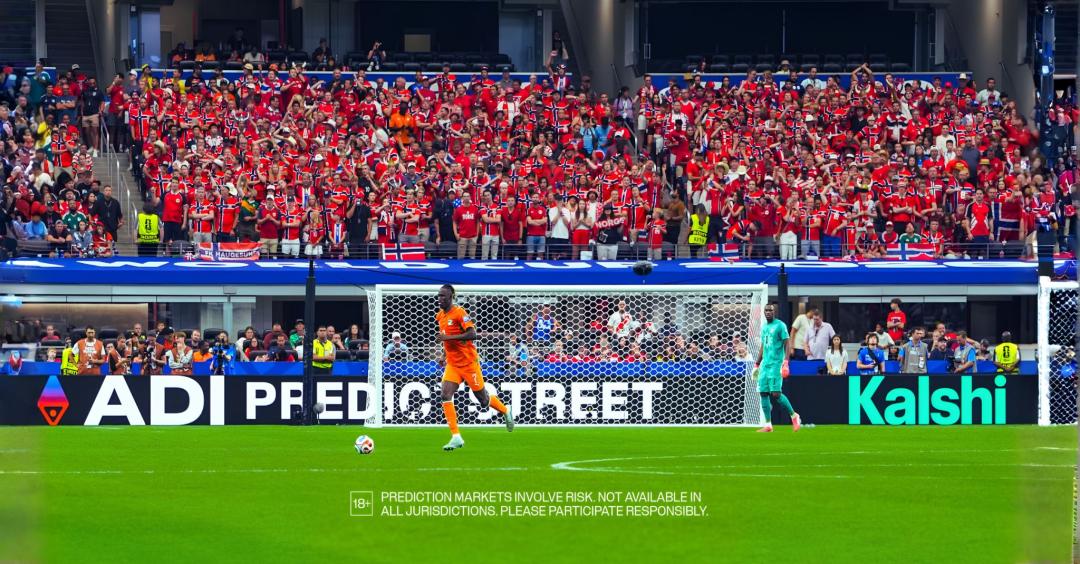
Behind this anomalous cooperation, the first thing exposed is ADI's own business difficulties.
The title of top-tier partner has not brought ADI a substantial volume of business. During the tournament, ADI's advertisements were prominently featured on stadium screens and broadcast feeds, and the brand partnered with numerous content creators to flood social media with World Cup-related content—even producing dedicated videos highlighting its own branding at venues.
On the other hand, without launching its own consumer-facing trading platform in multiple countries including the U.S., ADI has attempted to expand user access channels through a series of strategic partnerships. In May, it collaborated with sports retail giant Fanatics to launch a dedicated "World Cup Hub" page, where ADI provided official FIFA partnership credentials and brand licensing, while Fanatics built the end-user product for U.S. audiences. Additionally, the platform formed partnerships with betting exchange Matchbook and sports streaming service DAZN.
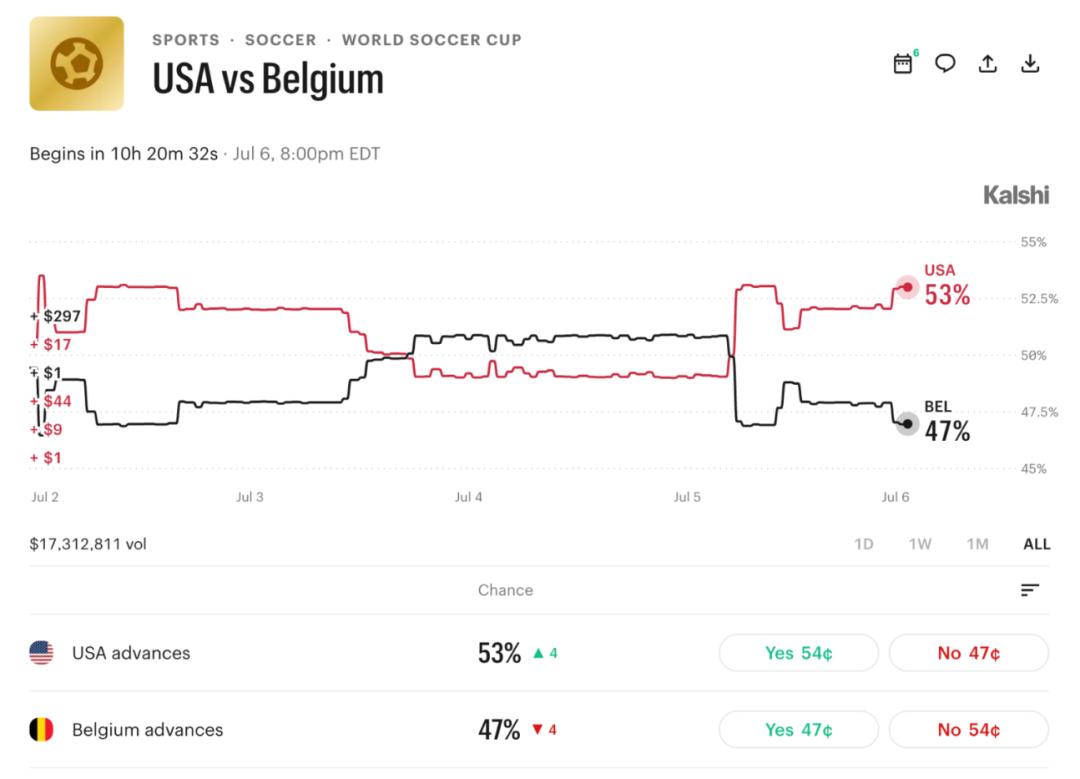
Even so, ADI's actual user penetration remains extremely low. During the group stage, total trading volume on the platform for multiple matches fell below $100, while betting volumes on other platforms reached tens of millions of dollars over the same period. A notable point of comparison is Kalshi—according to Bank of America data, it holds approximately 90% of the U.S. regulated prediction market share. In the first two weeks of the World Cup, the platform set an all-time high daily trading volume of $1 billion.
"This deal reflects more of ADI's urgent need for liquidity than Kalshi's need for marketing resources," Chad Beynon, Head of U.S. Research at Macquarie Capital, analyzed to Gambling Insider. "ADI holds exclusive FIFA sponsorship rights but lacks a user base and liquidity; Kalshi has ample liquidity and strong growth but no official FIFA affiliation. The two sides have achieved complementary asset alignment."
This was precisely the situation ADI faced in the early stages of the tournament. According to Bloomberg, citing sources familiar with the matter, ADI originally expected that holding a betting operating license and FIFA marketing partnership rights would generate sufficient market momentum, positioning it in investors' eyes as a platform on par with Kalshi. However, after the tournament began, the anticipated trading surge failed to materialize. As the group stage drew to a close, ADI began seeking more established partners, initially offering to share event exposure rights for approximately $50 million.
This offer was ultimately closed at a significantly lower price. According to Bloomberg reports, ADI, which spent $150 million to secure its top-tier FIFA World Cup sponsor status, ultimately sold co-branded exposure rights for the knockout stage to Kalshi for a heavily discounted $20 million. Previously, according to sports business outlet FOS, both Kalshi and another prediction market platform Polymarket initially participated in the official bidding process, but ultimately opted out due to the $150 million price tag being too high for rights limited to a single World Cup tournament.
The price compromise reflects ADI's deeper underlying needs. From a long-term perspective, the core driver of the partnership is ADI's need to build liquidity infrastructure and expand its user base, leveraging Kalshi's industry influence to overcome its startup challenges in attracting football-focused users. In short, what ADI truly needs is active users across both its prediction market and blockchain business lines.
In fact, FIFA's selection of ADI as a top partner was already unexpected. On April 2 this year, FIFA announced ADI as its official prediction market partner, marking the first time this category has been established in World Cup history.
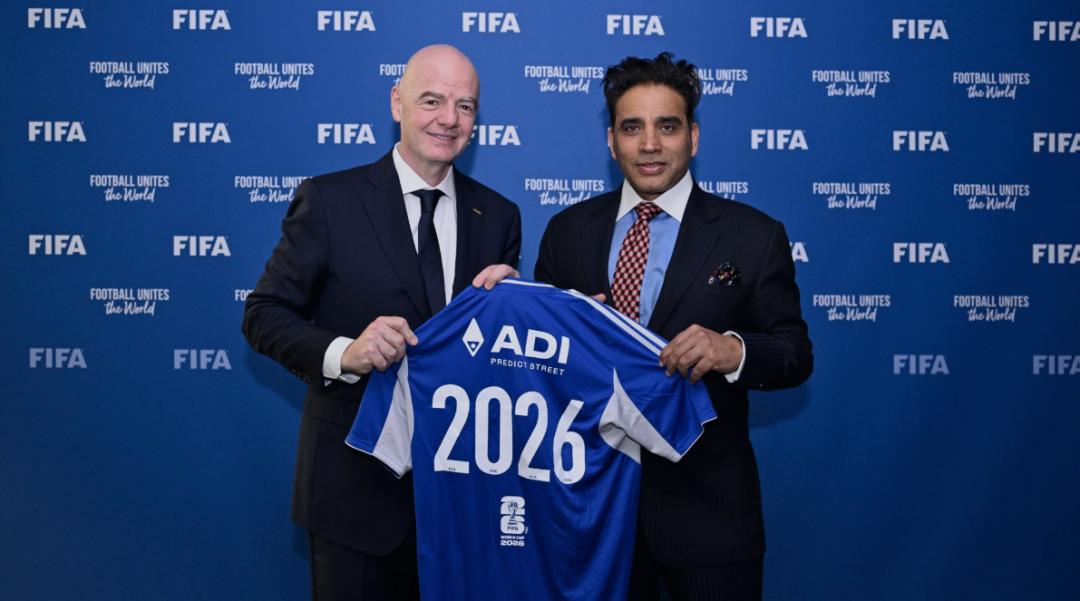
Yet this partnership has been riddled with ambiguities from the very beginning.
ADI is a niche prediction market platform based in Abu Dhabi, essentially purpose-built for this World Cup. At the time of the official partnership announcement, ADI's platform had not even launched, holding only a betting operating license issued by Gibraltar. This meant that, in theory, ADI could only legally operate in that jurisdiction, and was geographically restricted in dozens of countries including the U.S. Notably, Gibraltar is known in the industry as the "Blockchain Rock" for its crypto-friendly regulatory policies, and ADI is the holder of the territory's first-ever prediction market license.
"It's extremely anomalous that FIFA signed an official partnership agreement for a product that didn't even exist," Nikhilesh De, who covers crypto and prediction markets for CoinDesk, told FOS. In the U.S., prediction markets are regulated at the federal level by the Commodity Futures Trading Commission (CFTC), and platforms typically require months to secure CFTC approval. ADI only officially launched its own platform two months after the partnership announcement, just days before the World Cup kicked off.
ADI's underlying technical architecture has also raised questions. Its prediction market is built on the ADI Chain public blockchain, which launched in December 2025 and claims to "provide blockchain infrastructure services for governments across the Middle East, Asia, and Africa." According to CoinMarketCap data, ADI Chain's native token ranks 215th by market capitalization, with a 24-hour trading volume of just $1 million. Only a tiny fraction of the token is in public circulation, with the vast majority held by ADI Chain. Crypto journalist David Canellis told FOS that this type of token structure has been frequently used in recent years to artificially inflate token prices, allowing insiders to cash out at high valuations for profit.
For FIFA, however, the deeper significance of this partnership lies in strengthening its financial ties with Abu Dhabi. ADI's ultimate beneficial ownership traces entirely back to Abu Dhabi. It is a subsidiary of Finstreet, which is wholly owned by the International Holdings Company (IHC), under the Abu Dhabi royal family. The ADI Chain it operates is managed by the non-profit ADI Foundation, which was established by Sirius International Holdings, also under IHC. Sheikh Tahnoon bin Zayed al Nahyan, Chairman of IHC, is the brother of the UAE President, National Security Advisor, heads the country's largest sovereign wealth fund, and oversees a $1.3 trillion business empire spanning sectors including AI and finance.
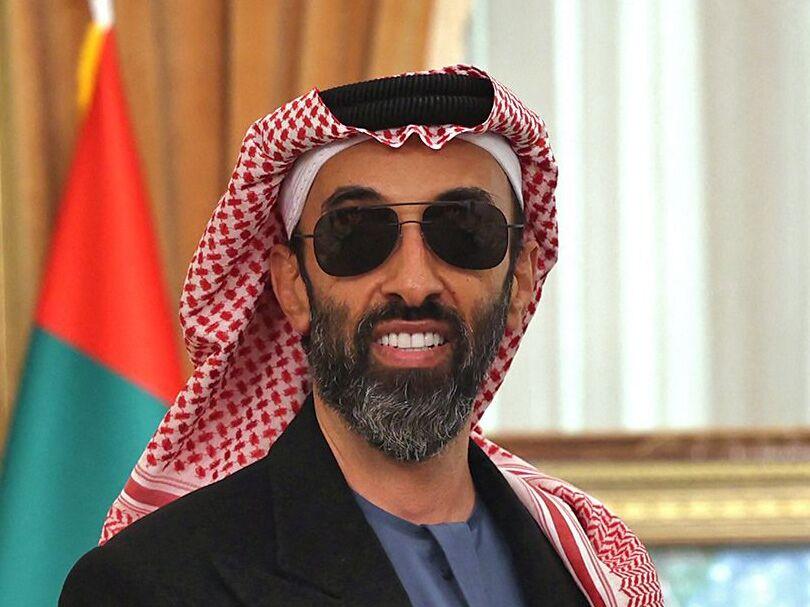
Sheikh Tahnoon bin Zayed al Nahyan, Chairman of IHC.
Previously, Abu Dhabi has hosted the FIFA Club World Cup five times, three of which occurred during Gianni Infantino's tenure as FIFA President. At the end of 2025, Infantino also struck a partnership with the Dubai Sports Council, announcing that the two sides will launch a new annual football awards ceremony starting in 2026. Moreover, FIFA maintains close ties with other Gulf states—Qatar hosted the 2022 World Cup; Saudi Arabia invested $1 billion in the expanded Club World Cup last year and will host the 2034 Men's World Cup. Both Qatar Airways and Saudi Aramco are top-tier official FIFA sponsors.
"Infantino has found Gulf leaders to be highly cooperative partners, which clearly aligns with his personal ambition to monetize every aspect of FIFA's operations," Kristian Coates Ulrichsen, a Middle East fellow at Rice University's Baker Institute for Public Policy, told FOS. For Infantino, ADI could serve as a gateway to the UAE and Abu Dhabi market, which holds massive capital and investment opportunities that FIFA has not yet fully tapped.
Parallel to this unusual case, the entire prediction market industry has witnessed a concentrated boom during this World Cup.
Kalshi has seen the most notable growth. According to user data collected by Dune Analytics, Kalshi's notional trading volume in June exceeded $31 billion, representing a more than 70% month-over-month increase from May's $17.9 billion. Meanwhile, as reported by CNBC, Polymarket's international exchange hit an all-time high monthly trading volume of $10.8 billion, reversing two consecutive months of decline in April and May. Even Rothera, a new industry entrant launched in June—a joint venture between U.S. options market maker Susquehanna International Group and stock trading platform Robinhood—reached $2 billion in trading volume in its first month, capturing a 7% share of the U.S. prediction market, per Bank of America data.
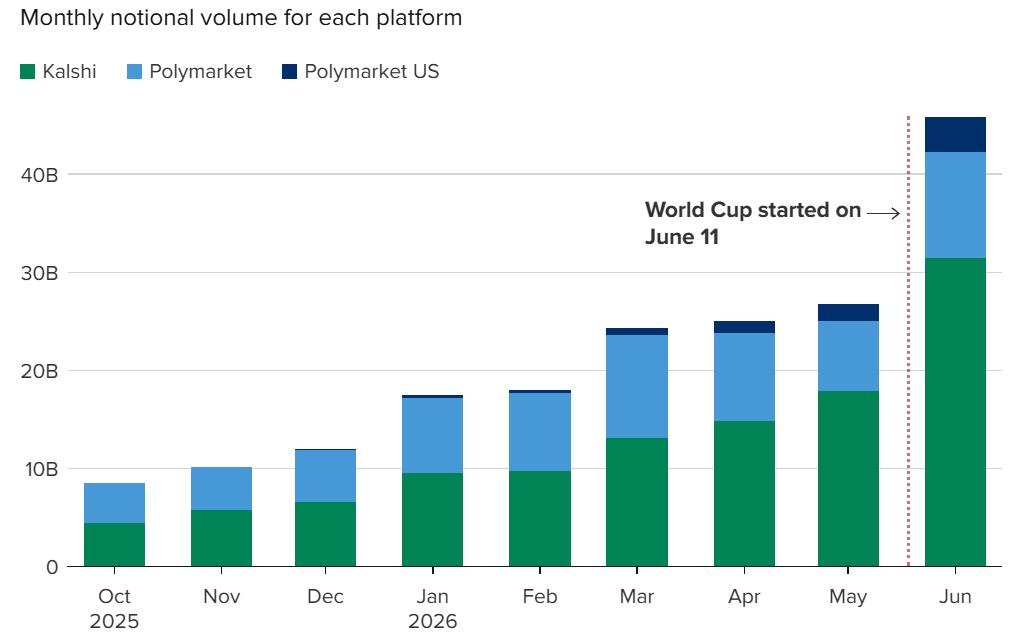
Following the World Cup kickoff, monthly notional trading volumes across all platforms surged dramatically. Source: CNBC.
A report from Binance Research shows that by late June, cumulative trading volume across 2026 World Cup-related prediction markets had exceeded $5.4 billion, making this tournament the largest event in the prediction market industry's history. Based on current user penetration trends, Binance Research estimates that annual trading volume in sports prediction markets will grow from approximately $248 billion in 2026 to a range of $554 billion to $923 billion by 2030, with a neutral baseline projection of $739 billion.
The boom in prediction markets is no accident. Beyond the 60% increase in match fixtures brought by the expanded World Cup format, the fundamental difference between their trading mechanism and traditional sports betting is the core driving force.
In simple terms, traditional sports betting follows a classic bookmaker model: the bookmaker sets the odds and takes opposing positions against users. In prediction markets, users act as counterparties to each other—each bet only supports two outcomes ("Yes" or "No"), and the contract price for both sides fluctuates in real time based on market demand. Before the event outcome is finalized, users can modify or close their positions at any time, without being required to hold their bets until the event concludes for settlement, as in traditional betting.
The cost structure is another critical factor driving mass adoption. Traditional sports betting generates revenue through embedded margins in odds, with an effective house edge of approximately 10%. Prediction markets operate as exchanges that only match buy and sell orders, charging fees of around 1%. Over multiple trading cycles, this cost gap widens significantly. Furthermore, the low fees and high accessibility attract both existing users and new participants. Many prediction markets run on-chain, enabling them to reach emerging market regions where traditional betting infrastructure is underdeveloped.
However, the boundaries between prediction markets, sports betting, and financial products are not clearly defined. As the prediction market frenzy spreads, regulatory stances across countries have diverged: some jurisdictions classify them as gambling, subjecting them to betting regulations, while others consider them to fall under securities or derivatives frameworks.
In recent weeks, Spain, Indonesia, and India have successively joined the list of jurisdictions imposing bans. Prior to this, most EU countries and large swathes of Asia had implemented temporary or permanent measures to block access to Kalshi and Polymarket's websites and apps. Brazil also shut down 27 prediction platforms including Kalshi in April this year. In China, prediction markets also face strict regulatory red lines. At the 242nd "Frontiers of Financial Research" seminar organized by the Fudan Development Institute's Financial Research Center (FDFRC), Deng Xiaoyu and Li Hao from Shanghai ManKun (Shenzhen) Law Firm pointed out that despite being labeled as "prediction markets," these platforms fully satisfy the three elements of gambling: staking funds, outcomes dependent on chance, and the exchange of money or property based on results.
In the U.S., at least 18 states are restricting or banning Kalshi and Polymarket under local gambling laws. Notably, Minnesota has formally enacted legislation classifying the operation of prediction markets as a state-level felony effective August 1, 2026, while Michigan, Nevada, and Massachusetts have obtained court injunctions to limit Kalshi's operations.
At the U.S. federal level, however, the CFTC maintains an overall supportive stance toward prediction markets, classifying them as financial derivatives rather than gambling and bringing them under derivatives regulatory frameworks. Jordan Bender, Managing Director of Equity Research covering the gaming sector at Citizens Bank, explained to The Athletic: "Currently, 62% of the U.S. population has access to legal sports betting. Prediction markets have found a regulatory loophole: they can launch these 'sports event contracts' at the federal level, bypassing the legal and regulatory restrictions imposed by individual states."
Industry analysts note that this modern prediction market ecosystem has truly taken shape since the start of Donald Trump's second presidential term. Trump has publicly stated that he will support prediction market firms amid widespread concerns over insider trading. His administration is currently revising federal regulatory rules to overturn decades-old policies that have suppressed the industry's growth. Trump's social media platform Truth Social has also announced plans to develop its own prediction market service.
The tug-of-war between regulation and industry expansion continues. The World Cup has proven that this sector can accommodate institutional-scale capital flows, but the industry's trajectory after the tournament concludes will be the true test.
"The World Cup is an unprecedented stress test," Asaf Meir, CEO of market compliance and risk management firm Solidus Labs, told CNBC. "Are the platforms secure enough? Mature enough? The World Cup has delivered the prediction market industry its most high-profile moment yet, and the sector must prove that this is not just a fleeting phenomenon."
This article originates from the WeChat public account "Lanxiong Sports" (ID