Raised nearly $4 million through crowdfunding, this star AI sports hardware company has launched an all-in-one coaching robot | Product Insight
Written by|Nan Huang
Edited by|Silai Yuan
After its first tennis serving machine became a smash hit, Pongbot launched an all-in-one AI coach robot.
The company is a highly sought-after target in the primary market, having secured three rounds of financing totaling hundreds of millions of yuan within the first half of 2025. Its products now boast over 300,000 users worldwide, with the devices having delivered more than 2 billion cumulative serves.
However, the current hardware sector no longer allows small, niche companies to grow gradually. The tennis industry has seen a flood of new competitors: domestic hardware startups are entering the market rapidly, while established overseas professional equipment manufacturers are also accelerating their expansion into the global professional market.
Pongbot had long envisioned expanding its business scope, and it was not until May this year that its first multi-sport integrated intelligent sports AI coach robot, Aura, was released. This marked the company's transition from a tennis-specific training tool to a multi-sport AI coach robot. On the day of its Kickstarter launch, the product raised over $1 million in just 5 hours, with a total crowdfunding amount of nearly $4 million.
Its core concept is straightforward: instead of requiring users to pay separately for each sport, a single device can cover as many scenarios as possible, including popular activities like padel, pickleball, and more. Leveraging its built-in AI Coach intelligent coaching system, the product's applicable scenarios and user coverage are significantly expanded.
Evolving from a single-sport specialized training tool to an AI personal trainer compatible with multiple net sports, Pongbot Aura represents a deep extension of smart hardware from the professional competitive sector to mass sports scenarios. When devices no longer serve only the performance metrics of a select few, users can truly regain the freedom to choose and start a new sport on their own terms.
When the AI Coach Gains Its "Hands, Eyes, and Brain"
In Pongbot's product lineup, Aura occupies a unique position.
Previously, its PACE series targeted advanced enthusiasts, delivering ball speeds of up to 130 km/h with a focus on ultimate performance in speed, spin, and landing accuracy. In contrast, Aura weighs only 7 kg and can be carried in a backpack. Its pioneering AI Coach intelligent coaching system targets a broader audience of casual ball sport enthusiasts.
What does a coach's daily teaching routine look like? Feeding balls to students by hand, observing their movements with their eyes, and correcting their techniques in real time. Every ball feed is accompanied by immediate feedback and adjustments.
Unlike traditional visual analysis solutions, where devices can only generate reports after training ends and prevent users from making active adjustments during the process, Aura is designed to fully replicate a coach's on-site teaching. Its AI Coach identifies issues in real time, continuously observes, judges, and adjusts serves through dynamic interaction with users, forming a complete guidance loop with every hit rather than stopping at post-training motion analysis.
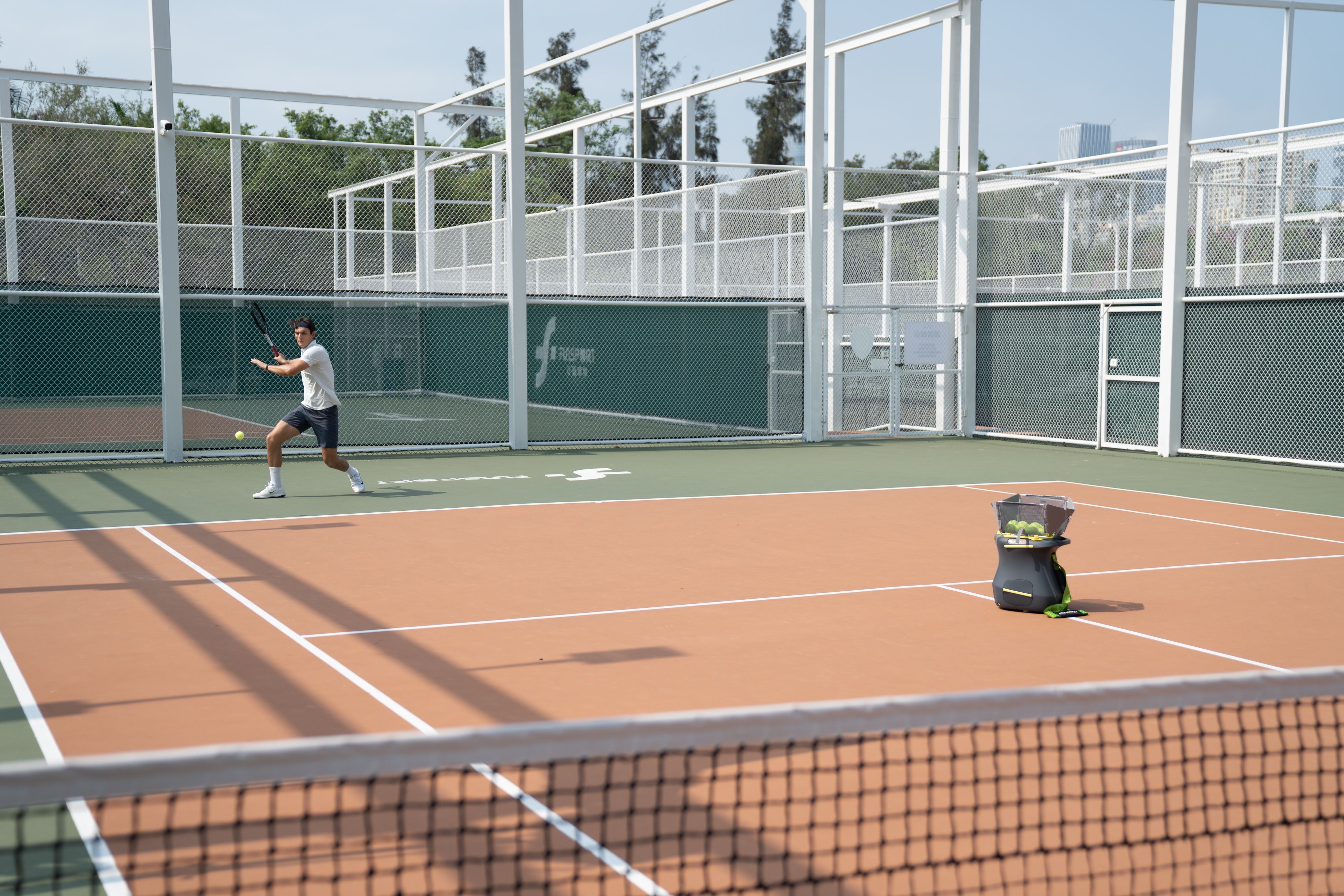
The multi-sport integrated intelligent sports AI coach robot Aura (Source: Enterprise)
However, the challenge of cross-sport compatibility cannot be solved solely at the algorithm level; it also requires platform-level hardware capabilities.
The physical parameters of different ball types vary drastically. Even within tennis, there are multiple specifications: pressurized competition balls, non-pressurized training balls, 75% pressure soft balls for youth users, and 50% pressure light balls for young children's training. Pickleballs also come in two structures: 16-hole and 24-hole designs, where the number of holes directly alters the ball's weight, drag coefficient, and flight trajectory.
The clamping and pushing structure of a conventional single-function serving machine is only compatible with one standard ball type. When switching to a different ball, issues like ball deformation, jamming, or inaccurate serving often occur. To make a single ball-feeding, landing, and hitting module compatible with all these physical differences, the hardware architecture of the serving robot must be systematically redesigned.
Before each serve, the wheel system adjusts the clamping distance and acceleration method based on the ball type. For example, tennis requires greater clamping force and higher wheel speed to generate sufficient serving speed and spin; while pickleballs, being lighter with higher air resistance, automatically trigger corresponding calibrated parameters.
"The technical threshold of an all-in-one device is not just about 'being able to serve the ball.' The core difficulty that determines the product's practical value lies in the robot's controllability over the ball's trajectory and spin intensity for different ball types," Zhang Haibo, founder and CEO of Pongbot, told 36Kr.
Since the aerodynamic characteristics of each ball type are completely unique, a universal mechanical structure cannot share the same set of motion parameters. Therefore, the team must build independent control models for each specific ball type to ensure users maintain a stable and controllable training experience even after switching sports.
If the all-in-one serving and ball supply system is Aura's "hand", acting as the execution terminal to complete multi-type serving precisely and controllably, then the capability of its AI Coach is built on two layers: visual perception and algorithmic decision-making. The "eye" is responsible for capturing every swing and the ball's trajectory, while the "brain" analyzes the data and provides training recommendations.
Aura is equipped with a detachable 120fps dual-camera visual module called Spotter, which delivers 10 TOPS of on-device computing power. Combined with large language and speech models, the deep integration of Spotter's visual perception with Pongbot's sports brain enables it to "see, think, and guide".
Different from solutions centered on visual analysis, which use cameras to capture users' swing movements and generate training reports with improvement suggestions, Aura's advantage lies in its flexible deployment and independence from specific hardware. However, its capability boundaries are also clear: it cannot actively intervene in the training process. The distinction of Aura's coaching robot is that while traditional solutions start with "analyzing movements", Aura begins by "initiating practice".
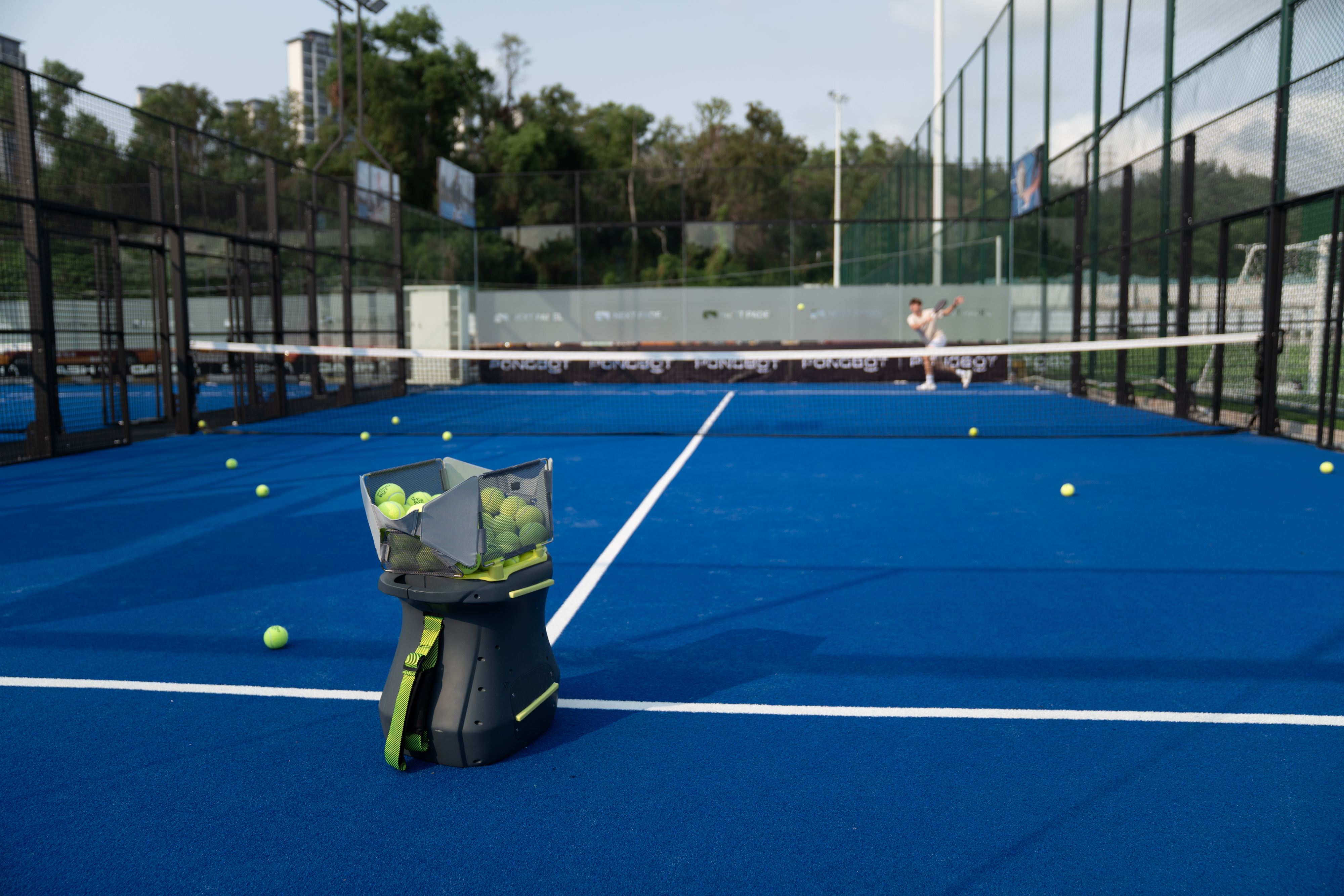
The multi-sport integrated intelligent sports AI coach robot Aura (Source: Enterprise)
Built on Pongbot's backend "sports large model", this represents the full implementation of its "hand-eye-brain" integrated technical architecture. The system not only records "where the ball landed" but also analyzes "why it landed there" — for example, was the backswing half a beat too slow? Was the contact point too far out? Did the weight transfer lag behind?
These judgments are instantly delivered to users via voice reminders right after each hit, providing adjustment feedback and driving the serving robot to adjust its next set of serving strategies. In Zhang Haibo's view, real teaching must start with "feeding balls", observing, judging, and adjusting through dynamic interaction, rather than remaining at the level of post-training motion analysis.
At the same time, the evolution of the AI coach also relies on high-quality data. This complete training loop further forms a unique data moat. Pongbot estimates that after Aura's launch, it will collect over 5 million hours of effective high-quality sports interaction data annually, creating a virtuous data flywheel.
From Specialization to All-in-One Integration
As the world's first AI coach robot to propose multi-sport integration for mass ball sport enthusiasts, Aura faced significant controversies during its product definition stage. Zhang Haibo recalled to 36Kr that the internal team's disagreement at the time was straightforward: "An all-in-one design will make users think you are trying to do everything, but nothing well." External partners and investment institutions also expressed similar concerns.
However, he never wavered, and this decision stemmed from two key considerations.
The traditional logic of sports products is "choose a sport first, then purchase the equipment", which is exactly the core pain point that beginners have long overlooked. Before they even determine their sports preferences, they have to pay for a complete set of equipment dedicated to a single sport.
According to industry surveys from organizations like PPA and Monitor Deloitte, pickleball in North America is one of the fastest-growing sports with an annual growth rate exceeding 30%; the number of padel courts in Europe has nearly tripled over the past five years; and tennis itself remains the racket sport with the largest global participant base.
The similarities in rules and court layouts among these three sports mean their beginner groups overlap significantly.
Aura's solution allows the device to natively support three ball types, with users unlocking additional sports as needed. "You don't have to make a decision before buying the device. Start with tennis, and when you want to try pickleball someday, pay the corresponding subscription fee in the App to unlock it. For users, with the cost equivalent to a casual group lesson, they can explore their interest in a new sport," Zhang Haibo explained.
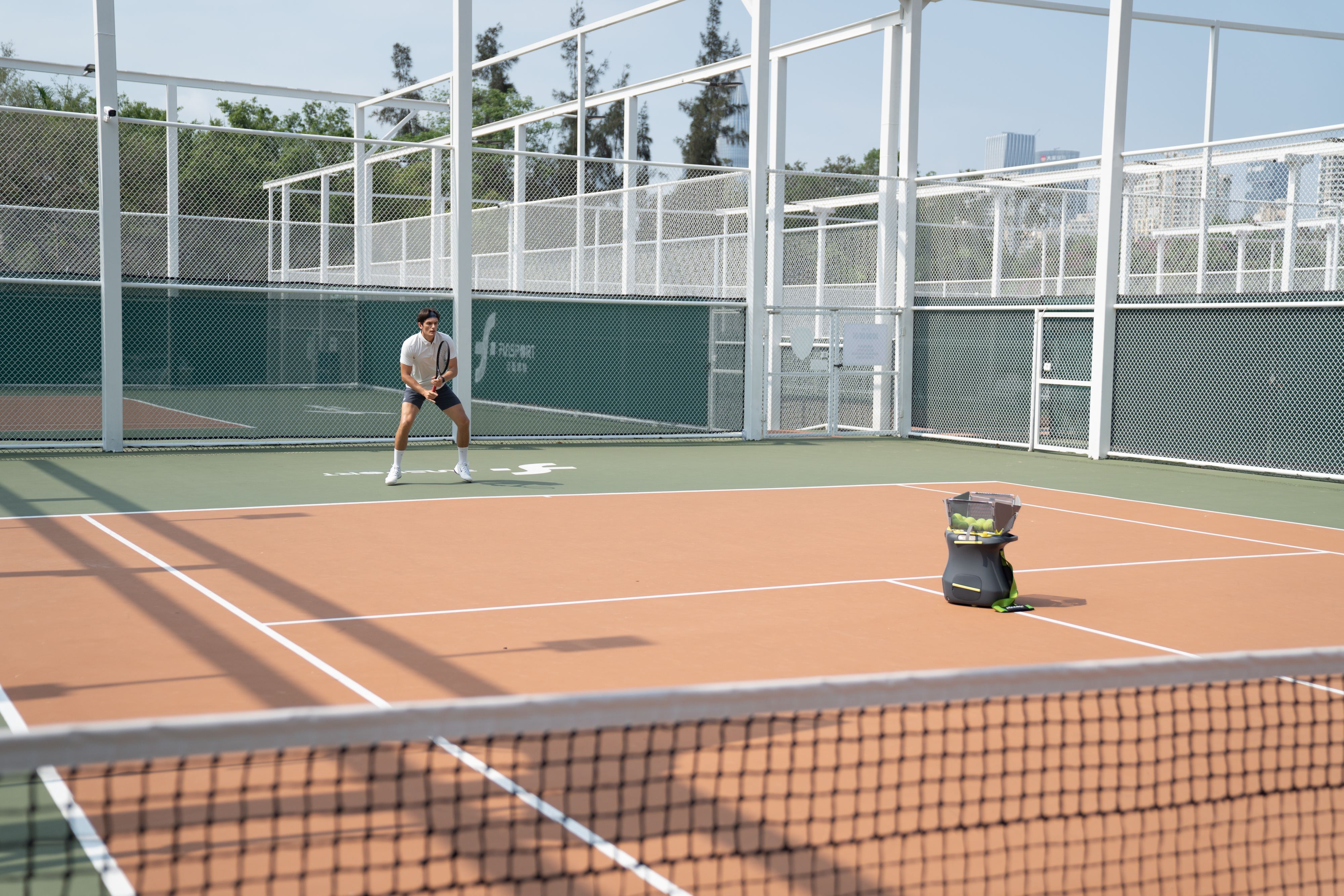
The multi-sport integrated intelligent sports AI coach robot Aura (Source: Enterprise)
The launch results confirmed his judgment. Zhang Haibo told 36Kr that almost all purchasing users chose the version with AI coaching features, and over half of them opted for the multi-sport integrated configuration.
This reflects a typical "value perception" logic in consumer psychology: the all-in-one function may not be used frequently, but its existence amplifies users' perception of the product's cost-effectiveness and lowers the decision-making threshold for their first purchase.
"It is a signal that the all-in-one design means enjoying services for multiple sports with the cost of a single device, and the cost-effectiveness advantage is self-evident," Zhang Haibo added. "Users want to have that possibility, even if they don't need it right now."
From a commercialization perspective, the all-in-one function is also a more cost-effective choice for startups.
Aura's strategy is to make its core mechanical platform universal, with differentiated adaptations only in wheel system adjustments and algorithm parameters. Using a single SKU to cover multiple categories like tennis, pickleball, and padel results in higher supply chain material reuse, better production efficiency, and improved cost control. Meanwhile, its target user base expands from a single sport group to three highly overlapping sport communities.
Standardized hardware serves as the entry point, while the real value anchor further shifts toward software-defined sports experiences. Pongbot users can choose to buy a single-sport version, and later unlock pickleball or padel through monthly or annual subscriptions in the App.
This "affordable hardware, value-added software" model has been proven in the consumer electronics industry but remains rare in the intelligent AI sports hardware sector. Its deeper intention is to retain users in its ecosystem through a unified hardware set and data system.
"A user learns tennis with Aura today, and their data accumulates in Pongbot's system; three months later, if they want to try pickleball, they don't need to buy another machine — they just need to complete a paid unlock on the software side. The device stays the same, users remain engaged, and data continues to grow," Zhang Haibo said.
What users want is not a stack of features, but a "real presence" that can continuously accompany them and provide real-time feedback during dynamic training. This is a very specific demand. Pongbot is working to build an AI coaching network that becomes smarter the more it is used, truly integrating "data × algorithm × hardware × scenarios" into a consumer-grade product.
Hardware is the entry point, users are assets, and data is the moat. Once this three-part loop is formed, Pongbot's real competitive advantage will no longer lie in a single device, but in a continuously evolving training system. Aura aims to be a real-time guiding coach that supports multiple sports. It rethinks "how many scenarios a single device can cover" at the hardware level, and connects different scenarios through software and data to form an expandable system. The longer users use it, the more the system understands them.
This approach may not be the only answer, but it provides a thought-provoking case study: in the sports equipment industry, enabling beginners to switch between sports at low cost — and having the system record every swing during their exploration process.