Looking back at Seres's development path, Zhang Xinghai is an entrepreneur who has been severely underestimated.
Starting from a small spring workshop to becoming one of China's most competitive new energy vehicle enterprises, looking back on Seres' 40-year journey, its entrepreneurial story is far more inspiring than those of new EV forces like "NIO, Li Auto, Xpeng".
Recently, Seres Group, the parent company of China's well-known new energy vehicle brand AITO, has released its latest 2026 semi-annual performance forecast. The company expects a net loss of 1.5 billion to 1.8 billion yuan attributable to listed company shareholders in the first half of the year, while the non-GAAP net loss will further expand to 2.2 billion to 2.5 billion yuan. This represents a cliff-like drop compared to the 2.941 billion yuan profit recorded in the same period of 2025.
The sharp decline in performance has also led to a significant slump in Seres' stock price. As of the latest available data, Seres' market capitalization has fallen below the 100 billion yuan threshold, standing at 97.2 billion RMB. This shift from profit to loss is mainly driven by the combined impact of external cost pressures and internal strategic adjustments.
First, the sharp rise in prices of core raw materials such as memory chips, industrial metals, and lithium carbonate has significantly increased vehicle manufacturing costs. AITO models focus on advanced intelligent driving and premium configurations, which has added 15,000 to 20,000 yuan in cost per vehicle¹⁵.
Second, in line with the principle of prudent operation, Seres has also conducted book value adjustments (impairment) on some existing assets with limited adaptability caused by technological iterations and model updates. While this has sharply reduced book profits in the short term, it aims to clear inefficient assets and pave the way for mass production of new models in the second half of the year.
Third, the ongoing price war in China's new energy vehicle market makes it difficult for terminal selling prices to rise accordingly, squeezing corporate profit margins from both sides and trapping enterprises in the dilemma of "growing revenue without growing profits".
However, this performance loss still cannot overshadow the tremendous success of the AITO brand. Behind AITO's massive success lies one of the most underrated entrepreneurs in China's automotive industry: Zhang Xinghai, founder of Seres Group. When mentioning Zhang Xinghai, the media often associates him with teasing remarks like "king of effortless success", "clinging to Huawei's coattails", and "the luckiest boss". It seems that Seres' current achievements are entirely attributed to Zhang Xinghai's "luck" and "complacency". But for an entrepreneur who has persisted in starting businesses for 40 years and repeatedly delivered outstanding results, such teasing is neither the truth nor fair.
Starting from a tiny spring workshop to becoming one of China's most competitive new energy vehicle enterprises, looking back on Seres' 40-year path, we will find that its development is a far more arduous and inspiring entrepreneurial story compared to new EV forces like NIO, Li Auto, and Xpeng. Compared with the new generation of entrepreneurs such as Li Xiang, Li Bin, and He Xiaopeng, Seres founder Zhang Xinghai is also a more exceptional doer and reformer.
Daring to Dream and Act
Zhang Xinghai came from a humble rural background. As a teenager, he single-handedly cultivated farmland that could support five people. To earn more money, he would wake up at 3 a.m. in the dark every day, carry heavy vegetable baskets over mountains to sell his produce, and on his way back, he would cut hundreds of catties of pigweed to carry home.
This kind of life lasted for several years. In the early 1980s, Zhang Xinghai left his hometown Yangjiamiao Village, Fenghuang Town, Ba County, Chongqing, to join his elder brother who worked in a spring factory and started his own spring business.
At that time, the spring of reform and opening-up spread across China. As one of the first pilot cities for the national comprehensive economic system reform, Chongqing experienced rapid industrial development. In 1984, Chang'an Machinery Factory located in Chongqing introduced technology from Japan's Suzuki Motors and built a production line with an annual output of 30,000 mini trucks and 36,000 engines.
For ordinary local people, landing a job at Chang'an Factory with a secure "iron rice bowl" was the ultimate dream. But Zhang Xinghai, in his early 20s, harbored an "ambition" that was completely disproportionate to his age: he wanted to supply springs to Chang'an Factory.
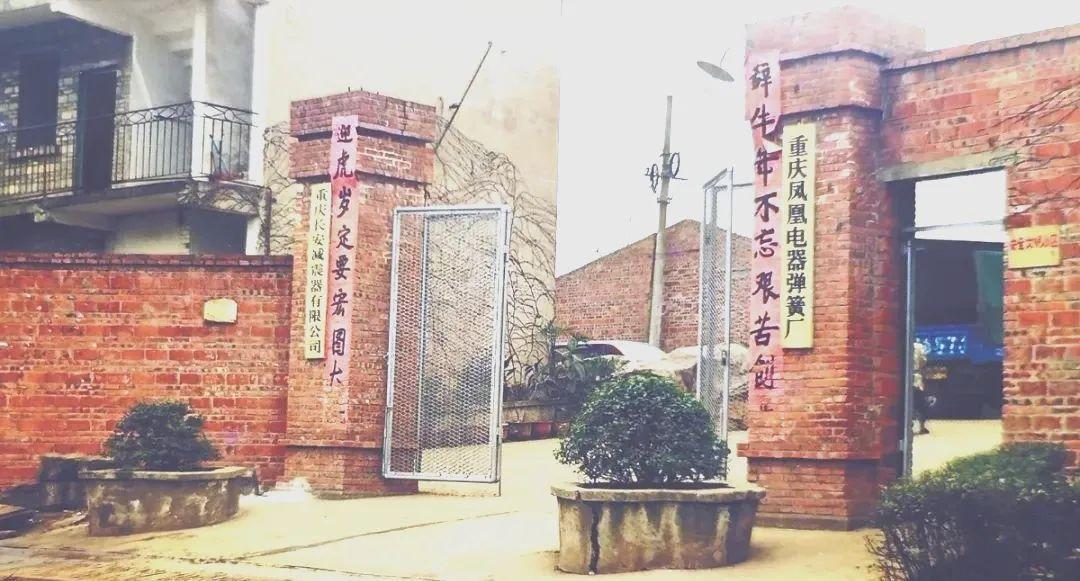
On September 1, 1986, the three brothers Zhang Xinghai, Zhang Xingming, and Zhang Xingli pooled all their life savings to raise 8,000 yuan - a huge sum at the time - as startup capital, and established Chongqing Ba County Fenghuang Electrical Spring Factory in their hometown Fenghuang Town. That year, Zhang Xinghai was 23 years old.
Later, thanks to its favorable cost-performance ratio, Zhang Xinghai actually secured the order for automotive seat springs from Chang'an. His personality of daring to "dream big" and daring to "go all in" transformed Zhang Xinghai's life: he was no longer just an ordinary worker in the tide of the era, but became an entrepreneur who actively sought to take control of his destiny and dance with the times.
After establishing a firm foothold, Zhang Xinghai quickly noticed a larger market: springs for household appliances, especially the square wire garter springs used on washing machine motor shafts. At that time, even China Spring Factory, the country's most technically capable spring manufacturer, could not produce such springs, and all square wire garter springs used by domestic washing machine enterprises had to be imported from Japan at a price of 1 USD per piece.
Zhang Xinghai refused to accept this. Together with his brothers, he traveled to Shougang and Shaanxi Steel to source the highest quality steel wire, and tried every possible method to improve processing techniques. After nearly a year of efforts with technical teams, Fenghuang Spring Factory finally successfully trial-produced square wire garter springs that were almost identical to imported products in quality, but priced at only 1 RMB each.
With this breakthrough, Fenghuang Electrical Spring Factory entered a fast track of rapid development. In just two to three years, it captured 90% of China's market share for washing machine square wire garter springs. Zhang Xinghai's reputation as the "Spring King" spread far and wide.
In 1995, the fully mature Chongqing Ba County Fenghuang Electrical Spring Factory was restructured into Chongqing Yu'an Group, focusing on the motorcycle and automotive shock absorber sector. Zhang Xinghai continued to invest heavily in R&D and deeply cultivated the shock absorber industry.
In the following years, relying on excellent product reputation, Yu'an Group not only became a first-tier supplier for Changan Automobile, but also attracted Japanese brand Yamaha for cooperation, setting a record of ranking first in production and sales in the motorcycle shock absorber industry for 13 consecutive years.
Open Collaboration
Chongqing is China's "Motorcycle Capital". After Jialing Machinery Factory produced the first civilian motorcycle of the People's Republic of China, the "Jialing CJ50", in 1979, the motorcycle industry in Chongqing began to flourish. By the end of the last century, it had formed China's largest motorcycle industrial cluster, giving rise to numerous well-known motorcycle brands and enterprises such as Jialing, Jianshe, Zongshen, Loncin, and Lifan.
Zhang Xinghai, who was in the heart of this thriving motorcycle industry, was also inspired. In 2002, Zhang Xinghai founded New Feeling Motorcycle Co., Ltd., but fate poured cold water on him: as "motorcycle ban" policies tightened across many regions nationwide, his motorcycle business ran into trouble and the enterprise did not develop smoothly.
In 2003, Dongfeng Motor and its partner had already suffered tens of millions in losses in their mini-vehicle business, so they intended to replace their cooperation partner. When the news spread, many enterprises showed interest - after all, besides being a central state-owned enterprise, Dongfeng Motor also held a precious automobile production license. However, facing the two conditions put forward by Dongfeng: first, taking over all past debts; second, not relocating the factory from Shiyan, Hubei - many enterprises hesitated. Debt negotiations were manageable, but arranging for all company employees to work in this third-tier city in Hubei was no easy task.
It is said that Zhang Xinghai was not the first to contact Dongfeng Motor, but he was the most proactive and straightforward. He not only agreed to take on all debts, but also personally led mobilization efforts to convince core employees to move to Shiyan for development. He later recalled: "I'm not that stubborn. As long as I can make cars, it doesn't matter where I do it. In terms of cooperation mindset and approach, I might be relatively more open."
Thus, in June 2003, Yu'an and Dongfeng Motor Co., Ltd. jointly established Dongfeng Yu'an Vehicle Co., Ltd., the first mixed-ownership automobile enterprise in China's automotive industry.
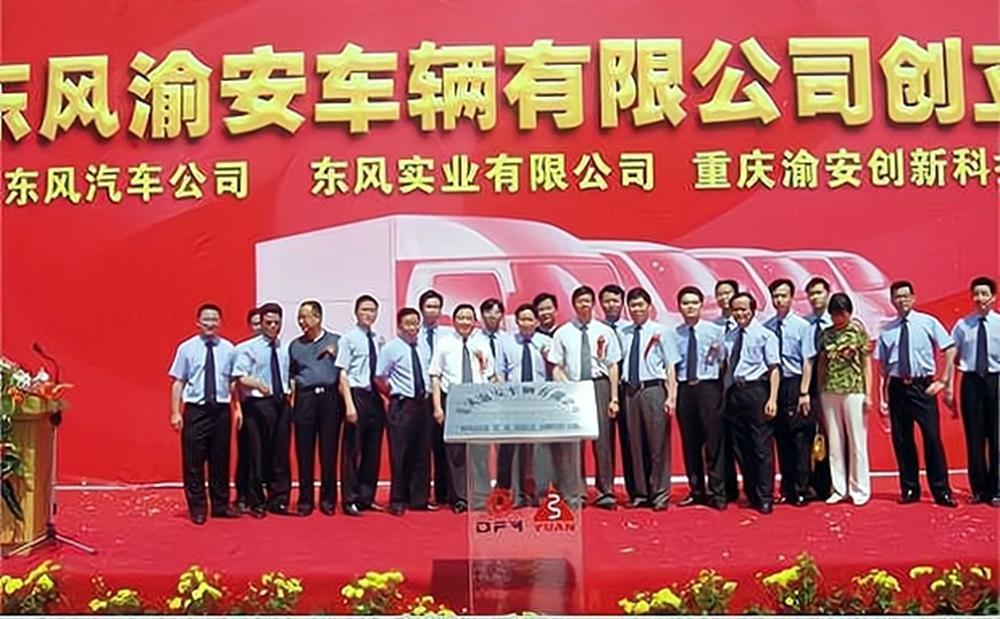
For this cooperation, Zhang Xinghai invested 50 million yuan, but the tangible assets he obtained (such as some old factory buildings) were limited. Many people thought it was not worth it and did not hold optimistic views on Zhang Xinghai's automotive manufacturing future. But Zhang Xinghai clearly understood his own capabilities and what he wanted. He said he had thought it through: "The automotive industry requires massive investment and has a long industrial chain. It is not easy to enter this sector without advantages in products, brands, talent, and technology. Our joint venture and cooperation with Dongfeng Motor and Dongfeng Industrial is an integration of all parties' strengths."
Instead of nitpicking over trivial details, Zhang Xinghai adopted an open and cooperative mindset that allowed all parties to leverage their strengths. This approach enabled Yu'an Group to rapidly evolve from a shock absorber manufacturer to a complete vehicle manufacturing enterprise.
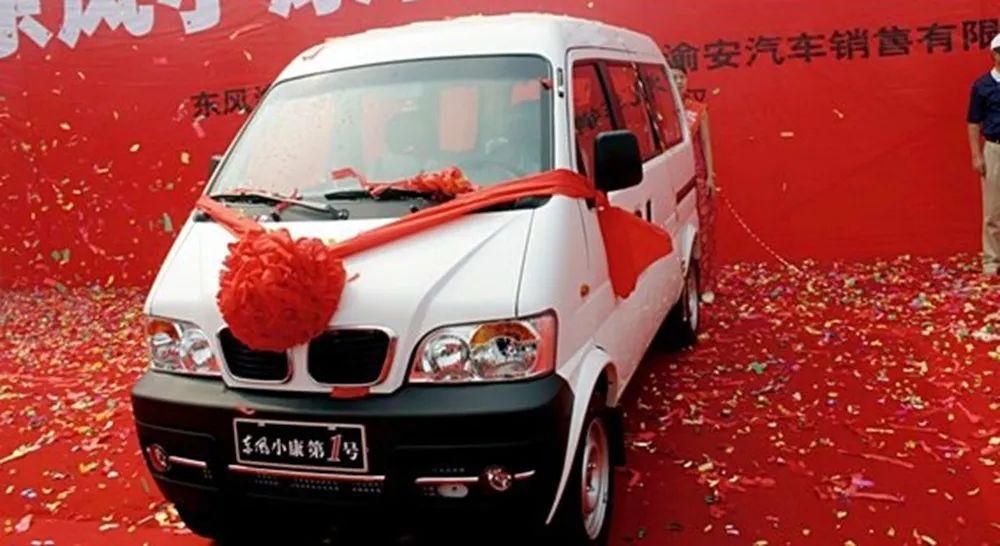
In 2005, the K07 microvan, with the Dongfeng logo on the front and "Dongfeng Xiaokang" badging on the rear, officially rolled off the production line. Coinciding with the implementation of China's first auto-rural subsidy policy, the advertising slogan "Drive Dongfeng, Live a Well-off Life" spread across the country, pushing the enterprise into a period of rapid development.
In 2007, Yu'an Group was renamed Chongqing Xiaokang Automobile Group Co., Ltd. In 2009, Xiaokang Automobile achieved an annual production and sales volume of 200,000 units, ranking among the top three in China's mini-vehicle industry with a market share exceeding 10%. In April 2011, the enterprise was renamed Chongqing Xiaokang Industrial Group Co., Ltd. On May 15, 2012, the 1 millionth Dongfeng Xiaokang model rolled off the production line. In 2016, Xiaokang shares were successfully listed on the A-share market. In 2017, Zhang Xinghai's family ranked fourth on the Chongqing wealth list with 14.954 billion yuan.
Pursuing Higher Ground
The rapid development of Xiaokang Automobile relied on two core factors: first, it stood on the shoulders of Dongfeng Motor, which provided automotive manufacturing qualifications, a complete production system, and strong support and endorsement in brands and distribution channels - an unmatchable starting advantage for many private automakers. Second, Zhang Xinghai always adhered to a market-oriented strategy, closely aligning model R&D with the practical needs of the public.
At that time, China's auto consumption was still in the "solving basic accessibility" stage, where people's primary demand for cars was low cost and practicality. Therefore, Xiaokang Automobile, which balanced passenger and cargo carrying functions with affordable pricing, quickly won the urban and rural markets.
However, this advantage, built on the era's demographic dividend, later became a shackle that hindered Xiaokang's upward transformation. After 2010, with decades of rapid economic growth in China, consumers no longer only pursued basic car ownership, but began to value brands, quality, driving experience, and comfort. The market for low-cost, practical mini vehicles gradually faded, and the industry's growth momentum weakened.
Zhang Xinghai, who had always been working on the front line, recognized this early on. As early as 2010, he laid out the Dongfeng "Fengguang" model series, attempting to move beyond the single mini-vehicle business and enter the family SUV market.
However, the long-standing brand perception of focusing on low-cost mini vehicles could not be erased quickly, and consumers' inherent impressions were hard to change. Even with significant hardware upgrades, the products still struggled to appeal to customer groups who prioritized brand and quality. Xiaokang's upward journey was extremely difficult.
A test drive event in Tibet in particular left an unprecedented psychological impact on Zhang Xinghai. The Fengguang 580 SUV he was driving struggled to climb a long steep slope, while a Japanese off-road vehicle next to it moved effortlessly. Zhang Xinghai realized that in the fuel vehicle sector, Xiaokang would find it difficult to catch up with international brands. Therefore, he shifted his focus to the new energy vehicle track.
After 2014, new energy vehicles, especially electric vehicles, were recognized as the new direction for the automotive industry. But in reality, almost all fuel vehicle manufacturers acted cautiously, even sluggishly. This is understandable: abandoning past successful paths and switching to an unfamiliar, uncertain new track is no easy task.
Standing at a crossroads of fate, Zhang Xinghai once again demonstrated his decisive courage. He said: "In the traditional automotive sector, we lag behind developed Western countries by at least 100 years, making it extremely difficult to catch up with their technology. I believe the future main track will be new energy vehicles. Even if we only produce a few hundred units today, the scale will definitely expand tomorrow. Only through new energy vehicles can Chinese brands have the opportunity to catch up with and even surpass global automotive brands." He then resolutely chose to pivot to the new energy vehicle track.
Instead of taking gradual exploratory steps like many other automakers, he directly traveled to Silicon Valley in the United States - the global hub of electric vehicle technology at the time - making massive investments to source technology, recruit talent, and build factories.
In 2016, Zhang Xinghai and his son Zhang Zhengping founded new energy vehicle enterprise SF MOTORS (Seres) in Silicon Valley, followed by a series of major moves: acquiring InEVit, a battery R&D company founded by Tesla co-founder Martin Eberhard, for 33 million USD to obtain core three-electric technology from the first generation of Tesla; investing 110 million USD to acquire the civilian vehicle factory of AM General, which had produced Hummer and Mercedes-Benz models; recruiting a large number of Silicon Valley electrification engineers to build a complete overseas R&D and manufacturing system...
Zhang Xinghai's vision was clear: build premium electric vehicles using top-tier American technology, first establish a high-end brand reputation in the North American market, then re-enter the domestic market. This would allow the brand to completely shed its long-standing low-cost mini-vehicle legacy.
However, reality often deviates from expectations. After 2018, geopolitical trade conflicts disrupted Seres' localized mass production plans in the US, while continuous overseas investments kept draining the enterprise's cash flow. In 2019, the SF5 model was launched in the domestic market, but neither the product design nor the pricing was accepted by consumers. Coupled with the public's inherent perception of Xiaokang as a low-end manufacturer, SF5 sales in 2020 were less than 1,000 units.
2020 was arguably the darkest year in Zhang Xinghai's entrepreneurial journey. Xiaokang recorded a net loss of 1.729 billion yuan, almost erasing the total net profits of the previous four to five years. The enterprise's cash flow was on the verge of depletion. In the capital market, its stock price plummeted, market value shrank sharply, and skepticism grew.