The express delivery fees have stealthily increased, but I am willing to pay the extra cost.
A couple of days ago, YTO Express quietly released an official announcement.
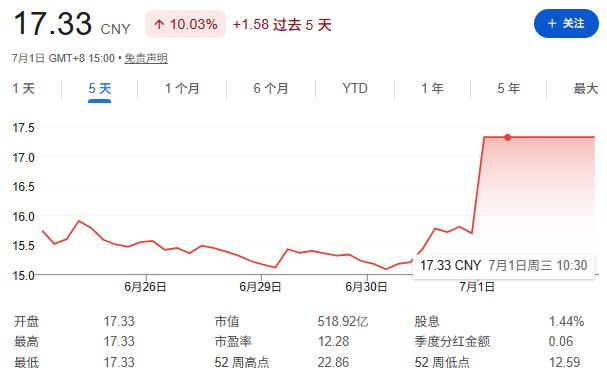
The announcement was only two pages long—short in length, but far from trivial in impact. The very next trading day, YTO's stock price hit the 10% daily up limit as soon as the market opened.
Even better, the stock prices of its peers STO Express, ZTO Express, and Yunda Express all surged in tandem.
You must be curious what exactly was written on those two pages.
The core boils down to one single sentence: In the first half of 2026, YTO's non-recurring net profit attributable to shareholders will reach 3 billion to 3.3 billion yuan, representing a year-on-year growth of 72.19% to 89.18%.
In short, YTO's profits have skyrocketed in the first half of this year, raking in massive revenue.

After reviewing Q1 performance reports, we found YTO's explosive growth did not come out of nowhere.
In the first quarter of this year, YTO's net profit had already risen by roughly 60% year on year. And it's not the only one doing well—every express delivery company saw their net profit jump by double-digit percentages, as if they had all taken a powerful performance booster.
STO Express saw 94.29% year-on-year growth, Yunda Express 51.67%, and JD Logistics 40.1%.
It has been ages since the courier industry last witnessed such a thriving scene.

After all, the express delivery, food delivery, and ride-hailing sectors all look like massive, well-established industries—but their actual profit margins are thinner than a sheet of paper.
For 80 cents, you can't even buy a single bunch of green vegetables, yet these companies can ship a parcel from the easternmost tip of China all the way to its westernmost border.
In 2007, the average price of a courier parcel in China was 28.55 yuan. By June 2025, that figure had plummeted to just 7.49 yuan.
That number is even propped up by SF Express's higher pricing. If we only look at the "Tongda" group of courier firms, YTO's average parcel price in 2025 was a mere 2.19 yuan, and Yunda's even lower at 1.98 yuan.
Yet somehow, this group of companies has managed to turn their fortunes around before food delivery and ride-hailing platforms did.

So how exactly did YTO and its peers pull off this turnaround?
After going through the official announcements, we found there are two key reasons behind this.
The first reason is easy to understand: cost-cutting.
AI technology has helped these firms slash a significant amount of operating costs. Examples include large-scale deployment of autonomous delivery vehicles and drones, replacing human customer service representatives with AI chatbots, and using AI to optimize logistics scheduling.
YTO stated in its 2025 annual report that after AI optimized its logistics chain, the cost per parcel dropped by 10.35%.

But even aggressive cost-cutting can't generate 3 billion yuan in profits. Saving money was not the core driver of this explosive profit surge.
The real turning point for the whole story was actually an official notice issued last July.
In July 2025, the Central Financial and Economic Affairs Commission explicitly announced "governing unregulated low-price competition among enterprises in accordance with laws and regulations". In plain terms, this meant a call for all industries to stop engaging in ruinous price wars, since low-price competition leads nowhere, and everyone should rein in this harmful practice.
Most people initially thought this was just a routine appeal—but the State Post Bureau of China responded with unprecedented speed. At the end of July, they summoned the "Three Tongs and One Da" courier group, along with J&T Express, for a regulatory meeting to address the issue.
Within days, Yiwu city raised the minimum parcel price by 0.1 yuan, and Guangdong province raised its minimum threshold by 0.4 yuan per parcel. The effect was immediate: by August, the overall average parcel price across the entire courier industry stopped its years-long decline and started rising for the first time.
Starting from this round of price adjustments, courier prices began to rise sequentially across provinces nationwide.
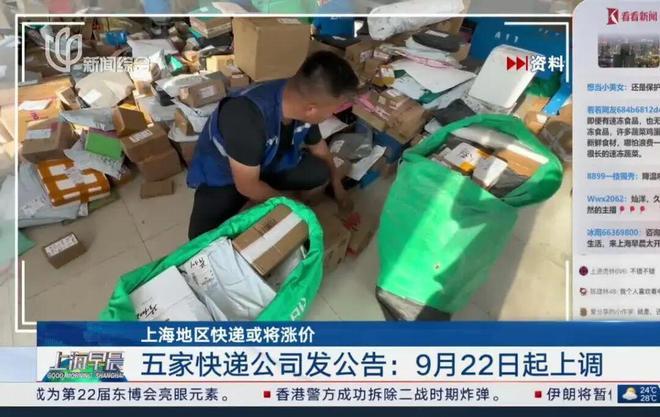
In October, the "Three Tongs and One Da" group and J&T Express jointly released a "Notice to Customers" announcing coordinated price adjustments. With a price hike of 0.2 to 0.8 yuan per parcel, the policy covered 22 provinces across China.
In March this year, the five courier firms joined forces again to raise prices in response to rising fuel costs, adding surcharges to parcels in regions like Guizhou and Shandong. Some regions removed existing discounts, while others increased waybill fees and the minimum charge standards.
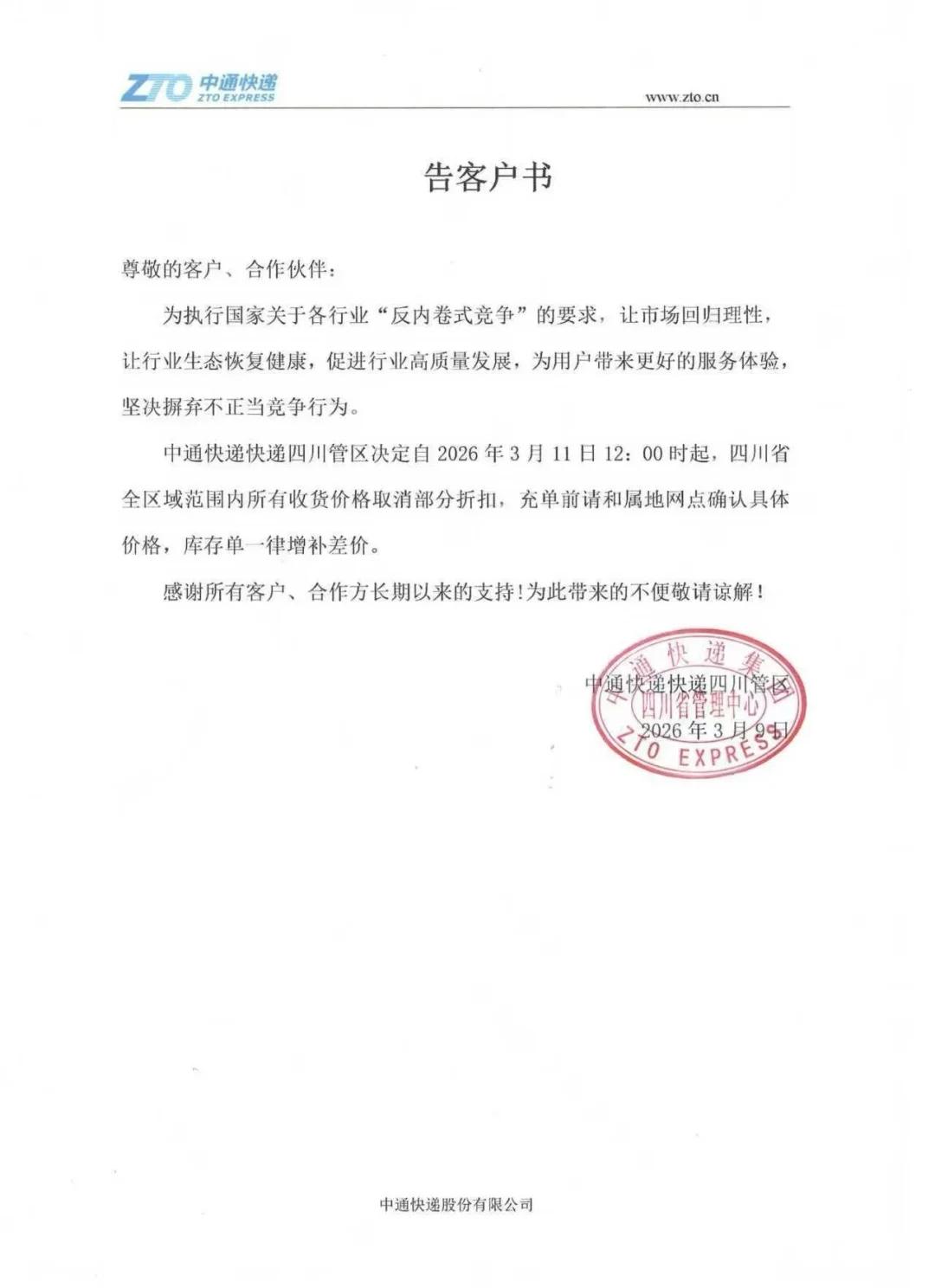
So the top reason for these companies' soaring profits is straightforward: parcel prices have been forcibly pushed higher.
For instance, in April 2026, YTO's revenue per parcel reached 2.23 yuan, marking a 4.21% year-on-year increase, equivalent to a 9-cent rise per parcel.
While the per-parcel increase looks small, the courier industry operates on an enormous scale with massive order volumes. Even a 10-cent price hike, multiplied by YTO's monthly volume of over 3 billion parcels, translates to an extra 300 million yuan in monthly profit.
YTO's price hike is actually on the lower end of the spectrum—its prices even slipped back temporarily in a few months when stabilization efforts faltered. But other major players have maintained consistent year-on-year price growth every month: STO Express saw a 19.61% year-on-year price rise in February, and Yunda Express posted a 15.38% increase.
Higher prices for customers on the front end, paired with lower operating costs on the back end—this dual force naturally drives profits upward.
But at this point, you might start to feel a bit puzzled.
This turnaround seems too simple. If raising prices by a few cents or a few dimes can generate 3 billion yuan in net profit, were all these courier companies being stupid? Why didn't they raise prices much earlier?

Because courier pricing is not something that courier companies can adjust arbitrarily whenever they want.
Most of the time, the real power to set courier prices lies in the hands of large merchants and e-commerce platforms, not the delivery firms themselves.
The "Tongda" group companies offer nearly identical service levels, and most customers don't even notice which specific courier company is delivering their parcels.
Courier companies have no competitive advantages other than low pricing. If a firm tries to raise or lower prices, they have to notify their customers in advance. If customers find the new price unsatisfactory, they can easily switch to a competing courier at any time.
More importantly, most courier networks operate on a franchise model. Even if the headquarters announces a price hike, the actual final pricing is still negotiated between local outlets and e-commerce business owners. To grab more orders, outlets inevitably end up in cutthroat competition using low prices.
This created a perfect, self-reinforcing Prisoner's Dilemma for the entire industry: if you don't raise prices, you will slowly go out of business; if you do raise prices, you will be quickly driven to bankruptcy.
Even if someone tried to forcibly break this cycle, prices would immediately fall back to their previous low levels.
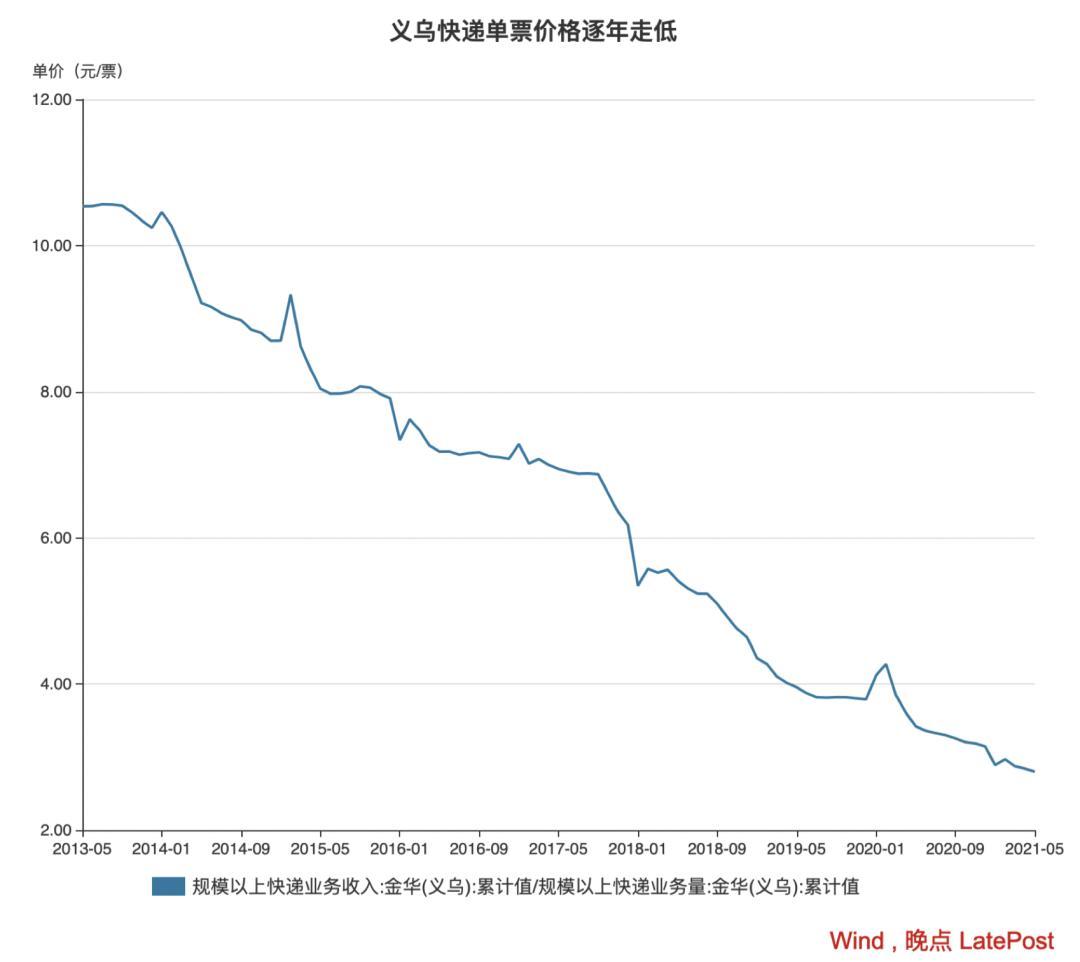
Yiwu had already tried this twice before, once pushing prices up to 1.5 yuan per parcel. Every time prices went up, people would claim "this time it's for real, the price war is finally over".


The outcome was that merchants simply fled Yiwu en masse, taking their parcels to nearby low-cost regions like Jinhua and Yongkang for shipping.
A whole cohort of professional scalpers even emerged within the industry, making a living entirely by exploiting cross-regional low-price parcel loopholes.
This is why local postal regulatory authorities could summon outlets for meetings every day, but it only addressed the symptoms rather than the root cause. To retain their customers, local outlet owners had to raise prices publicly while secretly offering hidden subsidies to clients, which soon pushed average parcel prices back below 1 yuan.
So with YTO's latest announcement, what truly excited the market was not how much extra profit the company had earned.
Instead, it was the fact that the price war has been firmly suppressed for half a year, leading many people to believe this could be a genuine, lasting turning point for the industry.
Over 20 provinces across the country pushed forward price hikes in unison, and the implementation was extremely rapid.
Although there are no explicit long-term formal policies, regions like Guangdong have introduced a price-locking period, strictly banning courier companies from poaching customers across different regions. Courier firms are prohibited from accepting orders at prices below 1.4 yuan, or they will face heavy fines.
Within just one month after the policy was implemented, Yunda, STO, and J&T Express were fined a total of 450,000 yuan. The price-locking period has now been extended twice, and it will continue until September.
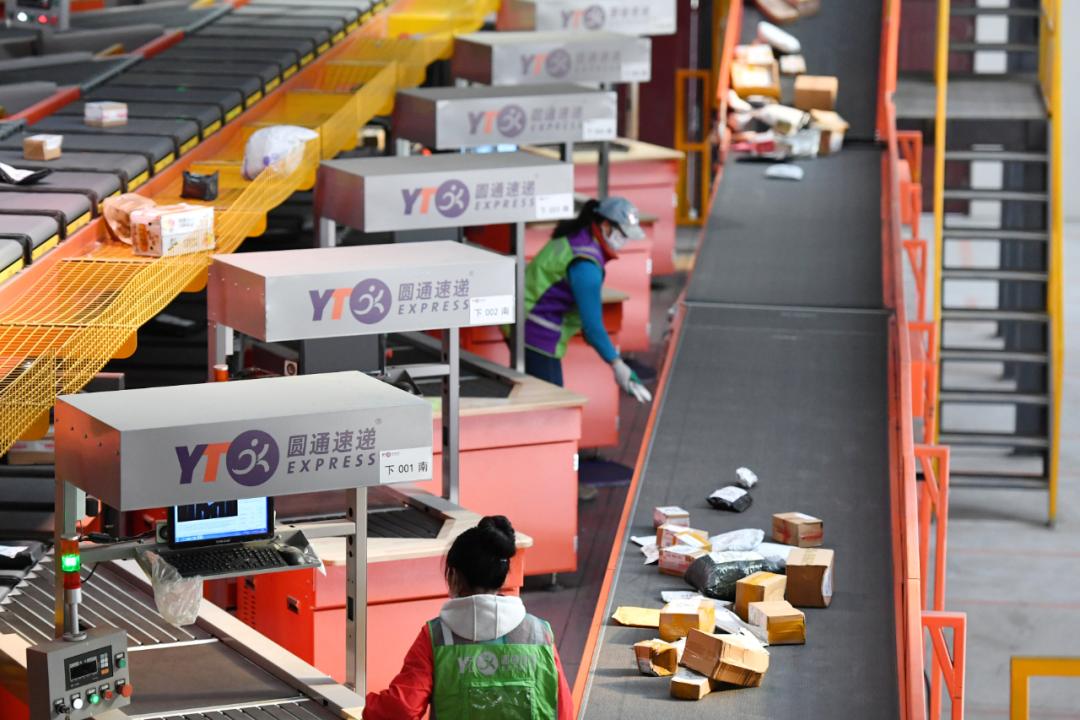
Reading up to this point, you might think the courier industry is on track for a full recovery. Issue one directive, push prices up, and profits will all roll in.
But arriving even earlier than the courier companies' semi-annual financial reports are the side effects of these price hikes.
Essentially, this round of price increases is ultimately borne by countless small and medium-sized merchants, many of whom are already struggling to cope with the extra costs.
While the cutthroat price competition among courier companies has slowed down, the price wars among merchants themselves are still going strong. The low-price logic of e-commerce platforms remains unchanged. In a world dominated by 9.9-yuan free-shipping products, courier fees have risen, but the selling prices of products simply cannot go up.
This price scissors gap will inevitably squeeze the survival space for merchants.
Many small shops in the Pearl River Delta, which were already operating on profit margins of just a few cents, have seen their profits completely wiped out. One merchant said they ship around 600 parcels a day, and the 0.