Earning millions per month per store and attracting investment from Heytea, what is the background of this "ripened tea" brand?
From Heqi Taotao to Chun Tian Aged Tea Shop, Heytea has invested in the same founder twice within five years. What exactly is this "aged tea" concept that has caught its eye this time?
Heytea has made another move.
According to Qichacha, Heytea (Shenzhen) Enterprise Management Co., Ltd. has recently added a new external investment targeting Shanghai Chun Tian Jian Catering Management Co., Ltd. — the operating entity of the tea beverage brand "Chun Tian Aged Tea Shop" — with a 5% stake. This marks Heytea's first public market investment in over three years since it took control of Su Guo Fresh Fruit Tea at the end of 2022.
The invested brand's founder, Lin Mingjuan, is an old acquaintance of Heytea. In 2021, her previously founded brand Heqi Taotao received investment from Heytea. Five years later, Heytea has doubled down on this seasoned tea industry veteran, though this time the new protagonist of the story is "aged tea".
01. 100 stores opened in 436 days — what's the background of "aged tea"?
Chun Tian Aged Tea Shop was founded just over a year ago. Its first store opened on B1 floor of Xintiandi Fashion Phase II in Shanghai in April 2025. Inside the retro Southeast Asian-style store decor, the dark wooden tea canister cabinet stands out most prominently. The menu features over 20 products, almost all prefixed with "aged" — Aged Black Warrior Sweet Potato Balls, Aged Pu'er Fresh Milk Tea, Aged Hong Kong-style Fresh Milk Tea, Vanilla Seed Aged Ceylon Cocoa, Aged Hualu Guava Jasmine, and more.
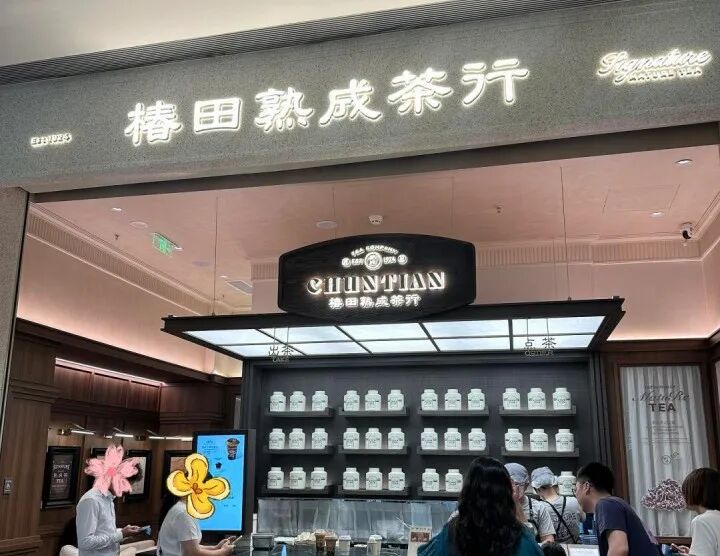
△ Image source: Xiaohongshu screenshot
"Aging" refers to fermenting tea leaves in controlled temperature and humidity conditions, allowing substances like tea polyphenols to transform slowly, reducing astringency and developing a mellow, rich taste. Just like premium aged beef develops deeper flavor over time, tea also requires this "curing" process.
The brand uses a more accessible explanation: it's gentler on the stomach. Consumers may not dive deep into technical details, but the niche nature of the term "aged" itself carries a certain appeal, easily evoking associations with "premium" and "meticulous" — aligning with young people's current preference for "thoughtfully crafted tea".
Chun Tian implemented a simple yet clever product design: popular tea bases are not fixed, offering customers three to four options — aged Pu'er, aged Hong Kong-style milk tea, aged Thai milk tea, or regular jasmine and black tea. This flexibility is rare in an industry where most brands stick to the convention of "one product paired with one specific tea base". Priced between 17 and 25 yuan, its price range nearly overlaps with Heytea's.
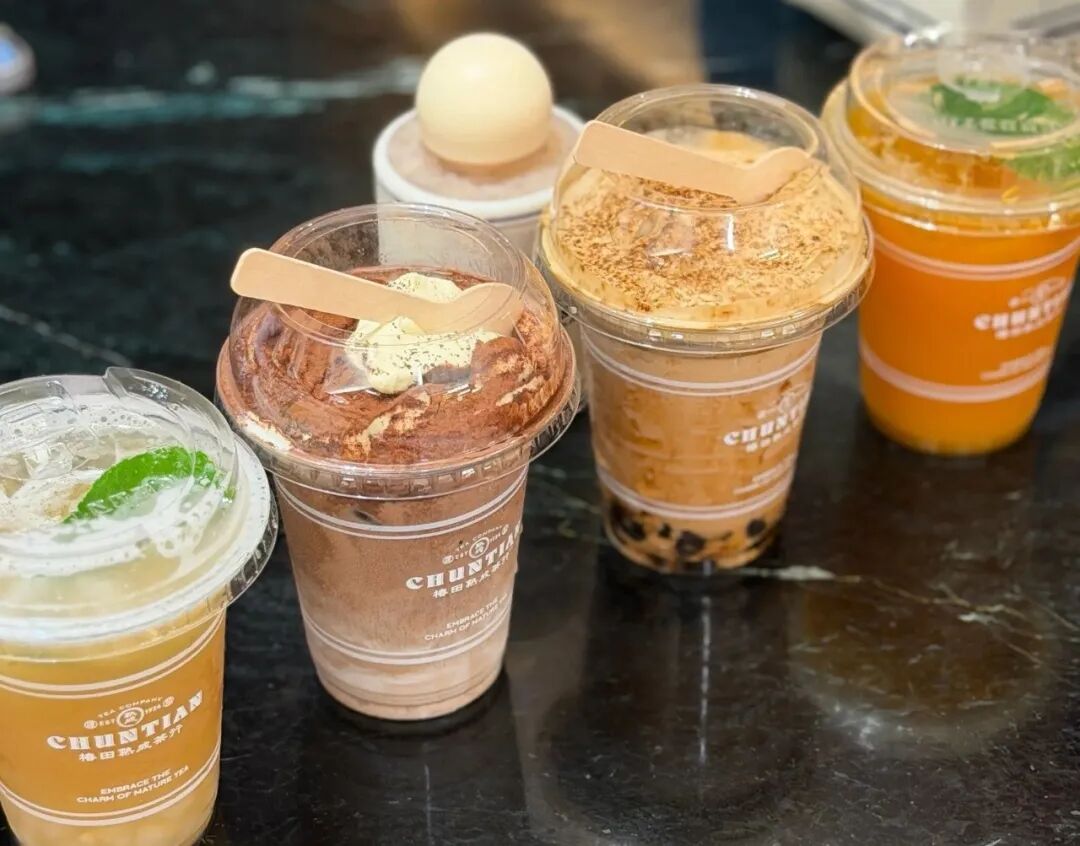
△ Image source: Dianping screenshot
On Dianping, many consumers visit specifically for the signature product "800-times Hand-beaten Yuanyang", with frequent reviews highlighting "smoother than traditional Hong Kong-style milk tea", "multiple tea base options", and "extremely rich and mellow flavor". The store design has also become a talking point, with some describing it as "more like a high-end pharmacy or boutique perfume shop" rather than a typical milk tea store.
Over the past year, Chun Tian has expanded rapidly. The brand claims that it opened 100 stores across 47 cities in 436 days, selling over 6 million cups of aged tea in total and accumulating more than 600,000 members. The official account of Chun Tian Aged Tea Shop posted that its Deji Plaza store in Nanjing and Hopson One store in Beijing both exceeded 1.2 million yuan in monthly sales this January. This news spread across the industry, further boosting its reputation.
02. Are milk tea brands all coining buzzwords to play with concepts?
Placing Chun Tian within the broader landscape of 2026's new tea beverage industry, it is just one snapshot.
In the first half of the year, the tea industry churned out new buzzwords almost every month. Thai milk tea, Hong Kong-style milk tea, custom blends, lemon milk tea, and aged tea took turns dominating trending topics — each concept emerging with labels like "revival", "explosive growth", and "industry trend", only to be quickly replicated by competitors and become yet another similar item on most tea brands' menus.
Thai milk tea grew the fastest among them. Around the same time Chun Tian was founded, Tamkoko Thai Tea opened its first store last April, expanding to over 300 locations across 111 cities nationwide within a year. Brands like OT Another Tea, OUO Thai Tea, and Black Tree also rushed into the market. The trend came quickly, and homogenization arrived even faster. When the market became saturated with black tea-based Thai milk teas, brands scrambled to find differentiation in "green" — Thai green tea products began appearing on menus, attempting to break the monotony of identical flavors by changing the base color.

△ Image source: Tamkoko Thai Tea official account
The popularity of Hong Kong-style milk tea has been largely tied to Chun Tian alone. Since its launch, alongside collaborations between leading brands like 7-11 and traditional Hong Kong milk tea veteran Lan Fong Yuen, the narrative of "Hong Kong-style milk tea making a comeback" began circulating in the industry. However, unlike Thai milk tea, Hong Kong-style milk tea has not spawned a wave of standalone brands, with its popularity mostly confined to new product launches across existing chains.
Lemon milk tea also rose rapidly in recent months. Major chains including Heytea, Ba Wang Cha Ji, and Ye Ye Bu Pao Cha have launched their versions, achieving high sales and viral buzz that even left staff busy enough to "wear out shaker cups".
Then there are custom tea blends — unlike the other categories with distinct flavor profiles, this represents more of a product philosophy: centering tea as the core ingredient, then creatively incorporating unique components for specialized preparation. Last year, Heytea pioneered nearly 20 custom tea blends including Snow Tip Jasmine King Guava and Qilan Apple Apricot.
Subsequently, a wave of brands followed suit: Ba Wang Cha Ji launched its "Walk Series" custom tea blends this April; Nayuki opened a concept store in Shenzhen debuting kombucha custom blends; Cha Baidao, Lelecha, and Ye Ye Bu Pao Cha also rolled out products like caramel cocoa custom blends, iced shaken matcha custom blends, and golden fruit Da Hong Pao custom blends... To date, custom tea blends have almost become a standard category for leading brands.

△ Image source: Xiaohongshu screenshot
Aged tea stands out as the most unique. It carries no regional label like Thai milk tea, nor a distinct taste profile like lemon milk tea. Currently, only two major players champion this concept: mainland China's Chun Tian and Taiwan's KOMO Tea. In March this year, KOMO Tea — which has specialized in aged black tea for 18 years — officially rebranded to "KOMO Aged Tea Shop", extending its aging technique from black tea to its entire tea product line.
When laying all these concepts side by side, a deep-seated issue in the new tea beverage industry emerges: Brands are getting better at coining concepts, yet struggling more than ever to build differentiated competitive moats.
Thai milk tea went from revival to homogenization in just one year; lemon milk tea evolved from a niche trend to a nationwide hit even faster. Overall, the new tea market is not short of concepts — what it lacks is the patience to develop these concepts into mature, sustainable categories.
Whether it's Thai milk tea, Hong Kong-style milk tea, or custom tea blends, brands are growing increasingly skilled at inventing new terms, yet the lifecycle of each trending concept keeps shrinking. Consumers are repeatedly fed new buzzwords, checking them off one after another, but the number of products that drive sustained repeat purchases doesn't seem to be growing.
Against this backdrop, Heytea's investment makes far more sense. Heytea is not betting on the unsteady "Hong Kong-style milk tea revival" trend, nor on Chun Tian's current store count — 100 stores are hardly a massive scale in the tea industry. It is wagering on the potential of the aged tea concept itself.
Concepts create the reason for a first purchase, but taste is what drives consumers to order repeatedly. The story of new tea beverages cannot be told solely through coined buzzwords.
This article is from WeChat official account "Red Meal Network", author: Xiao Lan, editor: Wang Xiuqing, published with authorization from 36Kr.