Panicked, leading medical device giants are hunting for targets with 30 million yuan in net profit
In 2026, major players in the medical device industry are permeated with a palpable sense of urgent anxiety.
This collective industry-wide jitters did not stem from a single unexpected event, but rather emerged as a combined product of performance pressure and capital expectations.
Among multiple publicly-listed medical device enterprises contacted by VCBeat, clear M&A demands have been explicitly expressed. They are pursuing a specific type of target with unprecedented enthusiasm: companies that can generate stable profits and deliver considerable net profit.
This is a transaction centered on "certainty".
Against the backdrop of normalized volume-based procurement and the end of the era of single-hit blockbuster products, many listed companies have hit growth bottlenecks or even experienced declines in their core businesses. They are eager to use extensional M&A to inject a strong boost into their weak financial reports, and to find a "second growth curve" leading to future development.
According to research data from VCBeat, among approximately 40 public M&A transactions between 2024 and 2026, more than 60% of the acquired targets are profitable enterprises.
A clear preference has emerged: targets with an annual net profit ranging from 30 million to 80 million yuan have become the most sought-after "golden cash cows" in the market.
M&A: Dual Demands of "Financial Reports and Industrial Layout"
Regarding M&A, there is a widespread view in the market that the main motivation for listed medical device enterprises to acquire profitable targets is to consolidate their statements and optimize book performance.
This view is reasonable, but incomplete. Under the current normalized volume-based procurement context, the era of growth driven by single blockbuster products in the medical device industry has come to an end. Many listed medical device enterprises that rely heavily on a small number of innovative products have seen their growth rates slow down or even stagnate. Enterprises inherently have the demand for expansion and development. When the growth of their core business slows down, M&A becomes an effective path to achieve rapid expansion and drive performance growth.
Zhang Taihao, Vice President of Zhenggu Capital, stated: "For enterprises whose core business has hit a bottleneck, their short-term goal is not to layout innovative tracks, but to acquire operating assets that can be consolidated into their statements simultaneously and hedge against downward profit pressure. We suggest that Chinese medical device enterprises stay alert to potential risks even in times of prosperity, learn from leading U.S. medical tech giants, and acquire more unprofitable innovative technologies during their upward development periods."
Through extensional M&A, the financial statements of many listed medical device enterprises have indeed been significantly optimized. For example, Dongxing Medical's core stapler products have been included in volume-based procurement, with its revenue remaining stable but no significant profit growth. In 2025, Dongxing Medical even recorded its first loss after going public, with a attributable net loss of 37.9403 million yuan.
Against this background, Dongxing Medical announced the acquisition of Wuhan Yijiabao, planning to enter the orthopedic implants and biomaterials track through M&A. In 2025, Wuhan Yijiabao achieved a revenue of 279 million yuan and a non-recurring profit after deduction attributable to shareholders of 72.3017 million yuan.
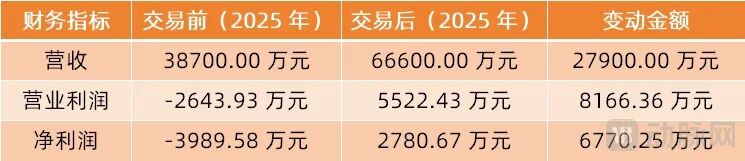
Once this transaction is completed, Dongxing Medical's 2025 revenue will increase from 387 million yuan to 666 million yuan, its operating profit will shift from a loss of 26.4393 million yuan to a profit of 55.2243 million yuan, and its net profit will change from a loss of 39.8958 million yuan to a profit of 27.8067 million yuan.
However, this view is not entirely correct. When carrying out M&A, listed medical device enterprises do not only consider financial data, but also take into account the target's industry sector, technological innovation, product portfolio, and business synergy.
Xue Chen, Founding Partner of Sage Consulting, who has deep experience in the medical device M&A field for many years, told VCBeat: "Most leaders of listed medical device enterprises have long-term industrial development thinking and far-sighted strategic plans. M&A is also a means or tool to serve their strategies."
Zhang Taihao added: "M&A activities of listed medical device enterprises are mostly carried out around their existing core business capabilities. Few of them will cross-border to acquire completely unrelated assets simply because the target is profitable. In the medical device field, equipment and consumables, different departments, and even different director groups within the same department have different business environments and know-how."
Such strategic M&A mainly follows the following logics:
First, acquire enterprises in the same track to integrate resources and complete product lines. For example, Hong Kong-listed company Xianjian Technology is a leading domestic player in the fields of structural heart disease and peripheral vascular intervention. Its products such as left atrial appendage occluders and aortic stent grafts hold high market share or considerable revenue scale. However, in the structural heart disease field, it lacks a patent foramen ovale (PFO) occluder product.
Xianjian Technology announced the acquisition of Huayi Shengjie in May 2026. The latter is one of the earliest pioneers in the field of interventional treatment for congenital heart disease in China, with products including atrial septal occluders, ventricular septal occluders, patent ductus arteriosus occluders, and PFO occluders. After the acquisition, Xianjian Technology will have a more complete and abundant product line in the structural heart disease sector, enhancing its overall competitiveness; Huayi Shengjie can use Xianjian Technology's channels to sell its products to broader markets.
Among them, Xianjian Technology and Huayi Shengjie have highly converging channels in the structural heart disease field; the doctors who use their respective products are also almost the same. Therefore, both parties can integrate and share sales channel resources, realize business synergy, reduce channel operation costs, and enhance their core competitiveness.
In addition, the acquisition of Shanghai Zuoxin by MicroPort CardioFlow follows a similar logic.
Second, cross-border acquire enterprises in other tracks to build a second growth curve. For instance, after the growth of Weigao Orthopedic's main business was restricted by the price reduction of volume-based procurement, it announced the acquisition of Jiesi Baier at the end of 2025 to layout orthopedic minimally invasive endoscopes and surgical power equipment;
Another case is Maipu Medical. The market size of Maipu Medical's main products (such as artificial dura mater patches) is less than 1 billion yuan and its growth is slowing down. To build a second growth curve, it proposed a plan to acquire Yijie Medical for 335 million yuan in 2025, aiming to layout the neurointervention field, which has a market size of over 100 billion yuan and rapid growth. At the end of June 2026, Maipu Medical's acquisition of Yijie Medical was approved, and it is expected to be implemented after obtaining the registration consent from the China Securities Regulatory Commission.
In recent years' M&A cases, Mindray Medical's acquisition of Huitai Medical, Kaili Tai's acquisition of Dongzhi Medical, Mingde Biological's acquisition of Hunan Lanyi, and Blue Sail Medical's acquisition of Biosensors International all follow this logic.
In the aforementioned acquisition cases, some targets are loss-making enterprises, which will be analyzed in detail later.
Third, acquire upstream core technologies to improve the industrial chain and enhance overall competitiveness. For example, United Imaging Healthcare acquired Sichuan Jiuyiyuan to layout localized medical cyclotrons, improve the upstream core hardware of PET/CT, and build a complete nuclear medicine equipment industrial chain;
MGI Tech's acquisition of two enterprises, Sanjian Qifa and Huada Xufeng, also follows this logic. By implementing the cutting-edge technologies of the target enterprises in spatial omics and nanopore long-read sequencing, MGI Tech has become one of the very few manufacturers worldwide that covers the entire chain of sequencing equipment.
Profitable Targets Are Also Scarce
For listed medical device enterprises, profitable targets are generally more attractive, and the most favored targets in the market are enterprises with a net profit scale of 30 million to 80 million yuan. If the net profit is too high or too low, the acquisition willingness of listed medical device enterprises will decline.
Zhang Taihao analyzed: "Most domestic listed medical device enterprises have a market value of several billion yuan, with disposable M&A funds of about 200 million to 300 million yuan. With M&A loans added, the maximum acceptable transaction consideration is about 700 million to 800 million yuan. Calculated based on the industry average PE of 10 times, a target with 80 million yuan in net profit corresponds to a transaction consideration of 800 million yuan, which basically matches the upper limit of the enterprise's financial capacity; targets with a net profit of less than 30 million yuan have limited driving effect on the overall performance of listed companies, and the cost-effectiveness of an acquisition investment of hundreds of millions of yuan is relatively low."
If the target's net profit exceeds 80 million yuan, most enterprises will meet the conditions for independent IPO applications on the Beijing Stock Exchange or the Sci-Tech Innovation Board. Founders can realize equity monetization through listing, and their willingness to sell is low. Even if they are willing to sell, the high price will make it unacceptable for most listed enterprises.
Xue Chen added: "When conducting M&A, listed companies will screen targets that match their own revenue scale, usually 10% to 20% of their own. At present, domestic listed medical device enterprises have low market value and limited cash flow. If they acquire an enterprise with a net profit of over 80 million yuan, the financial pressure will be too great, which may even trigger major asset restructuring and carry the risk of changes in the actual control rights of the listed company, resulting in relatively low comprehensive returns."
Multiple transactions in the past two years have confirmed this net profit standard: Dongxing Medical acquired Wuhan Yijiabao for 769.5 million yuan, with the target promising a net profit of 79.2 million yuan in 2026, close to the upper limit of the range; Aibo Medical acquired Demei Medical for 683 million yuan, with the target promising a net profit of 45 million yuan, which is in the middle of the range; Sanyou Medical acquired Shuimu Tianpeng, with the net profit in the three-year performance commitment period reaching 40.13 million yuan, 47.73 million yuan, and 55.18 million yuan respectively, falling within the 30 million to 80 million yuan range.
In addition, there will be a small number of M&A cases for small-scale targets with net profits at the million-yuan level in the market. This mainly falls into two scenarios: first, the target's products have outstanding growth potential, with limited short-term profit scale, but are expected to achieve a net profit of over 10 million yuan after acquisition; second, the listed company is under cash flow pressure and can only carry out small-scale M&A to slightly ease the performance fluctuations of its core business.
In addition to acquiring profitable enterprises, some listed medical device enterprises in the market also acquire loss-making targets, such as the aforementioned cases of Weigao Orthopedic's acquisition of Jiesi Baier and Maipu Medical's acquisition of Yijie Medical.
In fact, this does not mean that buyers actively reject profitable targets. Buyers' first choice is usually the leading enterprises in the corresponding segmented field, with stable revenue, profit, and performance growth rate. However, most of these favored enterprises are also listed companies or enterprises with the potential to go public. It is difficult for both parties to reach an agreement on valuation, or due to the limitation of capital scale, the acquisition cannot be implemented.
Therefore, one of the key reasons why sellers are willing to sell is that they have encountered operational bottlenecks, such as the aging founding team planning to retire, conflicts between management and investors, or the company's business being loss-making. Buyers can only choose to acquire from these targets with shortcomings.
For unprofitable innovative enterprises, after their products are approved, it still takes 1 to 3 years to achieve large-scale production and stable profitability. There are high uncertainties in the landing process such as market verification, capacity ramp-up, and clinical adaptation, leading to higher M&A risks. Therefore, the market still prefers profitable or commercially verified targets rather than early-stage innovative enterprises.
"Even some company leaders will choose to recruit talents to build a team and replicate and develop corresponding innovative products. They think this is more cost-effective than acquisition," said Chu Ying, an anonymous investor.
Xue Chen said: "For loss-making innovative assets, the industry has formed a mature handling method: for innovative single-product enterprises, most of them suffer from insufficient commercialization experience and resources, and can be directly integrated into the acquirer's sales channels to quickly generate revenue and profits through industrial synergy."
"For platform-based innovative assets or cross-industry innovative assets that cannot quickly improve their financial statements through industrial synergy in a short period of time, they can be integrated through an off-balance-sheet M&A fund. The listed company only participates as a capital contributor in the early stage, and does not consolidate the assets into its financial statements for the time being. After the fundamentals of the acquired assets improve, they will be transferred from the fund to the listed company, so as to avoid the short-term performance fluctuations and goodwill risks brought by M&A integration."
From the perspective of global industry laws, leading international medical device enterprises such as Johnson & Johnson and Medtronic have formed mature M&A logic and operational experience for domestic enterprises to refer to. Considering that most domestic listed companies are relatively conservative in their operations, their key acquisition targets are mainly enterprises that have achieved profitability or completed commercial verification, with only a small number of loss-making projects focused on early-stage cutting-edge technologies.
M&A Integration: A Tribulation for Listed Companies in Their Development Process
Any M&A means a change in the actual controller of the target enterprise, which is followed by the coordinated reform of strategic direction, management habits, and corporate culture.
Especially in the medical device industry, there are numerous segmented tracks, and there are differences between the acquirer and the acquired target in terms of product portfolio, R&D system, sales channels, and customer groups. After M&A, there are uncertainties in whether the teams of both parties can integrate, whether the channels can be reused, whether the management can be implemented uniformly, and whether the transformation of corporate culture can proceed smoothly. If the integration fails to meet expectations and the synergy value cannot be released, it will have a negative impact on the overall operation of the enterprise.
Xue Chen told VCBeat: "In the first year of M&A integration, it is already very difficult for the new controlling shareholder to keep the operating revenue and net profit from declining."
From the current practical cases, M&A integration is mainly divided into two methods: one is "boiling the frog in warm water", that is, setting a performance bet (usually 3 years), requiring the founders and management to continue serving for 3 years, and gradually replacing the management team. To meet the acquirer's demand for enhancing control over the company, the financial director and human resources director are generally the first key positions to be replaced.
The other method is "cutting the Gordian knot", that is, after the acquisition, the seller does not need to bear the responsibility of the performance bet. The acquirer will identify and adjust the management team of the acquired enterprise as soon as possible in accordance with its own corporate culture and business philosophy. This method is usually applicable to enterprises with rich M&A integration experience, or situations where the acquired enterprise is in a critical business situation and needs the acquirer to turn the tide.
In M&A integration, team integration is the primary long-standing difficulty, and conflicts may arise between the two parties in multiple aspects such as development strategy, management mode, and corporate culture.
These integration contradictions are more prominent in listed medical device enterprises that have encountered development bottlenecks. Some listed enterprises have limited operational management capabilities, and cannot coordinate operations in depth after acquiring targets. They can only maintain the independent operation of the targets and consolidate their financial statements, forming a "patchwork" management model, resulting in low recognition from the target team and hidden dangers for the subsequent development of the enterprise.
There are also some industrial acquirers that have stronger integration capabilities, but they also face the risk of core talent loss in the target enterprise, which may affect the performance of the acquired enterprise in the short term. This is also the source of the painful period of M&A integration.
Only by going through all kinds of tribulations in the M&A integration process can enterprises usher in the harvest period of M&A integration in terms of talent echelon, management concepts, and emerging businesses, and their comprehensive strength and industrial investment capabilities will rise to a new dimension.
What on Earth Are the Listed Medical Device Enterprises in a Hurry for in M&A?
Let's go back to the original question: What exactly are the listed medical device enterprises in a hurry for when they rush to acquire profitable enterprises?
Xue Chen's answer is actually very simple