Public sentiment surges in the pet food track: Guabao Pet needs a "bath" moment
Over the past two days, Beijing Business Daily's consecutive reports on the "temporary paralysis" incidents affecting numerous pet cats have brought the pet food safety controversy, which had remained dormant for nearly two years, back into the public spotlight.
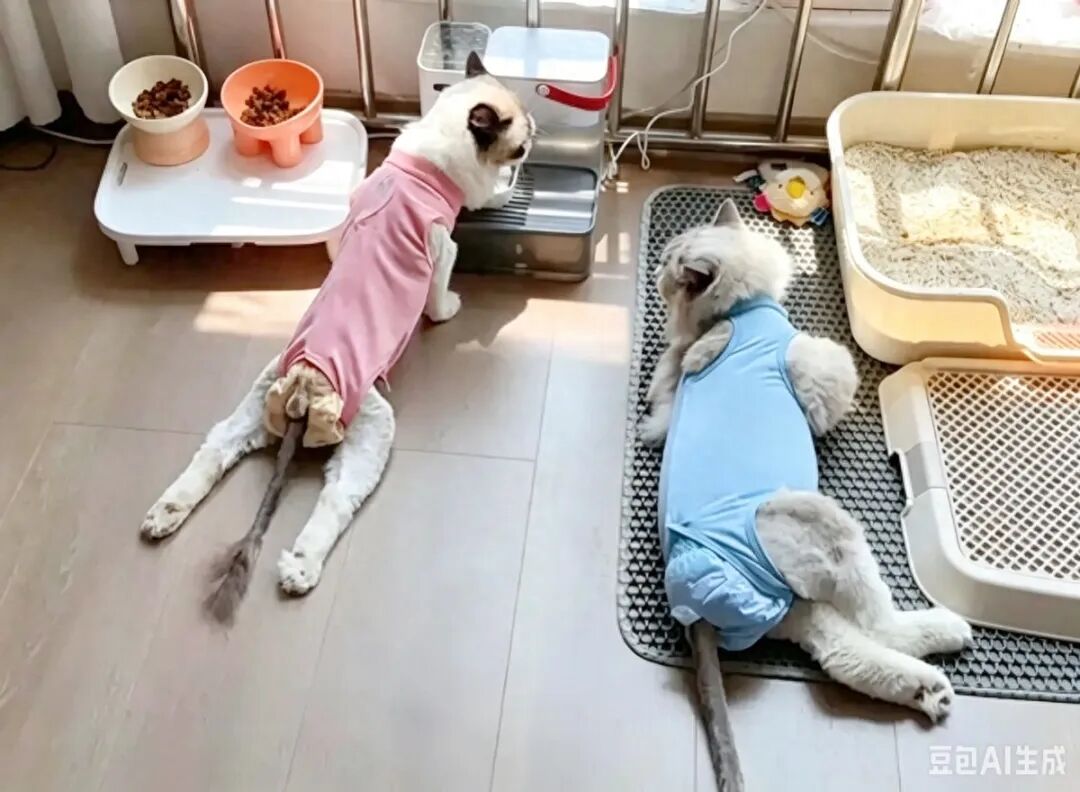
The reports mentioned that consumers across multiple regions of China have reported that their cats suddenly developed symptoms of hindlimb weakness or even full paralysis without any other apparent abnormalities. During subsequent clinical treatments, veterinarians directed their investigation toward the staple food the cats had been consuming long-term; after switching to different cat food, some cats gradually saw their symptoms subside.
So what brand of cat food were these cats originally eating?
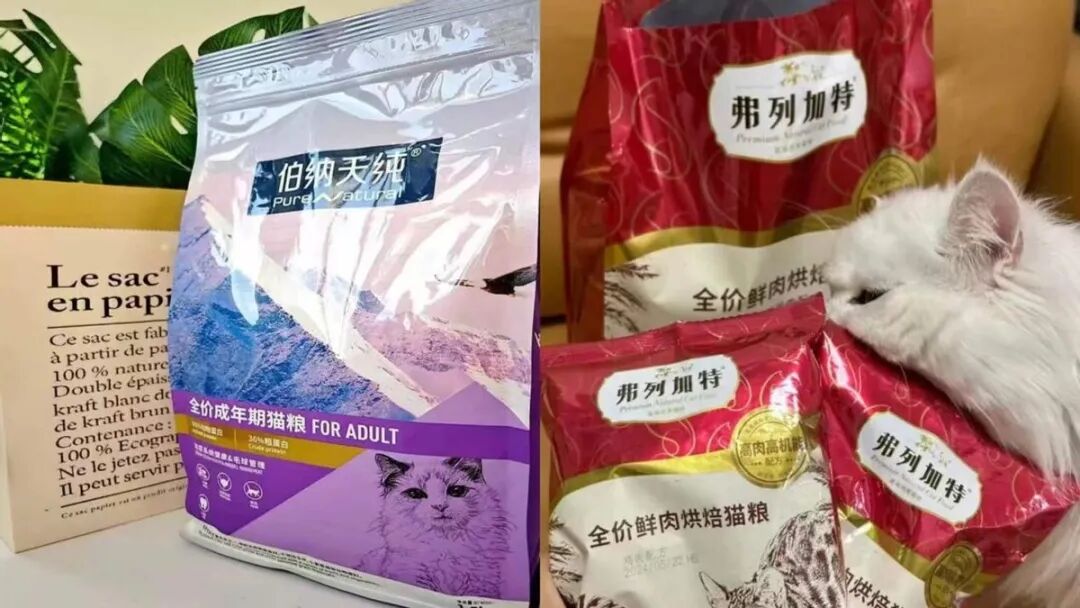
According to statistics compiled by community administrators from over 1,000 samples across 5 groups, by the end of October 2025, among the sick cats with clear feeding records, 65.58% had long consumed Pure&Natural cat food, 24.6% were fed Fregate, the high-end brand under Guabao Pet, and the remaining cases were scattered across multiple other brands.
In short, among domestic brands, the products of Guabao Pet (the largest in scale) and Shanghai Innopet (the fifth-largest) top the list.
This immediately pushed the two brands right into the eye of public opinion's storm.
What is quite reassuring, however, is that although all suspicions point to the products, no party has yet detected specific quality issues with the products so far.
Here comes the confusing part: since there are no confirmed product issues at present, why has this incident been covered by authoritative media and kept fermenting in public discourse?
This leads us to the issue of public relations management.
It should be noted that this incident's fermentation cycle has lasted for two full years, and the involved brands did not only learn of these problems recently.
But according to descriptions in reports from authoritative media such as Beijing Business Daily and International Finance News, over the past two years, apart from a self-verification announcement in 2025 and recent PR actions including "post deletion" and "5,000-yuan hush money", there have been no further substantial moves. (As of press time, Shanghai Innopet has announced that it will handle this incident promptly.)
To put it plainly, the crisis public relations handling of these two leading enterprises, despite the absence of confirmed product issues, not only failed to embody the core role of PR in safeguarding business operations, but even added fuel to the fire, putting the brands in a position where they could not justify themselves even with reasonable grounds.
At this point, if we review the situation purely from the execution level of crisis public relations, the handling approaches of the two leading enterprises appear to have many areas for improvement, which also serves as a blind spot that the entire pet food industry needs to be alert to.
A flawless response does not equal perfect crisis public relations
The first principle of crisis public relations should be based on the perspectives of safeguarding brand trust, stabilizing terminal business, and defusing consumers' negative emotions; any deviation from these goals strays from the original intention of conducting crisis PR.
To gain a more intuitive understanding, we can draw a direct comparison using the recent dramatic reversal in public opinion surrounding Dongpeng Special Drink:
Initially, a doctored short video taken at a dinner table spread the false rumor that "the boss of Dongpeng Special Drink does not drink his own beverage". Long after public opinion had fermented, the brand finally released a cold, legal-style statement that only emphasized the video was fabricated and that a police report had been filed, without any empathy or reassurance. As a result, its market value evaporated by over 7 billion yuan within just a few trading days.
The turning point of the incident came from Zhang Xue, who was sponsored by Dongpeng. With an ordinary background, Zhang Xue did not hide anything: she stepped forward in person, voluntarily released the complete original video, detailed the full context of the incident, and quickly dispelled nationwide doubts through sincere communication, instead winning a great deal of user goodwill.
What did Zhang Xue do right?
It was her proactive response, her rapid and candid confrontation with the core issue of the incident, and her emotional resonance with consumers that salvaged the brand's reputation.
Using Zhang Xue as the standard to measure the two-year-long cat food paralysis controversy, the PR disposal of Guabao Pet and Shanghai Innopet, which rank among the top 5 in the industry, is clearly far from perfect.
In other words, for this two-year cat food controversy, given that no product issues have been detected for the time being, proper public relations management could have potentially resolved the situation at any point over the past two years, and played a positive role in supporting business operations.
I. Public Opinion Fermentation: An Unnecessary Tug-of-War
This cat food controversy sprouted with scattered complaints in early 2024, evolved into large-scale rights protection communities by 2025, and eventually led to in-depth media tracking in 2026. For two full years, this matter has never been properly resolved.
It should be noted that this is an era dominated by self-media, where anyone can voice their opinions, and the age-old adage "good news never travels far, but bad news spreads fast" has been amplified to an extreme in this day and age.
Therefore, during an excessively long public opinion cycle, continuous public opinion issues will cause irreversible commercial losses to enterprises.
Take Nongfu Spring as an example: even an enterprise that occupies a large share of the market saw its performance decline continuously when it was affected by prolonged public opinion pressure.
This is even more true for the pet food industry, where market concentration is currently low. While foreign big brands are eyeing the market covetously, the thriving self-media ecosystem has also allowed influential independent brands to divert consumers' attention.
Tianyancha APP shows that for Guabao Pet, the enterprise affected in this incident, while its sales expenses are gradually rising, in the first quarter of this year, compared with the 20% and 30% growth rates of revenue in previous years, both profits and revenue have seen a marked slowdown.
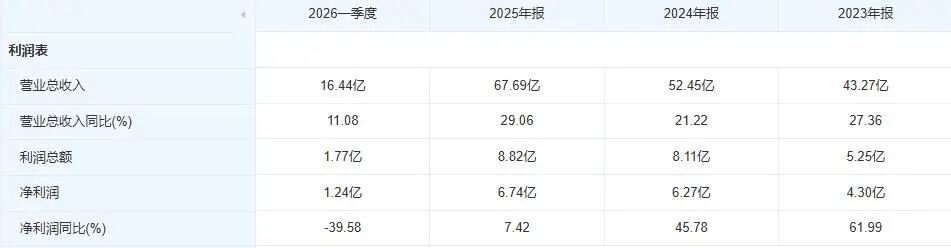
Of course, this does not mean that the decline in performance is entirely caused by this incident.
However, in such a competitive landscape, the vast majority of ordinary pet owners will not spend two years waiting for the enterprise to prove its innocence. They will simply remember "this brand once had a problem that paralyzed cats" and permanently switch to other brands.
So how should this situation be handled?
Proactive, even excessively proactive care for consumers is the optimal solution.
II. Replace Passive Announcements with Proactive Management to Regain Control of Public Opinion
Let's look at how experienced established brands respond to public relations crises.
Back when Great Wall ORA was hit by a sudden malicious rumor of "Hao Mao brake failure", a huge number of negative discussions erupted in a short period of time.
Great Wall ORA's first reaction was to contact the involved users, communicate candidly, and then propose jointly commissioning a third-party judicial appraisal institution to conduct testing. The appraisal report clearly showed that "the brake was not triggered" while "the accelerator was fully pressed", proving that the braking system was completely normal at the time of the accident.
It can be seen that the key to ORA's success lies in jointly commissioning a third-party appraisal with users. While solving the problem for users, it also established a good reputation for being responsible and reliable.
Guabao Pet and Shanghai Innopet obviously fell into a misunderstanding: that "a straight shoe does not fear a crooked sock", meaning that as long as their products are fine, there is nothing to worry about.
But the problem is, on the one hand, without participating in the process together, people can easily deny facts they have not witnessed with their own eyes; on the other hand, after investigation, the "paralysis" problem of the pets did indeed subside after switching to different cat food.
At this point, under the premise that no issues were found after the enterprise's internal product inspection, showing excessive care to consumers will not cause any harm to the enterprise at all.
For example, the actions reported by the International Finance News, such as deleting posts and paying hush money—don't these all cost money? Moreover, these moves are very likely to give rise to public criticism.
Instead of doing that, it would have been better to directly contact pet owners in the early stage of the incident, find authoritative hospitals and research institutes, and jointly identify the root cause of the pets' problems. Be open and aboveboard: if there is a problem, correct it; if not, reaffirm one's commitment to excellence.
Rather than waiting until public opinion expands to take action, by that time even if you still make the right choice, the reputational damage caused by passive response has already produced a substantial impact.
Therefore, all things considered, the development of the situation was completely controllable in the early stage, but it required the enterprise and its PR team to change their mindset, pursue the "Pangdonglai Model", shift from passivity to proactivity, and immediately view the issue from the perspective of the pet owners.
More importantly, looking at the current development stage of the entire pet food industry, operating with the more proactive "Pangdonglai Model" is also crucial to the operational safety of leading enterprises.
Take Root and Grow Downward: The Pet Track Must Bid Farewell to Blind Expansion
The pet food business is currently in a period of relatively rapid growth, and many problems have not yet been exposed.
Compared with the entire consumer industry, the pet food business is still not stable enough.
What does "stable" mean?
Take Yanghe Co., Ltd. in the Baijiu industry as an example: even when it was rumored that the sewage around its distillery was overflowing and the liquor quality was polluted, with the false details described vividly, insiders in the industry all treated it as a joke.
Because everyone knows very well that Baijiu enterprises, especially leading Baijiu enterprises like Yanghe Co., Ltd., have extremely strict requirements for product quality. Moreover, this industry has existed long enough, and whether it is external regulations or internal enterprise control, the probability of problems occurring is extremely low.
However, the pet food industry is clearly still in its early stage, which means that leading enterprises seeking expansion may suddenly be "reset to zero" by a single incident in their pursuit of scale growth.
Take the milk powder industry in the past as an example: due to the rapid development of domestic brands, internal control and laws and regulations were not yet perfect, Sanlu suddenly collapsed because of the melamine scandal.
At this point, we will find that while factors such as industry status and scale are important, for leading enterprises with a certain market share, ensuring a solid lower limit is more critical than striving for an upper limit.
Therefore, the following points are the real first principles for pet food enterprises at this stage:
I. R&D Innovation: Bid Farewell to Blind Expansion and Build a Genuine Brand Moat
Pet food appears to be a fast-moving consumer good, but essentially it shares highly similar attributes with infant formula food, with the core being nutritional science, compatibility, and safety.
Because the core meaning of the widely used term "fur kid" is "kid", and the core demand for pets is healthy companionship, which also determines that users' affection for pets is close to the emotion between humans and their own children.

To put it plainly, this is an industry full of care.
Therefore, the safety standards for pet food, and the refinement of various pet needs, are far higher than those of ordinary snacks and feed.
This requires enterprises to invest heavily in research and development.
Take China Feihe as an example: during the melamine incident back then, it stayed out of trouble, and managed to buck the trend and stand out amid industry chaos. It relied on strict production standards and R&D capabilities to become the only enterprise the public could trust, thus rising from a mid-tier enterprise to an absolute industry leader.
This successful path is fully applicable to the current pet food industry.
After all, pets, just like young children, cannot speak, and will eat as long as the food tastes palatable. At the same time, just like young children, pets of different breeds, ages, and constitutions have vastly different and highly sensitive needs for protein structures, trace elements, and gastrointestinal compatibility.
Many of the physical discomfort symptoms reported by pet users could very well be sensory issues caused by insufficient formula refinement and a lack of adaptability to special constitutions.
From this perspective, for pet food enterprises, future R&D investment is no longer a bonus item, but the fundamental foundation for establishing a foothold in the industry.
However, looking at the comparison between R&D investment and marketing investment of leading enterprises such as Guabao Pet, the gap between the two is enormous. For example, Guabao Pet's annual report shows that in 2025, its R&D investment was over 90 million yuan, while its sales expenses reached 1.527 billion yuan.
Therefore, how to balance the ratio between R&D and sales expenses in the future may be a problem that these enterprises need to consider in the next stage.
Not only that, from a regulatory perspective, the process of accelerating R&D should be as fast as possible.
II. Continuous Refinement of Regulation: Normalizing Compliance, Leading Enterprises Seize Opportunities to Set Industry Standards
Looking at all livelihood consumer tracks, they all go through a process from blind expansion to standardized maturity, and the pet food industry is no exception.
In the past, there were many chaotic phenomena in the pet complementary food and snack tracks. As the regulatory system continues to improve and industry standards are continuously refined, unqualified production capacity is gradually eliminated, and the market returns to standardized development.
At present, the Ministry of Agriculture and Rural Affairs is continuously promoting the national standardization of pet food, and standardized, refined, and normalized regulation is an irreversible general trend for the industry.
In this process, if leading enterprises can achieve high-standard production and keep their R&D capabilities up to pace, regulatory upgrading will not be a constraint for the industry, but the biggest dividend.
Because on the one hand, strict industry standards will eliminate tail brands that survive on low prices, OEM production, and non-compliant production capacity, purify the market environment, and leave more market space for legally operating brands.
On the other hand, leading enterprises in the industry have natural advantages in setting standards and guiding industry development. They can take the initiative to participate in the co-construction of industry standards, the establishment of quality control systems, and the implementation of safety regulations, directly upgrading from "passive compliance" to "active standard-setting".
Therefore, proactively improving R&D strength and taking responsibility for the standardized development of the industry can not only avoid one's own public opinion risks, but