To attract players back, PlayStation's solution is to sell monitors.
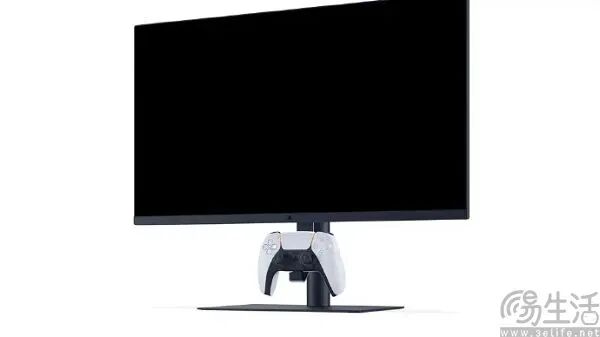
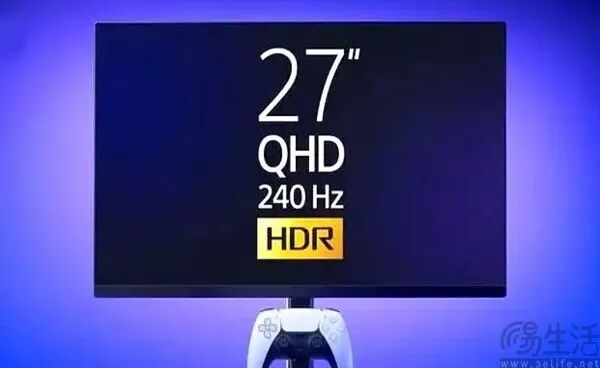
Last fall, Sony released the second display in PlayStation history, the "PlayStation Gaming Monitor". Compared to the PlayStation 3D Display of the past that supported the dual-view non-split SimulView feature, the PlayStation Gaming Monitor's specs on paper — aside from the built-in wireless charging base for the PS5 controller, 2560x1440 resolution, 240Hz refresh rate IPS panel, and support for VRR (Variable Refresh Rate) — seem rather unremarkable.
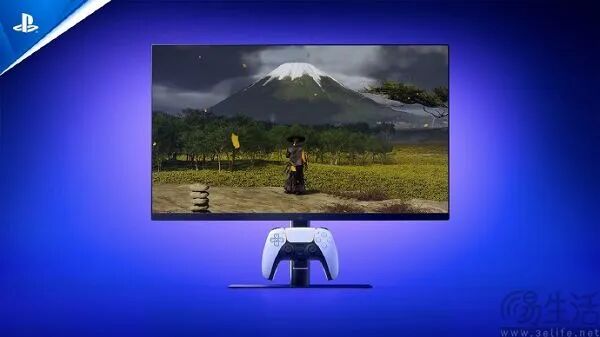
At that time, many players were confused about the PlayStation Gaming Monitor, wondering why Sony would suddenly launch a gaming display. Recently, at an investor meeting, Hideaki Nishino, CEO of Sony Interactive Entertainment (SIE), revealed the answer.
In response to investors' question "How to attract players who switched to the PC platform during the pandemic back to PlayStation", he stated that the core strategy to break the stereotype of "console games being forcibly tied to living room TVs" is to sell dedicated displays bearing the PlayStation brand logo. He noted that "For a long time, people have associated PlayStation with living room gaming. Therefore, Sony has expanded its product lines to include displays, breaking away from the stereotype that PlayStation equals living room gaming, and expanding its usage scenarios."
In short, SIE believes that by placing a 27-inch gaming monitor printed with the PlayStation trademark on players' desks, they can win back players who have long been accustomed to the PC gaming ecosystem. This raises the question: Can breaking the bond between game consoles and living room TVs really make players change their minds?
Before answering this question, let's first look at the changes that have taken place in the gaming industry. For a long time, game consoles have been the first choice for overseas players to enjoy gaming, while PCs were exclusive to hardcore players — even spawning the satirical nickname "PC Master Race". Unlike PCs, which require environment configuration and downloading various supporting files, game consoles like PlayStation and Xbox are plug-and-play and more affordable.
However, starting in 2021, the growth of console gaming began to slow down, while PC gaming grew rapidly. Market research firm Newzoo predicted in a related report that by 2028, PC gaming revenue will surpass console gaming revenue. From 2025 to 2028, the PC market is expected to have a compound annual growth rate of 6.6%, higher than the 4.4% of the console market; by 2028, the number of global PC gamers is expected to exceed 1 billion, while the number of console gamers will stabilize at around 688 million.
Ben Porter, Director of Consulting at Newzoo, also mentioned the Japanese market, stating that "Japan has historically been a game market where mobile comes first, consoles second, and PCs last, but their acceptance of Steam is now higher than ever, and more and more Japanese players are starting to access PC games through Steam."
Moreover, well-known Japanese game developer Capcom also admitted in its financial report that since fiscal year 2023, sales on the PC platform have surpassed those on consoles for the first time, and the sales ratio in fiscal year 2024 has reached 6:4.
According to institutions like Newzoo, players are not tired of playing games on the sofa, but the experience provided by the PC gaming ecosystem better meets their needs. In fact, the console gaming ecosystem is highly concentrated, with a single revenue structure — about 70% of its revenue comes from less than 20 top-tier titles, and new releases are generally priced at $70. In contrast, the PC platform demonstrates significant diversity, inclusiveness, and freedom.
For example, a large number of small-scale indie titles such as horror games, strategy games, and simulation games have been launched to the global market via Steam, with prices mostly ranging from $15 to $30, which not only lowers the threshold for users to try new games but also increases consumption frequency. More importantly, players have found that PC games are actually cheaper, with bigger discounts and free online multiplayer access.
On the PC side, no game developer or platform has ever tried to charge players extra fees for online multiplayer. Nowadays, with GaaS (Games as a Service) becoming increasingly popular, almost all cross-platform top-tier titles have taken online multiplayer as a selling point. But comparison reveals the problem: paid online multiplayer is arguably a key factor driving console game enthusiasts away.
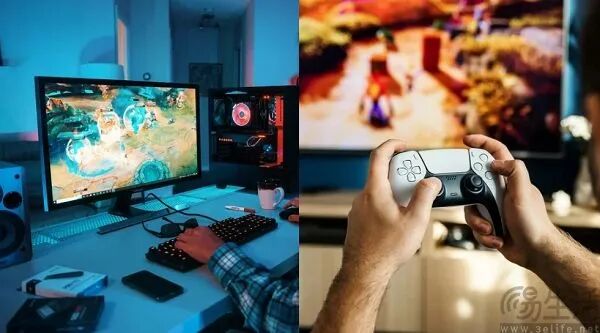
More importantly, the PC is a general-purpose computing device, and gaming is just one of its functions. In contrast, a game console can only be used as a gaming machine or a media player. In the current market environment, a PC that can both play games and handle work tasks is obviously more cost-effective than a game console with a single purpose.
With this in mind, the question raised earlier has its answer: Players are abandoning game consoles not because the visual experience of a gaming monitor is better than that of a TV, but because the gameplay of game consoles has become increasingly unappealing.
This article is from the WeChat public account "Three Easy Life" (ID: IT-3eLife), written by San Yijun, and officially published by 36Kr with authorization.