Tencent's Pace: Three Bold Ventures into High-Stakes Territories
In 2026, Tencent faces an extreme internal divide: on one hand, its Q1 net profit rose 11% year-on-year to 67.9 billion yuan, with gross profit margin hitting a record high of 57%; on the other hand, its stock price has plummeted over 30% within the year, wiping out more than 1.5 trillion Hong Kong dollars in market value.
Beneath this division lies the capital market's deep-seated anxiety that Tencent is "falling behind" in the AI race.
At the start of 2023, ChatGPT ignited a global AI competition, and China's "Hundred Model Battle" kicked off. Baidu was the first to launch its Ernie Bot, Alibaba followed closely with Tongyi Qianwen, and ByteDance's Doubao quickly gained traction through aggressive promotion strategies.
In contrast, Tencent did not publicly release its Hunyuan large model until September 2023, and its Yuanbao App did not launch until May 2024...
In terms of computing power investment, compared to Alibaba's 380 billion yuan and ByteDance's over 200 billion yuan in AI capital expenditure, Tencent's 31.9 billion yuan in the single quarter of 2026 Q1 does not seem particularly aggressive.
Lagging in foundational model development, falling behind on consumer-facing products, and taking a measured approach to computing power investment have led the entire capital market to question whether this tech giant renowned for its product excellence has lost its sharp edge in the AI era.
Today, Tencent stands at a critical juncture of valuation restructuring. And Tencent has successfully navigated at least two such turning points before.
01 First Turning Point: The Mobile Internet Era, WeChat's Late but Decisive Victory
In 2010, the smartphone wave surged, accelerating the world's transition into the mobile internet era. In October of that year, a Canadian instant messaging app called Kik Messenger became a global sensation, exceeding 1 million users in just 15 days after launch.
Inspired by this, Lei Jun, who adheres to the principles of "focus, perfection, word-of-mouth, and speed," led his team to develop China's first Kik-inspired product, Mili, in just one month. It supported free cross-platform chat, quickly reaching 1 million users and enjoying unprecedented popularity.
At that time, the industry reached a consensus: PC-era giants would be constrained by their inherent organizational DNA and miss out on the mobile era's dividends. As a result, the market favored Xiaomi, with its "native mobile" mindset, over Tencent, which held the PC social empire of QQ.
This sentiment spread across the capital market, triggering a sharp decline in Tencent's stock price. In 2011, Tencent's share price dropped from 230.8 Hong Kong dollars to a low of 139.8 Hong Kong dollars, a nearly 39% fall. In March of that year, Baidu surpassed Tencent in market value, marking the first time in nearly five years that the top spot in China's internet market capitalization changed hands.
Amidst fierce criticism, Tencent officially launched WeChat 1.0 in January 2011, initiating a head-to-head competition with Mili.
Compared to Mili's aggressive full-channel pre-installation and promotional subsidies, WeChat 1.0's early promotion pace was restrained and slow. It barely did any commercial promotion in the first five months, relying solely on organic user growth through word of mouth. This approach seemed "excessively conservative" in the internet industry, where rapid market expansion was prioritized.
However, this restraint during the early growth stage gave the development team precious time to understand user needs and refine their product philosophy.
Recalling the launch of WeChat 1.0, Ma Huateng noted, "The make-or-break period was just one or two months. Back then, several of our core executives were immersed in the platform every day, studying the product."
Zhang Xiaolong, the head of WeChat, spent 6 to 8 hours every day personally browsing user posts about product usage to understand their experiences and feelings.
During this process, Zhang Xiaolong accurately identified the core needs of mobile social networking: "stranger connections" and "lightweight communication." He subsequently added features like People Nearby, Shake, and Drift Bottle in the second half of 2011. These features immediately sparked widespread public participation, propelling WeChat past Mili.
After the launch of the "Shake + Drift Bottle" combination, WeChat's daily launches exceeded 100 million times. The distinctive "click" sound of Shake became the most iconic product memory of 2011's mobile internet era. Zhang Xiaolong once commented internally that this feature combination "completely turned the tide of the battle."
By the end of 2012, WeChat surpassed 300 million users, evolving from an instant messaging tool to a national-level social platform. Tencent secured the most valuable "ticket" to the mobile internet era.
Meanwhile, NetEase and Alibaba also recognized the massive traffic potential behind the social entry point. Jack Ma once said, "When WeChat rose to prominence, I was scratching my head every day."
As a result, in 2013, both companies launched social products to challenge WeChat. Alibaba's "Laiwang" made an especially bold push.
When "Laiwang" launched, Jack Ma mobilized the entire company internally, declaring that he would "set fire to the South Pole and march into the penguin's home."
He personally led the charge, actively participating on Laiwang under the username "Feng Qingyang," and mobilized his extensive network to invite business leaders like Liu Chuanzhi, Shi Yuzhu, and Guo Guangchang, as well as A-list celebrities including Jet Li, Wen Zhang, Huang Xiaoming, Zhao Wei, and Chen Kun, to join and create momentum. He even imposed a strict requirement on employees to "invite 100 external users," sparing no effort to force Laiwang's adoption.
Interestingly, "Laiwang" failed to make any dent in WeChat, but WeChat struck back the following year with "WeChat Red Packet," taking a direct shot at Alibaba's core business.
In subsequent years, WeChat launched features like Official Accounts, Mini Programs, and Mini Games, gradually improving its business ecosystem. As of the first quarter of 2026, the combined monthly active users of WeChat and Weixin reached 1.432 billion, maintaining its top position among domestic social apps for 10 consecutive years.
Ma Huateng has publicly reflected on WeChat's launch, stating essentially that if Tencent had not developed WeChat, the company would likely have faced serious consequences. This highlights the extreme urgency and peril of that period. Even so, WeChat's initial pace remained restrained and deliberate.
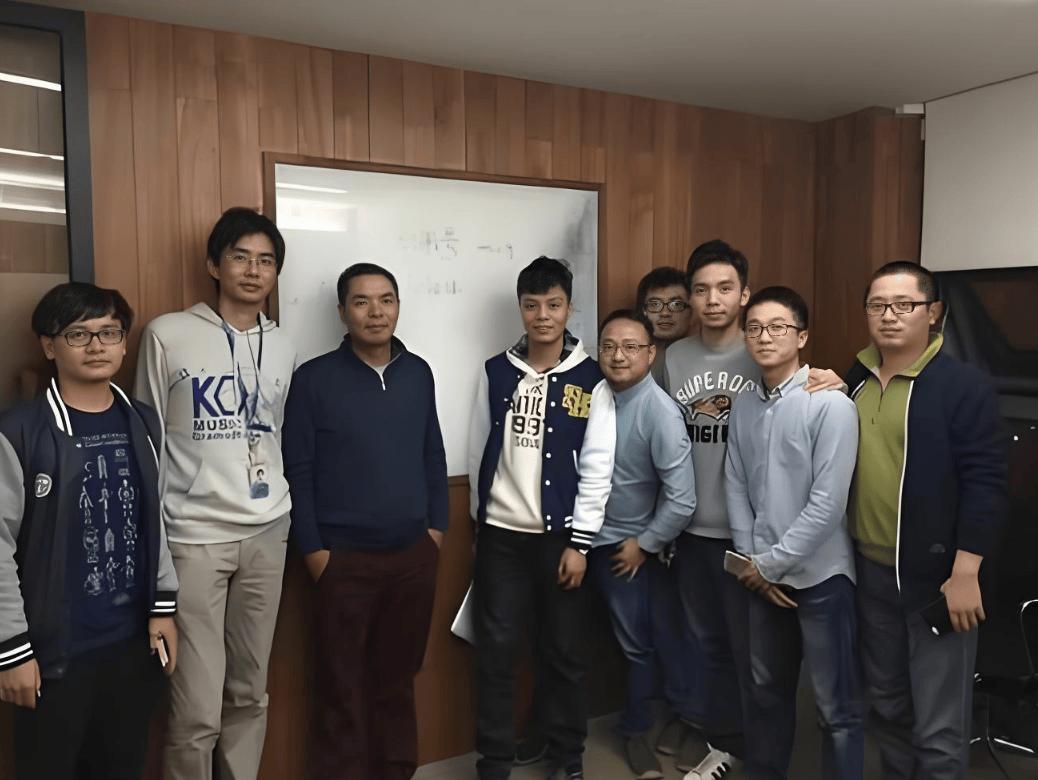
Zhang Xiaolong explained that if users do not actively invite others or share the product, it means there are issues with the product itself. Behind this statement lies Tencent's most prominent mindset and organizational DNA: "user experience first."
This user experience-focused restraint, combined with Tencent's long-standing competitive strategy of "observe — follow — outperform," ensures that Tencent always appears to be "half a step slow" when facing new technological trends.
02 Second Turning Point: The Short Video Wave, Video Account's Surprise Rise
Around 2012, 4G networks were fully deployed, smartphones entered millions of households, and user content consumption began shifting from text and images to short videos. The short video wave swept across the industry.
In 2013, Miaopai gained popularity leveraging Weibo's user base, and Kuaishou transformed from a GIF tool into a short video community to accelerate its growth. Later, Douyin entered the music and trend market with 15-second vertical short videos, exceeding 300 million daily active users in 2018 and securing its top position in the industry.
Suddenly, Kuaishou and Douyin dominated the market, while platforms like Pear Video, Haokan Video, and Huoshan Video also held their own niches.
At this time, Tencent faced two challenges: short videos were continuously diverting user time and advertising spending away from WeChat, and Tencent's investments in products like Weishi, Shanka, yoo Video, and Maobing all ended in failure.
The market once again panicked that Tencent was "losing the next battlefield," triggering an epic stock decline. In 2018, Tencent's share price fell from 475 Hong Kong dollars at the start of the year to 251.4 Hong Kong dollars by the end of October, a cumulative drop of 47%, almost halving its value.
At the height of public criticism, WeChat organized a very small team in 2019 to develop the Video Account. In January 2020, the Video Account officially launched. Initially, it used a simple feed stream model, primarily relying on system algorithm recommendations, with minor additional factors such as followed accounts and likes from Moments.
Similar to WeChat's early days, the Video Account started with a small team and was not well-received at launch, as it adopted the same algorithmic recommendation system used by Douyin. The market did not believe that the Video Account, which started four full years later, could break through Douyin's strong competitive moat.
As the market expected, Douyin's mature algorithmic recommendations performed poorly on the Video Account, with user engagement time less than one-third of that on Douyin and Kuaishou.
However, the team quickly discovered, by comparing content anonymously liked by friends with algorithm-recommended content, that friend-recommended content was far more engaging. They promptly adjusted their strategy: shifting from algorithm-dominated recommendations to social recommendation-dominated distribution, with algorithms playing a supporting role.
Under this unique distribution mechanism, high-quality content spreads virally through social connections, attracting even more users and creating a virtuous cycle for the Video Account. According to Tianyancha, the Video Account's daily active users exceeded 280 million by the end of 2022. Kuaishou took about 6 years to reach this milestone, while Douyin took 3 years.
At the all-staff meeting at the end of 2022, Ma Huateng, known for his "gentle" demeanor, rarely lost his temper, sharply criticizing executives and demanding that "non-performing businesses be cut." He stated clearly, "Don't ever tell me stories about buying traffic again; I don't believe in that anymore." After this scathing criticism, Ma Huateng singled out the Video Account for praise, calling it the hope of the entire company.
This high-profile recognition in such a context highlights the Video Account's critical strategic position within Tencent's business ecosystem.
With this strong backing, the Video Account embarked on a path of rapid growth. Around 2023, it officially surpassed Kuaishou to become China's second-largest short video and live streaming platform. By 2025, its daily active users rose to 630 million, with projections that DAUs will reach 750 million by 2026 — nearly matching or even exceeding Douyin.
More importantly, the Video Account's live streaming e-commerce GMV exceeded 40 billion yuan in the first quarter of 2026, surging 180% year-on-year, while driving a 20% increase in advertising revenue. It has become one of the core growth engines of Tencent's business.
Looking back on the Video Account's journey, Douyin and Kuaishou had already established strong market positions when it started. However, it found the right breakthrough direction, leveraging Tencent's unique and massive traffic pool resources to achieve a textbook example of "slow but steady victory."
03 Third Turning Point: AI in Progress
Today, Tencent has reached the AI turning point, facing similar challenges and demonstrating a comparable strategic rhythm.
The perception that Tencent's AI efforts are not fast enough can be traced back to its 2023 shareholder meeting. At the meeting, Ma Huateng systematically outlined his thoughts and predictions about AI:
"Initially, we thought AI was a once-in-a-decade opportunity for the internet, but the more we considered it, we realized it is a once-in-several-centuries opportunity, comparable to the industrial revolution sparked by the invention of electricity."
"In an industrial revolution context, launching a light bulb one month earlier is not very significant over a long time horizon. The key is to solidly build the underlying algorithms, computing power, and data, and more critically, to focus on real-world scenario implementation. Right now, we are still thinking through these aspects. I feel many companies are being too hasty, seemingly just to boost their stock prices. That has never been our style."
The core points of these statements are: first, recognizing AI's significance as an opportunity comparable to the electricity-driven industrial revolution; second, outlining AI's application path, prioritizing foundational work before focusing on real-world scenario deployment.
Aligning with this strategic direction, 2026 marks a critical year for Tencent to accelerate its AI layout — focusing on scenario implementation.
First, Tencent is accelerating the upgrade of its model capabilities. At the end of last year, Tencent consolidated AI resources from various business units to establish three new departments: AI Infrastructure, AI Data, and Data Computing Platform. It also recruited globally renowned young AI scientist Shuyao Yao to lead the Hunyuan large model project.
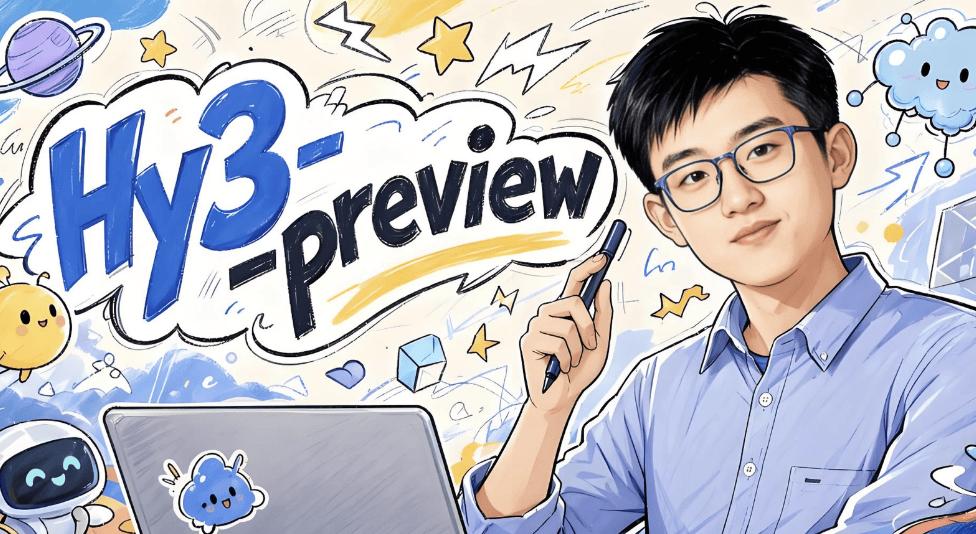
More than two months later, Yao Shuyao's team launched the first achievement after the Hunyuan infrastructure reconstruction — the open-source Hunyuan Hy3 preview large language model. Its exceptional capabilities in coding, intelligent reasoning, instruction following, and contextual learning made it the top-called model on OpenRouter for three consecutive weeks.
Second, Tencent is intensively launching application products. On June 5, Tencent released more than 20 "efficiency agent toolkits" tailored for vertical scenarios, ranging from ready-to-use personal tools QClaw and Yuanbao, to enterprise-grade WorkBuddy Enterprise Edition and agent development platform ADP4.0, and the industry-first "human-AI dual writing" Tencent Docs, widely deploying scenario-based applications.
WorkBuddy is particularly noteworthy. It is an AI agent desktop workspace, an "AI colleague" that can understand natural language, independently break down tasks, directly execute operations on the computer, and deliver results.
Its advantages lie in local deployment and zero-threshold usability: unlike open-source tools that require complex configuration, and deeper system access than purely cloud-based products. It can directly access local files, process data in batches, generate reports, and supports one-click WeChat integration and automated scheduled background tasks.
Data shows that the personal version of WorkBuddy launched in March, and currently ranks first in both monthly visits and month-on-month growth rate in China's PC-side AI-native office agent market, far exceeding the second-place product, ByteDance's Tran.cn.
Finally, Tencent unveiled its biggest trump card: WeChat, the super entry point connecting 1.4 billion users and 4 million mini-programs.
On June 8, WeChat announced that it would open AI ecosystem integration capabilities to all mini-program developers, first building the foundational infrastructure for AI. At that time, more than ten platforms including JD.com, Meituan, Didi, Ctrip, and Tongcheng Travel quickly joined the ecosystem as the first batch of internal test teams.
Around June 20, WeChat officially launched a limited internal test for users. According to the test version, WeChat's AI Agent is named "Xiaowei," located in the upper left corner of WeChat's main interface (the former star-marked entry point). Its core model is WeChat's self-developed Chinese large language model "WeLM," with some responses processed through DeepSeek.
Users can swipe right on the interface to activate interaction, using "Xiaowei" to chat, process files, call mini-programs (such as buying coffee or registering for medical appointments), automatically create small tools, manage Moments, search for related content, or generate images.
With this, Tencent has formally built a truly consumer-facing super application ecosystem on top of its foundational infrastructure of Hunyuan large model, WeLM, digital humans, and Tencent Cloud AI.
04 Tencent AI's Other "Half-Life"
On May 31, 2015, Ma Huateng