The "craziest" business of the World Cup has skyrocketed 300 times in a year
The quadrennial World Cup never fails to send some unexpected trends soaring.
Some admire players' toned physiques, others pore over championship odds, and many get hooked on new travel destinations (yes, I've been to Cape Verde, where football is beautifully unpretentious).
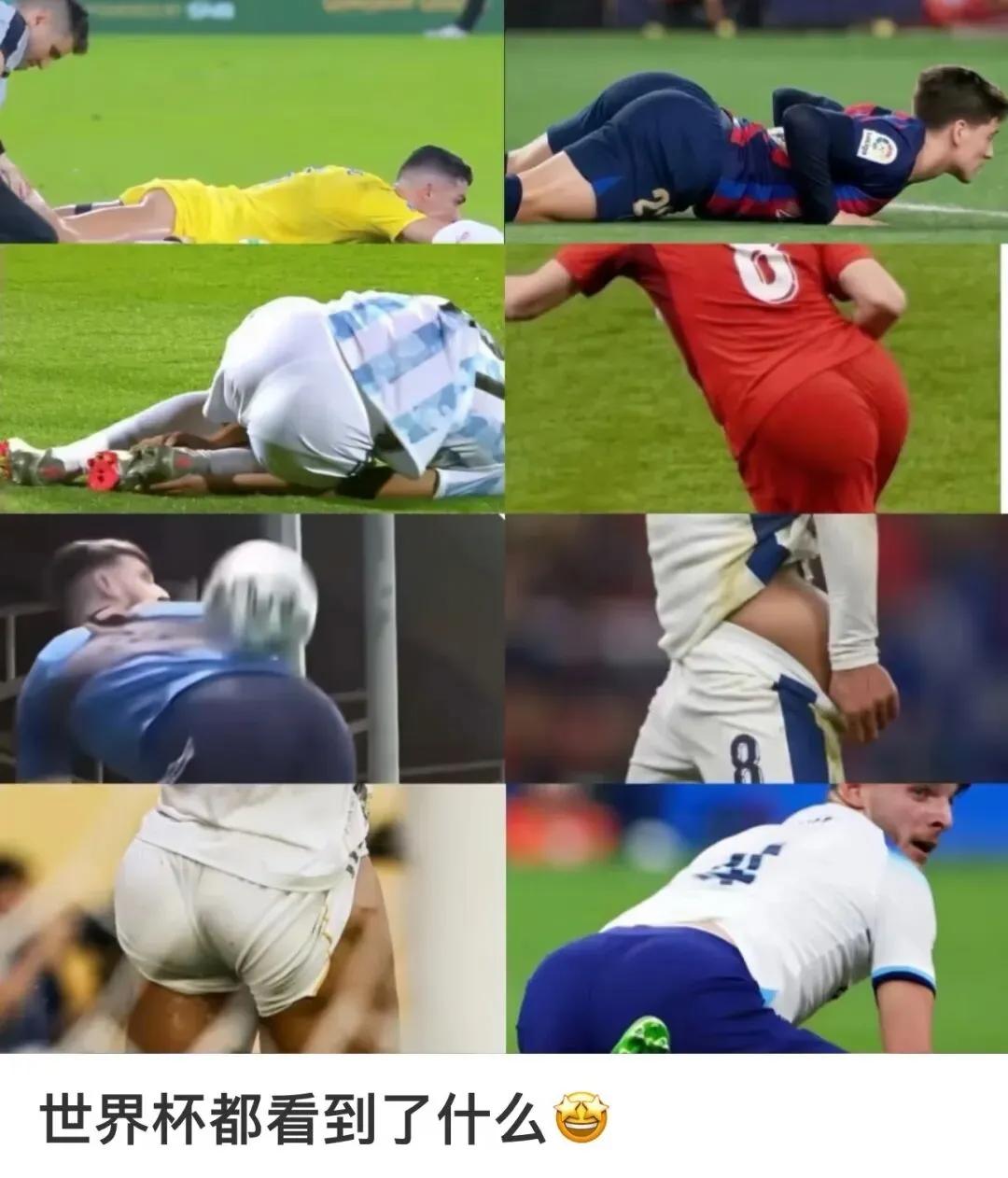
Football can create miracles overnight — turning a tiny African island nation in the Atlantic into a global household name, or catapulting an unknown player to the top of social media trending lists.
For seasoned collector Keith, the World Cup is forging another kind of miracle:
Sports trading cards.
The second the World Cup whistle blows, it's like the opening bell of a stock market.
A stunning long-range goal, a miraculous save, or a championship trophy can send the market value of a player's card in his collection skyrocketing;
But if you bet wrong — a player underperforms, or their team gets eliminated early — the high-priced card you bought can quickly lose its luster.
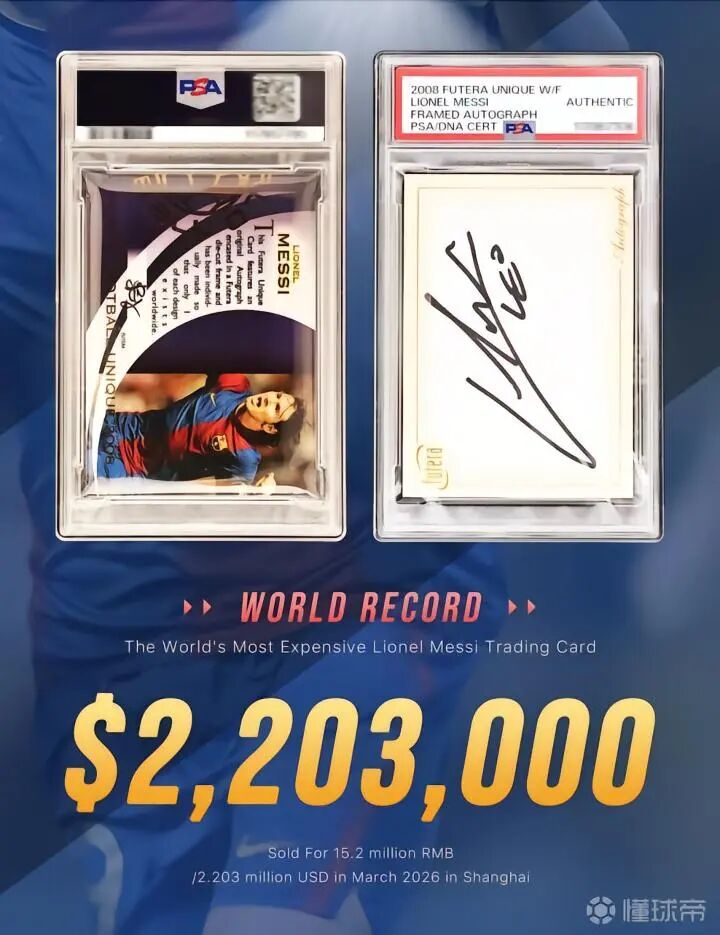
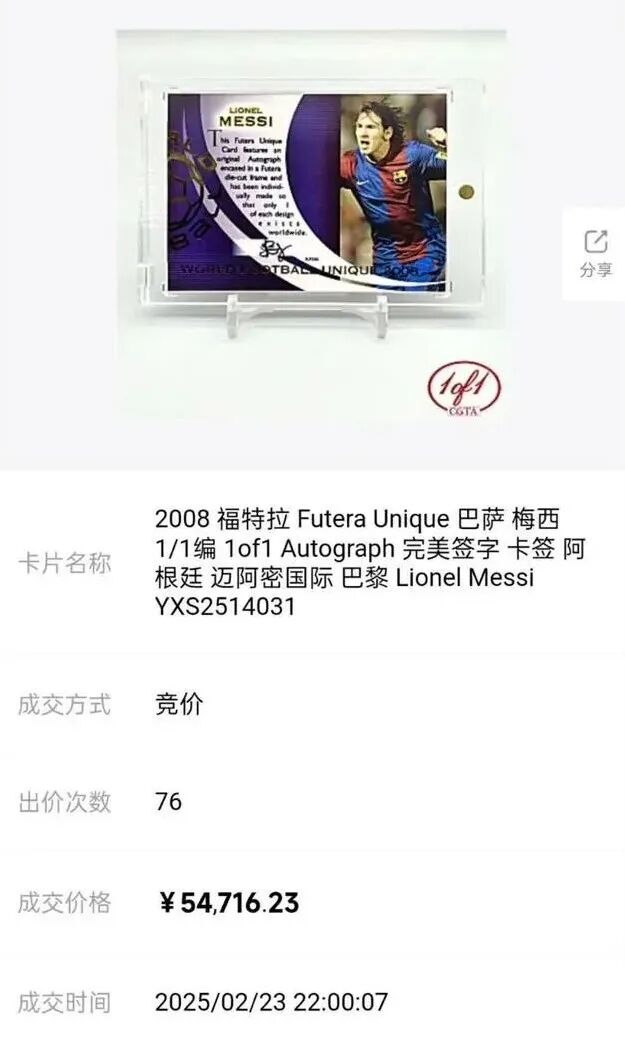
Back in March this year, a Messi-signed sports card sold for 15.2 million RMB at a Shanghai auction.
Just a year prior, that same card had changed hands for only 50,000 RMB.
Beyond the screen, these tiny pieces of cardboard have spawned countless stories of frenzy and heartbreak.
Sports Cards: Taking Youth Culture by Storm
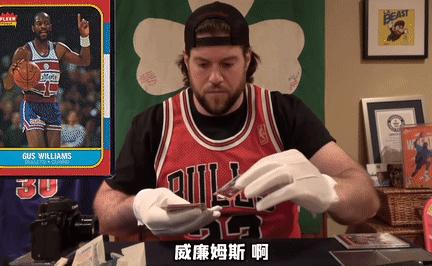
After the World Cup kicked off, Li Zhou passed by the board game shop he used to frequent, only to find it had completely transformed — it now sold sports trading cards.
Pushing open the glass door, he saw shelves lined with box after box of cardboard packages printed with athletes' faces, priced from dozens to thousands of yuan, covering football, basketball, F1, and UFC cards.

These specialized stores have been multiplying in first-tier cities in recent years, from veteran spots like Beijing's Blue Star and Shanghai's Dianpang, to new community shops and bidding agencies, creating a flourishing ecosystem.
They barely resemble traditional toy stores anymore, and feel more like offline exchanges. Collectors gather to open packs, trade cards, submit them for grading, and share rumors about upcoming new releases, gradually developing their own insider slang and tight-knit communities.
If you can't make it in person, it's no obstacle at all.
For convenience, you can let live streamers open packs on your behalf — no need to visit the shop, or even see the cards in person. Just place an order, and the streamer will unpack, scan, and ship the cards to you, letting you experience the thrill of the reveal through a screen.
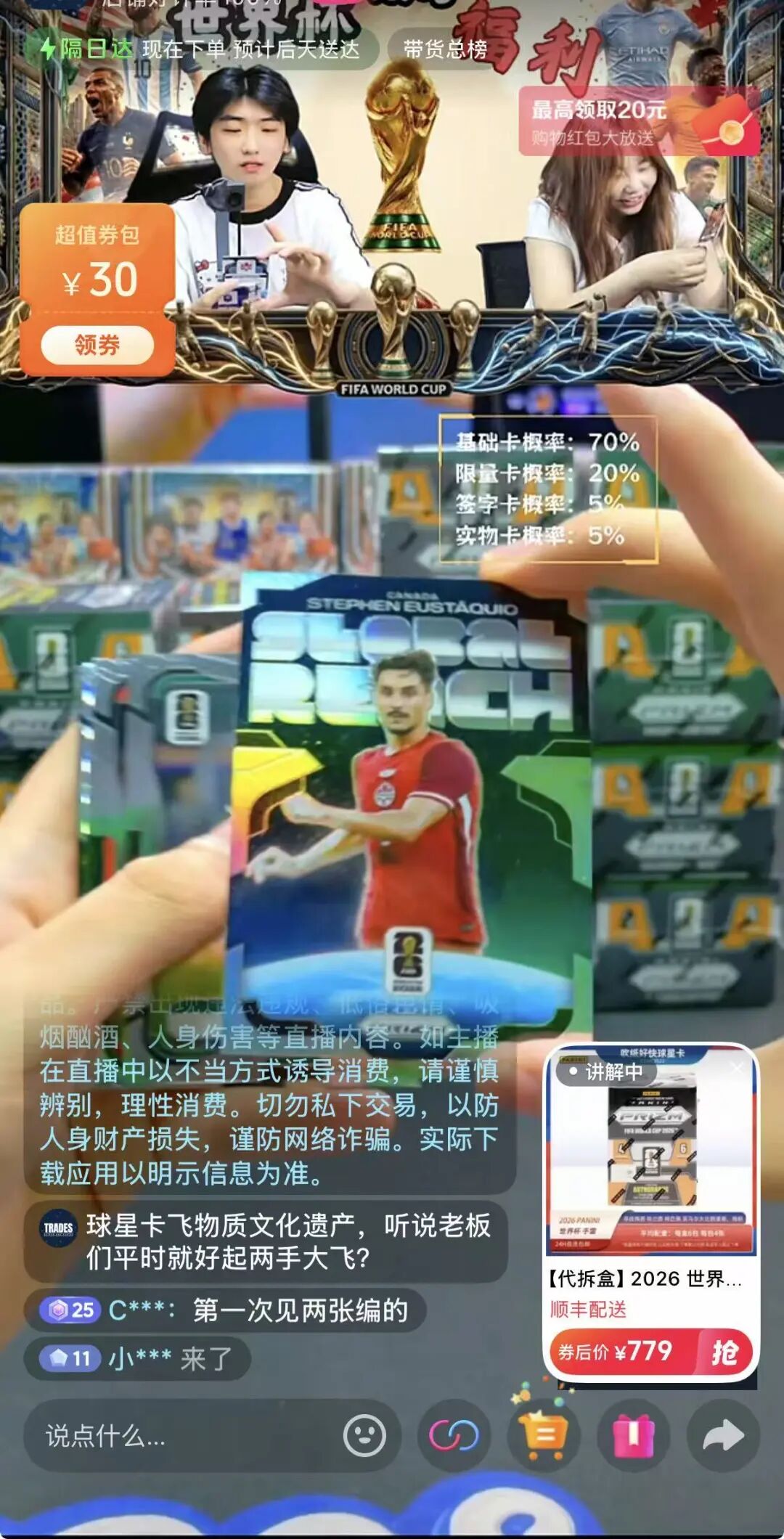
When a high-value rare card is pulled, the entire live chat blows up.
Those on a budget can "split a box": several people pool money to buy one, draw teams in advance, and whoever claimed the team that yields a great card gets to keep it.
Spending hundreds on a box isn't about getting common cards — it's gambling on the chance to hit a "gold pull". This is no different from the classic collectible cards in instant noodles decades ago, except the stakes have risen from a few cents to thousands of yuan.
Some new collectors hit a rare card on their first try and flip it for a profit; others hoard low-profile rookie cards early, and as the athlete rises to stardom, the card's value skyrockets.
Most stories aren't so lucky: some burn through thousands on boxes, only to end up with barely a handful of valuable cards; others chase a rare card by pouring in more and more money, only to find its resale value is less than half their initial investment.
Worse still, many get fleeced as unsuspecting new collectors.
As the saying goes, the oldest con game in the world is all about playing cards.
Many others treat this as a full-fledged business.
Some target top draft prospects for the new season, hoarding dozens of their rookie cards before the market catches on; others act as dedicated "middlemen", buying up loose cards cheap to assemble full sets and resell at a premium; those with sharp grading eyes hunt for underrated raw cards, then send them for professional grading to resell for several times their cost.
These practices are fundamentally no different from speculating on stocks, sneakers, or blind box figures — all profiting from information gaps and judgment, except the underlying asset is a piece of paper printed with an athlete's face.
It's at this stage that many realize sports cards are no longer the cheap childhood toys of a few cents a pack, but a serious, cash-heavy collecting market.
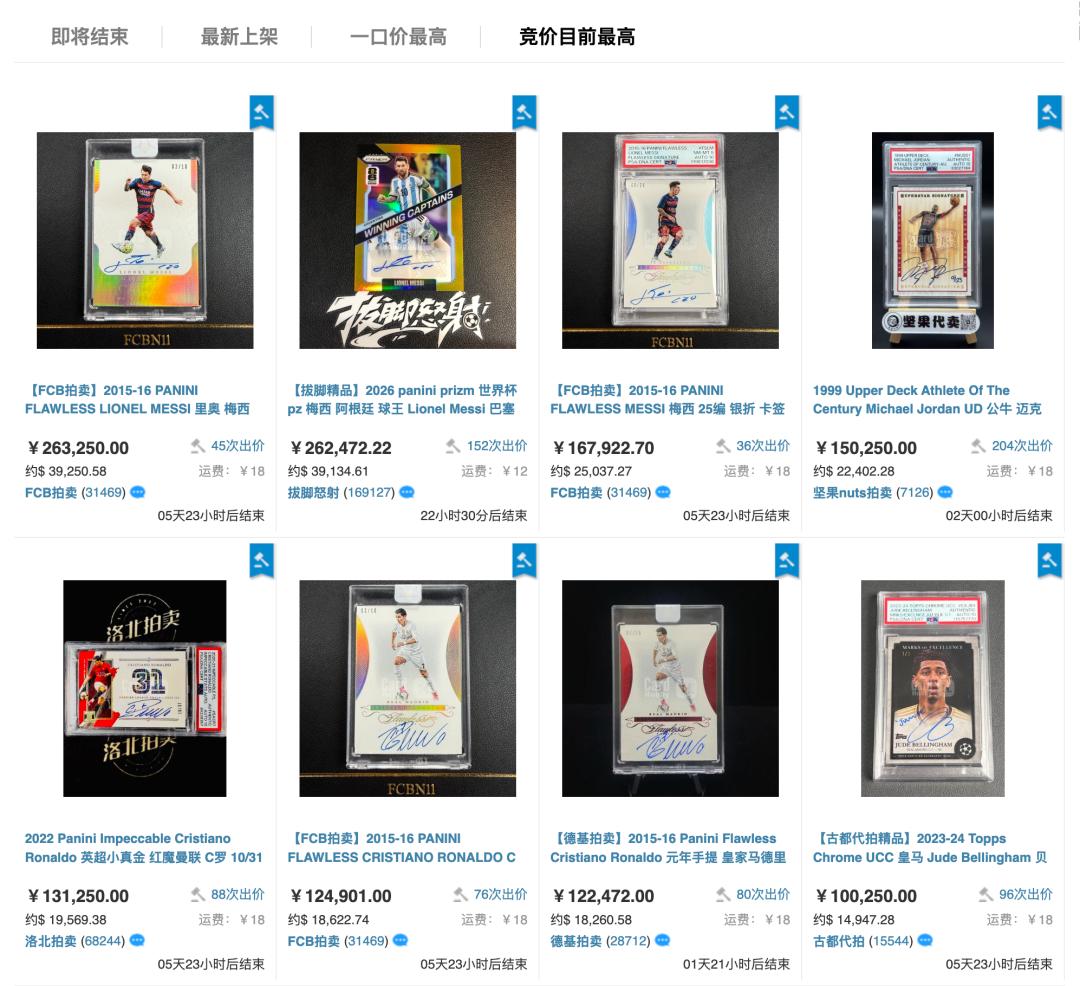
A signature card from a mid-tier athlete can easily sell for thousands of yuan;
A coveted rookie card can fetch tens of thousands;
Rare editions of legendary players can cost as much as an entire apartment.
Paying a Fortune for a "Piece of Paper"
Sports cards come in a vast range of types: base cards, parallel cards, autograph cards, rookie cards, numbered cards, jersey relic cards…
But no matter how flashy their packaging is, at the end of the day they're just pieces of paper — with ink, plastic wrapping, and at most some special finishes, jersey fabric swatches, or a player's signature.
Even premium cards cost less than a few dollars to produce.
A legendary sports card that sells for millions at auction costs barely more to make than a cheap base card worth a few yuan.
The value of a sports card is never in the paper itself, but in the story behind it.
As a rule, the most important card for any athlete is their rookie card. They may go on to set countless records, but they only ever have one rookie year.
A rookie card released exclusively in that debut year becomes the ultimate testament to their legacy.
When Stephen Curry first entered the NBA, he was written off as a limited-range shooter, his rookie contract seen as a low-risk steal, and his rookie cards weren't particularly sought after in the early days.
But over a decade of his career, Curry led his team to multiple championships, redefining the modern style of offensive basketball, and his rookie card value surged accordingly, hitting a record $5.9 million in 2021.
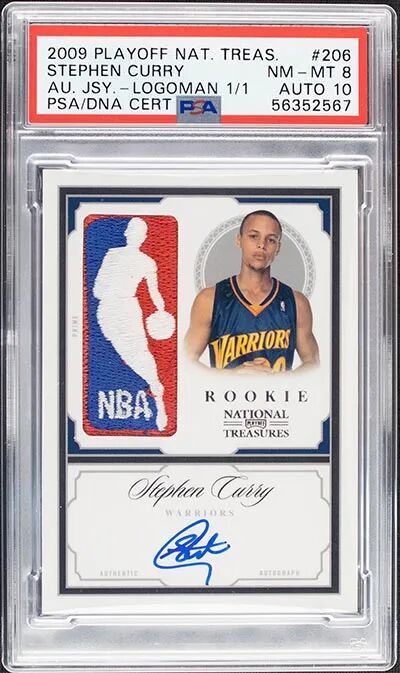
One-of-one global limited edition, hand-signed by Curry
Buyers aren't paying for paper — they're buying a piece of the legend's story.
However, once the story is fully written, the price hits a ceiling. Messi is already Messi, with little room left for surprise. The real thrill of high-stakes betting always lies with cards whose "story is just getting started".
In 2019, Zion Williamson was still playing college ball at Duke, when his Nike sneaker exploded mid-game — a moment that shocked the entire US overnight.
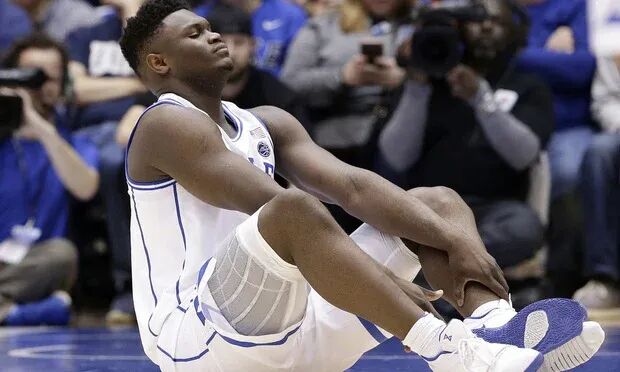
Many believed, with his freakish physical gifts, Zion was destined to be the next LeBron James.
So even before Zion played a single NBA game, his rookie cards became the year's hottest item. This logic is exactly the same as buying a growth stock: the premium you pay is for the potential, not for proven reality.
Just like any other investment market, the sports card world is driven by market sentiment. Good news, bad news, and viral rumors can all trigger wild price swings.
On January 26, 2020, Kobe Bryant died in a helicopter crash. Within 24 hours, the market value of Kobe's cards surged roughly 10 times over.
Ten months later, when Diego Maradona passed away unexpectedly, the exact same trend repeated itself.
Sometimes, you don't even need major breaking news — a single viral story can completely reset market prices.
Michael Jordan's 1986-87 Fleer rookie card #57 is the perfect example.
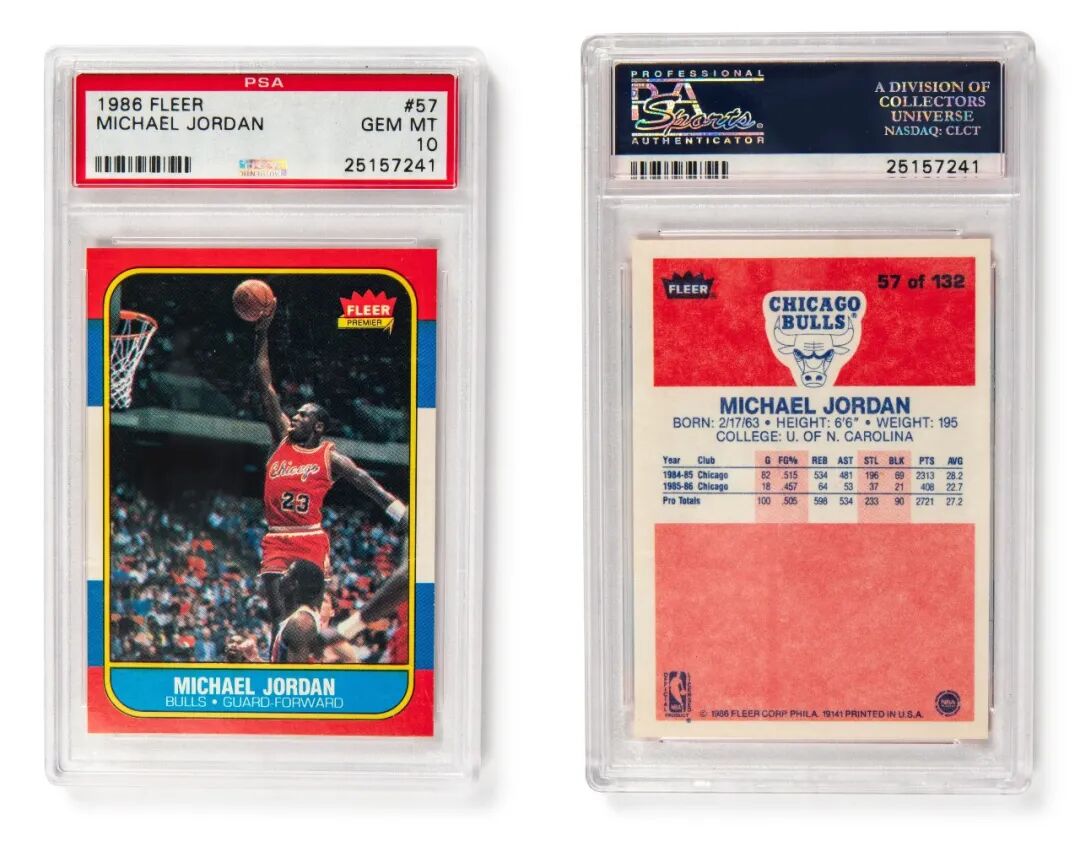
Prior to 2020, this card had long stayed stable at $18,000 to $30,000, a price that already reflected his superstar status, with little room left for major gains in theory.
Then the 2020 Jordan documentary *The Last Dance* changed everything.
The documentary was originally scheduled for summer release, but got pushed forward to April amid the pandemic. With the NBA suspended and no live games to watch, fans flocked to the documentary in droves for shared viewing.
The market value of Jordan's rookie cards surged to $100,000 overnight. It wasn't just Jordan — cards of Pippen, Rodman, Kerr, and everyone featured in the documentary all saw price hikes.
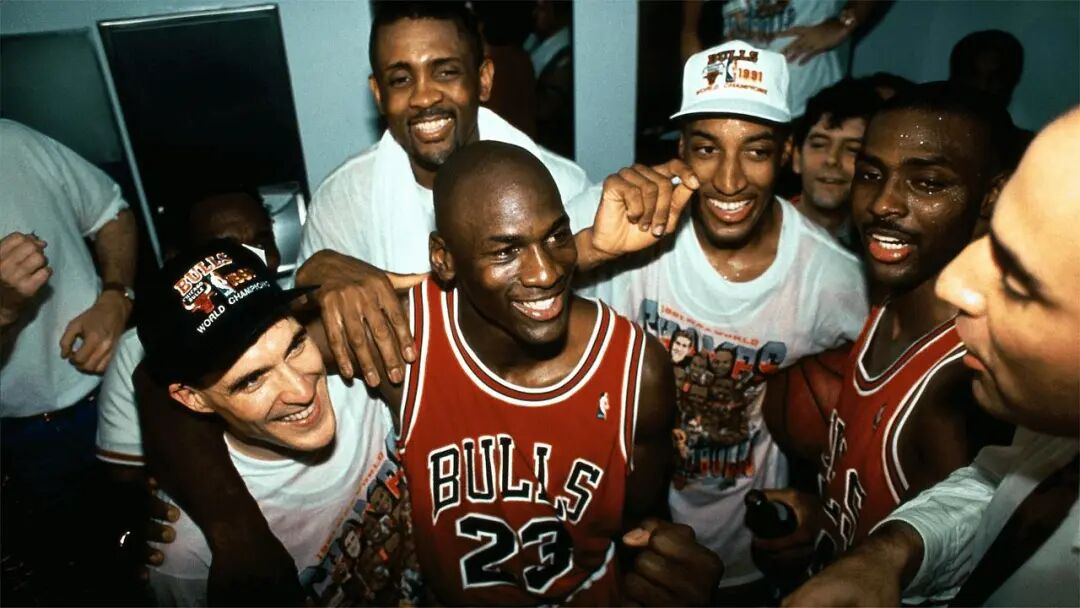
The documentary didn't add a single point to Jordan's career, nor did it create a single new card — it simply retold the story of Jordan and the Bulls dynasty.
Even the legend of a god needs to be retold over and over to stay fresh.
When enough people buy into the same narrative, it creates prices, trades, bubbles, and cycles. A full-fledged market emerges, populated by collectors, investors, traders, and speculators.
Stories create value, but they can also inflate bubbles.
A rookie can become a legend overnight, doubling their card's value in weeks; or they can suffer injuries, lose form, or flop in a transfer, and market hype can vanish just as fast.
Leading sports card auction house PWCC tracks price movements of 500 classic cards to compile the "PWCC 500" index.
From 2008 to 2022, the PWCC 500 index rose 855%. Why stop at 2022? Because after 2022, the sports card market entered a clear bear phase.
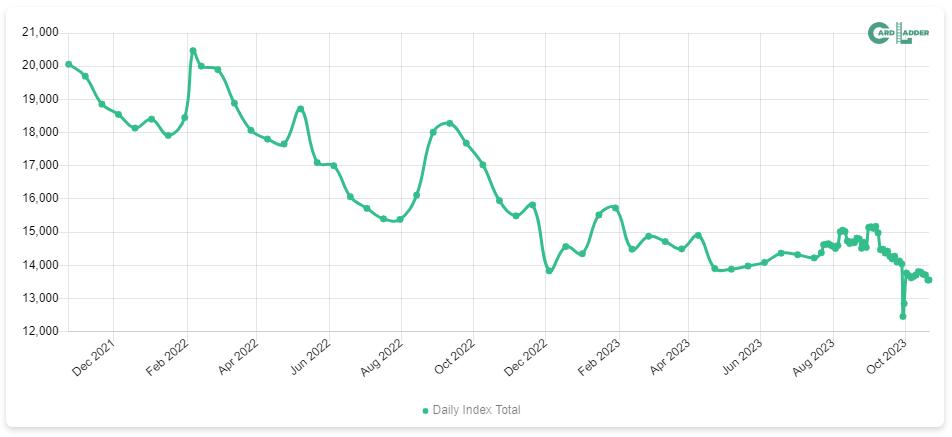
Those who bought at the peak saw their investments halve in value in just a few months.
In the century-long history of sports cards, this is just one of countless bull and bear cycles.
Merchandise Collecting? A Younger Sibling to Sports Cards
In the latter half of the 19th century, American tobacco manufacturers began mass-producing machine-made cigarettes. Early cigarette packs were flimsy soft paper pouches that easily got crushed in transit or pockets.
To protect the cigarettes, tobacco companies came up with a clever fix: slip a stiff cardboard insert inside the pack to reinforce the packaging.
Soon, shrewd businessmen realized the blank cardboard space shouldn't go to waste — they could print ads on it.