They can't shut down or merge, so they have no choice but to reform themselves.
Some car brands have consistently ranked at the bottom of sales charts for consecutive years with minimal market presence, yet they still manage to survive in the market. Not long ago, rumors suddenly spread online about certain automakers exiting the market, only for those companies to immediately issue denials. This sequence of events has made people more aware that there are so many lingering brands that are barely functioning.
Back in 2028, Li Shufu, Chairman of Zhejiang Geely Holding Group, stated that over 80% of automotive brands would be eliminated within the next 10 years. In subsequent years, figures such as Zhu Huarong, Chairman of Changan Automobile, and Li Bin, Founder of NIO, have also expressed similar viewpoints or issued related warnings.
The potential disappearance of 80% of automakers is the final outcome, and the process is the well-known "closure, suspension, merger, and transformation." However, looking back now, this scenario has not fully unfolded, and the prediction that over 80% of automotive brands would be eliminated has not come true. Those poorly performing brands that fail to align with industrial trends have not completely exited the market.
It should be noted that China's auto sales reached a historic peak of 28.8789 million units in 2017, a figure that was not exceeded in the following five years. It was not until 2023 that China's auto sales surged again to 30 million units, and hit a new all-time high of 34.4 million units in 2025. This favorable market environment has indeed helped many marginal automakers stay afloat.
Since the entire automotive industry cannot fully realize widespread closures, production halts, mergers, and transformations, mainstream automakers that aim to maintain their market share in a stock market can only enhance their competitiveness through internal "closure, suspension, merger, and transformation." The era for automakers to implement "downsizing" is approaching once again.
Strategic Contraction Becomes the Main Theme
For many years in the past, the expansion strategy of multiple brands and multiple models was a powerful tool for Chinese automakers to capture market share. However, 2026 market data reveals that this logic no longer works. According to statistics from the China Passenger Car Association, in the first five months of 2026, retail sales of domestic passenger vehicles dropped by 19.5% year-on-year.
In addition, data from the National Bureau of Statistics shows that the profit margin of the automotive industry in the first quarter was only 3.2%, significantly lower than the average level of downstream industries. More critically, a report from global consulting firm AlixPartners predicts that by 2030, only 15 of the current 129 automotive brands will remain financially viable.
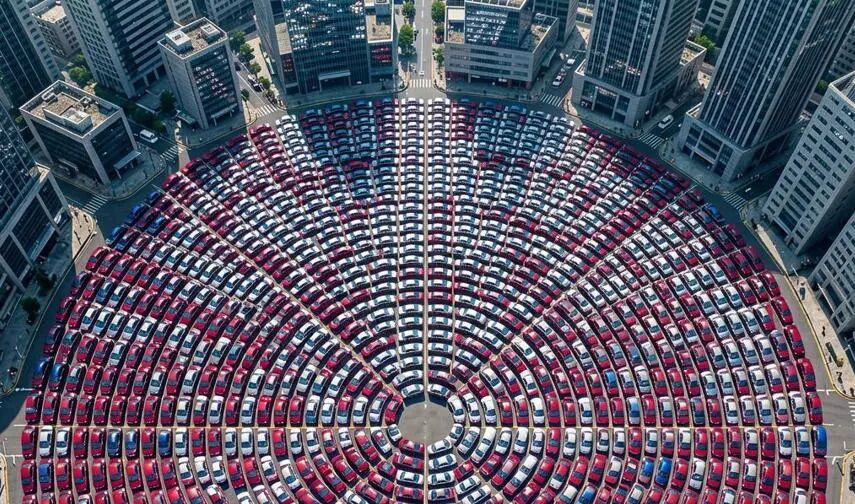
When the market pie stops growing, infinitely dispersing resources will only intensify internal friction. Data shows that from January to May 2026, a total of 544 new vehicle models were launched domestically, but only 5.5% of them achieved monthly sales exceeding 10,000 units. Massive investment cannot bring about economies of scale, and homogeneous competition continues to squeeze profit margins. Under such circumstances, numerous automakers have no choice but to start streamlining their own operations.
In June this year, Li Shufu clearly stated at the Chongqing Forum that redundant entities under Geely Automobile Group Co., Ltd. will be systematically shut down, consolidated, or restructured, focusing high-quality resources to strengthen the core listed platform of Geely Auto Holdings. Previously, Geely has already promoted the integration of Geometry, Radar, and Zeekr New Energy into the Galaxy brand, and merged Zeekr and Lynk & Co to form Zeekr Technology Group.
Later, BYD also announced that it would implement a self-responsibility profit and loss mechanism for its sub-brands starting in June, with the Dynasty, Ocean, Denza, and Fangchengbao brands operating independent accounting systems, while the Yangwang brand will temporarily remain outside this framework. At the same time, the original unified engineering research institute has been split into five brand-specific research institutes, and the original engineering institute has been downsized to a underlying technology middle platform.
Great Wall Motors also confirmed at its June shareholders' meeting the implementation of the "ONE GWM" strategy, which integrates the three mainstream product lines of Haval, Ora, and GWM Pickup globally under the unified "GWM" parent brand logo, retaining only the Tank and Wey brands as independent high-end lines, aiming to resolve brand recognition confusion and internal resource friction during global expansion.
In July, Li Auto launched a new round of adjustments, splitting the core functions of the product department and integrating them into the R&D department (the electric vehicle platform falls under vehicle R&D, and autonomous driving product functions fall under the foundation model team), eliminating the intermediate "platform product definition" link to achieve "product definition returning to R&D," and streamlining the decision-making chain from three levels to two.
Back in April this year, Changan Automobile Chairman Zhu Huarong clearly stated that the two brands Avatr and Deepal would undergo strategic integration and coordinated development. Over the next five years, the product portfolio will be streamlined from 63 models to 36, eliminating redundant models and concentrating resources to build high-volume products that can achieve annual sales of 100,000 units.
On the surface, this appears to be contraction, but in essence, it is a reallocation of resources. Capital, manpower, and technology previously scattered across redundant brands, duplicate models, and fragmented organizations are being consolidated into core platforms or shared systems. Forecast data from Geely, Changan, and Great Wall Motors confirms the tangible results of this strategic logic.
The 2025 annual report shows that the "One Geely" strategy has led to a continuous decline in sales expense ratio and administrative expense ratio. In the first quarter of 2026, this trend continued to strengthen: the sales expense ratio was 5.2%, the administrative expense ratio further dropped to 1.6%, and R&D investment reached 4.47 billion yuan, representing a 4.9% year-on-year reduction and a 38.2% quarter-on-quarter reduction.
At its strategy launch event, Changan Automobile mentioned that the strategic integration of Avatr and Deepal aims to reduce shared resource costs by 20%-30%. This will be achieved through optimized management of development and supply chain systems, combining both software and hardware improvements, including scale expansion, collaborative development, integrated supply chain management, and enhanced operational efficiency of middle and back offices.
Great Wall Motors' Return to Origin platform breaks down vehicle structures into over 300 reusable standardized hardware modules, and abstracts software functions into more than 2,000 standardized service tags that are dynamically scheduled by AI. Under this model, R&D costs can be reduced by approximately 70%, production asset investment by around 65%, and supply chain mold and development expenses by roughly 78% once implementation conditions are met.
The "Model Proliferation" Strategy Cannot Compete Against High-Volume Hit Products
Returning to the earlier data point, only 5.5% of vehicle models achieve monthly sales exceeding 10,000 units. As previously calculated by Auto Community, in the highly popular large 6-seat SUV market this year, 80% of models have become uncompetitive failures. Now this proportion may rise to 90%, which means the "model proliferation" strategy has completely lost its effectiveness.
In the past, when consumers walked into showrooms, they would ask about the differences between brands. This was a horizontal comparison between brands, focusing on technical routes, product positioning, and brand tonality. However, the current market landscape has completely changed: all brands and models have highly overlapping price ranges, similar dimensions, comparable powertrain systems, and even design languages that appear to be produced from the same template.

On the surface, this reflects excess product supply, but the root cause is the lack of clear brand focus. Companies themselves have not clarified who each vehicle model is targeted at, leaving consumers even more confused. Worse still, some automakers are launching products with nearly identical positioning, leaving consumers puzzled not about which model to choose, but about what actual differences exist between vehicles under the same group or brand.
In reality, it is not just the "model proliferation" strategy that has failed, but also the imbalance between investment and return. Industry calculations show that the development cost for a single vehicle model is approximately 1 billion yuan; if annual sales fall below 15,000 units, the R&D costs cannot be recovered. Following industry norms, a vehicle model needs to achieve cumulative sales of 150,000 to 200,000 units over its lifecycle to fully amortize development costs.
As a result, since the second half of last year, we have witnessed numerous short-lived products. A new model may achieve decent sales in its launch month, then start declining in the second month, and almost disappear from sales rankings by the third month. The new product dividend cycle has been compressed to around three months, causing all upfront investments in R&D, molds, and marketing to go to waste.
To make matters worse, a single new vehicle launch can be split into four or five separate events from pre-heating, unveiling, pre-sale to official launch, with each event costing at least millions of yuan. On the same day, several new models may launch simultaneously, but the promotional materials that cost millions are quickly scrolled past by consumers. Companies are spending more money, yet achieving diminishing returns.
Everyone understands the basic logic: why not launch fewer models and concentrate resources to create hit products? The problem is that no one dares to stop first. In a stock market, if you do not launch new models, consumers will turn to new products from competitors. Everyone is gambling, betting that their next vehicle will succeed while their rivals' new models will fail.
Market growth is gone, profits are shrinking, and distribution channels are on the verge of collapse. In 2025, approximately 5,000 dealerships across China withdrew from the market, averaging more than 12 closures per day. In 2026, the pace of dealership closures has further accelerated. If automakers do not actively downsize and reduce burdens for their dealers, the entire sales system will eventually collapse.
The old logic of "having more children makes it easier to win fights" worked in an era of market growth, when each brand and model had a clear market position. However, in a fiercely competitive stock market, "having more children does not necessarily guarantee victory." With a fixed total market size, where will additional sales come from? The marginal returns of multi-brand strategies are declining rapidly, while marginal internal friction is increasing exponentially.
Therefore, the reduction in the number of hit products further demonstrates the critical importance of high-volume flagship models. The true competitiveness of an automaker does not lie in how many new models it launches, but in how many models it has that consumers are determined to purchase. From established brands like Volkswagen and Toyota to recent players like Tesla and Xiaomi, all confirm this industry rule.
This article originates from the WeChat Official Account "Auto Community" (ID: iAUTO2010), authored by Yang Jing, and published by 36Kr with authorization.