An aeronautical engineer starts a business, with a unit product price of 25 million yuan and orders exceeding 1.7 billion US dollars.
As the founder and CEO of Volant Air, Dong Ming has recently been reading the military history book Twilight of the Gods to understand the true nature of human behavior in wartime environments. Gaining insight into human nature, building an organized team, and transitioning from an engineer to a manager are also among his key priorities at present.
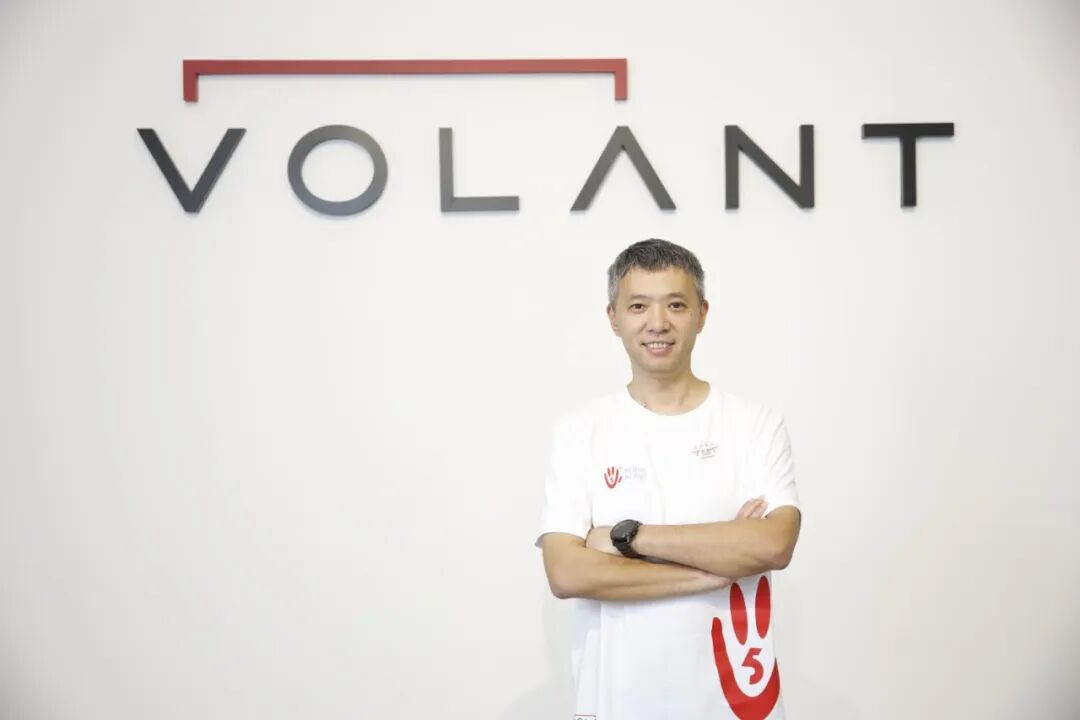
Dong Ming, Founder and CEO of Volant Air
Founded in June 2021, Volant Air is a startup focused on developing commercial passenger eVTOL (electric vertical takeoff and landing) aircraft — a type of vehicle that can take off and land vertically without runways, regarded as the core carrier for future urban air mobility.
After the "low-altitude economy" was included in the 2024 Government Work Report and the National Development and Reform Commission established the Low-Altitude Economy Development Department, this sector saw a sudden surge in popularity. Especially in 2024, known as the "first year of the low-altitude economy", Volant Air completed six rounds of financing throughout the year.
"Traditional commercial aviation has barely changed over the past century, and electrification will bring structural transformations to this sector," said Huang Ming, founding partner of Vision Star Capital, one of Volant Air's early investors. He believes that China's advantages in supply chains, talent pool, and market scale make it possible for world-class enterprises to emerge in the low-altitude economy track, and Volant Air is exactly such a representative enterprise.
Huaying Capital led the Series B investment in Volant Air, and its managing director Liu Tianjie also judged that the low-altitude economy track has the clearest competitive moat, and Volant Air has gone the farthest. "The moat in this track sounds simple — whether you hold the airworthiness certificate, but behind it lies massive investment and an extremely complex technical system," Liu Tianjie noted. In China, Volant Air's VE25-100 aircraft is one of the earliest high-grade commercial passenger eVTOL projects to receive airworthiness application acceptance from the Civil Aviation Administration of China.
Dong Ming stated that the VE25-100 has an extremely high certainty of obtaining the airworthiness certificate, which is only a matter of time. From the perspective of research and development, how to advance the development process scientifically and reasonably, how to release risks quickly and orderly, and how to demonstrate the aircraft's economic performance through flight tests are all core challenges of the project.
The latest progress is that in May 2026, Volant Air completed China's first manned eVTOL piloted transition flight, which is a key milestone shifting from technical validation to commercialization and further enhances the certainty of obtaining the airworthiness certificate. Previously, only Joby Aviation (US eVTOL manufacturer) and Vertical Aerospace (UK eVTOL manufacturer) had accomplished this feat globally.
In Dong Ming's view, the eVTOL industry represents a new structural opportunity arising from the integration of electric vehicles and aviation. He judges that the potential impact of this industry is "no less than that of the C919", but the sector has not yet entered its launch phase and is still in the 0-to-1 development stage.
"The development of the low-altitude economy industry requires a little patience. This is a manufacturing sector, and iteration takes time," Dong Ming said.
01
Choosing a Pragmatic and Feasible Path
In 2016, Uber proposed its aerial mobility vision, bringing eVTOL its first wave of widespread attention. Around 2019, the industry gradually converged product specifications to a 6-seat, 2.5-ton configuration — a direction that Volant Air later adopted, forming the foundation of its first model, the VE25-100. However, in terms of configuration selection, Volant Air opted for the compound wing design with relatively lower technical risk, where the vertical takeoff and landing system and the cruise system operate independently. This design features a simpler mechanical structure, making safety verification easier in the early market stage. In contrast, the tilt-rotor configuration has a more complex mechanical structure, with complicated flight modes during transition, poor fault tolerance, and higher verification difficulty.
Dong Ming emphasized that for passenger aircraft, safety is the top priority. "We always maintain a neutral and objective attitude towards technologies. But in the early stage of industrial development, eVTOL is an emerging concept. We need to use limited resources to quickly validate public acceptance, so we will assess the risks of different technical paths. The compound wing is a naturally safer configuration with a clear R&D and airworthiness roadmap. Under the current market and technical environment, the compound wing is the optimal solution." Volant Air's first product is defined as "safe, robust, and practical". In his opinion, this design is intended to help customers and the public better accept eVTOL, meeting customers' value pursuit and the public's demand for travel services.
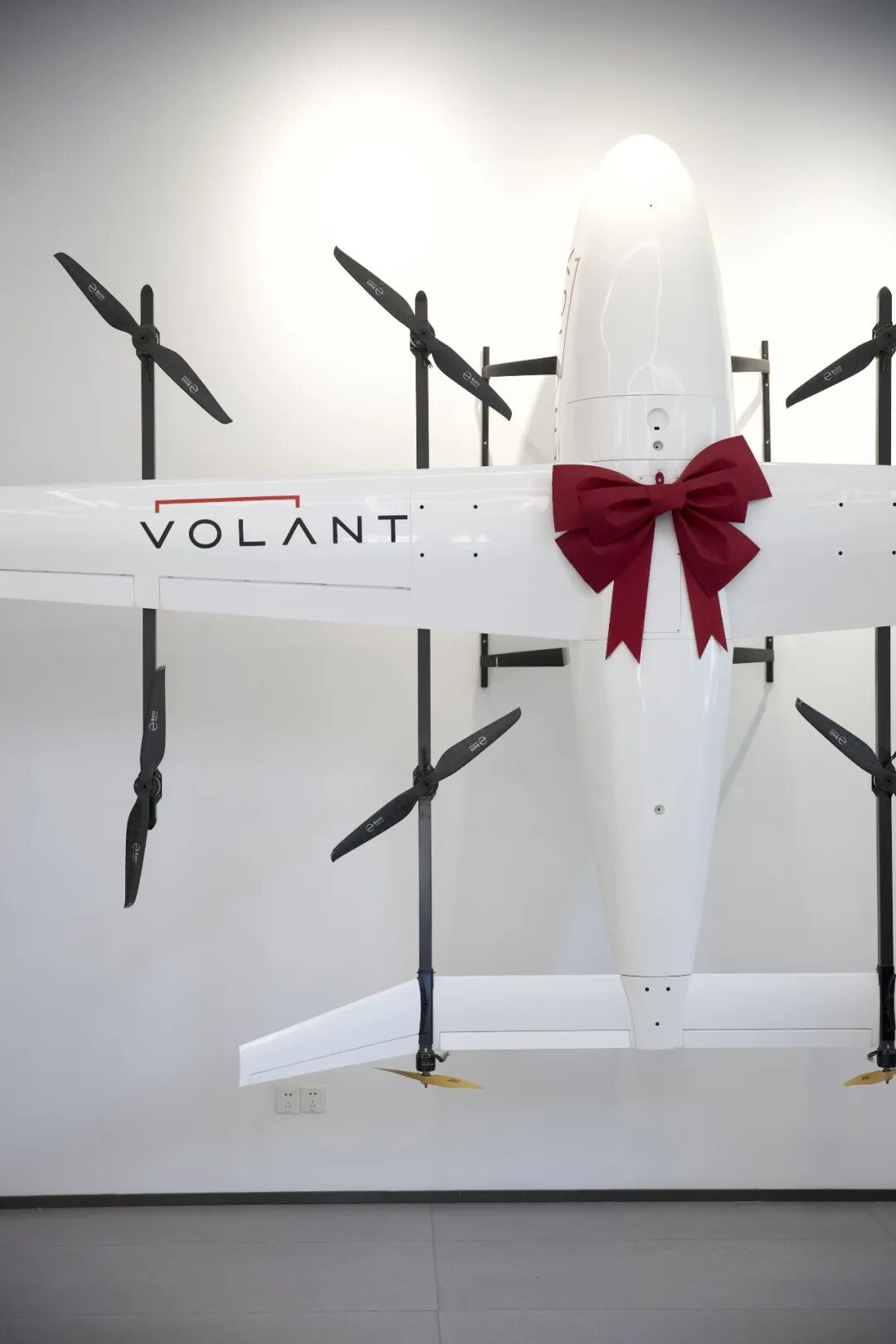
For any great startup, its initial product definition may determine 80% to 90% of its subsequent success or failure. Huang Ming draws a parallel between Volant Air and Li Auto: when everyone was eager to build "China's Tesla" and promote pure electric solutions, only Li Auto chose the progressive extended-range electric path. "Dong Ming didn't pitch the most idealistic story, nor did he choose the most radical technical route. Instead, he formulated clear advancement strategies for every aspect, including engineering implementation, airworthiness certification acquisition, and commercial validation. This was the most feasible, even the only feasible path at that time."
In terms of product iteration, Volant Air has put forward the "Three Models, Three Generations" plan — the first-generation product of the initial model, the VE25-100, aims to launch and validate the market. The second model will expand performance and application scenarios, focusing on high speed and long range, which is expected to be launched two years after the first product obtains certification. The third model targets the private market, whose definition is still in the preliminary stage. "Meanwhile, each model will continue to iterate. Great aircraft are all refined through repeated modifications," Dong Ming said.
Improving safety level is one of the parameters for product iteration. Currently, the overall safety level of the VE25-100 is equivalent to that of transport aircraft like the C919, reaching 10^-7, with the probability of a single catastrophic system failure lower than 10^-8. The next-generation model aims to raise the overall safety level to 10^-8, one order of magnitude higher than traditional transport aircraft. "At that time, passenger eVTOL may become the aircraft with the highest safety level in the world," Dong Ming said. He anticipates that 5 to 10 years after passenger eVTOL is put into the market, its cumulative flight hours may exceed those of traditional civil aviation aircraft, and the safety level will need to be further upgraded by then.
In terms of supply chain strategy, Volant Air has also adopted a pragmatic approach. Taking Joby Aviation as an example, in its early stage, it tended to pursue deep integration — even developing its own flight control system and avionics, which led to some detours and delayed its R&D progress. But Volant Air chose to integrate the existing supply chain system from the very beginning, focusing its independent R&D on materials and structures, system architecture, flight physics and control laws, as well as the energy system including battery packs and BMS (Battery Management System).
In terms of value proportion, about 70% of Volant Air's supply comes from the traditional aviation system, and the remaining 30% comes from the new energy and consumer electronics sectors. "We only develop what we consider valuable, instead of trying to do everything in-house," Dong Ming stated in an interview with China Entrepreneur.
02
"Maintain Unconditional Confidence"
Over the 5 years of entrepreneurship, Dong Ming has always remembered a sharing from a well-known investor: "Entrepreneurship is a high-risk journey where only a few survive. The most important thing is to maintain unconditional confidence." Unconditional confidence — this was exactly the state Dong Ming presented to the public in 2023.
At the beginning of 2023, the company's technical demonstrator suffered a hard landing, the CTO left with part of the team, and the previously agreed financing was canceled... "At that time, after paying salaries, there would be no money left in the company's account for the next month," Dong Ming recalled.
In the autumn of 2023, Vision Star Capital organized a group of portfolio company founders to visit local governments, enterprises, national sovereign funds, and Chinese-funded enterprises in the Middle East. Huang Ming told China Entrepreneur that at that time they only knew Volant Air was facing tight cash flow, but in every meeting, Dong Ming introduced his products calmly and confidently without showing any anxiety. He later learned that the company was going through an extremely difficult period at that time.
After the Middle East trip, Volant Air completed the indoor transition flight of its full-scale technical demonstrator. These breakthroughs in various R&D milestones helped Volant Air secure a much-needed round of financing. Zigong, a traditional drone industry base in China, had already identified the low-altitude economy as one of its key industrial development directions and had a natural sensitivity to eVTOL. Later, Volant Air obtained nearly 100 million yuan in financing from Zigong, pulling the company through its most difficult time.
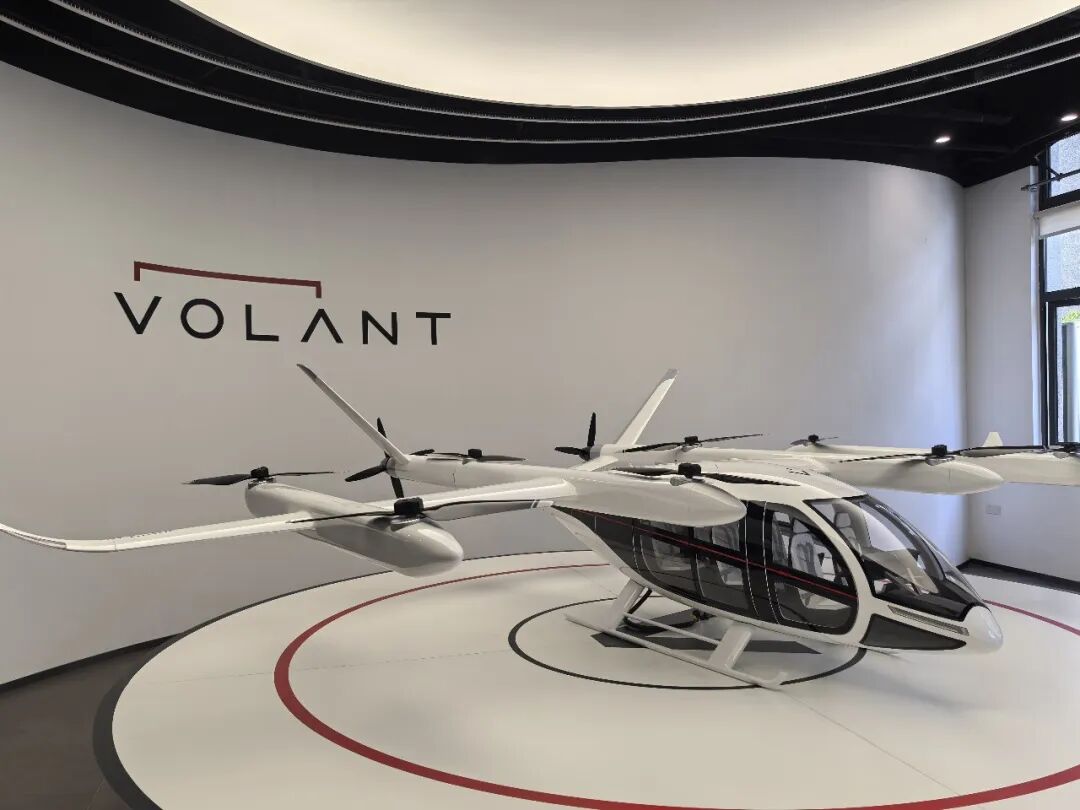
At the end of 2023, Volant Air also signed a cooperation agreement with the Zigong Municipal Government to build a passenger eVTOL intelligent manufacturing base in the Zigong Aviation Industrial Park, which is currently Volant Air's only manufacturing and flight test base. In May 2025, the first serial-production eVTOL "Made in Zigong" rolled off the assembly line in the Zigong Aviation Industrial Park.
"God helps those who help themselves," Huang Ming said. "Strive to the extreme, and fate will reward those who are truly dedicated to doing things well."
Entering 2024, with policies becoming increasingly clear, the low-altitude economy became a favorite of capital, and Volant Air's financing pace accelerated significantly, completing six rounds of financing within a single year. In 2025, the low-altitude economy's appeal to investors continued to grow, and Huaying Capital became the lead investor of its Series B round. "Our relatively consistent investment style is that we prefer to see some certainty in the industry before choosing to enter," Liu Tianjie said.
From April to May this year, Volant Air's Series C and Series C+ financings were successively closed, raising a total of about 3 billion yuan. The company's development path has also become clearer — using the certainty of the compound wing design to hedge technical risks, using a global shareholder base and order network to hedge market risks, and using continuous intensive capital injection to support engineering execution.
03
Systematic Thinking
Dong Ming started his career at an aviation research institute, where he developed in-depth technical understanding through work ranging from hardware and software design to system design. Later, he joined General Electric (GE) and worked there for 5 years, participating in the design and validation of the signal control system for the Qinghai-Tibet Railway, and led the team of the longest test train on the line at that time to complete the first full-line trial operation.
After leaving GE, Dong Ming returned to the aviation sector, participated in the development of the ARJ21, China's first domestically developed jet regional airliner, and deeply engaged in the C919 large domestic aircraft project from the conceptual design phase.
In his view, the core asset left to him by the large aircraft projects is not the directly applicable technical details — eVTOL is a brand-new field whose requirements for flight altitude, speed, and cost are different from those of large aircraft — but the "systematic development process".
"The development philosophy behind all civil aircraft is consistent," Dong Ming said. He believes that with the experience accumulated from the ARJ21 and C919 projects, plus a team of talents with systematic training, the industry can develop more steadily. Liu Tianjie pointed out that Dong Ming's most rare trait is that he "has experienced the industry and knows how the system operates", and "has strong forward-looking judgment on technologies".
Taking the supply chain as an example, Liu Tianjie introduced that unlike his peers, Dong Ming realized very early that reusing the new energy vehicle industry chain for the low-altitude economy "doesn't work". The reason is that aircraft have extremely high safety requirements, and every component, even every single screw, needs to be broken down in extreme detail, while the automotive supply chain cannot trace back to such a granular level. "If you reuse the automotive industry chain from the very beginning, the entire supply chain system will have to be completely rebuilt when it comes to passing the airworthiness certification," Liu Tianjie explained.
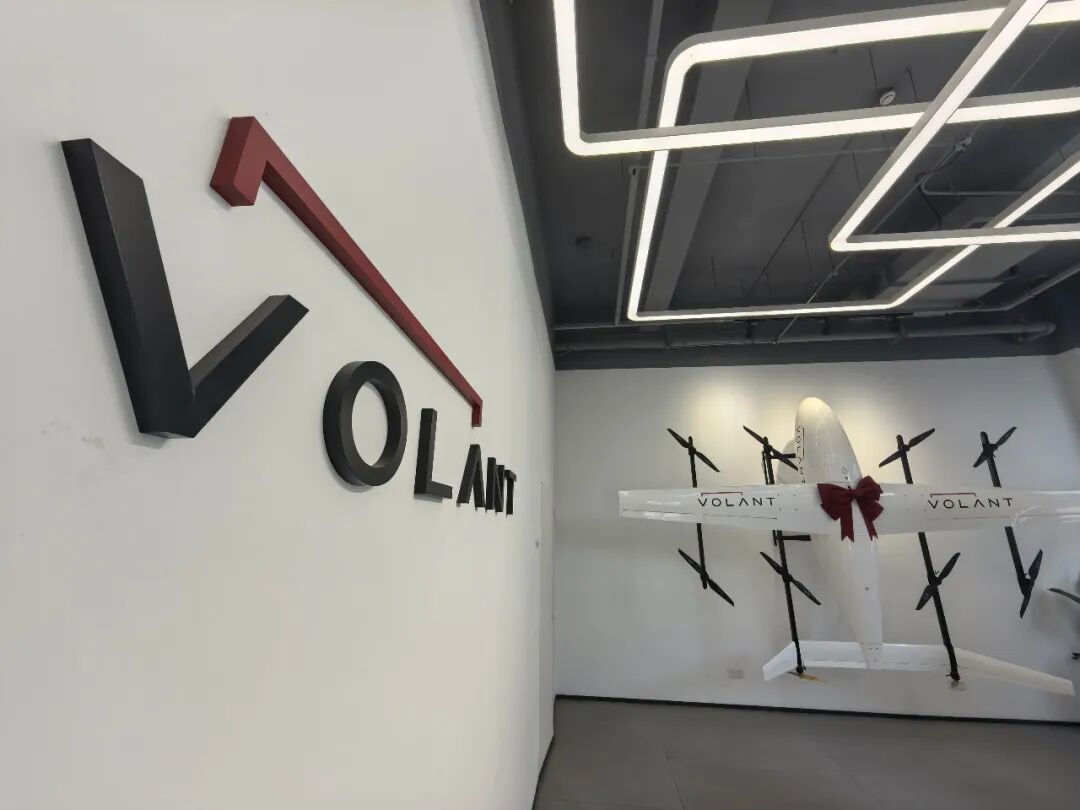
Volant Air's approach is to invest in batches in upstream suppliers with deep partnerships, helping them build up their capabilities, and jointly go through the airworthiness certification process.
On the wall of his office, Dong Ming hand-drew a quadrant chart: the horizontal axis represents design capability, and the vertical axis represents manufacturing capability. Currently, both upstream suppliers and Volant Air itself are in the "relatively weak" area at the bottom of the chart, and this status will gradually improve as the industry develops. "As more and more people want to enter this industry, we will have more partners to choose from," Dong Ming said.
The selection of operators also reflects Volant Air's efforts in building the industrial system.
Currently, the VE25-100 is priced at about 25 million yuan. The company has set an operational target of "20-kilometer flight in 5 minutes, with a per-seat cost of 60 yuan" in the future.
"What we care about most is our initial users," Dong Ming said. Volant Air has two core criteria for selecting operators: first, strong safe operation capability; second, the ability to demonstrate the aircraft's economic performance through actual flights, as "the economic performance of commercial aircraft is highly correlated with daily flight hours".
Volant Air's first launch customer is China Southern Airlines General Aviation, one of China's largest helicopter operators. In January 2025, the two parties formally signed the first batch of confirmed orders for the VE25-100, which is the first confirmed order for high-grade commercial passenger eVTOL in China.
In July 2025, at the first International Low-Altitude Economy Expo, Volant Air signed a procurement agreement with Thailand's Pan Pacific for 500 units of the VE25-100, with a total order value of 1.75 billion US dollars, setting a new record for the largest single export order of Chinese eVTOL.
As an entrepreneur who has worked in multiple large companies, Dong Ming says he does not have an entrepreneur he absolutely worships, but he does not deny that his management style has been deeply influenced by GE. His evaluation of GE is that it emphasizes integrity and respect for individuals, and maximizes employees' potential through cultural values and leadership training. He has brought this culture to Volant Air — R&D personnel do not need to clock in, because Dong Ming believes that only people with freedom and self-discipline can design excellent products.
"We hope to gradually internalize systematic engineering thinking into every corner of the organization. As Volant Air grows, the role of culture in driving the organization forward will become increasingly important," Dong Ming said.