The whole nation is focused on the incident of 900 snakes escaping: Behind it, people in Guangxi aim to build a 50-billion-yuan business through snake farming
A flood brought Guangxi's snake farming industry into the public spotlight.
Recently, affected by this year's 10th typhoon "Mekkhala", a snake farm in Hengzhou City, Guangxi was washed away by floods, with about 800 to 900 snakes escaping, triggering widespread public attention.
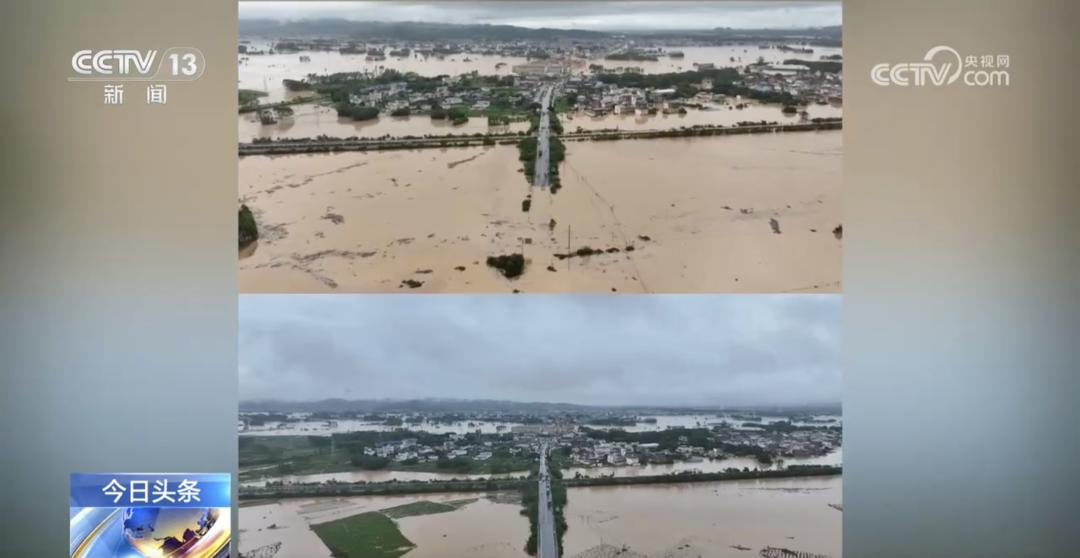
Hazard situation at Liulan Reservoir in Hengzhou, Guangxi. Source: CCTV News
This unexpected incident also made many people realize for the first time: Guangxi is actually the largest snake breeding base in China.
Guangxi has been engaged in large-scale snake farming since the 1980s. At present, the number of captive snakes in Guangxi has exceeded 30 million, accounting for 80% of the national total, forming a complete industrial chain.
Why did Guangxi become "China's top province in snake farming"? After the implementation of the "wildlife consumption ban", where has this once food-oriented breeding industry shifted its focus now?
01
Starting from the saying "Raising snakes in one room earns more than farming ten mu of land"
Guangxi has developed into a major snake breeding province in China, which is the combined result of multiple factors including local climatic conditions, geographical environment, and accumulated industrial heritage.
Located at low latitudes with the Tropic of Cancer running through its central area, Guangxi has a subtropical monsoon climate that is warm and humid. The widely distributed karst landforms, with numerous caves and rocky peaks, create a natural habitat for snakes to hide. Meanwhile, the region is dotted with rivers and lakes, covered with lush forests and vegetation, and is rich in natural prey for snakes such as frogs and rodents, making it ideal for the breeding and growth of various snake species.
It is understood that 106 snake species have been recorded in Guangxi, ranking among the top in China. Local residents have a long-standing tradition of catching and eating snakes, believing that snake meat has nourishing health benefits.
Since the 1980s, some farmers in Guangxi began to try artificial snake farming to increase their income, which was initially dominated by scattered backyard breeding.
Xu Ping, head of the Longyue Snake Farming Professional Cooperative in Heng County, Guangxi, told Times Weekly that Guangxi's economy has long been dominated by agriculture with a relatively weak industrial foundation, and breeding industries have always been an important way for many farmers to increase their income. Snake farming features relatively controllable investment and high added value, which has gradually attracted more and more farmers to participate.
Since the 1990s, the snake farming technology and breeding scale in Guangxi have been continuously upgraded. Around 2011, Guangxi's snake breeding industry ushered in its peak development period. According to reports from Guangxi Daily, at that time, the cost of breeding one rat snake was about 150 yuan, and its selling price could reach around 500 yuan after one year, with very considerable profits.
At that time, Lingshan County alone had more than 40 licensed snake farms and over 3,200 farming households, with an annual output of up to 1.56 million snakes. The saying "Farming ten mu of land is not as profitable as raising snakes in one room" became a widely popular phrase among local farmers, reflecting the booming state of the industry at that time.
In the following 10 years, Guangxi's snake breeding industry developed steadily. Hengzhou (formerly Heng County), Lingshan, Fusui and other regions have successively developed into important clusters of Guangxi's snake farming industry.
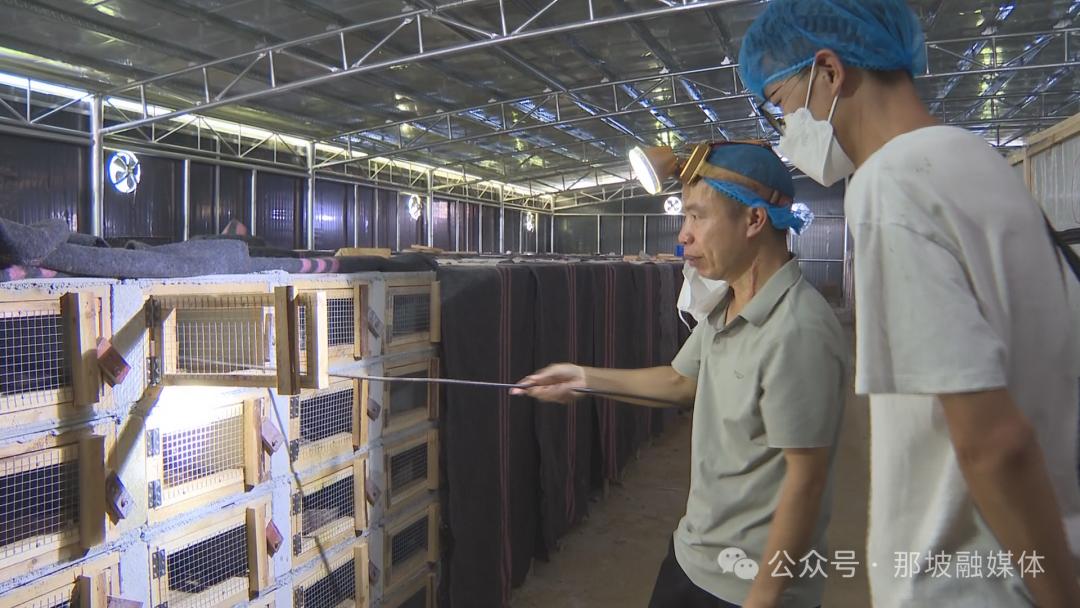
Standardized cobra breeding base in Napo County, Guangxi (Source: Napo Official WeChat Account)
By 2020, the total number of captive snakes in Guangxi was nearly 20 million, accounting for 70% of the national total, with more than 14,000 breeding entities (households) and nearly 37,000 employees.
However, this industry soon faced a major adjustment.
On February 24, 2020, the 16th meeting of the Standing Committee of the 13th National People's Congress reviewed and adopted the *Decision on Comprehensively Prohibiting the Illegal Trade of Wild Animals, Eliminating the Bad Habits of Wild Animal Consumption, and Effectively Ensuring the Life and Health of the People*. After the "wildlife consumption ban" was issued, snake farming that mainly targeted the food market was greatly affected, and Guangxi's snake industry entered a stage of adjustment.
Xu Ping told Times Weekly that after 2020, the scale of snake farming in Guangxi gradually shrank compared with its peak period, and some farmers withdrew from the industry one after another. At the same time, factors such as sluggish market consumption and falling prices of traditional Chinese medicinal materials have further squeezed breeding profits, increasing the overall operational pressure of the industry.
02
From over 30,000 farms to just 300+ scaled breeding enterprises
After the "wildlife consumption ban", Guangxi's snake farming industry began to adjust its development direction, gradually transforming from the past food-oriented model to the fields of medicinal use, scientific research, and big health.
In October 2024, Guangxi issued the *Guangxi Zhuang Autonomous Region's List of Artificially Bred Terrestrial Wild Animal Species (First Batch)*, including 10 mature artificially bred species such as the Chinese rat snake, Zhoushan cobra, monocled cobra, krait, gray rat snake, rat snake, banded krait, and Chinese moccasin into the category of medicinal development, providing a policy foundation for the industry to explore their medicinal value.
In the past, most snakes ended up on dining tables. Now, farmers are focusing on areas such as snake venom extraction, drug research and development, and health product production, hoping that a single snake can create higher economic value.
The experience of Guangxi farmer Li Yong is a microcosm of the changes in Guangxi's snake industry.
According to local media reports, Li Yong has been engaged in snake farming for more than 30 years, and the number of captive snakes in his farm reached 70,000 at its peak. After 2020, he adjusted his breeding scale in response to relevant policies, only retaining more than 6,000 breeding snakes, and shifted his focus to medicinal cobra farming. Through refined management, his farm maintains an annual revenue of millions of yuan.
In terms of industrial chain extension, Li Yong cooperated with scientific research institutions outside Guangxi several years ago to develop anti-cancer drugs using snake venom as raw material, and the related project has now entered Phase III clinical trials.
The transformation of Li Yong's snake farming business reflects the new trend of Guangxi's snake industry upgrading.
As the medicinal value of snakes gains more recognition, medicinal species such as rat snakes, cobras, and banded kraits have gradually become the focus of breeding.
After industrial adjustment, the annual output of commercial snakes in Guangxi has grown from about 20 million in 2020 to over 30 million at present. Currently, Guangxi has become the world's largest snake raw material base.

Rat Snake. Source: Tuchong Creative
At the same time, the entire breeding industry is undergoing "streamlining".
In the past, some farms had problems such as small scale and extensive management. Under policy guidance and market adjustment, the industry has begun to transform into standardized breeding. The originally more than 30,000 farms across the region have been streamlined to 300+ large-scale breeding enterprises after industrial reshuffling.
Yang Peisheng, director of the Specialized Committee of Medicinal Snakes under the Guangxi Wildlife Conservation Association, calculated an account: In the traditional "breeding-catering" industrial chain, Guangxi's snake industry mainly relied on primary processing profits, with an industrial scale of only tens of billions of yuan. But after shifting to the "breeding-medicinal research and development-deep processing" model, relying on high value-added products such as anti-cancer drugs and medical aesthetic raw materials, the industrial scale is expected to exceed 500 billion yuan.
However, the transformation of the snake industry is not easy. Xu Ping told Times Weekly that the development of a drug from laboratory to market often goes through multiple stages including experiments, clinical trials, and approval, which not only takes a long cycle but also requires continuous investment of large amounts of capital and scientific research resources.
He believes that if the snake industry wants to achieve further breakthroughs in the future, the key lies in converting snake resources into higher value-added products.
"In the past, we mostly used snakes directly, but now we need to extract the active ingredients from snakes and develop them into drugs or functional products, which requires a long-term research process. Currently, Guangxi is cooperating with institutions in Xi'an, Shanghai and other regions to explore the extraction and application of active substances in snakes." Xu Ping said.
According to the development plan of Guangxi's forestry department, Guangxi's snake industry will continue to reduce its dependence on the food market in the future, focusing on fields such as medicinal use, scientific research, and popular science exhibitions. At the same time, it will support enterprises to develop products such as drugs, health food, and medicinal meals, further extending the industrial chain from breeding to processing, research and development, and sales.
In this way, the value created by a single snake is expected to be much higher than in the past.
This article is from the WeChat Official Account "Reading City Studio", written by Li Hang, edited by Liang Li, and published with authorization from 36Kr.