On the Eve of Listing | A 35-year-old Tsinghua Top Student Rushes for Hong Kong Stock IPO, Building China's Second Largest Mobile Fingerprint Enterprise
This article is approximately 3,300 words, with an estimated reading time of 7 minutes
Author | Xiaoqiu Peng
Editor's Note: The "Eve of Listing" column focuses on the critical moments when enterprises sprint toward the capital market. Every prospectus hides an enterprise's ambitions, business cycles, and hidden concerns ahead of its public listing. This is the fourth issue — featuring JIIOV Technology.
Recently, JIIOV Technology officially submitted its prospectus to the Hong Kong Stock Exchange. This company does not manufacture mobile phones or modules — it produces the sensing brain hidden behind the fingerprint unlocking function of smartphones.
According to S&P Global's (Sullivan) statistical standards based on 2025 revenue, JIIOV ranks second in China's smartphone biometric solution market with a 14.5% market share; its fingerprint sensors have been adopted by 8 out of China's top 10 mobile phone brands. It sounds like a classic "profitable shovel-selling" success story, but after reviewing the 364-page prospectus, 36Kr found that the company's financial records, shareholder roster, and business network are far more complex than its "second-place in China" status suggests.

Optical fingerprint sensors drive majority revenue, losses narrow significantly
JIIOV's revenues from 2023 to 2025 reached 208 million yuan, 368 million yuan, and 469 million yuan respectively, with a three-year compound annual growth rate of 50.1%; gross margin climbed steadily from 26.3% to 37.6%. The most notable milestone is its profitability turning point: adjusted net profit (non-IFRS) narrowed from a loss of 66.814 million yuan in 2023 to a loss of 13.712 million yuan in 2024, then turned positive with a profit of 20.464 million yuan in 2025.
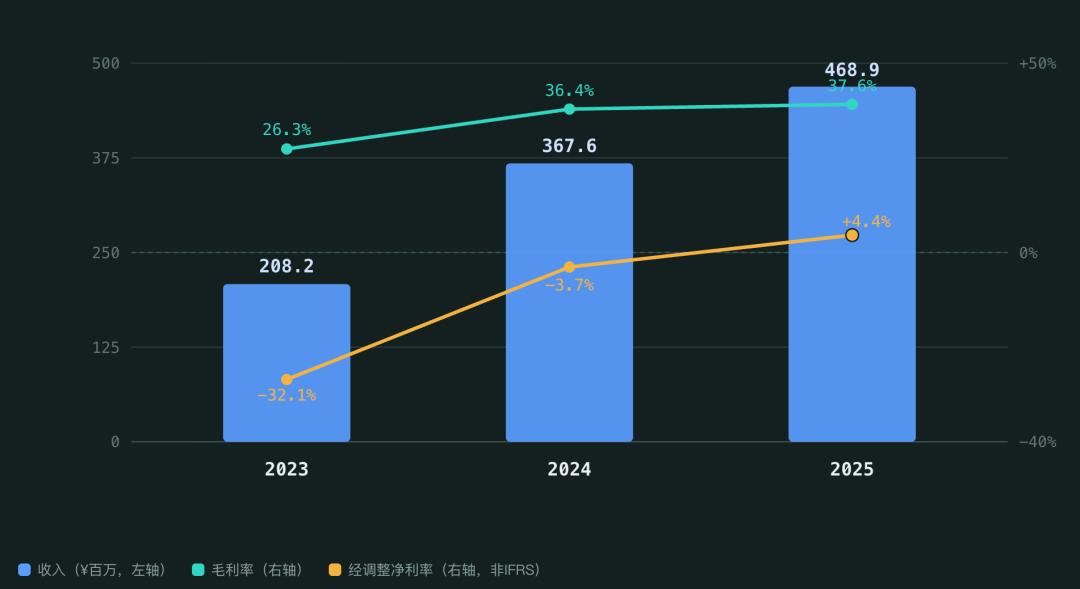
(Source / Compiled by 36Kr)
On the surface, it appears the company has finally turned the corner.
However, the adjusted calculation excludes two items: share-based payments (6.184 million yuan) and changes in the carrying value of redeemable liabilities (28.664 million yuan). Adding these two items back to present the IFRS-compliant financial statements shows that JIIOV recorded an annual loss of 14.384 million yuan in 2025. Its IFRS net losses over the past three years were 91.782 million yuan, 38.277 million yuan, and 14.384 million yuan respectively.
While losses are narrowing rapidly, the company has not yet reached full profitability on its official financial books.
(Source / Compiled by 36Kr)
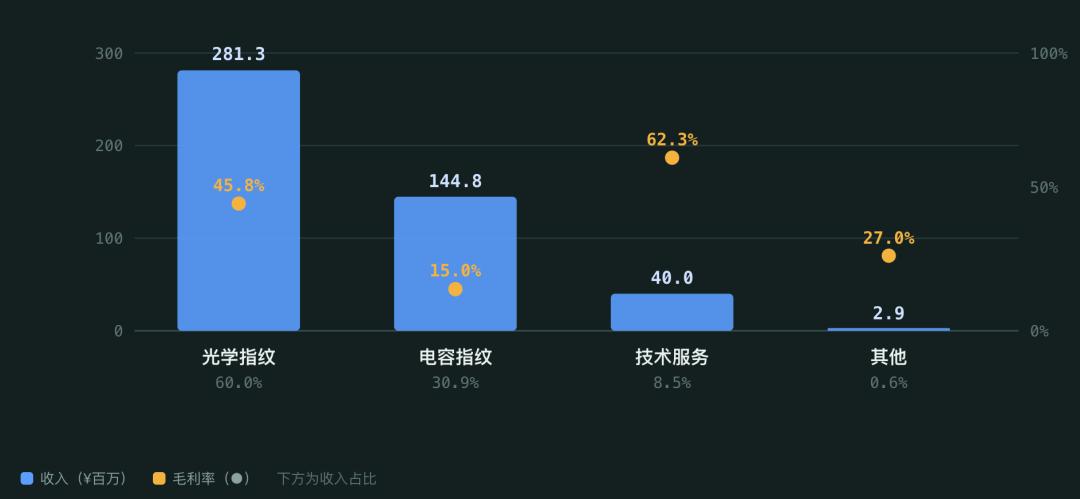
Breaking down JIIOV's revenue structure reveals that in 2025, 90.9% of revenue came from smartphone solutions, contributing 426 million yuan. This segment shows a clear shift between two types of fingerprint sensors: Optical fingerprint sensors, the high-end solution for under-display fingerprint recognition, generated 281 million yuan in revenue in 2025, accounting for 60.0% of total revenue, with a gross margin of 45.8%. This is the core growth engine, with revenue surging from 81 million yuan to 281 million yuan over three years.
Capacitive fingerprint sensors, the traditional low-end solutions for side and rear fingerprint recognition, recorded 145 million yuan in revenue in 2025, accounting for 30.9% of total revenue, with a gross margin of only 15%. This segment has already peaked, as its 2024 revenue also reached 145 million yuan, showing almost zero growth.
The significance of this contrasting trend is clear: JIIOV's overall gross margin increased from 26.3% to 37.6% precisely because high-margin optical fingerprint products now represent a larger share of revenue, diluting the proportion of low-margin capacitive fingerprint business. Optical fingerprint sensors are primarily integrated into mid-to-high-end smartphone models, serving as the true source of profits. Capacitive fingerprint sensors act more as a volume-driven legacy business.
The real growth variable lies in the third segment: Technical Services (NRE). This segment only generated 2.479 million yuan in 2023, but exploded to 39.964 million yuan in 2025, accounting for 8.5% of total revenue, with an extremely high gross margin of 62.3%. NRE refers to one-time non-recurring engineering fees, corresponding to the customized pre-development services JIIOV provides for smart glasses and embodied intelligence clients.
This indicates that JIIOV is beginning to extend its business narrative beyond smartphone fingerprint recognition into the smart glasses and embodied intelligence sectors. Although this segment currently represents a small share of revenue, it boasts the fastest growth rate and highest gross margin.
Unit economics analysis also helps illustrate the nature of this business. JIIOV is essentially a Fabless chip and algorithm company: it outsources chip manufacturing to third-party wafer foundries, and sells integrated proprietary chips paired with self-developed algorithms. The company can reduce the model's computing power requirements by over 1,000 times while largely preserving model accuracy, enabling deployment on edge devices. This capability gives it the confidence to define hardware through algorithms rather than compromising to hardware limitations, which also explains why its optical fingerprint products can achieve a 45% gross margin.
Additionally, operating cash flow turned positive to 12.25 million yuan in 2025, compared to -28.669 million yuan in 2023 and -5.292 million yuan in 2024. The company's self-sustaining cash generation has just begun, but the overall trajectory is positive.
Notably, based on 2025 revenue (excluding iOS systems), the top 5 players in China's smartphone biometrics market collectively capture 80.8% of the total market share.
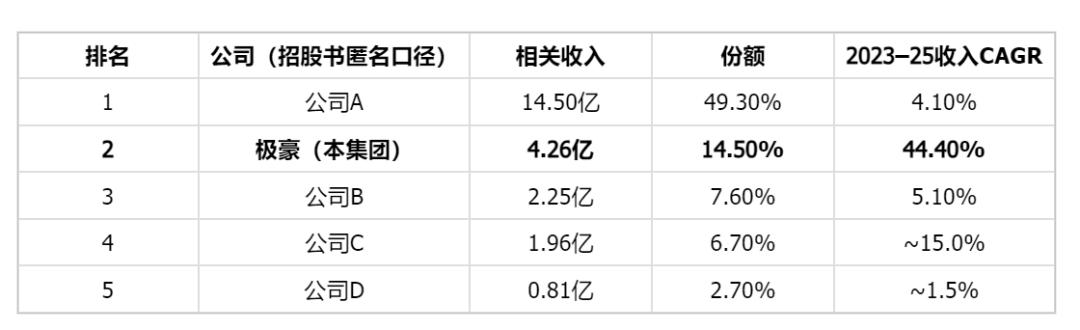
As shown in the table, the market leader is presumably Goodix Technology, with revenue approximately 3.4 times that of JIIOV and a 49.3% market share, making it an established industry giant. However, in this mature market with slow overall growth, Goodix only recorded a 4.1% growth rate, while JIIOV achieved a 44.4% compound annual growth rate.
The second-fastest growing company among the top 5 players has a compound annual growth rate of around 15%, which is only one-third of JIIOV's growth rate. In terms of shipment volume, JIIOV also ranks second with a 24.1% market share.
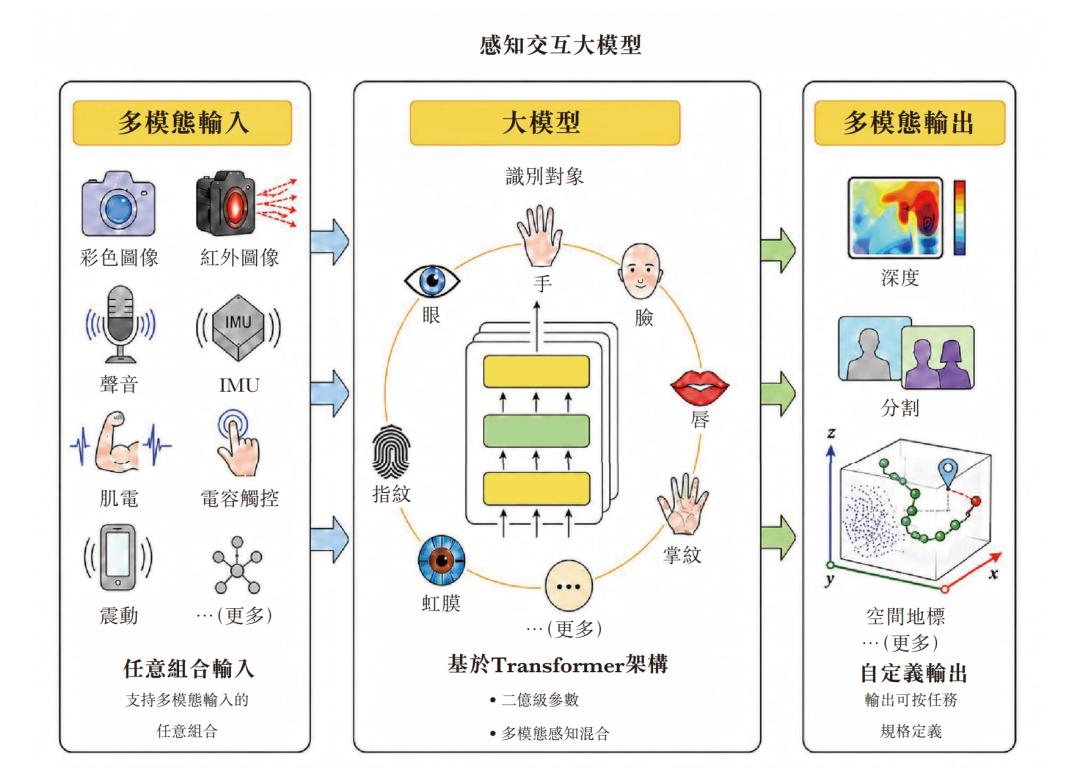
In other words, in a mature market that is approaching saturation, JIIOV is the only player still maintaining triple-digit accelerated growth. Its differentiated value proposition is: while competitors still rely on single-scenario algorithms and module stacking, JIIOV is currently the only company in China's sensing interaction market that owns a large-scale sensing interaction model. This unified multimodal architecture integrates fingerprint, facial, gesture, eye-tracking, and tactile recognition, theoretically enabling low-cost horizontal expansion into new terminal product categories.
However, whether this data flywheel and unified model can form a genuine competitive moat depends on the successful commercialization of smart glasses and embodied intelligence products. Currently, both sectors remain in the NRE development phase: smart glasses solutions have passed validation by four clients including Xiaomi and Honor, and vivo Vision has also adopted JIIOV's gesture recognition solution. The 5mm ultra-thin sensor for embodied intelligence is scheduled to complete module development in Q2 2026.
JIIOV's sales model also leads to high customer concentration: from 2023 to 2025, the top five customers accounted for 99%, 97.4%, and 89.6% of total revenue respectively, with the single largest customer representing 44.5%, 46.8%, and 41.4% of revenue in the corresponding years. While customer concentration decreased in 2025, having a single customer contributing over 40% of revenue remains a significant operational risk.
JIIOV does not sell directly to mobile phone brands, but distributes its integrated chips and algorithms through agents to module manufacturers, who then assemble the final modules and deliver them to end brands. The three major customer groups disclosed in the prospectus are all module manufacturers rather than end brands: Customer Group B, which produces camera modules and fingerprint modules, accounted for 44.5% of revenue in 2023 and 27.4% in 2025; Customer A, a fingerprint recognition module manufacturer, represented 28.2% of revenue in 2023 and 41.4% in 2025.
This upstream positioning has both advantages and disadvantages: the benefit is that the company is selected by 8 leading smartphone brands, providing a certain ceiling-level demand guarantee; the drawback is that JIIOV is separated from end brands by two layers (agents and module manufacturers), meaning its bargaining power and order visibility are constrained by intermediate links. If a major module manufacturer switches suppliers or reduces orders, the impact could be direct and severe. The supply side is also highly concentrated: in 2025, the top five suppliers accounted for 84% of total procurement, with the single largest supplier representing 50.1% of purchases.
However, JIIOV's operational efficiency is strong: in 2025, trade receivables turnover was only 19 days, inventory turnover was 76 days, and payables turnover was 46 days (thanks to its agent-based sales model that accelerates cash collection). This differs from many hardware companies that achieve revenue growth without corresponding cash flow improvement — JIIOV collects payments very efficiently.

No controlling shareholder, with core team background from Megvii and OmniVision
Since its establishment in 2020, JIIOV has completed the following equity financing and equity transfer transactions:
(Source / Compiled by 36Kr)
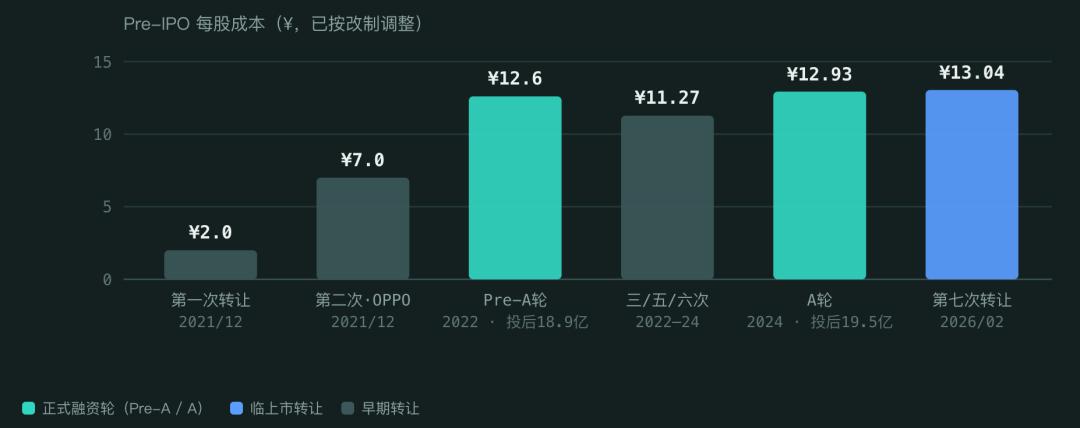
First equity transfer (Dec 2021): Only 2 yuan per share, involving a total amount of 102 million yuan. This was the absolute floor price, with investors being Beijing Qianxun and Beijing Xinghao (employee shareholding platforms)
Second equity transfer (Dec 2021): 7 yuan per share, involving 50 million yuan. Tourstar Investment (OPPO ecosystem) entered the market through connections with OmniVision and downstream suppliers;
Pre-A Round (Mar 2022, completed in Nov 2022): 100 million yuan invested at 12.60 yuan per share, with a post-money valuation of 1.89 billion yuan; investors included Will Semiconductor (50 million yuan), Qiming Venture Partners (40 million yuan), global distribution giant WPG Holdings (10 million yuan), etc.;
3rd / 5th / 6th equity transfers (2022-2024): Share price stabilized at 11.27 yuan;
4th equity transfer (Aug 2023): 9.62 yuan per share, with Beijing Qianxun transferring 49.1 million yuan worth of shares to Qiming Venture Partners;
Round A (Jun 2024): Haihe Yunbai invested 33 million yuan at 12.93 yuan per share, with a post-money valuation of 1.95 billion yuan;
7th equity transfer (Feb 2026, immediately before listing): 13.04 yuan per share, with investors Shenzhen Luqi (12 million yuan) and Xiamen Qingyue (33 million yuan).
Who is the biggest winner of this IPO? The entry cost tells everything. Early institutional investors who entered at 2 yuan and 7 yuan per share are now seeing paper gains ranging from several times to dozens of times, compared to the 12.93 yuan per share in Round A and the upcoming IPO offer price.
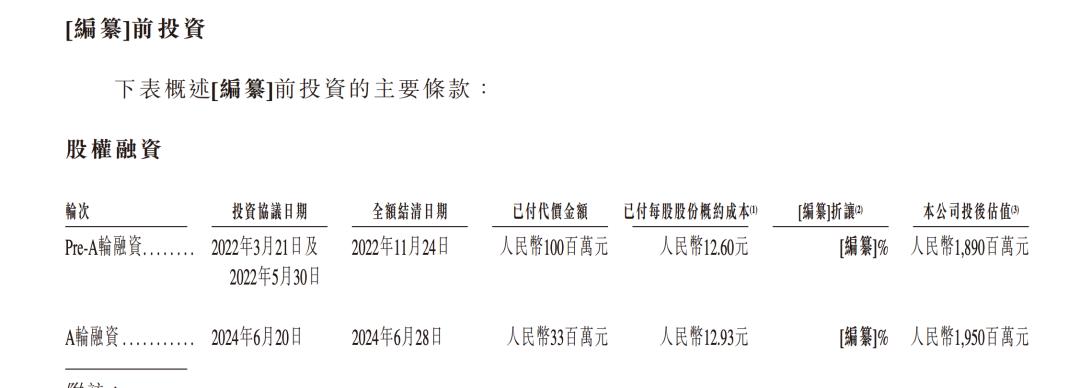
However, there is an unusual signal: the post-money valuation only slightly increased from 1.89 billion