Bulk snack retail, accelerating reshuffle
As Mingming Busy and Wanchen Group successively enter the "era of 20,000 stores", the duopoly landscape of the bulk snack sector has been basically established, with industry concentration further increasing, while mid-tier and tail brands will face accelerated market exit.
According to industry data, the combined market share of Mingming Busy and Wanchen in the bulk snack industry has long exceeded 75%. The leading industry players, leveraging their all-round advantages in store scale, supply chain, brand recognition, and capital, have built a formidable moat that small and medium-sized operators cannot easily surmount.
Since the start of this year, the two giants have simultaneously advocated for anti-involution strategies, fully shifting to refined operations, polishing private-label products and new single-store business models, which will make the industry's polarization even more pronounced.
The remaining survival space for small and medium-sized bulk snack brands is extremely limited, leaving them with no more than three viable paths: voluntarily exiting the market, aligning with leading brands, or completely pivoting to new business directions.
Accelerated Exit of Tail Brands
In the current bulk snack track, the overall market size and total number of stores continue to grow, but new market opportunities are almost entirely locked in by top-tier brands.
Per monitoring data released by GeoQ, in the first quarter of this year, 17 mainstream bulk snack brands opened 3,029 new stores while closing 828 outlets in the same period, resulting in a store opening-to-closing ratio of 3.66:1, significantly better than the full-year figure of last year. This is precisely the outcome of new store openings increasingly concentrating among leading players.
By the end of 2025, Mingming Busy operated nearly 22,000 stores, while Wanchen Group (300972.SZ) boasted a total of 18,314 outlets. In the first half of this year, the two companies maintained their store expansion momentum, both adding over 3,000 net new stores to continuously fill unrepresented locations across the country.
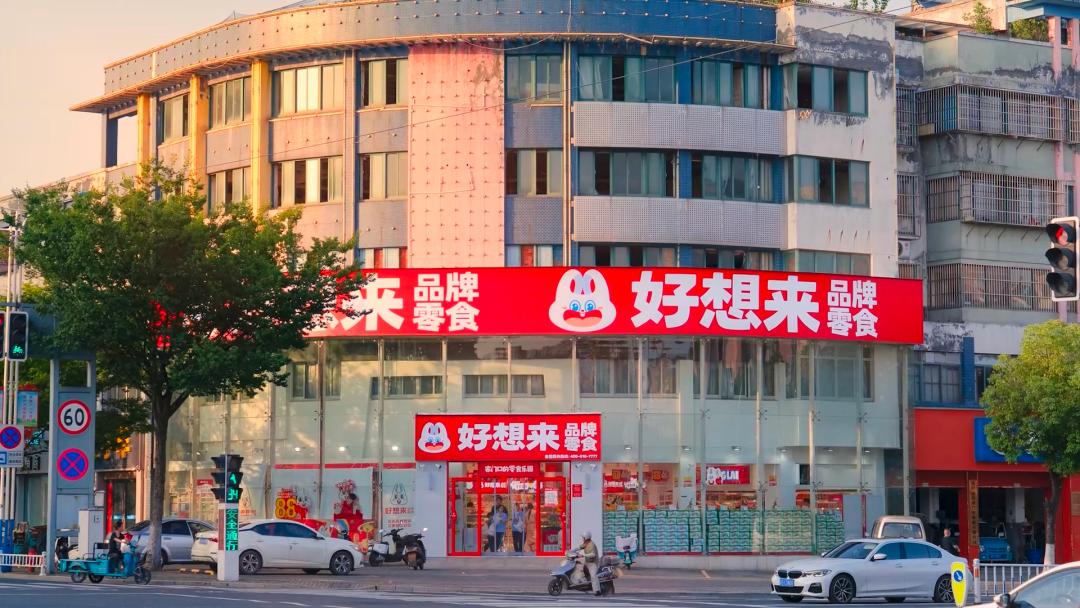
In sharp contrast, tail-end brands are exiting the market at an accelerated pace. A research report on the bulk snack industry published by Yicai in June revealed that the comprehensive store closure rate across the entire bulk snack sector reached 25%-30% in the first quarter of this year, while the closure rates of Mingming Busy and Wanchen Group remained at extremely low levels. This clearly demonstrates that the store closure wave is primarily concentrated among small and medium-sized brands.
A research note from Northeast Securities argues that the ultra-low store closure rate of leading brands is underpinned by their standardized supply chains and operational systems, which constitute core barriers that small and medium-sized operators cannot replicate. At present, incremental resources in the bulk snack industry have become highly oligopolistic, store expansion by small and medium brands has largely stagnated, leaving them only able to maintain existing operations with no remaining room for growth.
The Failure of Extensive Expansion Models
In past years, the bulk snack industry witnessed a race to open stores in lower-tier markets, with a large number of outlets densely deployed in county towns and townships, overstretching the consumption capacity of low-tier markets. Brands engaged in cutthroat competition in close proximity, with homogeneous rivalry intensifying sharply and customer bases of individual stores severely fragmented, ultimately rendering the price-for-volume business model ineffective.
To compete for limited foot traffic, brands launched fierce price wars, plunging the industry into a vicious cycle of low-price competition that drastically compressed profit margins for stores.
Data from a Cinda Securities research report shows that most small and medium snack stores only achieve a comprehensive gross margin of 18%-20%, and after accounting for rent, labor, logistics costs, and near-expiry product losses, their actual net profit margin falls below 3%. Previously, the payback period for new industry stores was generally around 12 months, but today the average payback period has extended to 24-36 months.
As the entire industry becomes mired in homogeneous competition, the advantages of leading enterprises are further amplified. Leveraging their scale and capital strength, they can adopt large-volume direct procurement and short payment terms to drive down procurement costs. Meanwhile, through deep insights into consumer demand and strong supply chain management capabilities, they can customize products in batches, develop private-label brands, and establish a unique profit structure.
Statistics indicate that customized SKUs under Mingming Busy now account for 34% of its total product offering. Per institutional research, by the first three quarters of 2025, private-label product sales of Wanchen Group made up 15% of its total revenue, with private products delivering significantly higher gross margins than generic branded goods, becoming a key driver of profit growth.
Warehousing and distribution efficiency, paired with digital operational capabilities, have further widened the operational performance gap between leading brands and tail-end players.
According to its 2025 annual report, Mingming Busy (01768.HK) has deployed 56 warehousing and distribution centers nationwide, with a total warehouse area of 1.232 million square meters, enabling 24-hour restocking for all its stores across the country and an inventory turnover period as low as 12.56 days. Wanchen Group, meanwhile, has established 48 ambient-temperature warehouses and 9 cold-storage facilities, achieving T+1 delivery in core regions to ensure rapid commodity turnover.
Against the backdrop of shrinking profit margins and mounting operational pressures, many small and medium-sized bulk snack brands have ceased building their own supply chains and conducting independent store expansion since the start of this year, instead opting to connect with supply chain hosting resources from leading players or industrial platforms to sustain operations via external product sourcing.
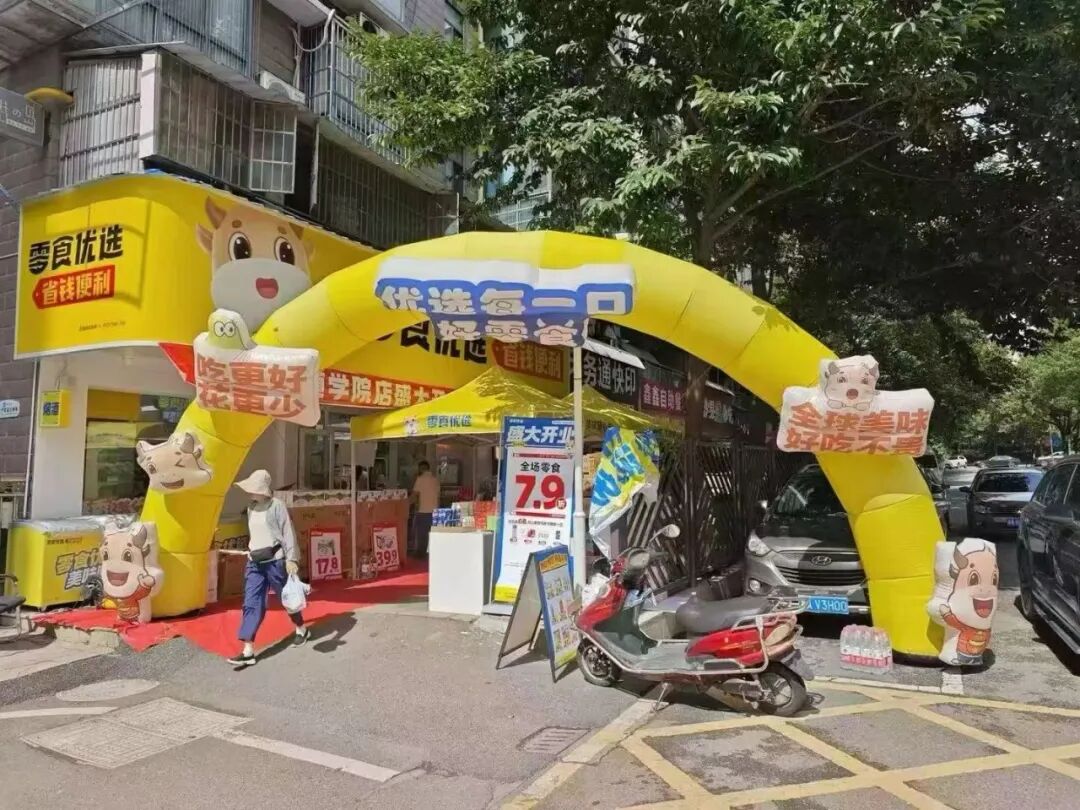
In February this year, Snack Preferred, a regional bulk snack brand with nearly 3,000 outlets, entered a deep strategic partnership with HK-listed supply chain enterprise Huitongda Network, setting up a joint venture to co-manage Snack Preferred. In the market's view, this represents a clear signal that small and medium bulk snack brands are actively seeking external support.
Oligopolistic Players Embark on a Long-Distance Race
Entering the industry's market exit cycle, leading bulk snack brands have proactively adjusted their growth logic. The two giants have voluntarily modified their competitive strategies, shifting from singular scale expansion to refined operations, and are now steering the new round of industry restructuring.
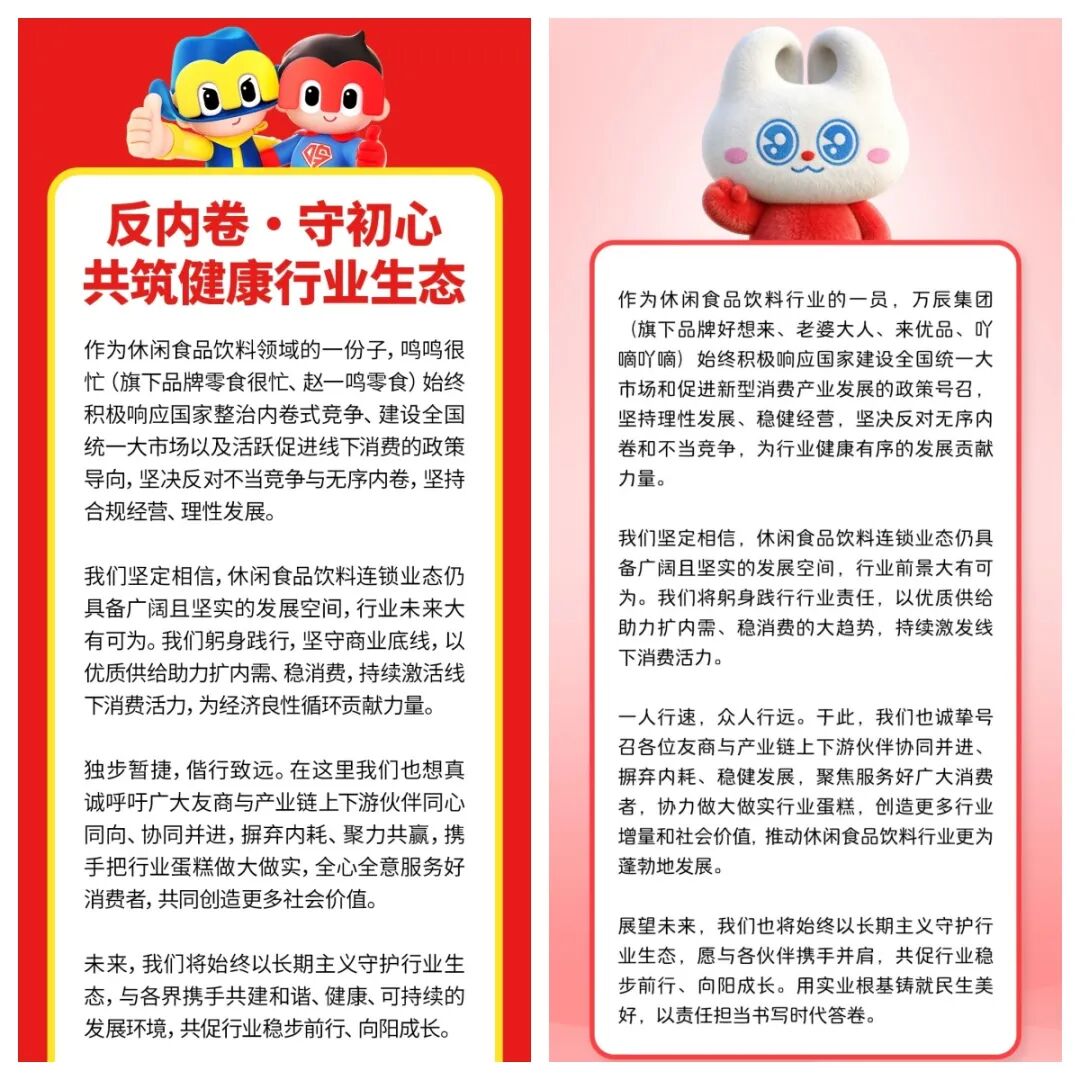
In June 2026, Mingming Busy and Wanchen Group simultaneously released anti-involution initiatives, marking a pivotal turning point for the development of the bulk snack industry that may put an end to the long-standing problems of unregulated expansion and internal friction.
At the same time, the two giants have reoriented their operational priorities, placing store profitability and operational efficiency at the top of their agenda.
In May this year, Wanchen Group announced in a public filing that it would terminate its brand marketing network construction project, and permanently reallocate the remaining over 50 million yuan of raised funds to supplement its working capital.
When the company implemented its private placement in 2024, it originally planned to invest over 100 million yuan to open 100 directly-operated stores in key cities across provinces including Anhui, Henan, Shandong, and Fujian. Two years later, the company determined that the necessity of executing the "brand marketing network construction project" had changed, and that continuing to invest in opening directly-operated stores was no longer appropriate at this stage.
At this year's April performance exchange meeting, Mingming Busy also explicitly stated that it no longer sets store opening numbers as a rigid KPI, and instead pays more attention to single-store GMV, franchisee survival rates, and single-store profitability, emphasizing that "only by running stores well can one open more stores."
To break through the growth bottleneck of the singular bulk snack track, leading brands have begun to iterate their store models, breaking the operational boundaries of purely snack-focused offerings to explore new growth avenues.
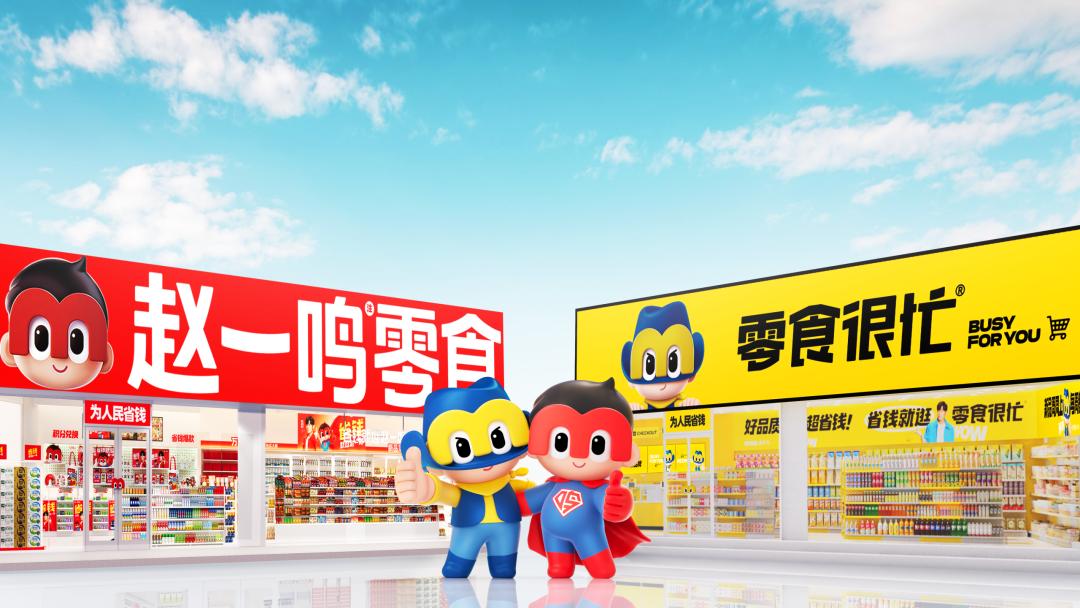
Mingming Busy has launched its Zhao Yiming 3.0 Value Supermarket concept, expanding in-store SKUs to over 3,000 and adding high-frequency essential categories such as daily chemicals, low-temperature frozen foods, and baked goods. Wanchen has rolled out upgraded versions of its Laiyoupin Value Supermarket and Huishengjia Community Discount Store to deeply integrate into community daily consumption scenarios.
An analysis from Cinda Securities' research report notes that this format upgrade of "snacks + essential daily goods" can effectively boost store repurchase rates and average transaction values, while mitigating the involutionary pressures within the pure snack segment.
On the distribution front, both companies have fully integrated into instant retail platforms such as Meituan and Taobao Flash Shopping, connecting offline in-store consumption and online home delivery scenarios to expand per-store revenue streams.
During the industry shakeout process, high-quality store locations vacated by closed small and medium-sized brands have mostly been taken over by franchisees of leading players, and the combined market share of the two duopoly leaders is expected to steadily increase.
After this round of profound industry reshuffling, the era of extensive growth for the bulk snack sector — driven by traffic dividends, low-price high-volume strategies, and blind store expansion — has come to a complete end, and industry competition is now returning to fundamental business principles.
A research note from Guotai Haitong Securities states that the domestic bulk snack industry still has mid-term growth potential, with untapped incremental opportunities remaining in low-tier counties, township markets, and unpenetrated regions in Northwest and North China. However, future industry growth will no longer rely solely on new store openings; instead, players will optimize returns from existing outlets and iterate business formats to unlock new growth. At this stage, the bulk snack industry has evolved from a speed-focused sprint into a long-distance race that prioritizes endurance capabilities.
This article originates from the WeChat Official Account "Zebra Consumer" (ID: banmaxiaofei), authored by Ren Jianxin, and published with authorization from 36Kr.