"Reconstructing" the Primary Industry, This Western Province Fights a Life-or-Death Battle
Recently, Guizhou has issued a five-year action plan to specify the full-scale advancement of the transformation "from selling liquor to selling a lifestyle", so as to promote the high-quality development of Guizhou's Baijiu industry.
As one of China's six major Baijiu producing regions, Guizhou accounts for over 80% of the nation's total Jiangxiang Baijiu production capacity. The industrial added value of its Baijiu industry once made up as high as 30% of the province's total industrial output, making it a well-deserved "top-priority industry".
However, the "growing pains" of the industry's in-depth adjustment are now spreading at an accelerated pace.
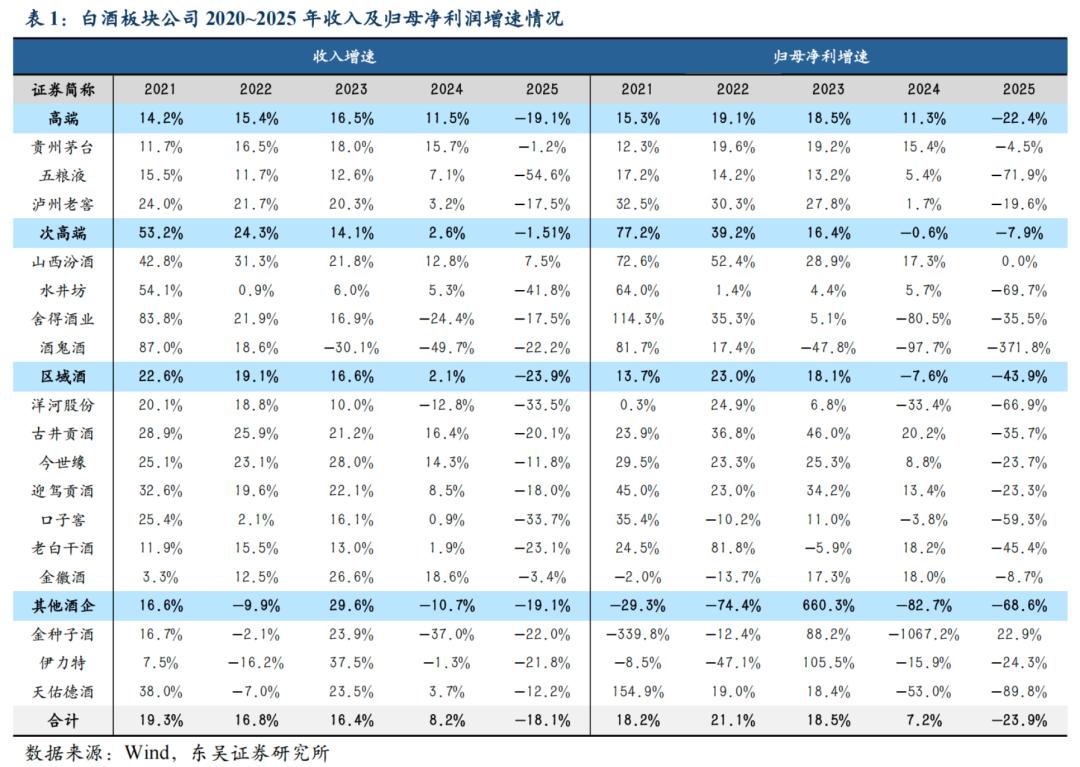
In 2025, Kweichow Moutai recorded its first-ever dual decline in annual revenue and net profit since its listing. In the same year, the added value of industries above designated size in Guizhou grew by 7% year-on-year, while the growth rate of the wine, beverage, and refined tea manufacturing sector was only 2.4%.
Guizhou's situation is not an isolated case.
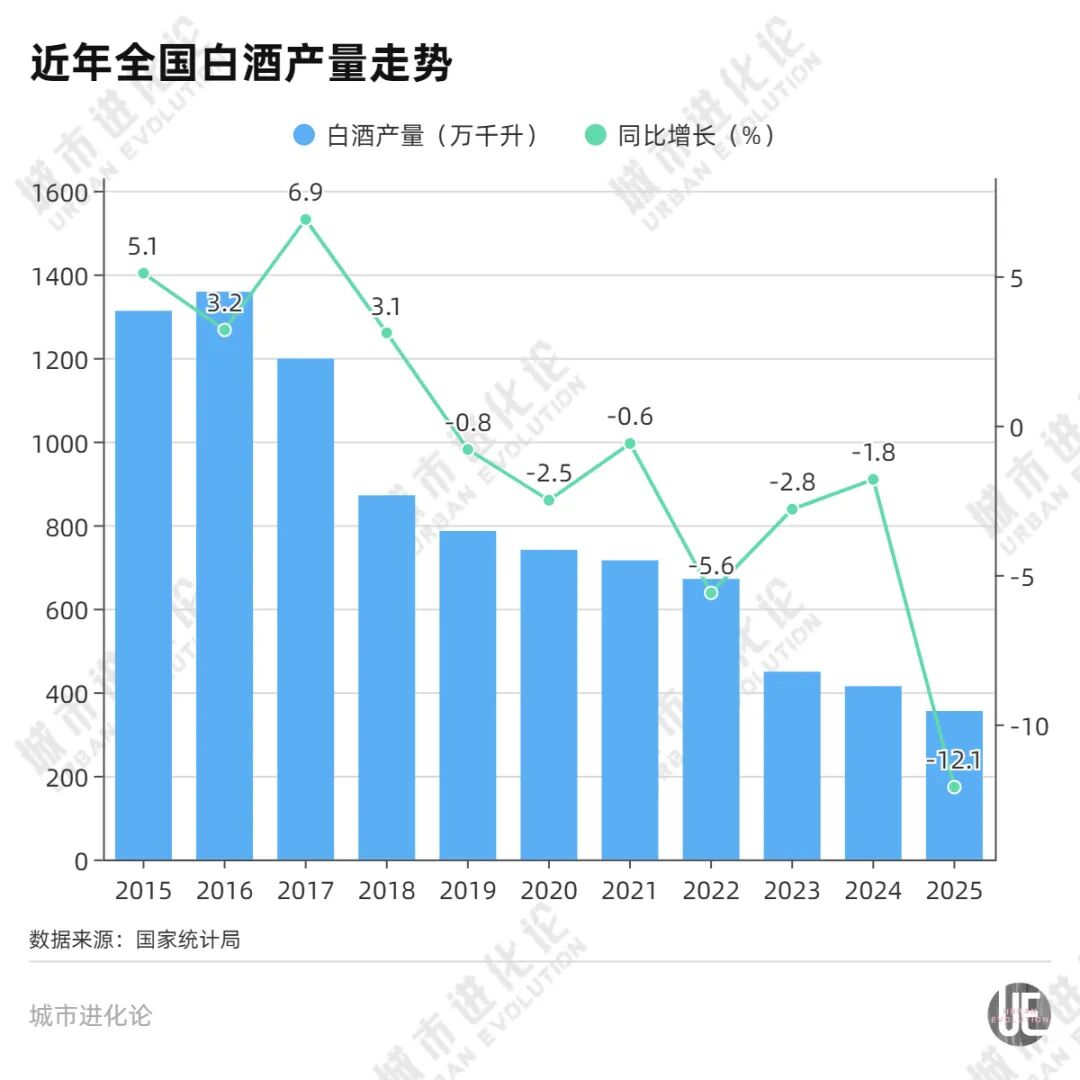
In the first half of this year, the market value of the A-share Baijiu sector plummeted by over 600 billion yuan, marking a 21.57% drop. The pressure on the production side is equally notable: from January to May this year, the total output of Baijiu from enterprises above designated size nationwide reached 1.452 million kiloliters, down 4.3% year-on-year. The full-year 2025 output stood at 3.549 million kiloliters, a 12.1% year-on-year decline, marking the ninth consecutive year of reduction.
Against this backdrop, key Baijiu industry hubs including Guizhou are undergoing a "collective transformation" to explore new development paths for their local pillar industries.
01
Trend
As the birthplace and core production area of Jiangxiang Baijiu, Guizhou once contributed over 40% of the total profits of China's Baijiu industry with only 30% of the nation's Baijiu output, securing a leading, independent position in the fiercely competitive industrial landscape.
With the industrial added value of its enterprises above designated size ranking first among the province's ten major industrial sectors, the Baijiu industry has become Guizhou's "number one pillar industry".
Leading liquor enterprises play a decisive role in this achievement.
In 2025, Guizhou's listed companies recorded a total operating revenue of 343.149 billion yuan, a record high; their total profit reached 127.194 billion yuan, ranking first in western China for the first time and eighth nationwide.
Among these enterprises, Kweichow Moutai topped the list with an operating revenue of 168.838 billion yuan, accounting for nearly half of the total revenue of all Guizhou-listed companies on its own. Its total profit (114.755 billion yuan) even took up a 90% share, ranking first among listed companies in western China and 11th across the country.
Yet the power of industrial cycles is unstoppable. Behind the glorious facade, the once solid "industrial moat" has already developed cracks.
Data released at the annual meeting of the Guizhou Baijiu Enterprises Chamber of Commerce shows that China's Jiangxiang Baijiu production capacity reached about 650,000 kiloliters in 2024, down 13.33% year-on-year. This marks the first decline in the industry's production capacity in nearly six years, and the price range of mainstream products is also trending downward.
According to data from the Guizhou Provincial Statistical Bulletin, in 2025, the added value of Guizhou's wine, beverage, and refined tea manufacturing sector grew by 2.4%, 4.6 percentage points lower than the growth rate of the province's total industrial added value of enterprises above designated size. Among major industrial products from enterprises above designated size, the output growth rate of "alcoholic beverages" was -3.1%; and among the retail sales of commodities by entities above the designated size, the growth rate of tobacco and alcohol products was -12.7%.
Also in that year, Kweichow Moutai saw its operating revenue and net profit decline by 1.21% and 4.53% year-on-year respectively. This was the first time the leading Chinese liquor giant recorded a dual drop in annual revenue and net profit since its listing in 2001, breaking the growth trend it had maintained for more than 20 years.
Meanwhile, the impact of market fluctuations has become more widespread across the region: a large number of small and medium-sized enterprises have drastically reduced production or suspended operations, intellectual property disputes in the industry are on the rise, and internal competition has intensified...
Local media outlets have pointed out bluntly that the opening year of the 15th Five-Year Plan period is a strategic opportunity for Guizhou's industry to accelerate its pace of catching up with the national level. From the perspective of the province's overall development, the Baijiu industry, a traditional pillar sector caught in a cyclical industry adjustment, obviously cannot afford to lag behind.
Looking back, China's Baijiu industry has shown clear characteristics of cyclical fluctuations, and each downturn has spurred the iteration of business logic. In the new round of industrial transformation, Guizhou is attempting to reposition itself.
02
Pursuing Transformation
The transformation began two years ago.
In early 2024, the Guizhou provincial government work report explicitly proposed to promote the integrated development of cultural tourism, sports tourism, bridge tourism, business tourism, and liquor tourism, and conduct in-depth research on specific measures to drive the transformation "from selling liquor to selling a lifestyle". This marked the first time this concept was mentioned in a local government work report.
Image source: Photo by Xu Shuai
A few months later, the "Implementation Plan for the Transformation from 'Selling Liquor' to 'Selling a Lifestyle' in Guizhou Province" (hereinafter referred to as the "Implementation Plan") was released. It aims to create new models, scenarios, and forms of business for the Baijiu consumer market, and foster new growth drivers for the Baijiu industry through the in-depth integration of Guizhou Baijiu with tourism and cultural resources such as the province's natural scenery and authentic local delicacies.
Since then, the Guizhou provincial government work report has highlighted this initiative for three consecutive years, with relevant formulations evolving from researching and promoting the transformation, to accelerating the shift, advancing it with greater efforts, and finally emphasizing innovative measures and quality upgrading.
A series of high-level policy deployments have sent a clear signal that Guizhou is taking the initiative to break through the existing bottlenecks and pursue transformation.
"Guizhou has chosen a path that breaks away from traditional frameworks." Some industry insiders note that at a time when the Baijiu industry, especially the Jiangxiang Baijiu segment, is undergoing in-depth adjustments, high inventory levels, price inversions, and changing consumer demands have become a "Sword of Damocles" hanging over the entire sector. Guizhou's move is essentially a systematic reconstruction of the industry's underlying logic.
Specifically, the core of the shift "from selling liquor to selling a lifestyle" lies in transforming to "selling services". This not only greatly expands consumption scenarios, but also reconstructs the value chain of the liquor industry — profit sources extend from pure liquor product sales to multiple segments including cultural tourism services, brand experiences, and cultural derivatives.
In the long run, in the face of new trends such as consumption upgrading, market diversification, and the rise of younger consumer groups, Guizhou's Baijiu industry needs to adopt a new development approach — leveraging culture and experience as leverage to drive the coordinated value growth of brands and producing regions, and ultimately realize the transformation.
While the government is taking the lead in promoting this shift, leading liquor enterprises are also actively responding.
Just one month after the "Implementation Plan" was issued, the 2024 mid-year market work meeting of Kweichow Moutai explicitly stated that "the transformation to solve the pain points of matching supply with demand is imperative", and the service concept should shift from "selling products" to "selling a lifestyle" tailored for different consumer segments.
Comparing the "Implementation Plan" with the newly released "Guizhou Province Upgraded Action Plan for Promoting the Transformation from 'Selling Liquor to Selling a Lifestyle' (2026-2030)" (hereinafter referred to as the "Upgraded Action Plan"), it is not difficult to see the deepening of local policy thinking and strategic upgrading in promoting this transformation.
For example, the plan clearly specifies the implementation of upgrading actions in four key areas: business forms, products, market entities, and promotion and marketing. In addition, based on previous exploration, it sets clear quantified targets:
By 2027, a number of exemplary Baijiu consumption scenarios will be built. At the provincial level, 10 distinctive chateaus, 10 liquor and food streets, 5 high-star Baijiu experience hotels, and 10 characteristic pubs will be newly developed, and 21 liquor-tourism integrated scenic spots will be upgraded, gradually enriching the lifestyle experience offerings around Baijiu.
By 2030, a comprehensive matrix of Baijiu consumption scenarios will be fully established. The concept of "transforming from selling liquor to selling a lifestyle" will be more widely recognized, becoming an industry consensus and a consumer trend, forming a tangible, experiential, and desirable lifestyle.
03
Competition
With the high-level promotion at the provincial level, Zunyi, as the core area of the global Jiangxiang Baijiu industry, undoubtedly undertakes the important task of leading and demonstrating this transformation.
The integration of liquor and tourism is reshaping Zunyi's cultural tourism landscape. Key nodes such as Moutai Town, Dongjiu Town, and Xijiu Cultural Park are connecting the Chishui River Valley into a "liquor aroma corridor". By integrating Jiangxiang Baijiu resources, red cultural heritage, and natural landscapes, multiple high-quality tourism routes have been launched, extending Baijiu consumption from pure product purchases to immersive experiences.
According to the "Upgraded Action Plan", Guizhou further proposes to "support the construction of Moutai Ancient Town in accordance with the standards of national 5A-level tourist attractions, and build it into a landmark scenic spot integrating liquor and tourism". The focus is no longer limited to the upgrading of products themselves, but to building an alcohol-centered industrial ecosystem.
Looking across the country, following Guizhou, many other key Baijiu industry hubs have also joined this transformation wave.
For example, Suqian in Jiangsu province, another of China's six major Baijiu producing regions, released the "Three-Year Action Plan for the Construction of Chateaus in Suqian (2024-2026)" as early as July 2024. The plan aims to build a new pattern of clustered development of distinctive chateaus, form a unique liquor-tourism integrated industrial system, and provide core support for the green food industry led by liquor brewing to achieve an output value of 100 billion yuan.
To this end, the local government has introduced highly supportive policies. For instance, in terms of supporting the brand development of chateaus, subsidies ranging from 300,000 yuan to 3 million yuan will be granted to chateaus that meet corresponding grading standards; for supporting the scaled development of liquor enterprises, a maximum one-time reward of 2 million yuan will be provided.
The latest development is that in May this year, Luzhou in Sichuan province issued the "Guiding Opinions on Accelerating the Construction of a World-Class Baijiu Chateau Cluster in the Luzhou Producing Area", launching the in-depth transformation "from selling liquor to selling a lifestyle". The document clearly states that during the 15th Five-Year Plan period, Luzhou will be built into a globally renowned Baijiu cultural experience destination, and the total revenue of the city's entire Baijiu industry chain is expected to exceed 200 billion yuan by 2030.
Luzhou, which is part of the "Chinese Baijiu Golden Triangle" together with Zunyi in Guizhou, is the world's only core producing area renowned for both Nongxiang and Jiangxiang Baijiu. The homogeneous competition among multiple regions means that the race for this transformation track will become increasingly fierce.
In line with the "Upgraded Action Plan", Guizhou is also offering tangible support in areas such as loan interest discounts and strengthening credit support for enterprises, including policies to "fully guarantee the land demand of cultural tourism projects that meet relevant regulations".
As Wan Xinggui, Secretary-General of the Brand and Marketing Expert Committee of the Guizhou Provincial Liquor-making Industry Association, pointed out, the competition in the next stage will be a dual contest between "excellent product quality" and "high soft value".
More importantly, for this western Chinese province, leveraging Baijiu — a unique IP with rich cultural attributes — to integrate cultural, sports, and tourism resources and form an alcohol-centered interconnected industrial system is of great significance for boosting consumption and industrial development.
Will Guizhou, the pioneer exploring this new path, be able to break through the industry cycle and achieve successful transformation?
This article is from the WeChat public account "City Evolution Theory", written by Cheng Xiaoling, and published with authorization from 36Kr.