In the AI era, is the "Genius Youngster" a lifelong title?
On the evening of July 6, Li Bojie posted simultaneously on Zhihu and X to vent his frustrations about his interview at DeepSeek.
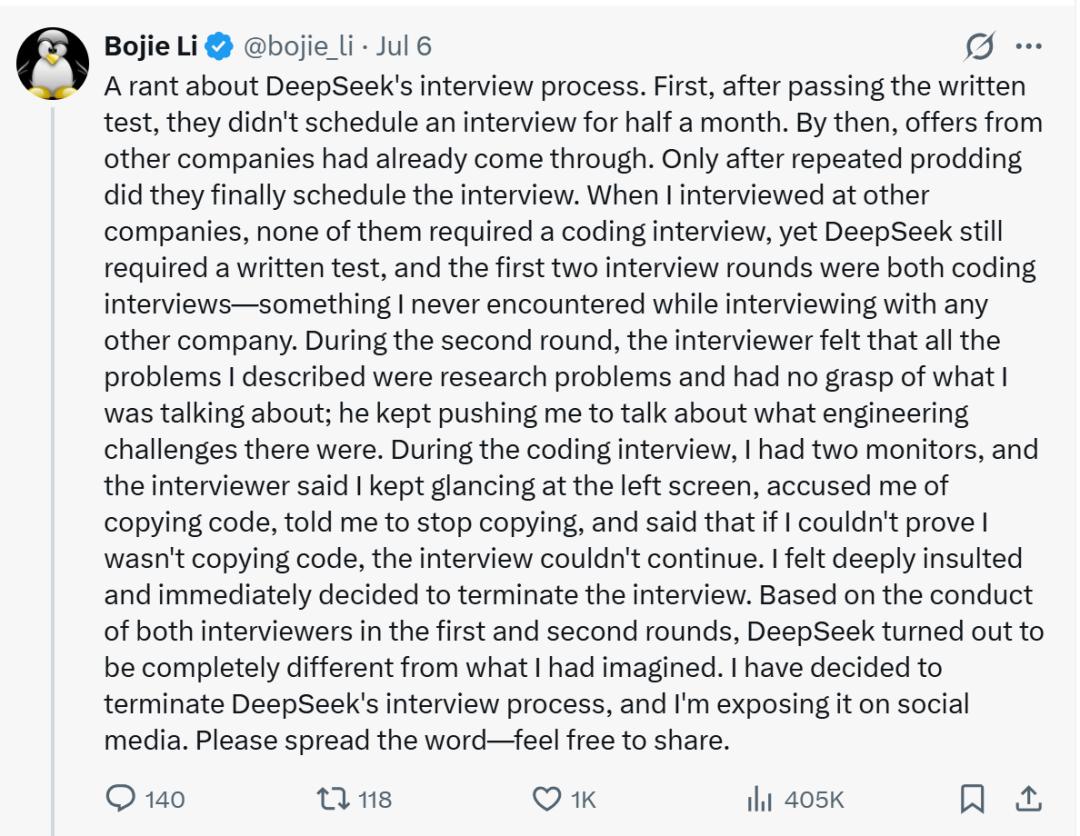
This incident indeed sparked extensive discussions, as the scenario of a "Huawei Genius Youth" encountering a "mythical AI powerhouse" is rarely seen.
However, the spread path of this incident was rather unusual — so much so that posting on self-media platforms like X alone could not resolve the issue, requiring a multitude of media outlets to explain the full context of what had transpired.
Over more than ten hours, the controversy spilled over from tech communities to mainstream web portals: programmers on V2EX split into two opposing camps, with users who own dual monitors stepping forward to share their experiences, saying "I also frequently glance at my secondary screen"; under the related Zhihu question, public sentiment gradually shifted from showing solidarity to scrutiny, and people began digging into his entrepreneurial journey after leaving Huawei in 2023. In the early hours of July 7, he had to publish another post to directly address public speculations: Pine AI is operating normally, I am not job-hunting due to failed entrepreneurship, but I want to join a foundational model company to "explore the higher ceiling of intelligence".
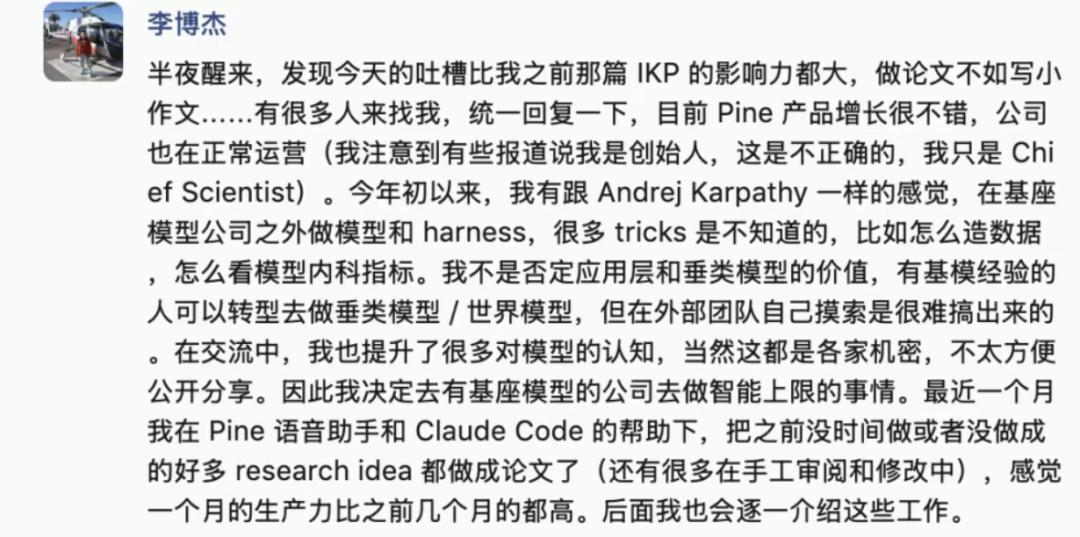
DeepSeek has remained completely silent. The company is currently in the middle of a large-scale hiring spree covering roles from algorithm research to supercomputing cluster operations, and it has no time — nor likely any need — to get involved in this debate; this has always been DeepSeek's style.
In parallel to this incident, just a few days ago, the lead of Tencent's Agent product QClaw also announced her resignation. In her public statement, she denied the widely rumored internal "horse race" competition, noting that QClaw and WorkBuddy "report to the same manager", and added that she next hopes to "solve one or more major problems that have plagued humanity" — a direct quote from her post.
Within 48 hours after her long post was published, headlines like "Earning millions at 25, building QClaw at 26, then she resigned" emerged in batches; immediately after, a wave of skepticism followed, with QClaw's overseas traffic data being unearthed, and the claim of "creating a viral hit with zero budget" being dismantled point by point.
These star employees from big tech firms all spoke out voluntarily, only to face a sudden shift in public opinion turning against them after their posts went viral.
This essentially boils down to the same underlying trend: The market is re-evaluating the "big company halo".
The halo is first and foremost a business asset for the company
If I went for an interview at DeepSeek and then posted on X, Zhihu, and Maimai complaining about flaws in the interview process, I would probably be roasted so hard that I'd have to quit social media.
But the "Huawei Genius Youth" title carries entirely different weight. Whether a company of the "new era" can be scrutinized by a genius from the "old era" has become a publicly debatable topic.
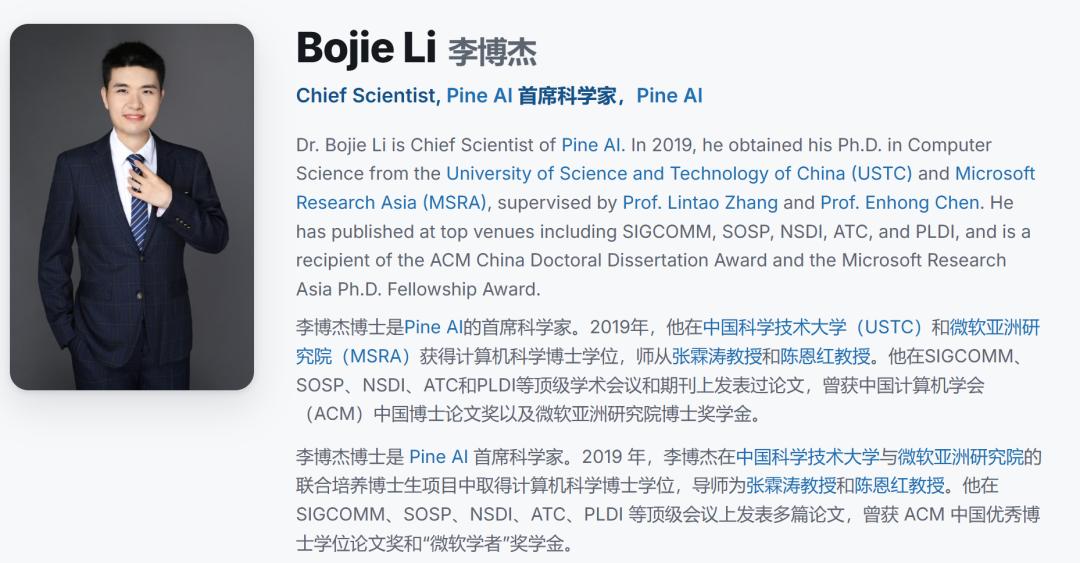
The title "Huawei Genius Youth" did not originally belong to people like Li Bojie — it was first and foremost a PR investment by Huawei. In June 2019, Ren Zhengfei stated in an internal EMT speech that Huawei "would recruit 20-30 genius youths from around the world this year, and aim to hire 200-300 more globally next year". The plan set three tiers of annual salaries, starting at 896,000 RMB, with the top tier ranging from 1.82 million to 2.01 million RMB. Over four years, only four people worldwide received the maximum salary package.
It is important to note the timeline: in May 2019, Huawei was just added to the Entity List. From its very inception, the "Genius Youth" initiative carried functions beyond regular business operations — to prove to the outside world that even under sanctions, Huawei could still attract the top talent globally. As a result, each selected individual's name, university, and salary were repeatedly covered by the media. These individuals naturally found themselves at the center of public discourse: everyone hopes that geniuses can bring about transformative breakthroughs.
Therefore, the roles of these "genius youths" have always been complex. In addition to tackling key technical challenges assigned by the company, they also serve as the public face of the company's technical capabilities, and to a certain extent, undertake part of the communication work for the company's employer brand. There's no way around it — the word "genius" is inherently attention-grabbing.
Tencent did not spend money on this, but it has also been carefully cultivating its own narrative. The official version of QClaw's story — a small 5-person team, zero marketing budget, over a million users within a week of beta testing — Zhang Shuyu added details in her long post: printing 30 flyers and distributing them downstairs, reaching out one by one to friends with social followings from 10 a.m. to 1 a.m. to ask for promotion help. These details are most likely true. But for an internal anecdote to become a widely known story across the internet, the prerequisite is that the platform is willing to let it spread: it proves that even within a giant like Tencent, legends of small teams building success from scratch can still happen.
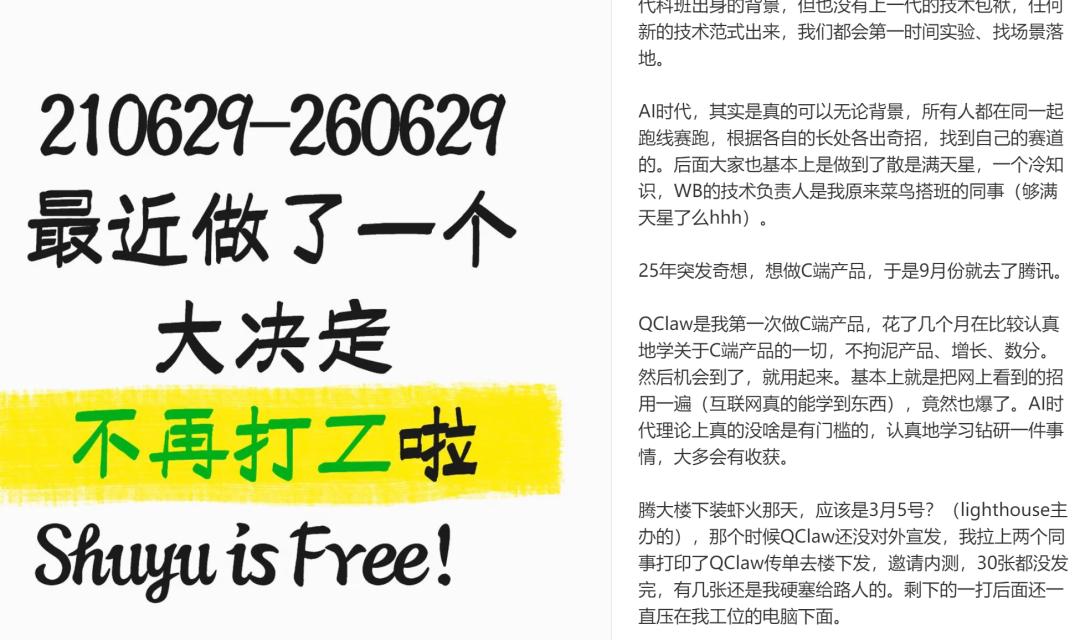
This has become the standard narrative of the AI era: small teams, no "old-timers" holding back, rapid delivery. This template is more than enough to make the highly paid "veteran" employees nervous: their own job security can easily be disrupted, so they'd better keep hustling.
At this point, we can at least draw a preliminary conclusion: "Geniuses" are assets built up by companies through real financial investment and PR resources. Their initial valuation is set by the company, based on the company's own needs — talent acquisition, business transformation, proving innovation capabilities — rather than necessarily based on what the individual has actually achieved.
The premium starts accumulating from the very first day someone is labeled a "genius".
After resignation, the premium belongs to the individual
While you are still employed, this premium belongs to the company; from the day you resign, it transfers to you. The title follows the individual, the company does not reclaim it, and the media continues to use it — Li Bojie left Huawei three years ago, but in all reports this week, he is still referred to as the "former Huawei Genius Youth".
Li Jing was one of the first people to go through this entire journey. During his 16 months at Baidu, he worked on 5-6 projects, none of which were ultimately launched, and he resigned on April 18, 2018, citing "personal development reasons". After that, his WeChat public account stopped updating after February 14, 2017, and he gradually faded out of the public eye. Huxiu once published a retrospective: "The Rise and Fall of 'Professor Li': Baidu's Hundred-Million-Yuan Failed Attempt in the Information Feed Business". His public reputation was valued at nearly 100 million RMB, but his actual business performance was almost zero — the gap between these two figures roughly represents the scale of that premium.
Eight years later, Zhang Shuyu completed the same journey in 10 months, which took Li Jing 16 months. QClaw launched its beta test in March this year, gaining over a million users in one week; its overseas version launched on April 21, with development taking only 5 days, and the team claimed 99% of the code was generated by AI. In the same month of April, the overseas version's traffic plummeted 99.19% month-on-month (based on third-party traffic data cited by The Paper on May 19). She resigned on June 29 — in her long post, she specifically marked the date: June 29, 2021 was her first day of full-time work, and five years later on the exact same date, she decided to "stop working for others". Some online claimed she paid for sponsored posts, but there's no evidence for that, and it's unnecessary anyway: the story of a 26-year-old who built a strategic product for Tencent would be picked up voluntarily by self-media outlets.
The problem is that this halo asset has a fatal flaw: outsiders cannot verify it. The real contributions of employees within big tech firms are invisible — the platform remains silent, former colleagues are bound by NDAs and non-compete agreements, and real project data is not public. How much of QClaw's viral success came from the product itself, and how much from Tencent's distribution channels and the "lobster" trend? The outside world has no way to know. Is Li Bojie's research at Huawei really worth the roughly 3 million RMB annual salary (the commonly cited figure in media reports)? The outside world also has no way to confirm. Buyers — the next employer, investors, the public — can only make valuations based on the title. For assets that cannot be verified, the inflated value only keeps building up; once it reaches a certain point, a single crack will trigger a concentrated public backlash. Li Bojie's crack was a frustrated complaint post he couldn't hold back, and Zhang Shuyu's crack was a resignation letter that came off as overly pretentious.
The public backlash is not a market failure. It is the market itself — a delayed, brutal price correction.
Of course, some people's halos can stand up to verification. Before being selected as a "Genius Youth", Zhihuijun was already a content creator with millions of followers, and all his works are publicly available online for anyone to inspect. He resigned to start his own business at the end of 2022, and in March 2025, his company Agibot reached a B+ round valuation of around 15 billion RMB; in July of the same year, the Agibot-led consortium acquired 2.1 billion RMB in shares of Sunway New Materials, with 11 consecutive 20% daily limit-ups over 16 trading days, pushing its market cap from 3.1 billion RMB to 37.1 billion RMB (at the peak). Others simply never entered this market: the four people who received the maximum 2.01 million RMB salary — Zhang Ji, Zhong Zhao, Qin Tong, Zuo Pengfei — the most well-known of them, Zhang Ji, turned down a 3.6 million RMB offer from another company back then, and has barely made any public appearances in the six years since.
The most valuable people are precisely the ones who stay the quietest.
The premium in Silicon Valley might be even larger
Some people attribute this phenomenon to being uniquely Chinese. On the contrary — big company halo premiums are far more excessive in Silicon Valley than in China.
TechCrunch compiled a list in February this year: former OpenAI employees have founded 18 well-documented startups, and the media refers to this group as the "OpenAI Mafia". The valuation levels for these companies are staggering: Mira Murati's Thinking Machines Lab secured a $2 billion seed round in July 2025, with a $12 billion valuation, setting a new seed round funding record. TechCrunch put it plainly in their original report — no product at all. Ilya Sutskever's SSI publicly committed not to release any commercial products before achieving safe superintelligence, yet its valuation still reached $32 billion in April 2025, growing sixfold in seven months. The Information reported an even more extreme case this year: a startup founded by a former OpenAI researcher, just six weeks old, targeted a $4 billion valuation for its fundraising. Six weeks of existence, just the "ex-OpenAI" prefix, and a $4 billion price tag.
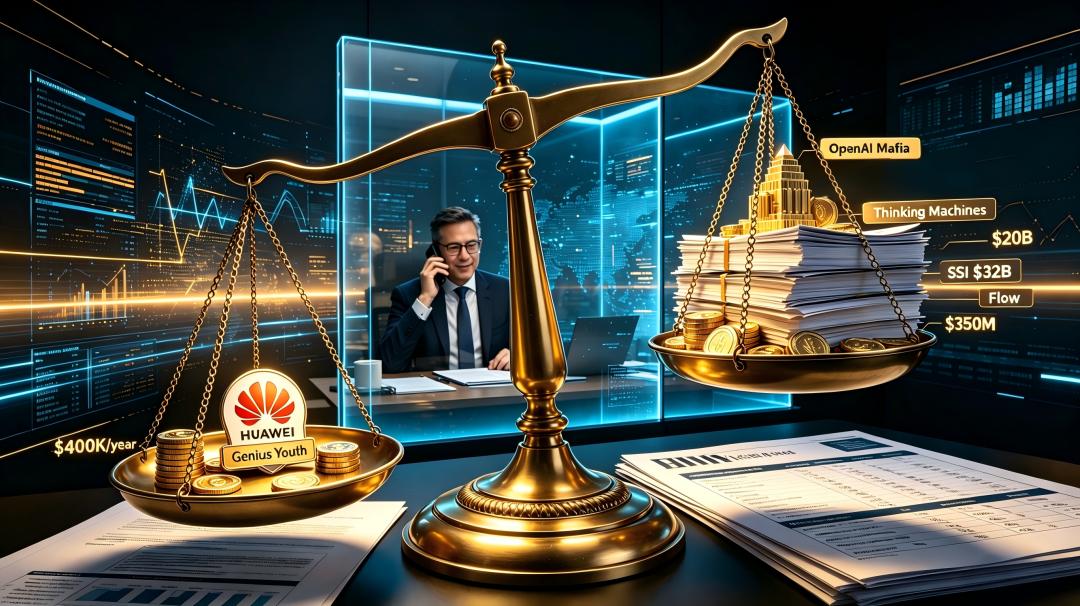
In terms of premium magnitude, the "Genius Youth" title cannot compare to the "ex-OpenAI" label.
Even more extreme is that Silicon Valley halos can even survive outright failures. Adam Neumann drove WeWork from a $47 billion valuation to a disastrous IPO collapse, and investors paid roughly a $1 billion severance package just to get him to step down. Three years later in 2022, a16z wrote a $350 million check for his new real estate startup Flow — the largest single investment in a16z's history — and the company was valued at $1 billion before it even opened for business.
But Silicon Valley has something that China lacks: a set of private mechanisms to verify the authenticity of these halos. Before investors set a price for an "ex-OpenAI" talent, there is a standard practice called "backchannel reference" — bypassing the candidate themselves, making confidential calls to 3-5 people who have worked with them. VC partner Hunter Walk put it bluntly: the references provided by the candidate themselves "are going to say glowing things", only offering positive feedback, while the truly valuable information comes from those off-list calls. When a16z partner Chris Dixon was asked why he dared to invest in Neumann, he answered with the same logic: "We do our own research". You might disagree with their conclusions, but the price is a verified price, the bet is a voluntary bet, and the losses come out of professional investors' own pockets.
China's halo market is missing this critical step. Background checks are just procedural formalities, former colleagues dare not speak out, platforms never endorse the capabilities of their former employees, and the media only amplifies narratives without verifying facts. With no one performing the verification step, inflated value stays embedded in the price; once a flaw emerges, the only correction mechanism left is a public online mob attack. To squeeze out inflated value, Silicon Valley uses a few confidential reference calls, while China uses viral trending topics.
The difference in consequences falls on the individuals involved: in Silicon Valley, halo devaluation manifests as a lower valuation in the next funding round — the numbers look bad, but the person still retains their dignity. In China, halo devaluation means the individual is dragged through repeated public scrutiny, and even their legitimate, non-inflated achievements get tarnished in the process.
Conclusion
So, is the "Genius Youth" a lifetime title?
The title does stay with you for life. The media will continue to use it, as that is the inertia of it being a communication asset. But its purchasing power does not. The truly iconic scene this week did not play out on social media trending lists, but in that DeepSeek interview room: a star AI company founded in 2026, facing a candidate with a glittering resume, ignored the famous title, administered two rounds of coding tests as usual, and raised questions on the spot when doubts arose. One can debate whether their approach was crude — scheduling the interview half a month late, making plagiarism accusations face-to-face, which is far from being respectful — but the nature of it is clear: The new generation of buyers is refusing to pay the price set by the previous generation of platforms, choosing to inspect the product for themselves.
This is the ultimate conclusion drawn from these two viral incidents: the premium of big company halos will not disappear, but the