Pudu Robotics, Not Wanting to Be an "Old Fool"
In the first half of this year, the narrative surrounding embodied intelligence has grown increasingly grand.
Every so often, new investment and financing news related to embodied intelligence emerges in tech circles, continuously raising industry expectations.
Meanwhile, a disconnect has appeared between the hype and real-world implementation in this track: the vast majority of players are still stuck in the demo and small-scale delivery stages, with very few having achieved a fully closed commercial loop.
Pudu Robotics is one of the rare exceptions amid this widespread frenzy.
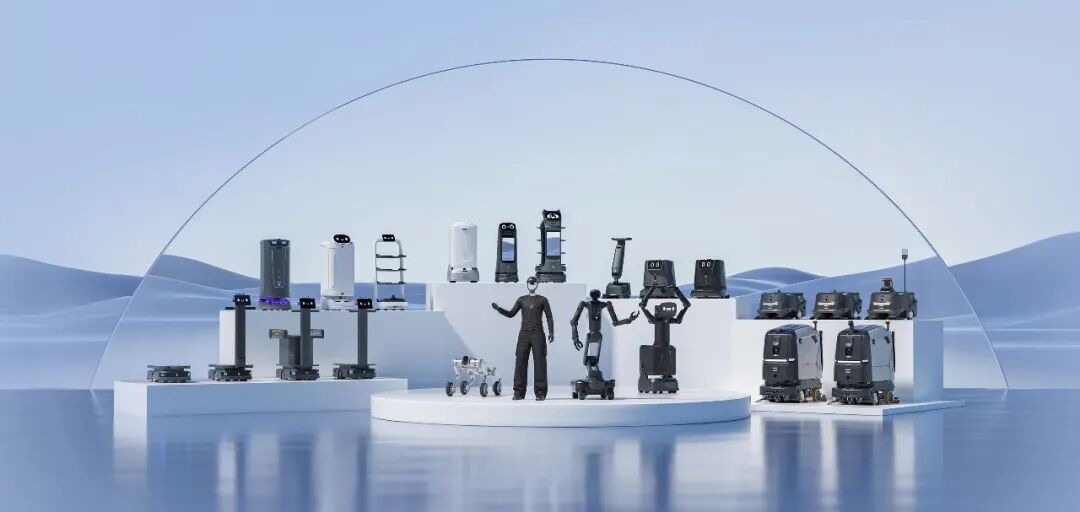
This player, which started out with food service robots, has taken a different path from the mainstream: instead of fixating on the humanoid robot narrative, it dived into the mundane, repetitive, and seemingly unglamorous commercial scenarios such as restaurant back-of-house operations and hotels, to iteratively develop its embodied capabilities from real use cases.
As a result, while other players are still struggling to achieve mass production and delivery, Pudu has already shipped over 100,000 units.
However, for the far-reaching embodied intelligence industry, commercialization does not equal the perfect answer. Every step forward in this sector could bring new uncertainties, meaning Pudu cannot afford to slow down its evolution.
Business First, Narrative Second
In 1835, when Darwin landed on the Galápagos Islands aboard HMS Beagle, he discovered that closely related finches had evolved completely different beaks depending on which island they inhabited: seed-eating finches had thick, strong beaks; insect-pecking finches had slender, sharp beaks; and nectar-sipping finches had curved, hook-like beaks.
In other words, the environment shapes demands, and demands define form.
This evolutionary rule also applies to robots. Although Pudu Robotics is now among the first tier of embodied intelligence players, its origins are fundamentally different from those of the current batch of startups that grew out of the physical AI narrative.
At this stage, most players focus on humanoid forms, first envisioning the final product shape, then iterating and upgrading while searching for applicable scenarios. This approach can indeed drive capital expectations and gather R&D resources, which is a natural part of the long-term exploration of the industry.
However, when Zhang Tao founded Pudu Robotics in 2016, he did not have the luxury of relying on narratives to sustain his business.
Back then, there were countless "stories" in the market. Embodied intelligence, robots, and other concepts were lost among a sea of popular investment targets, and could not easily capture investors' attention as they do now.
Before that, Zhang Tao had founded EZ Robotics, a company focused on home scenarios. But at that time, the household robot market suffered from weak demand and difficult implementation, and the business ultimately failed to form a closed commercial loop, ending in disappointment.
Serial entrepreneurs are often deeply marked by their previous failures. Those who have stumbled in B2B or government projects will likely avoid long-cycle, project-based businesses in their next venture. Those who have experienced the pain of not finding a viable commercial model will tend to be extremely pragmatic in their next move.
Zhang Tao is exactly that kind of entrepreneur. In his second venture, he set aside all romantic ideas and adopted a new mindset: first, identify a sufficiently high-demand scenario, develop a dedicated product that fits it, and then gradually build up general capabilities from that foundation.
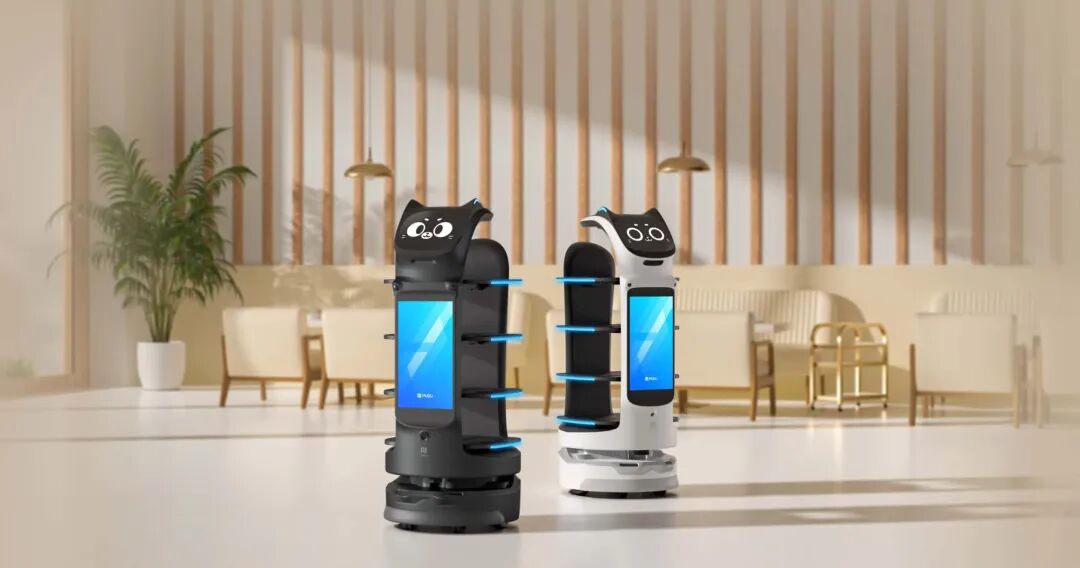
Eventually, the unglamorous but high-demand food delivery scenario caught his eye: as long as a robot could stably carry food from the kitchen to the dining table, it would create clear commercial value. Under the technical conditions of that time, choosing restaurants with closed environments and relatively fixed routes also helped reduce many technical implementation challenges.
Take the "Happytogo" robot launched in 2017 as an example. It was counterintuitive to the prevailing aesthetic standards of the industry at that time: all non-essential structures were removed, leaving a final product that was little more than a mobile base with multi-layer trays, essentially a self-navigating sideboard.
But in the robotics industry, the food service scenario is ultimately a narrow niche.
In 2019, Pudu Robotics had already shipped over 5,000 food delivery robots. In an interview at that time, Zhang Tao stated that Pudu would remain focused on food service robots for a long time, before striving to grow from "the most valuable food service robot company" to "the most valuable robot company."
Over the following seven years, Pudu Robotics expanded into more commercial scenarios, first entering the commercial cleaning sector, then gradually moving into factories, logistics warehouses, and other environments. Each time it entered a new "island," it evolved a new type of "beak."
However, the Galápagos evolutionary logic is rooted in the ecosystems of isolated islands. When Pudu Robotics stepped out of its food service "island" and into the new continent of embodied intelligence, its past survival philosophy would face new tests in a far more complex industrial ecosystem.
Pudu Robotics Does Not Want to Be Seen as an "Old-Timer"
The usually steady Pudu Robotics has made a subtle shift in its attitude toward embodied intelligence.
Back in 2024, Pudu Robotics first put forward an industry judgment, predicting that the service robot sector would evolve into an ecosystem where dedicated, quasi-humanoid, and humanoid robots coexist.
In just three months of the second half of that year, from the release of its first quasi-humanoid robot PUDU D7, to the five-fingered dexterous hand PUDU DH11, and then the full-size bipedal humanoid robot PUDU D9 — in terms of product forms, it completed its layout of both quasi-humanoid and humanoid embodied carriers at once; in terms of execution hardware, it entered the core components sector with its five-fingered dexterous hand, filling the gap in its execution capabilities.
After this series of moves, Pudu Robotics, which previously had a relatively shallow presence in embodied intelligence, completed its multi-form and multi-path layout in one go, securing a seat at the core table.
But this was very uncharacteristic of Pudu.
As mentioned earlier, Pudu Robotics was known in the industry as a staunch pragmatist, focusing on nothing but steadily building a viable commercial model. Its sudden acceleration in the embodied intelligence sector seemed like a rushed attempt to rebrand itself.
One key reason is that embodied intelligence is not just a business track — it is an admission ticket.
In the past two years, embodied intelligence has become one of the most hyped public "pastures" in the market. Hot money, top talent, and even tech headlines have all flocked to this field.
However, the rules of the commons are harsh: when too many cows graze, the grass is quickly depleted. The embodied intelligence sector is no exception. While entry barriers seem low, the narrative-driven market has a limited carrying capacity.
The AI sector has already proven that in terms of market imagination, "old-timers" cannot compete with "newcomers." Zhipu AI burned 4.7 billion yuan in a year, yet its market value reached hundreds of billions of Hong Kong dollars, while established companies like Xiaomi and Meituan, which have tens of billions in profits, struggled to keep up.
A similar divide now exists in the robotics industry, with two distinct groups at the table.
The first group is the barefoot newcomers.
These players have no legacy business burdens or revenue targets. From the day they were founded, they have staked all their value on embodied intelligence. Their advantage is agility, but their disadvantage is a lack of solid foundations. If the market hype cools down, they could quickly run out of funding.
The second group is the established players with existing revenue streams, and Pudu is a typical example.
Pudu, which entered the market early, has a solid main business, with its hardware products deployed across the globe. It has clearly built a viable commercial scenario, but every coin has two sides: its mature business is both a foundation and a drag, making Pudu seem like an "old-timer."
Take its cleaning business as an example. Pudu Robotics entered this sector in 2021, and after several years of development, this business now accounts for over 70% of its revenue, becoming its core pillar. Its products feature AI garbage recognition and active cleaning capabilities, which can intelligently identify different types of waste and proactively locate them. This perception technology has naturally been incorporated into its broader AI narrative.
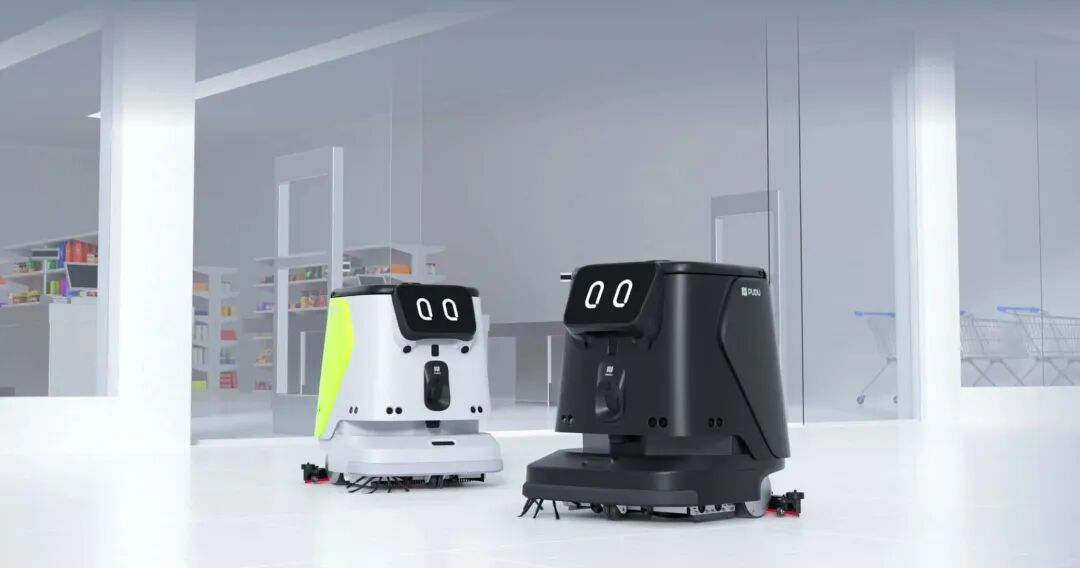
However, these capabilities are not unique to Pudu. High-end consumer robotic vacuum cleaners have long achieved similar dirt recognition and active cleaning functions.
The capital market tends to be crude when assigning labels. Talking about AI within the boundaries of an existing hardware business will never allow a company to break free from the constraints of being seen as a mere hardware vendor.
In other words, while some embodied intelligence startups that have not yet achieved mass production can chase sky-high valuations just with demos, Pudu, if it stays confined to its existing niches, risks being permanently labeled as a commercial hardware manufacturer, with its valuation tied to conventional metrics like shipment volumes, gross margins, and payment cycles.
Therefore, while Pudu may disdain the hype in this "commons" and even criticize the industry for being full of empty stories, it cannot afford to lose its admission ticket to the game.
After Securing the 10-Billion-Yuan Valuation, the Real Test Begins
In the end, Pudu Robotics obtained that admission ticket.
In April 2026, Pudu closed a new round of financing of nearly 1 billion yuan, pushing its post-money valuation past the 10-billion-yuan mark.
The investor base is a mix of state-owned capital and industrial capital, including Longgang Financial Holdings, AIA Investment, BAIC Capital, and Lens Technology. There are no short-term speculative funds; almost all investors are long-term players with industrial resources.
The financing will be mainly used for R&D in embodied intelligence technology, expansion of its product matrix, deeper penetration into global markets, and large-scale production capacity building.
In other words, the capital market has ultimately recognized Pudu's new identity, acknowledging that it is no longer just a hardware vendor selling food delivery and cleaning equipment, but a legitimate player at the embodied intelligence table. The two-year narrative upgrade has finally been solidified.
On the other hand, as the table changes, so do the exam questions.
For example, in the current domestic embodied intelligence landscape, Pudu has a rare advantage that most other players lack: an overseas revenue base that consistently accounts for over 80% of its total revenue.
The logic is that whether it is food delivery robots or cleaning robots, the core value proposition is to replace human labor and reduce costs. In regions with high labor costs, the return on investment cycle is shorter, and customers are more willing to pay. This calculation is straightforward in developed countries in Europe and America, but more complicated in China.
The key question is: to what extent can the advantages Pudu has accumulated over the years be transferred to the embodied intelligence sector?
Pudu Robotics has offered many answers, but the most critical one may be its recently launched "One Brain, Multiple Forms" technical architecture.
According to Pudu Robotics, different types of robots can be built on a unified underlying general algorithm large model to form a standardized brain. With only lightweight adaptive training tailored to different scenarios and demands, these robots can be rapidly deployed and put into use.
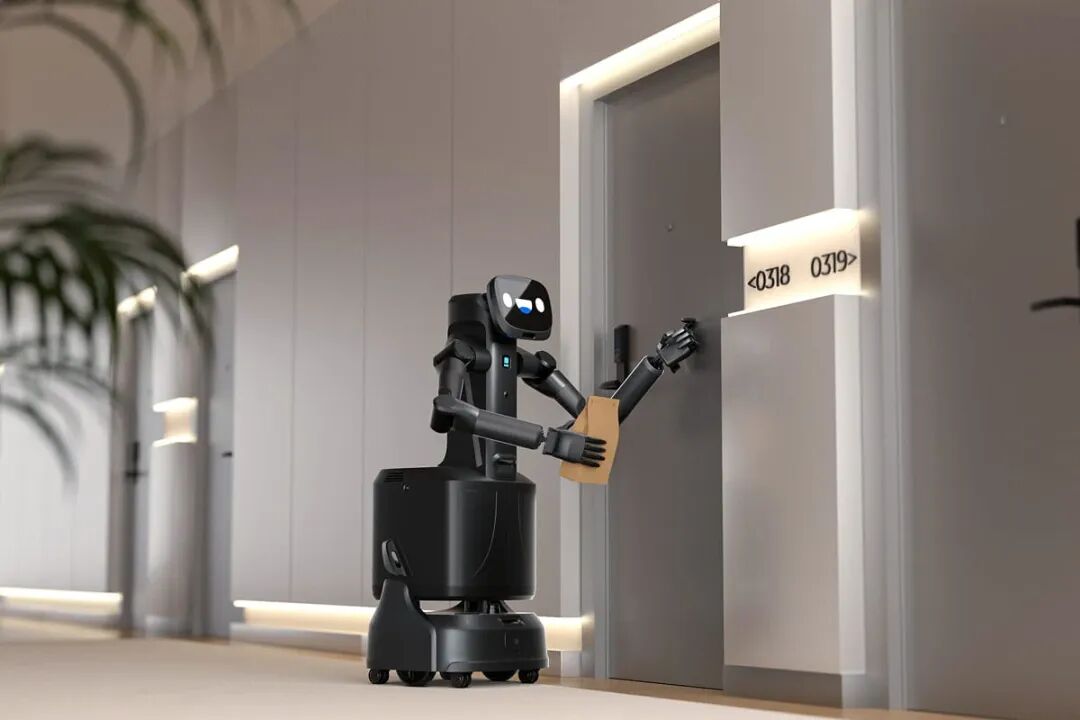
This architecture is essentially a bridge built by Pudu Robotics, whose core purpose is to convert the massive data accumulated from its traditional businesses into bargaining chips in the new embodied intelligence game.
At the end of the day, Pudu Robotics has previously excelled in the commercialization exam, achieving high scores through steadiness and deep cultivation. But the long-term embodied intelligence field represents a completely different exam, where technical priority far outweighs commercialization, and few people care about overly specific short-term landing points.
The scoring standards, grading logic, and problem-solving approaches have all changed. It remains to be seen whether Pudu's past advantages will turn into drags, and whether its pragmatic roots will become a burden in a capital-intensive race. Pudu Robotics will have to provide the answers.
Fortunately, this exam has only just started. Pudu Robotics still has plenty of time to write its response.
This article is from the WeChat official account "guangzi0088" (ID: TMTweb), written by Wen Yehao, edited by Wu Xianzhi, and published with authorization from 36Kr.