The commercialization of eVTOL involves far more challenges than just "getting off the ground".
The boom of the low-altitude economy often starts with an aircraft.
Over the past few years, the debut of real eVTOL prototypes, the rising popularity of the flying car concept, low-altitude route pilots, and the entry of local industrial funds have quickly turned this sector into a high-frequency term in emerging industries. Compared with traditional drones, the passenger and cargo-carrying aircraft represented by eVTOL clearly carry greater imaginative potential: it not only points to low-altitude logistics, emergency rescue, and urban governance, but also to future urban air mobility, intercity transportation, and three-dimensional travel.
Behind this boom, what deserves more attention is not the imagination of market space, but the fact that the industry is moving from conceptual demonstration to the stage of certification, type approval, and operation system construction. Public information shows that new domestic technologies such as unmanned flight and electric vertical takeoff and landing have achieved rapid breakthroughs, with 19 type certifications for unmanned aerial vehicles completed, and more than 70 new aircraft models under review.
Meanwhile, the newly revised *Civil Aviation Law of the People's Republic of China* came into effect on July 1, 2026. It has further improved institutional arrangements at the legal level to support the development of the civil aviation manufacturing industry, transportation industry, and low-altitude economy, and strengthened the management of the design, production, maintenance, and flight activities of civil unmanned aerial vehicles.
However, as the industry moves from concepts, test flights, and exhibition booth displays to commercialization, a more practical issue has begun to emerge: getting an aircraft to fly is only the first step.
What truly determines whether eVTOL can operate successfully is not just the parameters of a single model, nor a single successful flight, but whether it can access a stable, compliant, safe, cost-controllable route that users are willing to pay for.
In other words, the commercialization of eVTOL is not just about manufacturing the aircraft, but about making a complete low-altitude operation system work.
An eVTOL flying from point A to point B seems like a simple flight mission. But if you break down this route, you will find that behind it is a whole set of systems engineering: where to place the takeoff and landing points? How to coordinate airspace? How to meet airworthiness and operation standards? Why would passengers or cargo owners pay for it? What to do when weather conditions change? How to divide safety responsibilities? Can operating costs be covered? Can maintenance, insurance, scheduling, and emergency systems provide long-term support?
These issues are becoming the key for eVTOL to move from "flying" to "being usable".
In the first phase of the low-altitude economy, the industry focused on who could get the aircraft to fly first; in the second phase, the more critical question is who can make it operate safely, compliantly, stably, and at low cost.
A single route is far more complex than the aircraft itself
The most visible part of eVTOL is the aircraft itself.
This is not hard to understand. Compared with airspace management, airworthiness certification, operation scheduling, and safety responsibilities, the aircraft is more intuitive and more communicable. An aircraft capable of vertical takeoff and landing, a low-altitude flight demonstration, or an imaginative rendering of future urban air mobility can quickly make the public feel the technological progress of the low-altitude economy.
But commercialization is not a demonstration. The progress of airworthiness certification is becoming an important indicator to observe the commercialization of eVTOL. Public data shows that China has completed type certification for 19 unmanned aerial vehicles, with more than 70 new aircraft models under review. This indicates that the industry has moved beyond early test flights, demonstrations, and technical verification to enter a more rigorous stage of certification and operation preparation.
Taking the EHang EH216-S as an example, public information shows that this model has obtained the type certificate, standard airworthiness certificate, and production license issued by the Civil Aviation Administration of China; in 2025, its related operating airline also obtained the operation certificate. An operation certificate means that the enterprise has the ability to carry out commercial flights safely and compliantly, and marks that eVTOL commercialization has further moved from "product certification" to "operation certification".
Another case is the AutoFlight V2000CG. According to information from the East China Regional Administration of Civil Aviation, the V2000CG is the first ton-class electric vertical takeoff and landing aircraft system project accepted by the East China Administration. The review team carried out airworthiness certification based on the design and operation characteristics of eVTOL, and completed the type certification work after 1 year and 5 months.
These cases show that the industry has entered a new stage from "can it be built and fly" to "can it be produced, delivered, and operated in compliance with regulations".
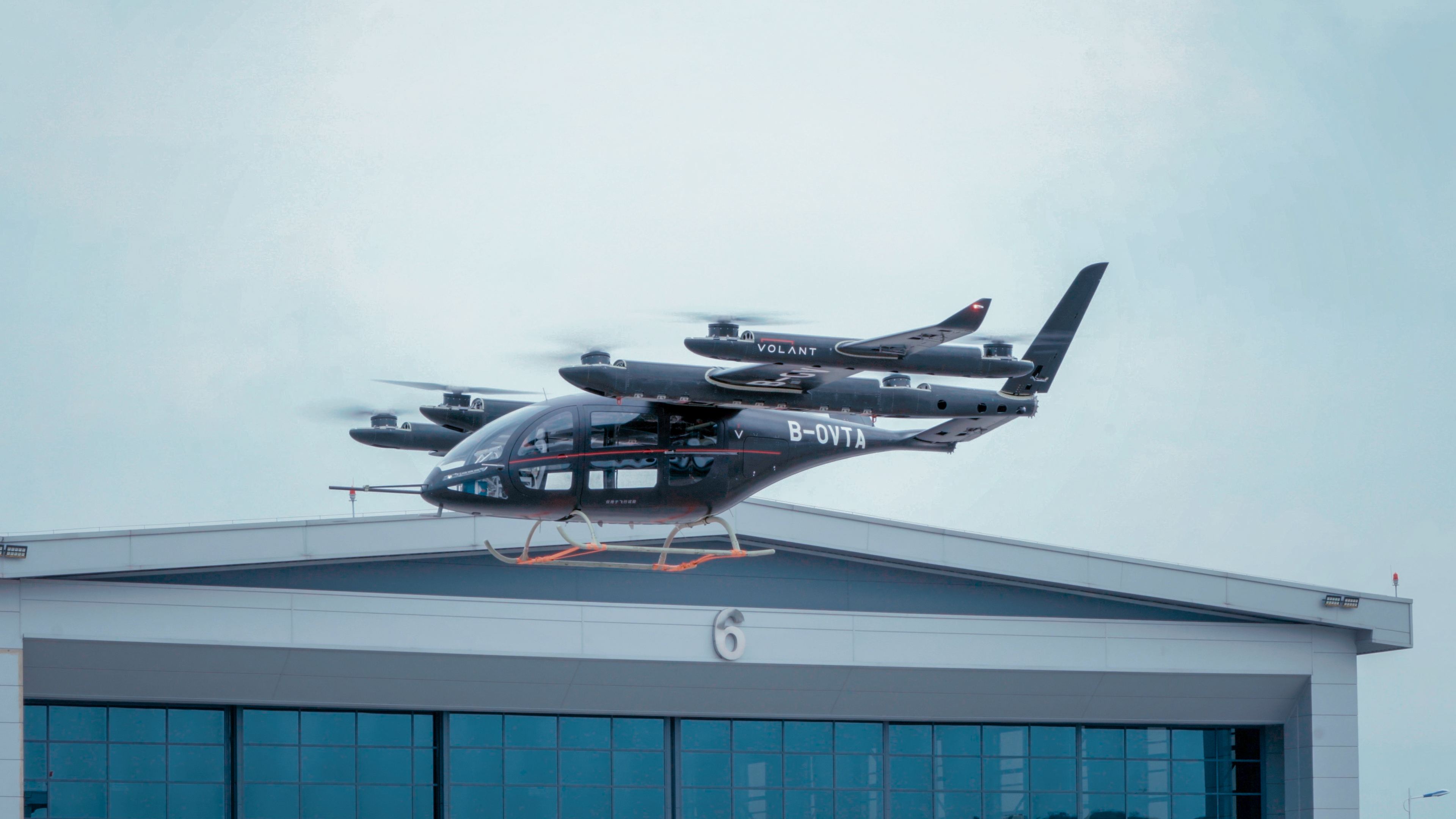
For eVTOL, the debut of a real aircraft is just the starting point. After entering real scenarios, the first problem it faces is the route. To establish an eVTOL route, at least three questions need to be answered.
The first question is whether the demand is sufficiently stable.
Whether for passenger travel or cargo transportation, eVTOL cannot form a commercial closed loop only by occasional demand. It requires stable passenger flow, cargo flow, or public service demand. For example, are there truly high-frequency, rigid, payable demands in scenarios such as from urban core areas to airports, short-distance commuting between urban agglomerations, transportation to islands and mountainous areas, emergency rescue, medical transfer, fire inspection, and intercity logistics?
If the demand is unstable, eVTOL will easily remain at the stage of test flights, demonstrations, and single-point pilots.
The second question is whether the costs can be justified.
The cost of eVTOL is not only the procurement and manufacturing cost of the aircraft itself. After actual operation, it also includes costs such as airworthiness verification, vertiport construction, route operation, energy supply, maintenance support, flight scheduling, safety management, insurance, and personnel training.
This means that the commercialization of eVTOL is not simply replacing ground transportation, but reconstructing a new low-altitude travel or low-altitude transportation chain. If it cannot prove time value, efficiency value, or public service value in specific scenarios, it will be difficult to move from "able to fly" to "normalized operation".
The third question is whether the responsibilities are sufficiently clear.
Once eVTOL enters cities and public spaces, safety and responsibility will become prerequisites for commercialization. Clear rules are needed for where it flies, who schedules it, who supervises it, how to determine liability in case of accidents, how to protect passengers, how to compensate for cargo losses, and how to retain data.
This systemic pressure has already begun to emerge. According to public data from the Civil Aviation Administration of China, by the end of March 2026, more than 3.8 million drones had been registered under real names in China, with over 430,000 operators; in 2025, drones accumulated 45.3 million flight hours, a year-on-year increase of nearly 70%. The rapid expansion of low-altitude flight activities means that when higher-safety-level passenger and cargo-carrying aircraft such as eVTOL enter low-altitude airspace in the future, the requirements for communication, navigation, surveillance, meteorology, scheduling, and safety supervision will only be higher.
This is also where eVTOL differs from ordinary hard technology products.
Some technological products can be quickly accepted by the market as long as their performance is strong enough; but eVTOL is different. It naturally enters public spaces, involving airspace, safety, urban governance, and public trust. The ability of an aircraft to fly is only the starting point, and whether it can be accepted by the social system determines whether it can truly expand.
Commercialization is constrained by the operation system
Looking further beyond eVTOL, you will find that what the low-altitude economy truly lacks is not just more advanced aircraft, but an operation system that can keep the aircraft running for a long time.
This system at least includes several levels.
The first is the airworthiness and safety system.
For passenger and cargo-carrying aircraft, airworthiness is not an additional link, but an entry ticket to commercialization. Whether for passenger travel or cargo transportation, the aircraft must prove that it has sufficient safety in the design, manufacturing, testing, operation, and maintenance links.
This is also why the commercialization pace of eVTOL can hardly be determined solely by enterprises themselves. It requires the regulatory system, testing and verification capabilities, airworthiness certification resources, and operation standards to advance synchronously.
The second is infrastructure.
The vertical takeoff and landing capability of eVTOL reduces its dependence on traditional airports, but it does not mean that it does not need infrastructure. To operate normally, it requires takeoff and landing points, energy supply, communication and navigation, low-altitude perception, meteorological services, operation management, and emergency support.
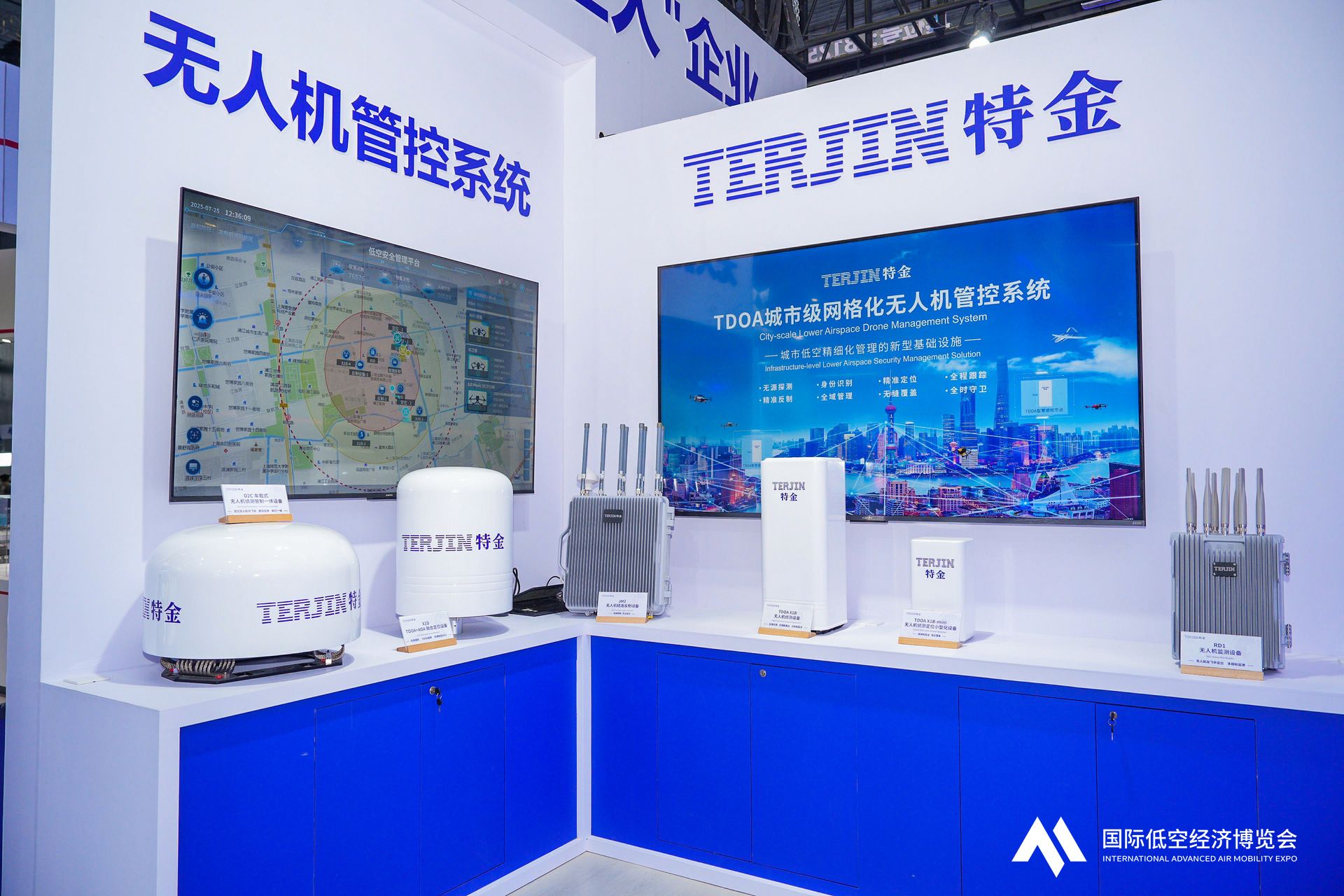
This also explains why the low-altitude economy cannot be promoted solely by complete aircraft manufacturers. Public information from the Civil Aviation Administration of China mentions that the construction of low-altitude service support capabilities is being accelerated, including the construction of a civil low-altitude flight service scheduling platform, continuously improving the integrated support capabilities of low-altitude communication, navigation, surveillance, and meteorology, and promoting the construction of a low-altitude surveillance network; meanwhile, 47 flight service stations have been built nationwide, 38 of which have passed the compliance inspection by regional civil aviation administrations; during the "15th Five-Year Plan" period, efforts will be made to achieve a 100% real-name registration rate for civil drones, with the number of valid drone license holders exceeding 1 million, and the total annual flight hours of civil low-altitude aircraft exceeding 80 million hours.
For eVTOL, these capabilities are not background facilities, but prerequisites for achieving normalized operation in the future.
The third is operation scheduling.
After eVTOL enters real scenarios, it is not a single aircraft flying alone, but multiple aircraft, multiple routes, and multiple types of scenarios operating together. How to schedule, how to avoid obstacles, how to respond to weather changes, and how to handle emergencies will all affect commercial efficiency.
This also means that the competition for eVTOL is not just between complete aircraft manufacturers, but will extend to links such as avionics systems, communication-navigation-surveillance perception, safety supervision, low-altitude infrastructure, and operation services.
The last is public trust.
Cargo-carrying aircraft can start with cargo and public service scenarios, but passenger-carrying aircraft will eventually face ordinary passengers. Whether users are willing to take it, whether they are willing to pay for faster commuting or intercity travel, and whether they believe it is safe enough will all affect the commercialization speed of eVTOL.
From this perspective, what eVTOL truly needs to accomplish is not just technical verification, but the establishment of social trust.
Cargo transportation takes the lead before passenger travel
The most imaginative scenarios for eVTOL are often passenger travel.
Air commuting, airport transfers, intercity flights, and short-distance transportation in urban agglomerations are all sufficiently attractive scenarios. They also make it easiest for the public to understand the future vision of the low-altitude economy: the time originally wasted in ground congestion is reorganized through a low-altitude route.
But from the perspective of commercialization difficulty, passenger travel may also be the scenario with the highest threshold.
It has higher requirements for safety, airworthiness, operation, insurance, public trust, and urban management. A passenger route must not only prove that the aircraft can fly, but also that passengers are willing to take it, regulators allow it to fly, cities can manage it, accident liability can be traced, and operating costs are sustainable.
In contrast, scenarios such as cargo transportation, emergency response, fire protection, inspection, and intercity transportation may become earlier entry points for eVTOL and other passenger and cargo-carrying aircraft to verify their operation capabilities.
The AutoFlight V2000CG is a typical case. As a ton-class eVTOL aircraft system project, its certification path shows that scenarios such as cargo transportation, emergency response, and transportation in special areas may become the first entry points for passenger and cargo-carrying aircraft to verify their operation systems. Public data shows that the V2000CG is mainly oriented to scenarios such as low-altitude logistics, emergency material transportation, and emergency rescue, and has completed type certification.
These scenarios may not be as communicable as "air taxi", but they can more easily prove the practical value of the low-altitude economy.
In other words, the low-altitude economy should not only focus on "when can we realize air commuting", but also on whether scenarios such as cargo transportation, emergency response, fire protection, inspection, logistics, and public services can be successfully implemented first.
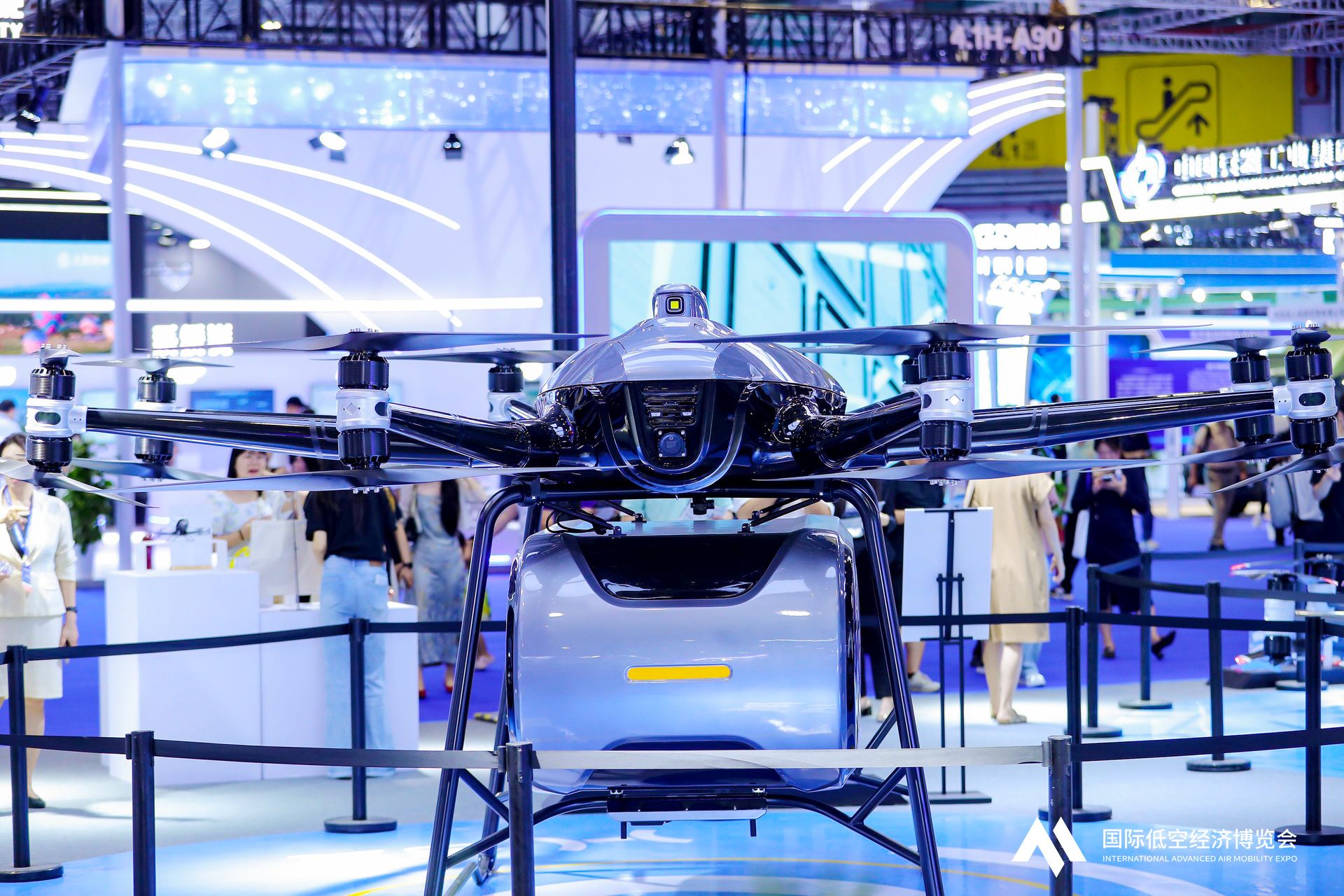
For eVTOL, commercialization may not be a one-step leap into mass travel, but to first verify safety, scheduling, cost, and operation systems in cargo and public service scenarios, and then gradually move to larger-scale passenger scenarios.
The truly important question is not how many more aircraft will be unveiled, but how many repeatable operation routes these aircraft can access and how many real scenarios they can serve.
To understand the low-altitude economy, you need to go to the industrial site
For this very reason, understanding eVTOL and the low-altitude economy cannot be limited to news, policies, and financing events.
Many issues will only become specific when you enter the industrial site: are there enterprises engaged in avionics, power systems, materials, communication, positioning, and safety supervision alongside an eVTOL? Are local governments, scenario application parties, and operation service institutions involved behind a low-altitude route? Can scheduling, response, communication, and safety mechanisms be seen in a low-altitude flight demonstration? Are the topics discussed in a forum conceptual hype, or real issues such as airworthiness, operation, compliance, talent, insurance, and scenario implementation?
This is also why the 2026 International Low-Altitude Economy Expo is worth observing in the context of industry changes.
According to public information, the 2026 International Low-Altitude Economy Expo will be held at the National Exhibition and Convention Center (Shanghai) from July 22 to 25, with the theme "Harness New Momentum of Low Altitude, Usher in a New Chapter of Economy". The exhibition is expected to cover an area of 60,000 square meters, gather more than 400 exhibitors, and arrange more than 80 conferences and activities.
If you only regard it as a low-altitude equipment exhibition, you will underestimate the significance of such exhibitions at the current stage.
Judging from the announced exhibition lineup, the exhibition on the one hand brings together eVTOL complete aircraft manufacturers such as EHang, Volocopter, TCab Tech, SKYLA, AutoFlight, and Aerofugia; on the other hand, it also covers supporting links such as avionics, additive materials, communication-navigation-surveillance perception, safety governance, and low-alt