The leading visual intelligence enterprise in China's civil aviation sector has launched its IPO, with its stock price plummeting by 17% at the opening of trading.
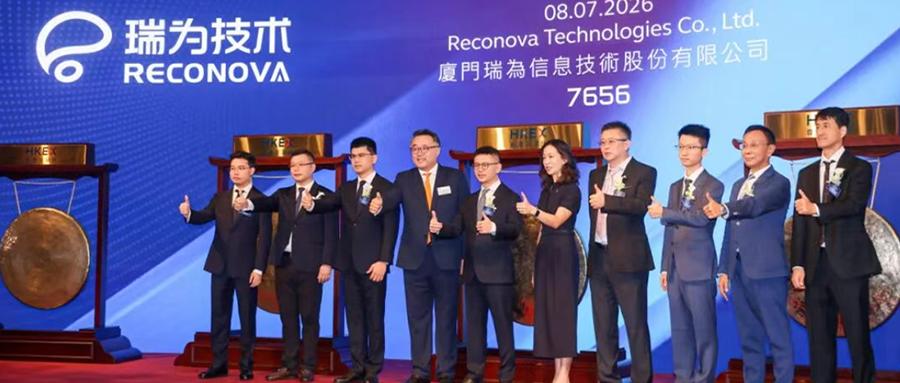
Zhidx Report on July 8: This morning, Xiamen-based visual intelligence enterprise Rayvision Technology was officially listed on the Hong Kong Stock Exchange.
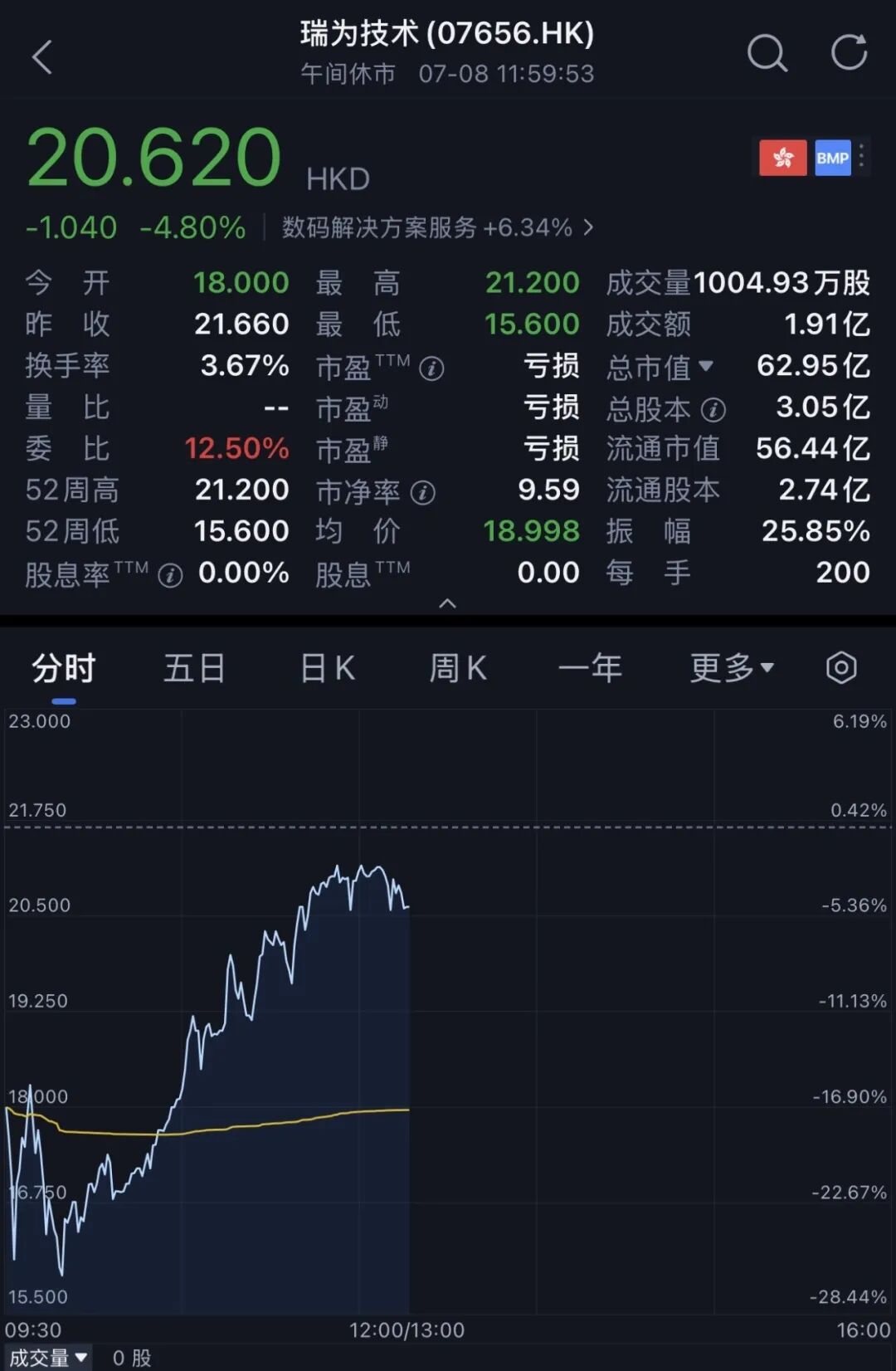
Its issue price was HK$21.66 per share (approximately RMB 18.76), and the opening price stood at HK$18 per share (approximately RMB 15.59), representing a 16.9% drop from the issue price. As of the midday trading break, its share price was 4.8% lower than the issue price at HK$20.62 per share (approximately RMB 17.87), with a total market capitalization of HK$6.295 billion (approximately RMB 5.455 billion).
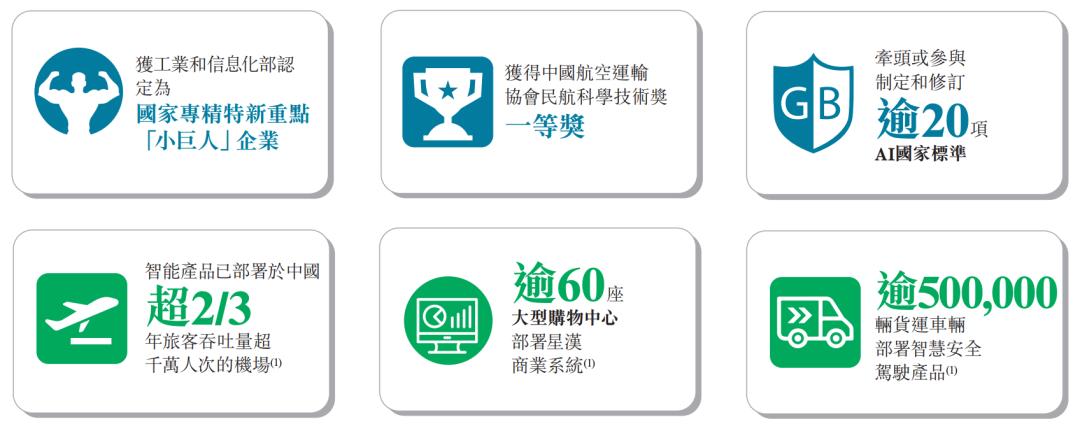
Founded in 2012, Rayvision Technology focuses on leveraging its self-developed visual large models, deep learning technologies, multi-spectral imaging technologies, and hardware-software co-design capabilities to deliver a full range of intelligent products for visual perception, visual cognition, and visual reasoning, with core application scenarios covering civil aviation, commercial spaces, and safe driving.
The company's business scope includes visual intelligent products, robots, and intelligent agents. It has already launched the Xiaorui Travel Service Robot and the Xiaoyi Baggage Handling Robot, and developed three visual intelligent systems: RecoSee, RecoAware, and RecoThink, to enhance internal R&D efficiency.
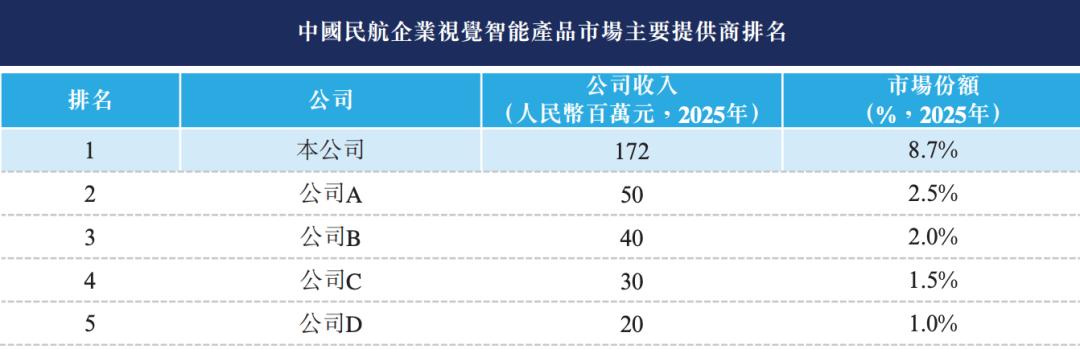
According to data from Frost & Sullivan, based on 2025 revenue, Rayvision Technology ranks first in China's civil aviation enterprise visual intelligent product market with an 8.7% market share.
With a 1.7% market share, Rayvision Technology ranks fourth in China's commercial space enterprise visual intelligent product market.
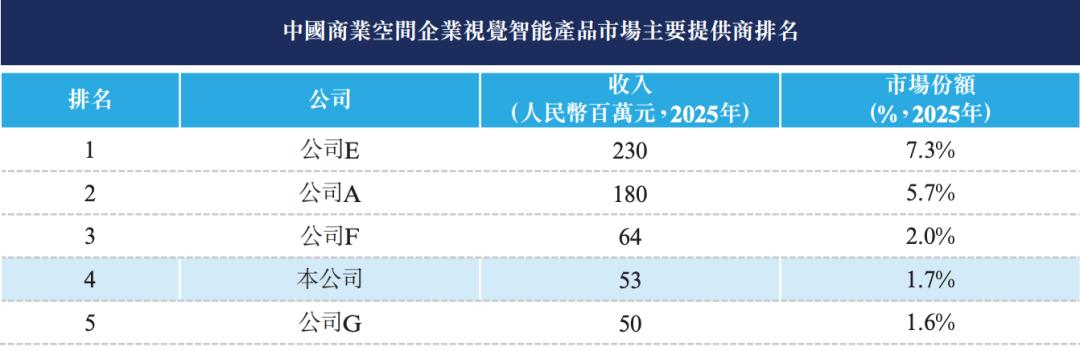
According to annotation estimates, Company A, B, C, and D are respectively Beijing AI vision enterprise Aibee Intelligence, Swiss 3D perception enterprise Xovis, Cloudwalk Technology, and Swedish visual recognition manufacturer Gunnebo. Company E, F, and G are Shanghai visual analysis firm Huina Technology, Guangzhou digital visual enterprise Wandianzhang, and Shanghai vision startup Jushi Intelligence.
As stated in the prospectus, Rayvision Technology completed a total of 9 rounds of financing before its listing, raising a cumulative total of RMB 571.2 million. As of December 31, 2025, all net proceeds from pre-IPO investments had been fully utilized. The company's latest financing round was its Series E funding in April last year, with a post-money valuation of RMB 3.55 billion.
In addition, Intel is one of its major shareholders, holding a 4.16% stake.
Rayvision Technology plans to raise HK$608 million (approximately RMB 527 million), which will be used to strengthen R&D capabilities and product supply, build production bases, enhance business development and marketing capabilities, expand overseas sales channels, and cover working capital and general corporate purposes over the next five years.
01. CAGR of Revenue Reaches 35.2%, Remaining Unprofitable
Rayvision Technology's core business is to provide visual intelligent technologies and products to enterprise clients.
In 2023, 2024, and 2025, Rayvision Technology recorded revenues of RMB 242 million, RMB 395 million, and RMB 443 million respectively, representing a compound annual growth rate of 35.2% from 2023 to 2025. Its net profits for the three years were -RMB 33 million, RMB 8 million, and -RMB 68 million respectively.
According to the prospectus, Rayvision Technology's 2025 losses were driven by increased R&D expenditures. At the same time, revenue expansion led to a rise in accounts receivable, which further expanded impairment losses on financial and contract assets. Contract assets refer to creditor's rights arising from performed obligations that have not yet reached the payment collection stage and have not been converted into accounts receivable.
In terms of R&D investment, Rayvision Technology allocated RMB 47 million, RMB 53 million, and RMB 72 million respectively over the three years, accounting for 19.2%, 13.4%, and 16.2% of total revenue in the corresponding years.
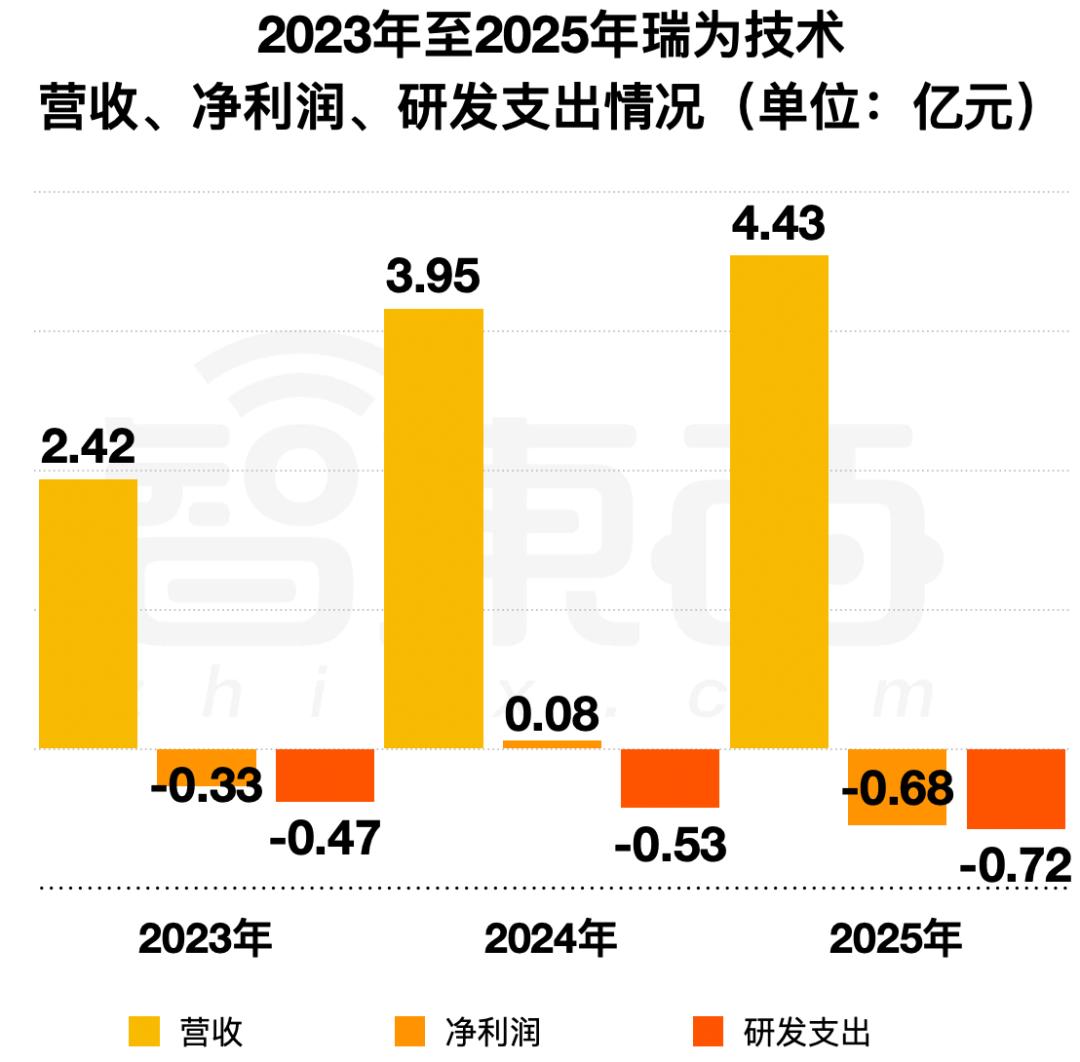
▲ Revenue, net profit, and R&D expenditure of Rayvision Technology from 2023 to 2025 (Chart by Zhidx)
From 2023 to 2025, the company's gross profit margins stood at 40.8%, 39.8%, and 37.7% respectively, remaining relatively stable.
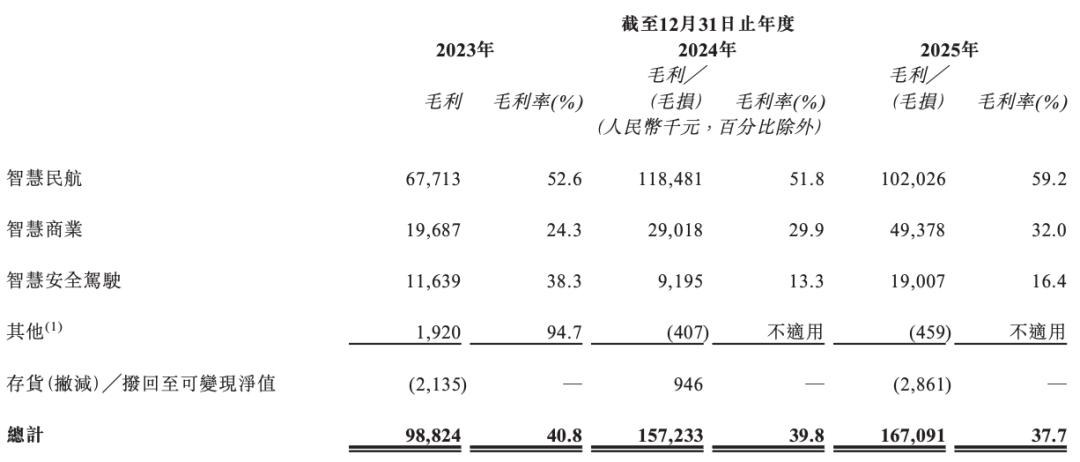
Over the three years, the company's cash and cash equivalents at year-end were RMB 11 million, RMB 55 million, and RMB 38 million respectively.
02. Focus on 3D Vision, Large Models, and Night Vision Imaging Technologies, Baggage Handling Robots Have Been Piloted in Three Major Airports
Rayvision Technology has built a business system covering three core scenarios: smart civil aviation, smart commerce, and smart safe driving.
In the smart civil aviation sector, its products are mainly used for automated and intelligent upgrades of check-in, security screening, boarding, and passenger service processes, including the Wanwei smart boarding gate and millimeter-wave security gates.
This scenario also includes the Xiaorui Travel Service Robot and the Xiaoyi Baggage Handling Robot. The Xiaorui Travel Service Robot is equipped with Rayvision Technology's self-developed QTune VLM model, which can identify passenger identities and automatically retrieve check-in information. The Xiaoyi Baggage Handling Robot has been trialed at three domestic airports with annual passenger throughput exceeding 10 million.
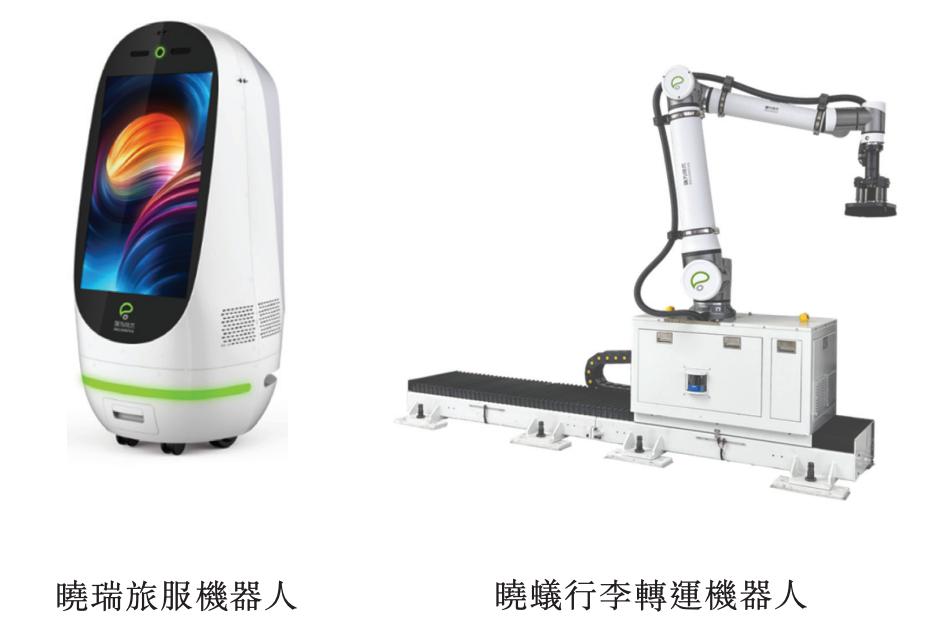
▲ Xiaorui Travel Service Robot and Xiaoyi Baggage Handling Robot
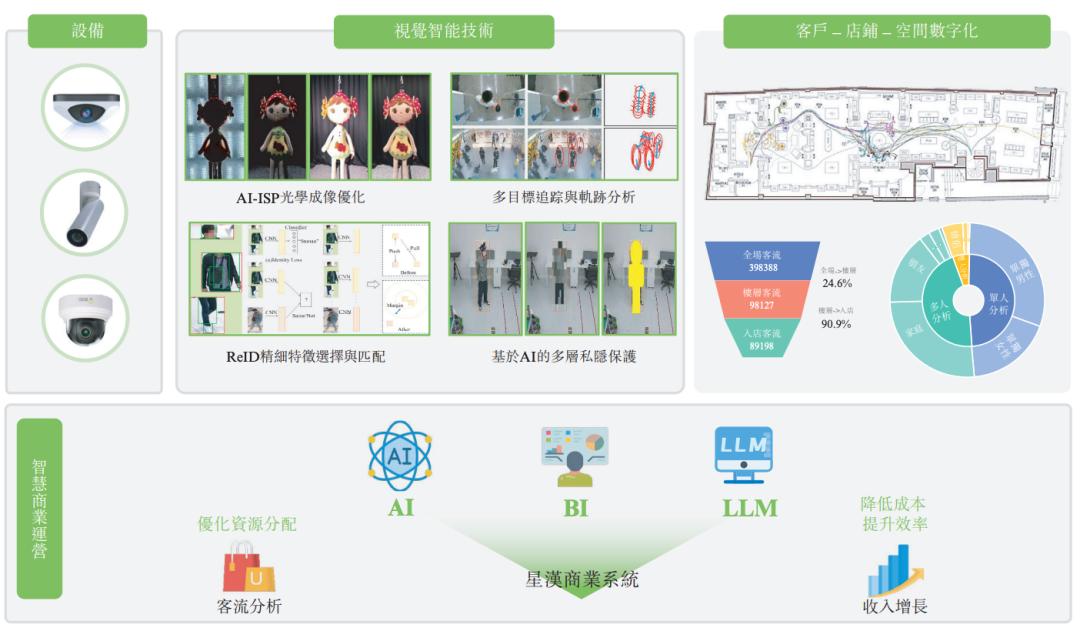
In the smart commerce field, it has developed the Xinghan Business System, an intelligent operation platform integrating AI, Business Intelligence (BI), and large language models, which can provide commercial real estate developers with unified data analysis, real-time decision-making, and precise customer interaction tools.
For smart safe driving, Rayvision Technology has developed intelligent safety value terminals and the Recadas safety control management platform. The intelligent safe driving terminals collect and analyze real-time data through on-board cameras, covering vehicle location, driver behavior, road type, weather, and traffic information.
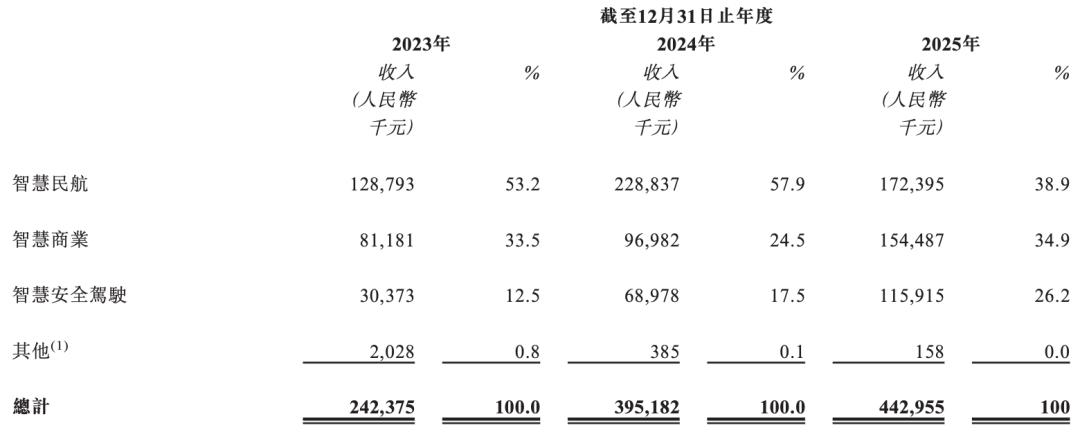
In terms of revenue breakdown by different business lines, as of 2025, revenues from smart civil aviation, smart commerce, and smart safe driving accounted for 38.9%, 34.9%, and 26.2% of total revenue respectively.
Regarding new product developments, the prospectus reveals that Rayvision Technology plans to launch new products including the second-generation Xiaoyi Baggage Handling Robot and wheeled dual-arm robots.
Rayvision Technology focuses on iterative upgrades of 3D vision, large models, and night vision imaging technologies, while increasing investment in multi-agent collaboration, embodied AI, and robotics technologies.
In the 3D vision field, it has developed 3D object detection, volume measurement, grasping and stacking algorithms based on depth information and point clouds, which can improve the accuracy of robots in spatial perception, path planning, grasping, and stacking tasks, and extend these capabilities to scenarios such as logistics and warehouse automation.
For large model technologies, Rayvision Technology focuses on VLM and end-to-end VLA models, improving cross-scenario adaptability and edge device deployment capabilities through model lightweighting.
In addition, in the field of night vision imaging, the company has independently developed optical modules and AI-ISP algorithms, integrated with non-visible light sensor technologies, to improve imaging quality under extremely low illumination and extreme lighting conditions, and support 3D perception applications.
In the embodied intelligence sector, the company focuses on multi-robot collaboration and complex operation tasks, to enhance robots' capabilities in motion planning, grasping, stacking, and multi-arm coordination.
03. R&D Team Exceeds 100 Members, Three Intelligent Agent Systems Have Been Developed
The company's technical system consists of three layers: foundational technologies, integrated technologies, and component technologies.
Foundational technologies include computer vision algorithms, optical imaging control systems, and large-scale datasets tailored to different enterprise needs.
Within this framework, the company has independently developed the NovaDet, NovaID, and NovaTrack deep learning frameworks, which support an integrated process of training, inference, and quantization. Meanwhile, its self-developed QTune VLM framework enables heterogeneous sensor fusion.
Integrated technologies refer to the collaborative optimization combining algorithms, optics, hardware, and data. Its proprietary AI ISP and TargetAE (Automatic Exposure) technologies can achieve full-color imaging under low-illumination conditions and optimize imaging for specific targets.
Component technologies include cognitive decision engines, optical imaging systems, interactive execution units, and data middle platforms, enabling efficient development of visual intelligent agents.
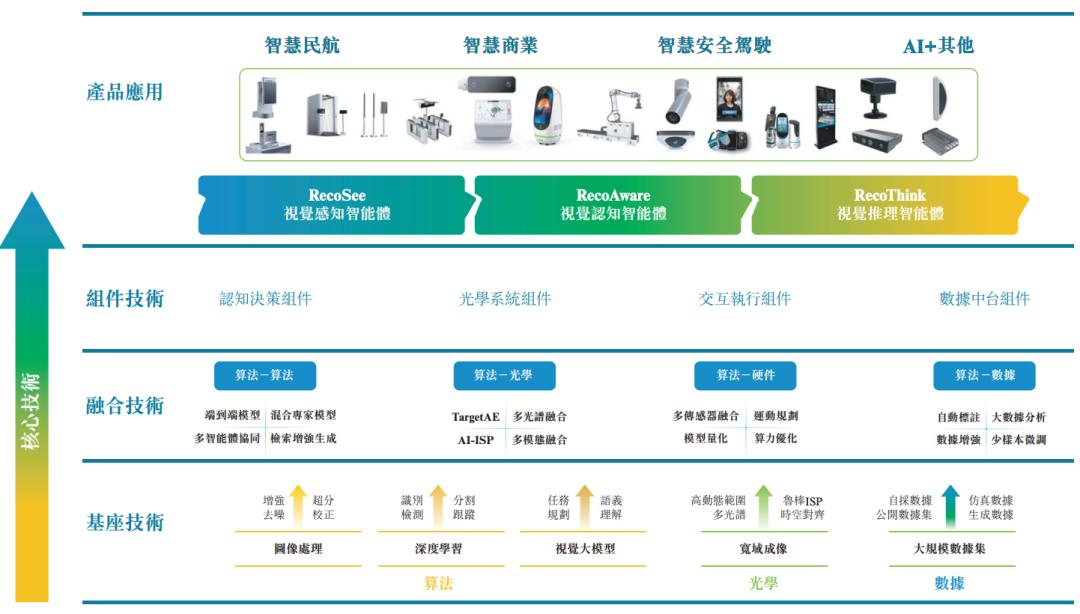
On this basis, Rayvision Technology has built the RecoSee, RecoAware, and RecoThink visual intelligent agents that run through the full technical stack.
The RecoSee visual intelligent agent delivers clear vision through wide-area imaging and target detection, providing high-definition imaging under complex lighting and weather conditions to realize real-time detection of extremely small and multiple targets.
The RecoAware visual intelligent agent mainly performs understanding through object recognition and behavior analysis. It can identify people, vehicles, and objects, analyze target attributes, and support cross-domain tracking and behavior understanding of multiple targets.
The RecoThink visual intelligent agent can "think" through reasoning and planning, achieving visual semantic understanding in open scenarios and supporting end-to-end decision-making, reasoning, and task planning.
These three intelligent agents have improved the R&D efficiency of core products such as smart boarding gates and robots, while enabling the creation of modular, portable technical components that can be adapted across different products and application scenarios.
Rayvision Technology's R&D team consists of more than 100 experts in AI, software, and hardware technologies. As of December 31, 2025, the company holds 188 registered patents and 128 software copyrights.
04. Revenue from Largest Customer Accounts for 14.4%
Rayvision Technology's clients include smart civil aviation system integrators, smart commercial real estate developers, industrial complex or public industrial park developers, operators, door lock manufacturers and integrators, and telecom and in-vehicle equipment manufacturers in the connected vehicle field.
From 2023 to 2025, revenues from Rayvision Technology's top five customers accounted for 59.1%, 73.5%, and 60.3% of total revenue respectively, while revenue from its largest customer accounted for 24.0%, 31.7%, and 14.4% of revenue in the corresponding years.