Without the next Labubu, is Pop Mart still valuable?
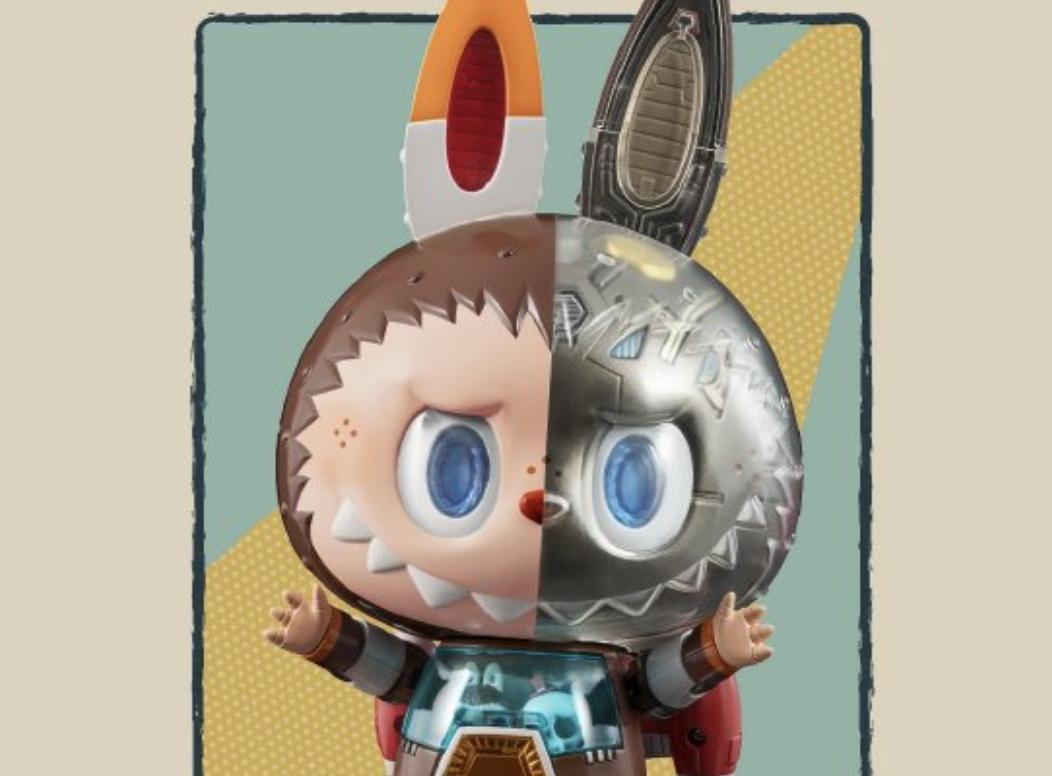
In 2025, Labubu's sales exceeded 100 million units, making it Pop Mart's most dazzling "social currency". By June 2026, this currency is depreciating.
The enthusiasm in the secondary market is being doused by icy water. On the night the "Vintage Barbershop" series launched, regular models fell below their issue price within half an hour, dropping from 159 yuan to 100 yuan; the hidden variant only carried a 5x premium, whereas previous series had seen premiums as high as 25x. Goldman Sachs also observed that most products in the secondary market in May were already near zero premium or trading at a discount. As Pop Mart's supply expanded sharply, the "scarcity game" logic for hidden variants is suffering a systemic blow. The cliff-like drop in premium multiples confirms that speculative capital is exiting in a stampede, and the Beta dividend for the trendy toy category — excess returns captured by targeting specific market risk exposures — is truly experiencing a broad ebb.
Online channels are also sounding alarms: Deutsche Bank data shows Pop Mart's Chinese online channel sales in May fell 5% year-on-year, roughly 25% lower than the monthly average in the second half of 2025; U.S. market credit card consumption plummeted by about 40% year-on-year in the second quarter. Bloomberg Second Measure data points out that Pop Mart's U.S. sales dropped 45% year-on-year in March, and continued to fall 42% in April, reversing the growth momentum from early 2026 (including 130% growth in January and 41% in February). By the end of 2025, its inventory reached 5.473 billion yuan, up 259% year-on-year, and its share price has fallen by more than 50% cumulatively from its August 2025 peak.
What the market is sensing is not just the cooling of a single IP, but a deeper fear: an over-concentrated revenue structure is tying the entire company to the rise and fall of one IP. Thus, a question plaguing all investors is surfacing — without the next Labubu, is Pop Mart still valuable?
Labubu Is Far More Than a 38% Revenue Pillar
In 2025, Pop Mart's total revenue reached 37.1 billion yuan, with Labubu contributing 14.16 billion yuan, accounting for 38% — the revenue from this single IP exceeds the combined revenue of the second to fifth most popular IPs. This is a steep and unsettling curve: the share was only 5.8% in 2023, jumped to 23.3% in 2024, and approached 40% in 2025.
But for Pop Mart, Labubu is far more than just a "38% revenue contributor".
During its boom period, it created a full-fledged multiplier effect across the entire system: nearly half of all growth was driven by it; traffic-driven users it attracted would often make incidental purchases of other products after entering stores; spontaneous appearances of celebrities like Lisa and Rihanna wearing Labubu products amounted to hundreds of millions of dollars in free brand exposure. Labubu is not just one of the revenue pillars — it is the strategic entry point for the entire system, the master valve for free traffic across all platforms.
Yet when the cooling sets in, all logic reverses. The first contraction comes from reduced direct revenue. The traffic-driving effect vanishes, organic social media exposure dries up rapidly, and customer acquisition costs surge discontinuously — this is the second contraction. The more fatal third factor is production capacity that was blindly expanded to accommodate last year's overwhelming traffic, which instantly turns into inventory pressure once sales retreat, with rigid deductions for impairment losses directly eating into profits.
Chief Operating Officer Si De acknowledged at a performance meeting: "Last year, a large number of new users came into our stores because of Labubu, and they did not understand the trendy toy culture... after the boom ended, due to insufficient accumulated user engagement, the traffic decline and sales pullback were relatively noticeable."
This reveals a crisis deeper than "single IP dependency": Labubu created a gust of "cross-draft wind" rather than a "reservoir". Once the hype faded, the traffic it attracted did not settle into loyalty for other IPs or recognition of the brand. This is the underlying reason why the capital market sold off Pop Mart even when its financial reports looked bright — they were not looking at past growth, but at the future stall spiral.
Why the Share Price Fell Before the Financial Report
The social currency nature of trendy toy IPs determines that their popularity naturally has a lifespan. When an IP evolves from a niche treasure to a mass-market hit, its value as an identity marker diminishes. Pop Mart's aggressive production expansion accelerated this process.
The original intention was to burst the scalper bubble and make products easier for fans to buy, but once production lines were running at full capacity, Labubu transformed from a scarce social media artwork into a mass-produced industrial commodity, and psychological satisfaction plummeted. More critically, the most loyal core players of trendy toys often hold anti-mainstream sentiments — when Labubu completely breaks into the mass market, these hardcore fans who originally built the IP's fanbase will quickly seek the next "niche treasure", and the IP's cultural foundation begins to shake.
Running parallel to the cooling is the growth stall. In the first quarter of 2026, overseas growth rates plummeted from the previous 300% to 900% range to 25%-30% in Asia-Pacific and 55%-70% in Europe and the Americas. When a company's overall growth rate falls from 184.7% to 20%-30%, its valuation logic changes forever — the market will no longer award a premium for a "high-growth platform", but will measure it with the metrics of a "mature consumer goods company".
The share price being cut in half from its peak is not just pricing in slower growth. It reflects that the market is recalculating a core probability: does Pop Mart have the ability to convert these shallow, trend-chasing visitors into highly engaged core users? Over the past two years, Labubu has driven nearly half of all growth. When this engine decelerates, the question to judge is not "how many more Labubu units can be sold", but "after losing Labubu's new user acquisition, can other IPs sustain the business?"
The current ~14x PE valuation is an exact discount of this uncertainty — it neither rewards the platform narrative nor penalizes the fading of the hit product. This is not trading on "how much Labubu will drop", but on "whether Pop Mart actually has a verifiable moat".
Can Platform Capabilities Be Established?
To answer "is it still valuable", the key lies in whether Pop Mart can build its trendy toy platform capabilities, and it must look beyond short-term data fluctuations to observe long-term capability changes.
First, the independent viability of mid-tier IPs. The critical point is not when the next Labubu will appear, but: after losing Labubu's traffic pull, can SKULLPANDA, CRYBABY, MOLLY and others maintain stable organic growth? If Labubu's revenue share drops from 38%, but the absolute revenue of other IPs does not collapse in tandem, it proves the platform has traffic diversion capabilities. Conversely, if Labubu declines and others fall alongside it, the "cross-draft wind" hypothesis will be confirmed.
But this cannot be judged solely by absolute revenue. A more fundamental verification metric is: after Labubu's traffic disappears, does the lifecycle of single series from IPs like SKULLPANDA shorten significantly? If their sales rely on the brute expansion of SKU counts — frequently launching new series to stimulate consumption — rather than the lasting appeal of a single series, that is merely "new launch-driven" growth, not "IP-driven" growth. Genuine IP power is reflected in whether a series still maintains stable organic sales six months after its release.
Another key metric is the attach rate of "Labubu-free" orders. Tracking online purchase data, for orders that include CRYBABY or DIMOO products but no Labubu items, are their average order value and repurchase frequency at healthy levels? This can directly strip out "incidental purchases brought in by Labubu", and prove whether these IPs have independent customer acquisition and conversion capabilities.
Second, the mass emergence of near-mid-tier IPs. The ability to cultivate a batch of near-mid-tier IPs with annual revenue between 100 million and 500 million yuan and healthy repurchase rates is the true measure of the system's hematopoietic capacity. A 2-billion-yuan hit is the result of perfect timing, location, and people, but a group of backbone IPs that do not rely on top-tier traffic and can find their own seed users are the source of structural stability.
Here we need to distinguish the essential difference between "naturally emerging" and "system-manufactured" IPs. Tracking the zero-to-one process of a new IP: what percentage of its first 100,000 consumers came from "hard promotion" within Pop Mart's internal traffic pool — app pop-ups, member pushes, prime in-store display positions — and what percentage came from the designer's independent organic growth in external communities? The former verifies channel distribution capabilities, while the latter verifies genuine IP content penetration. A sustainable platform needs to see the proportion of the latter rising.
More critically is the "survival rate" and "return cycle" of designers. For new designers signed by Pop Mart, is the average time from the first product series launch to annual sales exceeding 100 million yuan shortening? After designers receive commercial returns, do they choose to renew contracts in depth, or go independent like Vinicius Costa in the early days? This directly reflects whether the platform's empowerment and benefit alignment with core creative talents is stable. Without designer loyalty, there can be no continuous IP supply.
Third, the water storage capacity of channels. There is a key fork in the road here: do users "go to a store because they like a certain IP", or "go to Pop Mart because they want to find something fun"? The former makes users appendages of the IP brand — once Labubu leaves, the users leave too. The latter is the embryonic form of a channel brand. With nearly 500 stores worldwide and tens of millions of members, if operated properly, Pop Mart itself is becoming a "Sephora of trendy toys".
Whether this mental association is established can be verified through the simplest brand association test: when consumers "want to buy a fun little trinket or small gift", is their first thought "go check Pop Mart" or "search for which IP is trending recently"? The former is the victory of the channel brand. Observing the composition of store foot traffic on non-new-launch days is the key to distinguishing authenticity — if in-store visitors are highly dependent on new product launch dates, it means consumers are following the IP, not the channel.
Notably, natural differentiation in IP preferences has begun to emerge across regions — Hirono has found its audience in the Philippines, SKULLPANDA in Singapore, and CRYBABY in Thailand. This proves that what Labubu's ebb leaves behind is not a vacuum, but differentiated demand being filled by different IPs.
But the true water storage test lies in the member's "second item purchased" — when a user who made their first purchase because of Labubu comes back, what is the second Pop Mart product they buy? If it is a low-AOV plush fast-moving consumer good, it means the user only formed a path dependency on "impulse spending"; if it is a blind box series of another IP, it means recognition of the product format has settled; if it is a higher-AOV MEGA collectible, that represents the sedimentation of "cultural identity". These three tiers correspond to drastically different user lifetime values.
The Most Fatal Black Box, and Dangerous Signals
All the capability building mentioned above is based on an implicit premise: trendy toy IPs can be operated on a platform model, and after new IPs replace old ones, users' purchase frequency and total spending can remain constant. But this premise has never been proven.
Pop Mart's disclosed member data is cross-sectional: 72.58 million cumulative members, 55.7% overall repurchase rate. It has never stratified data by registration year to publish the longitudinal retention curve of the same cohort of users. This means a cruel possibility has been carefully concealed — the front end is frantically acquiring new users via Labubu, while veteran users of three years or more are exiting en masse.
Defining the tens of millions of new members who poured in during Labubu's boom as the "L Generation", they need to be broken down into three categories: L1 speculative types, who only chase popular hidden variants and have resold products on the secondary market; L2 novelty-seeking trend-followers, who entered because of social hype, only bought Labubu IP products, and went silent once the trend faded; L3 converted and settled users, who got started with Labubu, then began to deeply understand and continuously purchase other IPs or product categories, becoming consumers of pan-trendy culture. The core of whether Pop Mart is valuable depends on the true proportion of L3 in the "L Generation", and whether it can complete the systematic conversion of L1 and L2 users to L3 before Labubu completely fades away.
Essentially, this might be a "user churn and replacement" game, not a "user retention and cultivation" business.
The trajectory of the MEGA premium strategy provides an indirect but powerful piece of evidence. In 2024, MEGA's growth rate reached an impressive 146.1%, which management interpreted as a signal that veteran users were "trading up" — blind box players would naturally shift to higher-AOV collectible products as they aged and their purchasing power increased. But by 2025, the growth rate plummeted to 13.8%. In hindsight, that year's boom was more of a mental spillover from the blind box mania — consumers were buying financial products, not art collections. The "trading up" narrative has already begun to collapse.
Shortly after, management hit the brakes hard following the 2025 annual report: MEGA order volumes were cut by 30%-40%, over 40% of regular SKUs were eliminated, and resources were discontinuously shifted to plush FMCG categories. This effectively admits that MEGA cannot become the second growth curve. Instead, the company is using low-AOV, high-turnover plush categories that rely more on IP hype to absorb traffic — this can contribute incremental sales, but cannot answer "what to do after the next hit product fades".
Moreover, in 2025, plush products driven by Labubu's breakout achieved a staggering 187.1 billion yuan in revenue (surging 560.6% year-on-year), becoming Pop Mart's largest product category. However, the repurchase ceiling for plush products positioned as "trendy FMCG/bag charms" is far lower than that of traditional blind box figures. Consumers can hardly develop the infinitely high-frequency "collect a whole wall" repurchase behavior they have for blind boxes, and over-concentration of resources exposes the company to the risk of category conversion backlash.
Putting the two strategic shifts together points to a disturbing direction: the "veteran users trading up" water storage narrative has been actively abandoned in the face of data. The failure of MEGA is not an isolated product line issue, but a major crack in the entire "user lifetime value" narrative foundation — if even the most loyal, highest-spending MEGA buyers cannot be retained, the retention rate of ordinary members will only be more fragile.
How Much Is Pop Mart Actually Worth?
The capital market is pricing this "unclear account" at roughly 14x PE.
Bandai's confidence in enjoying a 25-30x valuation comes from the fact that it has clearly proven that diehard fans who entered the market for Gundam 30 years ago are still consuming today, and their spending has risen exponentially with purchasing power. Pop Mart cannot provide same-cohort traceability data, so institutions can only apply risk discounts by referencing the FUNKO playbook