Why on earth does this handheld game console cost as high as 11,999?
What's the most frustrating problem for handheld console gamers?
Anyone who has followed handheld gaming devices, especially Windows-powered handhelds, has almost certainly heard the two long-standing complaints: poor performance and short battery life.

But Tony has long believed these two issues are only superficial symptoms. The root causes behind them boil down to two factors: the operating system, and the hardware — specifically, the processor.
Although the handheld gaming market is flooded with a wide variety of devices — the ROG Ally, Lenovo Legion Go, MSI Claw, OneXPlayer, AYANEO, and more — if you flip through their spec sheets, you'll find the chip section is dominated by just a handful of names, almost all of which are AMD.
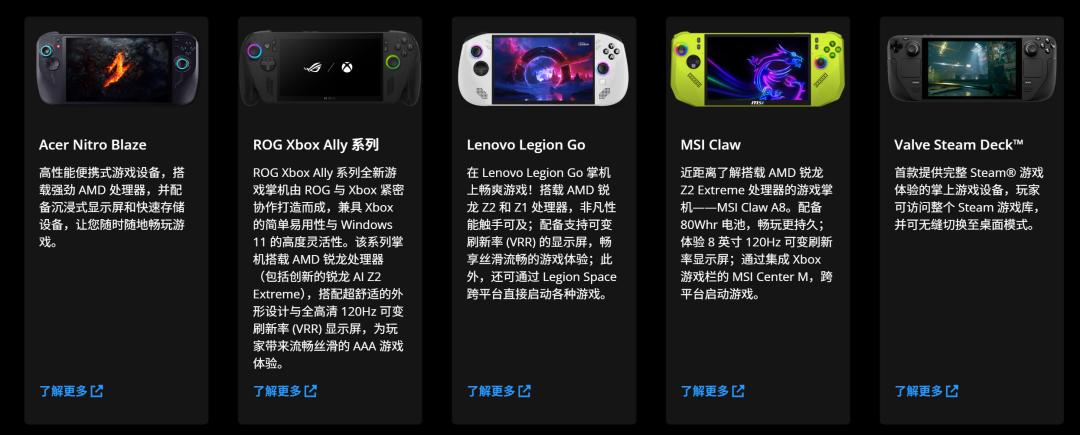
In other words, for quite some time now, AMD has faced virtually no competition in the handheld gaming processor market.
As we all know, a market without competition becomes stagnant. Initially, everyone chose AMD chips precisely for their strong performance that could run AAA games.
But over the past few years, AMD's Ryzen Z1/Z2 series processors for handhelds have delivered underwhelming upgrades that barely meet expectations.
However, this status quo is likely to be disrupted by Intel.
Earlier this year, Intel released the Panther Lake processor — a low-power chip designed for ultra-light laptops that surprisingly integrates two brand new GPUs. The version with the 12 Xe core GPU even directly targets discrete graphics cards in benchmark scores...
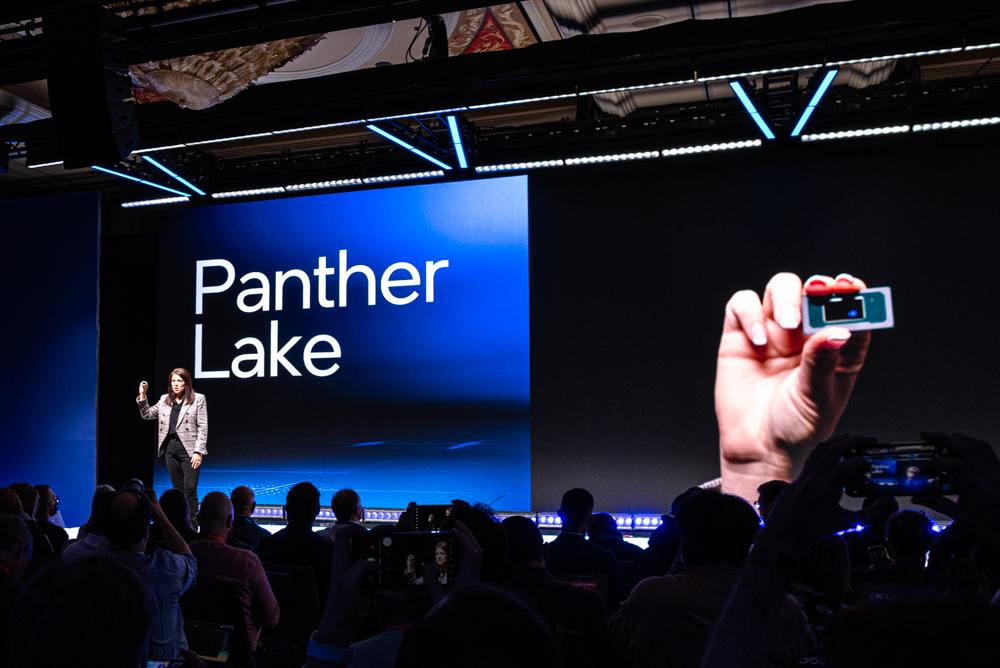
Low power consumption paired with a powerful integrated GPU? These two features immediately caught Tony's eye: how great would it be to put this chip inside a handheld console?
Then at COMPUTEX this past May, Intel officially launched the Arc G-Series processors specifically targeted at handheld gaming devices and players — derived from the Panther Lake processor family, but specially optimized for handheld form factors.
Tony also got his hands on the first batch of MSI Claw 8 EX AI+ handheld consoles equipped with the Arc G3 Extreme. Can this device deliver breakthroughs in the two areas players care most about: performance and battery life?
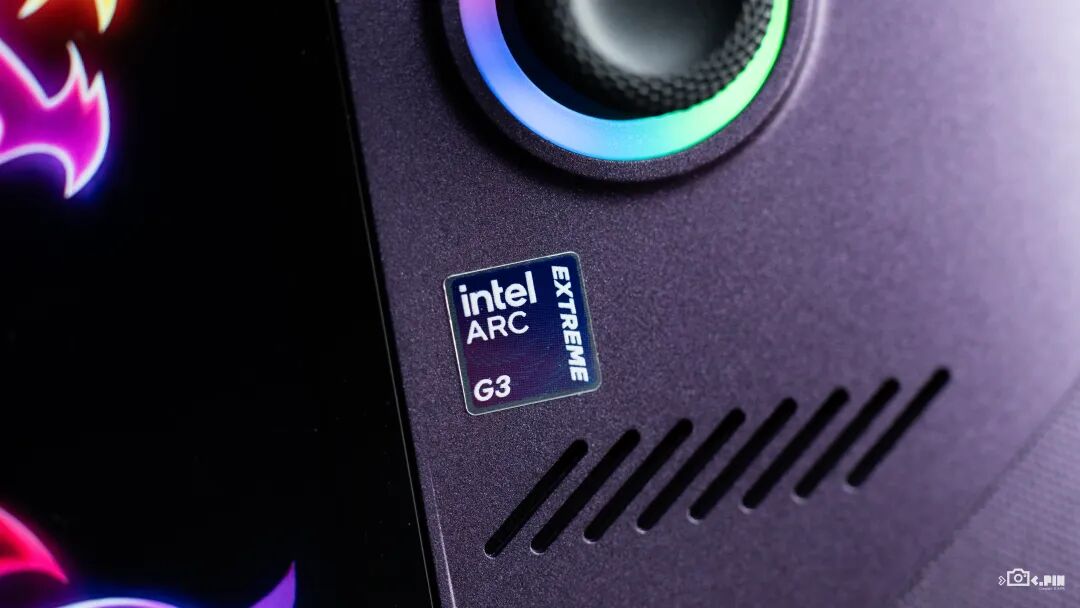
Without further ado, let's cut to the chase — the performance of the G3 Extreme.
Looking at its specifications, the G3 Extreme doesn't simply copy the higher-end Panther Lake models. Instead, it makes targeted trade-offs based on gaming scenarios. The MSI Claw 8 EX AI+ handheld pairs the G3 Extreme with 32GB of RAM and 1TB of storage, creating a very well-balanced configuration.
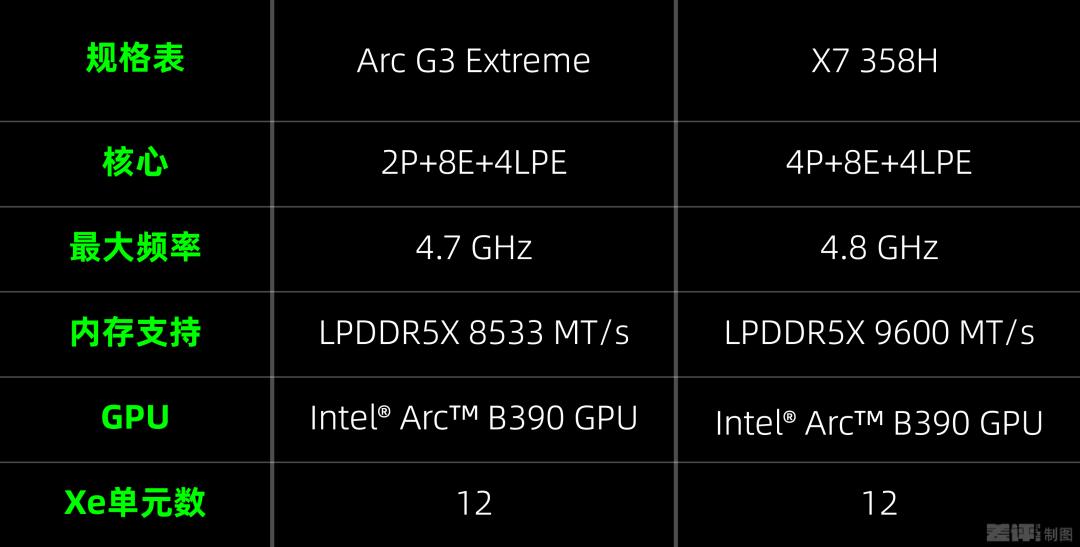
On the CPU side, a comparison with the X7 358H reveals that it has two fewer high-performance P-cores. Tony spoke with Intel engineers, who explained that since the G3 Extreme is designed specifically for handhelds, they prioritized maintaining strong single-core performance while de-emphasizing multi-core performance — which is relatively unimportant for gaming — to improve the handheld's battery life.
Even with 2 fewer P-cores, the G3 Extreme's CPU performance is far from weak. It scores 2016 points in CineBench R23 single-core, placing it in the top tier among handheld consoles; its multi-core score of 15196 is also more than sufficient for gaming needs.
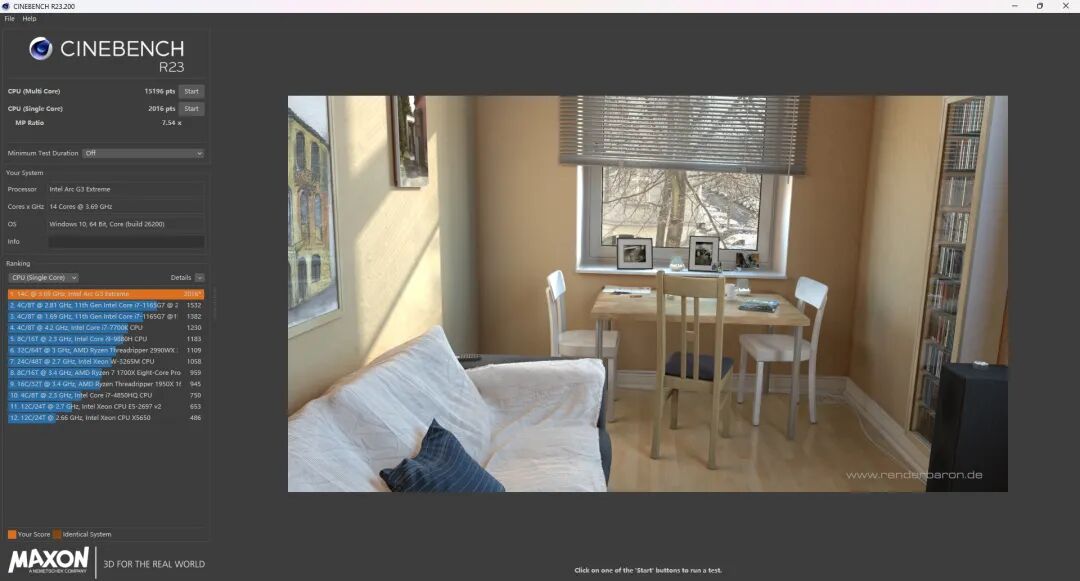
However, these scores were measured at maximum performance. For handheld consoles, we need to look beyond peak performance and examine how the chip performs in low-power scenarios, evaluating its energy efficiency ratio.
Tony tested its performance at power levels of 10W, 15W, 25W, and 35W. Even at low power consumption, the G3 Extreme delivers impressive results.
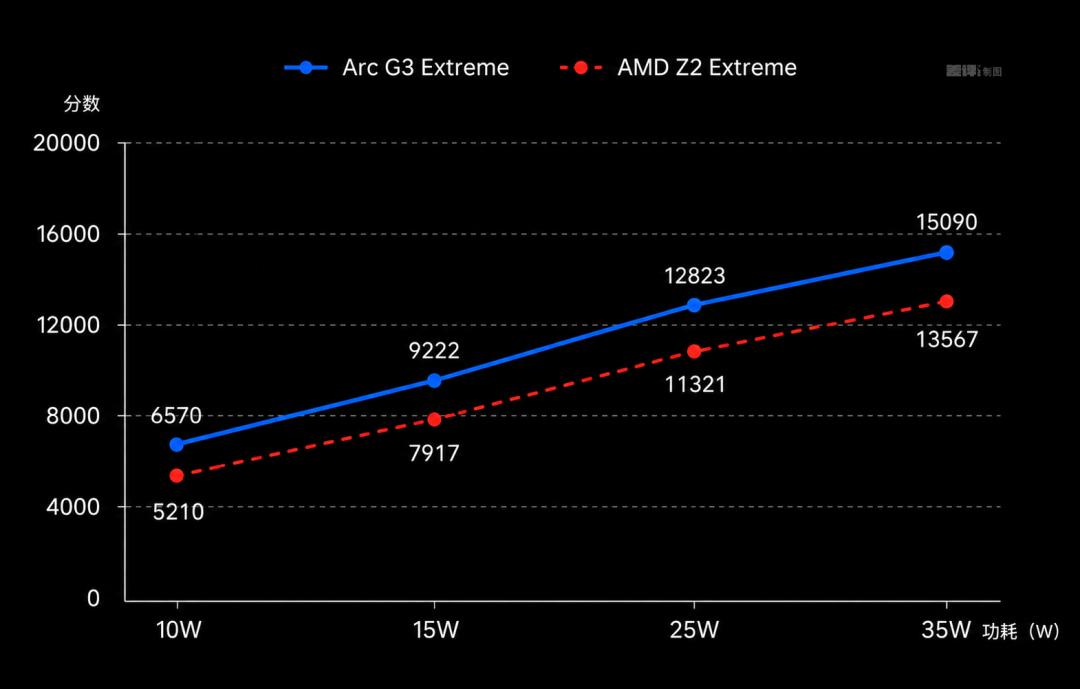
CineBench R23 Multi-Core Score Comparison
As for the GPU section, it retains the full 12 Xe specification without any cuts on the G3 Extreme. The only limitation comes from the handheld form factor, which cannot supply as much power as a laptop can.
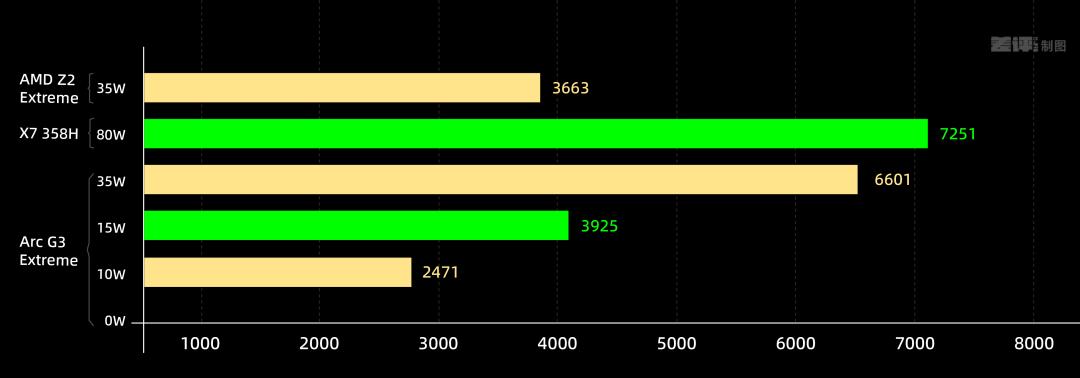
But its performance at 35W is surprisingly good. As usual, Tony ran the 3DMark TimeSpy test. Compared to the 65W or even 80W B390 commonly found in laptops, the performance gap is only around 10%. When matched against AMD's Z2 Extreme designed for handhelds, the B390 clearly pulls ahead by a significant margin.
3DMark TimeSpy Score Comparison
Theoretical benchmarks are one thing, but anyone familiar with Intel knows that their integrated GPUs often post impressive benchmark scores yet struggle when running actual games.
That all changed when Tony launched *Cyberpunk 2077* on this handheld — the default graphics settings surprisingly had ray tracing turned on. So he ran a quick test: at 35W power, 1080P resolution, and low ray tracing settings, the game still hit 50 FPS?
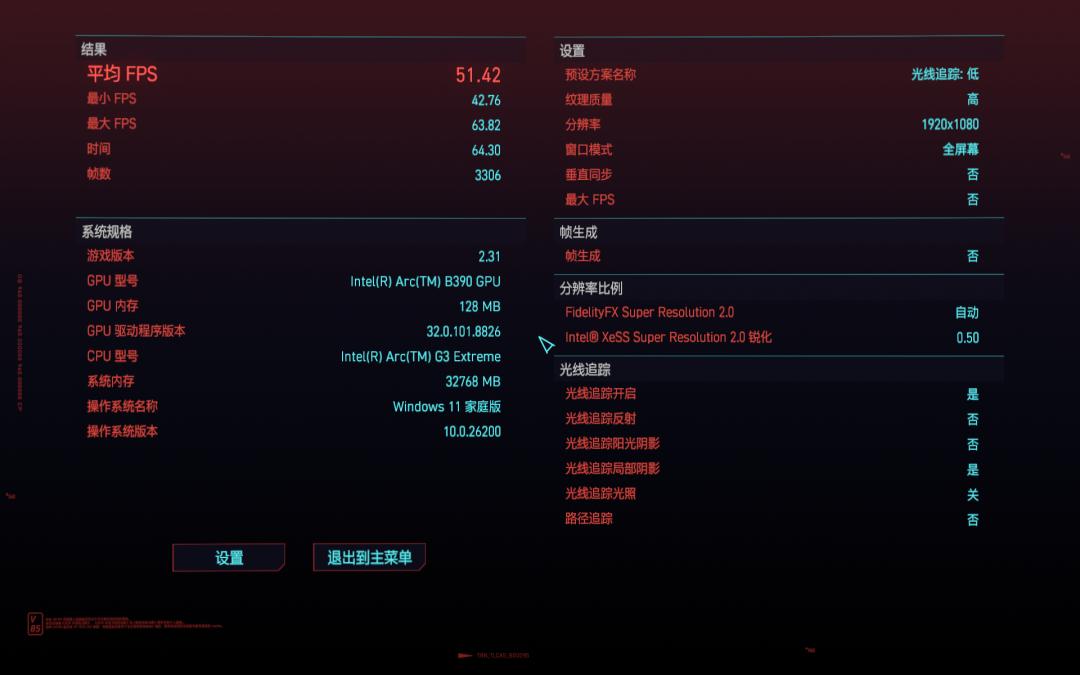
Keep in mind, this is just a handheld console. A few years ago, Tony was still marveling at how the Steam Deck made playing AAA games on the go a reality. Now, with technological advancements, we can even enable ray tracing on handhelds.
In other words, the hardware ray tracing units Intel integrated this time are genuinely usable on handheld devices.
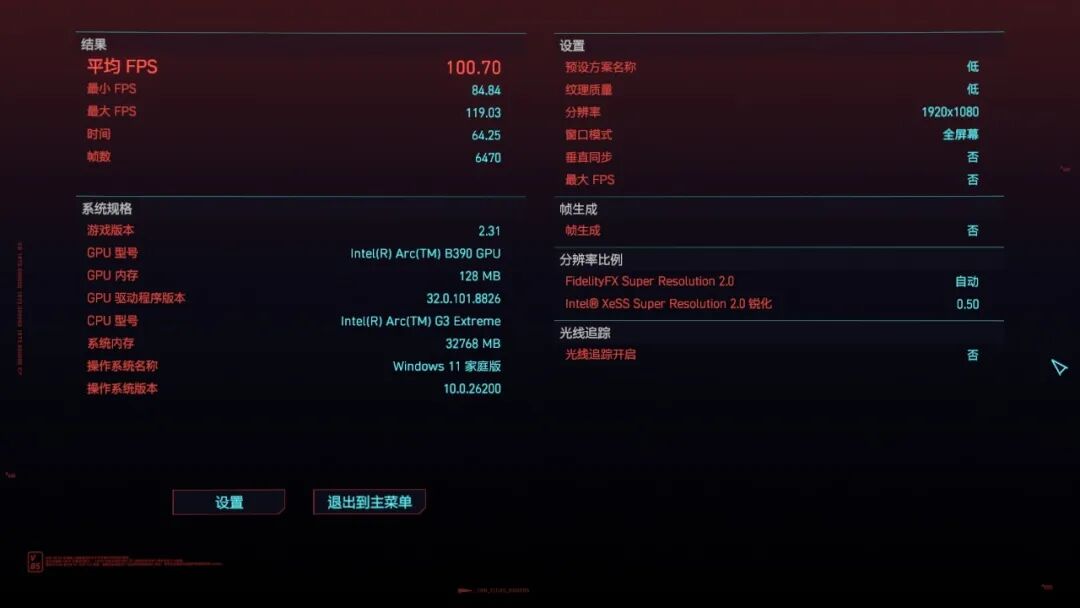
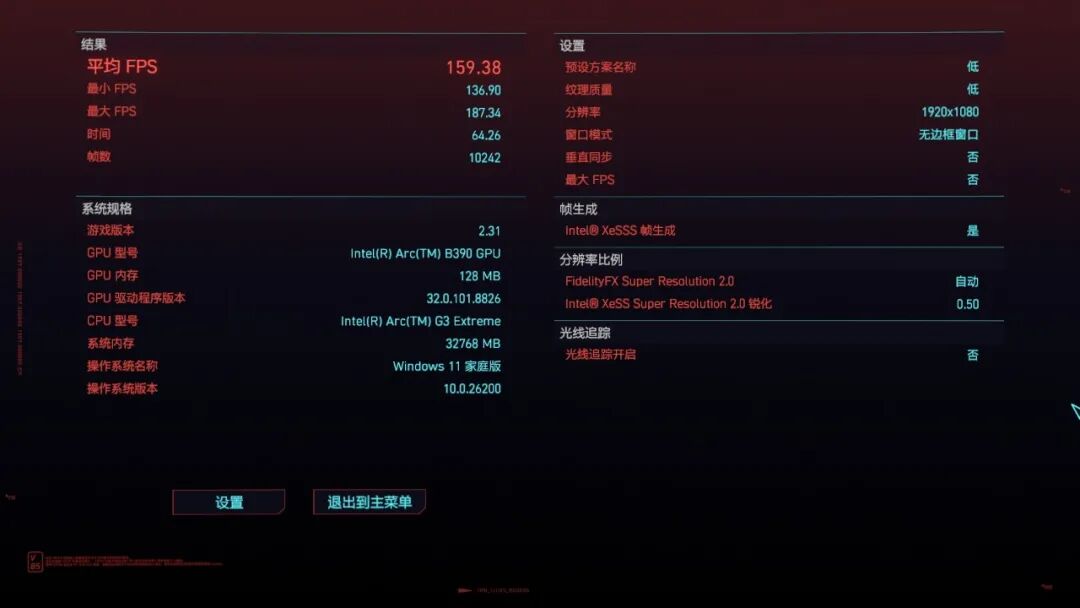
Of course, the B390's raster performance is also excellent. Taking *Cyberpunk 2077* as an example again, at the same 35W power limit, after switching to 1080P low settings optimized for handhelds, the frame rate jumps straight to 100 FPS. With frame generation enabled, it can reach nearly 160 FPS — more than enough to fully utilize the handheld's 120Hz refresh rate screen.
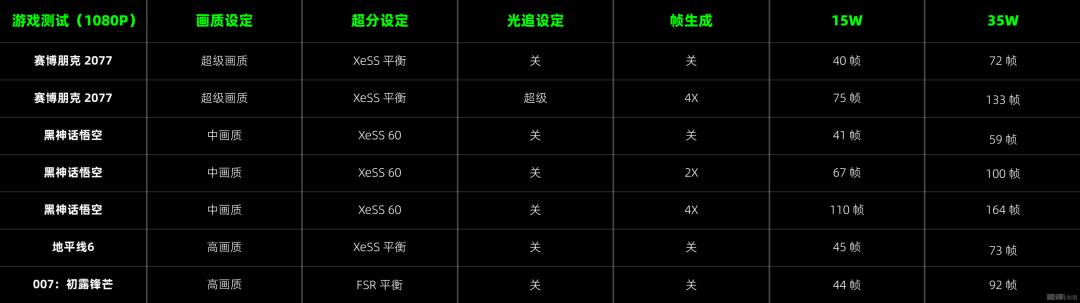
Tony tested several more games and summed up the results: at full 35W performance, handling 1080P games is no problem — you can easily get 60 FPS by adjusting graphics settings, and even enable XeSS frame generation and ray tracing. When power is limited to 15W, you can still achieve over 30 FPS at 1080P with XeSS.
The performance is certainly impressive, but what about battery life? The MSI Claw 8 EX AI+ handheld comes with an 80Wh battery. At 50% screen brightness, 20% volume, with TDP set to 20W and fans running at full speed, *Cyberpunk 2077* at 1080P medium settings can run continuously for 2 hours and 40 minutes on a full charge.
Intel also provides an Endurance Gaming long battery life mode. When enabled, it actively limits the frame rate to further reduce power consumption.
With the same settings, after enabling the long battery life mode in Intel's Graphics Command Center, *Cyberpunk 2077* can run for approximately 4.5 hours before draining the battery.

All in all, by inheriting the excellent energy efficiency ratio of the higher-end Panther Lake chips and the powerful B390 integrated GPU, the Arc G3 Extreme fully lives up to Tony's expectations, delivering stronger performance and decent battery life on a handheld console.
We've talked so much about the processor, but let's not forget the MSI Claw 8 EX AI+ handheld itself.
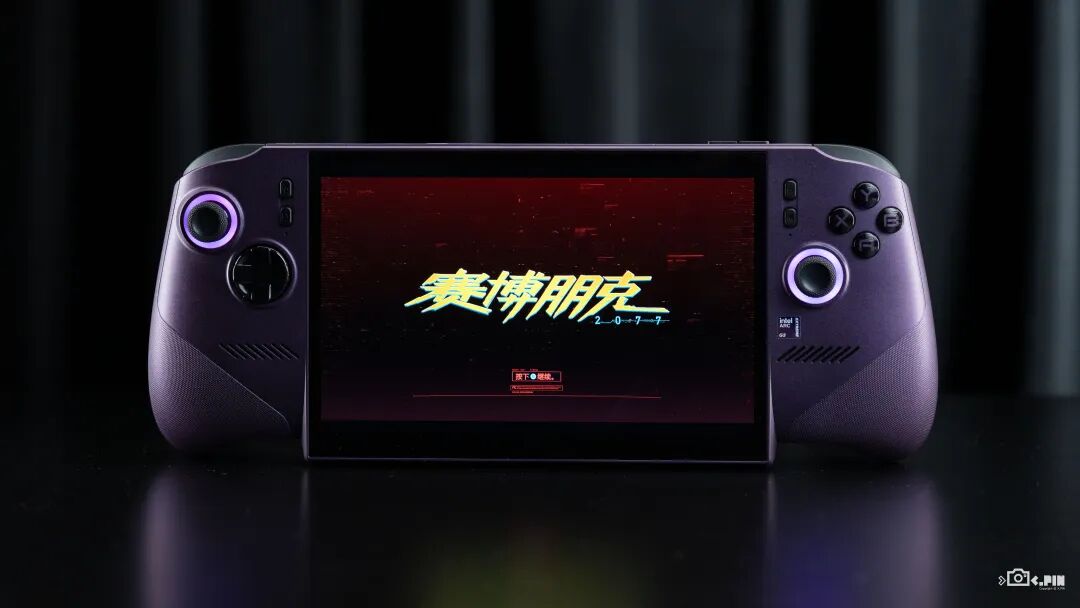
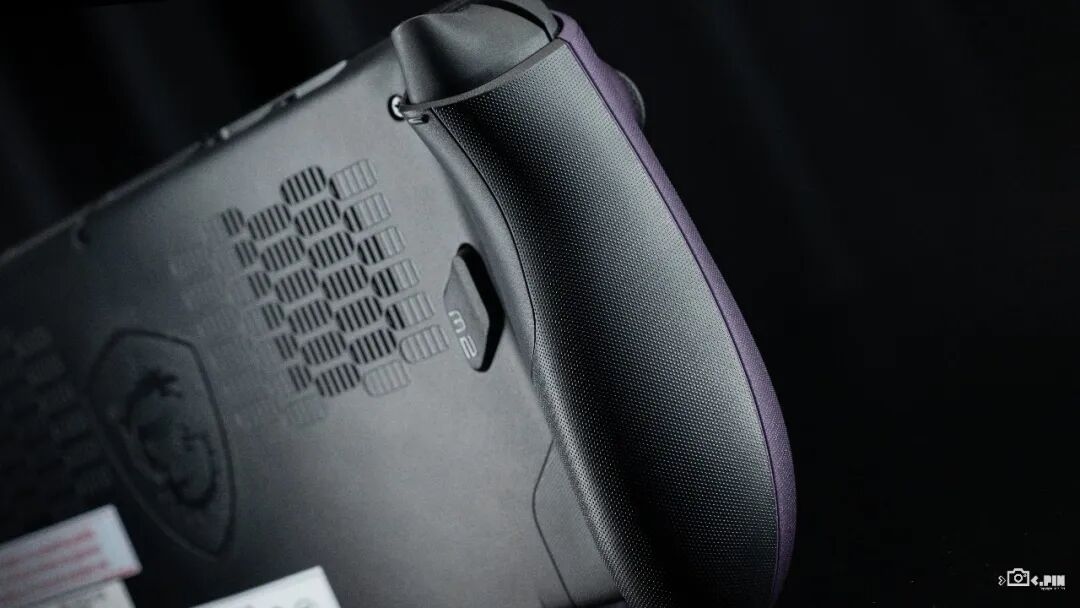
In terms of design, it somewhat resembles last year's ROG Xbox handheld. The two side grips are ergonomically shaped, though the "chicken leg" style grips aren't as exaggerated as those on the Xbox handheld.
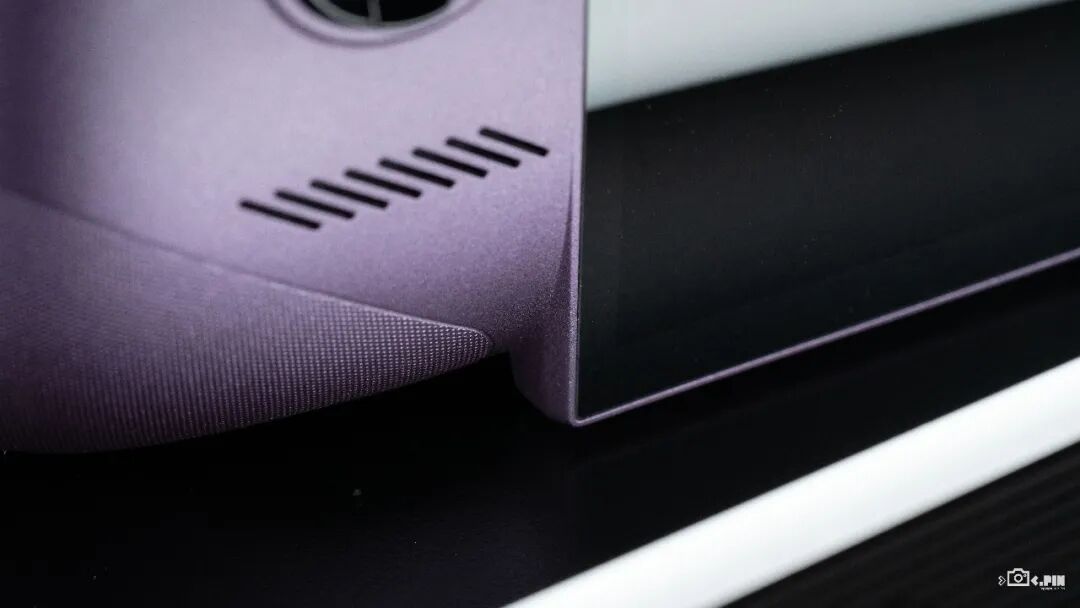
To allow the device to stand upright, the bottom section of the screen has a specially designed protruding edge.
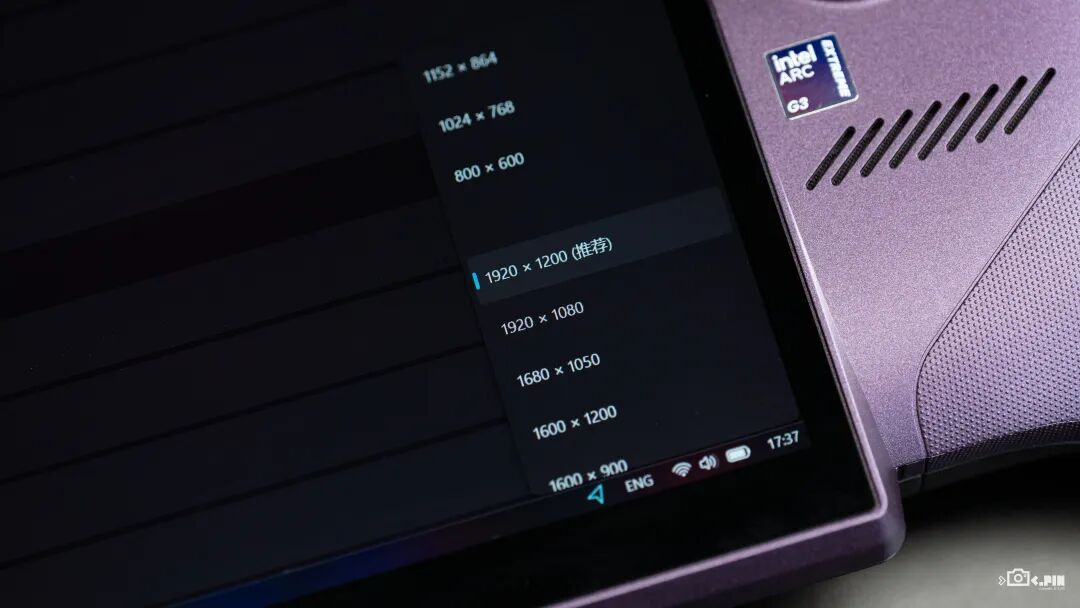
The screen itself is an 8-inch 1200P resolution IPS display, supporting 48-120Hz variable refresh rate — more than sufficient when paired with the G3 Extreme.
All ports and buttons are