Is Doubao Qianwen delisting "Agents"? A translation blunder: Agents are actually a top priority for major tech firms
A piece of news in the AI circle these days has got netizens all fired up.
Doubao, Qianwen, and Yuanbao have all delisted their AI companions overnight.
The timing is remarkably coincidental: Doubao announced that its AI agent function will be taken offline on July 15, 2026, and Qianwen also notified that its intelligent agent service will be officially shut down on the same day; earlier, Tencent's Yuanbao had already disabled its AI application intelligent agent features on June 30. Doubao also reminded users that after October 15, relevant data will no longer be accessible or recoverable within the Doubao platform.
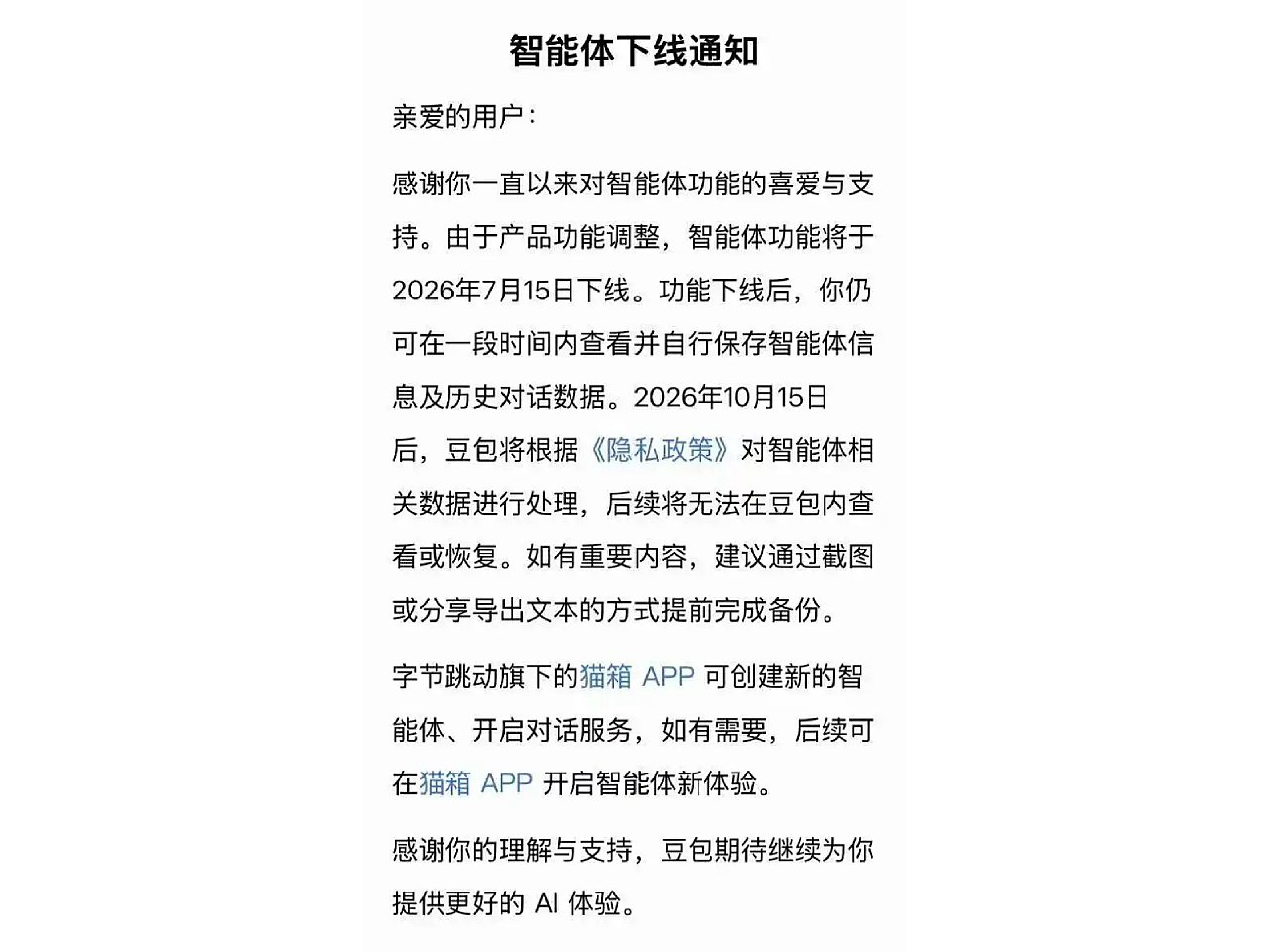
(Image source: Leitech)
To be honest, even I was taken aback when I saw this news.
Just a while ago, everyone was talking about how Agents were going to take over your office work, your phones, your computers, and all your daily services. But how did it suddenly turn into a "total wipeout of intelligent agents" overnight? Every platform is emphasizing that these services will never be restored after being taken offline. What on earth is going on here?
This isn't abandoning Agents — it's all a translation misunderstanding
We need to sort out the concepts first to make sense of this.
The so-called "intelligent agents" that Doubao and Qianwen have shut down this time are essentially just Chatbots. They usually come with avatars, preset personalities, opening lines, and fixed tones, only equipped with basic functions like "role setting + Q&A + retrieval augmentation", and lack the capabilities for independent planning and closed-loop execution of complex tasks.
In other words, these things are more like digital pets, not the Agents we usually discuss.
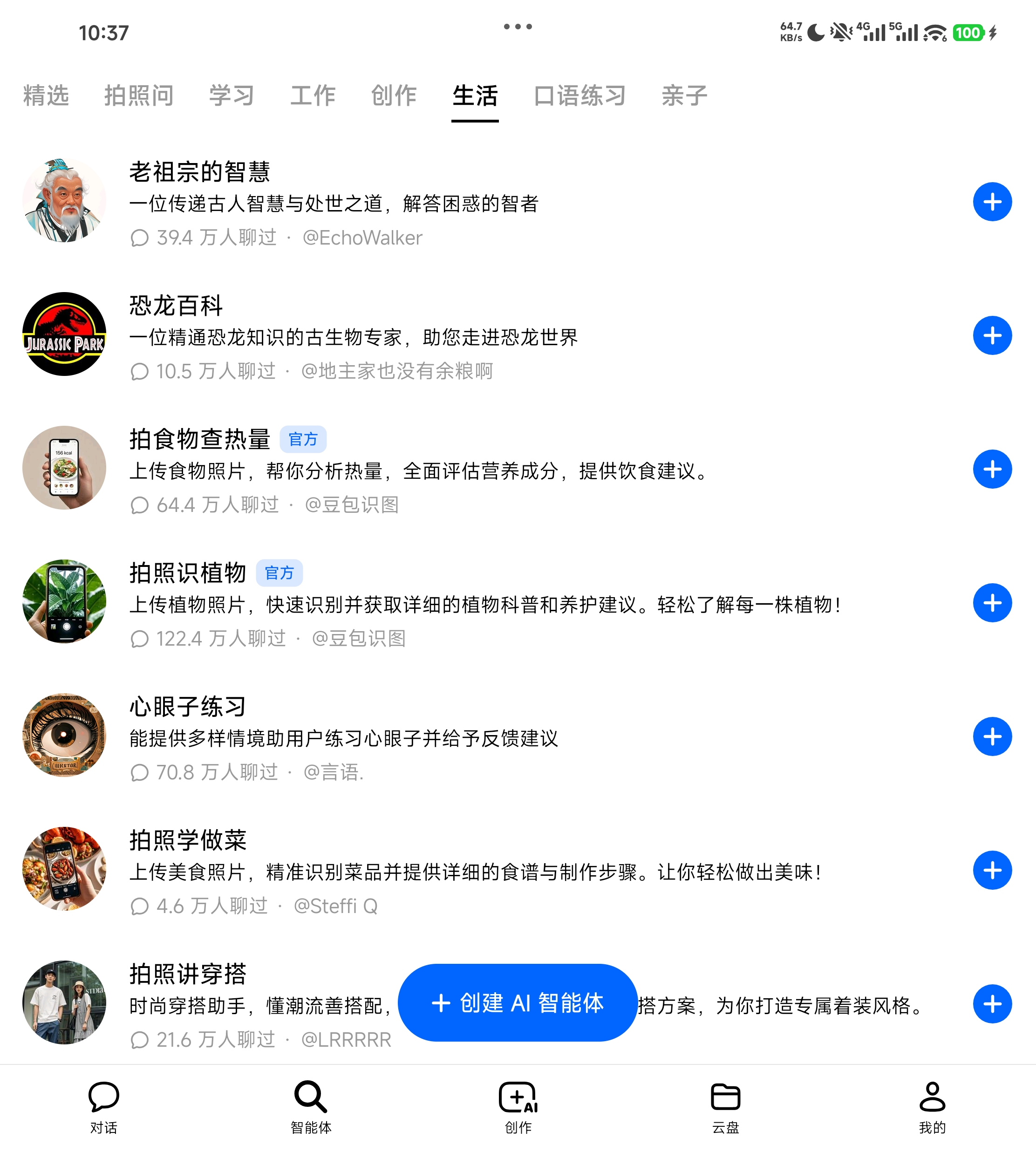
(Image source: Leitech)
A real Agent must at least be able to understand goals, break down tasks, call tools, read files, and execute actions, ideally allowing users to review and take over during the process. It needs to evolve from just "talking" to actually "doing". But many Bots labeled as intelligent agents are essentially just chatty character shells.
It's fair to say the Chinese internet often has this kind of confusing abstraction.
Earlier this year, we were still debating how the word "Token" should be properly translated. But when it came to Chatbots and Agents, all platforms uniformly translated both terms as "intelligent agent".
Once the narrative goes off track, the meaning gets distorted. When platforms take down a bunch of anthropomorphic chatty Bots, netizens end up thinking domestic large model providers have completely abandoned the Agent roadmap.
In reality, this tightening of control by platforms is more about complying with new regulations on anthropomorphic interactive services.

(Image source: Cyberspace Administration of China)
The new regulations taking effect on July 15 clearly stipulate that these types of emotional interaction services must implement anti-addiction mechanisms, minor identity verification, content review, and fulfill other related corporate responsibilities.
The reason is simple: letting these applications develop unchecked could easily cause irreversible psychological impacts on users.
According to the latest survey released by JAMA in June this year, Chatbots have become a non-negligible issue in the mental health of American teenagers. Nearly 1/5 of respondents use large language models for emotional support, and nearly 90% of them find the AI's advice "partially or very useful".

(Image source: JAMA)
The problem is that talking to AI is easy — you don't need to read between the lines or consider the other person's feelings. But real human relationships are complex, full of ambiguities, misunderstandings, and compromises. If people immerse themselves long-term in the "comfort zone" provided by AI, they may gradually lose the ability to handle real interpersonal relationships.
The resulting social phenomena have forced California to introduce the SB 243 Act to restrict minors' use of Chatbots, and China is just following this trend.
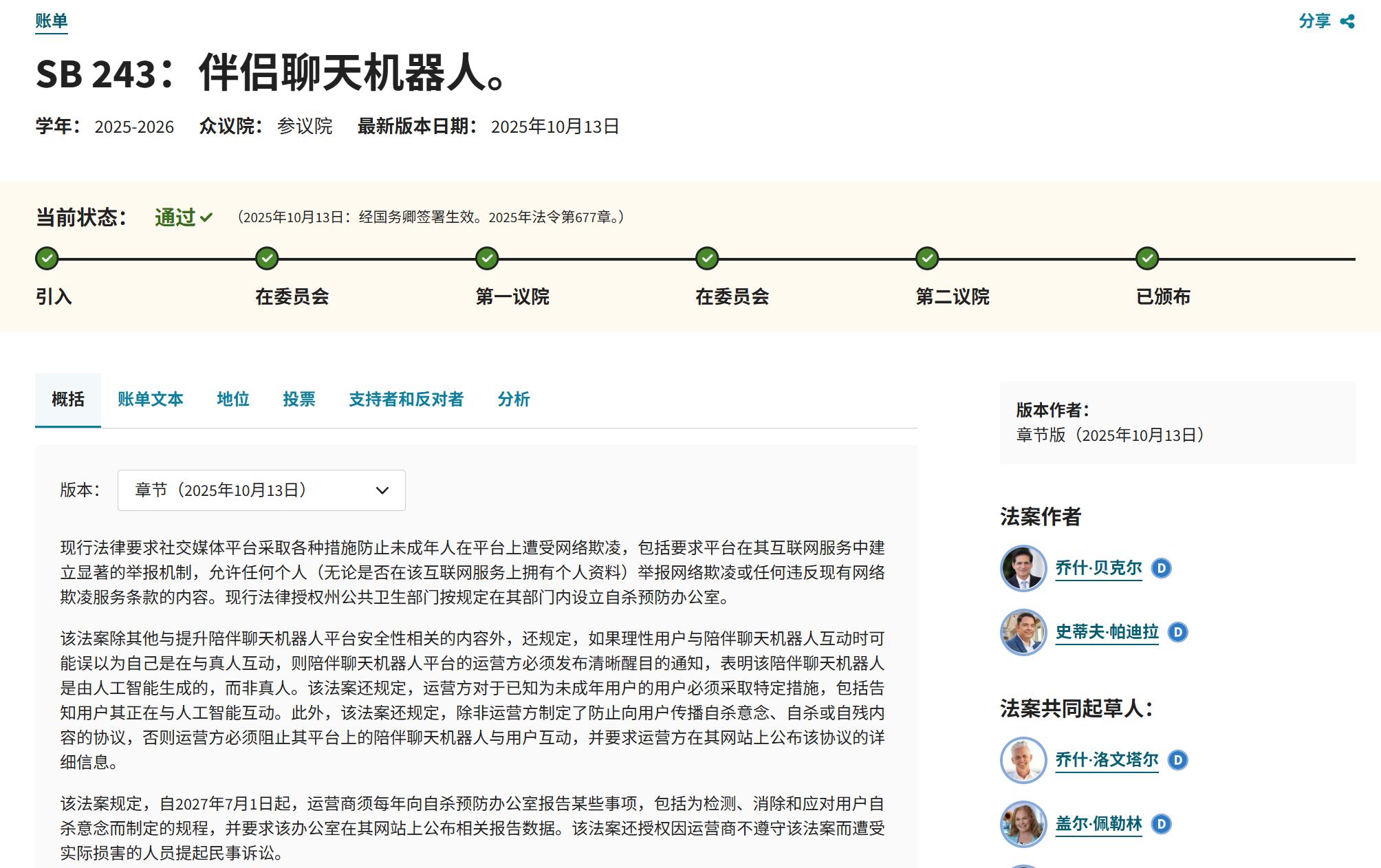
(Image source: Digital Democracy)
Of course, this one-size-fits-all approach by platforms has indeed angered many netizens to some extent.
Some users cried out that "the sky has fallen" after waking up to the news, some joked that "the virtual girlfriend I finally bonded with is gone", and even more people said "only the intelligent agent is willing to talk to me, stay with me, and never judge me for being unaccomplished".
Well... no offense guys, but your reactions just prove that the manufacturers' decision was the right one.
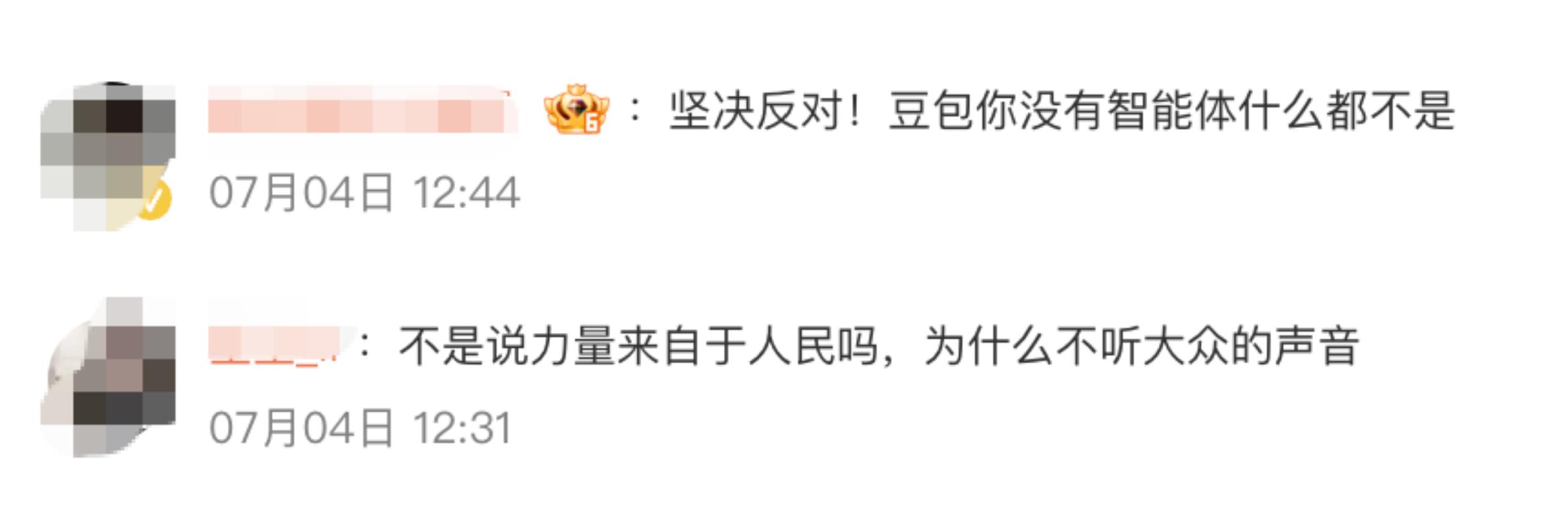
(Image source: Weibo)
There were also more heartwarming stories — some people felt these intelligent agents were more than just tools, they were like the companionship of family members.

(Image source: Weibo)
But Doubao did take this into consideration, and has launched the MaoXiang app dedicated to Chatbot services.
In my opinion, separating general large model apps from anthropomorphic companion products will be the inevitable trend in the future. Doubao will continue to serve as a tool platform, while MaoXiang takes over character chat and story interaction scenarios. This also allows ByteDance to better manage Chatbot permissions and support the free development of UGC content.
Agents are precisely the top priority for all AI players
This delisting of Chatbots does not mean that Qianwen and Doubao are ignoring intelligent agents. On the contrary, the truly functional Agents that can get things done are the hard nut that major tech companies are most eager to crack right now.
Leitech reviewed the industry last week: currently Alibaba, Tencent, ByteDance, Kimi, MiniMax, and Zhipu are all working on Agents, and their development paths have clearly split into two categories: Code-focused and Work-focused. One type helps developers write code, refactor projects, and run commands; the other helps regular users organize materials, process files, generate documents, and push forward office tasks.
Tencent's main offerings are WorkBuddy and CodeBuddy.
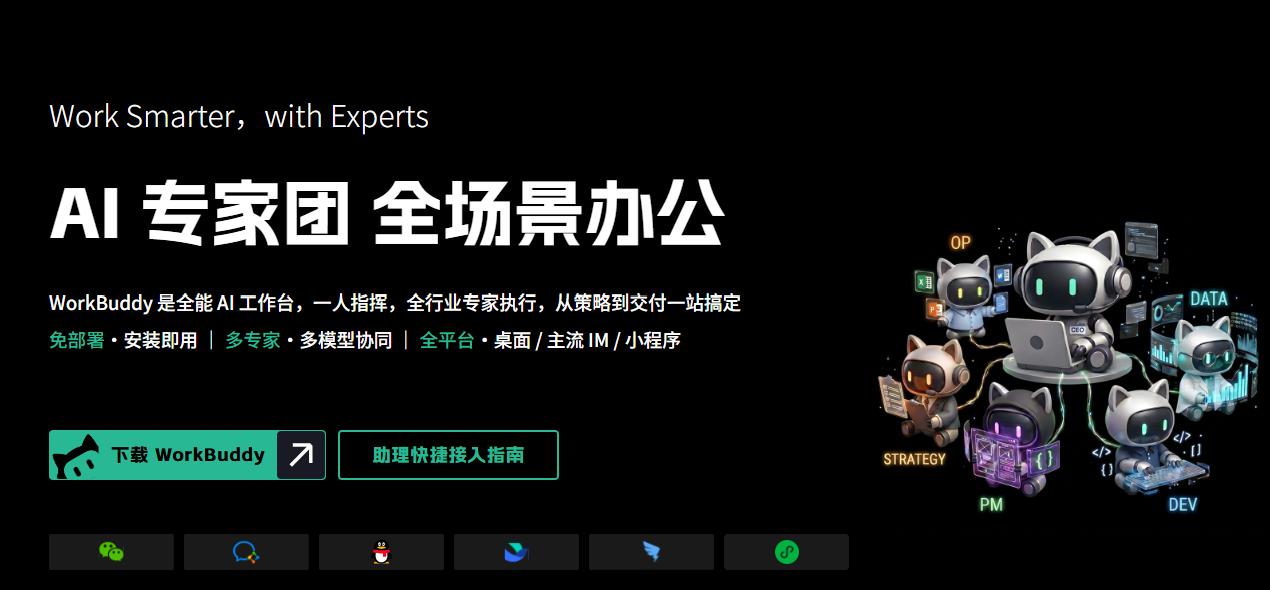
(Image source: Tencent)
Among them, WorkBuddy focuses on general office scenarios, capable of accessing context from Tencent Docs, Tencent Meeting, IMA Knowledge Base, Tencent LEXIANG, and the WeChat ecosystem. It is particularly suitable for users who already rely on the Tencent ecosystem for work. CodeBuddy targets developer scenarios, and currently covers over 95% of Tencent's engineers.
Alibaba started with Tongyi Lingma, and is expanding into products like Qoder Desktop and QoderWork.
The former is a standard AI development platform, while the latter adds features for design, writing, and slideshows on top of common capabilities like file organization, data processing, document generation, browser control, desktop control, and scheduled tasks. Beyond that, there aren't many standout unique advantages.
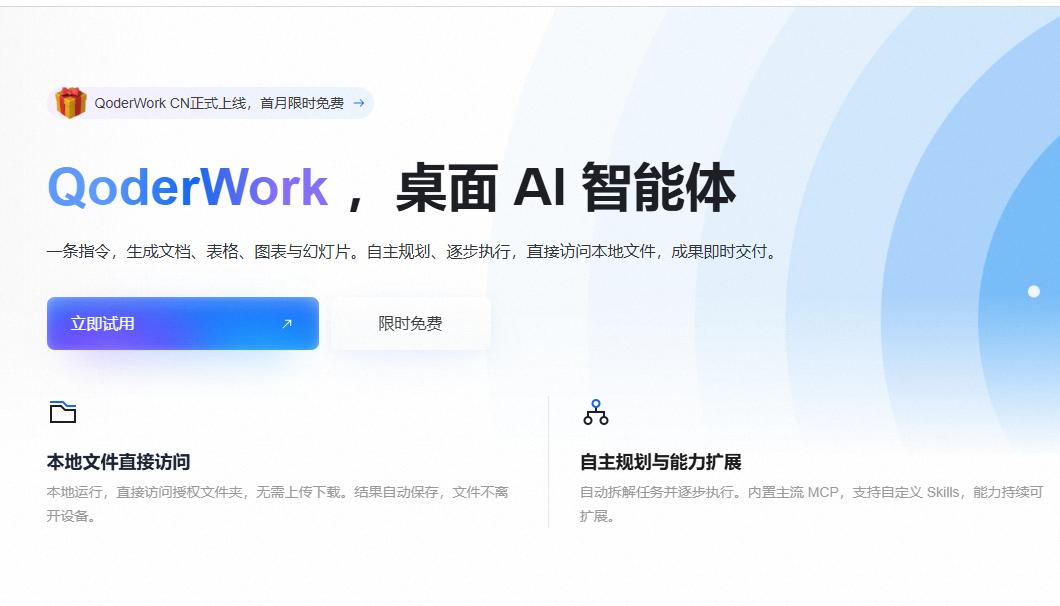
(Image source: Alibaba)
ByteDance is not standing still either. TRAE was one of the earliest breakout AI development tools in China, and the subsequent TRAE Work further evolves this development tool into a general-purpose workbench.
Compared to Tencent's WorkBuddy which expands through its own ecosystem, TRAE Work is more like an efficiency entry point for individuals and small teams. It provides multi-platform access on web, desktop, and mobile, allowing tasks to continue running locally or on the cloud. Users can check progress, review results, and adjust directions on their phones even when away from their computers.
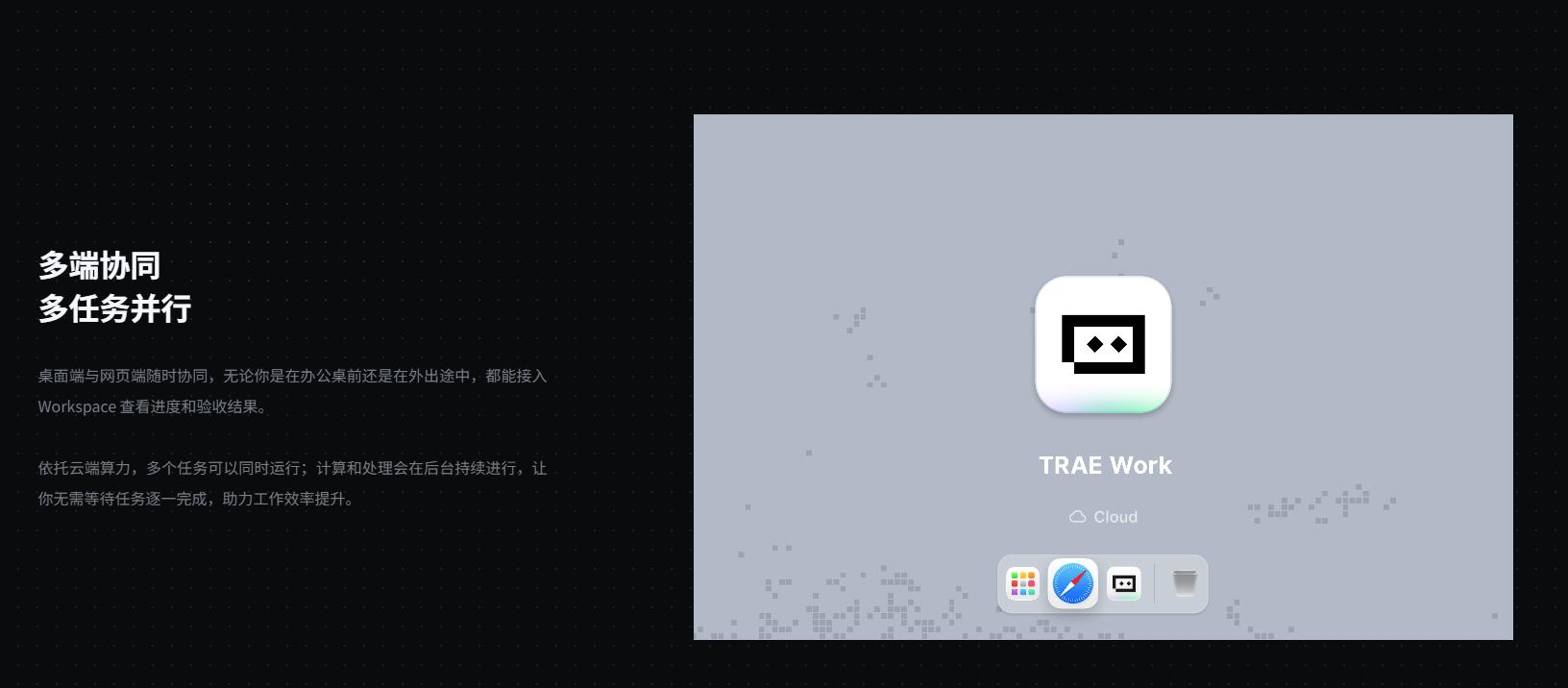
(Image source: ByteDance)
As for Kimi, MiniMax, and Zhipu, they focus more on technical routes. Kimi wants to bring its long-text advantage into long-horizon tasks. MiniMax emphasizes vertical integration of models and Agents. Zhipu's ZCode concentrates on Code Agents, deepening capabilities around complex codebases, engineering context, and task verification.
(Image source: Kimi)
That's right — these are the real intelligent agents.
They're not just prompt words stuffed into a fixed template. True intelligent agents must understand goals, break down tasks, call tools, read files, execute actions, and allow users to review, correct, and take over during the process. Only tools that can actually accomplish real work deserve to be called Agents.
Google and Meta hit roadblocks one after another — is WeChat becoming the industry's great hope?
These requirements may not sound difficult, but many foreign tech giants are at a loss how to implement them.
You know, Google still hasn't opened real Agent capabilities to all users to this day. According to official statements, only Ultra subscribers can access Gemini Spark, with restrictions limited to users in the US, aged 18+, using English, and available only on Gemini's mobile app and web platform.
The situation at Meta is even more dramatic. Mark Zuckerberg admitted in an internal meeting that the company is still striving to achieve superintelligence, but the development of AI Agents has not met expectations.

(Image source: Leitech)
That's strange — what exactly is so hard about developing Agents?
In fact, the problems these two giants face are completely different. The Muse Spark that Meta is currently showcasing still needs improvement in "terminal and system operations" and "multi-Agent orchestration". While it can manipulate Agents, it cannot guarantee stable completion of long tasks, coding tasks, and system operation tasks.
There were also rumors that they tried to acquire Manus to fill in these gaps, but the deal eventually fell through due to regulatory hurdles.
As for Google, even though Gemini 3.1 Pro itself has solid Agent capabilities, the importance of Google's ecosystem makes them hesitant to move forward. Because once Agents are connected to apps like Gmail and Docs, the large language model will inevitably gain access to users' files, emails, schedules, and account permissions.
<