The "King of Unmanned Stores" is sprinting for a Hong Kong IPO, earning 2 billion yuan a year by profiting from salaried workers.
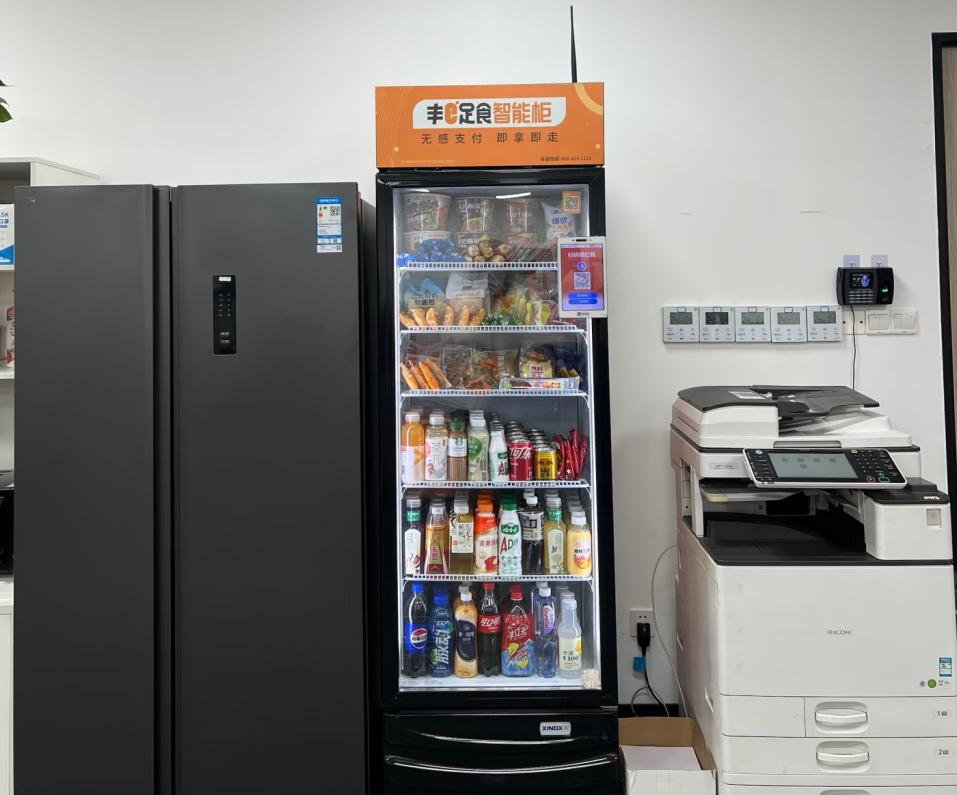
Opening the cabinet door to grab your desired drink or snack, a mobile mini-program pops up the bill and automatically deducts payment... Smart snack cabinets are gradually infiltrating office spaces, becoming the "energy charging stations" for more and more office workers.
Travel back nine years ago. Unmanned shelves and smart retail cabinets were once one of the hottest tracks in the capital market, with hundreds of companies trying to turn office pantries into "business battlefields". However, the once red-hot track underwent a drastic reshuffle in less than two years. Star players such as Guoxiaomei and Xingbianli collapsed one after another, and some analysts even labeled the entire sector as a "false proposition".
After the dust settled, two leading companies have forged viable survival models through completely different strategies. One is the industry pioneer Ubtech (hereinafter referred to as "Ubtech"), and the other is SF Express's incubated "hidden champion" — Feng E Food (hereinafter referred to as "Feng E"), the company that pioneered the unmanned cabinet model of "open first, pay later".
Recently, Shenzhen Feng E Technology Co., Ltd., the parent company of Feng E, officially submitted its prospectus to the Hong Kong Stock Exchange, planning to list on the Main Board of the Hong Kong Stock Exchange.
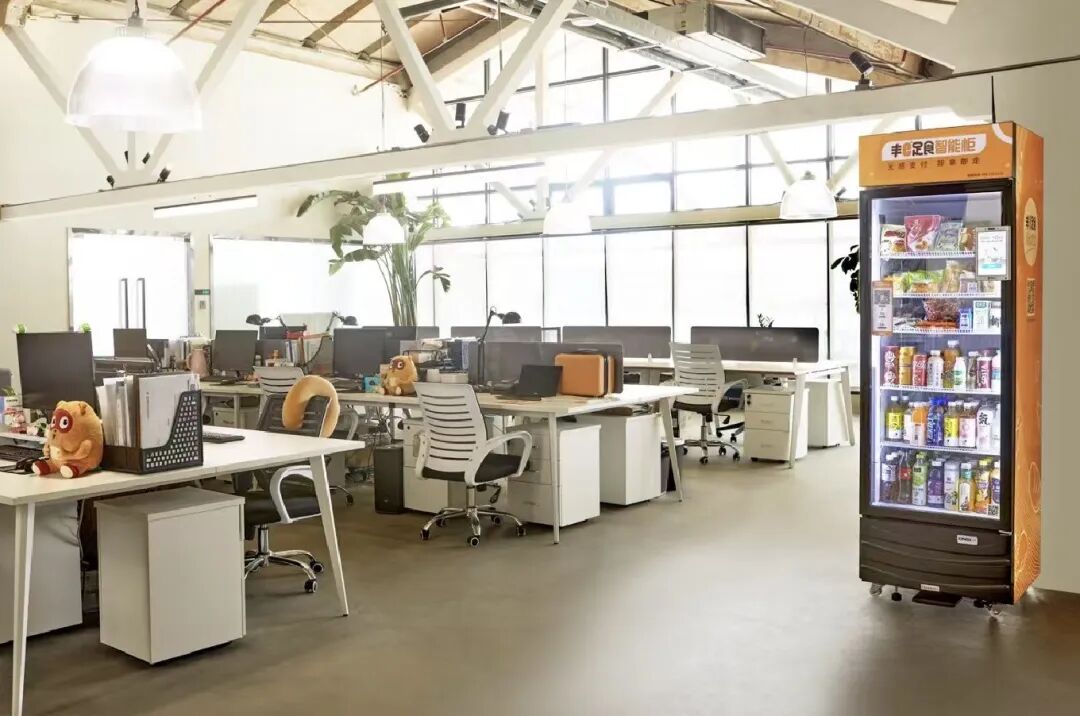
As SF Express's foray into the goods-selling industry, Feng E's IPO has at least two layers of solid foundations.
According to data from the prospectus, first, it ranks first in market share in the smart retail cabinet industry. By the end of 2025, it had over 184,000 smart cabinets across the country, capturing a 21.5% market share and becoming the undisputed leader in the unmanned retail sector. Ubtech, which went public earlier, ranks second with 49,700 smart cabinets and a 5.8% market share, followed by smart cabinet brands deployed by FMCG giants such as Nongfu Spring and Genki Forest.
Second, it is the first company in the industry to achieve large-scale profitability through a fully direct-operated model. In 2025, Feng E recorded an annual revenue of 2.009 billion yuan, a gross profit of 1.12 billion yuan, a gross margin of 55.8%, and an adjusted net profit of 118.6 million yuan. In comparison, Ubtech, after years of being listed, is still struggling to break even. According to its published financial report, its adjusted net loss in 2025 was 55.6 million yuan.
As the fruit of SF Express's years of deep cultivation in the retail track, Feng E has put forward a new narrative driven by AI agents. But returning to the essence of retail, what does this "king of smart cabinets" rely on to make money? Has the unmanned retail model truly become viable?
100% Direct Operation: The "Hidden Champion" Incubated by SF Express
Although SF Express has completed its equity exit before the IPO and Feng E has started independent operations, Feng E Technology was originally incubated within the SF Express system. In 2017, it was initially a controlled subsidiary of SF Express, and its founder Shan Xinning is a post-80s top student from Tsinghua University who had worked at SF Express for many years.
Feng E mainly targets closed but high-frequency vertical scenarios such as office buildings and pantries. In its corporate promotion advertisements, the equipment and installation are completely free of charge, and any location with more than 30 people nearby can access the service and enjoy revenue sharing.
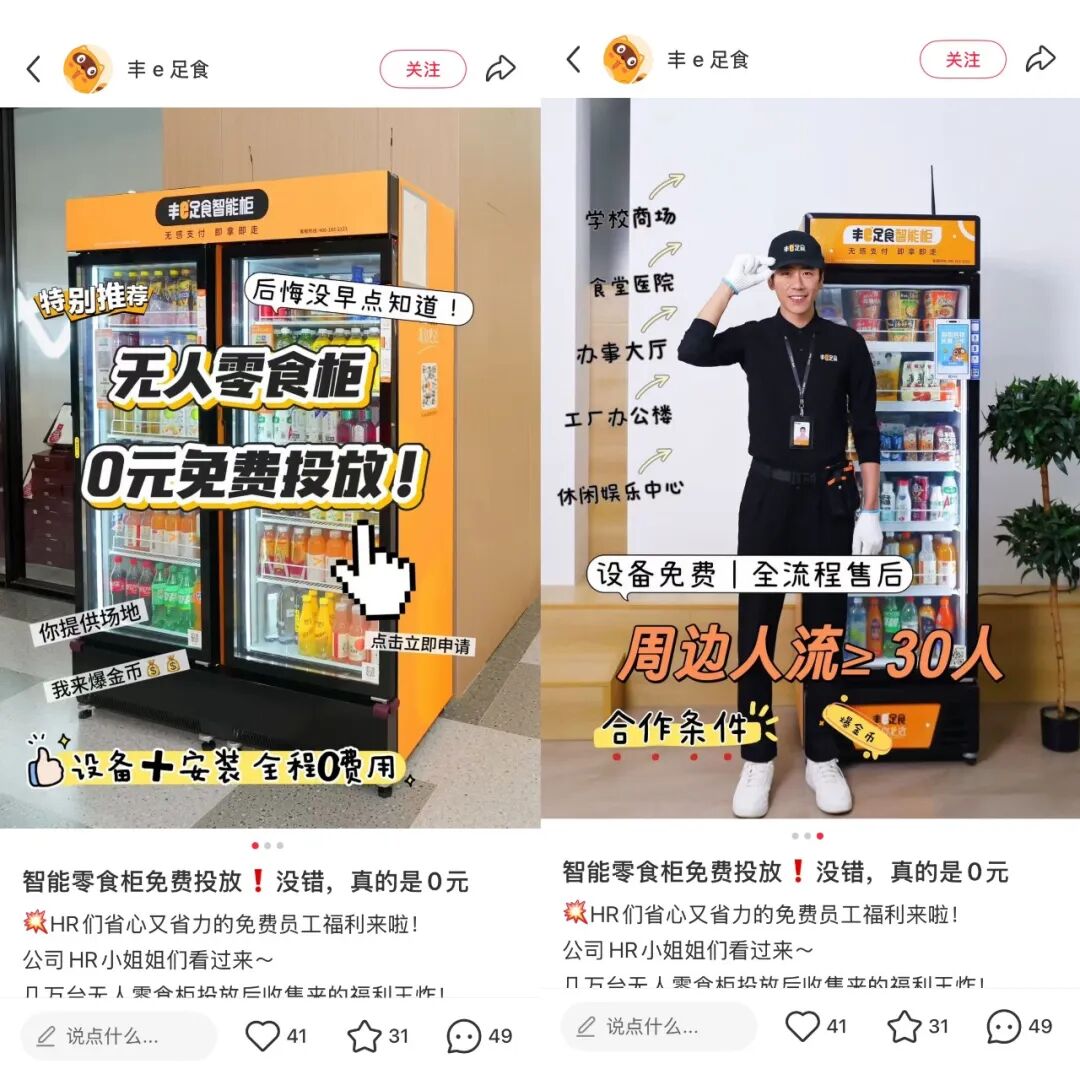
According to the prospectus, almost all of Feng E Technology's revenue comes from product sales through smart retail cabinets, with only 1% coming from advertising and other income.
Over the past three years, Feng E's gross margin has remained above 50%, reaching 55.8% in 2025 — exceeding Ubtech's 37.1% and far outpacing many chain convenience stores.
Three factors underpin its high gross margin: First, the "parasitic nature" of its locations — the office and pantry scenarios it focuses on usually have companies placing cabinets for their employees for free, with no need to pay venue rent. Second, the scale barrier creates massive centralized purchasing volume, allowing it to secure exclusive low costs. Third, since office workers have a high willingness to pay a premium for instant convenience, there is greater room for product pricing.
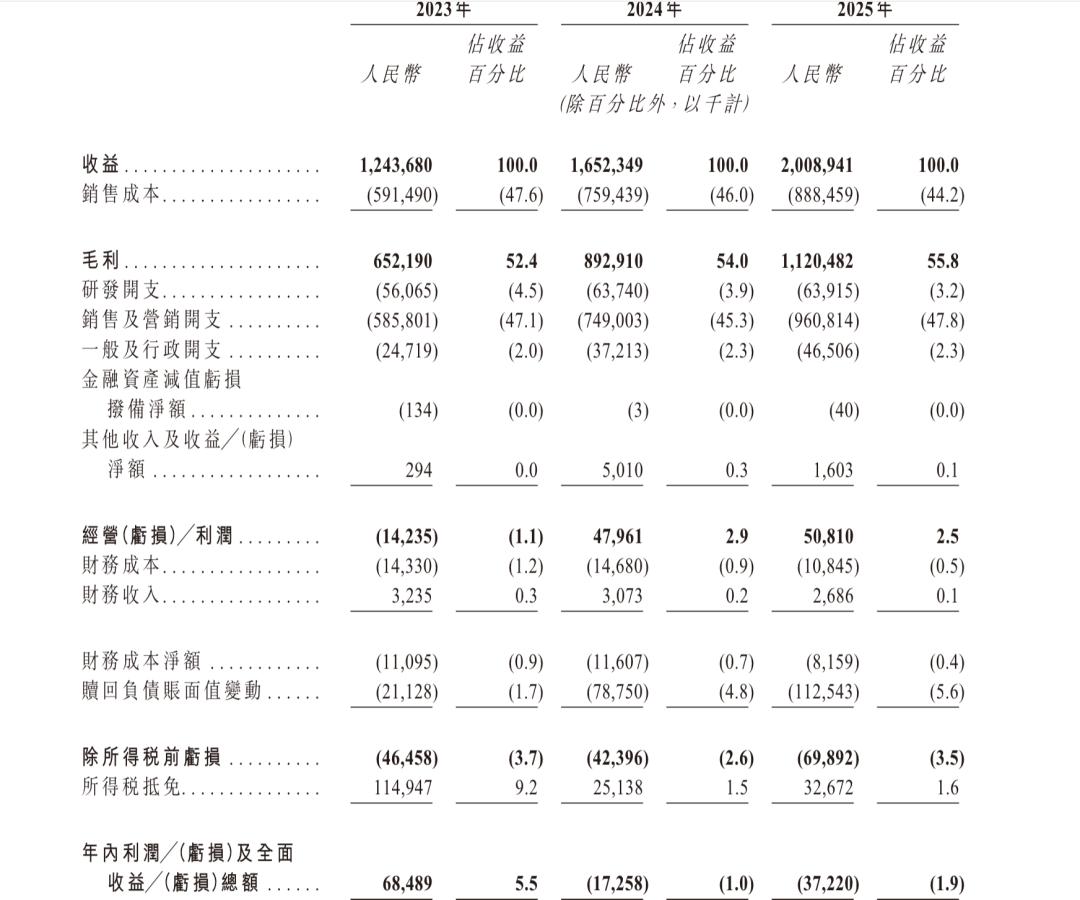
Source: Feng E Technology Prospectus
However, the massive number of locations relies on manual restocking, and Feng E Technology is trying to use AI to turn this "heavy business" into a "light" one.
In its prospectus, Feng E Technology positions itself as an AI-driven retail enterprise, noting that the labor cost for restocking and operations under its AI system is only 30% of that of traditional retail cabinets.
In 2024, Feng E developed the "Flow Pilot" AI agent, introducing it as China's first large-scale commercial AI retail agent. Its logic is similar to "L4-level autonomous driving": the AI fully takes over operational decision-making, dynamically analyzing data from 180,000 locations 24 hours a day.
Through algorithms, Feng E has achieved two key breakthroughs:
On the one hand, experience-free restocking. Restocking staff no longer need to judge which products to replenish — the AI pre-plans restocking routes and SKU combinations. This doubles the number of locations one restocker can manage, from 60 to 120.
On the other hand, an extremely low break-even point. Leveraging algorithm-driven efficiency gains and SF Express's existing logistics and warehousing network, Feng E has lowered the operating threshold to a monthly sales of 300 yuan. This means Feng E can even generate profits from "micro-locations" that Ubtech would dismiss as unprofitable, squeezing out margins through algorithms.
Recently, Feng E also announced a cooperation with Tongyi, integrating Alibaba Cloud's large language model to use AI to further improve unmanned retail efficiency.
The Divergent Paths of Two "Survivors"
The two companies that emerged from the unmanned retail track represent two distinct development directions for the industry.
Ubtech follows the platform logic of "high-traffic locations + franchise expansion + diversification".
Its cabinets are mainly distributed in public domain traffic pools such as schools, factories, and transportation hubs. While these locations generate high per-unit revenue, their entry fees are also a heavy burden. To ease this pressure, Ubtech adopted a franchise model in the early stage and tried to break the boundaries of retail, transforming into a "traffic entry point".
Prospectus data shows that Ubtech once had extremely high expectations for diversification, with the gross margin of its advertising and system support services once approaching 100%. To tell a new growth story, Ubtech also dabbled in businesses such as mini KTV (Uchang), self-service coffee machines, and even automatic lottery ticket vending machines.
However, these businesses are highly dependent on offline foot traffic and advertising market conditions. When offline traffic fluctuates and advertisers cut budgets, Ubtech's growth faces long-term challenges.
Ubtech's performance report shows that the company has not achieved annual profit since 2020. In 2025, its revenue was 2.759 billion yuan, down 5.5% year-on-year, with a net loss of about 68.7 million yuan. The revenue from its core unmanned retail business was 1.837 billion yuan, down 6.5% year-on-year. The revenue from advertising and system support services shrank by 28.3% year-on-year due to reduced advertising demand, with only other businesses such as operating system support and Uchang AI smart karaoke booths recording growth.
In 2025, although Ubtech's adjusted loss narrowed significantly, this was mainly achieved by closing high-rent and low-efficiency locations, controlling costs, and optimizing non-operating projects — without a substantial improvement in profitability efficiency.
Ubtech's efforts to explore "new businesses" over the years have mainly focused on mini KTV hardware sales and location operations, as well as vending machine wholesale. Although these businesses contributed some positive growth, they only account for 11.3% of total revenue, with its core unmanned retail business still making up 66.6% of total revenue.
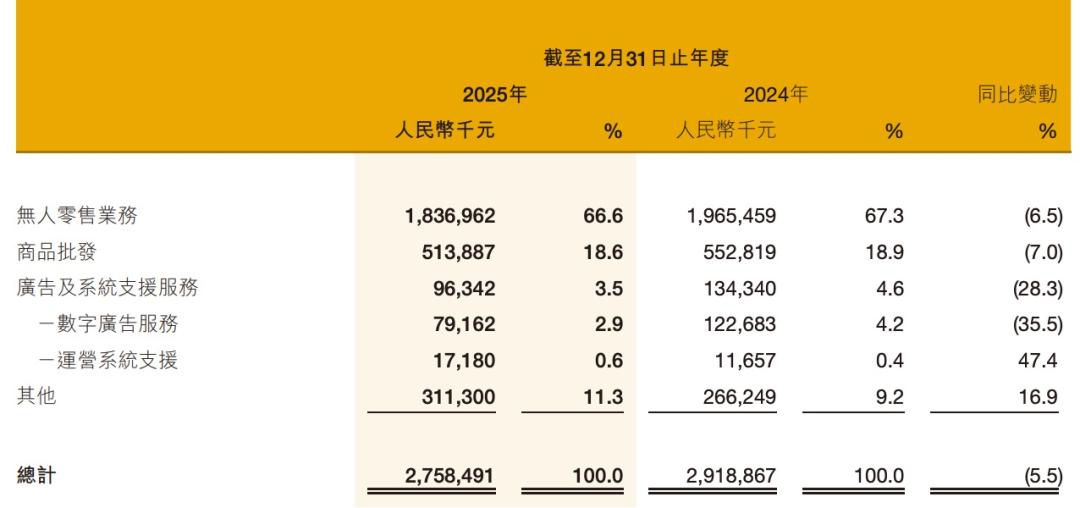
Source: 2025 Ubtech Annual Report
Over the past year, despite weaker advertising demand and declining revenue, its nearly 100 million yuan in advertising revenue has to some extent provided Ubtech with sufficient cash flow to hedge against retail cycle risks.
On the other hand, Feng E has adopted a retail model of "private domain scenarios + full direct operation + product markup".
Feng E mainly focuses on closed private domain scenarios such as office buildings and factory workspaces. These scenarios have stable and exclusive traffic — once a cabinet is placed at the front desk of a company, competitors can hardly enter. Its main profit comes from that 3-yuan bottle of water and 5-yuan loaf of bread. Although this model incurs huge sales expenses in the initial expansion stage, it has strong risk resistance.
However, this stable "small-scale business" also poses Feng E's biggest risk: the heavy full-direct-operation model implies high operating leverage. This means Feng E's future path is very clear — to improve efficiency and boost per-cabinet output through methods such as AI optimization.
Is Unmanned Retail a Good Business?
Behind its thick AI narrative, Feng E is first and foremost a retail company.
The success or failure of retail essentially lies in whether it can continuously cater to consumers' unchanging core needs. Those failed unmanned retail ventures in past years offered neither convenience in time and distance, nor advantages in products and services, nor affordable prices. When novelty becomes the only selling point, there is nothing to retain consumers.
If we look back at the crazy "hundred-cabinet war" in 2017, behind the collapse of the vast majority of players was the same expectation: to use the logic of internet traffic platforms to deploy offline retail with heavy assets, pursue scale growth while neglecting profit verification, and underestimate the fundamental gravity laws of offline retail.
As locations expanded, they found that unlike the logic of internet software where marginal costs tend to zero, each new location means a new round of investment in cabinet hardware, warehousing rent, and distribution teams. Once capital recedes, players without endogenous growth momentum gradually collapsed.
Judging from financial data, the two survivors — Ubtech and Feng E — have not completely escaped this gravity.
By the end of 2025, Ubtech had 67,840 locations, with a year-on-year growth of only 1%. Behind this near-stagnant growth is the fact that high-quality locations have been fully competed for, and new business expansion is more difficult than expected, forcing operators to re-evaluate the risks of expansion. Today, Ubtech's market value has shrunk by about 75% since its initial public offering.
Feng E tries to use AI narrative to reconstruct the rules of survival, but so far, algorithms cannot yet offset the wear and tear of heavy offline assets.
According to the prospectus, Feng E's sales expense ratio is still rising against the trend as its scale expands. From 2023 to 2025, Feng E's sales and marketing expenses were 586 million yuan, 749 million yuan, and 961 million yuan respectively, with sales expense ratios of 47.1%, 45.3%, and 47.8% — meaning that even after doubling its scale, the expense ratio remains at a high level.
Calculations show that in 2024, Feng E's average monthly revenue per cabinet was 1,132 yuan, which dropped to 1,034 yuan in 2025, indicating a declining trend in per-cabinet revenue.
This means that even though AI has optimized restocking routes and reduced product loss, as locations penetrate into second- and third-tier cities or more fragmented "micro-scenarios", the marginal development costs and logistics operation and maintenance costs of new locations are still eroding profits.
In other words, the efficiency improvements brought by algorithms are currently offset by the structural costs of offline expansion.
At present, unmanned retail cabinets not only face competition from peers, but the rise of the instant retail industry means that competition for consumers' "last 10 meters" needs has become unprecedentedly fierce.
As instant retail platforms such as Meituan and Xiaoshi Supermarket continue to expand their SKU offerings, with delivery radius and speed reaching their limits, unmanned retail cabinets with no unique product or price advantages are gradually losing their appeal. On social platforms, many users say they are "shocked" by the bill that pops up after picking up goods, noting "it's much more expensive than convenience stores, and it feels like being blindsided".
Admittedly, in some more closed office scenarios, the "instant accessibility" of unmanned retail cabinets still has irreplaceable advantages. But how much premium white-collar users are ultimately willing to pay for this convenience remains to be verified.
After IPO, Feng E, the "king of unmanned retail", still needs more time to find its true moat.
This article is from the WeChat public account "World Wide Web Business" (ID: txws_txws), written by Zhang Hangying, and published with authorization from 36Kr.