Cannes Lions 2026: What Are Global Marketing Decision-Makers Focusing On?
This year in Cannes, the heatwave is hitting, and the popularity of the Cannes Lions International Festival of Creativity is only rising.
As the global advertising industry's barometer, numerous speeches and award-winning cases on the Cannes stage have shown us the ongoing changes and some future trends in the advertising and marketing industry:
Two major discussion points have seen a soaring popularity: Firstly, the topic of AI has evolved from the exploration of small tools to "intelligent agent tools and intelligent agent marketing"; secondly, the "full mainstreaming" of the creator economy. Various institutions are vying to launch "creator" activities, and brand owners and agencies are trying to promote the reform of their media channels from the perspective of creators.
Almost every conversation is centered around the theme of "trust" - consumers trust smaller circles; brands trust creators and give them more autonomy; marketers are still working hard to gain the trust within their own companies. Many industry insiders said that in the past year, they spent more time discussing how to convince the CFO that creativity is crucial.
This year, the focus has shifted from the debate between brand and effectiveness to "how to build an organizational structure that allows creativity to continuously drive business results." The question is no longer whether creativity is important. Instead, it's about how the organization can create conditions for creativity to thrive and how marketing leaders can clarify the benefits for the entire enterprise. Creativity is increasingly regarded not as the result of an advertising campaign but as an organizational ability.
Traditional advertising agencies are facing unprecedented external competition: Layoffs have released a large number of excellent talents who form more flexible small teams; creators are starting their own agencies and media companies; entertainment companies and sports companies are launching advertising services with institutional characteristics; in-house teams within brands are growing; management consulting firms such as BCG, Accenture, and Deloitte are also continuously eroding the market share of traditional advertising groups.
"We're like living in a blender."
As Jessica Jensen, the Chief Marketing Officer of LinkedIn, said, today's marketers have long become "all-round warriors" - "We are responsible for both message delivery and brand building, and we also need to introduce AI tools and translate them into actual business results. At the same time, we have to cut down on manpower and costs. It's simply maddening."
The current marketing industry has long gone beyond the scope of "marketing." Therefore, we need to be more observant and quickly detect the trend changes in the market.
01
Advancement of AI Marketing:
You Still Need People with Excellent Taste
The topic of "whether AI will take away jobs," which was widely discussed last year, no longer concerns anyone this year.
After a year, although the core of the discussion still revolves around AI, the main direction is more practical, focusing on the proposition of "how we can implement it systematically": for example, how should we change our operating systems in this context? And how can we jointly assume governance responsibilities at a higher level?"
In terms of creativity, AI remains a polarizing topic. Creative professionals and Cannes judges have been arguing about how and when to apply it.
This year's Cannes award list reflects this love - hate relationship: Google's AI Craft entry "Project Genie" won the Grand Prix in Digital Craft. Throughout the entire festival, only one other AI Craft entry won a Lion Award: Team One's "The Last Real Man" for The RealReal won a Bronze Lion in Film Craft. Dozens of other AI entries didn't even make it to the shortlist.
This is a rather clear signal from the judges, showing a cold shoulder to AI - generated creativity and cherishing hand - crafted works.
One of the marketing campaigns that tied for the most Lion Awards this year, Heineken's "Could Have Been a Heineken," addressed the communication fatigue caused by "long voice messages" in the digital age. It developed a WhatsApp bot to automatically recognize ultra - long voice messages (> 3 minutes) and exchange them for free beer vouchers, encouraging users to put down their phones and have face - to - face conversations. This work transformed the social platform itself into a solution, strengthened the brand's concept of "real connection," and called on people to put down their phones and embrace the real world.
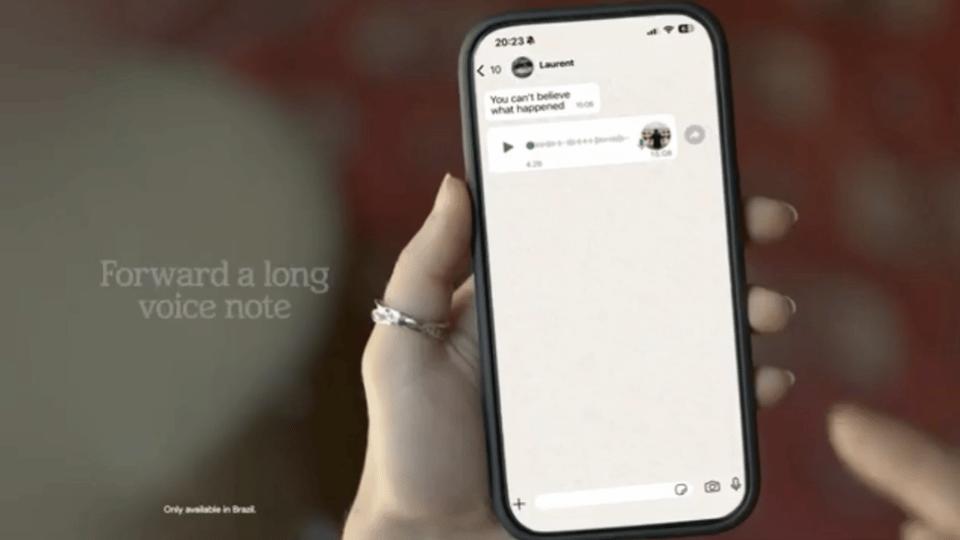
Heineken's "Could Have Been a Heineken"
However, the increasing use of AI among creative professionals is an irreversible trend.
Many agencies have established in - house technology labs to keep up with the endless stream of tools provided by wave after wave of AI startups. Agencies have also seen results in the implementation and application of AI, especially in areas such as prototyping. AI helps them successfully pitch ideas to clients by quickly visualizing creativity. More and more people are saying that if agencies hadn't initially presented an engaging AI version, those final "manually - crafted" cases wouldn't have become a reality.
Beyond creativity, in the placement stage, which the public doesn't see, the role of AI has been fully recognized.
Many attendees said that AI agents can detect abnormal problems in traffic transactions and even help discover media fraud. With the support of faster intelligent technology, advertising buyers only need to optimize in real - time at any time during the operation process. Agents are handling tasks that humans find cumbersome, such as dealing with spreadsheets, adjusting bids, and the initial setup of advertising campaigns.
At the Cannes Lions International Festival of Creativity, advertising industry giant platforms, advertising technology companies, media platforms, and agencies are all paying attention to the development of marketing agents. A wave of agent product launches emerged a few weeks before the festival. They also used various data to prove that agent tools are not just dealing with one - time advertising transactions between a single buyer and seller agent, but are already prepared for the "collaborative orchestration stage," meaning they have the ability to participate in every corner of the market.
Ajinkya Joglekar, the vice president of marketing at telecommunications operator Optimum, has started using the placement agent of advertising platform Mediaocean (partially developed through its ad server Innovid), which has reduced the time required to launch creative materials into the market by 80%. It replaces the traditional manual, detail - oriented workflow of managing and tracking the material names, meta - tags, specifications, and placement destinations of each independent creative work line by line through spreadsheets.
"As humans, we need to analyze data and develop creativity. In the face of the number of platforms, the volume of interactions, and the continuous flow of data that the advertising industry currently faces, all these tasks are extremely time - consuming and almost impossible to complete manually alone," Joglekar said. "We are present in every channel and must prepare multiple sets of creativity for each channel. So, it doesn't make sense to have a human analyst handle these."
However, there are still technical obstacles in building agents and orchestrating and coordinating them throughout the supply chain. Marketing leaders pointed out that humans still need to provide safety rails and catch AI hallucinations because the probability of agents fabricating false data out of thin air may be as high as the probability of them detecting real marketing loopholes.
In addition, the industry is still in the exploratory stage of establishing standards for the smooth operation of the ecosystem; currently, the standard for communication between agents is mainly applied through the Model Context Protocol server. Multiple forces are also developing parallel industry standards for programmatic agent - based advertising purchases.
So, if someone tells you that the agent they're working on can achieve end - to - end, fully autonomous optimization... they're probably just bluffing you.
02
The Creator Economy:
Be a Partner, Not Just a Channel
A topic as hot as AI is the "creator economy." To some extent, this is because more and more creators are participating in the Cannes Lions Festival.
TikTok flew 16 creators to the festival, including beauty creators Golloria George and Katie Fang, comedians Morgan Jay and Yasmine Sahid, and former "Love Island" contestant Jeremiah Brown.
According to Variety, TikTok wrote in a statement: "When creators, culture, and the right tools are combined organically, brands can achieve the best business results. On TikTok, this combination can help the audience transform from 'passive viewers' to 'active participants': they can explore new ideas, acquire knowledge, build deep connections, and finally make purchases on the same platform."
At this year's Cannes Lions Festival, TikTok officially launched Symphony Agent and Custom Creator Networks. The latter supports brands in building a dedicated talent pool that includes creators, employees, partners, and brand advocates. Brands can issue creative requirements within the talent pool and convert their own brand videos into ads, effectively simplifying the content marketing process.
Later this summer, TikTok will jointly launch the first custom creator network with Starbucks. This project is based on Starbucks' "Green Apron Creator Program" and aims to empower employee - driven brand storytelling. Starbucks will be able to share creative briefs with its employee - creator community, enabling them to more directly participate in the creator economy through content creation opportunities and advertising revenue sharing.
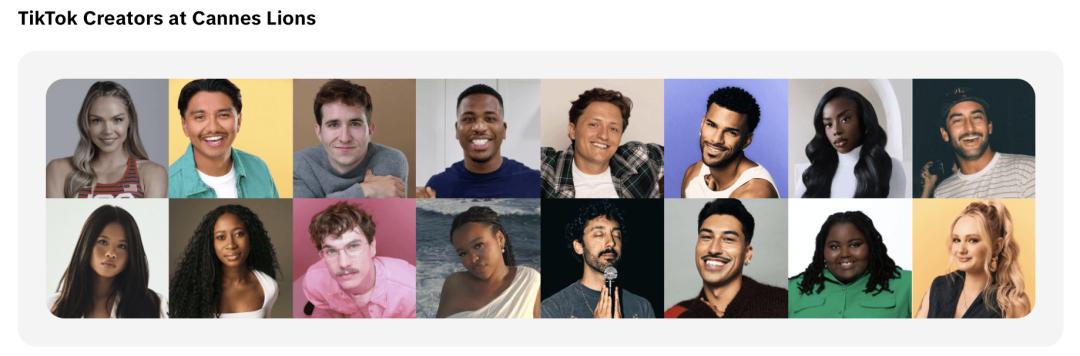
TikTok creators at Cannes. Source: TikTok
UTA, one of Hollywood's top talent agencies, also brought more than 70 creators to Cannes. Its clients include Keith Lee and Olandria Carthen, who made appearances at the UTA Beach and the Microsoft Garden. UTA's presence on the beach even surpassed that of the major advertising and communication groups that used to dominate there.
"Cannes is definitely a festival for creators now," said James Brownstein, the founder of influencer marketing agency Poster Child.
Many creators at Cannes discussed their ambition to build mature media companies, integrating brands into their own projects rather than simply seeking social media sponsorships. Creators are challenging brands to stop seeing them as just media - buying channels and start treating them as strategic partners.
Cat Goetze (aka CatGPT), who participated in the festival in collaboration with Claude from Anthropic, said she doesn't want to be a glorified billboard, relying solely on brand sponsorships. She launched Physical Phones (a Bluetooth - driven landline phone brand) last year and is building Cat Labs (a creator - led product studio).
Creators are also establishing agencies. For example, YouTube star Brandon Baum founded Studio B, with clients including Meta, Adidas, and Lego.
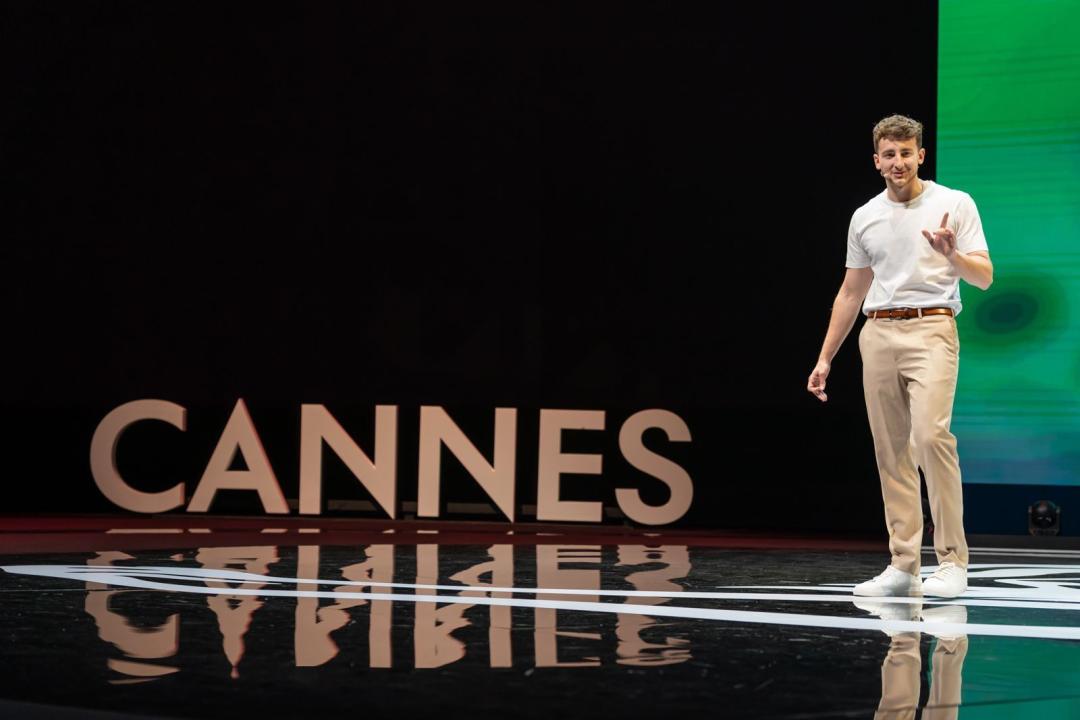
Brandon Baum at Cannes. Source: Brandon Baum's LinkedIn account
Brands are also trying their best to win over the growing creator community at Cannes.
William White, the Chief Marketing Officer of Walmart, believes that creators can bring something to brand storytelling that brands themselves can't always capture: 'richer emotions, more authentic life beliefs, and more space to show humanity.'
Todd Kaplan, the CMO of Kraft Heinz, bluntly said that anyone who thinks this is just about "reach (traffic)" doesn't understand the essence of the matter. He pointed out that brands must not approach the creator economy with the same logic as they used to buy traditional media resources. Brands often only focus on the number of followers - for example, someone has 20 million followers - but fail to realize that creators are a "combination" of artists, creative directors, production companies, communication media, and IP assets.
What brands are buying is not traffic; they are borrowing the 'authenticity' of creators. And this borrowing will only work when brands provide clear business "rails (red lines)" for creators, clearly telling them what they can and can't do for the brand, rather than just treating them as a line item in the media budget.
Leandro Barreto, the CMO of Unilever's Beauty & Health business, clarified the misunderstanding of the company's highly - praised "creator strategy." He said bluntly: This is not a problem of channels. Neither TV ads nor paid media are dead.
"This is about 'how demand is created.' Even before the emergence of various online platforms or influencers, people trusted recommendations from friends far more than the self - promoting claims of brands. Creators are not exactly the same as that real - life friend - this relationship is 'parasocial' rather than a real personal friendship - but they are indeed an extension of this acquaintance relationship."
Brands still need to win the favor of the public by building "familiarity," and familiarity can only come from "high - frequency repetition."
03
Other Important Information and Views at the Cannes Scene
P&G: Robots Can't Build Brands, but People Can
Marc Pritchard, the Chief Brand Officer of Procter & Gamble (P&G), gave a speech titled "Robots Can't Build Brands: The New S - Curve of Creative Transformation," mainly discussing how the company applies data and technology to its creative process without losing its human touch, and how marketers can strike a balance between technology and human creativity.
He introduced P&G's new marketing model, which aims to use data and insights to produce a large amount of marketing content.
"Generative AI has given huge creative energy to sources at all levels - enhancing the experiences of entertainment, advertising, influencers, creators, distributors, and consumers. Moreover, it also provides assistance through agents (AI assistants) that can understand individual preferences, purchase and media behaviors, and purchase intentions, thereby improving the shopping experience," he said. "These structural changes are colliding with each other, bringing about major transformations - achieving a leap in brand building to a new S - curve."
However, P&G believes that no matter how advanced technology becomes, the core of brand building remains the same: discovering relevant human insights and transforming them into excellent consumer experiences. What changes is the way we work. What remains unchanged is the underlying logic of brand building. Brands still achieve growth by building awareness, strengthening memory, and guiding consumers to make purchases - but it all starts with understanding people.
Although AI can quickly generate a good starting point, it can't dig out the subtle cultural truths that can only be obtained by observing humans in daily life. Those deeper insights - those rooted in human curiosity, empathy, and real - world observations - are the core of transforming information into creativity that shapes brands.
Take P&G's UK dish - care brand Fairy and its award - winning "Skip the Soak" marketing campaign as an example. The UK team discovered a unique local insight: British consumers have an ingrained habit of soaking dishes before washing them. AI could have analyzed millions of data points, but it couldn't understand this cultural - level behavior. By embracing this cultural truth, the team re - positioned Fairy around helping people "skip the soak," driving double - digit growth.
Technology can analyze data points, but it takes people to transform these signals into creativity that can shape brands.
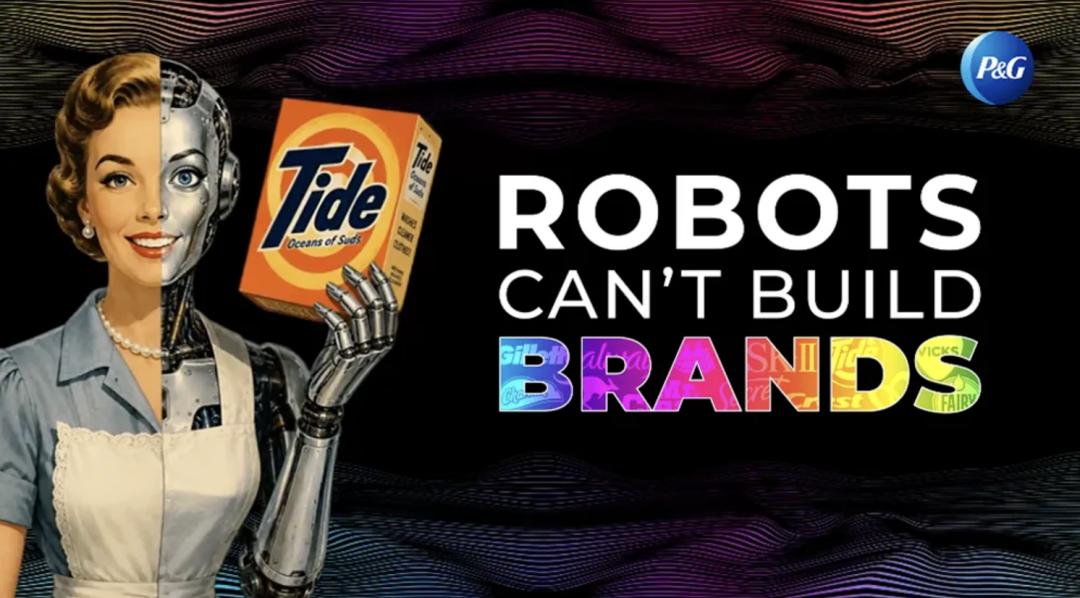
Brand building is moving away from the slow, linear "batch - processing" process towards a continuous stream of creativity - where the speed, quantity, and diversity of creative development, testing, optimization, and large - scale promotion have reached unprecedented levels.
In terms of work style, P&G still believes in the value of agencies but prefers a "mix - and - match" approach to agency partnerships. Marc Pritchard said: "For agency partners, it's no longer 'one - stop shopping'... This is a modular approach that allows us to leverage each other's superpowers."
It was reported that a P&G spokesperson confirmed that although the company still maintains partnerships with core suppliers such as Publicis