Burning 100 million Tokens just to write a weekly report? 360 Zhou Hongyi reveals the harsh truth of LLM hallucinations
“There is a misunderstanding among people. When digital employees come, do I have to pack up and leave? Once a company distills your capabilities using AI, you will be replaced by machines, which scares many people. In fact, within a company, those who can write their capabilities as skills, master AI, and are good at transforming agents are actually the talents that the enterprise should strive to retain and should be specially rewarded.” Zhou Hongyi, the founder of 360 Group, directly tore through the veil of this cheap anxiety with just a few plain truths.
On June 24th, at the National Convention Center in Beijing, the 14th Internet Security Conference (ISC.AI 2026) kicked off.
After finishing his keynote speech on the stage, Mr. Zhou rushed to a media interview room without a dazzling spotlight. During the more than one - hour communication and interview, Zhou Hongyi revealed to the public “what he is thinking” and “what he is afraid of” in this life - and - death test of agent implementation by peeling away the dazzling computing power bills and target temptations in front of him.
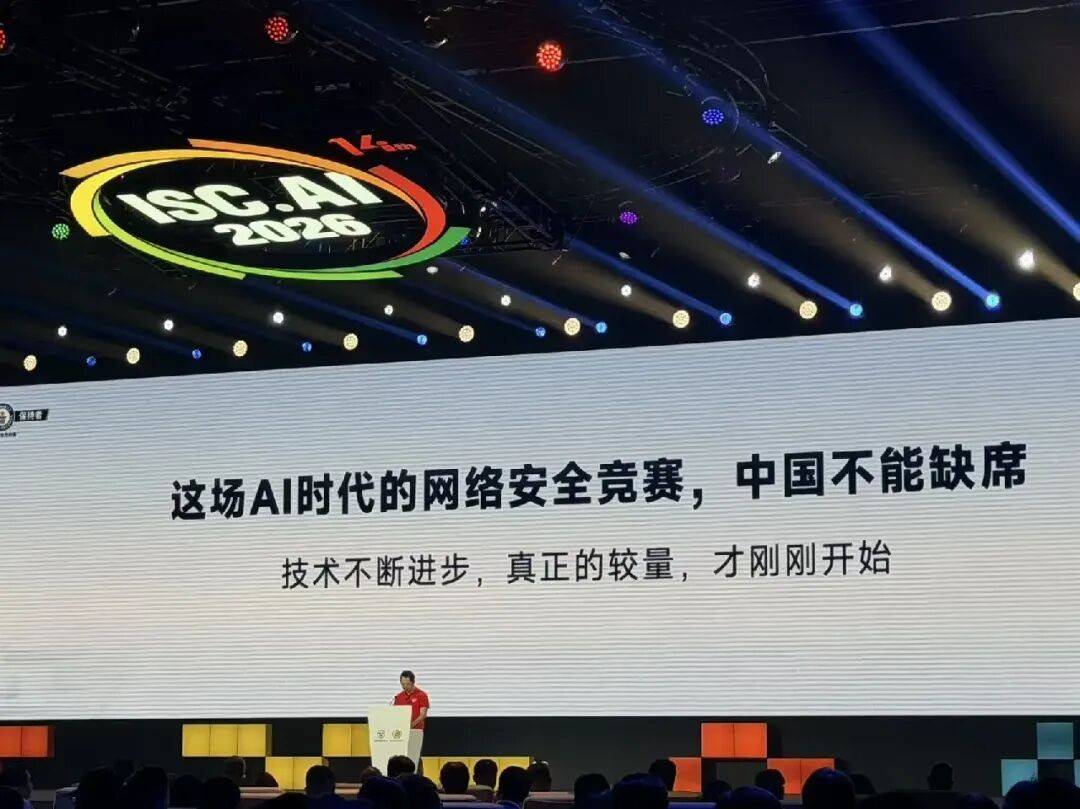
Stop blindly boasting about the whole company embracing AI. Instead of spending money on tokens to show determination across the board, it's better to reshape the enterprise organization. Otherwise, it's like installing the most advanced engine on a late - Qing Dynasty horse - drawn carriage. Not only will it not run fast, but it will also end up in a crash...
In Mr. Zhou's view, in this “arms race” of computing power and tokens, the underlying business logic is often more brutal than the technology itself.
The Overestimated “All - Round Illusion” and the “Wasted” Tokens
Many enterprises' understanding of AI still remains in the illusion that “buying a system can make them soar”. However, the reality is extremely harsh: when you let a lobster - like agent do work, in order to achieve the so - called “super - ability”, it will frantically load dozens of tools and get stuck in a dead - end loop of attempts. As a result, even for simple tasks like checking the weather or making a PPT, it can easily burn tens of millions or even hundreds of millions of tokens.
Zhou Hongyi has paid a real price in this AI pit. He once thought that “playing with AI requires being willing to spend money”, but later found that this senseless consumption must be stopped. Therefore, before the new “Nano WORK” platform was formed within 360, he resolutely abandoned the lobster model.
“There are two reasons for abandoning the lobster in Nano WORK. One is the inherent uncertainty of core security in the lobster model, which will lead to a lot of additional work. The other is that the token consumption of the lobster model is simply too large and unreasonable.” Mr. Zhou seriously reviews every attempt and choice.

As Jensen Huang, the CEO of NVIDIA, said before, the scale of token expenditure is one of the yardsticks to measure the depth of an enterprise's AI application. However, burning money is not the goal; burning it to achieve efficiency is the real goal of an enterprise.
The path of promoting AI within 360 is extremely practical: in the first stage, “tricking” employees into developing the habit of discussing with AI, even if they use it to write online literature or solve Goldbach's conjecture. The core is to develop the habit. This coincides with Ren Zhengfei, the founder of Huawei's management motto “first rigidify, then solidify, then optimize”. In the second stage, when employees start using tokens, 360 begins to study the token consumption efficiency of employees with agents and strongly promotes transparency.
In Mr. Zhou's view, if after consuming 100 million tokens, there is no high - quality code submission, no feasible product plan, or no truly workable agent in the end, then this so - called AI Native is essentially a vain self - indulgence under the guise of technology.
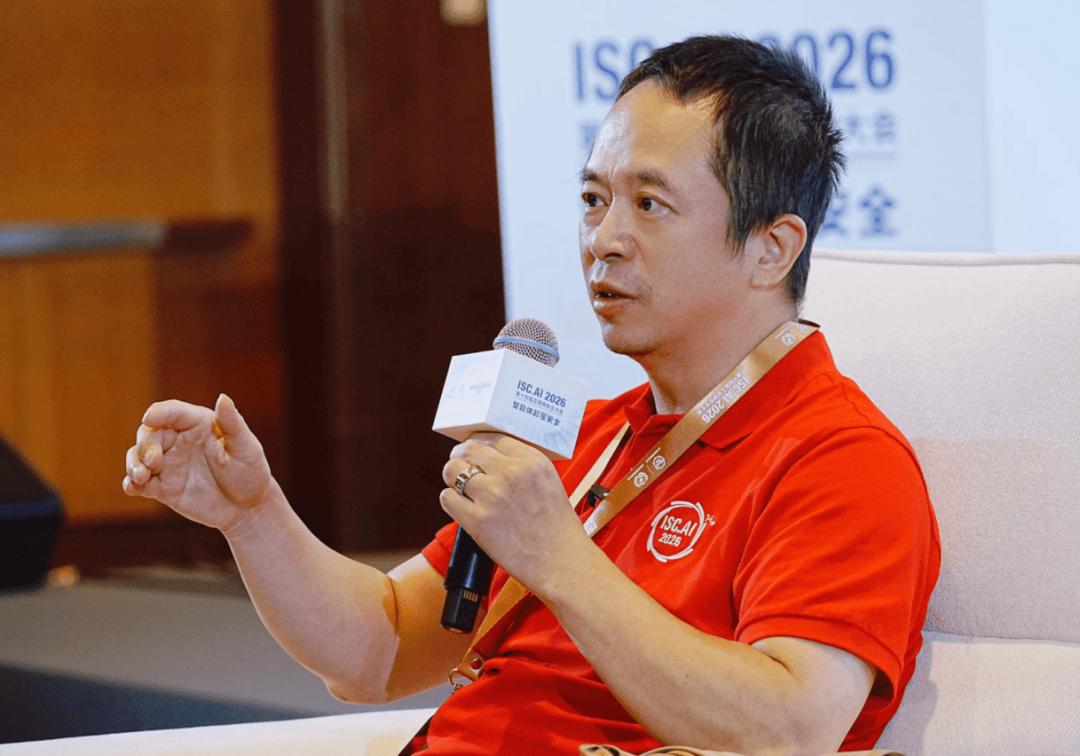
The Misplaced Anxiety: It's Not AI That Eliminates You, but Colleagues Who Can Lead AI Charges
“Many business owners also have a misunderstanding that they can lay off a large number of employees after using AI. In fact, the emergence of AI also gives many employees new opportunities. Those who are good at using AI will have better development within the enterprise.” In Zhou Hongyi's view, the results submitted by various agents in the enterprise still need to be corrected by humans. To put it bluntly, someone always has to clean up the mess when AI makes mistakes.
“Agents cannot do all the work. Employees with silicon - based leadership are still needed. Employees who can use and train agents will have better development space. In the end, those who don't understand AI and can't use it to improve work efficiency will be eliminated. To put it simply, it's not AI that eliminates you, but your peers who are proficient in using AI to improve efficiency.” Zhou Hongyi believes.
The valuable implicit knowledge in an enterprise, such as the shortcut business - processing logic, the unspoken approval rules, and the muscle memory for dealing with sudden crises, is often hidden in the minds of old employees, not written in the company manual. Therefore, summarizing this implicit knowledge, whether in the form of a knowledge base or distilled skills, is crucial for the implementation of agents within the enterprise.
Zhou Hongyi made it clear that the real fatal resistance to the implementation of AI agents lies not in employees, but in the outdated organizational structure.

Even if the enterprise equips employees with the most powerful Claude large - model, and the code submission volume increases significantly, the efficiency of the whole company remains unchanged. Why? Because the organizational structure, job definitions, and business processes of the whole enterprise are still the old ones: product managers use AI to write plans, which are then submitted to programmers after layer - by - layer approval in meetings. The front - end and back - end programmers write code using AI respectively and then summarize it for testing. This seemingly prosperous “full - staff AI” situation is what Zhou Hongyi calls “installing the most advanced engine on an old - fashioned horse - drawn carriage”.
A real AI Native organization essentially destroys and reshapes the old structure. There is no longer a clear distinction between pure product managers and front - end/back - end developers within Anthropic. Everyone is a full - stack engineer, and when there are differences, two versions are directly launched to test data feedback. The code library is no longer a fortress locked by multiple permissions, and any engineer can let AI search for bugs globally...
“What makes many enterprises painful is whether to change their corporate culture, whether to change their organizational structure, and even whether to flatten the original management process. This is the life - and - death line that all enterprises must cross.” Zhou Hongyi believes that “turning individuals into super - individuals is one stage, and turning the organization into a super - organization is the second stage. The second stage is far more complex than people imagine.”

What Defeated Chewing Gum Is Mobile Payment, and Traditional Security Is Dead
If the organizational change within an enterprise is a painful experience, then for the traditional network security industry, the arrival of large - models is like a dimensionality reduction strike.
“Do you know chewing gum? It used to sell very well in the Chinese market because it was often placed at the supermarket checkout counter. People were used to buying a pack when looking for change or making a casual purchase. Later, with the emergence of mobile payment, the scenario of ‘looking for change’ at the checkout disappeared, and people gradually lost the habit of buying chewing gum casually. In the end, the popularity of chewing gum was killed by mobile payment.” Zhou Hongyi gave a very sharp example.
In Mr. Zhou's view, the reshuffle of the network security industry is the same. Initially, Anthropic and OpenAI started doing code security audits to enable their models to have programming capabilities. As a result, after the models' capabilities emerged on a large scale, these AIs originally designed for writing code can not only accurately find vulnerabilities but also write extremely sophisticated attack code.
Large - model manufacturers have inadvertently overturned the traditional network security industry and directly changed the rules of the network attack game. The defense logic of traditional antivirus software is as flimsy as paper in the face of this dimensionality reduction strike.

“I think it's no longer meaningful to do traditional security now.” Zhou Hongyi said that after traditional security is fully empowered by AI, 360 will strictly do only two things: one is to automatically dig for vulnerabilities, and the other is to do automated network defense. Traditional software, including 360 Security Guard, will degenerate into underlying tools that can be called at any time by agents.
If network security manufacturers don't evolve and don't use agent technology to improve their capabilities of automated vulnerability discovery and automatic defense, then the only outcome waiting for traditional manufacturers is to be mercilessly eliminated.
You know, what defeats you is often not your peers. As the science - fiction writer Liu Cixin wrote in “The Three - Body Problem” with a heavy pen: “I eliminate you, and it has nothing to do with you.”
“People in the security industry have a tough time. Just like Sisyphus in Greek mythology, they work hard every day to push a big rock up the mountain, thinking they have reached a new stage and the security problem is finally over. But then AI and agents appear. Although the old problems are solved, new problems emerge. There will never be a once - and - for - all answer in this industry.” Mr. Zhou sighed with emotion.