Lemon tea is stuck at 9.9 yuan, while lemon milk aims to sell for 19 yuan
The new tea beverage industry is never short of new products. Every summer, the menus of various brands quickly become bustling. Lychees, peaches, bayberries, grapes, watermelons, and mangoes take turns to appear. Seasonal fruits are like short - term traffic cards, being played repeatedly.
Unfortunately, most of these products can only be sold for two or three months. Relying on seasonal supply, they have a short life cycle and large fluctuations. They are suitable for creating summer buzz but are difficult to become a stable foundation in a brand's long - term menu.
Meanwhile, another type of evergreen product has also encountered its own problems. Lemon tea was once one of the most stable categories in the new tea beverage industry. It is refreshing, thirst - quenching, and highly standardized, making it suitable for large - scale store replication. However, as more and more brands enter the market, hand - beaten lemon tea has gradually become a low - price customer - attracting item.
9.9 yuan has almost become the mainstream perception of lemon tea. This is not an easy situation for new tea beverage brands.
Low - price lemon tea can bring in customers but is difficult to contribute a higher average order value; seasonal fruit teas can create popularity but are difficult to sell throughout the year; traditional thick milk teas still have a market, but under the consumption trend where young people are increasingly pursuing freshness, low - sugar, and light - burden products, new alternatives and supplements are needed.
Therefore, an obvious gap has emerged in the new tea beverage menu: brands need a new major product that can be sold throughout the year, has a mild flavor, has a higher unit price than lemon tea, and can meet the trend of freshness.
Lemon milk has emerged to fill this gap. It is not simply a combination of lemon and milk. Instead, it attempts to pull lemon out of the 9.9 - yuan low - price customer - attracting item and place it back in the mid - to high - price range of 15 to 19 yuan.
This is why several leading brands have started to launch lemon milk products intensively this summer.
Cha Ji launched two special lemon milk blends, Nuo Qing Shan and Wu Hong Chen, in its national stores. Data publicly released by the brand shows that the total sales of the two products exceeded 80,000 cups three days after their launch.
Before and after this, Heytea launched Ning Da · Jiu Xun Mo Wang, and Shanghai Auntie launched Qing Shuang Qing Ning Xiao Tie. Several leading brands almost simultaneously introduced lemon milk to consumers.
On the surface, this is a new product launch.
But upon further examination, it is actually a re - exploration of the menu structure and price range in the stock competition of the new tea beverage industry.
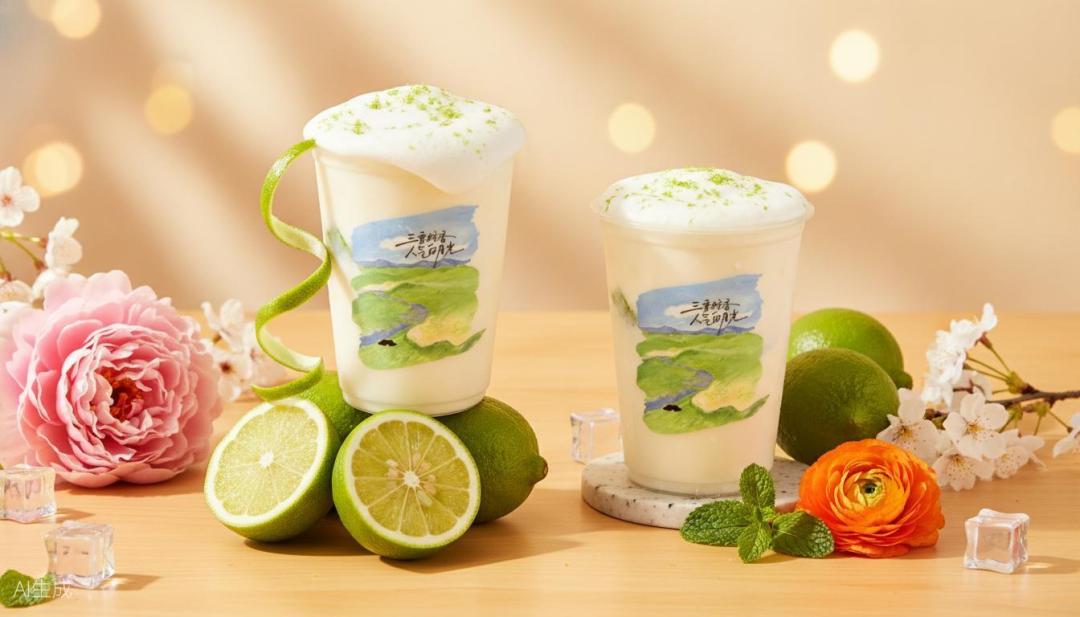
Reordering the New Tea Beverage Menu, Lemon Milk Fills the Gap
In the past few years, the menus of new tea beverage brands have generally consisted of several types of products.
The first type is low - price customer - attracting items.
This type of product plays the role of attracting new customers, stimulating activity, and increasing the frequency of store visits. Lemon tea is the most typical representative.
It is popular, refreshing, stable, and easy to be priced low. Consumers will find it reasonable for a cup of lemon tea to sell for 9.9 yuan. A higher price would require more explanation.
The second type is seasonal traffic items.
Lychees, bayberries, peaches, and grapes in summer, and strawberries, taro puree, and chestnuts in autumn and winter all belong to this category.
Their value lies in creating a sense of freshness. However, their problems are also obvious: the window period is short, the supply fluctuates greatly, and the products are likely to disappear at the end of the season.
The third type is classic milk teas and high - satisfaction products.
Elements such as thick milk, coconut milk, milk caps, taro puree, custard, mochi, and ice cream have long supported the unit price and satisfaction of new tea beverages.
However, after consumers have drunk enough heavy - textured beverages, fatigue will set in. Especially after the enhancement of health awareness and the rise of sugar - control awareness, young people have become more cautious about high - sugar, heavy - textured, and high - burden milk teas.

This poses a real problem for new tea beverage brands:
Low - price items are too cheap, seasonal items have a short lifespan, and thick milk teas are too heavy.
Brands need a new intermediate - layer product. Currently, most lemon milk products on the market are priced between 15 and 19 yuan. This price range is higher than that of 9.9 - yuan lemon tea but not as high as some limited - edition products that are occasional purchases. The market lacks a mid - to high - price range product that can be sold daily, increase the average order value, break free from the limitations of fruit seasons, and meet the trend of fresh flavors.
This is the real value of lemon milk. The reason why lemon milk can play this role is that it reorganizes the value of lemon.
In the past, lemon tea was sold for its thirst - quenching and refreshing properties. Thirst - quenching is a need that is easily devalued. Consumers are not willing to pay a high premium for "thirst - quenching".
But lemon milk places lemon in a different flavor structure. Perfume lemons provide a refreshing aroma, milk provides a smooth texture, and flower tea bases provide aroma layers.
In this way, the product is no longer just an ordinary lemon tea but more like a light milk drink. The lemon aroma reduces the sweetness and greasiness of the milk drink, the milk reduces the irritation of lemon tea, and the flower tea prevents the whole drink from having only two one - dimensional flavors of sourness and milk.
This allows lemon milk to meet two needs simultaneously: freshness and satisfaction. This product structure is very important for today's new tea beverage industry.
The milk tea industry is no longer short of single - point creativity. What is truly scarce is a fixed main product that can exist in the menu for a long time.
Many new products can be popular for a month. But what brands really want is a regular product that can stay on the menu and continuously contribute to sales and profits.
The potential of lemon milk comes from here. It is not just a new product this summer but a new attempt by new tea beverage brands to find a stable foundation for their menus.
Lemon Milk is a Product Screened from Regional Markets
Lemon milk seems like a new product jointly promoted by leading brands, but it is not an idea that emerged out of thin air. More precisely, it is a product that was first repeatedly tested and initially verified in regional markets and then expanded by leading brands.
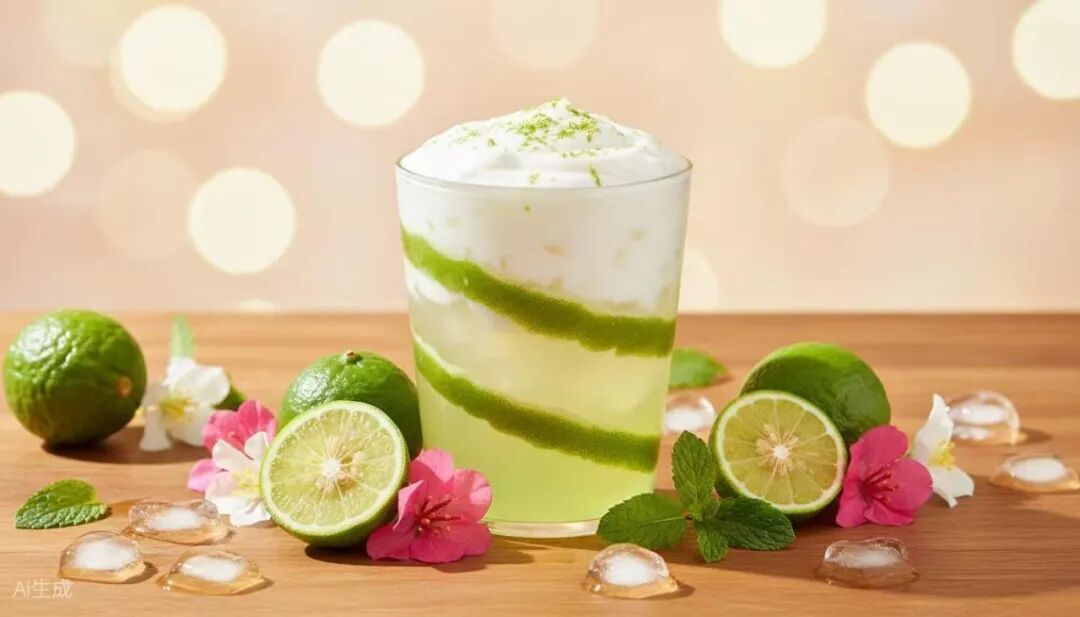
This is very important.
In the past, many popular products in the new tea beverage industry came from the R & D departments of leading brands. Brands would first propose a concept, the market would quickly follow, and small and medium - sized brands would then replicate and spread it. The path of lemon milk is somewhat different.
It did not emerge directly from the headquarters' meeting rooms but was gradually screened out in street - side shops, regional stores, and local consumption habits.
According to public information and industry reports, the combination of lemon and milk is not new. Similar products have appeared in early Hong Kong - style tea restaurants and Taiwan - style milk tea shops. However, for a long time, this type of beverage has not become a national mainstream category.
The reason lies not in the concept but in the process. Lemons are acidic, and milk contains protein. If a large amount of lemon juice is directly mixed into fresh milk, the fruit acid can easily cause the milk protein to coagulate, resulting in problems such as layering, clumping, and astringency.
Just because a drink tastes good when occasionally made in a small shop does not mean it can be introduced into thousands of stores. The key to making a new tea beverage a major product is not just creativity but the ability to produce it stably.

The real turning point for lemon milk came from long - term store - level trials in regional markets. In some markets in Zhejiang, some small shops and specialized lemon milk brands began to explore more stable processing methods. They no longer focused on squeezing lemon pulp for juice but instead turned to pounding the skin of perfume lemons to release the natural aroma from the peel.
This seemingly small action changed the underlying logic of the whole drink. In the past, lemon juice provided the acidity, but now the lemon peel provides the aroma.
After the acidity is reduced, the risk of milk clumping also decreases, providing a more stable foundation for the production of lemon milk. This is also the prerequisite for lemon milk to move from regional small shops to chain brands.
Regional markets can screen out such products because they have three advantages.
First, user feedback is more direct.
Small shops do not have complex R & D processes or multi - level approvals. The shop owner stands in the store every day and can directly see the reactions of consumers after drinking. They can hear customers say it is too sour, too greasy, too light, or too astringent, and can quickly adjust the formula. For an immature drink, this feedback speed is very important.
Second, store operations are more flexible.
When leading brands launch new products, they often have to consider the adaptation of national stores, the stability of the supply chain, brand tonality, price system, and operational efficiency, so they are more cautious.
However, regional brands can repeatedly test formulas, adjust sweetness, change tea bases, and change milk bases around a small category until the product is successful in the local market.
Third, regional consumption habits are more likely to form a stable product category perception.
Many national new products were not initially educated through large - scale marketing but first formed a stable repurchase rate in certain cities, certain neighborhoods, or certain groups of people.
The same is true for lemon milk. It did not initially appear as a "national major product" but was first accepted by consumers in some regional markets. Subsequently, regional chain brands further standardized this product model, providing a basis for its spread to a larger market.
For example, after Ye Ye Bu Pao Cha launched Lan Xiang Qing Ning, it further quantified the production process of lemon milk, improved the flavor structure with flower tea and special milk, making the product not just a simple combination of lemon and milk aroma but a more complete tea - beverage expression.
The good market feedback of such products shows that lemon milk has been verified on a large scale in the regional chain system.
By the time brands such as Cha Ji, Heytea, and Shanghai Auntie entered the market intensively this year, lemon milk was no longer an untested new product.
What leading brands are doing is putting a product model verified in regional markets into a larger national store network, which shows that innovation in the new tea beverage industry does not always occur in the R & D departments of leading brands.
Many truly viable new products may first grow from local markets, regional stores, and real consumption habits.
When Lemon Milk Enters the Lifecycle of a Blockbuster Product, the Real Competition Begins
The current popularity of lemon milk has made it enter the countdown to homogenization in advance. In the past few years, the new tea beverage industry has found that once a new product is verified, the replication speed is very fast.
When one brand creates a buzz, other brands quickly follow, the supply chain matures rapidly, product expressions become similar, and finally, prices drop.
Lemon milk is likely to go through a similar process. It still has a sense of freshness now. Consumers find the combination of lemon and milk contrasting, and brands can also create awareness of new products around "lemon milk".
However, when more and more stores simultaneously launch lemon milk, consumers will soon find that the differences between lemon milk products of different brands may not be as large as expected.
The aroma of lemon peel, milk, flower tea base, freshness, and low - sugar are all keywords that are easy to replicate. Once product expressions become similar, the competition will return to brand influence, store density, membership systems, price promotions, and cup - making efficiency.
The innovation window is getting shorter and shorter. The speed at which products are replicated is often faster than the speed at which consumers form stable preferences.
Therefore, whether lemon milk can truly become a long - term major product cannot be judged solely by how many brands launch it this summer.
It also needs to go through the complete lifecycle test of a blockbuster product.
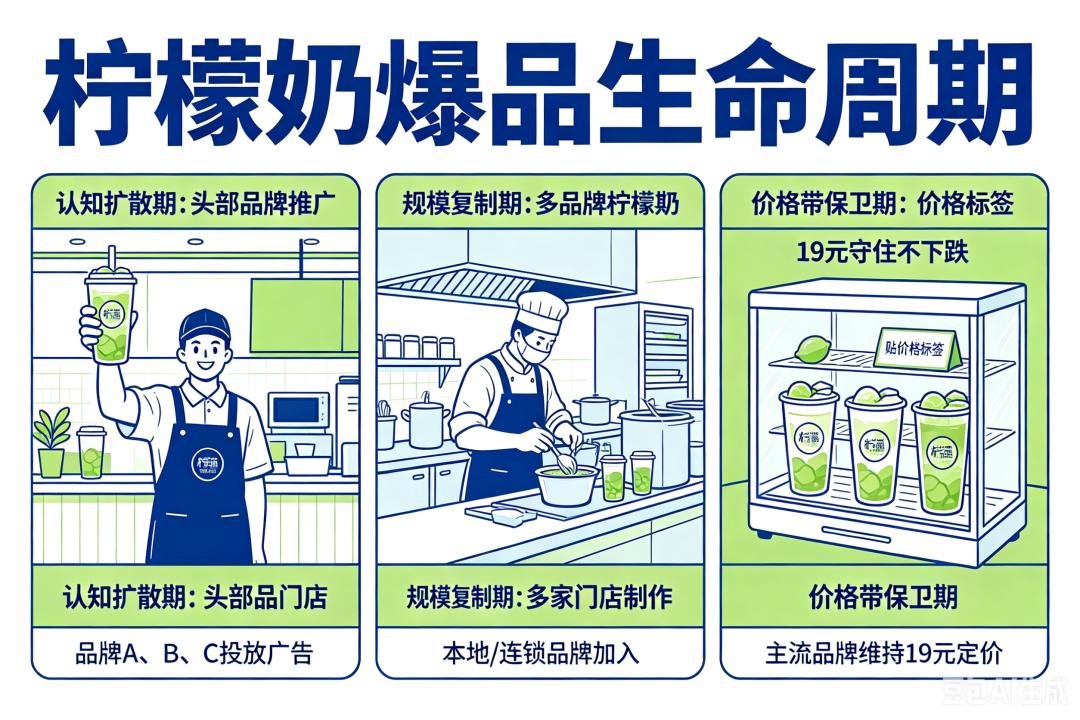
The first stage is the cognitive diffusion period.
The biggest value of leading brands entering the market is not how many cups are sold but to quickly expand the awareness of the category. When Cha Ji, Heytea, and Shanghai Auntie simultaneously introduce lemon milk to consumers, the speed of market education will be significantly accelerated.
Lemon milk, which was originally only popular in some regions, will be known by more consumers. In this stage, regional brands and specialty stores will both benefit and face pressure. The benefit lies in the increased popularity of the category, which will lead to more searches, trial purchases, and discussions.
The pressure lies in that once consumers know that leading brands also have lemon milk, they will start to choose products based on more familiar brands, closer stores, and more stable membership benefits.
The second stage is the scale replication period.
This stage tests the store's engineering capabilities. One of the core actions of lemon milk is pounding the lemon peel. This action brings a sense of on - site production and aroma release. However, for stores, it also means additional operation time and labor costs.
Consumers like the authenticity of "on - site beating" and "on - site pounding", while stores must face the cup - making efficiency during peak hours. If a product is too slow, it will affect the overall operation of the store.
Especially for national chain brands, whether a product can stay on the menu for a long time depends on whether it is suitable for standardized production. Hand - beaten lemon tea has encountered similar problems in the past.
The stronger the sense of on - site production, the better the consumer perception, but the greater the pressure on store efficiency. What lemon milk needs to solve in the future is how to find a balance between "the value of on - site production" and "operational efficiency".
The scale replication period will also magnify another problem: drinking stability. Although pounding the lemon peel reduces the acidity and alleviates the problem of milk protein coagulation, it does not mean that all problems have completely disappeared.
After lemon milk is left for too long, it may still develop a bitter taste, slight coagulation, or flavor attenuation. This will affect take - away, delivery, and long - time drinking scenarios.
If