After mass account bans, Claude suddenly releases a cheaper new model
There are two long - standing issues with the Claude model: one is the tendency to ban accounts, and the other is the high cost.
Regarding the former, many Claude users have experienced it in the past week. Discussions about Anthropic's risk control on social platforms have become increasingly bizarre, ranging from IP locks and reviews triggered by logging in from a different location to reminders like "Don't casually open emails sent by Anthropic" because the location where the email is opened may be used to determine the account's location.
Although the details of the rumors still need to be verified, the frequent account bans of Claude are an established fact. When I woke up yesterday, I found that my fifth Claude account had also been banned.
As for the latter, Anthropic has also provided the latest answer.

Just now, Claude Sonnet 5 was officially released. According to the official statement, Sonnet 5 is currently the Sonnet model with the most agent capabilities. It can formulate plans, call tools such as browsers and terminals, and execute autonomously in more complex tasks.
From the product positioning perspective, Anthropic aims to transfer the capabilities that were previously more associated with the high - end Opus model to the more commonly used and lower - priced Sonnet product line. This upgrade of Claude is not only about the model becoming more powerful, but also about re - balancing the relationship between "usefulness" and "affordability".
Sonnet 5 is released, but it's a cheaper version of Opus
As is well - known, in Claude's product line, the mid - tier Sonnet has always been the key entry point for Claude to reach the developer community.
Claude 3.5 Sonnet, 3.6 Sonnet, and 3.7 Sonnet have made many people seriously start using Claude in workflows such as writing code, calling tools, and handling long - term tasks for the first time. For many developers, the earliest perception of the AI agent era began with Sonnet - level models.
However, in the past year, Anthropic's most significant improvement in capabilities has been concentrated on the high - end Opus model.
Opus is more powerful but also more expensive. Sonnet remains the main choice, but in complex tasks, long - term execution, tool calling, and high - difficulty reasoning, the gap with Opus has been gradually widening.
Sonnet 5 aims to address this gap.
Anthropic claims that Sonnet 5 has significantly improved in aspects such as reasoning, tool calling, programming, and knowledge work compared to Sonnet 4.6. Its overall capabilities are close to those of Opus 4.8, but the price is lower. The official positioning is also clear: Opus 4.8 is still suitable for tasks that require higher accuracy, while Sonnet 5 provides a lower - cost option with capabilities closer to those of high - end models.
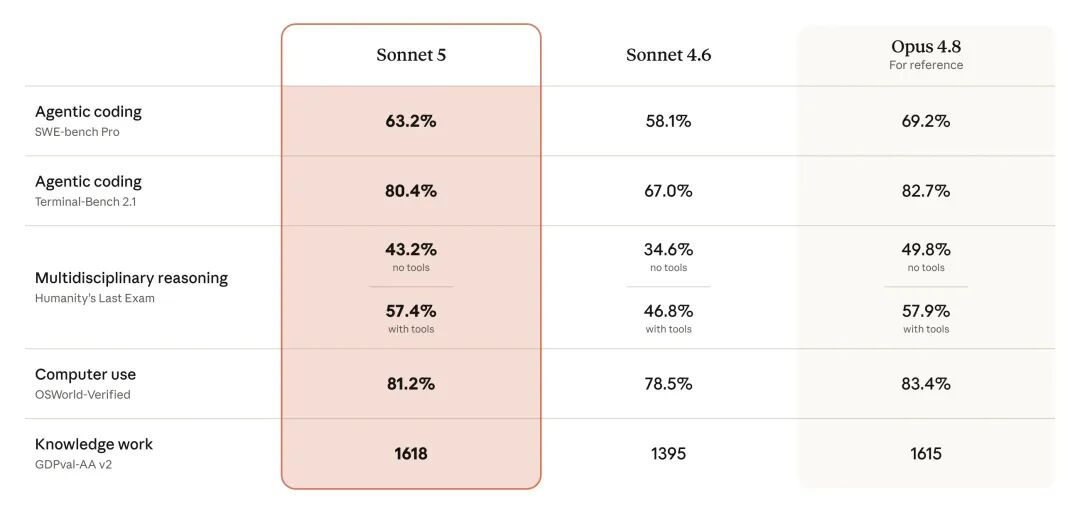
Official blog 🔗 https://www.anthropic.com/news/claude-sonnet-5
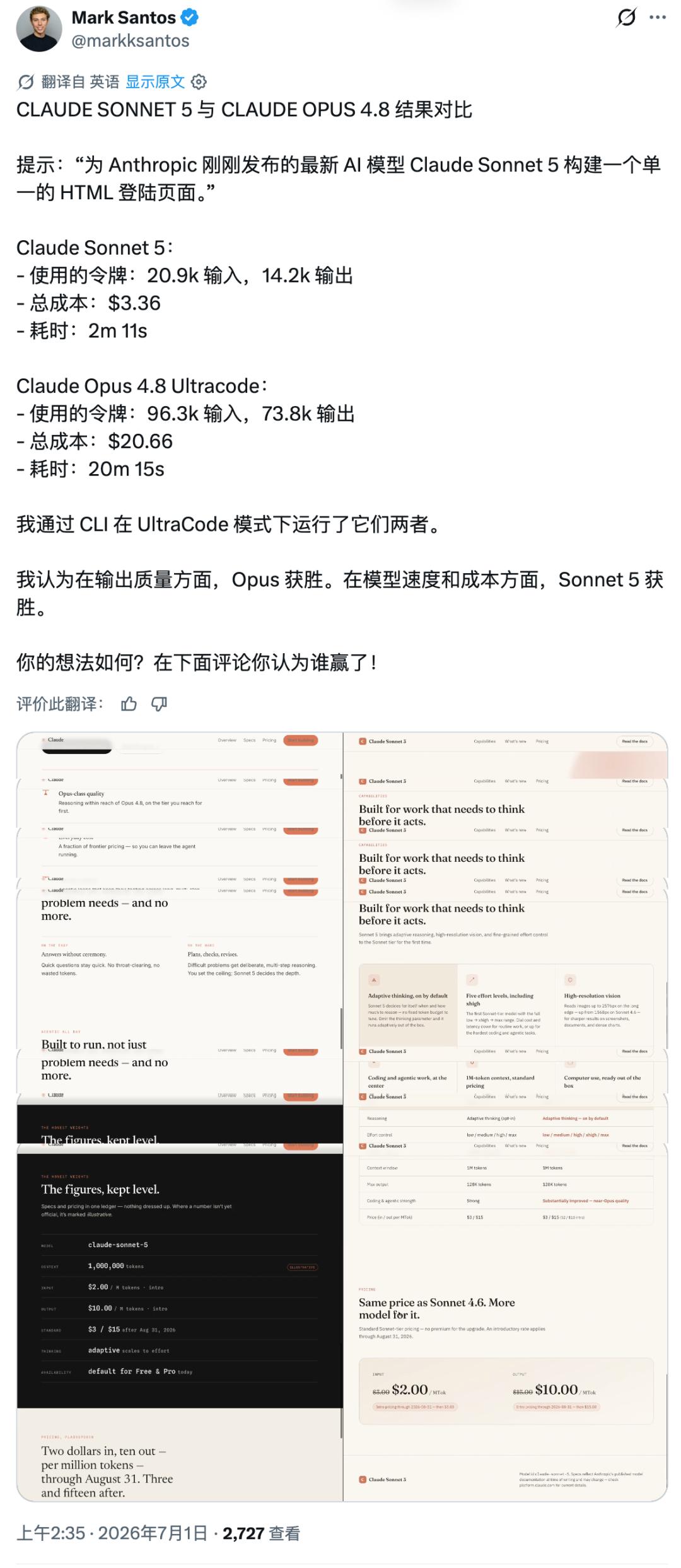
In fact, based on my experience, Sonnet 5 doesn't show any visible improvement. Instead, it gives me the impression that it was rushed out under the guise of an Agent - native model to save computing power.
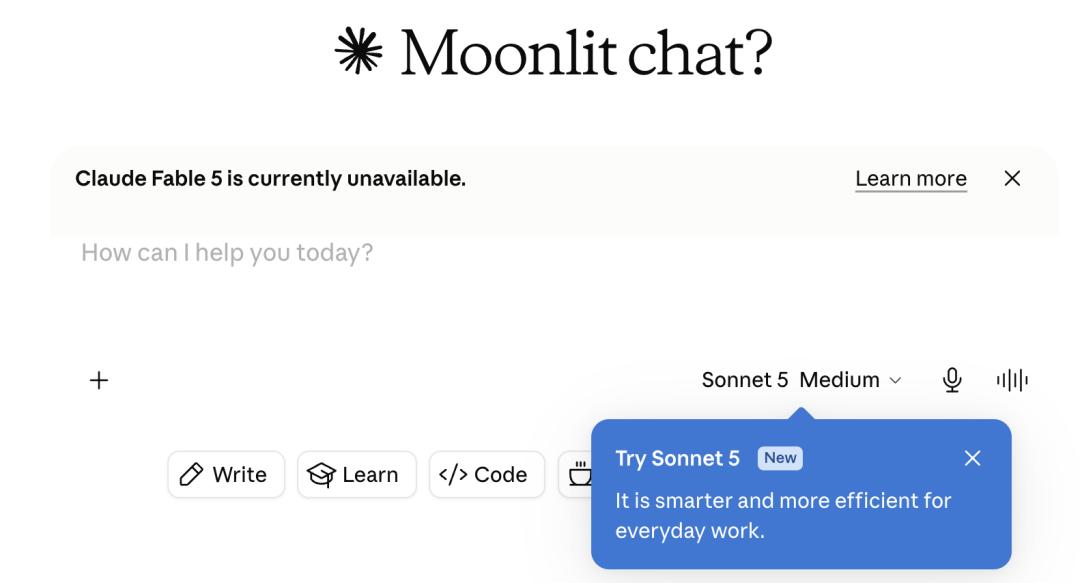
In terms of price, Anthropic has provided a launch window.
From today until August 31, 2026, the input price of Claude Sonnet 5 on the API is $2 per million tokens, and the output price is $10 per million tokens. After September 1, the standard price will return to $3 per million tokens for input and $15 per million tokens for output.
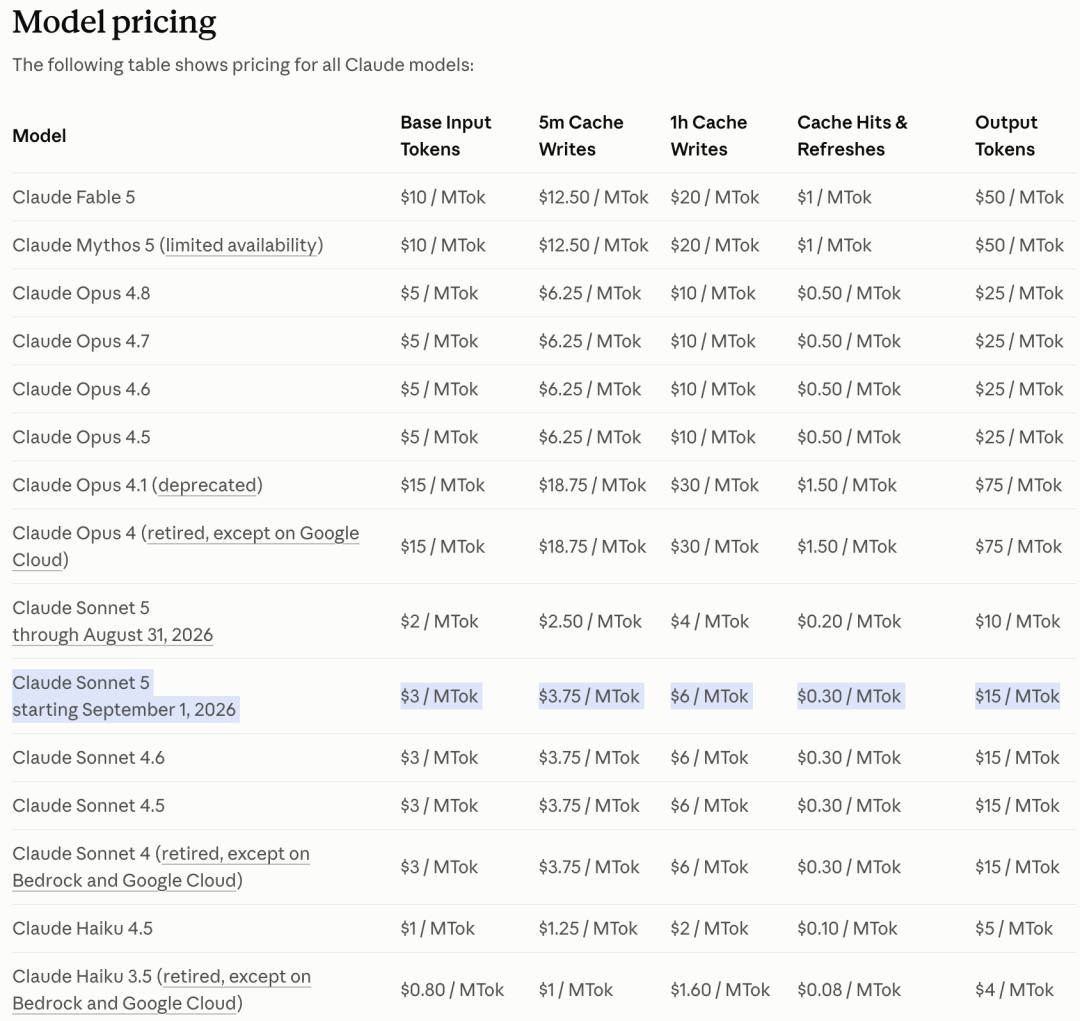
API price 🔗 https://platform.claude.com/docs/en/about-claude/pricing
In comparison, the price of Opus 4.8 is $5 per million tokens for input and $25 per million tokens for output. This price difference is the key for Anthropic to encourage developers to shift from experimenting with Opus to large - scale deployment of Sonnet.
However, the low price of Sonnet 5 doesn't necessarily mean a sharp drop in the bill.
Anthropic quietly mentioned in a footnote that Sonnet 5 uses an updated tokenizer. The same input text may generate more tokens, approximately 1.0 to 1.35 times the original amount, depending on the content type.
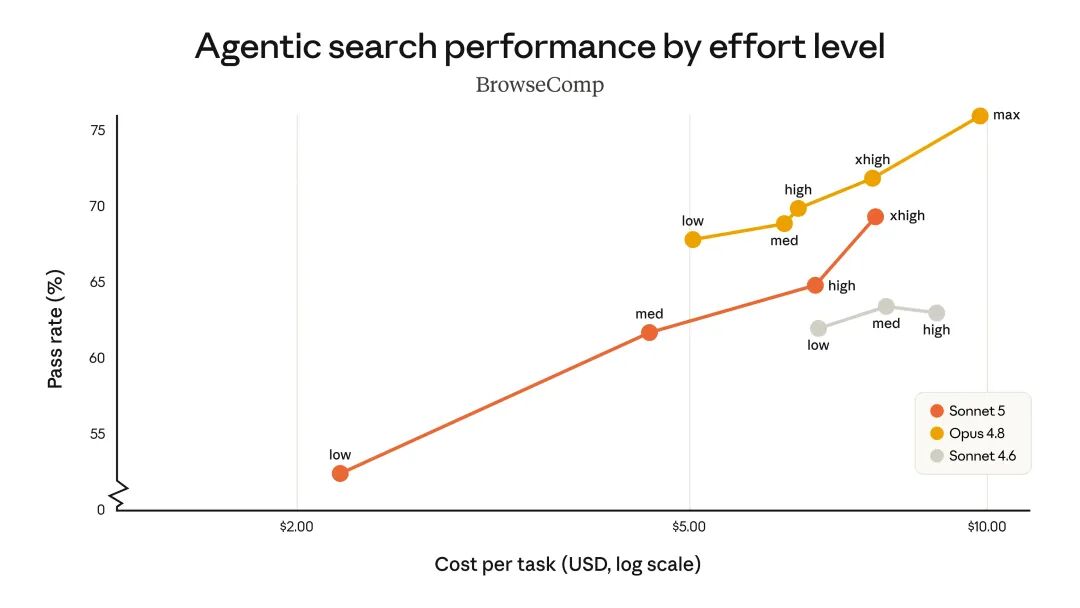
That is to say, developers should not only look at the price per million tokens but also consider the token consumption, cache hit rate, and output length in real - world tasks.
This is also the reason why Anthropic repeatedly emphasizes the "cost - performance curve". The focus of Sonnet 5 is not to completely replace Opus but to enable more tasks to achieve agent capabilities close to Opus at a lower cost.
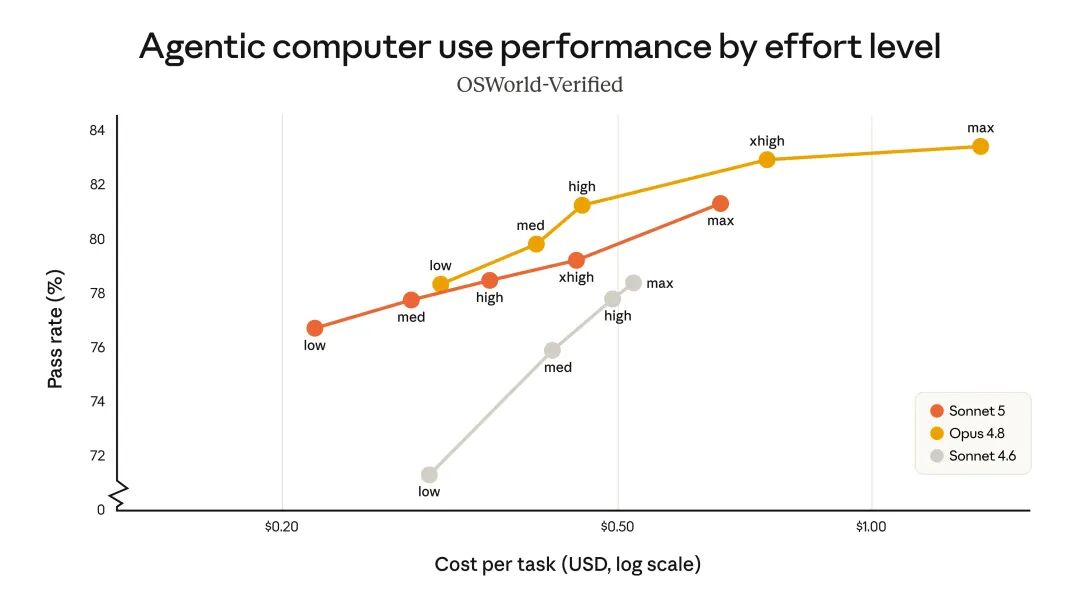
For ordinary users, Claude Sonnet 5 is now available for all packages, becoming the default model for Free and Pro users. Max, Team, and Enterprise users can also use it. Meanwhile, it has also been integrated into Claude Code and Claude Platform, and developers can call it via claude - sonnet - 5.
Besides capabilities, security is also a key focus of this release by Anthropic.
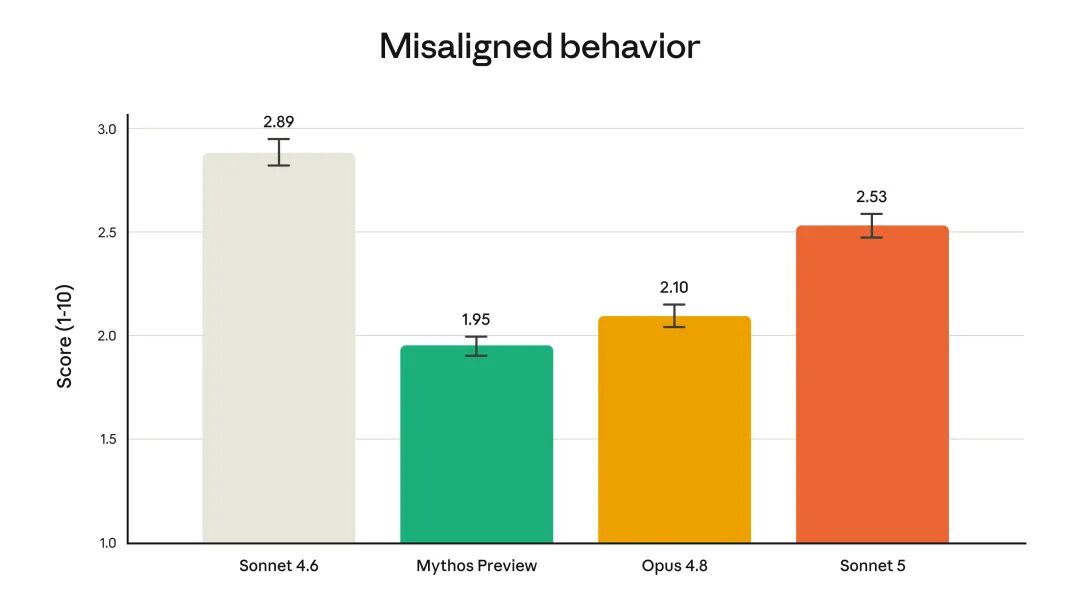
The official states that Sonnet 5 is better than Sonnet 4.6 at rejecting malicious requests, more resistant to prompt injection attacks, and has lower hallucination and compliance tendencies. In automated behavior audits, the rate of bad behavior of Sonnet 5 is lower than that of Sonnet 4.6 but still higher than that of Opus 4.8 and Claude Mythos Preview.
In terms of network security capabilities, Anthropic indicates that Sonnet 5 has not been specifically trained for high - risk network security tasks. It can handle some routine and harmless network security work, but in the evaluation of dangerous capabilities, it is significantly weaker than Opus 4.8 and Mythos 5.
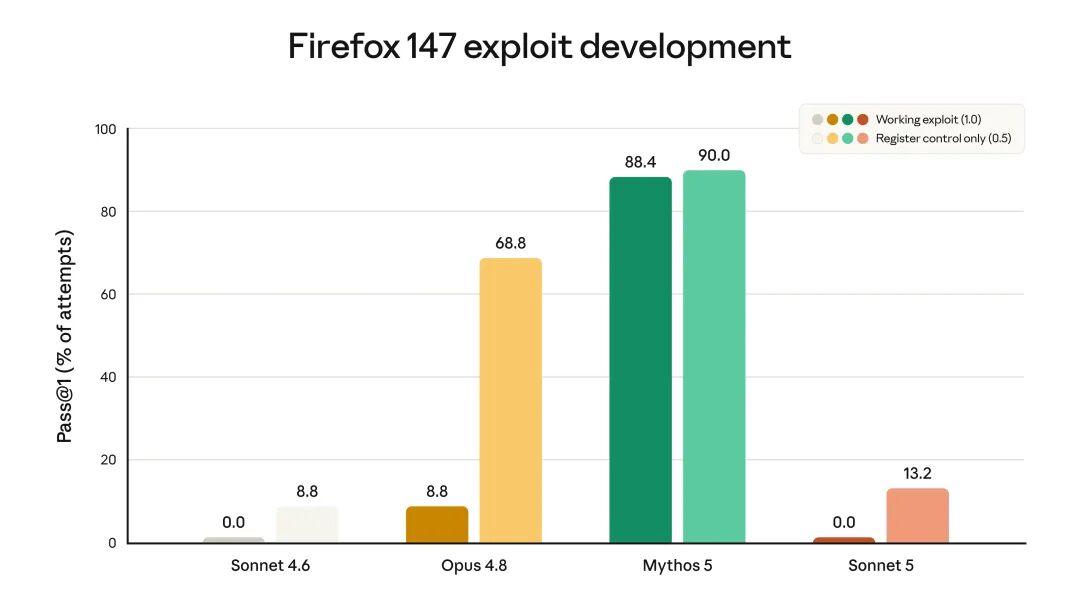
Taking the Firefox 147 vulnerability exploitation evaluation as an example, neither Sonnet 4.6 nor Sonnet 5 was able to successfully write a complete and runnable exploit. Sonnet 5 only had a slightly higher partial success rate than Sonnet 4.6. Anthropic believes that this is mainly due to the improvement of the model's general capabilities rather than specific training for network attack capabilities.
Therefore, Sonnet 5 has a network security protection mechanism enabled by default to identify and block dangerous uses in real - time. However, Anthropic judges that the overall network security risk of Sonnet 5 is relatively low, so the protection intensity is lower than that of Fable 5.
In the context of the product line, Sonnet 5 is a regular upgrade. From Anthropic's current perspective, it is more like an answer sheet presented to developers, enterprise customers, and the IPO market.
Anthropic doesn't just want to focus on code - writing; it also wants to tell a bigger story with Claude
On the same day, Anthropic also released another product: Claude Science.
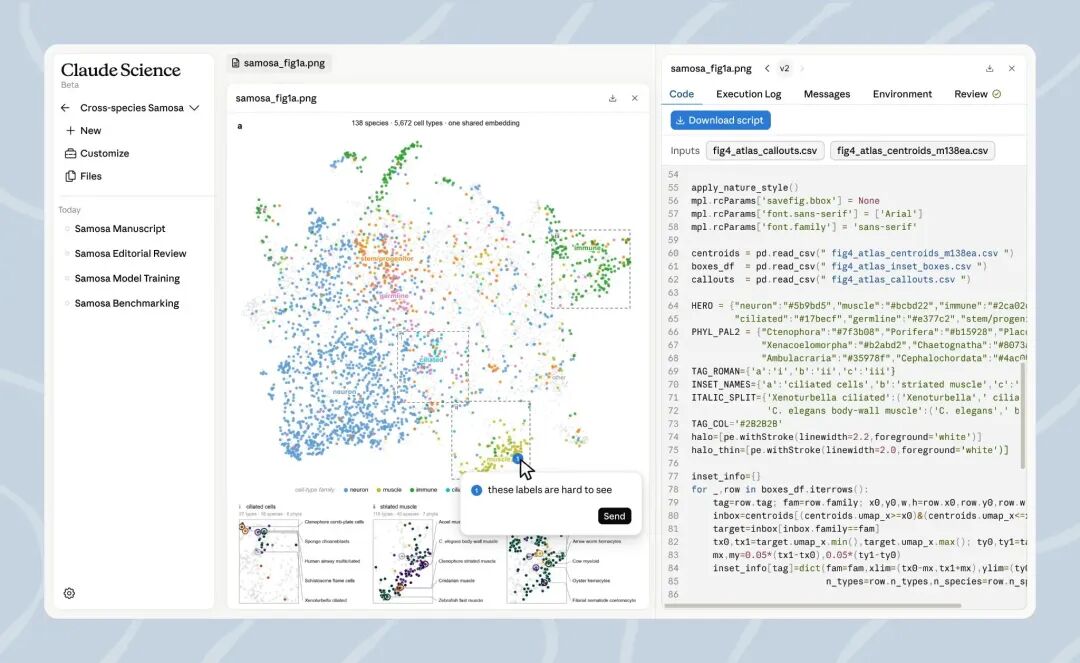
Different from the model upgrade of Sonnet 5 targeting developers and enterprise users, Claude Science is aimed at scientific research scenarios. According to Anthropic, it is an AI workbench for scientists, which can integrate the tools, databases, computing resources, and paper - writing processes that researchers use daily into the same environment.
There are a lot of trivial tasks in scientific research.
Researchers need to search PubMed, write Jupyter Notebooks, run R, connect to cluster terminals, and handle various databases, file formats, and data pipelines.
🔗 https://www.anthropic.com/news/claude-science-ai-workbench
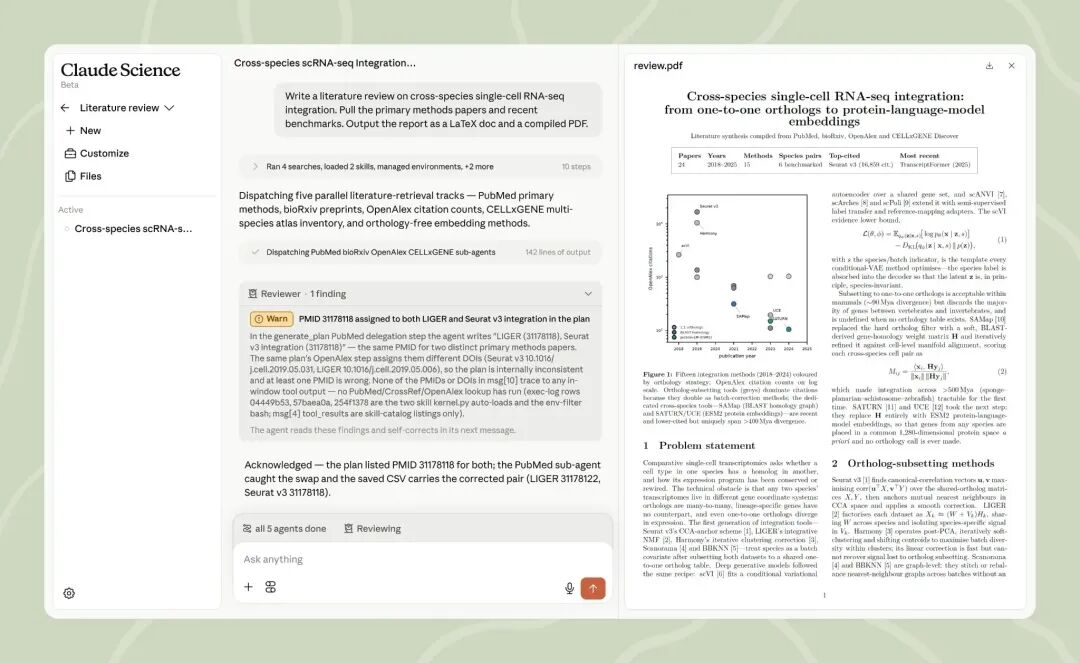
What Claude Science aims to do is to integrate these scattered tools, allowing scientists to complete literature analysis, multi - step research, chart generation, manuscript modification, and computing tasks in a single session.
Helping with code - writing is just one of its core highlights. Anthropic emphasizes that the results generated by Claude Science will have an auditable history, including the code behind the charts, the running environment, natural - language explanations, and complete message records. Researchers can check how a result was obtained and reproduce it months later.
It can also natively render scientific objects such as 3D protein structures, genome browser tracks, and chemical structures, and support users to modify charts using natural language, for example, removing gridlines or changing the axis to a logarithmic scale.
In terms of computing power, Claude Science can connect to researchers' existing local computers, Linux machines, and HPC cluster login nodes, and can also call on - demand computing power such as Modal. It will first formulate a plan, request confirmation before accessing new resources, and then submit computing tasks.
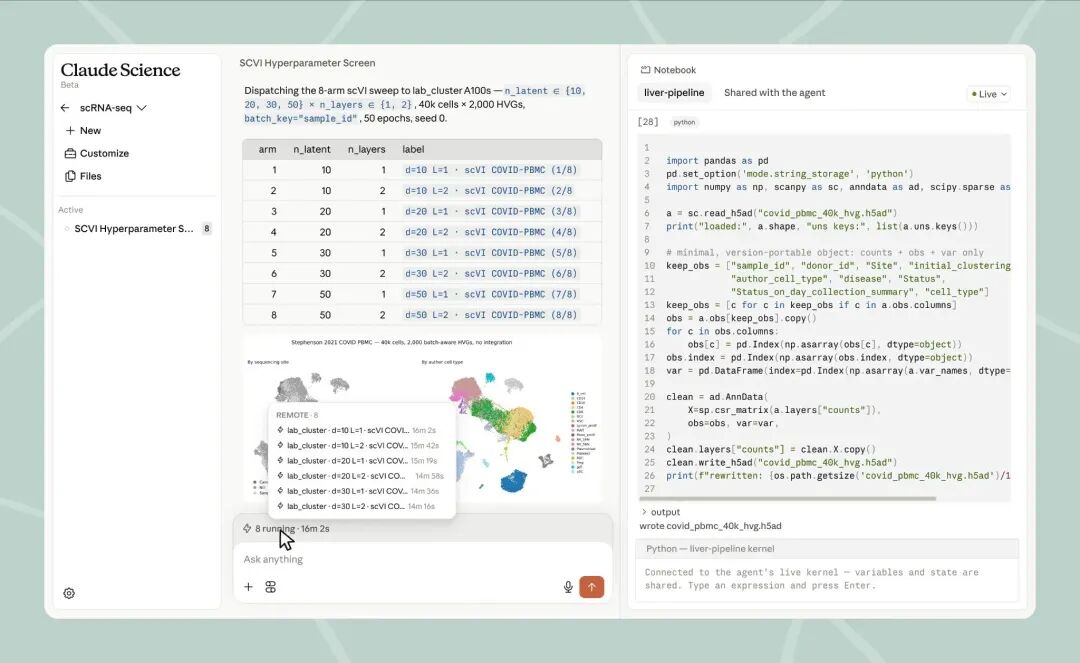
For scientific research scenarios involving large - scale and sensitive data, a key selling point is that the data can remain on the existing laboratory infrastructure, and only the context required for each step of analysis will be sent to Claude.
Anthropic has also pre - set more than 60 scientific skills and connectors for Claude Science, covering areas such as genomics, single - cell, proteomics, structural biology, and chemoinformatics. It can connect to databases such as UniProt, PDB, Ensembl, Reactome, ClinVar, ChEMBL, and GEO, and can also use the NVIDIA BioNeMo Agent Toolkit to call life - science models and libraries such as Evo 2, Boltz - 2, and OpenFold3.
Specifically, Stephen Francis from the UCSF Brain Tumor Center used it to accelerate the molecular epidemiology research of gliomas, saying that the time for some analyses was reduced to about one - tenth of the original.
Currently, Claude Science is available in beta form to Claude Pro, Max, Team, and Enterprise users, supporting macOS and Linux. Team and Enterprise users need administrators to enable it.
Anthropic will also support up to 50 Claude Science AI for Science projects, providing up to $30,000 in credits for each project. Modal will also provide up to $2,000 in computing - power support for some projects. The application deadline is July 15, 2026.
Whether it's Sonnet 5 or Claude Science, one is targeted at developers and enterprise production processes, and the other is aimed at scientific research, life - science, and medical - related research.
They are making efforts in different directions but ultimately converge on the same goal: Anthropic doesn't just want to prove that Claude can chat and write code; it also wants to prove that Claude can enter long - term, complex, professional, and high - paying work scenarios.
This coincides with the gradual clarification of Anthropic's IPO story.
In early June, Anthropic secretly submitted a draft IPO prospectus and officially