The India that Elon Musk avoids, why are Japanese companies betting a whopping $110 billion on it?
In the past few years, the most common news in India has not been about attracting investment but about multinational companies suing the Indian government.
Apple may face a maximum fine of $38 billion due to an antitrust investigation, according to estimates.
Tesla has been in talks with India for five years and decided to suspend its plan to build a factory in India last month.
Logically, such a market should make foreign investors more vigilant.
However, Japanese automakers such as Toyota, Honda, and Suzuki are going in the opposite direction and increasing their investment in India.
What considerations do Japanese automakers have behind this move?
What risks exist in this controversial market?
01 A Billion - Dollar Gamble
In May this year, Toyota announced that it would invest an additional approximately $1.8 billion in India to build three new vehicle factories in Maharashtra.
Meanwhile, Honda is expanding its electric vehicle production capacity at its factory in Rajasthan, India.
Suzuki, which entered the market earlier, plans to invest $7.2 billion for production expansion, electrification, and exports.
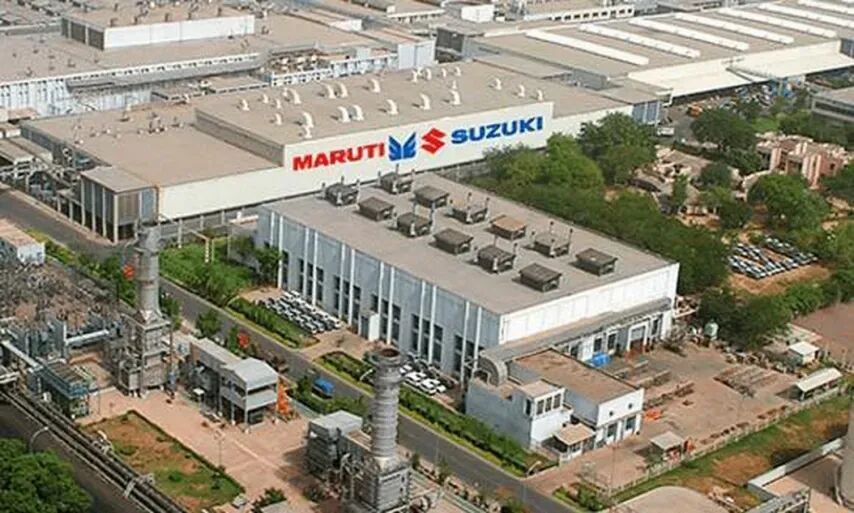
Suzuki's factory in India
The cumulative investment of these three Japanese companies has approached $11 billion, which is the largest influx of foreign capital in the Indian automotive industry to date.
Compared with markets in Europe, the United States, China, and Southeast Asia, where Japanese automakers have a long - standing presence, India's business environment is not ideal.
What really attracts Japanese automakers is its huge market volume.
In 2025, the top four countries in terms of global automobile sales were China, the United States, India, and Japan in that order.
India's annual automobile sales reached 5.517 million units, with a growth rate of up to 6%, second only to China among major markets.
An interesting detail is that in the past, when Japanese automakers announced their global plans, the Chinese market was frequently mentioned.
Now, this position is being replaced by India.
With the rapid rise of new energy vehicles in China, the market share of Toyota, Honda, and Nissan in China has declined from a peak of 23% to less than 9%.
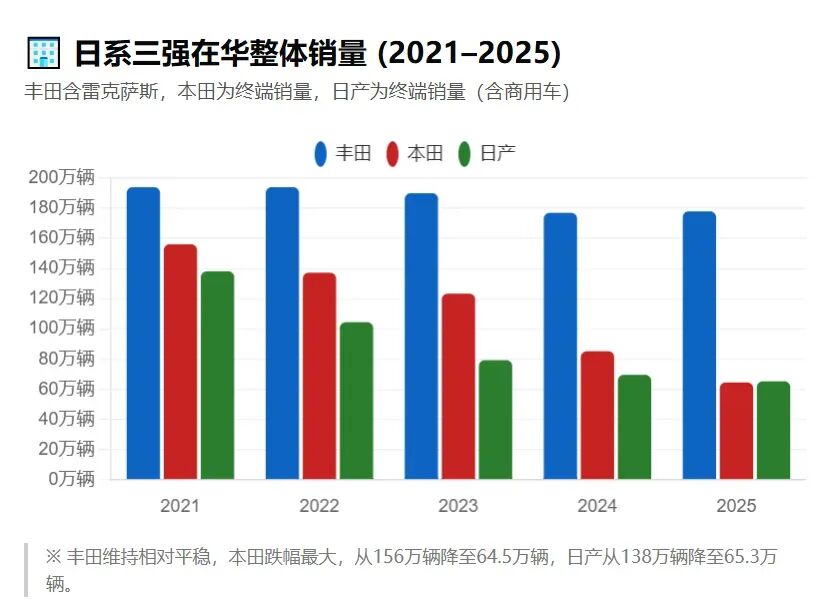
Changes in the sales volume of Japanese automakers in China
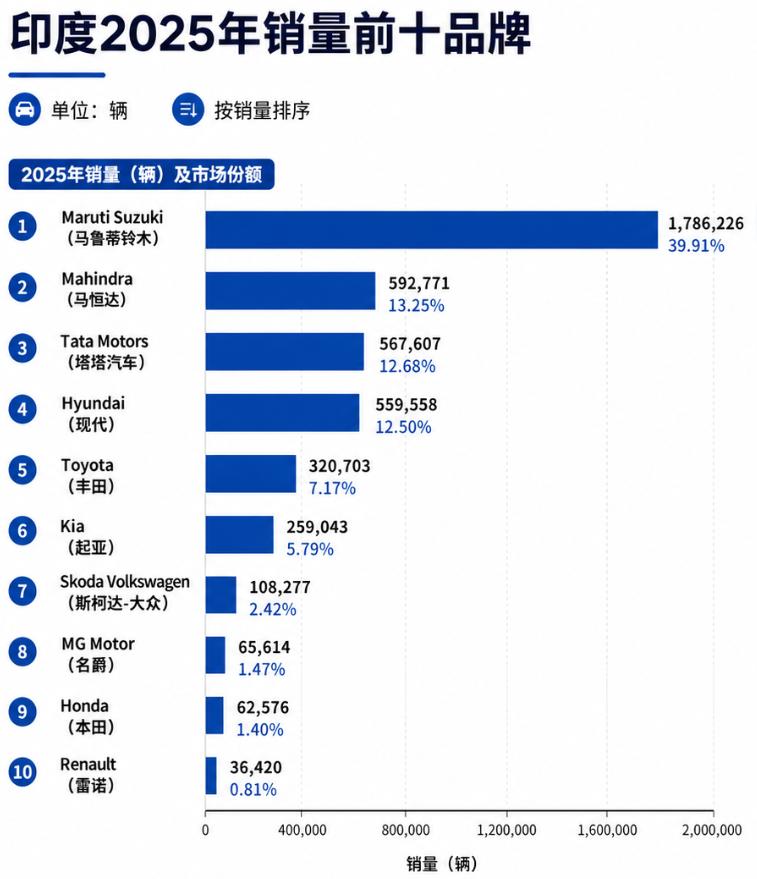
On the other hand, Toyota sold more than 300,000 vehicles in India in 2025.
This figure is not significant in China.
But in India, it means that India has become one of Toyota's fastest - growing large markets.
From this perspective, India is more like a new gambling table that one has to bet on.
02 Competing with China in the Wrong Way
Many people see Japanese automakers' investment in India as a huge gamble, but from the perspective of Japanese automakers, it is more of a natural move.
As early as 1982, Suzuki established a factory in cooperation with India, becoming the first Japanese automaker to enter the market.
In the following years, brands such as Toyota and Honda also gradually entered the market.
After more than 40 years, Suzuki has become the largest automobile manufacturer in India, maintaining a market share of around 40% for a long time. Together with other Japanese brands, they almost occupy half of the Indian market.
Currently, Suzuki alone has several large - scale production bases in India, such as those in Gurgaon, Manesar, and Gujarat, with an annual production capacity of more than 2.5 million vehicles.
It means that Japanese automakers have had successful experiences in India before.
Moreover, investing more in India now has an advantage: Currently, the penetration rate of new energy vehicles in China's new car sales has exceeded 60%, it can reach 25% - 35% in major European countries, and the United States is also approaching 10%.
Only in India, the penetration rate of electric vehicles is only 4%.
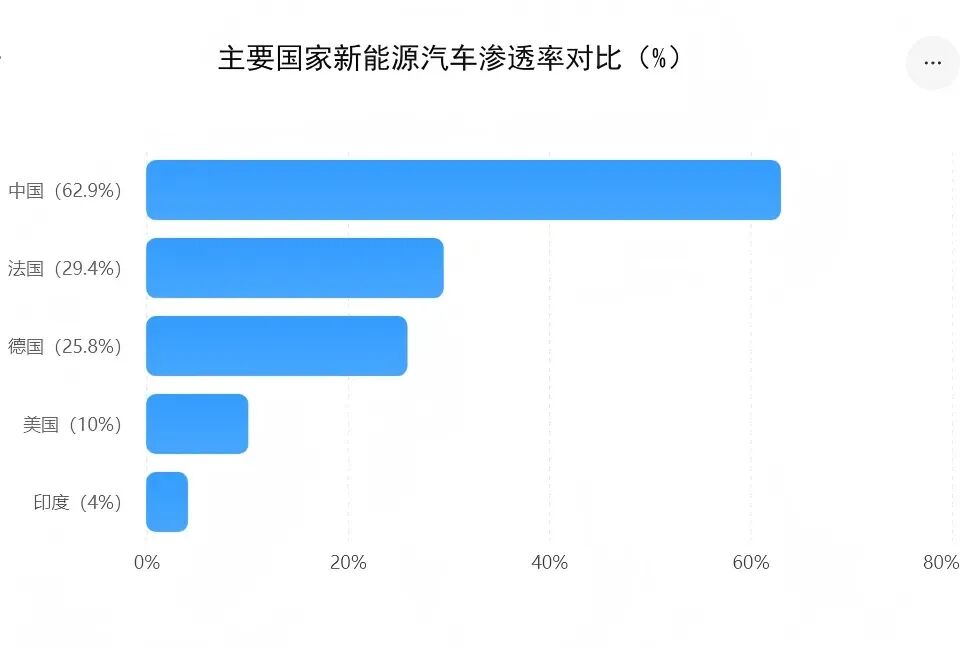
Comparison of the penetration rates of new energy vehicles in different countries
For Toyota and Honda, which adhere to fuel - powered vehicles, India is undoubtedly an ideal market.
In the past few years, as the wave of electrification has swept the world, Japanese automakers have remained cautious.
In 2022, Akio Toyoda, the former president of Toyota, publicly stated that there is a "silent majority" in the automotive industry, and not all consumers will immediately switch to pure electric vehicles.
In the Japanese automotive industry, Akio Toyoda's view is not an isolated case, which has indirectly led to the slow pace of electrification transformation of Japanese automakers.
Take Honda for example. Its global sales of electric vehicles last year were only 66,000 units, accounting for less than 2% of its total sales.
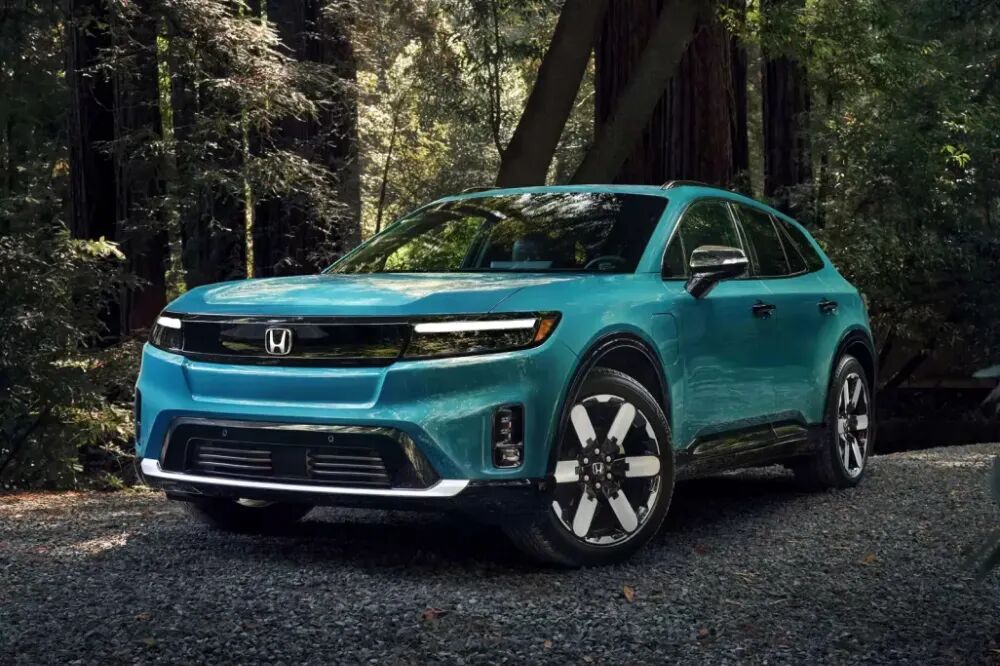
Honda's first pure - electric SUV Prologue in the North American market
Not long ago, Honda announced that it would abandon its goal of making electric vehicles account for one - fifth of new car sales by 2030 and the goal of selling only electric or fuel - cell vehicles by 2040.
In addition, brands such as Subaru, Toyota, and Mazda have all slowed down their electrification processes.
In this context, the Indian market, where fuel - powered vehicles are dominant, has begun to show special value.
What's more, India has set up high investment barriers, keeping Tesla and Chinese electric vehicles out.
In 2023, BYD planned to invest $1 billion in cooperation with an Indian partner to build a new energy vehicle factory.
But the plan was ultimately not approved - the reason given by the Indian side was a national security review.

Screenshot of an Indian media report
According to Indian regulations, direct investment from India's land - neighboring countries (mainly targeted at China) must be strictly approved by multiple departments of the Indian government. Many international media describe it as the "ABC policy" (Anything But China).
It is worth noting that Japanese automakers are now eyeing not only the Indian market but also want to use it as a springboard to radiate the world.
For example, in terms of markets in the Middle East and Africa, India has a better geographical advantage than China and Japan.
It takes about 14 days to ship a car from India to South Africa by sea, while it takes about 40 days from Japan.
In addition, in recent years, India has successively signed FTAs with markets such as ASEAN, the UAE, Australia, and South Korea. Passenger cars exported from India can enjoy preferential tariffs of 0% - 5%.
So, India is more like a convenience store located in the middle of an intersection for Japanese automakers.
Japanese media call it an ideal hub for "radiating the southern market".
03 Potential Risks
Although the Indian market seems to be a red - ocean market everywhere, there are also many problems that Japanese automakers have to face.
Elon Musk once said that Tesla's Shanghai factory is the most productive factory in the world.
The basis for his judgment is not only that Chinese workers are hard - working but also that 95% of Tesla's parts can be found in China.
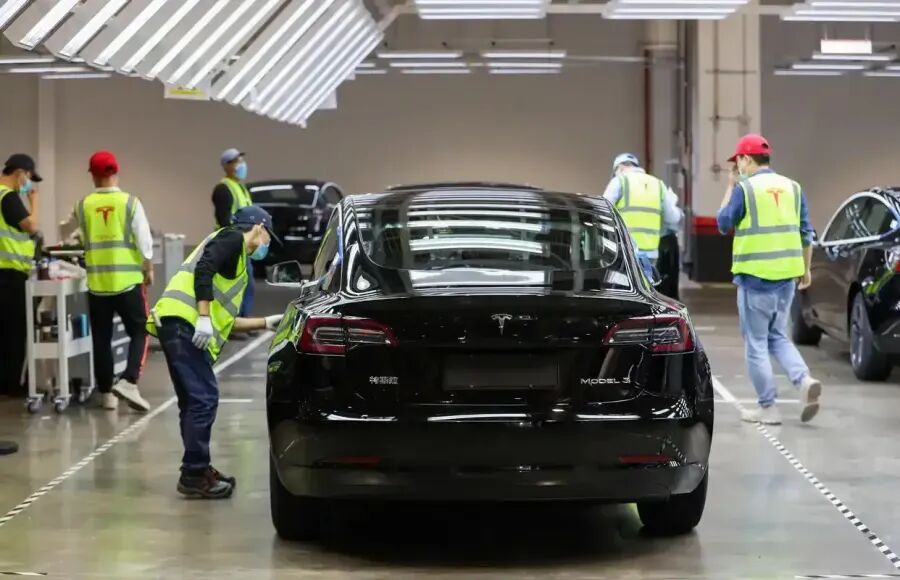
Workers operating in Tesla's Shanghai factory
You know, it usually takes tens of thousands of parts to produce a car from the drawing board to production, which is exactly India's shortcoming.
When Suzuki entered India, the local automotive industry was almost non - existent.
At that time, the Indian government even hoped that Suzuki would help establish a supply chain system.
In order to cultivate parts enterprises, Suzuki engineers were stationed in Indian supplier factories for a long time, training production standards step by step.
But even so, Suzuki still cannot completely get rid of its dependence on imports.
Some high - end electronic components and precision equipment still need to be purchased from Japan, China, and other places.
To solve this problem, Japanese automakers once called on local parts manufacturers to build factories in India, but many small and medium - sized suppliers were deterred by "uncertain orders and difficult - to - guarantee profits".
Actually, even if all the parts are available, the quality of the Indian labor force will always restrict the production of Japanese automakers.
Automobile manufacturing is different from basic industries such as textiles and wood processing, which requires higher skills from workers.
Data shows that the proportion of professionally trained labor in Japan can reach 70%, while in India it is only about 13%.
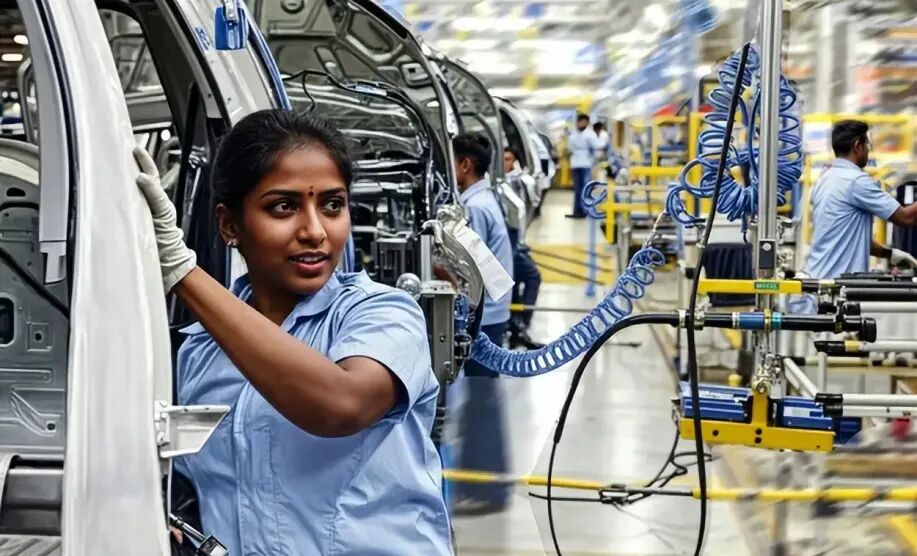
Indian automobile workers
At the same time, the local backward transportation conditions and power supply are also persistent problems.
Take road transportation as an example. The total length of compliant expressways in India is only 14,000 kilometers, about 1/13 of that in China; the national highways are 145,000 kilometers, only 1/3 of that in China.
The backward road network means low logistics efficiency and high transportation costs.
Looking at the sales situation of Japanese automakers in India, it is not as optimistic as expected.
Now, Japanese automakers have about a 48% share in India, while local Indian brands such as Tata and Mahindra are catching up rapidly. They occupied 29% of the market last year, and the rest is mainly divided by Hyundai and Kia.
Although Japanese automakers are in a dominant position, the competition is still fierce.
Of course, as a super - market with a population of 1.4 billion, Japanese automakers are betting on the huge future growth in India.
The Yomiuri Shimbun of Japan analyzed: "India has a population of over 1.4 billion, and future demand is still expected to continue to grow."
Zhengjieju found that as of the end of 2025, the number of cars in India was only 50 - 55 million, about the same level as China 20 years ago.
The question is, can India replicate the miracle of China's rapid economic growth in recent years?
So far, no one can give a definite answer.
Currently, the consumption ability of the Indian people is still at a low level. For example, recently, when the local area suffered from extreme heat, there were only 94 million air - conditioners in the whole country, with a penetration rate of about 8%, and it is expected to reach 40% by 2050.
If it takes decades to popularize air - conditioners worth 2,000 yuan, how many years will it take for cars priced over 100,000 yuan to enter ordinary families?
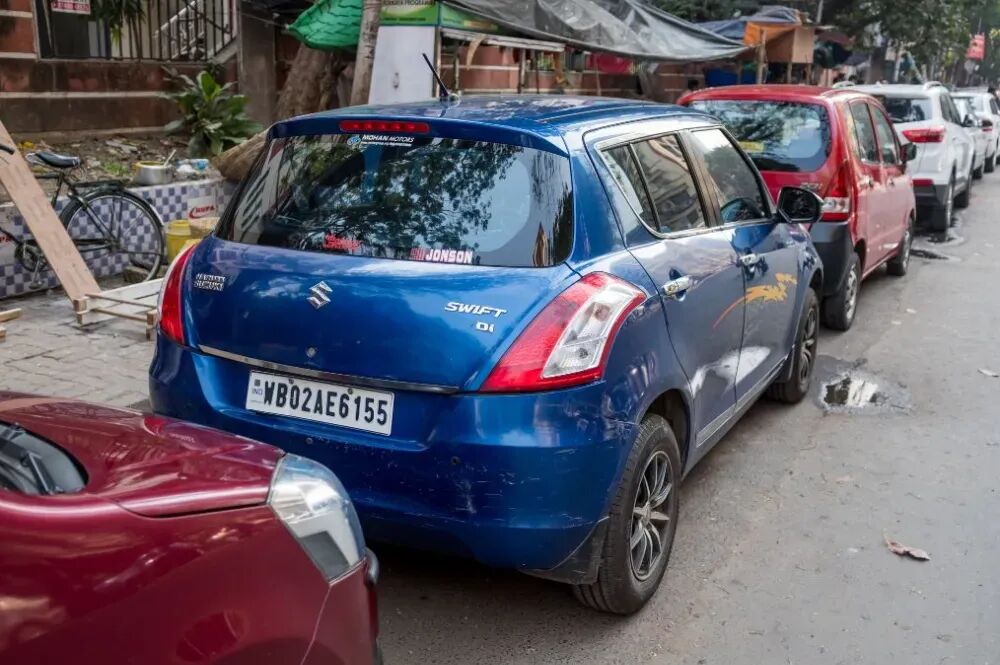
The common Maruti Suzuki in India
In addition to these practical problems, Japanese automakers must also guard against India's perfidy.
Over the years, American, Chinese, and South Korean companies, as well as European companies such as Nokia and Vodafone, have all suffered setbacks in India.
Even Japan itself has suffered a great deal.
In the article "Japan Spent a Fortune to Win the Chinese High - Speed Rail Business but Was Badly Cheated by India", Zhengjieju introduced that Japan spent a huge amount of money to win the 500 - kilometer high - speed rail project from Mumbai to Ahmedabad and promised to provide low - interest yen loans for 80% of the project.
Ten years have passed, and the project budget has soared by more than 60%. Due to problems such as land acquisition, environmental assessment, and national land approval, the completion date has been postponed from 2023 to 2028, and Japan has been dragged into a quagmire.
Taking this as a lesson, today, Japanese automakers are gambling billions of dollars in India.
Will history repeat itself?
I'm afraid there is a big question mark.