Trapped by "Freshness": The Trillion-Dollar Business — The Better the Experience, The Riskier the Expansion?
In the spring of 2026, in Xinjiekou, Nanjing, a long queue formed in front of a snack store. This was not a limited - edition co - branding of a milk tea brand, but the first store in East China of Jinlimen, a fresh snack brand from Changsha. On the opening day, young people flocked to the store and queued up.
At about the same time, on the first basement floor of Wushang Dream Times in Wuhan, a new store named "You·Tuijian" quietly opened. Behind it stood Mingming Henmang, a giant in the bulk snack industry.
During the May Day holiday some time ago, Juewei Food, the leading brand in marinated snacks, opened two "Juewei Fresh Snacks" stores simultaneously in Changsha and Chengdu.
Consumers' attention to the ingredient list and their vigilance against "technology and excessive additives" have led to the quiet rise of the new species of "fresh snacks".
In 2020, the market scale of "fresh snacks" was less than 5 billion yuan. By 2025, it had swelled to 18 billion yuan, with an average annual compound growth rate of over 40%. According to the prediction of Zheshang Securities, the market scale will soar to 40 - 50 billion yuan in 2026.
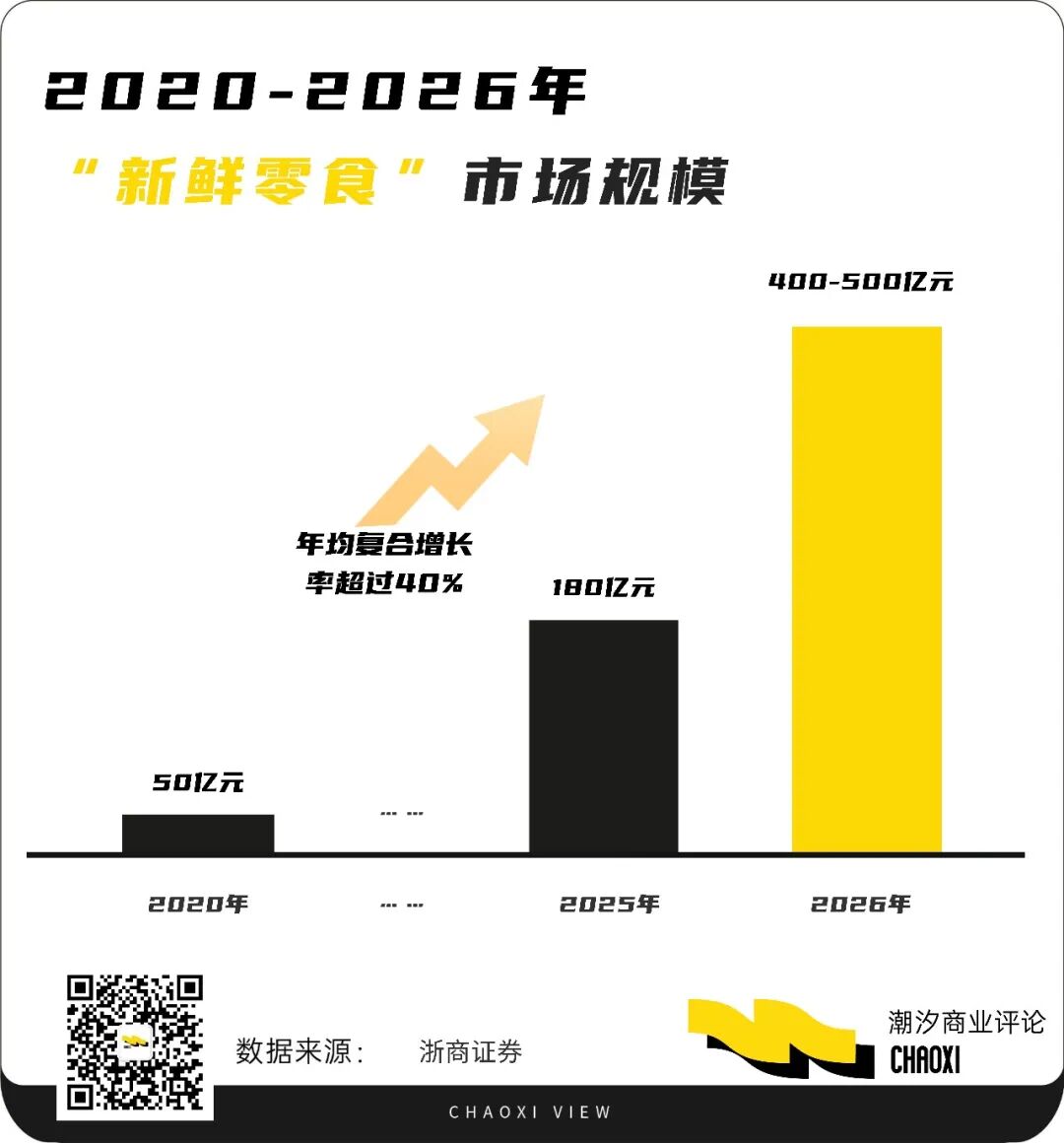
A market that has grown seven or eight times in less than six years is hard to escape the attention of capital. A report from Zhongtai Securities shows that in 2025, there were more than 20 rounds of financing throughout the year, with a total amount exceeding 1 billion yuan.
Meanwhile, the top players in the industry have also entered the spring of capital valuation.
According to a report from "Business Observer", Jinlimen, Jiduofull, and Yili are all in talks for Series A financing, with valuations around 2 - 3 billion yuan. They have even attracted star institutional capital such as Sequoia.
However, even for Jiduofull and Yili in the first echelon, the number of stores nationwide is less than 100. Based on a Series A valuation of 3 billion yuan, it means that the valuation of a single store is nearly 30 million yuan.
So, can a "fresh snack" store really support a valuation of 30 million yuan? Behind the booming industry, is it a long - term business or just a short - lived capital - driven frenzy?
1
Why Fresh Snacks?
Fresh snacks themselves are not really a new species, but the concept was first systematically put forward in 2020.
At that time, Laiyifen first incorporated "fresh snacks" into its brand strategy, trying to distinguish itself from traditional long - shelf - life snacks with on - the - spot production and short - shelf - life, healthy products. However, it was a group of native brands that emerged from places like Changsha, Shenyang, and Ningbo after 2024 that really made this concept popular.
By 2026, various players had quickly gathered in the market.
The first category is regional native brands, and there are four in the first echelon, including Yili, Jiduofull, Mama Pu, and Jinlimen.
Among them, Jinlimen is a pioneer. It originated in Changsha and was initially a roasted nuts store named "Jinlimen". In 2021, it transformed into the fresh snack business model. What stands out about Jinlimen is its very strong single - store model. According to research data from Huachuang Securities, the average area of a Jinlimen store is about 300 square meters, with an average customer spending of 50 - 60 yuan. High - quality stores can achieve monthly sales of over 4 million yuan, with a gross profit margin of 35% - 40%.
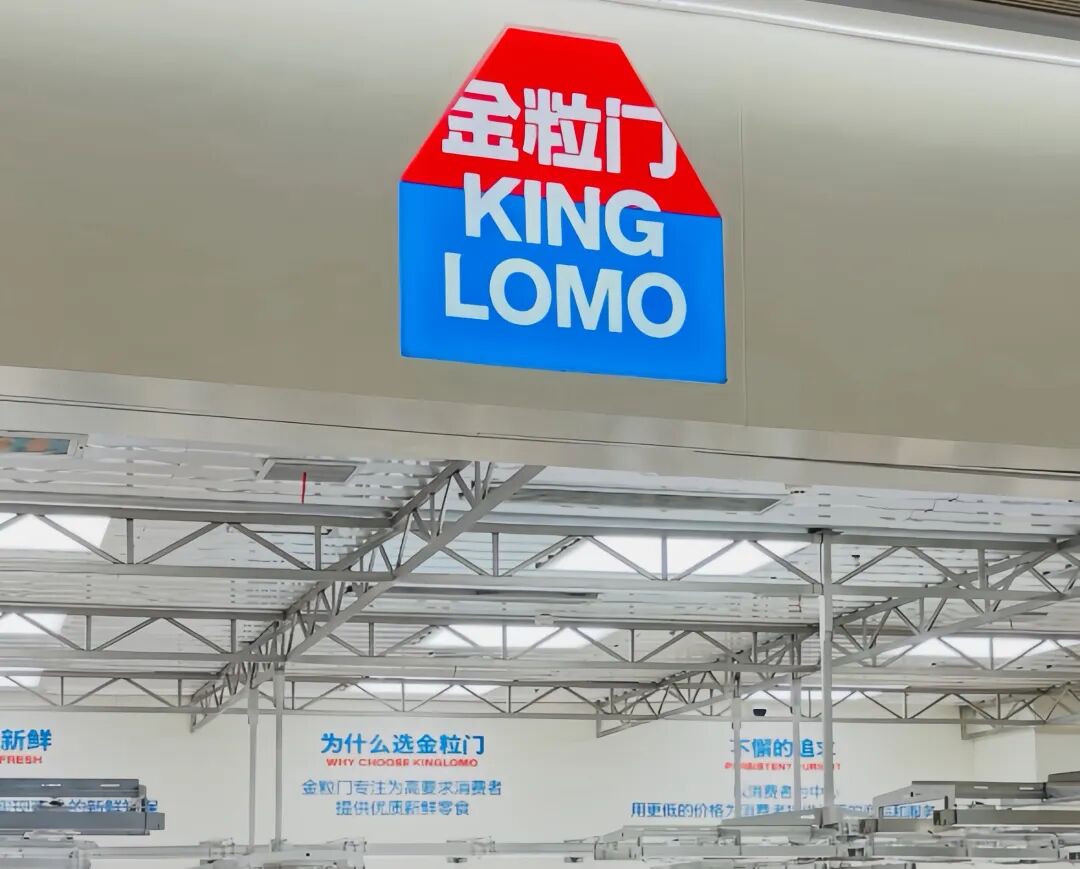
However, due to its insistence on direct - operated stores, Jinlimen currently has less than 30 stores nationwide, with 15 of them in its home base of Changsha.
Jiduofull has chosen a faster and more aggressive franchise expansion model. It opened its first store in March 2025, and in just over a year, the number of stores has exceeded 100. It has also set a goal of adding 600 - 1000 stores in 2026.
Yili is based in the northern market. According to the brand, in 2025, Yili achieved an income of about 500 million yuan, with a net profit margin of 10% - 15%. More than 90% of its stores are profitable, and it currently maintains a zero - closure rate.
Mama Pu focuses on the Jiangsu and Zhejiang regions.
The second category is cross - border players, including listed companies. For example, Juewei Food opened pilot stores in Changsha and Chengdu during the May Day holiday this year, with nearly 200 SKUs covering categories such as marinated snacks, drinks, baked goods, dried fruits, and desserts. According to publicly available information on its official website, as of mid - June, there are already 7 stores nationwide, and it plans to officially start national expansion in July. Youyou Food is also following up on the layout. In addition, "You·Tuijian" under Mingming Henmang, a bulk snack company listed on the Hong Kong Stock Exchange, is also opening stores one after another.
Why do these listed companies cross over into the fresh snack industry?
Actually, whether it's Juewei Food, Mingming Henmang, or Haoxianglai, these traditional snack brands are facing relatively obvious growth ceilings.
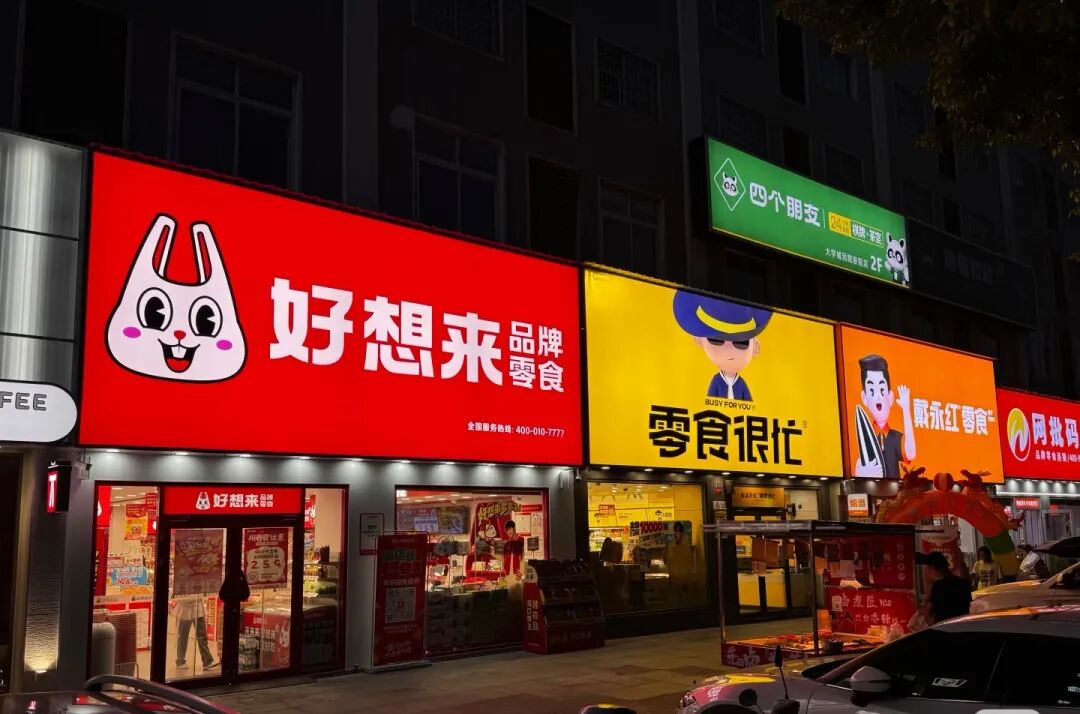
Especially in the bulk snack industry, after several years of rapid development, it has entered a mature integration stage. The price war has squeezed the profit margin thinner and thinner. The store - opening speed and revenue growth rate of Mingming Henmang and Haoxianglai are both slowing down.
Needless to say, traditional leisure snack brands are generally experiencing weak growth. The decline in revenue and net profit of Liangpinpuzi and Three Squirrels is obvious to all. Juewei turned from profit to loss in 2025.
The industry urgently needs a new direction to break through the ceiling and create a second growth curve.
The emergence of fresh snacks provides a path to shift from a "price war" to a "value war".
On the other hand, consumer demand has undergone fundamental changes.
Today's consumers are quite "rigorous" about "eating". They want snacks to be both delicious and clean.
According to the "2026 New Trends in Chinese Snack Consumption" white paper, the health attribute has risen to the fourth most important consideration for consumers when choosing snacks, accounting for 36.7%. Among them, 67% of consumers are willing to pay a premium for health labels.
A survey by Nielsen IQ shows that more than 60% of young consumers are willing to pay a premium of up to 30% for products with a "clean label".
Fresh snacks physically avoid the dependence on preservatives with "short - shelf - life" and provide a visible sense of safety with "on - the - spot production", which just hits this psychological need.
Moreover, the industry infrastructure is already very mature. The cold - chain logistics network and central kitchen contract manufacturing ensure the cross - regional circulation of "short - shelf - life" products. A pack of fresh roasted meat jerky with a shelf - life of only 60 days can be delivered from the central factory to a store thousands of miles away within 48 hours. The digital back - end management system can accurately predict the replenishment volume of each single store and control the loss at a relatively reasonable level.
Driven by these three factors, the fresh snack industry has quickly heated up.
2
What's Left After the "Freshness" Fades?
Actually, marinated snacks, chestnuts, and freshly baked pastries can be seen everywhere in supermarkets on the streets. Why do consumers have to go to a fresh snack store specifically?
The answer lies not on the shelves but in the "scenario".
What a fresh snack store sells is not only the snacks themselves but also a sense of security that "this thing is like real food, not an industrial product".
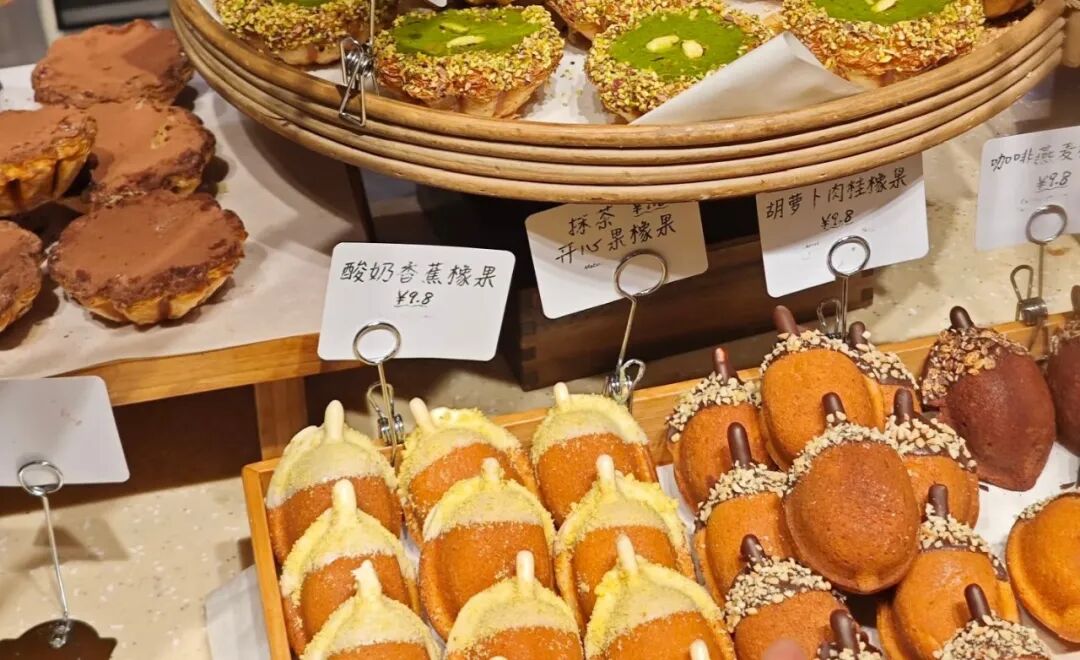
When you enter the store, the aroma of freshly baked goods wafting from the open kitchen, the hot - out - of - the - oven puffs, and the clerks making products behind the transparent counter all create an immersive consumption scenario that combines sight, smell, and taste. It turns the simple act of "buying snacks" into an experience full of "smoky atmosphere". It is precisely this experience that accurately hits the psychology of the main consumer group aged 20 - 40: what they buy is not snacks but the sense of solidity of "on - the - spot production".
Data also confirms the attractiveness of this model.
According to comprehensive reports from industry media such as Lian Shang Wang, the average customer spending in fresh snack stores can generally reach 45 - 60 yuan, and the repurchase rate exceeds 35%. This repurchase rate is not low.
What supports the repurchase is, on the one hand, the quality of the products themselves. Short - shelf - life means better taste, and on - the - spot production means fresher flavor. On the other hand, it is the continuous new - product launch ability. Some brands maintain a monthly product iteration rate of about 20%, attracting consumers to come back repeatedly with a rich variety of SKUs and constantly updated popular products.
However, fresh snacks are also trapped by the word "fresh".
First of all, the contradiction between short - shelf - life and scale is the most direct. The shorter the shelf - life, the greater the risk of loss. According to research data from Orient Securities, the average loss rate in the fresh - made snack industry is as high as 8% - 15%, far higher than the 1% - 3% loss level of traditional packaged snacks and bulk snack stores. Any problem in the production, distribution, or sales process will directly affect the profit. Once a store expands across regions, cold - chain logistics, distribution timeliness, and replenishment frequency will become huge costs and management pressures.
Secondly, there is a gap between scale and quality control. In January 2026, Jinlimen was exposed by Hunan City Channel's "Focus" for problems such as poor sanitary conditions and forging production dates in its marinated products contract - manufacturing factory. Eventually, Jinlimen set up a special compensation fund of 12 million yuan and implemented a "ten - fold compensation" for the involved products.
An even more hidden crisis than cost and quality control is homogenization.
If you have visited stores of different brands, you will find that the decoration styles are surprisingly similar. White granite, stainless steel, and silver - gray tones have almost become the standard industrial style in the industry. The product structures are also very similar: fresh - baked goods and marinated products are used to attract customers, and nuts and dried fruits are used to increase the average customer spending.
When all brands are hanging the "fresh" sign, this label itself is no longer a moat for any brand.
Once the freshness fades, why should consumers choose you instead of the store next door?
3
Who are the Real "Competitors" of Fresh Snacks?
Under the superposition of the triple pressures of cost, quality control, and homogenization, if fresh snack brands want to break through the ceiling, they cannot just rely on the "smoky atmosphere" at the store end to tell stories. They must move upstream. Looking at the players who have achieved scale in the fresh snack industry so far, they have basically done one thing right: making the supply chain more substantial.
Yili has built two self - owned factories in Shenyang and Nanjing and plans to expand to Tianjin and Dongguan in the future. Jinlimen has built a full - chain system of "direct procurement from bases + central kitchen + on - the - spot production in stores", with a cold - chain radius controlled within 200 - 300 kilometers. Several self - owned factories of Jiduofull are about to be put into production, relying on the manufacturer network resources of the Heisejingdian Group to support rapid expansion.
However, making the supply chain more substantial can only solve the problem of "not falling behind", but it may not be able to stop "outsiders from entering".
The real competitors of fresh snacks may not be each other. For example, bulk snack terminals like Mingming Henmang may add short - shelf - life products and rely on centralized procurement at low prices to seize the sinking market. Convenience store chains such as FamilyMart and Lawson can also rely on their mature short - shelf - life fresh food systems and dense community locations to compete for the daily repurchase customer group.
An even greater threat comes from retail giants such as Sam's Club, Hema, and Fat Donglai.
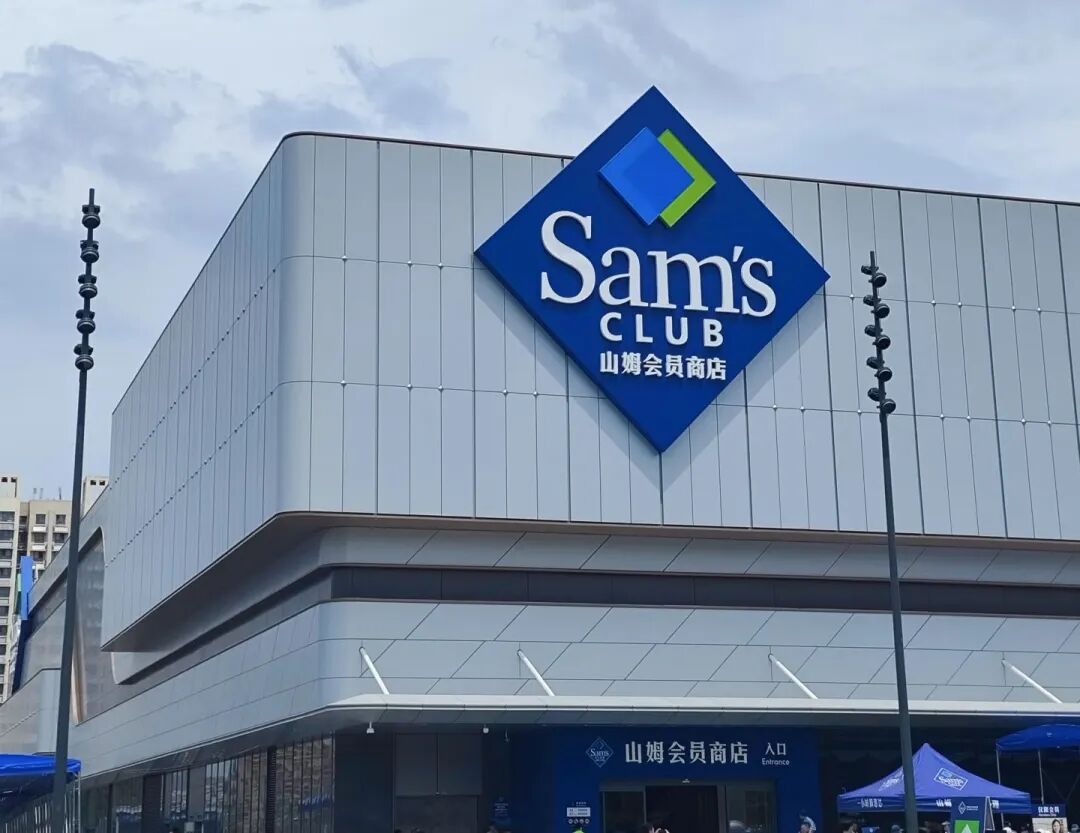
These giants have mature supply chain systems and strong private - label brand capabilities. Sam's Club's Member's Mark series, Hema's "Hema Workshop" and "Daily Fresh", and Fat Donglai's private - label fresh food have all covered different consumption scenarios in a hierarchical manner.
The current product - selection strategy of fresh snack stores is largely "copying" the popular products of Sam's Club and Hema. For example, single products such as Swiss rolls and mochi are widely replicated, but with smaller specifications and lower prices.
This "following strategy" can quickly attract customers in the initial stage, but in the long run, once Sam's Club and Hema decide to increase their investment in the short - shelf - life snack field, fresh snack players will face a dimensionality - reduction attack from the upstream.
This scene is familiar. In the past, Liangpinpuzi and Three Squirrels were also representatives of emerging channels, rising rapidly through online traffic and category innovation. But when traditional food giants and e - commerce platforms reacted and started to focus on the same categories, as pioneers, Three Squirrels and Liangpinpuzi had to get involved in price wars and traffic competition.
Will fresh snack brands repeat the same mistakes? Perhaps the answer will be revealed in 2026.