36Kr Exclusive | Tongji PhD Transitions from Construction Robots to Coal Mining, Betting on the "Structural Blue Ocean" of Auxiliary Operations
Author | Ou Xue
Editor | Yuan Silai
Yingke learned that Suiqing Robotics, a mining robot company (hereinafter referred to as "Suiqing"), has recently completed a tens-of-millions-yuan angel round of financing. The investor is Lianyungang Jinqiao Fund. The funds from this round will be mainly used for the engineering iteration of core robot products for coal mine underground, the construction of the supply chain, and the expansion of the team.
Suiqing was officially established in early 2025. Prior to this, it had completed nearly two years of technology accumulation and underground verification through its subsidiary. The core team of Suiqing has been deeply involved in the intelligent robot and special equipment industry for many years, with an average working experience of over 10 years, forming an age echelon from the post - 80s to the post - 98s. All the core backbones have full - chain practical experience from product definition to on - site delivery. The founder, Wang Long, is a doctor in the field of robotics from Tongji University and an early pioneer of construction robots in China. He once served as a senior researcher at the Hong Kong University of Science and Technology.
In the mining robot track, which is transitioning from "single - point automation" to "full - scenario unmanned operation", most start - up companies choose core operation links such as mining and transportation. However, Suiqing made the opposite decision - focusing on auxiliary operations, including roadway material transportation, high - altitude operations, sealed wall construction, and floating coal cleaning.
The business logic behind this choice is straightforward: The large - scale mining and transportation equipment field has already been monopolized by leading enterprises, making it extremely difficult for new players to enter. In the auxiliary operation scenarios, the personnel account for more than 60% of the front - line underground workers - corresponding to about one million front - line mining workers in nearly a thousand large and medium - sized mines across the country. This group is precisely the core target of the national mine "personnel reduction" policy. However, traditional coal machinery enterprises have limited investment, and external technology companies find it difficult to enter due to high certification thresholds and complex environments.
Wang Long told Yingke that this window period presents a structural opportunity where "the giants haven't done well, technology companies can't enter, and the value of personnel reduction is the greatest."
Technically, the coal mine underground has multiple extreme environmental characteristics such as high gas, high temperature and humidity, low illumination, narrow space, and high dust. A more hidden difficulty is that the core components must pass the coal mine safety certification. However, the supply chain of certified servo motors, sensors, joint modules, etc. in the market is extremely imperfect, and the selection space is very small. This means that even with mature algorithms, one may face the situation of "having no rice to cook".
Suiqing's R & D follows two lines. In terms of hardware, it self - develops explosion - proof modules. It's not because self - development is cool, but because the motors, joints, and sensors that have passed the coal mine safety certification and are suitable for auxiliary operation robots are very scarce in the market. Without self - development, it's impossible to even assemble a prototype. In terms of algorithms, for the extreme working conditions of low illumination, high dust, and narrow roadways, the general perception scheme is completely redesigned.
However, these two lines together are just the ticket to enter the market. The real barrier that Suiqing has formed is a set of "intuition" accumulated after repeatedly going down the well, disassembling and inspecting, encountering and solving problems in real mines - knowing which parameters will drift on - site, which structure can't last for three months in a coal powder environment, and how to handle the situation when the robot slips on a slope. Latecomers can buy the same motors and even poach a few algorithm engineers, but they can't buy this "intuition that can only be developed after being taught by problems on - site".
Currently, Suiqing has planned 6 products. Among them, the underground auxiliary transportation robot and the high - altitude operation robot have received small - batch orders and are in the final stage of coal mine safety certification.
Two other products - the sealed wall construction robot and the mining truck tire safety disposal robot - fill the gaps in the industry and are the first of their kind in China. The former corresponds to the wall - building operation link with a high incidence of coal mine safety accidents, and the latter is for the open - pit mine scenario and is the key product that the company will focus on creating in the next stage. Wang Long revealed that both products have completed the pilot test and are expected to complete the certification successively in the second half of 2026.
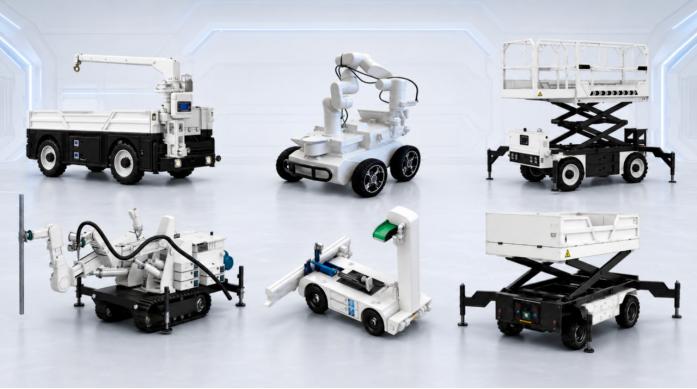
Suiqing Robotics' product matrix (Source/Enterprise)
In terms of product implementation rhythm, Suiqing adopts a phased "lawnmower strategy": The first two products play the role of "roadway entrants", quickly entering the procurement lists of leading mining enterprises with high cost - effectiveness and completing the original trust accumulation of product reliability and engineering delivery ability. The two "first - of - its - kind" products are the "profit harvesters".
In terms of performance, Suiqing currently has orders worth over ten million yuan in hand, and all its customers are leading central state - owned enterprises in the energy and mining industries. Among them, Suiqing has established a deep strategic cooperation relationship with China Coal Technology and Engineering Group. As the leading formulator of industry standards for mining robots and the only national - authorized management institution for coal mine safety certification, the latter has provided key support for Suiqing in terms of certification efficiency and market access.
Suiqing's future plan is divided into three steps: Within two years, complete the certification and batch delivery of the 6 products in batches and establish a first - mover advantage in the coal mine underground auxiliary operation scenarios. Within three to five years, horizontally expand this advantage to non - coal mine auxiliary operations, forming a business layout that covers both underground and open - pit, coal and non - coal mine auxiliary operations. Within five to seven years, extend the explosion - proof and extreme - environment operation capabilities polished in the coal mine underground to scenarios such as petrochemical explosion - proof operations and urban underground spaces (comprehensive pipe galleries, underground logistics).
In Suiqing's view, the coal mine underground is the "technical touchstone" with the highest explosion - proof level and the most severe working conditions. A robot that can work stably in a high - gas, high - dust, and narrow - space environment will naturally have its engineering capabilities spill over to scenarios such as petrochemical plants and underground spaces as the difficulty of the scenarios decreases.
The uniqueness of this path lies in that the current explosion - proof robot market is strong in inspection but weak in operation, while Suiqing's core ability is to perform tasks such as handling, construction, and cleaning in extreme environments - forming a structural complement. From coal mines to petrochemicals to underground spaces, the market ceiling jumps from the tens of billions level to the hundreds of billions level, and there is a clear customer profile and implementation rhythm at each step.
The following is an excerpt from the conversation between Yingke and Wang Long (edited):
Yingke: What is your core technological barrier? If leading enterprises enter the market, how will you respond?
Wang Long: Many people think that the difficulty of mining robots lies in algorithms, but the more fundamental problem is the supply chain. The certified core modules that we can use are very scarce in the market. Without modules, no matter how strong the algorithms are, we can't make products that can go down the well. So, since its establishment, we have decided to self - develop the hardware and precipitate core components such as motors, sensors, and joints into our own modules. This not only solves the problem of "having no rice to cook" but also shortens the whole - machine certification cycle from the industry average of one and a half years to within our internal expectations.
The algorithm level is also equally important. In an environment with low illumination, high dust, and narrow space, general algorithms are ineffective, and targeted heterogeneous fusion design is required at the perception layer. Therefore, our barrier is not a single - point technological breakthrough, but the systematic engineering ability accumulated in the process of "self - developing hardware from scratch + deeply reconstructing algorithms for extreme working conditions". Other enterprises need to pass the supply - chain hurdle first if they want to catch up, while we have been running in this lane for two years. More importantly, in the extremely "conservative" coal - mining industry, customers won't buy just because you are a giant. What they need is the trust accumulation of "someone who has run down the well for two years and has been verified in the mine". This kind of trust can't be bought with money; it can only be built over time. Giants have their own battlefields. They are more willing to acquire mature technology teams rather than start from scratch to tackle the supply chain.
Yingke: The coal mine safety certification cycle for coal mine robots is very long. How do you plan the product rhythm to hedge against the time risk?
Wang Long: You're absolutely right. The certification cycle is indeed one of the biggest uncertainties in this industry. It's normal for a new product to take one and a half years from underground testing, repeated rectifications to finally obtaining the certificate. If we only bet on one product, once a certain link gets stuck, the company may come to a standstill. So, from the very beginning, we took two actions: First, we arranged multiple product lines in parallel. Our first two products are already in the final stage of certification and will be delivered in batches within this year. The middle two are in the pilot - test stage and will follow up in the first half of next year. The last two are in the pre - research stage. Even if the certification of one product is postponed, other product lines are still advancing. Second, we certified the core modules first. This can compress the whole - machine certification cycle of new products from 18 months to within 12 months. This is how we manage policy risks in an engineering way.
Yingke: What exactly did you gain from the transformation from construction robots to the mining industry? Is it an advantage or do you need to start from scratch?
Wang Long: Many people ask me how much technology overlaps between construction and coal - mining, apart from both being "dirty, messy, and poor". To be honest, except for the underlying mathematical logic of motion control and end - effectors, the superstructure is almost completely different. The illumination and structuralization degree of construction sites are much better than those of mines, and the safety standards are not on the same level. If I have to say that the experience is useful, it's not the "copy - and - paste" of technology, but our deep respect for "industrial - scenario delivery".
In the construction industry, the biggest lesson we learned was "thinking that good technology would make customers buy". So, when we entered the coal - mining industry, we spent one and a half years without promoting any products. Instead, we went to the site to understand what the real "rigid demand" is - not the requirements in the tender documents, but the real sense of oppression that miners feel when building walls in a confined space with a high gas concentration. This understanding of the decision - making logic, acceptance standards, and payment habits of B - end customers is universal. If the technology has to start from scratch, this "intuition to avoid pitfalls" is the only asset we brought over and the most valuable thing in this transformation.
Investor's view:
Jinqiao Fund said that the angel - round investment in Suiqing Robotics is based on three converging judgments:
First, the time window driven by both policies and accidents has converged. In 2025, the National Mine Safety Administration issued the "Key R & D Catalog of Mining Robots". In 2026, industry safety accidents further accelerated mining enterprises' shift from "can buy or not buy" to "must buy as soon as possible". Suiqing's core products happened to complete underground verification and were about to be mass - produced at this node.
Second, the team is an extremely scarce "engineering - practical" combination in early - stage projects. The core team has both the background of doctoral degrees from well - known universities and full - chain delivery experience in complex industrial scenarios. More importantly, they have made a path that the industry generally believes is "unfeasible" work. In the situation where the supply chain of core modules for coal - mine robots is almost blank, they have overcome the design of explosion - proof structures, intrinsically safe certified modules, and algorithms for extreme environments from scratch and have obtained purchase intentions from leading mining enterprises.
Third, the starting point of industrial empowerment is exactly the first stop of strategic migration. Relying on the industrial ecosystem and supply - chain resources of Lianyungang Security Industry Group, Jinqiao Fund will assist Suiqing in accelerating coal - mine safety certification and connecting with large - scale mining enterprises. More importantly, Lianyungang itself has high - risk operation scenarios such as a national - level petrochemical industrial base, large - scale dangerous - goods ports, and nuclear power facilities. The first stop of Suiqing's migration from coal mines to petrochemical explosion - proof and underground spaces is right here.
As the extreme - environment operation robot track enters the "scenario fission period" from "single - point trial use", the explosion - proof module and operation algorithm capabilities that Suiqing has accumulated in coal - mine auxiliary operations have the potential to be systematically exported to high - barrier scenarios such as petrochemicals and underground spaces. What we are investing in is not just a coal - mine robot, but a set of engineering capabilities to "do work" in extreme environments. Once this set of capabilities is verified, the cost of technology migration to new scenarios is extremely low, while the entry threshold for competitors to replicate is extremely high. We are willing to accompany this team to start from the most dangerous underground and climb up step by step.