Alan Greenspan and His Age
In October 2008, in a hearing room on Capitol Hill in Washington, 82-year-old Alan Greenspan sat under the spotlight.
It was the fifth week after the collapse of Lehman Brothers. The financial crisis was still spreading, the stock market was plummeting continuously, banks were reluctant to lend to each other, and the financial products that had been repeatedly endorsed were losing credit and value at a speed that was hard for people to understand. Committee Chairman Henry Waxman leaned forward and asked that question:
In other words, you found that your worldview and your ideology were incorrect and didn't work?
Greenspan replied, "Precisely."
Exactly.
Then, he said the words that were later repeatedly quoted: "I found a flaw."
The weight of these words far exceeded a former Federal Reserve Chairman's rare admission of error. What Waxman was asking about was not a specific policy judgment of his, but a whole set of beliefs behind U.S. economic policies in the past three decades: The market can correct itself, financial institutions will constrain risks for their own interests, and the government should not over-intervene in the market operation.
It was a set of beliefs of the era, not just belonging to him alone.
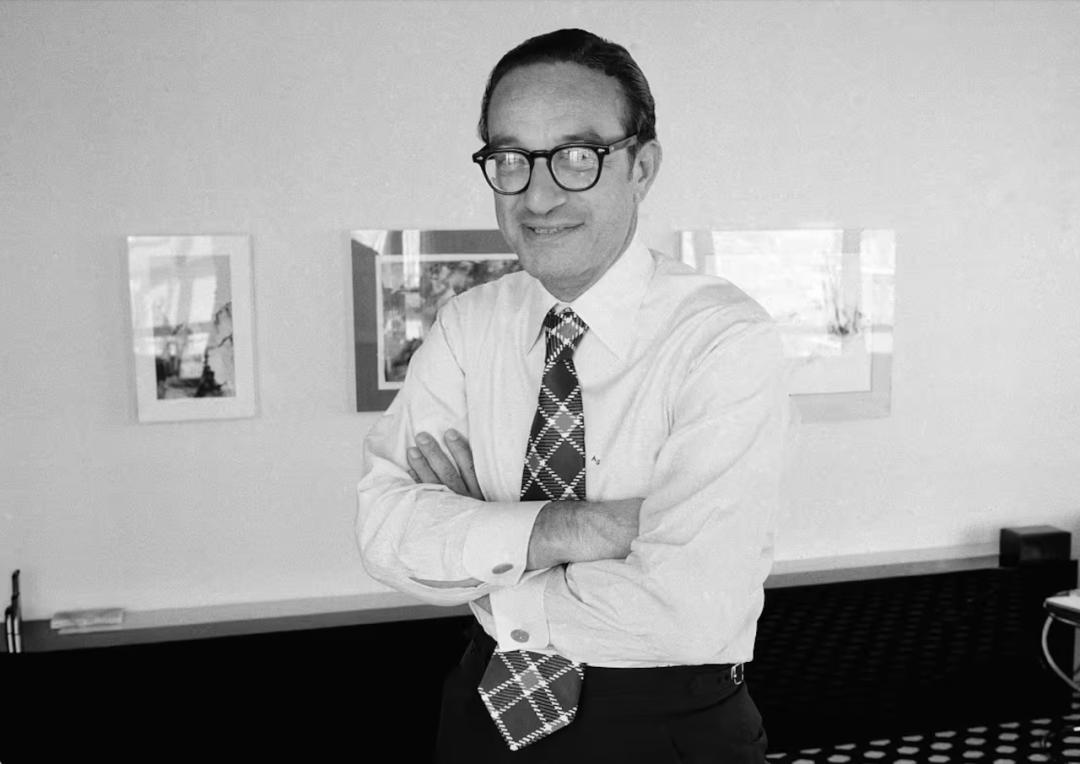
On June 22, 2026, Greenspan passed away at home at the age of 100 due to complications of Parkinson's disease. Eighteen years had passed since that hearing.
In his long life, he was once called the "Maestro" and also became one of the most prominent defendants in the era of the free market. From 1987 to 2006, he headed the Federal Reserve for 18 years, serving under four presidents: Reagan, George H.W. Bush, Clinton, and George W. Bush. During his tenure, the United States experienced the longest post-war economic expansion, the Internet revolution swept the world, globalization reached its peak after the end of the Cold War, and Wall Street packaged financial innovation, risk pricing, and American-style prosperity into a global language. Only two years after his retirement, the global financial system suffered the most severe crisis since the Great Depression.
Was Greenspan the creator of prosperity or the sower of the crisis? Perhaps there is no simple answer to this question. More importantly, his life almost completely traversed the rise, glory, and breakdown of that era. It can be said that he was one of the most prominent faces of that era.
Before becoming the "Maestro,"
he was first a believer
Before entering Washington, he was first a person who believed in the market.
In the early 1950s, the young Greenspan met writer Ayn Rand in New York. Today, people are more familiar with Rand as a novelist, but in that small circle, she was more like a thought mentor.
Economists, lawyers, scholars, and entrepreneurs around her gathered regularly to discuss philosophy, politics, and the future of capitalism. This circle was later called the "Collective." The name was somewhat ironic because many of them considered themselves extreme individualists.
Greenspan was one of the most loyal members.
Rand believed in reason, individualism, and the free market. She thought that the less the government intervened in economic life, the better, and laissez-faire capitalism was the institutional arrangement that best suited individual freedom. These ideas deeply influenced Greenspan. In the 1960s, in his article "Gold and Economic Freedom," which was later included in Capitalism: The Unknown Ideal, he defended the gold standard system and criticized the government for eroding private wealth through monetary expansion and fiscal deficits.
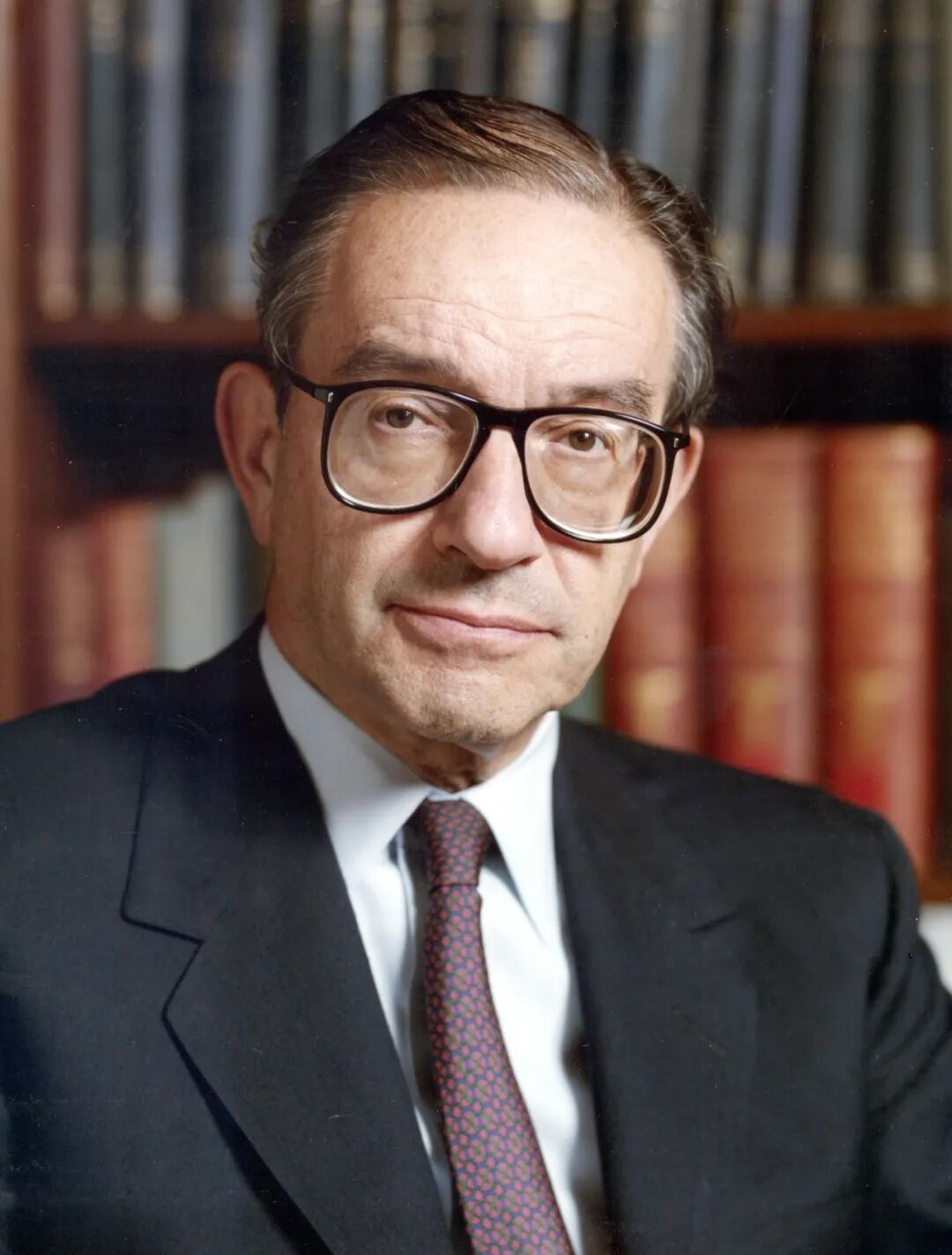
Many years later, people kept rereading this article not only because it was written by the future Federal Reserve Chairman, but also because it presented an idea that later dominated the Western world for a long time: The market is more efficient than the government, financial innovation can create wealth, the free flow of capital will bring growth, and the state had better not make decisions for the market.
Greenspan was not the creator of these ideas, but he later became their most powerful practitioner.
His life was not related to economics from the beginning.
As a teenager, he learned the clarinet and saxophone, entered the Juilliard School, and also performed as a jazz musician. Later, he turned to economics and became one of the most popular economic consultants in New York. He was not an academic economist. Deducing models on the blackboard bored him. He was fascinated by raw data, would delve into statistical reports, track steel orders, inventories, production, freight, and corporate profits, and look for the turning points of the economic cycle in a pile of seemingly boring numbers.
Greenspan always had a somewhat odd work habit. He liked to read reports, organize data, conceive speeches and testimonies in the bathtub. Water vapor, paper, statistical tables, and the policy language of Washington overlapped strangely in this detail. Of course, this was just a personal habit, but it also seemed like a metaphor for Greenspan-style power: He didn't dominate the market in the posture of an orator. He preferred another set of tools: obscure sentences, minor data corrections, and slight changes in the wording of interest rates, making the global capital market repeatedly speculate about his true intentions.
He believed in the market and also believed that he could read the voices that others hadn't heard from the digital traces left by the market.
In 1987, when Reagan appointed him as the Chairman of the Federal Reserve, a believer in the free market era stepped onto the most important position in the global financial system.
The birth of the Maestro
Only two months after taking office, Greenspan faced his first major test.
On October 19, 1987, the Dow Jones Industrial Average plunged 22.6%, setting the record for the largest single-day decline in the history of the U.S. stock market. Wall Street was in panic. Traders were worried that the market couldn't open normally, banks were worried about the collapse of their trading partners, and securities firms began to doubt whether they could survive the next day. That day, what Wall Street experienced went beyond the scope of the stock market decline: Whether the entire financial system could still function became a question that no one dared to answer.
That night and the next morning, the Federal Reserve system entered a state similar to wartime command. What was really frightening was beyond the index: Whether the credit chain behind the market would suddenly break - whether margin calls could be made, whether transactions could be cleared, whether securities firms could still get financing from banks, and whether banks were willing to continue to believe that securities firms could survive this storm.
The next morning, the Federal Reserve issued a very short statement, which basically said only one thing: As the nation's central bank, the Federal Reserve is ready to provide liquidity to support the economy and the financial system.
There was no complex explanation, no long policy statement, and not even specific figures. But the market understood the meaning: The Federal Reserve would not stand by.
Behind this statement, the Federal Reserve provided liquidity to the banking system and encouraged banks to continue lending to securities firms. The New York Fed kept in touch with major banks, trying to prevent panic from spreading in the credit chain. Later, many people regarded this scene as a classic case of modern central bank crisis management: When the financial market is in panic, the central bank not only has to provide funds but also confidence; it is not only the lender of last resort but also the explainer of last resort.
The crisis finally didn't turn into a collapse of the financial system. For Greenspan, this was not only a successful crisis disposal but also the starting point of an era myth.
In the following 18 years, the era seemed to reward him again and again.
In the 1990s, the U.S. economy entered a record-long expansion cycle. In offices, personal computers and the Internet began to change the way of working; on store shelves, the global supply chain brought cheaper goods; corporate profits were boosted by both technological progress and transnational production, and Nasdaq translated this optimism into higher and higher valuations. Unemployment declined, the stock market rose, and inflation remained moderate. Economists later called this period the "Great Moderation." Many people began to believe that the modern economy had entered a new stable state: Inflation was under control, recessions became short and mild, and the economic cycle no longer seemed as violent as before.
In today's view, this optimism seems a bit naive. But at that time, it was almost a consensus of the era.
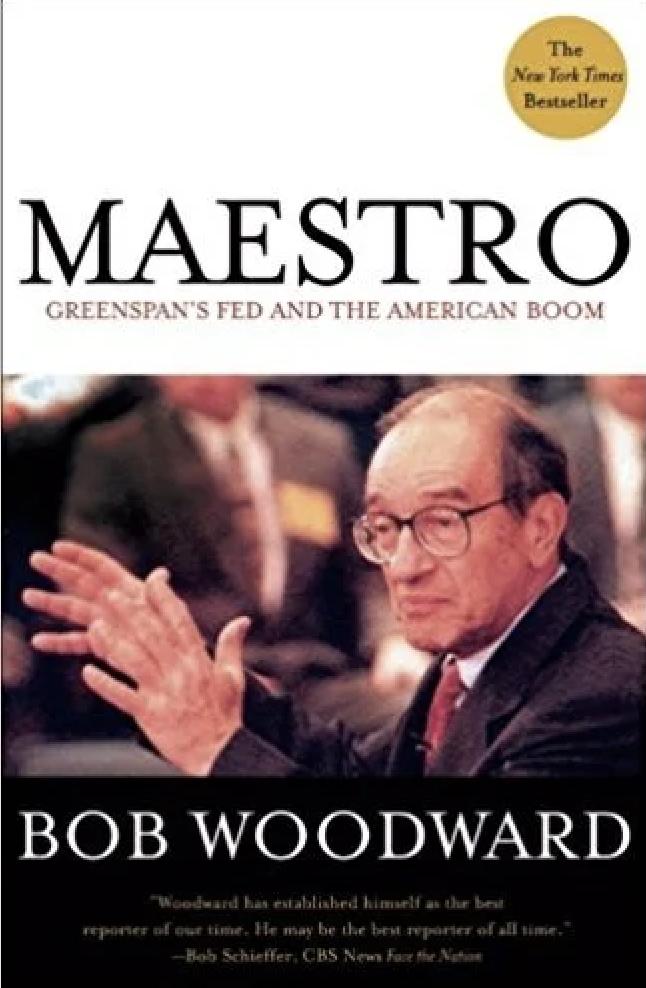
Greenspan became the most prominent symbol of this consensus. Journalist Bob Woodward wrote a biography for him with only one word in the title: The Maestro. This title spread not only because he successfully managed interest rates but also because in that era, people believed that professional bureaucrats could manage complex economic systems through rationality, data, and technological means.
If the Reagan era believed that the market could create wealth, then in the Clinton era, people began to believe that the central bank could manage risks. Greenspan happened to stand at the intersection of these two beliefs.
He saw the bubble but believed in the market
In December 1996, in a speech in Washington, Greenspan put forward a phrase that was later recorded in economic history: "Irrational exuberance."
At that time, the U.S. stock market had been rising for many years. The Internet was changing the world, venture capital was pouring in, and technology companies could get amazing valuations even without profits. Greenspan clearly realized that the market was becoming more and more fanatical. He asked: How do we know whether irrational exuberance has pushed asset prices to an unreasonable level?
Later, this speech was often regarded as a prophecy. Facts proved that his concerns were not unfounded. The Internet bubble continued to expand and finally burst in 2000.
But a more thought-provoking question is: Since he saw the bubble, why didn't he stop it?
The answer may be hidden in his deepest belief in his life. Greenspan always doubted whether the government was smarter than the market and whether the central bank had the ability to accurately identify bubbles. In his view, The market may make mistakes, but policy-makers who try to correct the market will also make mistakes, and the latter may not be safer.
Therefore, rather than actively pricking the bubble, he preferred to quickly stabilize the situation after the crisis occurred.
This attitude was gradually magnified in the market's interpretation into a more specific expectation: The Federal Reserve would not actively intervene, but once the risk was large enough to threaten the entire system, it would definitely step in to bail out. Investors gave this expectation a name: "Greenspan put option."
This was not a real financial contract but a psychological insurance. The risk still belonged to the market, but when the risk was enough to threaten the entire system, the Federal Reserve would appear. This was the case in the 1987 stock market crash, the 1998 Long-Term Capital Management crisis, and after the burst of the Internet bubble in 2001 and the "9·11" attacks.
After each crisis passed, the market rose again; after each intervention, Greenspan's prestige became higher. This made more and more people believe that the Federal Reserve could not only put out the fire but also manage the risk itself.
This may be the deepest confidence of that era and also the most expensive misjudgment later.
Flaw
In 2007, the U.S. real estate market began to collapse. The default rate of subprime mortgages kept rising, and the financial innovation that Wall Street was once proud of began to fail. The risks that were carefully packaged, rated, sold, and dispersed around the world did not disappear but just existed in another form.
A year later, Lehman Brothers collapsed, American International Group was bailed out, the financial system froze, and the world economy fell into the most severe crisis since the Great Depression.
Many people began to look for those responsible. Greenspan could not be excluded from the list.
In the eyes of critics, he long believed in the market's self-restraint ability and opposed strengthening financial supervision; he maintained low interest rates for a long time after the burst of the Internet bubble; he repeatedly sent signals to the market that the Federal Reserve would step in to rescue in case of a crisis. All these factors together shaped that era full of leverage, speculation, and optimism.
Of course, history is rarely so simple. The housing bubble was not created by one person. The global savings glut, the distorted incentives of financial institutions, the failure of rating agencies, the fragmentation of supervision, and the U.S. society's obsession with homeownership all contributed to that disaster. Blaming Greenspan for all the responsibility is neither fair nor accurate.
But Greenspan's importance lies in that he once represented the most authoritative set of explanations of that era.
He believed that financial institutions would constrain risks to protect their own interests; believed that market participants knew better about the consequences of their own actions than regulators; believed that the market's self-repair ability would ultimately be stronger than the government's pre-intervention.
The 2008 crisis hit the weakest part of this set of explanations.
At the congressional hearing, Greenspan said that he once believed that lending institutions would control risks out of the need to protect shareholders' interests, but the reality "shocked" him. His so-called "flaw" didn't just mean that the market would make mistakes. The market always makes mistakes. What really shocked him was that those who should have known the risks best and had the most motivation to avoid them eventually became the creators of risks.
In other words, whether the market is rational or not has never been the core issue. People's trust in rationality itself has gone too far.
This is a subtle but important difference. Because it belongs not only to Greenspan but also to that era.
In the decades after the end of the Cold War, people increasingly believed that the market could effectively allocate resources, that financial innovation could disperse risks, and that the global capital flow would bring higher efficiency. These beliefs were not unfounded. In fact, in the era when these beliefs prevailed, there was indeed real prosperity.
But after 2008, people began to realize that efficiency doesn't always bring stability, innovation may also create vulnerability, and the market sometimes makes collective mistakes in the same direction.
So, an era began to turn.
His era was also China's era
During the 18 years when Greenspan headed the Federal Reserve, there was another background that should not be overlooked: It was also the era when China shifted from a planned economy to a market economy and deeply embedded itself in the global division of labor system.
These two pieces of history did not happen in parallel.
Between 2004 and 2005, the Federal Reserve raised interest rates continuously, but long-term interest rates did not rise synchronously as traditional experience expected. Greenspan later called this abnormal phenomenon the "Greenspan conundrum." The answer to this puzzle is not single, but the changes on the other side of the Pacific were obviously part of it.
China's manufacturing industry continuously exported cheap goods to the United States, reducing the inflation pressure in the United States; East Asian economies including China and Japan had been buying U.S. Treasury bonds for a long time, which also pushed down the long-term interest rates in the United States to a certain extent.
In other words, the low inflation and low interest rates in the Greenspan era were not only the result of the Federal Reserve's interest rate operations but also related to the structural changes in globalization. U.S. consumers enjoyed cheaper and cheaper goods, Chinese factories got a broader and broader market, and U.S. dollar assets provided the main destination for East Asian