The "half-life" of the perfume lemon: it has been popular for several years, but it has not yet truly grown up
If only looking at the scale, perfume lemons have been one of the most successful agricultural trends in the past decade.
From a niche local fruit in South China to the "lifeblood" behind tens of thousands of tea shops, and now with the planting area expanded to 400,000 mu, perfume lemons have become the core raw material in the trillion - level tea - beverage market.
However, the large - scale industry cannot withstand the scrutiny of large - scale and market - oriented operations. Even for the top tea - beverage brands, the proportion of first - grade fruits they purchase is less than 50%.
In other words, even with 400,000 mu planted, there are still not enough good fruits.
This is not a story of backward agriculture, but rather a story where the industry has developed too fast while its internal strength has not kept up. The planting area is sufficient, but the standards have not been established, and there are still some problems in the entire industrial structure...
01
The Story of a Variety Being "Discovered"
There is no unified account of the origin of Guangdong perfume lemons. Some sources say they were introduced from Taiwanese perfume lemons, others claim they are a local variety from Panyu, Guangzhou, and still others suggest they are a hybrid of the two.
According to a paper in China Fruit Industry Information, as early as 2008, perfume lemons were planted on the embankments of fishponds in Panyu, Guangzhou. Locals called them "Guangdong native lemons", which were mainly supplied to Western restaurants, coffee shops, and some milk tea shops. It was not until 2009 that Foshan Dakoujiu Food Co., Ltd. bred a batch of seedlings through air - layering and discovered a seedless natural mutant variety among the seeded varieties, naming it "Jiujiu Lemon".
However, regardless of the variety, the yield and popularity of perfume lemons are far lower than those of yellow lemons.
The real turning point for perfume lemons to be valued and "discovered" was a wooden mallet.
When the mallet strikes, the oil glands on the outer skin are broken, releasing a unique aroma of orange blossoms and lemongrass, which has become the key weapon to capture consumers' sense of smell. The tea - beverage market has also found a new high - potential target.
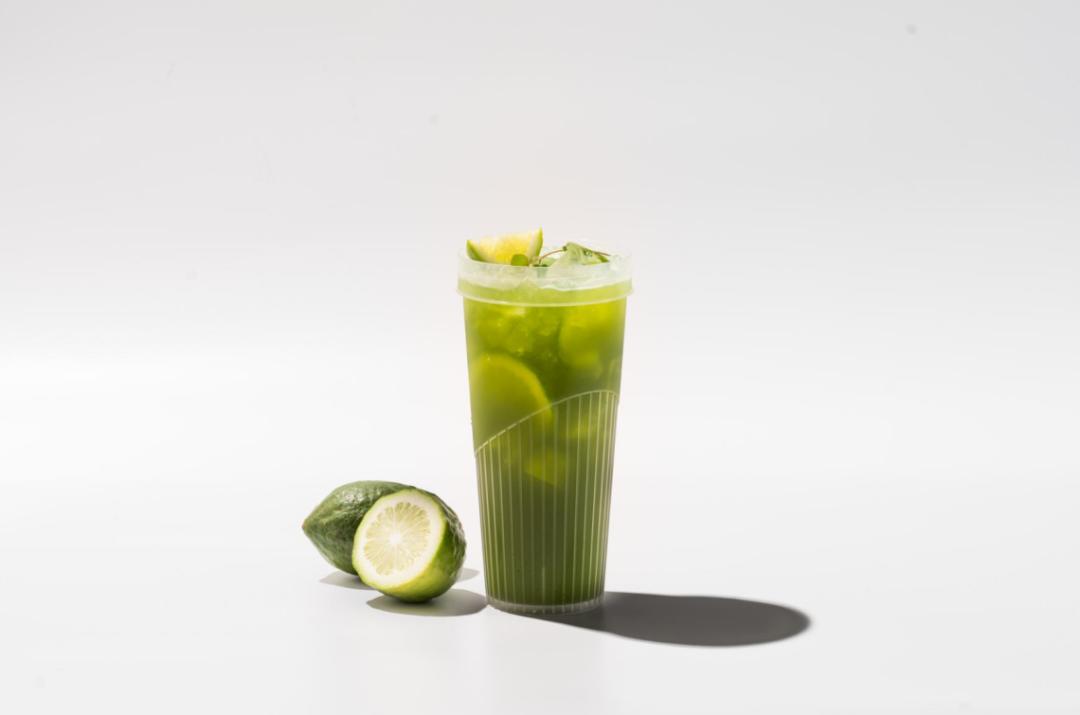
Image source: Tuchong Creative
Why perfume lemons instead of the more well - known Eureka (yellow lemons)?
Wang Guqian, a relevant person in charge of Ningji, a leading domestic lemon tea brand, frankly said that the most special feature of Guangdong perfume lemons is their smell. "The intensity of this fragrance is more than three times that of ordinary lemons, which is also the core reason for our choice."
Objectively speaking, in addition to the aroma factor, for the back - kitchen of tea shops, the seedless characteristic of perfume lemons can reduce the operation steps. The juice yield of 51% makes full use of the fruit (45% for Eureka), and the appropriate acidity and after - sweetness also bring a refreshing taste to lemon tea.
In terms of the supply chain, the yield of Eureka lemons is highly concentrated in autumn and winter. For tea shops to use this kind of fruit at other times, they are almost always frozen fruits. In contrast, perfume lemons bear fruit throughout the year without obvious off - peak and peak seasons, providing a stable supply of fresh fruits.
All these advantages have made tea - beverage brands quickly "take sides".
Brands such as Ningji, Uncle Qiu, Taling, and Abao Lemon Tea have started to expand rapidly and have attracted the attention of investors such as GF Xinde, Gaorong Capital, ByteDance, Shunwei Capital, and Tencent. Even established players like Heytea and Nayuki have launched lemon tea products.
According to the big data of Hongcan, the number of freshly - made lemon tea shops across the country has increased from more than 3,000 in 2020 to more than 20,000 in 2025, an increase of about seven times, with an annual compound growth rate of more than 47%.
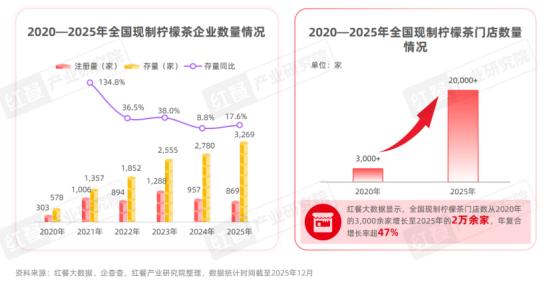
As the well - deserved protagonist of "hand - pounded lemon tea", perfume lemons have naturally become in high demand.
The agricultural sector has smelled the opportunity, and the follow - up expansion of planting has followed.
Some industry media once roughly estimated that the planting area of perfume lemons in 2022 was 40,000 - 50,000 mu. By May this year, this figure had nearly tripled. Zhao Jun, the supply chain person in charge of another leading lemon tea brand, "Linli LINLEE Hand - Pounded Lemon Tea", said in an exchange with Hongcan Supply Chain Guide that the planting area of perfume lemons in China has reached about 400,000 mu.
Currently, the main production areas of perfume lemons are concentrated in the outer areas of the Pearl River Delta such as Lianjiang, Enping, and Taishan in Guangdong, as well as in some counties in Guangxi and Yunnan. Considering the flavor and seasonal fluctuations in different environments, the procurement of first - grade fruits, represented by lemon tea specialty stores, is still concentrated in Guangdong and Guangxi.
For example, Lianjiang is recognized as the core production area. Its soil and climate conditions make the oil gland density and aroma of perfume lemons superior to those of other producing areas. In 2022, it was recognized as a product under national geographical indication protection.
02
The Upstream Is Not Really Ready
In the past few years, the price of a cup of "hand - pounded lemon tea" could reach nearly 20 yuan, and the market price of perfume lemons, the protagonist behind it, has been on a "roller - coaster ride". At its peak, it was 35 yuan per catty (in May 2021), and at its lowest, there were even special - offer fruits at 1 yuan for 10. Today, the origin supply price has fallen back to the range of 3 - 4 yuan per catty.
For small - scale farmers, such price fluctuations are even more cruel, and they may end up working in vain.
During the peak production season of perfume lemons in June this year, some fruit farmers said, "The price is so low that I don't even want to pick them. I might as well just cut down the trees. I can't even get back the cost." Others "advised against" it, saying, "Never follow the trend to engage in planting! Before you start, it's dozens of yuan per catty. Once you have a good harvest, it's only a few cents per catty."
Behind the sharp price fluctuations is a fragile industrial structure lacking a buffer mechanism.
Perfume lemons have a key biological characteristic: They can only enter the peak production period three years after planting. That is to say, the nearly 9,000 lemon tea specialty stores in 2022 used lemon trees planted before 2020. When the upstream sees the huge gap caused by the explosion in the downstream, it also takes three years to start supplying the market.
Climate risks are also uncontrollable. For example, the frost in 2021 and the low temperature and rain in 2022 directly led to a reduction in the yield of perfume lemons. The supply falling short of demand meant that a first - grade fruit weighing three or two taels could be sold for 8 - 10 yuan.
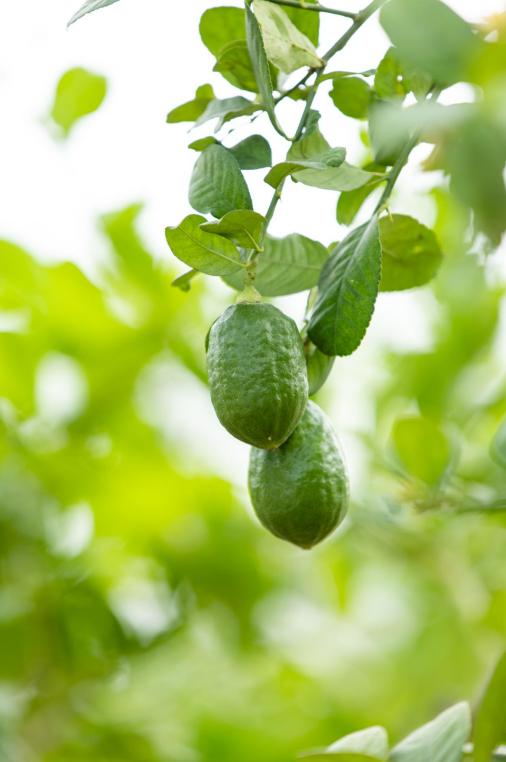
Image source: Tuchong Creative
The price increase further exacerbated the instability of procurement transactions. According to a report by "36Kr", in May 2022, the fruit farmers contracted by Abao Lemon Tea were willing to pay an additional 200,000 yuan (three times the deposit) to break the contract, tearing up the previous purchase contract at 7 yuan per catty. At that time, the market price had risen to 20 - 30 yuan per catty.
Once the price signal is released, the expansion of planting becomes inevitable, which is also an important reason why the planting area of perfume lemons has reached 400,000 mu today.
However, the question is, if the upstream has planted enough, is there enough for the downstream to "pound"? The reality is far from that simple.
Take Rongmugen Tun, Bobai County, Yulin, Guangxi as an example. In 2025, there was a 200 - mu perfume lemon base in this area, with an estimated total output of 120,000 catties and an average output per mu of 600 catties. The market purchase price is 6 - 8 yuan per catty. Compared with traditional crops such as corn, this income is of course much more substantial. However, this output per mu is still far from the 3,000 catties of the orchards cooperated with by Linli LINLEE.
Some industry insiders revealed that Yangchun, Guangdong is currently the most concentrated area for perfume lemon planting in China, with a scale of nearly 50,000 mu, but the actual output per mu is still less than 800 catties.
The output of large - scale planting bases is far better than that of small - scale farmers, but small - scale planting still dominates in traditional producing areas such as Guangdong, which results in a relatively low total output of perfume lemons.
Several relevant person in charge of procurement for lemon tea brands also told Hongcan Supply Chain Guide that currently, the planting scale of perfume lemons in China is sufficient to meet the expansion of the market in the next 3 - 5 years. However, the more urgent task is to achieve "yield improvement within unit cost" on a larger scale.
The bigger problem lies in the "proportion of first - grade fruits".
It is understood that chain tea - beverage brands such as Ningji and Linli LINLEE only use first - grade fruits in their stores. That is, factors such as weight, degree of skin blemishes, area of shaded branches (the area that can be covered by two fingers together), and aroma must meet the standards of each brand.
How many such first - grade fruits are there? According to Linli LINLEE, the output proportion of its cooperative orchards is less than 50%.
In other words, large - scale does not equal high - quality. This gap is a major structural contradiction in the entire industry at present. There are reasons for reaching this stage.
The price of the previous follow - up expansion of planting has become increasingly obvious today. Family - style small - scale workshops still account for the majority. Insufficient aroma of varieties and non - standard use of pesticides are the legacies left by that "rush to action".
Tea - beverage brands such as Ningji have built their own perfume lemon planting bases. The orchard bases have all achieved mechanized operations and are equipped with corresponding intelligent pesticide spraying systems to reduce labor costs. They have also fundamentally solved the problems of seedling purity and aroma through traceable seedlings. However, it is almost impossible to replicate such a high - standard model in all planting areas in a short time.
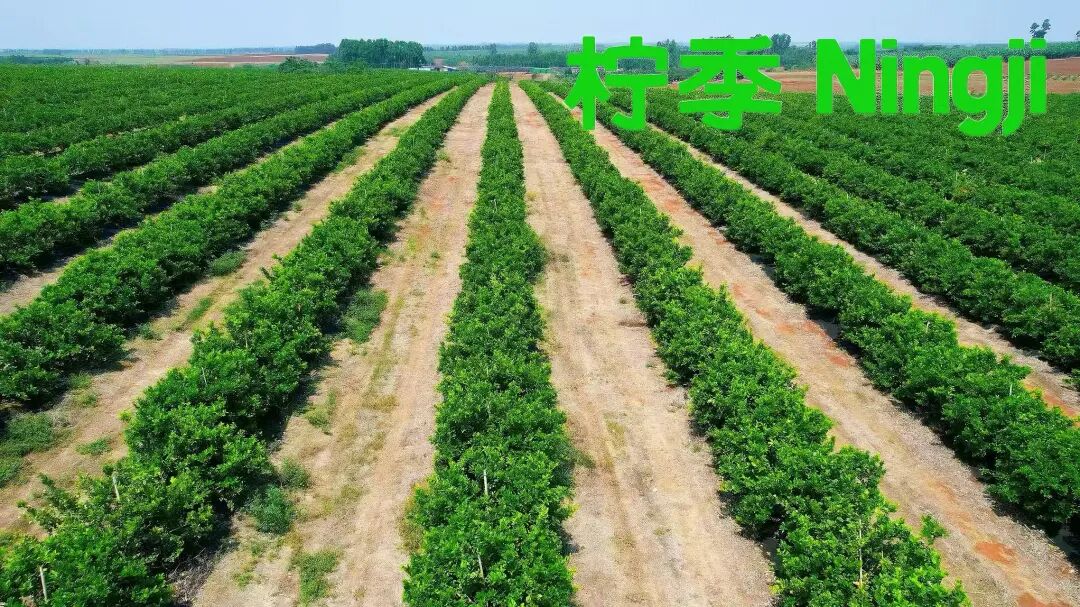
Ningji's standardized perfume lemon planting base in Zhanjiang. Image source: Provided by the interviewee
The planting is scattered, and the usage is also scattered. The inability to effectively serve the downstream applications is also where scattered planting is "willing but unable".
Zhao Jun of Linli said that "The shelf - life of perfume lemons is very short. We hope to minimize the time they are exposed to high temperatures." The so - called shelf - life is the time from the moment of picking in the orchard to the point when they meet the standards for making lemon tea.
It is understood that perfume lemons must have a special aroma when they are in an unripe yellow state. Therefore, the lemons picked are still unripe. After a rough sorting in the orchard, the fruits need to be sent to the sorting center and stores. The whole process must be kept under cold - chain transportation, and the "breathing" of the fruits is controlled through modified - atmosphere packaging films to delay their growth. Currently, according to Linli LINLEE's standards, the shelf - life is basically controlled at about 20 days, and the best fruits in the overseas market can reach 28 days.
The closer to the orchard, the longer the shelf - life that can be obtained. Therefore, cold - chain facilities can play the maximum scale effect in areas with dense planting. For example, Linli LINLEE's processing center in Yangchun processes about 200,000 catties of perfume lemons every day, covering the producing areas within a radius of 50 kilometers.
Without this cold - chain facility to "race against time", the service life of a perfume lemon will be greatly shortened. High - quality fresh fruits may be wasted or deteriorated due to improper storage and circulation, and inferior and damaged fruits cannot be quickly frozen, making it difficult to retain their value.
Especially in emerging producing areas, the planting is scattered and not yet large - scale. The unit cost of building cold - chain facilities is higher. However, if they still rely on the original bulk circulation mode to supply the downstream, some perfume lemons will "not be able to leave Guangdong".
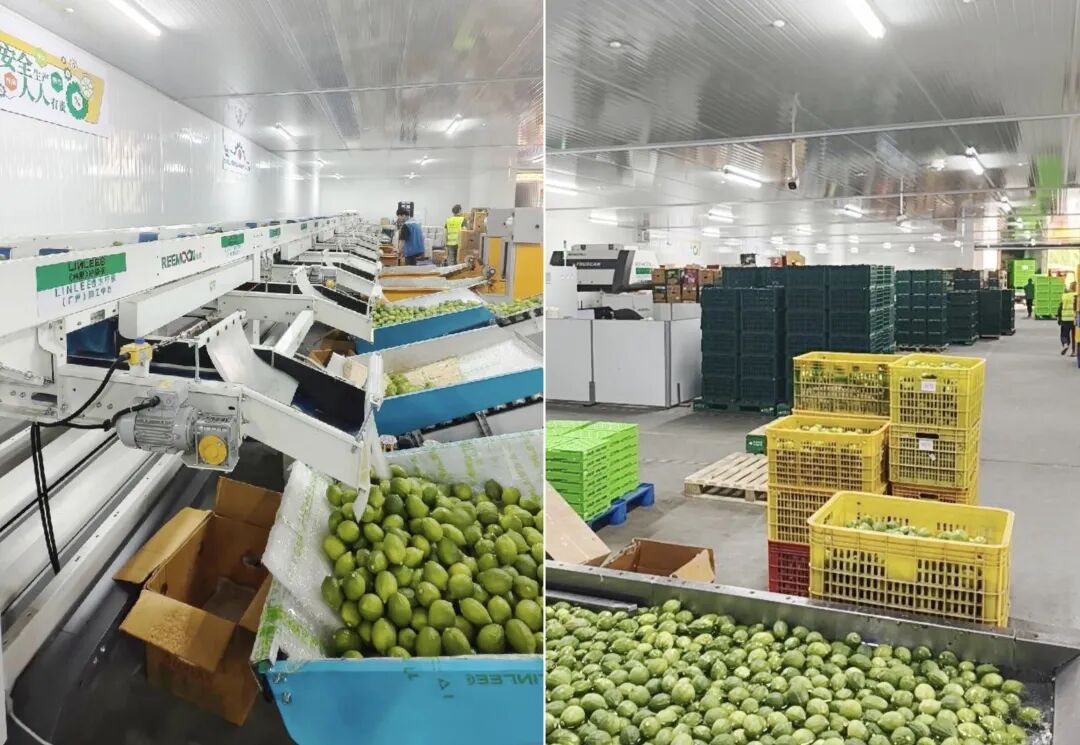
Linli LINLEE's perfume lemon sorting center. Image source: Linli LINLEE
When Wang Guqian of Ningji was communicating with Hongcan Supply Chain Guide, he proposed that the producing areas should strengthen the construction of pre - treatment and low - temperature deep - processing centers. The major perfume lemon - producing counties should establish 1 - 2 standardized sorting lines for automatic grading and cleaning, and rapid pre - cooling to reduce fruit loss.
With the current technological level, extracting the aroma from the oil glands and then restoring it still cannot reach the level of on - site pounding in the stores. Therefore, improving the quality of the industry and making detailed classifications are the top priorities to get through the initial stage.
03
The Absence of National Standards and the Near - Zero Deep - Processing
Assuming that all 400,000 mu of land are planted with the goal of producing first - grade fruits, can the industry achieve overall efficiency improvement?
The answer is no. Because the entire industry still cannot uniformly