Who says sawing wood has no future? This old man was sawing away and ended up developing the SpaceX engine.
[Introduction] SpaceX's market value hit 2.1 trillion. With just 0.06% of the shares, his net worth exceeded one billion! He's not Elon Musk. His name is Tom Mueller, the first employee on SpaceX's payroll, a man who only builds rocket engines. And more than twenty years ago, this man was in a logging town of 2,500 people in Idaho, wielding a chainsaw to cut wood...
Recently, SpaceX rang the bell on the NASDAQ.
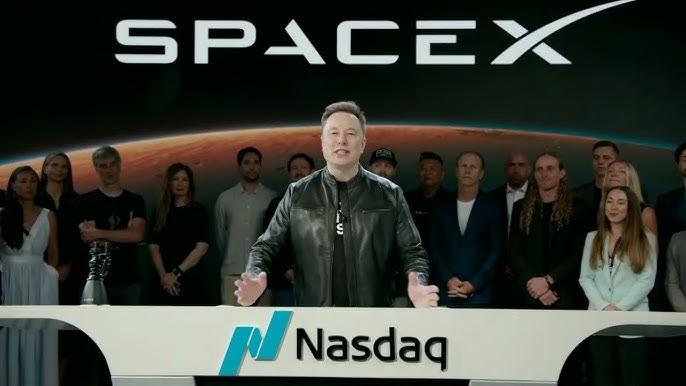
This is a carnival for the winners.
Elon Musk's net worth jumped significantly, and the early investors were grinning from ear to ear.

But that's not who we're talking about today.
It's a person on the list that almost no one noticed. His shareholding is only 0.06%. Multiply this by 2.1 trillion, and it's worth over one billion dollars.
His name is Tom Mueller, the first employee on SpaceX's payroll, specializing in building rocket engines.
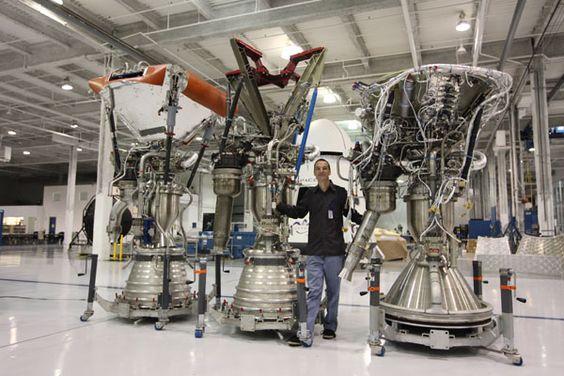
And that's not even the most incredible part.
More than twenty years ago, this man who now has a net worth of over one billion was in a town of 2,500 people in Idaho, wielding a chainsaw to cut wood in the forest.
A Kid Who Grew Up in the Forest
To start from the beginning, we have to go back to the logging town of St. Maries in Idaho. It has a population of 2,500.

Mueller's father was a logging truck driver. He worked hard all his life and hoped his son would also work in the logging forest in the future.
Mueller once made an analogy.
Have you seen the movie October Sky?
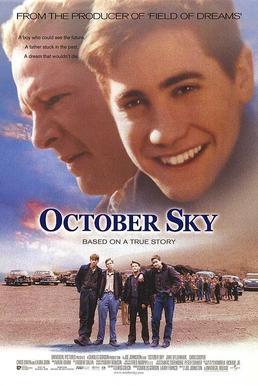
October Sky is an American movie released in 1999, adapted from a true story and the novel Rocket Boys. The story depicts the real childhood of Homer Hickam who lived in Coalwood, and the screenwriter Louis Corrigan made some adaptations to the story.
It tells the story of a coal miner's son who finally left the mining area and became an engineer.
He said, "Replace'mining' with 'logging', and that's my life."
"My father was a very hardworking logging truck driver. He hoped I would become a lumberjack. But I finally left and became an engineer."
This kid was obsessed with rockets from a young age.
He bought materials for Estes rockets at the local model store and made dozens of them, hanging them on the head of his bed.
Of course, most of them didn't last long - either they were lost or exploded.
Even wilder things were yet to come.
At the junior high school science fair, he stuffed live crickets into a rocket and launched it into the sky just to see what would happen to the crickets under acceleration. Unfortunately, the parachute didn't open. The rocket crashed back to the ground, and all the crickets died.
In high school, he simply used his father's oxy - acetylene welder to build a rocket engine by himself.
On the first ignition, a hole was burned through the side of the combustion chamber.
If it were other kids, they might have given up at this point.
He didn't. He soaked the whole engine in a coffee can filled with water to cool it down and managed to make it run stably and start recording data.
With this homemade engine cooled by a coffee can, he made it all the way to the finals of the national science fair held in Anaheim.
It was his first time on a plane, his first time leaving Idaho, and his first time seeing Los Angeles.
He didn't win a prize and lost badly.
The projects of others at the scene were so sophisticated that they didn't seem to be made by kids. But Mueller's engine was built with his own hands, piece by piece, weld by weld.
This later became the footnote of his entire life.
Four Summers, One Chainsaw
His family couldn't afford to send him to a prestigious school. He went to the University of Idaho, which was 70 miles away from home, because the in - state tuition was cheap.
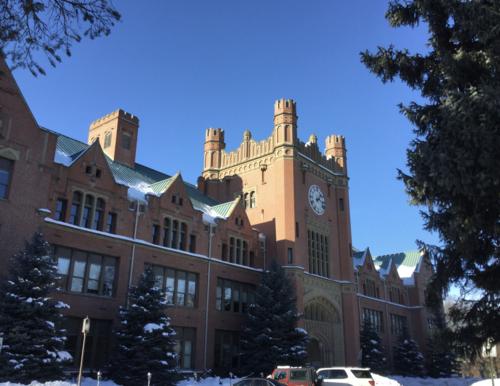
He basically earned his tuition by himself. During four summers, he spent all his time in the forest - cutting wood and dragging logs with a cableway. It was both tiring and dangerous.
He physically experienced what hard work meant.
It was that hardship that forced him to be extremely determined. Sweating among the bugs and broken branches, he only had one thought in his mind: when school started, he would study as hard as he could.
To put it simply, he had only two paths in front of him. After graduating from engineering, he could become an engineer; or he could accept his fate and become a lumberjack like everyone in his family.
This was the simplest and most effective motivation in the world.
When he graduated, he had job offers from Idaho and Oregon, but none of them were related to rockets.
Was he supposed to go to Boise to make disk drives for HP?
He flatly refused: "No way."
He packed his bags and headed to California to look for a job in the rocket field.
His father looked at him as if he were a madman.
"You already have job opportunities. What on earth are you doing?"
He only replied with seven words: "I just want to do this."
A person who wields a chainsaw in the forest and a person who adjusts the thrust beside the combustion chamber seem like two different species.
But in Mueller, they are the same pair of hands.
Since childhood, he helped his father repair logging trucks, do welding, and operate the lathe - these experiences gave him an indescribable intuition: he could tell what would work and what was nonsense just by touching it.
Rockets are the machines with the highest energy he has ever seen. He loves machines, loves speed, and loves that little bit of danger.
So he went to California.
A Hobby in the Garage and the Question 'Can You Build a Bigger One?'
When he arrived in California, he joined TRW - one of the top aerospace companies at that time - and worked there for fifteen years.

TRW Inc. (Thompson Ramo Wooldridge) is an American company that operates in the fields of aerospace, electronics, and automotive. TRW developed many American spacecraft, including Pioneer 1, Pioneer 10, and the Space Telescope.
The problem was that in such a large company, for a good idea to be implemented, it had to go through numerous approvals.
By the time the multi - level approval process was completed, the initial enthusiasm had long been ground to dust.
This meant that Mueller, sitting at his desk during the day, became more and more bored.
So when he got home at night, he would go into his garage and tinker with engines on his own. It was just a hobby, and he didn't expect it to lead to anything.
But this "hobby" grew bigger and bigger.
By early 2002, he had built the world's largest amateur liquid - fuel rocket engine in his garage: it weighed 80 pounds but had a thrust of 13,000 pounds.
The garage couldn't hold it anymore, so he moved it to a friend's warehouse.
It was in that warehouse that Elon Musk came to him.
That year, eBay acquired PayPal for $1.5 billion.
As the largest shareholder, Musk cashed out a large sum of money and then immediately plunged into something that everyone at that time thought was crazy: building rockets.
He walked around Mueller's engine and asked a question:
"Can you build a bigger one?"
Note that this question later became worth over one billion dollars.
What's even more interesting is that the engine that Musk took a fancy to was never actually used.
Mueller moved it back to his garage, and it's still sitting there gathering dust to this day.
But on May 1, 2002, he still joined Musk.
The first employee on SpaceX's payroll.
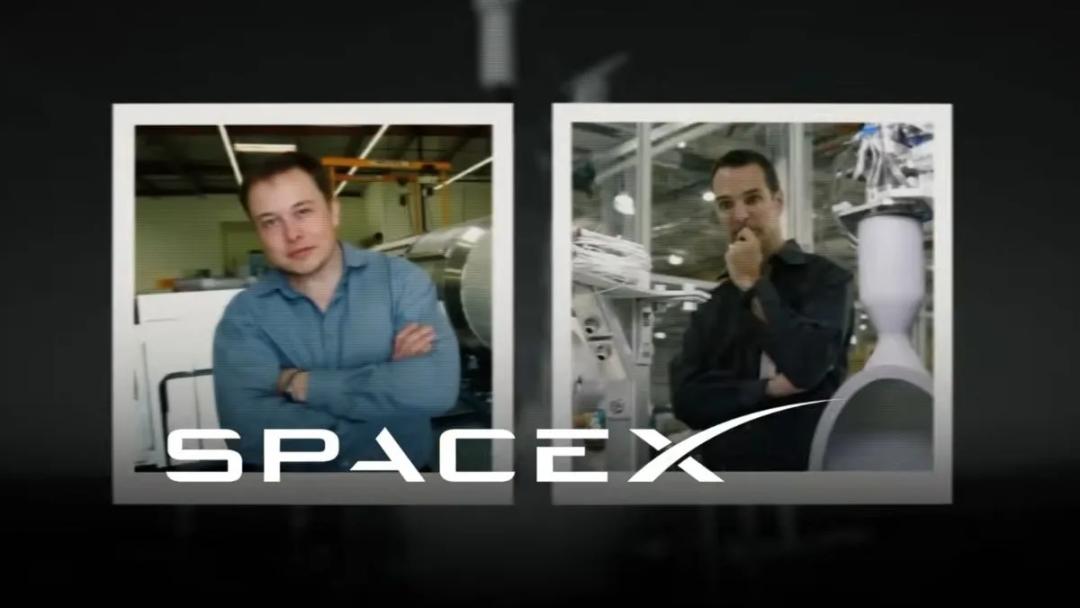
In the next eighteen years, he was going to do something that even national space agencies found headache - inducing.
Make the Rocket Fly Back
Launching a rocket into space and into orbit is one of the most difficult engineering feats on this planet. Before SpaceX, only national space agencies had achieved it.
And the most difficult part is often the engine.
This is exactly what Mueller tackled.
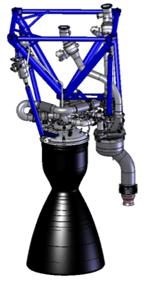
He started from scratch and designed the Merlin engine, which was installed on the Falcon 1, Falcon 9, and the Dragon spacecraft. According to Mueller himself, the thrust - to - weight ratio of the Merlin 1D is the highest among all rocket engines in history.
But these parameters are not the key.
What really changed the rules is another thing.
Before Mueller, rockets were the most expensive single - use items in the world. They cost tens of millions of dollars to build, and after one launch, the first - stage rocket would fall into the sea and could never be retrieved.
To put it exaggeratedly: every launch was like lighting a cigarette and then throwing away the entire lighter factory.
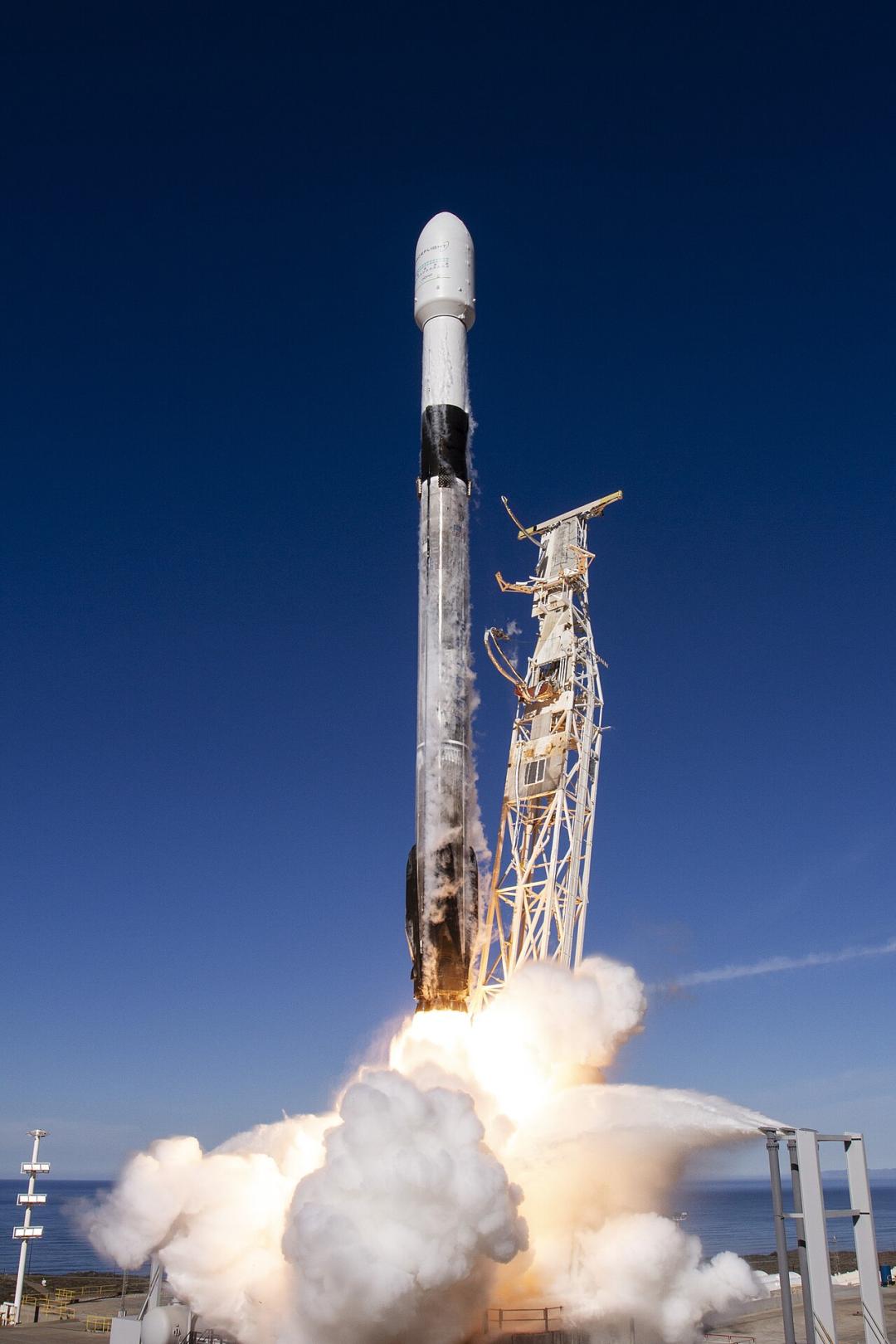
The Merlin engine made things different for the first time. It allowed the booster to re - ignite and decelerate by its own thrust and land vertically back on the ground steadily.
The rocket could be recovered.
These four words brought down the cost of going into space.
This is how the Starlink constellation covering the sky came into being.
This is how SpaceX, with a market value of 2.1 trillion dollars today, emerged. Tracing back, it all started with that engine.
He also initiated the development of the Raptor engine - the full - flow staged - combustion methane engine that powers the Starship.
Before him, no American company had ever succeeded in building such an engine.
What He Wants Is Never That 0.06%
In 2020, Mueller retired from SpaceX.
Logically, a person who single - handedly helped the company grow from a garage - built engine to a stage where rockets could fly back on their own should take a rest at this point.
But he couldn't stop. Less than a year after retirement, he founded a new company: Impulse Space.

The work they do sounds like science fiction: building "space tugs" to move satellites in orbit, moving them from where rockets