Volkswagen takes drastic measures: 50,000 job cuts and 3 million units production reduction. Has the golden era of German automakers come to an end?
"We were once at the peak of this industry, but we didn't make 'enough' money."
The summary made by Volkswagen CEO Oliver Blume at the annual general meeting revealed Volkswagen's helplessness.
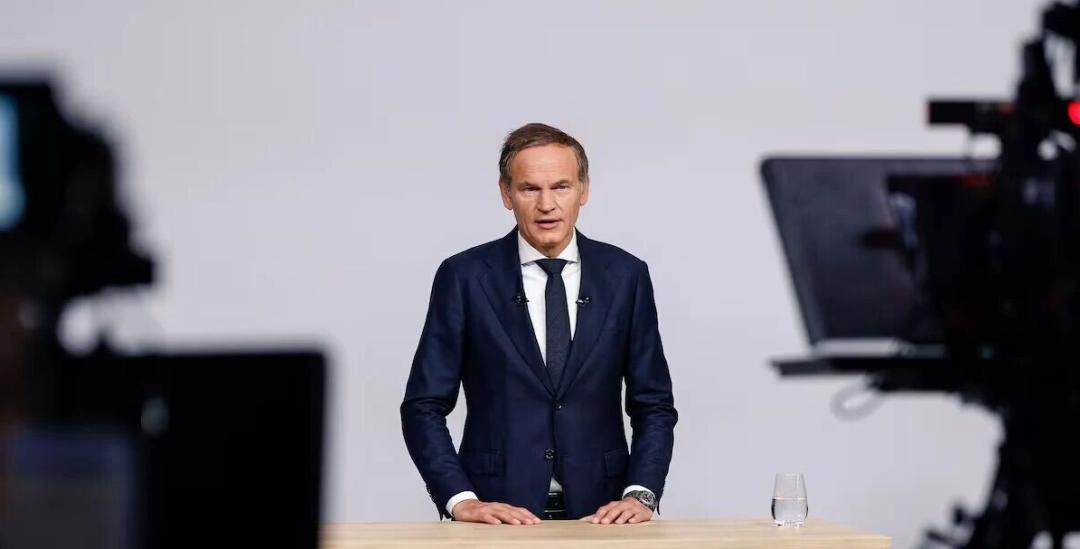
It only took Volkswagen one year to go from being one of the most profitable car companies in the world to needing to cut jobs to stop the bleeding.
In 2025, although the scale and revenue of the Volkswagen Group remained stable, its net profit plummeted by 53%, and the operating profit margin dropped to 2.8%, the lowest level since the "Dieselgate" scandal in 2016.
The stock price also slid from a peak of about 357 euros in 2021 to the current range of 105 to 111 euros, with the market value shrinking by nearly 70% from its peak.
In this situation, the annual general meeting, which used to be a time for voting on dividends and everyone happily "counting money," has evolved into a concentrated interrogation of the group's strategic execution and the underlying structure of corporate governance this year.
Under a series of soul-searching questions, Blume faced the reality and announced a more radical package of cost-cutting measures, from job cuts to production capacity reduction.
The measures are not enough
At the beginning of the question-and-answer session at the annual general meeting, an investor from Deka Investment fired a direct shot: "If Volkswagen doesn't completely readjust its strategy, it will face the risk of decline." She also made an analogy with the situation of VfL Wolfsburg being relegated to the 2. Bundesliga.
The implication is that if this company based in Wolfsburg continues on its current path, its "home-field advantage" will eventually be eroded. She also specifically pointed out the backwardness of the software business, believing that the long-term delays in digital layouts such as Cariad are dragging down the overall competitive rhythm of the group.
Some investors also criticized the serious lack of synergy within the group, describing a large amount of excess production capacity and inefficient structures as a millstone around Volkswagen's neck. At this time, Volkswagen must face the reality.
Indeed, since its sales volume was surpassed by Toyota in 2020, Volkswagen has held the position of the world's second-largest car company for six years, but its production capacity has never been adjusted down and has remained at 12 million vehicles. The fact is that in the past five years, Volkswagen's average sales volume has only been 9 million vehicles.
This means that every year, there are many idle factories, equipment, and workers, but the company still has to spend money.
"Our starting point was based on the global production capacity of 12 million vehicles per year planned before the pandemic and the more optimistic assumptions at that time. Now, we think the figure of about 9 million vehicles is more realistic, which is also the average production volume in the past five years," Blume said at the meeting.
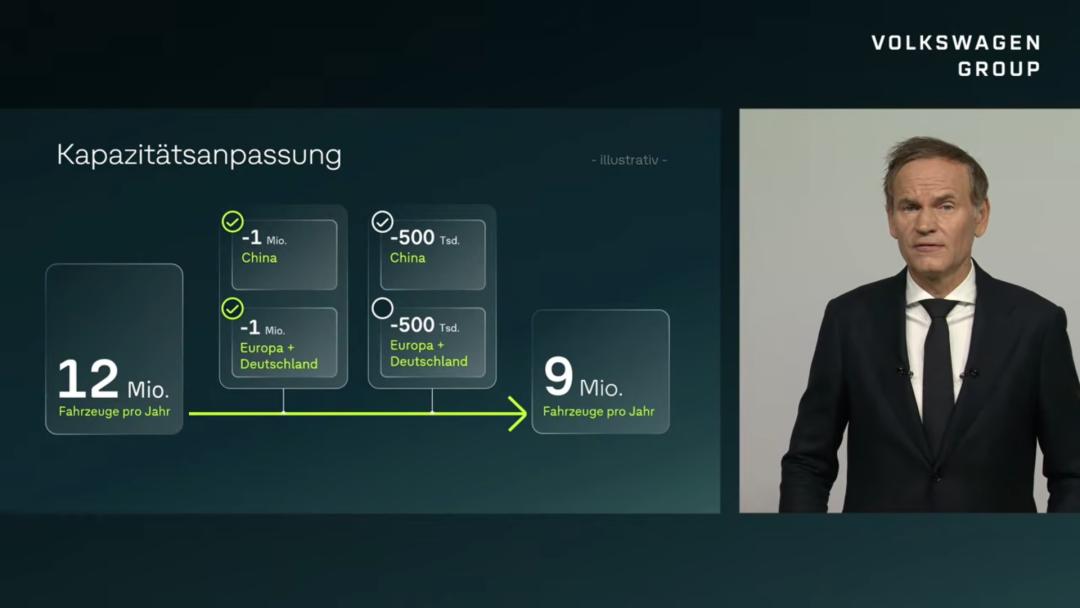
He clearly stated that Volkswagen will officially implement the production reduction plan, and the annual production capacity will be reduced from 12 million to 9 million vehicles.
The specific measures are being implemented step by step: Zwickau and Emden will each reduce from two production lines to one, the main factory in Wolfsburg will be reduced from four to two, and the production of the fuel-powered Golf will be moved to Mexico starting in 2027.
The "Transparent Factory" in Dresden also completely stopped its vehicle production business in December 2025 and was transformed into an innovation park led by the Technical University of Dresden. This is the first time Volkswagen has shut down a vehicle factory in Germany.
By the end of 2025, Volkswagen had reduced its production capacity by 2 million vehicles in China and Europe, and six vehicle factories had stopped operating. In addition, Volkswagen will further reduce its production capacity by 500,000 vehicles in China. The relevant plan has been finalized, but Blume did not disclose which production bases are specifically involved.
In addition, Ulrich Hocker from the German Association for the Protection of Securities Holders (DSW) said bluntly at the annual general meeting that Volkswagen's current stock price is appalling.
He said that there are no signs of the group's intrinsic value being restored in the stock price, and the so-called transformation still remains on paper. The subsequent question was even more pointed: "Is the current job-cutting effort enough, or are there more stringent reduction measures to come?"
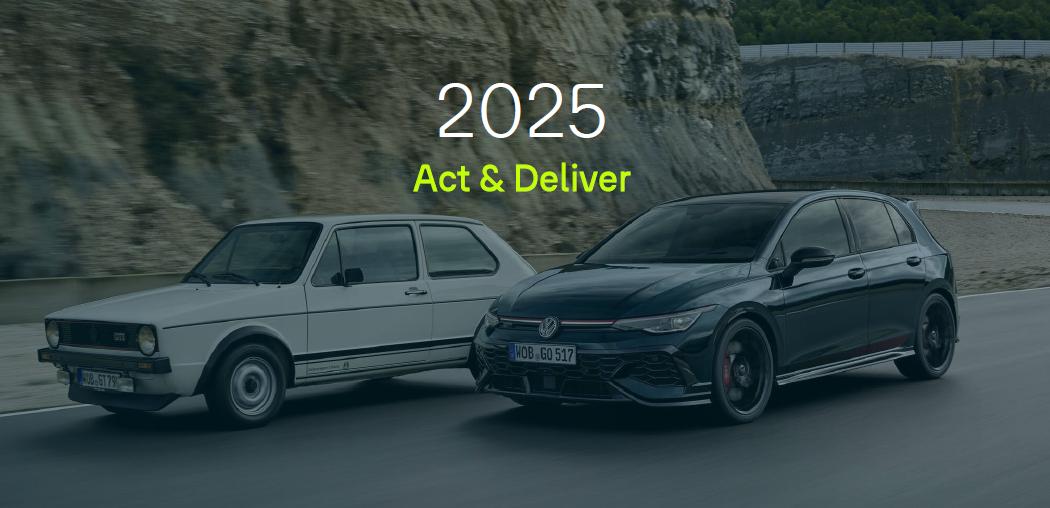
However, Blume doesn't think so. In his view, in the past three years, the Volkswagen Group has completed a fundamental strategic reshaping, a comprehensive upgrade of the technical architecture, and promoted the group's rectification. Not only has it fulfilled all its promises, but some core goals have even been achieved faster than originally planned.
The first-quarter report for 2026, released earlier, just verified the intensity of this reform. In the first quarter of 2026, through labor negotiations and personnel streamlining, Volkswagen cumulatively reduced indirect costs by about 1 billion euros, and the net cash flow of the automotive business also turned positive from -800 million euros in the same period last year.
Even though the effects of the reform are starting to show, in his view, it's still far from enough.
The job-cutting effort will be further intensified. The Volkswagen Group will cut 50,000 jobs by 2030, covering the Volkswagen, Audi, and Porsche brands and the software subsidiary CARIAD. Among them, 19,000 people will be laid off this year.
Blume said that more than 28,000 separation agreements for 2030 have been signed, mostly through "voluntary separation, early retirement, and natural attrition." The costs of factories at various production bases in Germany have decreased by more than 20% last year.
It's worth mentioning that Blume used a word in his speech: verbindlich, which means binding. This means that it's no longer just a plan but more like a hard target.
Counterattack during the retreat
Under the more radical cost-cutting plan, Blume put forward a performance target that surprised the outside world. He hopes that Volkswagen can achieve an operating profit margin of up to 10% by 2030.
The guidance for the operating profit margin this year is 4% to 5.5%, and the net cash flow is expected to be between 3 billion and 6 billion euros. The long-term goal still aims for a profit margin range of 8% to 10% and to enable the automotive business unit to obtain a higher net cash flow, accounting for more than 60% of the group's operating profit.
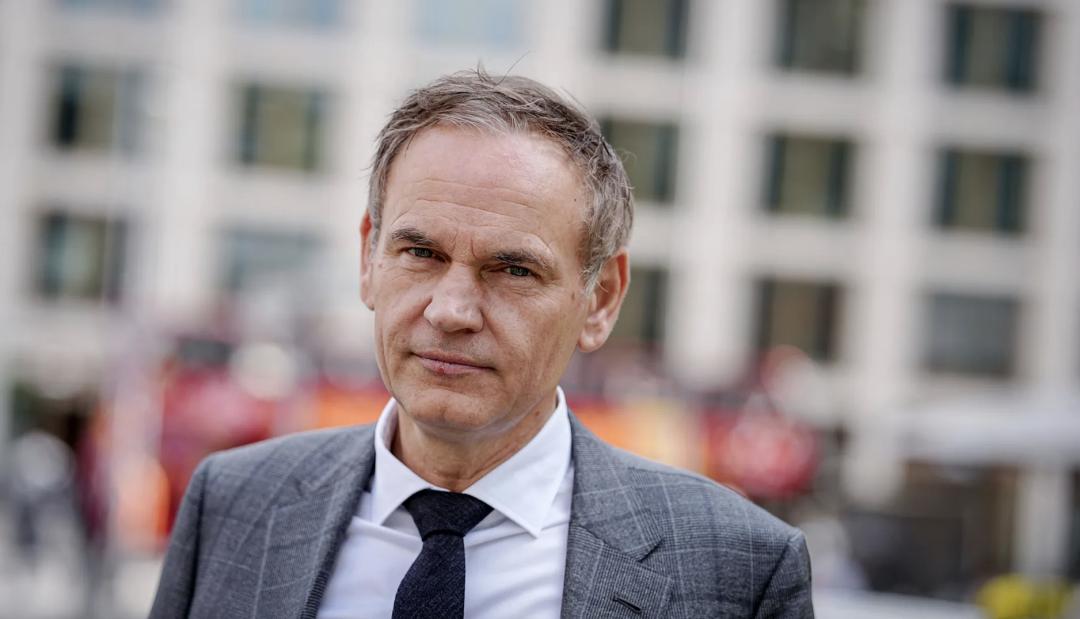
It should be noted that in 2025, Volkswagen's operating profit margin was only 2.8%.
In 2025, the Volkswagen Group sold about 9 million vehicles, with sales revenue of 321.9 billion euros, basically the same as the previous year. The operating profit was only 8.9 billion euros, a year-on-year plunge of 54%, hitting the lowest record in nearly a decade since 2016. The net profit after tax dropped from 12.4 billion euros in 2024 to 6.9 billion euros, a year-on-year decline of 44%, and the profitability shrank significantly.
It's not hard to see that although the company sold a lot of cars, the profit was gone.
Volkswagen attributed the sharp decline in profit to four factors: the impact of new import tariffs in the United States, which alone caused a loss of about 5 billion euros; the cost of Porsche's product strategy adjustment; exchange rate fluctuations; and the intensification of the global price war and product portfolio adjustment.
Even in 2026, the situation has not been reversed. In the first quarter of 2026, the revenue was 75.657 billion euros, a year-on-year decrease of 2.5%. The operating profit was 2.463 billion euros, a year-on-year decline of 14.3%. The vehicle delivery volume was 2.049 million, a year-on-year decline of 4%. The three core data of revenue, profit, and sales volume are still declining.
As we all know, all the actions such as job cuts, factory closures, and production reductions are essentially to get rid of the development dilemma of "weak revenue growth and halved profits." But how to improve the operating quality during the strategic contraction is the key variable for Volkswagen's future.
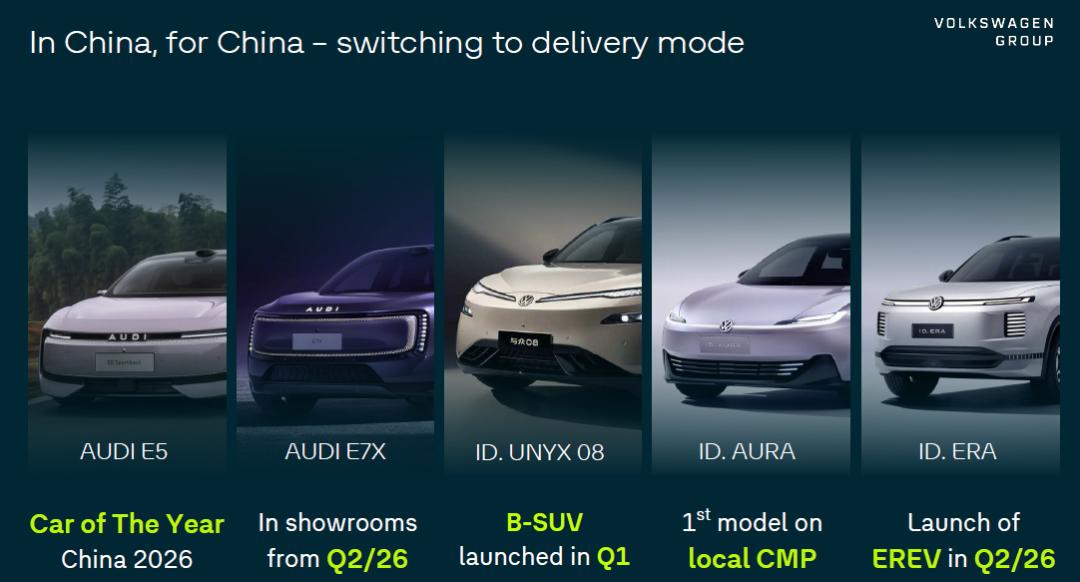
For example, Volkswagen is launching its largest-ever product offensive in China. In 2026, the group's various brands will launch more than 20 new energy vehicle models and plan to expand to about 50 models by 2030. It has also released the Agentic AI for All. Starting in 2026, new models based on the Volkswagen Group's CEA architecture will be fully equipped with it on the vehicle side.
As for the North American market, although Volkswagen lost 5 billion euros due to tariffs, in Blume's view, North America is actually Volkswagen's biggest growth opportunity in the future.
This is because in 2025, Volkswagen only sold 320,000 vehicles in the United States, far less than the more than 2 million vehicles sold by General Motors, Toyota, and Ford, which are among the top three in the market. For Volkswagen, this is also an opportunity for growth.
Blume emphasized at the annual general meeting that Volkswagen is about to revive the Scout brand in the United States, accelerate the localization of the Audi brand in the United States, and the joint venture with Rivian is also in progress. An electronic and electrical architecture for the European and American markets will be launched in 2027, with the goal of reducing the overall cost by 80%.
Cutting jobs to stop the bleeding is just the beginning. It remains to be seen whether these "counterattack" measures can translate into profits in the future.
This article is from the WeChat official account "SuperEV-Lab" (ID: SuperEV-Lab), author: Wang Lei. Republished by 36Kr with permission.