Three "Capital Magic" Tricks Behind the Skyrocketing Valuations of Zhipu AI and MiniMax
The "twin stars" of Hong Kong stocks' AI large models, Zhipu and MiniMax, have witnessed an extremely magical capital market trend.
These two enterprises have successively listed on the Hong Kong stock market and are simultaneously vying for a listing on the A-share Science and Technology Innovation Board. Coupled with the green light from the fifth set of policies of the Science and Technology Innovation Board, a series of combined measures have directly driven the stock prices to high levels.
The market trend is so outrageous that it's blinding: Zhipu's revenue in 2025 was only 724 million yuan, and MiniMax's revenue was only in the 500 million yuan range.
These two enterprises, which have been incurring huge losses for years, have managed to support a market value of hundreds of billions, frequently surpassing Xiaomi and JD.com during trading sessions. The market sentiment has become completely fanatical, and people are even shouting slogans like "catching up with Alibaba in one week and surpassing Tencent in two weeks."
Looking back at the 30 - year history of the Chinese Internet, there are already precedents for this kind of hype where small - scale revenue drives sky - high market values.
Back then, LeEco over - valued itself through the PPT narrative of "ecological synergy." Today's AI twin stars may just be a repetition of the old story in a new package.
The bustling market is just an illusion.
Peeling off the essence of the bubble, this round of AI valuation myth doesn't rely on technological breakthroughs or performance implementation. It's purely a capital magic created by the superposition of policy windows, chip manipulation, and double - standard valuations.
Behind the carnival, three hard - core gaps and an extreme industry involution have already doomed this hype to be unsustainable.
I. Three Capital Magics Create Sky - High AI Market Values
This round of sharp rise is not based on market value pricing but a precise capital routine. Three layers of magic are superimposed, creating an outrageous AI market value spectacle out of thin air.
The first magic: Hitting the policy and domestic substitution window periods, losses are completely tolerated.
In previous years, enterprises like Zhipu and MiniMax, with annual revenues in the hundreds of millions and annual losses in the billions, would never have reached the threshold of a market value of tens of billions.
Now, the AI track has the right timing. The entire industry has entered the era of intelligent agent implementation, and MaaS has become the core foundation for industrial digitalization, completely opening up the market's imagination space.
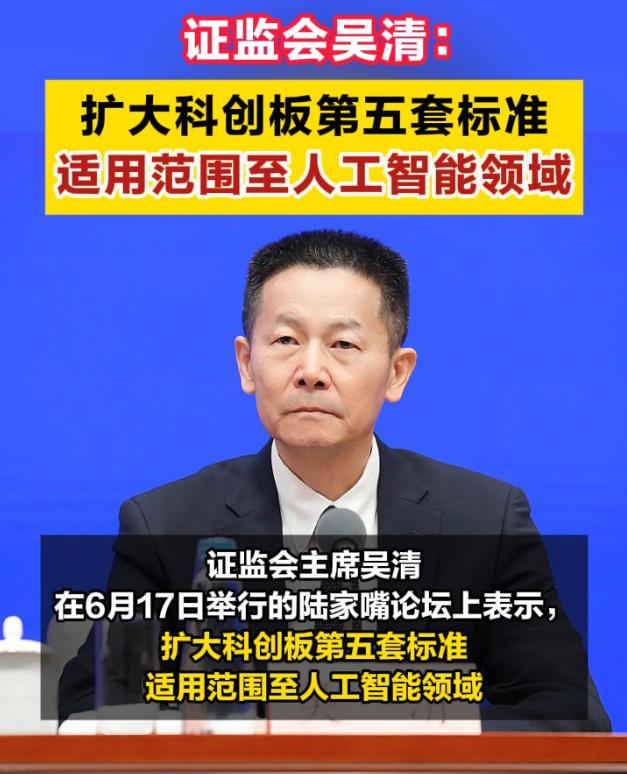
More importantly, the fifth set of standards of the Science and Technology Innovation Board has issued an exclusive "immunity card" to large - model enterprises, exempting them from profit assessment and only focusing on technology and R & D.
Coupled with the restrictions on overseas top - tier AI models and the prominent gap in high - end domestic services, Zhipu's GLM - 5.2 has become a high - quality domestic alternative.
What the capital is hyping is not just the growth story of AI but also the risk - avoidance demand of the digital supply chain. The triple dividends of policy, industry, and geography have directly smoothed out the enterprises' loss flaws and forcibly raised the industry's valuation ceiling.
The second magic: Extreme scarcity + ultra - low floating shares create a false liquidity boom.
There are only these two pure general large - model listed targets in the Hong Kong stock market, with no alternative options.
Put simply: There are only two rare donkeys in the whole village, and everyone wants to buy them, but the owner only puts half a donkey leg up for sale.
At the beginning of Zhipu's listing, the floating shares were only 1.5%, and the vast majority of the chips were firmly locked by cornerstone shareholders and primary VCs.
With the scarcity of targets and the exhaustion of circulation, without a huge amount of funds, a small amount of south - bound funds can drive the stock price to soar. The so - called grand occasion of crushing giants and having a market value of hundreds of billions is not the real value of the enterprise but just a false prosperity piled up by the lack of liquidity.
The third magic: Double - standard valuations are taken to the extreme, and the pricing of new and old enterprises is completely unequal.
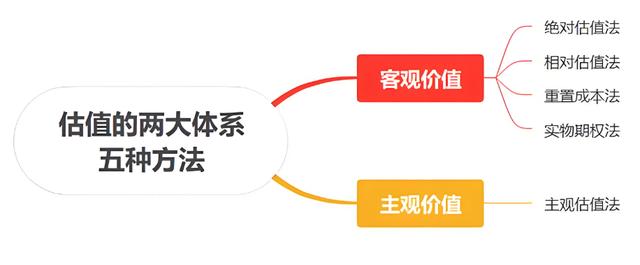
The most absurd truth in the current capital market is the two completely separate valuation logics.
New AI upstarts (Zhipu): In 2025, its revenue was 724 million yuan, and the net loss was 4.718 billion yuan. For every 1 yuan earned, it burns 6.5 yuan. The P/ARR valuation is 128 - 270 times, and the price - to - sales ratio is approaching 890 times, equivalent to over - drawing the revenue of the next 45 years in advance.
The global SaaS leader (Salesforce): As the industry's top benchmark, its price - to - sales ratio was only 20 times during the peak bubble period. In contrast, the valuation bubble of domestic AI is extremely outrageous.
Established Internet giants (Alibaba/Tencent/Xiaomi): The market provides strict pricing, only giving a static price - to - earnings ratio of more than ten times. Even if they are making huge profits and have abundant cash flows, as long as the business growth rate slightly declines, they are immediately labeled as "stalled growth and reaching the ceiling of the track."
On one hand, there is the "dream valuation" that over - draws decades of the future, and on the other hand, there is the "performance valuation" that calculates every penny. This set of asymmetric rules is the core lie behind the seemingly dominant position of new AI upstarts over giants.
II. Three Real - World Gaps Burst the AI Valuation Bubble
Capital routines can create gods in the short term, but they can't deceive the market in the long run. Three hard - core real - world gaps will eventually pierce all emotional bubbles and let the valuation return to its original source.
The first gap: A serious mismatch between revenue and market value, and all are castles in the air without an ecological foundation.
The current market value of hundreds of billions of Zhipu and MiniMax is purely piled up by market sentiment and is completely out of touch with the real industrial scale.
Zhipu and MiniMax have been incurring continuous losses and have no native ecosystems such as social, e - commerce, and traffic to support them. Their income only comes from scattered government and enterprise orders and basic API calls, with a single monetization path and extremely weak self - hematopoietic ability.
In contrast, Xiaomi, JD.com, Alibaba, and Tencent have revenues in the hundreds of billions and stable cash flows in the tens of billions and have a complete industrial closed - loop. Market value ultimately needs performance support, and the valuation purely based on story - telling is doomed to be a rootless bubble.
The second gap: The major test of share unlocking in July is approaching, and it's time for the ultimate reveal.
VCs and cornerstone investors in the primary market never do charity. The only purpose of investing at a low cost is to cash out at a high price.
The bloody precedent of the "Four AI Dragons" is there: They reached their peak upon listing and were trampled upon when the shares were unlocked. On the first day of share unlocking, SenseTime's stock price plummeted by nearly 50%, and its market value of 200 billion yuan evaporated overnight.
In July this year, Zhipu and MiniMax will simultaneously face the first large - scale share unlocking, and a large number of low - cost chips will be ready to flee.
The more crazy the stock price is hyped now, the more substantial the floating profits of institutions are, and the more severe the subsequent selling pressure will be. The false market trend may collapse at any time.
The third gap: The A - share market doesn't nurture permanent stories, and performance must be realized in 2026.
The nature of A - share funds is straightforward and cruel: They come fast, hype fiercely, and leave in a hurry.
Retail investors and hot - money speculators may praise you as a "sweetheart" today, but once you can't deliver solid profit reports, they will trample you into a "hag" tomorrow.
The industry consensus is set: 2026 is the ultimate turning point for the AI industry.
The market will completely bid farewell to concept - hyping and story - telling and enter a hard - core assessment period focusing on implementation, profit, and return. If an enterprise can't reduce losses, make profits, and secure solid orders within one or two years, the gravity of valuation correction in the A - share market will be far more cruel than that in the Hong Kong and US stock markets.
III. The Final Industry Game: The Carnival Can't Hide the Extreme Underlying Involution
After removing the cloak of capital hype, the large - model track has long ceased to be a simple technological competition and has entered an all - around final game of scenarios, ecosystems, and cash flows.
The current market - value carnival covers up the fierce underlying involution in the industry.
Although they are both AI twin stars, the business models of the two enterprises have already diverged, with their advantages and disadvantages clearly distinguishable. However, the capital is blindly hyping them up uniformly, which shows the irrationality of the market trend.
Zhipu takes the high - end B - end premium route. After raising the API price by 83%, the call volume soared by 400%, trying to seize the industry's pricing power; MiniMax focuses on low - price traffic positioning, directly reducing the model price by 50% to seize the market, and is deeply involved in homogeneous involution, with its profit space continuously compressed.
What's even more fatal is that the dimensionality - reduction strangulation by Internet giants is already at the door.
ByteDance's Doubao, Alibaba's Tongyi Qianwen, and Tencent's Hunyuan, backed by the top - tier native traffic of Douyin, Taobao, and WeChat, have directly slashed the API prices. The unit price of a large number of basic model Tokens has been pressed down to "a few cents per million," and the price of some basic services has been directly reduced by 99%, or even made permanently free.
The giants can afford to lose. The stable cash flows from e - commerce, advertising, and cloud services are enough to fill the losses of AI business, and they can crush startups through their ecosystems.
However, Zhipu and MiniMax have no native ecosystems to protect them and also face the dual pressures of restrictions on overseas high - end chips and high domestic computing power costs. The bottomless price war of giants combined with their own high burden is rapidly squeezing the survival space of the two startup stars.
History always rhymes. Ten years ago, LeEco hyped up a market value of hundreds of billions through the PPT story of "ecological synergy"; ten years later, the AI twin stars are repeating the same kind of market - dream - rate carnival with the new narrative of "intelligent agents."
History doesn't simply repeat itself, but it will surely lead to the same result: Capital bubbles that are divorced from performance and cash flows will eventually burst.
Insight
This round of sharp rise of the AI twin stars has nothing to do with technological breakthroughs or qualitative implementation. It's just a short - term capital spectacle spawned by the superposition of small - cap scarcity, the track's upswing, and the belief in the AI industry.
Even if Zhipu, MiniMax, etc. successfully list on the A - share market and complete the A + H dual - platform layout, and pull up another wave of premium in the short term, they can't change the underlying logic of the industry.
In the second half of the large - model era, what matters is never how delicate the PPT is or how perfect the industry story is, but who can maintain a longer - lasting cash flow and build a more stable industrial barrier.
The long - term industrial trend of AI is beyond doubt, but the capital market trend piled up by emotions will ultimately escape the fate of "watching the building rise and watching the building fall."
The market value hyped up by the upswing will disappear like the wind. Only the implementation scenarios, hard - core technologies, and positive operating profits are the ultimate moats for technology enterprises.
Facing this feverish AI valuation carnival, investors must stay sober.
Don't fantasize that startups can overtake Internet giants in a curve. Just review the K - line chart of LeEco before its delisting.
The most expensive tuition in the capital market has never been being trapped by chasing high at a high price, but mistaking the short - term noise of the era for the permanent gospel of the industry.
(This article is an independent industry observation and does not constitute any investment advice)
This article is from the WeChat official account "Zhang Dongwei", written by Zhang Dongwei and published by 36Kr with authorization.