There are so many Indian programmers, why can't they save India's Internet industry?
Is India's software outsourcing industry about to be completely wiped out?!

When it comes to India's industries... people may not have a very good impression. But seriously, in the field of the Internet industry, India has indeed done quite well.
Looking at the world, India's software outsourcing industry is the undisputed number one in the world. This industry creates more than $150 billion in export revenue for India every year, directly employs more than 4 million people, and indirectly drives more than 10 million jobs in the upstream and downstream industries.
The combined market value of the three giants, TCS, Infosys, and Wipro, once exceeded $400 billion.
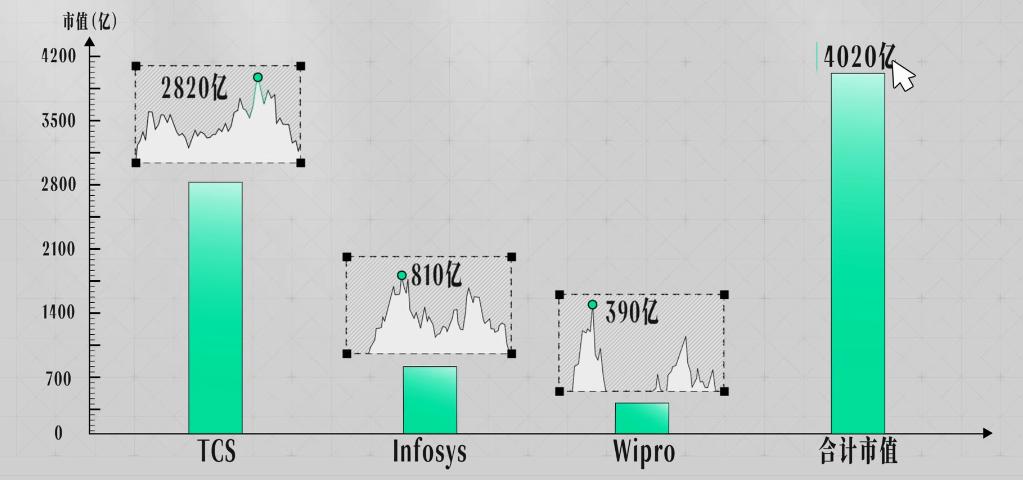
And the entire scale of India's Internet economy has reached the third place in the world, only after China and the United States.
But this year, the overall industry index of this sector has fallen to its lowest point in three years.
A report from Bloomberg even bluntly pointed out that with the development of AI, India is becoming the biggest loser.
Hello everyone. Today, let's talk about whether India, the "world's office", is really going to be hit hard by AI?
This year, TCS, India's largest IT service company, carried out a large - scale layoff, axing 12,200 employees at once.
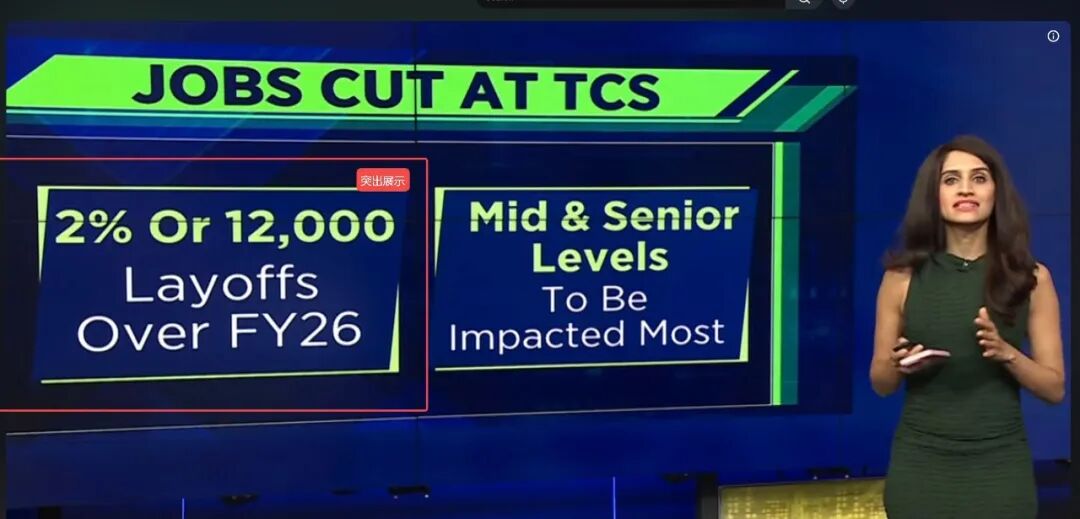
The recruitment targets of several other giants are also shrinking simultaneously —— Infosys, Wipro, and HCL are no exception.
If you have a little knowledge of the scale of this company, you'll find this number abnormal. TCS is the world's second - largest IT service provider, only after Accenture. It has more than 600,000 employees, with an annual revenue of nearly $30 billion and a market value that once exceeded $190 billion, higher than that of Goldman Sachs.
The starting point of India's software outsourcing industry
In fact, India's Internet industry started a little earlier than that of China.
Back in 1991, India was experiencing an unprecedented economic crisis. Its foreign exchange reserves were on the verge of exhaustion, inflation was soaring, and the traditional "license system" made the entire industrial system malfunction.
The Indian government, which had just launched economic reforms, was eager to seize an emerging industry that could quickly generate foreign exchange and bypass the country's weak industrial foundation.
—— The Internet.
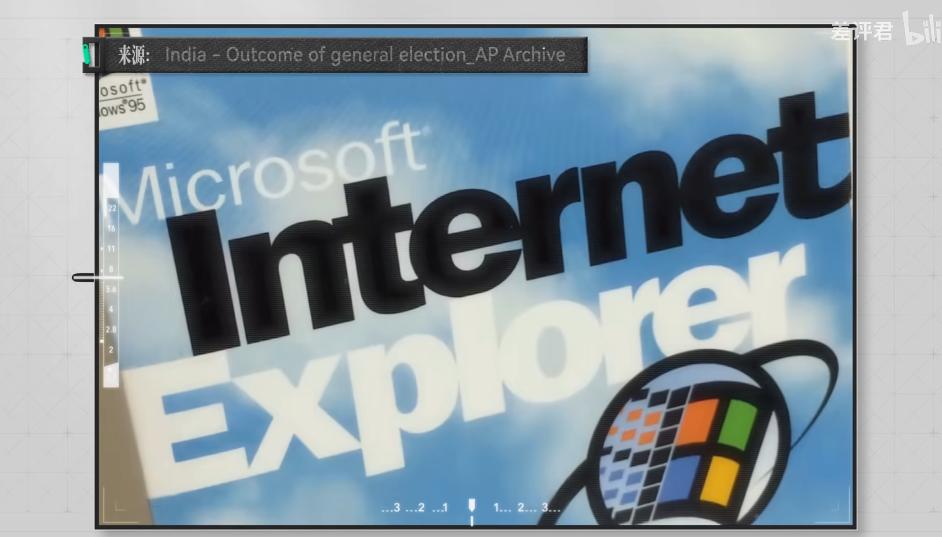
Soon, a once - in - a - lifetime opportunity in the literal sense came.
At that time, global enterprises were facing the "Y2K millennium bug" problem. Many old systems used only two - digit numbers to represent the year. For example, 1999 was written as 99, and in 2000, the system might misjudge it as 1900.
European and American enterprises needed a large number of programmers to check and modify old codes.
This work was very tedious, with a relatively low technical content, but the demand was huge, and the time window was only one or two years. The hourly wage of local engineers in Europe and America was simply overkill for this kind of work.
Indian companies smelled an opportunity.
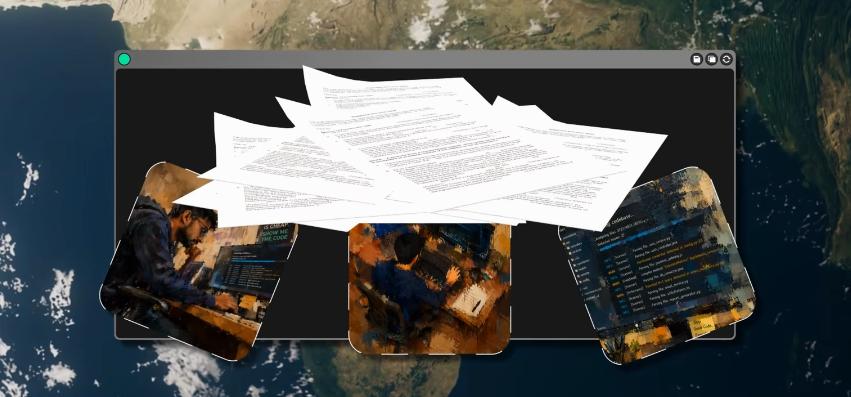
A group of Indian IT enterprises led by TCS, Infosys, and Wipro split into two teams. Some people went to the customers' sites to interface with the IT departments of banks, insurance, telecommunications, and other companies, understand business processes, and obtain system permissions. The main force stayed in places like Bangalore and Mumbai, responsible for scanning codes, making modifications, and conducting tests.
Due to the time difference, customers usually put forward requirements during the day, and the Indian team continued to work at night. By the time European and American customers went to work the next day, the repair results were already on the table.
There was also a shortage of programmers in the United States at that time. In order to recruit technical personnel,
The quota of H - 1B visas was first increased from 65,000 to 115,000, and later to 195,000.
A large number of Indian engineers took this opportunity to come to the United States. Together with the offshore teams in India, they formed the "on - site communication + offshore delivery" model.
This was the first time that Indian software companies entered the core IT systems of European and American enterprises on a large scale, directly accessing the most basic codes and data of Western big companies.
According to subsequent statistics, in this wave alone, Indian companies earned about $2.5 billion. But this money was not the most important thing. The most important thing was trust.
After the Y2K project ended, European and American enterprises found that the Indian teams were actually quite useful.
Good job, young man. We'll come to you next time!
The glorious era
After the Y2K project ended, India's outsourcing did not disappear. Instead, it continued to grow. The reason was very simple: Old systems won't automatically become new just because the year 2000 has passed.
After enterprises solved the year - related problems, they found a bunch of new problems:
Should the old mainframe system be migrated to Unix or Windows Server?
Should the software system be switched to Oracle or SAP?
Should the financial system be connected to ERP?
Should the customer service system be connected to CRM?
Should the insurance claims process be digitized?
In short, there were many troubles, and all of them could be handed over to Indian companies.
Moreover, the most crucial invention of Indian companies was the 【onsite - offshore model】, which was the "on - site + offshore" global delivery model mentioned before.
In the document submitted by Infosys to the US SEC in 2003, the advantages of this model were described very clearly:
It could break a project into components and execute them simultaneously at the customer's site and in India's global development centers; reduce costs and shorten the delivery cycle through cross - time - zone work; and sell services to regions with higher profits while placing production in regions with lower costs.
After doing long - term maintenance work for a long time, customers would further say: Since you are already maintaining my system, you can also develop new functions!
Since you can do development, you can also handle testing!
Since you...

In the end, Indian companies were no longer just suppliers but became part of the IT systems of many European and American enterprises.
Meanwhile, in India, the government strongly supported top - tier institutions like the Indian Institutes of Technology and encouraged private capital to enter the field of vocational education. Private training institutions and numerous private engineering colleges expanded rapidly, sending a large number of "plug - and - play" standardized programmers to the industry every year.
These young people could speak English, had basic programming skills, and accepted relatively low salary levels globally. After all, the salaries of Indian programmers ranked second - last in the world, only higher than those in Nigeria, but it was already a decent middle - class income in India.
With policies, talent, and price advantages, the engine naturally started easily.
Since then, India's software outsourcing industry has taken off officially.
Outsourcing industrialization, but with frequent accidents
However, it's not difficult to find that India's model has several distinct characteristics.
First, it charges by the number of people and the number of days. An engineer charges customers thousands of dollars a month, and Indian companies make a profit from the price difference. In essence, this business model doesn't sell products but sells labor. Your growth depends on how many people you hire and how many of them you "rent" out.
Second, it has extremely high customer stickiness. Once you hand over the codes, architecture, and operation and maintenance of your core system, it's very difficult to take them back. The cost of changing suppliers is huge, and the cost of making mistakes is even greater. So, once you sign a customer, you are often bound to them for ten or twenty years.
Third, it has almost no self - owned products. Indian companies rarely develop their own software platforms or SaaS products. Because their core competitiveness is not "what I have" but "what I can undertake for you".
Since this model essentially sells labor and charges by the number of people, business growth naturally tends to rely on increasing the number of people.
The three major Indian IT companies have more than 1 million employees in total.
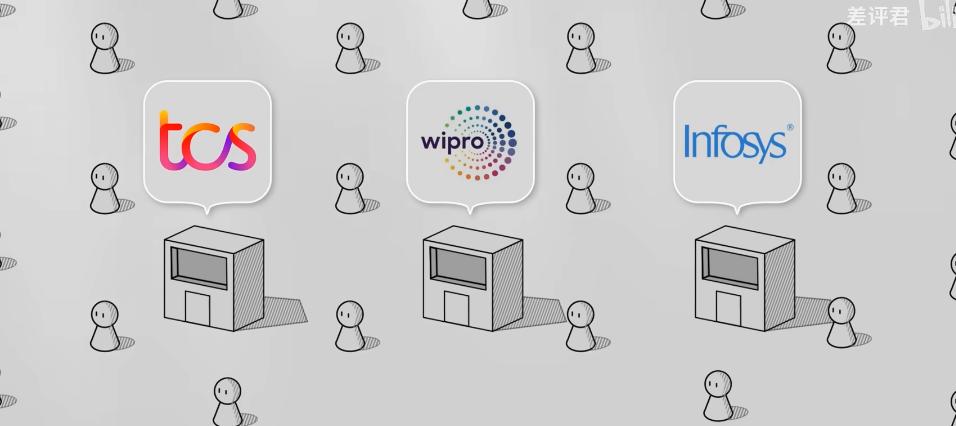
Managing the code output of 1 million people and controlling the quality is a very real challenge.
Moreover, there is sometimes a phenomenon of multi - layer outsourcing in Indian software companies. That is, one job is outsourced from A to B, and B outsources it to C. Through layers of subcontracting, an important project may end up in the hands of a group of novices.
This phenomenon even has a term called "cascading employment".
As a result, accidents are inevitable, and some of them are extremely serious.
In May 2017, British Airways had an epic IT failure.
At Heathrow and Gatwick airports, a large number of flights were directly cancelled, and about 75,000 passengers were left stranded at the airport.
The cause of the accident was that the power supply was accidentally cut off during the maintenance of the data center, resulting in the paralysis of the entire computer system.
British Airways strongly denied it, but the British trade union GMB didn't buy it. They publicly came out and said: Ultimately, this was because British Airways had laid off a large number of local IT employees before and transferred the relevant work to India!
Although the final investigation report is still a mess with different opinions, the debate about "whether Indian outsourcing is reliable" was completely detonated in that incident.

In 2025, the firewall upgrade of Optus in Australia failed, resulting in a large number of emergency calls not being able to get through and indirectly causing multiple deaths.
After investigation, it was found to be related to India again!!
In short, India's software outsourcing makes the news from time to time, and the number of accidents, big and small, over the years is countless.
So, the question is: Why do European and American enterprises still use Indian outsourcing despite so many accidents?
The answer is very simple.
Because most outsourcing projects are not about building rockets but are long - term accumulations of dirty and tiring work.
Testing, maintenance, migration, compatibility adaptation... The technical content of these jobs may not be very high, but they are extremely tedious, consume a lot of manpower, and will never disappear. As long as your core system is still running, someone has to keep an eye on it every day.
India not only has a large number of programmers but also has strong organizational capabilities for these programmer labor forces. They charge low prices and can generally speak English, which makes it relatively convenient to communicate with customers.
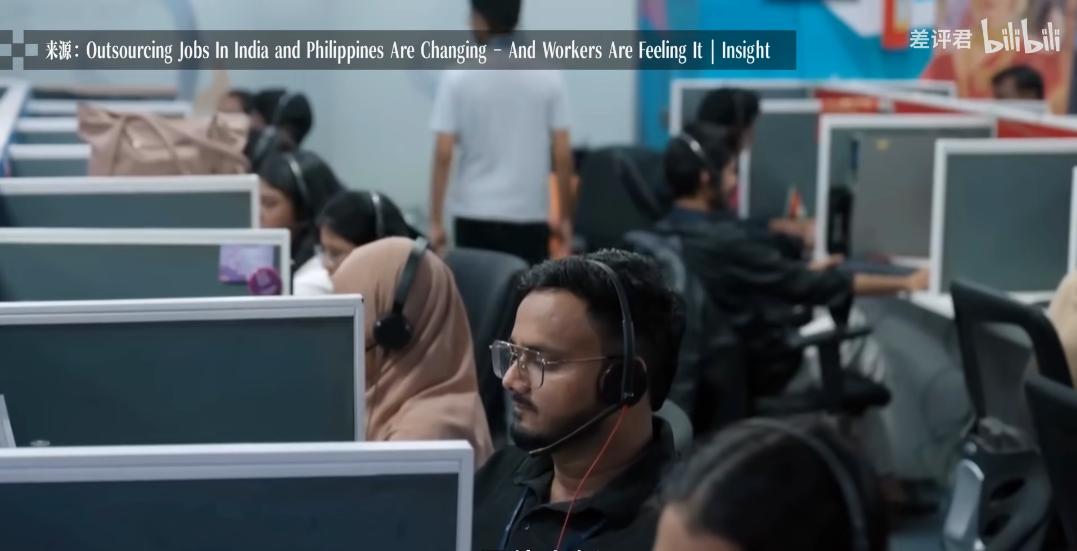
So, only India can supply software labor to global enterprises on a large - scale and standardized basis, just like supplying water and electricity.
So, the real psychological activity of enterprises is like this: I know that outsourcing will have communication costs and quality risks that may occur from time to time, but if I don't use India, I can't even find anyone to do the work.
Of course, there is also a very important but not so easy - to - say reason: Although in the long run, entrusting the core system to a low - cost team thousands of miles away for maintenance may have risks far greater than the benefits, at least