AI Experiment of a 21-year-old Established Enterprise Service Company: Let the Agent Run Through the Entire Process
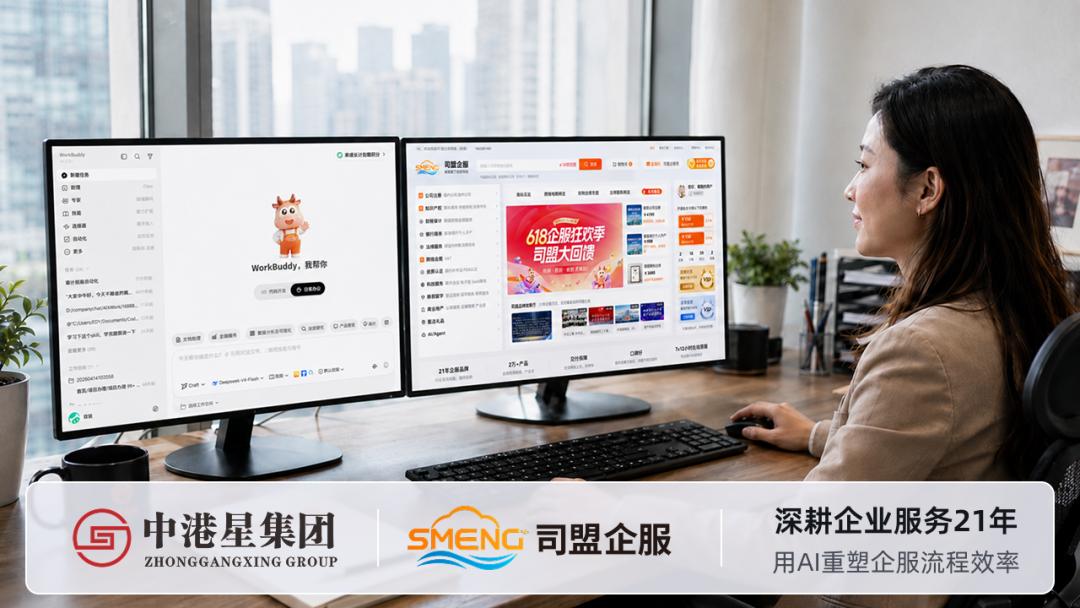
Enterprise services is an industry with a "heavy" process.
Helping clients register companies globally, obtain qualifications, and ensure compliance. When an order comes in, it may involve more than a dozen documents and three or four rounds of reviews. Simeng has sufficient professional knowledge, but what slows down the efficiency are the daily inevitable basic actions: repeatedly collecting, modifying, and confirming materials, identifying and entering each transaction in the cash flow, and downloading, categorizing, and replying to each email.
Yuan Lin, the president of Zhonggangxing Group, said, "In the past, a large part of our costs actually went into the process of repeatedly communicating and modifying materials until the materials submitted by clients were qualified." This is also the most awkward part of the enterprise services industry: services must be standardized, but the delivery process is full of non - standard scenarios, and many judgments can only be made based on experience.

Yuan Lin, the president of Zhonggangxing Group
Simeng Enterprise Services' approach is: first let AI replace the standardized professional services, and then let professional employees make judgments and decisions.

Integrate AI for all employees into the annual plan
Simeng Enterprise Services is an integrated enterprise services platform under Zhonggangxing Group. Its services cover more than 10 professional fields, including global company registration, qualification handling, financial and tax auditing, intellectual property, legal services, banking services, and cross - border compliance. Since 2018, Simeng Enterprise Services has been undergoing digital transformation and has self - developed a full - process business system, which is many years earlier than its peers. In Yuan Lin's words, "When the wave of AI came, we were actually the first to sense the changes."
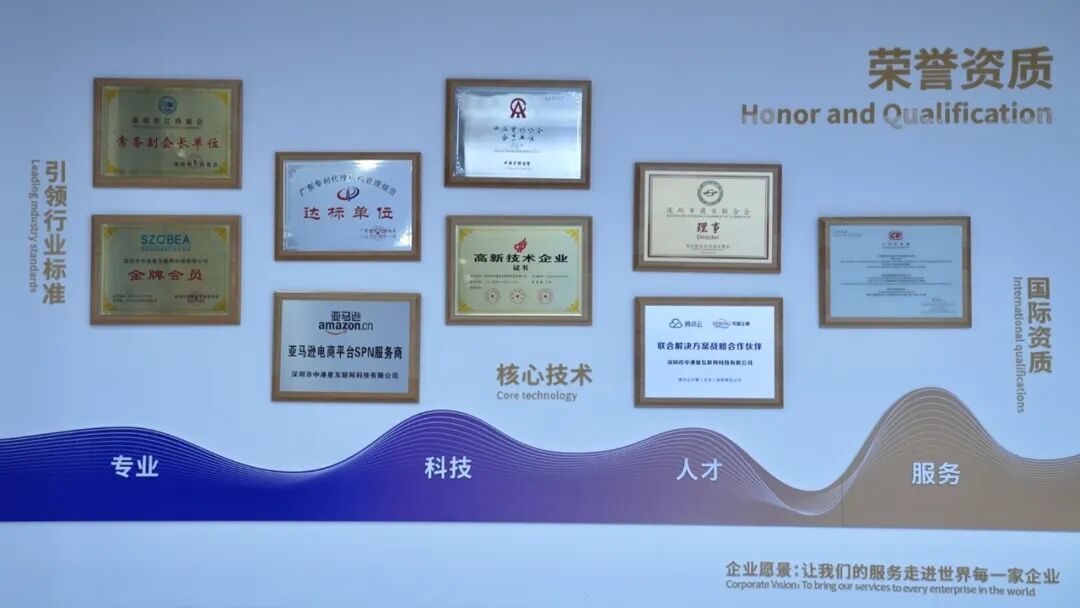
In the fiscal year 2026, Simeng explicitly wrote the application of AI into the company's annual plan and set three goals: each position should be enhanced with the support of AI, use agents to handle various work processes, and transform the existing processes with the empowerment of AI.
Moreover, all employees are required to implement it.
This is just the first step. In the enterprise services industry, when putting agents into real business processes, a core problem must be solved: whether the results can be reviewed and whether the risks can be controlled.
Ye Jian, the director of Tencent's Smart Cultural Tourism and Agricultural South China Solutions, has dealt with many enterprises that "install but don't use". His summary hits the nail on the head: "Raising shrimps personally is a bit like raising a small pet. We allow it to make mistakes and have problems at any time. However, when an enterprise raises shrimps, it is like raising a digital employee, and it has to be responsible for compliance, risk control, etc."
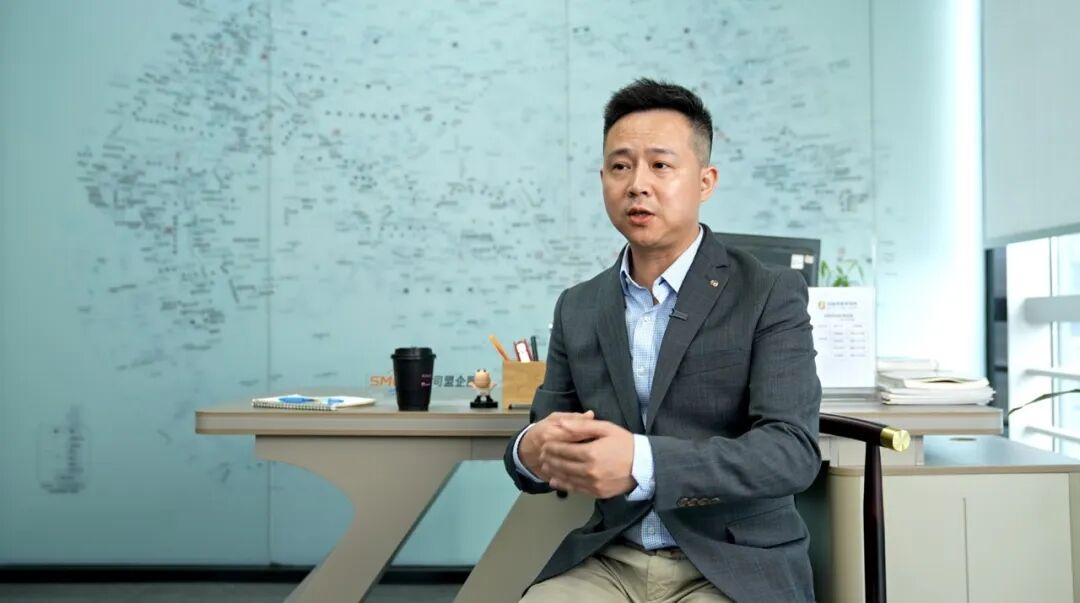
Ye Jian, the director of Tencent's Smart Cultural Tourism and Agricultural South China Solutions
Raising AI as a pet and treating AI as a work partner are two different things.

What tasks can be assigned to agents?
Simeng has summarized a set of judgment criteria internally to decide which scenarios should be connected to agents first.
In Yuan Lin's view, an agent can be useful only when two conditions are met. "First, its process is clear. Second, what to execute at each step is also standardized."
According to this standard, they found the first scenario: email classification. Every morning, the first thing Simeng's employees do when they go to work is to process emails from official institutions in various countries - the European Union Intellectual Property Office, the Hong Kong Companies Registry, the United States Patent and Trademark Office... Different mailboxes and different attachments need to be downloaded, classified, and put into corresponding folders. This action is not complicated, but it takes at least two hours to process hundreds of emails.
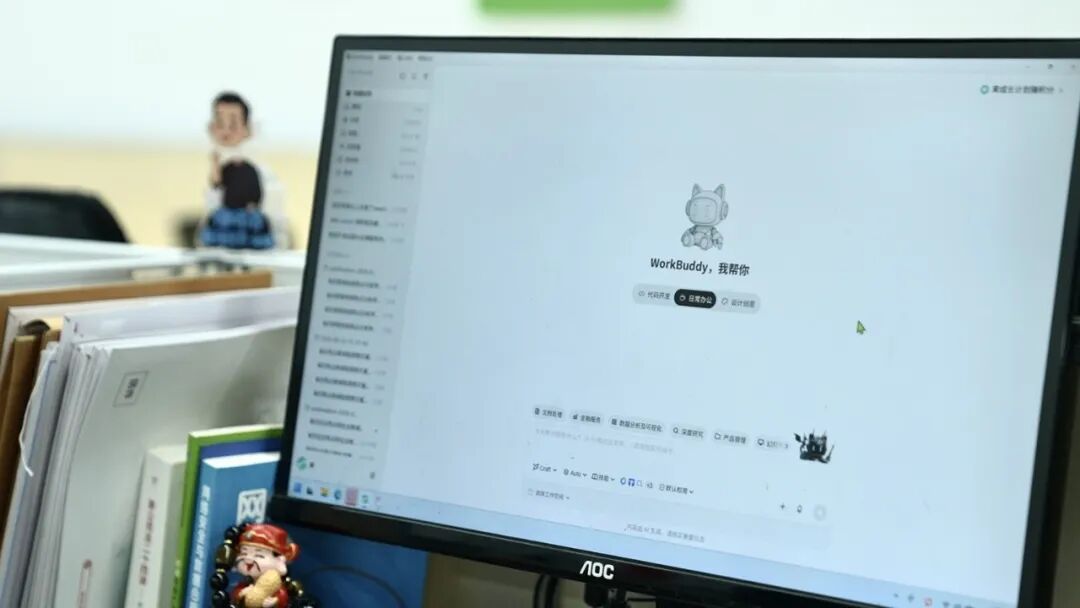
After connecting to WorkBuddy, the agent can log in to the mailbox before employees go to work and complete the tasks of downloading, classifying, and archiving attachments. By the time employees sit at their desks, the results are already available.
Auditing is another typical scenario.
Even if a client has only 5 million in revenue, if the unit price is 50 yuan, there will be more than 10,000 transactions. Each transaction needs to be identified, entered, and made into a report, and then handed over to an accountant for auditing. In the past, this "accounting" process "took at least a week". Now, Simeng has developed a skill in WorkBuddy to specifically identify the cash flows of various banks. The tasks of identification, organization, and form - filling are all automatically completed, and the accountant receives a well - organized financial report.
Behind this change is a several - hundred - fold increase in efficiency. Currently, Simeng still retains the manual verification process. The next plan is to let another agent do the preliminary verification, and then let humans make the final confirmation.
The third scenario is the review of global company registration. Simeng's business covers more than 100 countries, and the laws and regulations of each country are different and constantly updated.
In the past, compliance experts had to manually verify: whether the proportion of the ID card was compliant, whether the signature was real, whether the signatures on the passport and the power of attorney were consistent, and whether there were signs of PS - these judgments could only be made by human eyes item by item. Now, the agent runs through the process first, and after the preliminary verification, it is transferred to the experts for final confirmation.
"According to the feedback from our front - line staff, the efficiency has increased by at least 5 times," Yuan Lin said. Simeng does not transfer all the risks. When AI encounters uncertain items, it will mark them for manual confirmation and will not directly approve them. Yuan Lin explained that this is based on the company's service concept of "high - efficiency and zero - error". Being a bit more rigorous may increase the cost, but it is an essential investment to be responsible for clients.
This is also a hurdle that enterprise agents must cross before truly entering the production process: they need to run fast, but also know when to stop and wait for humans.

The real pitfall: stopping at a superficial attempt
Ye Jian observed that Simeng is one of the enterprises he has contacted that has truly achieved in - depth use of AI by all employees. "When they first started using WorkBuddy, they were actually very cautious, but after using it, they couldn't stop." Simeng's employees spontaneously share their experiences of using AI within the company every day, and each person is exploring new ways to use it in their own positions. This is in sharp contrast to the situation of many enterprises where "they install it but no one uses it".
This is also a piece of advice that Yuan Lin wants to give to his peers. "The biggest pitfall is to stop at a superficial attempt. You need to keep using it. In the process of implementation, you will definitely encounter various setbacks. As we keep using it, you will become more and more proficient, and the agent may also understand you better and its skills will better meet your business needs. Only in this way can we truly grow together."
Ye Jian has also summarized a set of dimensions to measure whether an enterprise truly "knows how to use AI": easy to use, in - depth use, daring to put it into the review process, and outputting reliable results - most enterprises give up after the first two steps, while Simeng has reached the third step.
AI has not replaced Simeng's employees. But every morning, when they open WorkBuddy, the first thing has changed - the email processing has already been completed, and what awaits them are the tasks that truly require experience and judgment.
This is what it means to treat AI as a work partner.