Chinese companies "kick their way" into the World Cup
When opening the live broadcast of the 2026 FIFA World Cup jointly hosted by the United States, Canada, and Mexico, many people will notice a detail.
The Japanese brands that once dominated the World Cup screens have completely disappeared. In contrast, Chinese enterprises have firmly established themselves in this global top - level sports event for three consecutive sessions, and have upgraded from simple advertising exposure to core technical support partners for the event.
Senior football fans may still remember that from 1982 to 2002, JVC (Victor Company of Japan) occupied the main sponsorship position of the World Cup for a total of twenty years. In the 2002 FIFA World Cup jointly hosted by South Korea and Japan and the 2006 FIFA World Cup in Germany, Toshiba briefly took over, further consolidating the influence of Japanese brands in the sports arena. In the 2010 and 2014 World Cups, Sony became the core sponsor of the World Cup display equipment. For those decades, the logos of Japanese enterprises rolling beside the football field and the technologies of Japanese enterprises behind shooting and broadcasting became the collective memory of global football fans.
However, in the 2018, 2022, and 2026 World Cups, Japanese brands can no longer be seen in the list of official top - level sponsors.
Instead, Chinese enterprises such as Hisense, Lenovo, and Mengniu are intensively exposed inside the stadium; outside the stadium, more Chinese enterprises are going global with the help of the World Cup stage.
The "Chinese Eyes" That Decide the Game
Let's start with the most exciting one - VAR.
The full name of VAR is "Video Assistant Referee System", which is the most loved and hated thing in the World Cup. A marginal offside or a handball can lead to a completely different result with a tiny difference in the penalty. In this World Cup, the "eyes" that decide these penalties come from China.
Hisense is the "display equipment supplier for the VAR video referee system of the 2026 World Cup". Their self - developed RGB - Mini LED display equipment has directly entered the International Broadcast Center and the Video Referee Center in Dallas, USA. The referees stare at Hisense's screens, replay frame by frame, draw lines, and make penalties.
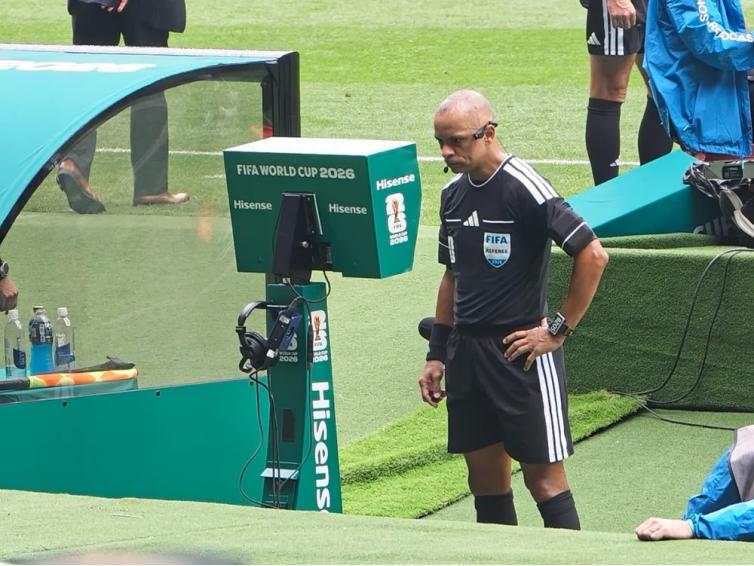
In the opening match of the World Cup between Mexico and South Africa, the referee showed 3 red cards and 3 yellow cards during the whole game, setting a record for the most red cards in the opening match since the inception of the World Cup. During the game, the main referee went to the sideline to check the VAR twice and immediately showed red and yellow cards. Behind this was Chinese technology.
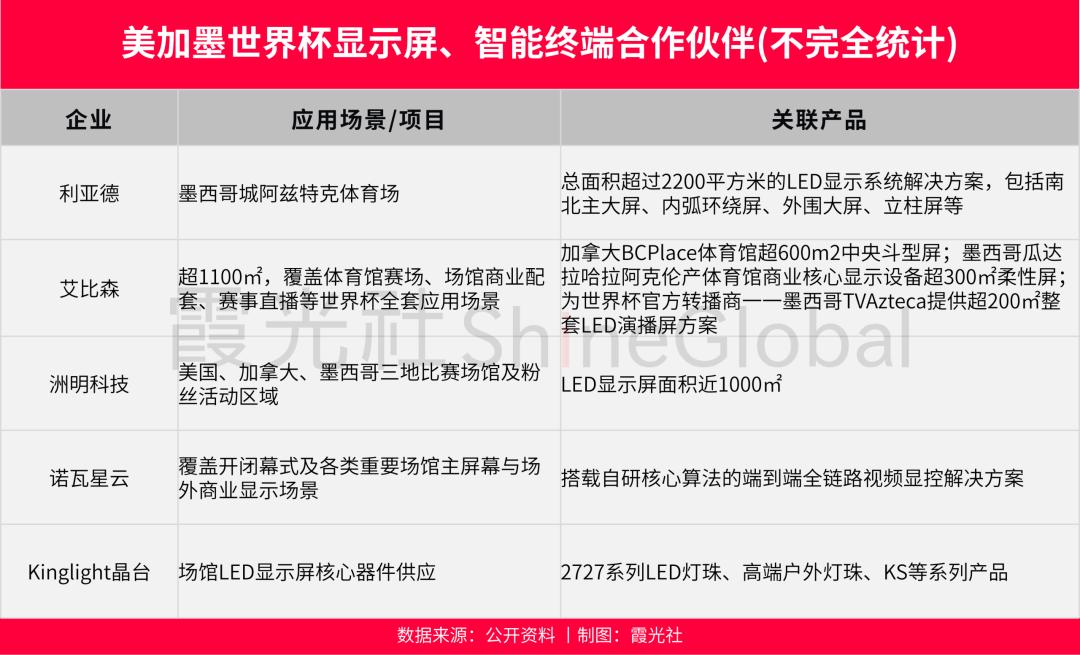
As the most important display terminal in the stadium, the large screen responsible for displaying scores, wonderful replays, and stadium advertisements also cannot do without Chinese manufacturing. According to incomplete statistics, display - related enterprises such as Liyard, Unilumin, Absen, Shenzhen Sijue Optoelectronics, NovaStar, and Kinglight have all participated in this World Cup, providing technical and product support in multiple aspects, including the stadium large - screen system, control and drive, LED packaging devices, referee display terminals, and personal viewing equipment.
The same goes for broadcasting equipment. Shenzhen Hiway Vision Technology, an enterprise in Shenzhen, has independently developed 4K ultra - high - definition audio - video codecs, streaming media capture cards, and live production encoding all - in - one machines, which are being deeply applied in the World Cup broadcasting links of many mainstream domestic new media platforms.
Moreover, this year, Chinese technology is not only involved in "watching" but also in "calculating".
Lenovo is the official technology partner of this World Cup. For this purpose, it has built a technology command center and an observation platform covering the United States, Canada, and Mexico. Through digital twin of stadiums and AI visual monitoring, staff can real - time monitor the status of equipment, network conditions, and the progress of the event in 16 cities across three countries on a unified platform and respond to emergencies in a timely manner.
At the same time, it has also jointly released with FIFA a football AI super - intelligent agent, a 3D digital human visualization solution, and an AI video enhancement system from the referee's perspective, which are applied in scenarios such as in - stadium referee penalties, on - field analysis by coaches and players, and high - definition real - time picture output.
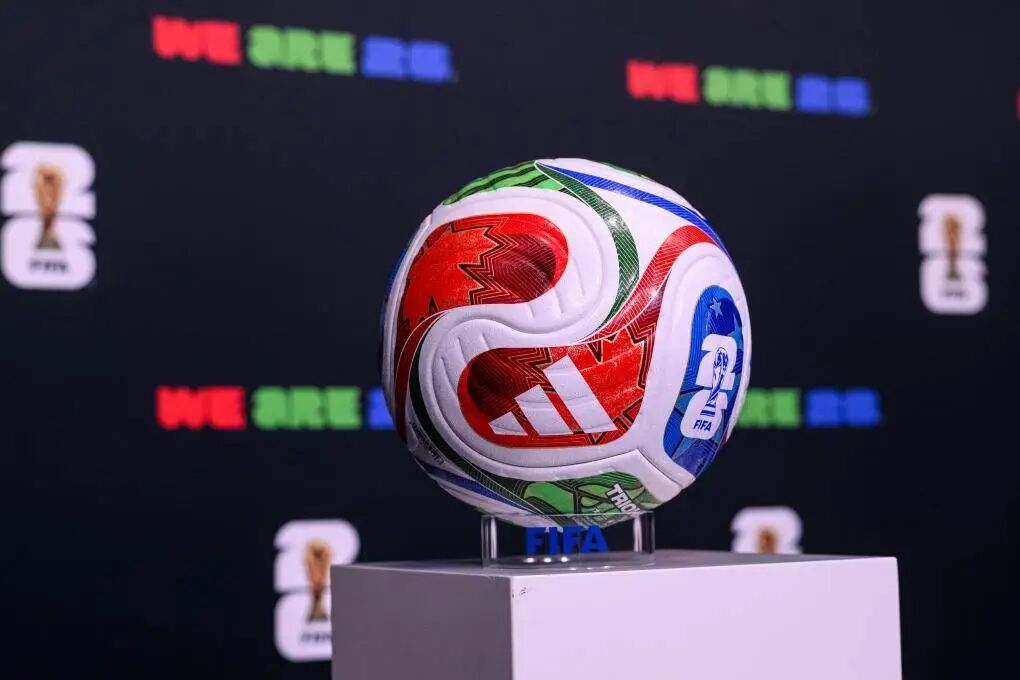
There are also more low - key contributions.
The official match ball, "Triple Wave", is exclusively produced by a Guangdong enterprise. It has a four - panel structure, the least in history; it is embedded with a 500Hz motion - sensing chip, which collects ball - touching data 500 times per second to assist VAR in making accurate penalties. It is used in all 104 official matches, and its technical threshold is much higher than that of ordinary footballs.
Therefore, from the penalty system that determines the outcome of the game, to the ball at the players' feet, and then to the smooth pictures on global mobile phone screens. Whether visible or invisible, it's all about Chinese manufacturing.
The "Chinese Cars" Outside the Stadium
After looking at the inside of the stadium, let's shift our attention outside the stadium.
Since the event is hosted in the United States, Canada, and Mexico, and held in different cities, transportation has become the biggest obstacle.
How to ensure that tens of thousands of fans can arrive at the stadium on time for a game? The answer is, by cars.
In Mexico, 115 new - type light rail trains developed by CRRC are running through the three host cities of Mexico City, Monterrey, and Guadalajara. They carry more than 1.25 million passengers per day on average and are the main means of transportation for Mexican fans to and from the stadium.
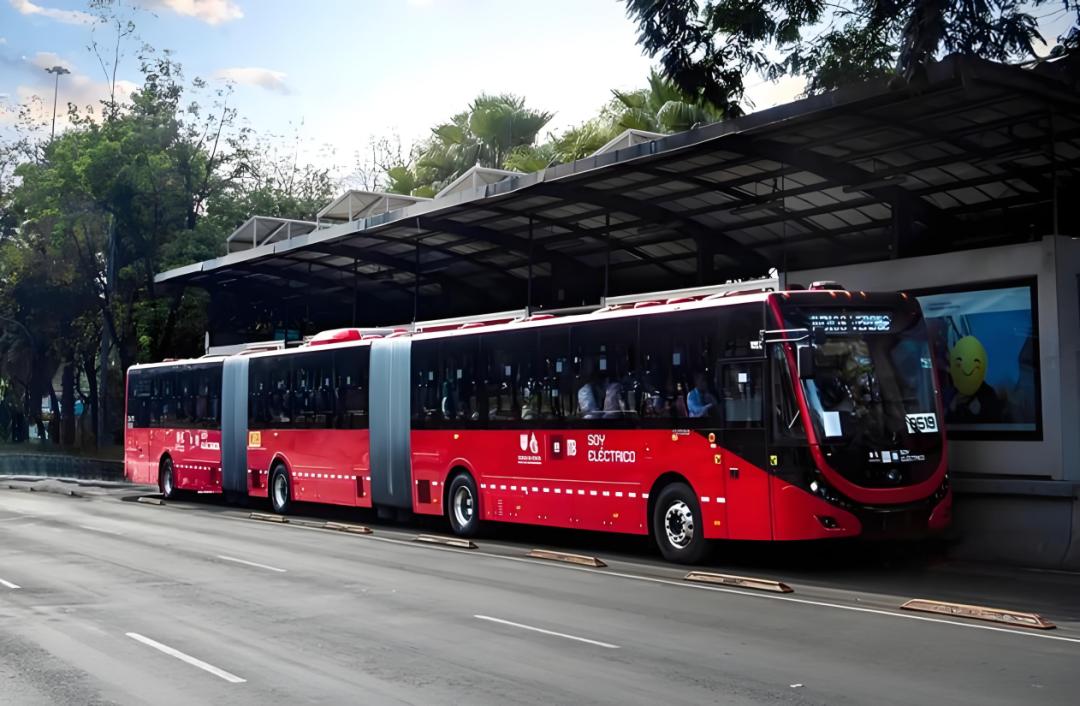
If the light rail is the "artery", then the buses are the "capillaries".
In Mexico City, the official has organized a fleet of 800 new - energy shuttle buses to be responsible for the commuting of players and staff. Among them, Chinese - made buses account for more than 95%, with Yutong and BYD accounting for the largest proportion.
After talking about the vehicles on the road, let's talk about the "things above the head".
The Aztec Stadium in Mexico City is the world's first stadium to host three World Cups - in 1970, 1986, and now in 2026. To welcome this year's World Cup, the stadium has undergone a comprehensive renovation for 20 months.
Who is responsible for the renovation? The answer is Zoomlion, a Chinese enterprise.
Its RT75 tire crane participated in the hoisting of the stadium's steel structure and steel beams throughout the process. With its efficient, stable, and reliable performance, it ensured the project was completed on schedule and helped the stadium achieve a magnificent transformation. In addition, Zoomlion's intelligent aerial work platforms also participated in the construction of the temporary outdoor stage in Mexico City for the World Cup.
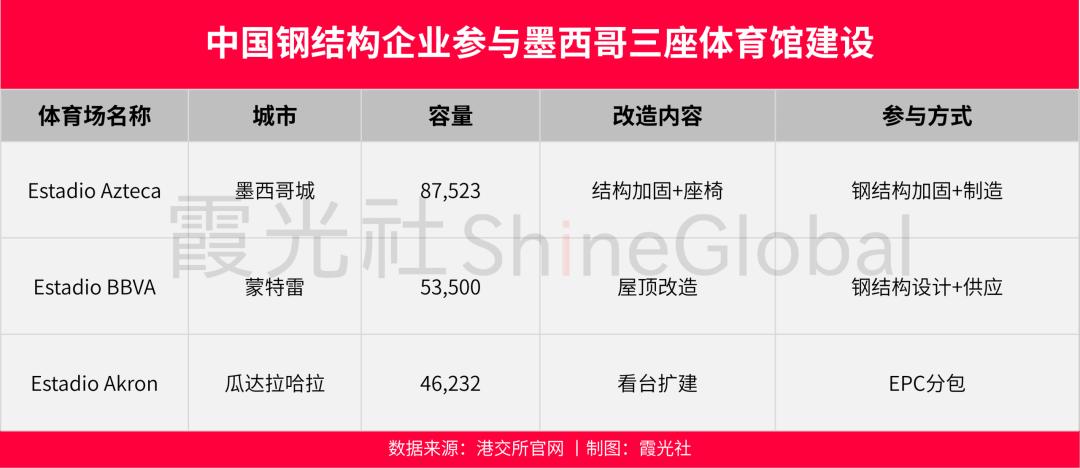
At the same time, for the three stadiums in Mexico undergoing renovation and expansion, the "attendance rate" of Chinese steel structures is 100%. Take the Aztec Stadium as an example. It was built in 1966 and passed the acceptance according to the standards and specifications at that time, but it no longer meets today's implementation standards. And because it is located on an earthquake - prone belt, the Mexican side's requirement for the renovation is to be "resistant to an 8 - magnitude earthquake".
During the renovation process, the Chinese construction team used about 5,500 tons of steel structures in the main stands, roof structures, stair evacuation passages, and foundation reinforcement. By October 2025, when the project was delivered and accepted, the earthquake - resistance level was increased from 6 to 8, while the cost was reduced by 15% (US$24 million).
One month later, the president of the Mexican Football Federation commented, "The Chinese team has given new life to our 60 - year - old stadium. This is a model of China - Mexico cooperation."
When the aerial shots of the stadium and city streets are being broadcast, and when the fans are happily enjoying the convenient transportation and exciting games, it is the "Chinese equipment" and "Chinese technology" that are silently supporting them.
The "Made in Yiwu" Surrounding the World
What we talked about before were all "big things". Now let's talk about something lighter - the small things in the fans' hands.
One month before the World Cup, the bosses in Yiwu were already extremely busy.
This is not an exaggeration. Look at a set of data. In 2025, the export value of sports goods and equipment from Yiwu reached 11.65 billion yuan, a year - on - year increase of 20.3%. In the first two months of 2026, it had reached 2.34 billion yuan, a year - on - year increase of 38.5%. In the first quarter, it continued to grow to 2.83 billion yuan, a year - on - year increase of 12%, and World Cup - related products accounted for a considerable proportion.
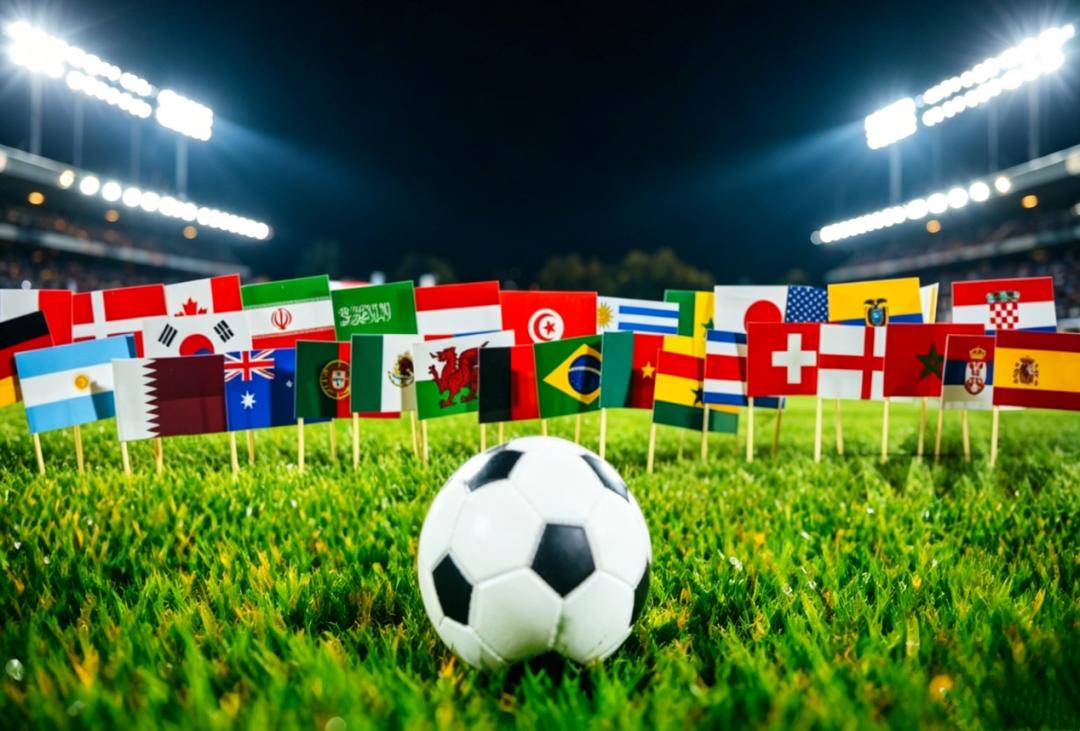
Although this year's data is not yet available, according to the data from previous World Cups, products made in Yiwu account for about 70% of the market share of World Cup souvenirs. Footballs, fans' jerseys, trumpets, inflatable sticks, small national flags, team - themed glasses, hats, wigs, scarves, beer mugs... Almost all the "atmosphere - creating" equipment you can think of is "monopolized" by Yiwu.
But there is a new change this year.
In the past, the souvenirs were mainly characterized by "low - cost and large - quantity". This year, Yiwu has started to focus on "creative upgrading".
Data shows that in 2025, there were 1,546 new intellectual property customs filings in Yiwu's jurisdiction, a year - on - year increase of 29.05%. To meet the strong demand of merchants, the Yiwu Market Supervision and Administration Bureau has set up an intellectual property rights protection service center directly in the commercial city, providing 34 one - stop services from patent applications, trademark registrations to overseas rights protection.
A report in the Global Times mentioned that on the official website of Target Corporation, a major US retailer, World Cup - related products have been gradually launched and are in the hot - selling stage. The overall prices are mostly concentrated between $10 and $25. Among the thousands of stores of this retailer across the United States, about 30% of the products come from the Chinese supply chain, and "Made in China" covers the main product categories.
Why Pay Attention to the "Chinese Power" Behind
By this point in the article, you may have noticed that "Made in China" at this World Cup is completely different from what it was ten or twenty years ago.
In the past, "Made in China" was synonymous with "cheap contract manufacturing". When consumers bought a World Cup commemorative T - shirt and turned it over to look at the label - "Made in China", but the brand was Nike or Adidas, and the bulk of the profit went to others.
Now? "Made in China" is moving towards "technology integration" and "brand going global".
On the one hand, among the 16 global sponsors of the 2026 World Cup in the United States, Canada, and Mexico, Chinese enterprises occupy 4 seats and still "shine on the whole field". On the other hand, those "low - key" enterprises, relying on their products and technologies, are directly involved in the service and operation of the event.
These two paths are both making inroads.
From the hosting of this global top - level event, it can be seen that over the decades, Chinese and Japanese enterprises have almost completely switched positions. From this perspective, this "Chinese team" has played very well.
This article is from the WeChat official account "Xiaguangshe" (ID: Globalinsights), author: Tang Fei. Republished by 36Kr with permission.