Spending $9,000 to tour Chinese factories, a new type of tech-themed tourism is gaining popularity overseas
God Translation Bureau is a compilation team under 36Kr, focusing on fields such as technology, business, workplace, and life, and mainly introducing new technologies, new ideas, and new trends from abroad.
Editor's note: From visiting BYD factories and taking autonomous taxis to visiting humanoid robot and AI startups, a new type of technology tourism is emerging in China. For overseas entrepreneurs and investors, these trips are not only a window to understand China's technological strength but may also influence their judgments on industry trends and investment opportunities. This article is a translation.
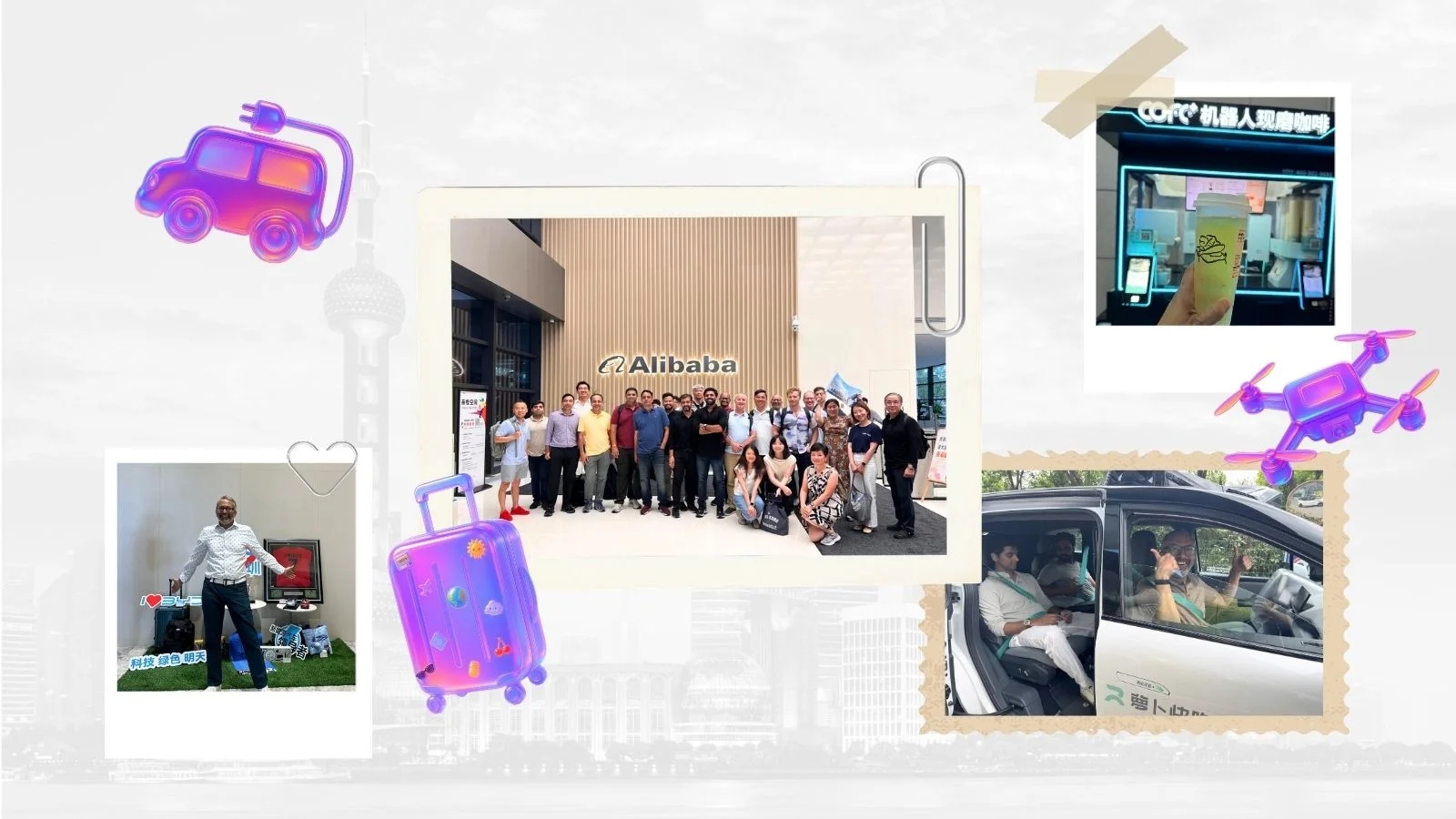
Image source: Chetan Shah
Foreign tourists are flocking to Chinese factories and AI startups in the hope of discovering the next major technological breakthrough.
For decades, ambitious tech entrepreneurs, investors, and engineers have regarded Silicon Valley as a "pilgrimage site." Now, more and more people are starting to fly to Shanghai, Hangzhou, and Shenzhen instead.
A new type of technology tourism is emerging in China. Tourists can pay up to $9,000 for customized trips, which include visiting electric vehicle factories, experiencing autonomous taxis, and visiting artificial intelligence and robot companies. The widespread online dissemination of videos of China's dancing humanoid robots and flying cars has, to some extent, promoted this trend and given many people the feeling that China may be developing faster than the West in some key emerging technology fields. As the technological competition between China and the United States intensifies, these trips have gradually become a way for people to find the next investment opportunity and technological breakthrough.
"There is a 'fear of missing out' mentality behind this. People are starting to think that China's technology ecosystem has developed to a fairly mature level. If they don't come and see it for themselves, they may fall behind their competitors who have already been here in terms of information," said Shaoyu Yuan, an adjunct professor of international relations at New York University who studies China's soft power. "If you're starting a startup or need to make an investment decision, reading about BYD's vertical integration is one thing, but walking into its production workshop is quite another."
What to See on a China Technology Tour
These trips are usually called and packaged as "Shanghai AI and Robot Innovation Tour" or "In - depth Inspection of Electric Vehicles and Batteries," and generally last for 3 to 5 days. Tourists can enter factories, startup incubators, and industry conference venues, and can also have private Q&A sessions with corporate executives. The tour fees usually do not include air tickets but cover accommodation, meals, and local transportation.
The companies on the itinerary are carefully selected and are also representatives of China's technological rise. For example, BYD, which sells more electric vehicles globally than Tesla, Unitree Technology, which has become popular online with its humanoid robots, and DeepSeek, an AI startup that is increasingly being compared with ChatGPT.
"To be honest, these trips are a bit expensive," said Chetan Shah, an investor from Mumbai who has participated in several China technology tours. "But they can provide some opportunities that may not be available even if you pay money... I can visit BYD as an ordinary tourist, but usually, I can only enter the exhibition hall and cannot go deeper into the factory area."
Shah runs his own family business. He said that after getting a close - up look at China's manufacturing capabilities, he had to re - evaluate some of his previous judgments on global competitiveness. He also said that these trips helped him improve his investment judgment, and this kind of gain is difficult to obtain just by reading research reports.
"I started comparing similar companies in the West, China, and India... such as chemical companies," Shah said. "It was only after actually visiting China that I realized that China can control manufacturing costs at a level that India can never compete with." He said that he later withdrew from several investments, and these investments subsequently fell by 40% to 50%.
The Business Behind Technology Tourism
In 2023, Boyang Shen moved to Shanghai after working in business consulting in Europe for 10 years and originally planned to start a market research and consulting company. But when two clients asked him to design customized visit itineraries around the electric vehicle and live - streaming e - commerce industries, his business unexpectedly shifted in another direction.
Shen realized the potential of technology - themed tourism. One year later, he applied for a tourism business license and now runs an organization called GloPen in Shanghai. In the past 18 months, GloPen has received more than 1,000 tourists.
"There is a lot of competition in the consulting industry," Shen said. "But there is still a lack of this all - inclusive, immersive experience in the market."
Most of GloPen's technology tourism clients are from Southeast Asia, India, and Europe. The number of clients from the United States and Brazil is relatively small, but the demand cannot be ignored.
Rui Ma, the founder of the research and analysis company Tech Buzz China, said that the company is about to launch a technology tour mainly for high school students with a background in science, technology, engineering, and mathematics. Currently, 32 people have signed up, most of whom are from the United States, and the rest are mainly from Singapore and India. The project will also invite interns from Chinese AI companies and young students who have just entered the robot industry to communicate with the visiting parents and children.
"Our goal is to let parents get the latest information, update their existing knowledge, and rethink what their children can learn and should learn," Ma said. "If your child is already 16 years old, it will be very helpful for them to understand what people are really researching and doing now. The competition in China's higher education system has become very fierce... Undergraduate students are becoming the main authors of published papers."
Meanwhile, technology experience projects for ordinary tourists are also increasing in China. Searching for "technology tour" on Tripadvisor or Trip.com can yield dozens of different options.
Shenzhen is a manufacturing and technology center in southern China adjacent to Hong Kong. At the beginning of May, among the 104 local tourism activities, the top - ranked one was the "Shenzhen Technology Tour: Exploring the Future." This bilingual tour priced at $92 includes watching drone food delivery, taking an autonomous taxi, and visiting flagship stores selling AI glasses and AI toys.
Companies are also starting to seize this opportunity to improve their public image. XPeng Motors, an electric vehicle startup, started selling tickets to its own showrooms in January, and these tickets are often sold out.
A New Window for China's Technological Soft Power
Technology tourism also aligns with China's efforts to actively shape its image as a technological powerhouse.
In April 2025, American YouTube blogger iShowSpeed visited Shenzhen and experienced a flying car. Although his team denied being paid by the Chinese government, the relevant video still received more than 600,000 views, and Chinese official media also praised the video for "letting the real China be seen."
In February this year, German Chancellor Friedrich Merz visited Unitree Technology in Hangzhou, and the video of him watching humanoid robots perform kung fu was widely spread on Chinese social media. During their visits to China this year, the leaders of Spain and Vietnam also met with Chinese technology company executives and tried on AI glasses.
On May 15, Lex Friedman, who hosts one of the world's most popular technology podcasts, posted on the X platform that he would go to China to talk with "engineers at the core of China's AI revolution" and also planned to hitchhike in China.
"Someone sees content related to Chinese technology on TikTok or YouTube and becomes curious. The curiosity prompts him to take a technology tour, and the tour brings him first - hand experience. Then, these experiences are made into content and shared online, reaching new audiences and further stimulating more people's curiosity," Yuan said. "Each time this cycle occurs, it further strengthens China's national image of strong technological strength and even potential leadership. Whether you think this impression is in line with the facts or exaggerated, the mechanism that drives its formation is real and is accelerating."
Translator: Xiaochuan