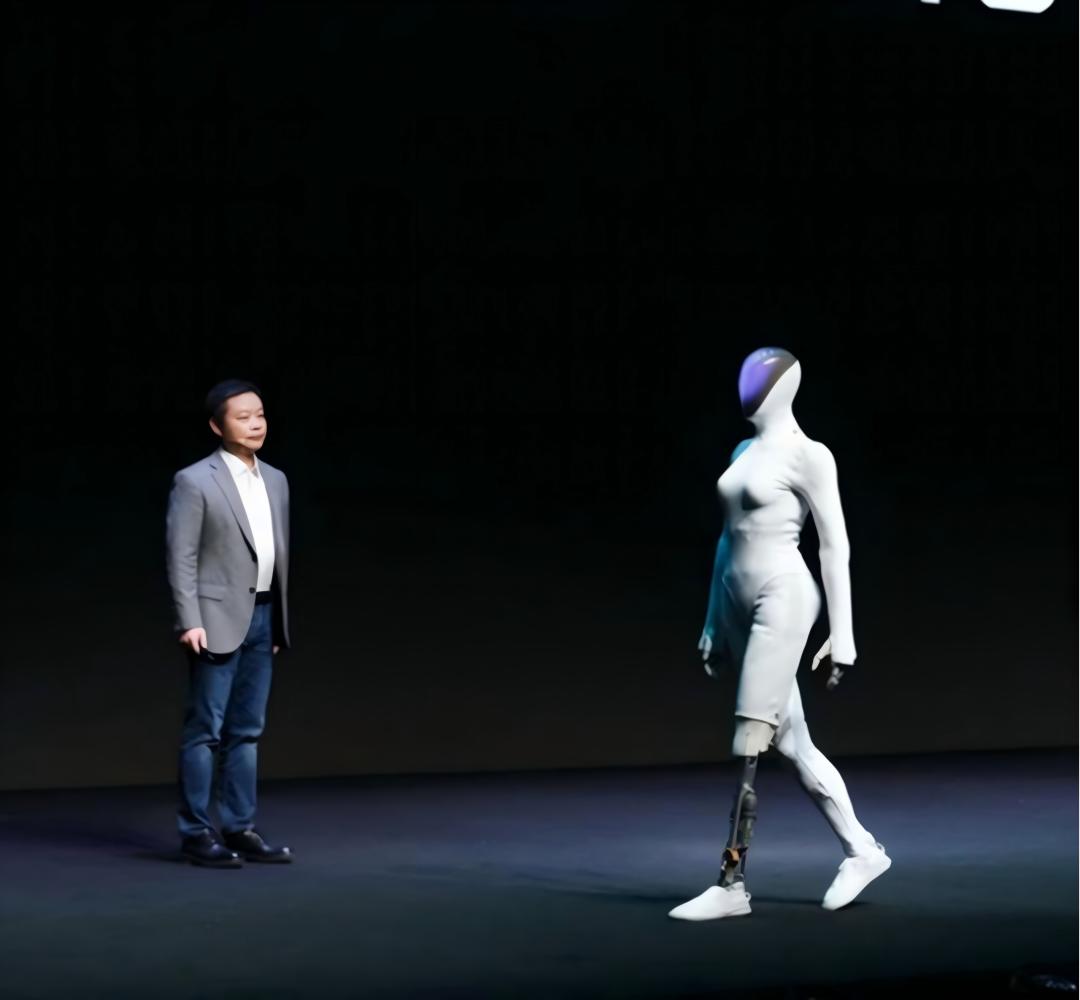
People who build cars have started to swarm into "building humanoid robots".
Recently, the global automotive industry has been captivated by a brand - new arena.
First, BYD's senior management publicly stated in an interview that they are developing humanoid robots.
XPeng Motors also announced that its robot project has entered the mass - production sprint phase, with the goal of having the robots in offline stores next year.
Even Li Auto, known for its steady approach, has carried out a major organizational structure adjustment internally. It has added three secondary departments: Embodied Engineering, Embodied Interaction, and Embodied Behavior, and plans to develop an ideal humanoid robot codenamed Nexus.
Across the ocean in the United States, Tesla's Fremont factory in California is vigorously dismantling the production lines for Model S/X to prepare for the production of the third - generation Optimus robots in the second half of the year, with a designed production capacity of 1 million units.
Strange! Why are these auto industry tycoons suddenly flocking to cross - border into robot manufacturing?
Is it because cars are not selling well and they need to find a new story to raise funds?
If you really think so, you're underestimating them.
The reason they are flocking to cross - border is that they are all competing for the entry ticket to the physical AI world.
Automobile companies that fail to get the entry ticket will surely lose the future.
01
Let's start with a warning letter.
In October 2025, Michael Burry issued a warning letter, stating that there is a huge bubble in the current AI market, and quietly planned to short NVIDIA.
Michael Burry is no ordinary person. He was the first in the market to see through the subprime mortgage bubble back then. Through the subprime mortgage crisis alone, he helped his clients earn $72.5 billion and became a legend overnight.
The later movie "The Big Short" is based on his story.
Strangely enough, with AI currently booming, NVIDIA's market value soaring, and countless hot funds pouring into the AI arena, looking prosperous, why doesn't he think highly of it?
It's very simple. Because today's AI has a fatal flaw - the "brain in a vat".
It may be able to write touching articles, create beautiful PPTs, and even generate realistic videos. However, the problem is that if you ask it to bring you a glass of water on the table, it can't do it.
No matter whether its parameters are in the hundreds of billions or trillions, it will always be just a cyber tool sealed in a chassis.
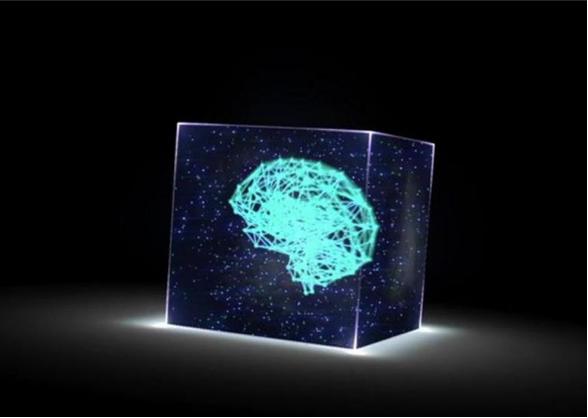
This determines that the upper limit of the value it can create is limited to digital assets such as articles, paintings, videos, and codes, and it can't even help humans tighten a single screw.
However, the majority of human society's GDP is built in the physical world. Tightening screws, building roads and bridges, and even cooking and serving dishes are all real - world physical labor.
This is the reason for Wall Street's anxiety. The novelty and marginal effect brought by AI are rapidly diminishing. If AI cannot reshape the productivity of the primary and secondary industries in the future, once the AI economy reaches its upper limit, the AI bubble that has burned countless amounts of money will burst instantly.
Therefore, in recent years, a consensus has been formed in both the tech community and the capital circle:
The next step for AI must be to have a physical form and be able to intervene in and transform the physical world. In a nutshell, it's embodied intelligence.
The question is, what can serve as the physical form for AI?
At this stage, the most suitable body for AI is the intelligent vehicle.
It is equipped with lidar and cameras (eyes), high - computing - power chips (brain), and motors, electronic controls, and chassis (limbs), and can control itself to move freely.
However, the problem is that the activity scenarios of vehicles are limited. It can only run on the road, and can't even enter small alleys, let alone homes.
If vehicles won't work, then it can only be humanoid robots.
More than one person has wondered why it has to be human - shaped. Can't we just attach wheels or tracks to a robotic arm?
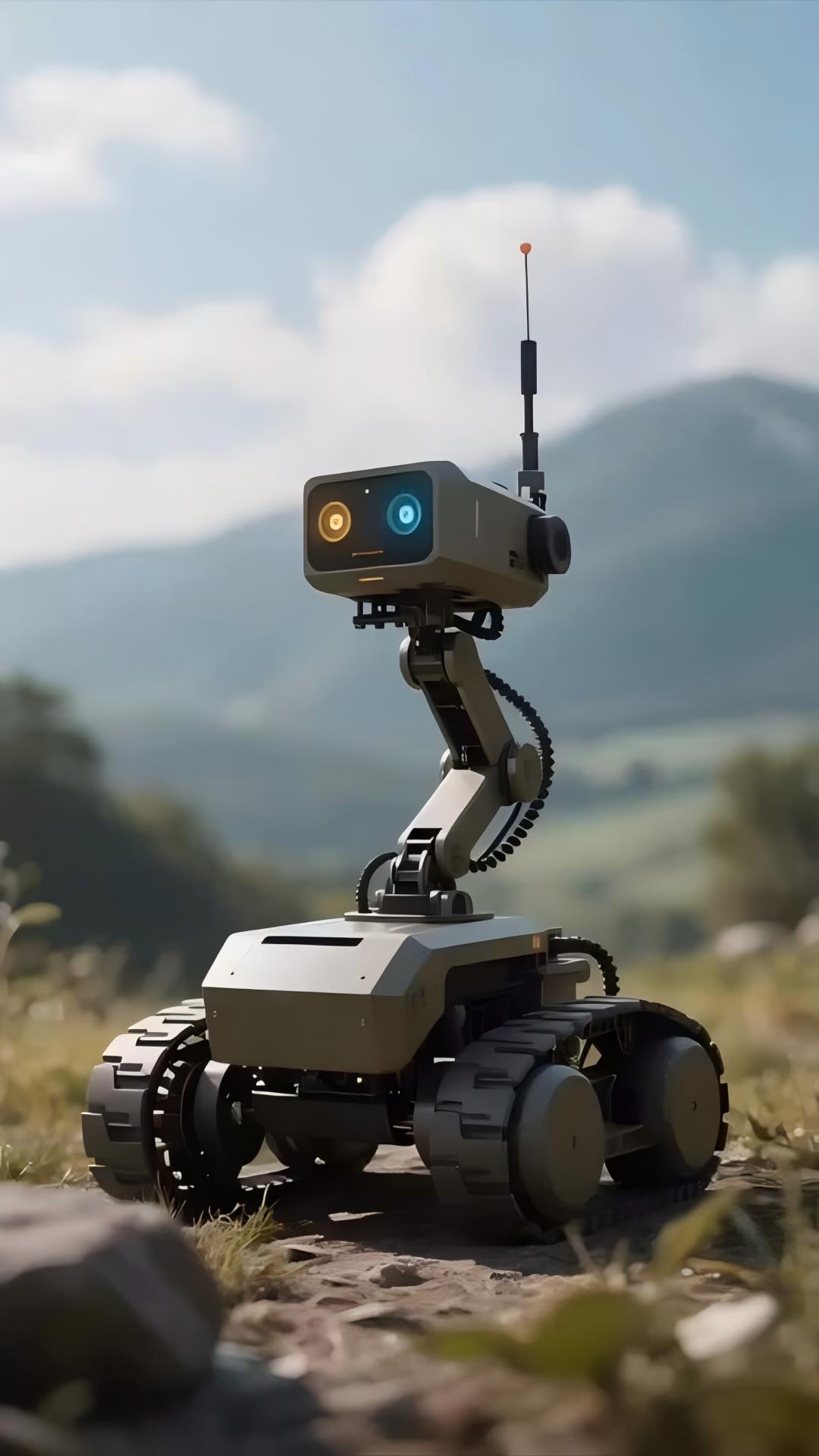
No, because all physical spaces and tools for humans, whether it's car doors, stairs, tools, or doorknobs, are custom - made for humans. Only humanoid robots can use them without barriers and without modification, and replicate all complex human labor.
Therefore, only humanoid robots can truly enable AI to replace human labor.
As Li Xiang said: "Autonomous driving is the first half of embodied intelligence, and general - purpose humanoid robots are the second half."
These two halves may seem like two different industries, but in essence, they are manifestations of the same physical AI revolution at different stages and in different forms.
02
Many people feel a sense of inappropriateness when they see auto companies venturing into robot manufacturing, thinking it's "going off - track".
In our stereotypical view, robot - making should be the domain of geeky companies like Boston Dynamics or Unitree. What are auto companies doing getting involved?
However, if we study the supply chains and production models of the two, we'll find that no one is more suitable for robot manufacturing than auto companies!
- - Let's start with the "brain".
In the past, the "brains" of autonomous driving and industrial robots were completely different.
Industrial robots rely on fixed programs, moving a certain distance along the X - axis and Y - axis. Autonomous driving, on the other hand, relies on the algorithm of "perception - fusion - planning - control".
But now? The two brains have merged into one!
Take XPeng as an example.
Now, whether it's for intelligent driving or robots, XPeng uses its self - developed VLA large - model.
This means that robots no longer need programmers to write codes like "lift the foot 15 degrees". Like cars, they can directly see the scene through cameras and then automatically learn how to avoid obstacles, grasp objects, and walk through an end - to - end network.
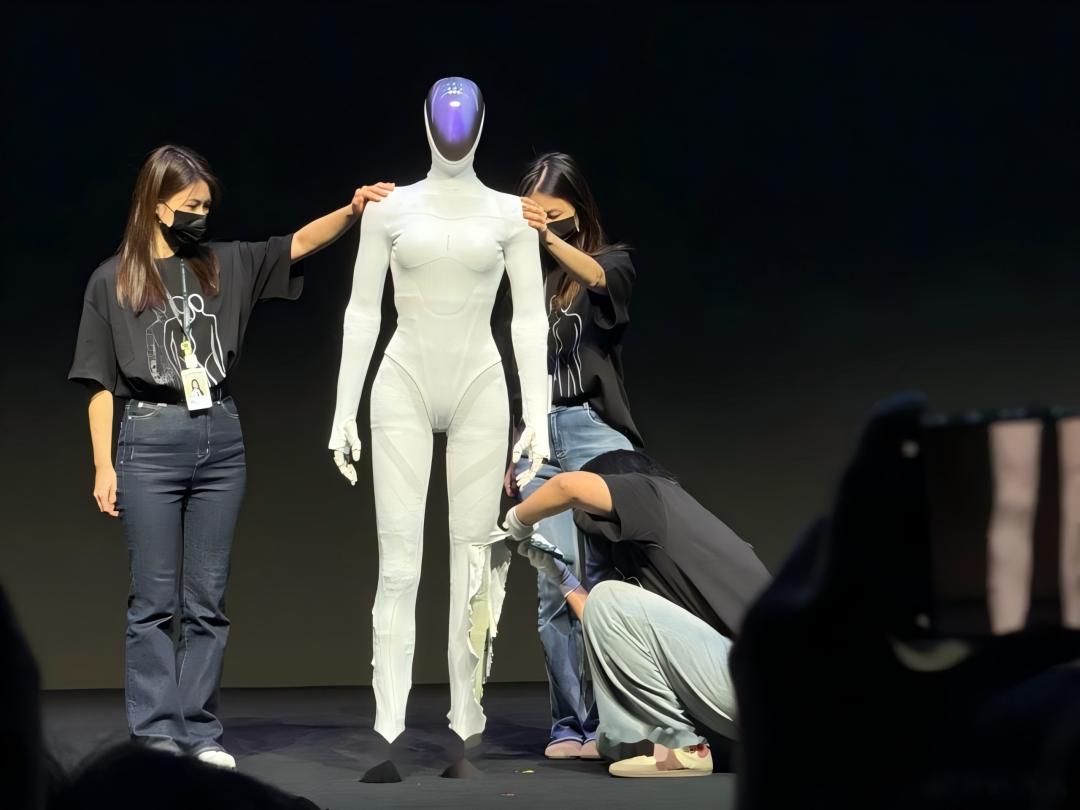
This is the auto companies' strategy. The same large - model base can be directly shared by both, without having to start from scratch.
Moreover, the super - computing centers and simulation systems that auto companies have built for autonomous driving in the past decade can also be directly applied to robots. This is the secondary monetization of technical assets.
- - Next, let's look at the "body".
The hardware costs of humanoid robots are mainly concentrated in three areas: motors, batteries, and sensors.
Coincidentally, these three are the well - honed skills of China's new - energy vehicle industry!
Never underestimate the absolute advantage of auto companies in this field.
For the same high - torque, lightweight servo motor, will the purchase price be the same if Unitree buys it compared to BYD?
Will the communication cost be the same if Zhiyuan asks CATL to customize a battery compared to BYD sending a letter to its Fudi department?
Certainly not!
With large purchase volumes, the cost is low. Traditional robot companies simply don't have the absolute control over the supply chain and the dominance in large - scale manufacturing that BYD has.
Therefore, when auto companies apply their supply chains directly to robots, at the very least, the cost will definitely drop significantly.
A robot that costs a million dollars in the laboratory may cost less than 50,000 yuan when produced by BYD. This is the terrifying aspect of auto companies.
Of course, the automotive industry is not all - powerful, because auto companies don't have "hands".
For humanoid robots to work, they must have robotic hands with extremely precise force control. In actual use scenarios, the workload of dexterous hands can even account for nearly 50% of the entire robot.
And this is exactly the gap for auto companies, as cars don't need hands.
But is this a problem? Not at all! If you don't have hands, just buy them!
On May 29th, Xinuo Future completed hundreds of millions of yuan in Series A financing. Who led the investment? It was Li Auto.
What does Xinuo Future do? It's a supplier of dexterous hands.
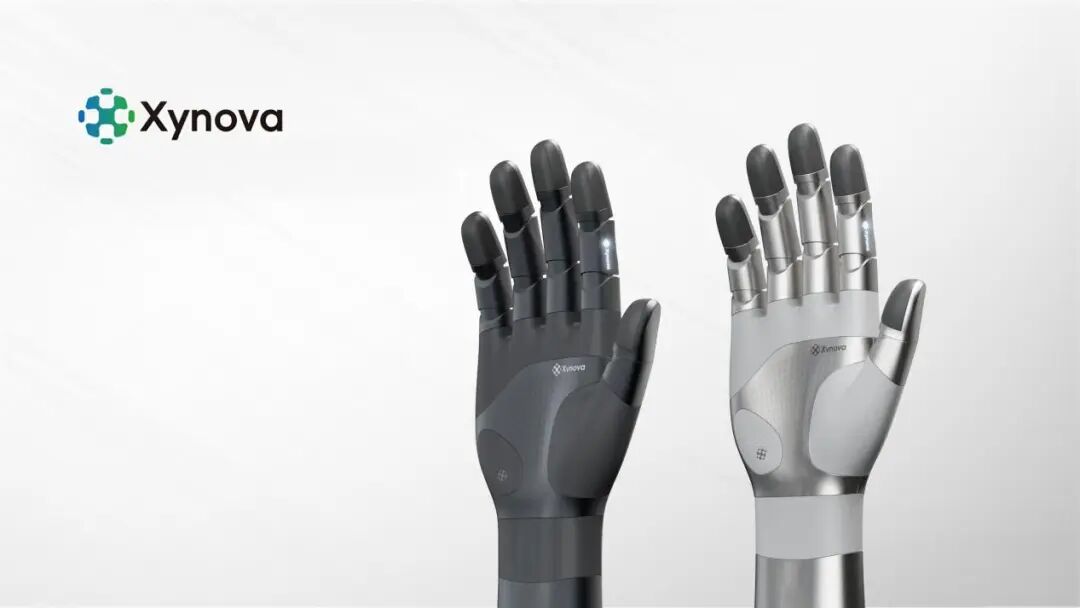
Coincidentally, in March this year, the Pacini dexterous hand, which can synchronously sense 15 types of information such as six - dimensional force, material, and temperature, also received investment from BYD.
The last piece of the puzzle for auto companies has been perfectly fitted.
Finally, let's look at data.
As mentioned earlier, robots that share the end - to - end large - model of cars can learn to work and live in the physical world on their own.
The question is, how do they learn? This requires a large amount of high - quality physical interaction data from the real world.
Why can autonomous driving iterate so quickly? Because millions of intelligent cars are running on the streets every day. Car owners are actually free data collectors, sending back a large amount of road - condition videos and driving decisions to the cloud every day.
But how can humanoid robots collect data?
You can't just put a robot into an ordinary family's home right away, can you?
If it trips an old person or drops a child, that's bad enough. What if it causes a fire? The problem will be huge.
So we find that although robots are now everywhere, their main application scenarios are still stage performances, just changing from doing the yangge dance to performing kung - fu.
Such scenarios may be able to train a trainee, but they can't train a robot that can do real work.
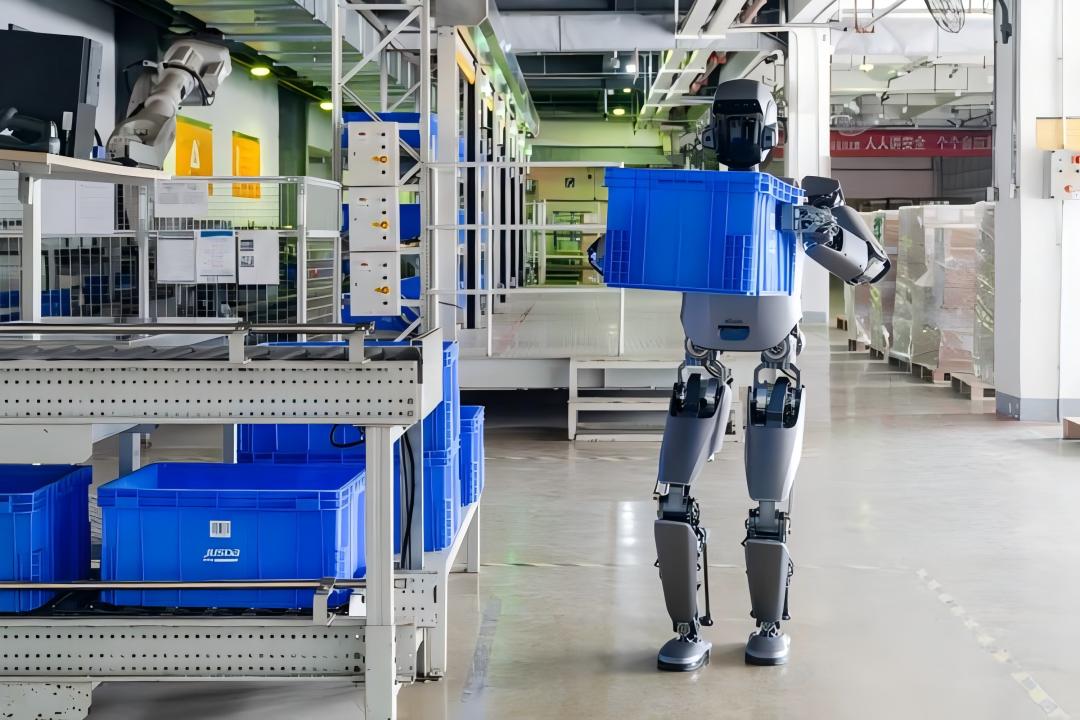
So what to do? There's only one way: enter the factory.
A few years ago, Amazon had a group of engineers wearing VR glasses and data gloves, working in the factory like robots.
However, the problem is that the data collected in this way is not only inefficient and costly but also of extremely poor quality.
In order to obtain truly high - quality data, large American companies are no longer satisfied with "distilling" programmers. They are even starting to "distill" workers, asking them to wear special cameras to collect their work processes.
It's quite black - humorous. The AI written by programmers is eliminating programmers, and these workers are using the data collected with their own bodies to feed the robots that will eventually replace their jobs.
At this time, the advantage of auto companies is highlighted again.
Where can a pure technology company find a factory to train robots? Even if you offer it to the factory owner for free, the factory owner may still be worried that your "Parkinson's - like" robot will affect production efficiency!
So they can only let the robots repeatedly grab balls in the laboratory. How can such meager data train a robot that can adapt to complex life scenarios?
However, this is not a problem for auto companies at all.
Just build the robots and throw them directly into the factory. Let them tighten screws, move boxes, and then continue to collect data.
Every time a robot falls, makes a recognition error, or has a force deviation during assembly, it will become valuable training data for the iteration of the next - generation large - model.
Once the model is completely mature, the final step is to push the robots into millions of households at a low price of tens of thousands of yuan.
This is the most core trump card for auto companies in robot manufacturing:
The brains are connected, the trunks overlap, the hands are supplemented, and the "souls" coexist.
At this point, do you still think auto companies are crossing the border?
No, they are not crossing the border at all. They are just using the blueprints and production lines for car - making to reassemble an intelligent car that can stand up. That's all.
03
Looking at the history of the global automotive industry, it is essentially a cruel history of industrial reshuffling.
The first time was when assembly - line production eliminated handicraft workshops; the second time was when Toyota's lean production defeated the American automotive industry; the third time was what we just experienced, when new - energy intelligent connected vehicles sent fuel - powered cars into the dustbin of history.
So what will be the next reshuffle?
There's no doubt that it's cost reduction and high - level intelligence.
In this round of reshuffling, those who don't venture into robot manufacturing may be the ones to be eliminated.
Let's start with intelligence.
Future cars will no longer be traditional means of transportation but a part of a personal AI assistant.
With the same large - model, it can drive for you when you go out, and become a robot nanny at home. They share the same cloud - based brain, the same chip architecture, and the same