A 50-square-meter small store needs a monthly revenue of 230,000 yuan to make a profit. Can catering businesses still thrive in community commercial properties?
Why can't a community with tens of thousands of residents sustain the restaurants downstairs?
In a residential area with tens of thousands of residents, why do the restaurants downstairs keep closing one after another?
Recently, Liuyun Community in Guangzhou posted a ban, reiterating that catering and other industries are not allowed to operate in residential buildings. This "star community" that has given birth to many internet-famous catering brands is undergoing a business format adjustment.
Looking at the whole country, similar scenarios are not uncommon: the vacancy period of many ground-floor commercial spaces that used to be restaurants has been extended, and the rental advertisements have gone unanswered for months.
Can restaurants still be opened in the ground-floor commercial spaces of communities?
"The row of shops downstairs is getting emptier and emptier."
Red Meal Network visited several cities such as Guangzhou, Shenzhen, and Changsha and found that it is difficult to sublet the catering spaces in communities, and they remain vacant for a long time. The overall business atmosphere continues to cool down.
In the Songgang area of Bao'an, Shenzhen, Brother Lin, who runs a fast-food restaurant of over 80 square meters, plans to close the store and transfer it. However, the rental information has been posted for nearly half a year, but no one has shown interest. "In the past, nearby shops could be transferred within two or three months, but now no one is willing to take over. But closing the store directly will also result in losses, so I can only grit my teeth and keep going for now."
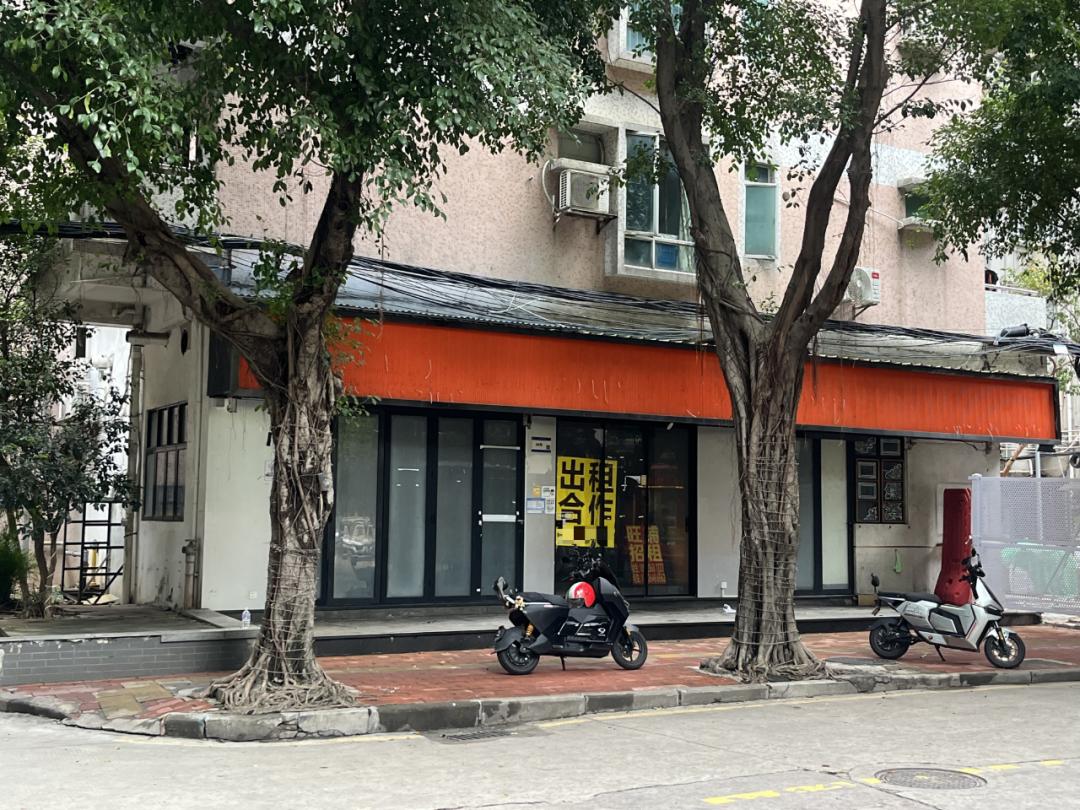
In the Jiangnanxi business district in Guangzhou, known as an internet-famous block, several shops on the main street of a community have posted "For Rent" advertisements. As you go deeper into the community, the number of shops for rent increases significantly. Many local real estate agents and property owners said that the number of subletting shops has increased significantly compared to before, and some shops have been listed for months without any inquiries. The number of people inquiring about renting shops has decreased significantly. "In the past, as soon as the advertisement was posted, people would call. I used to receive seven or eight calls a week, but now I get only a few calls a month."
△Photo source: Taken by Red Meal Network
In Panyu, Guangzhou, the "For Rent" sticker on a street-facing storefront in a suburban community has turned yellow. The owner of the neighboring convenience store recalled: "The previous tenant, a Western restaurant, has been closed for more than two years. There have been people inquiring from time to time, but no deals have been made."
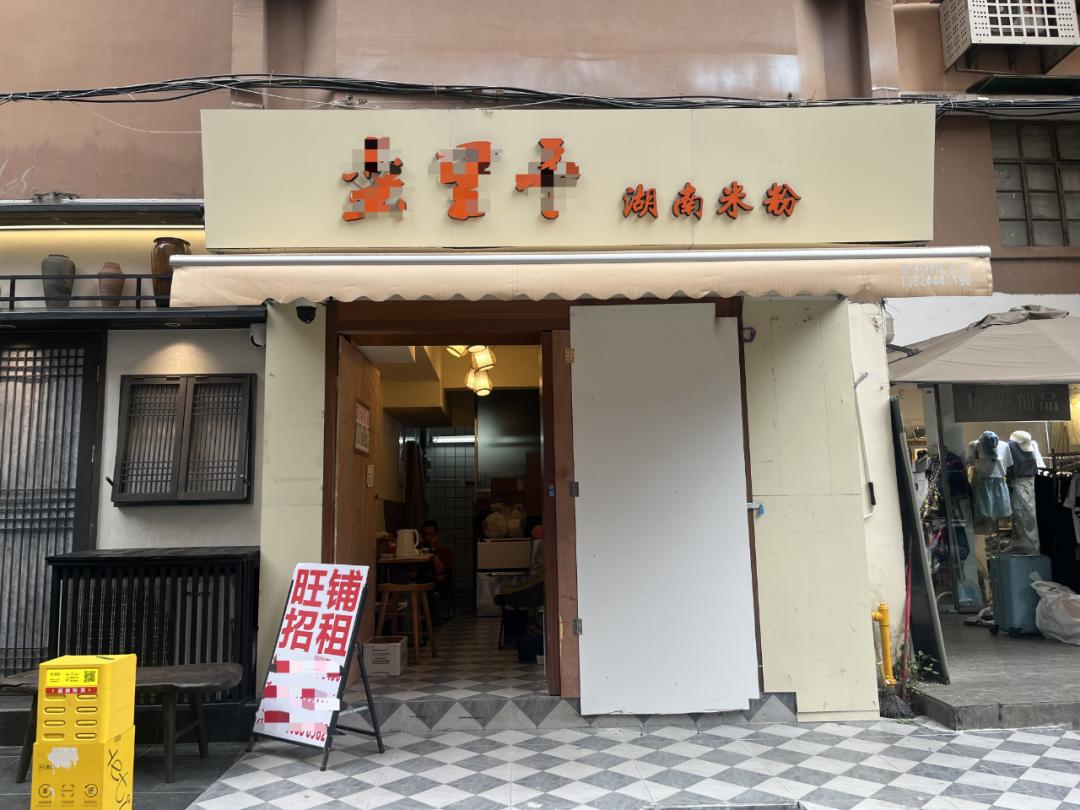
Downstairs of a high-rise residential area in Yuelu District, Changsha, Boss Zhu, who runs a private kitchen business, is also considering transferring the store. He made a rough estimate for Red Meal Network - with a population of 3,500 households, calculated at 3 to 4 people per household, the designed resident population is about 12,000. In such a large community market, but the catering businesses on the ground-floor commercial spaces have gone from "changing one after another" to "unable to change" this year.
According to him, in just half a year, several restaurants in the same row have closed one after another, and no new merchants have moved in. The vitality of the block has decreased significantly, and the customer flow of each store has been significantly affected.
△Photo source: Taken by Red Meal Network
According to a report by Lanjing News, in February this year, a deputy to the Shanghai People's Congress mentioned in a speech that "many small shops and street-facing stores around communities in Shanghai have been vacant or withdrawn. In the past, there might be someone to take over within half a year to a year, but now some stores have been vacant for four or five years."
Overall, the turnover rate of catering businesses in the ground-floor commercial spaces of communities is accelerating, and the vacancy rate is on the rise. A set of industry data confirms this trend from the side: the "2026 Chinese Catering White Paper" shows that the national restaurant closure rate in 2025 reached 48.9%. In terms of business format, the closure rate of catering businesses in the ground-floor commercial spaces of communities is significantly higher than the industry average, approaching 55%; while the catering businesses in commercial districts are relatively stable, with a closure rate in the range of about 35% - 40%, significantly lower than that of community stores.
Why can't a community with tens of thousands of residents sustain the restaurants downstairs?
The number of "For Rent" advertisements is increasing, even in communities with tens of thousands of residents. What exactly is going on with the catering business in the ground-floor commercial spaces of communities? Red Meal Network learned from many industry insiders that multiple pressures are simultaneously impacting the catering business format in the ground-floor commercial spaces of communities.
1. High rent, opening a store becomes "working for the landlord"
Boss Zhu in Changsha continued to calculate an account for Red Meal Network: for a 50-square-meter storefront, with monthly rent, utilities, and labor costs, the monthly break-even turnover needs to reach 230,000 yuan. That is equivalent to selling nearly 8,000 yuan per day on average, and 133 orders per day are needed to break even. For a 50-square-meter small store, even with outdoor seating, this is a very difficult task to achieve.
Brother Lin in Songgang, Shenzhen, also said, "The rent was 20,000 yuan a few years ago, and now it has gradually increased to 24,000 yuan, which is almost a quarter of my monthly turnover. Coupled with the decreasing customer flow in the past two years, I really can't keep going."
What makes restaurant owners even more helpless is that the rent of the ground-floor commercial spaces in communities has not decreased with the decline in customer flow. "It's good if the rent doesn't increase every year. Don't even mention reducing the rent. Landlords would rather keep the store vacant than reduce the rent." This is the most common complaint heard after visiting more than 20 community catering merchants.
2. Mismatch between time periods and demand, small stores can't bear the idle running costs
Different from the all-day customer flow of catering businesses in commercial districts, the customer flow of the ground-floor commercial spaces in communities shows obvious polarization: from 9 am to 5 pm, there are mostly the elderly and children on the street, with relatively weak purchasing power. They mostly buy snacks and drinks, and the average customer spending is relatively low; during the morning and evening rush hours from 7 am to 9 am and from 6 pm to 9 pm, the customer flow is relatively concentrated, but the time period is very short. For a large amount of time, the stores are in an "idle running" state, but the costs remain the same.
Jiang Yi, the founder of Hao Xia Chuan and a columnist for Red Meal Network, analyzed this: "Pure community catering mainly focuses on dinner and late-night snacks, and the proportion of lunch and breakfast is very limited. During the day, seven or eight out of ten people in the community go to work, and the remaining middle-aged, elderly, and children are not willing to spend money outside. So, catering categories for the lunch time period are not suitable for pure community catering." Many community restaurants go out of business not because the products are not good, but because the wrong time periods are chosen. The income during the period with the weakest customer flow cannot support the full-day costs.
3. Too many people are competing for "a meal", and the dine-in business is shrinking
The core customer group of community catering is basically the residents and office workers within a few kilometers. However, now, their "daily dining" needs are being divided up by takeaways, fresh food in convenience stores, and community group buying. The advantage of the ground-floor commercial spaces in communities being close to customers has been greatly weakened.
Needless to say about takeaways. Consumers only need to tap a few times on their mobile phone screens, and the food from restaurants within a few kilometers can be delivered to their doorsteps. There is no need to only patronize the stores downstairs. There are quite a few consumers with this habit, which directly diverts the business of community restaurants. Red Meal big data shows that the national catering takeaway market scale reached about 1.4 trillion yuan in 2025.
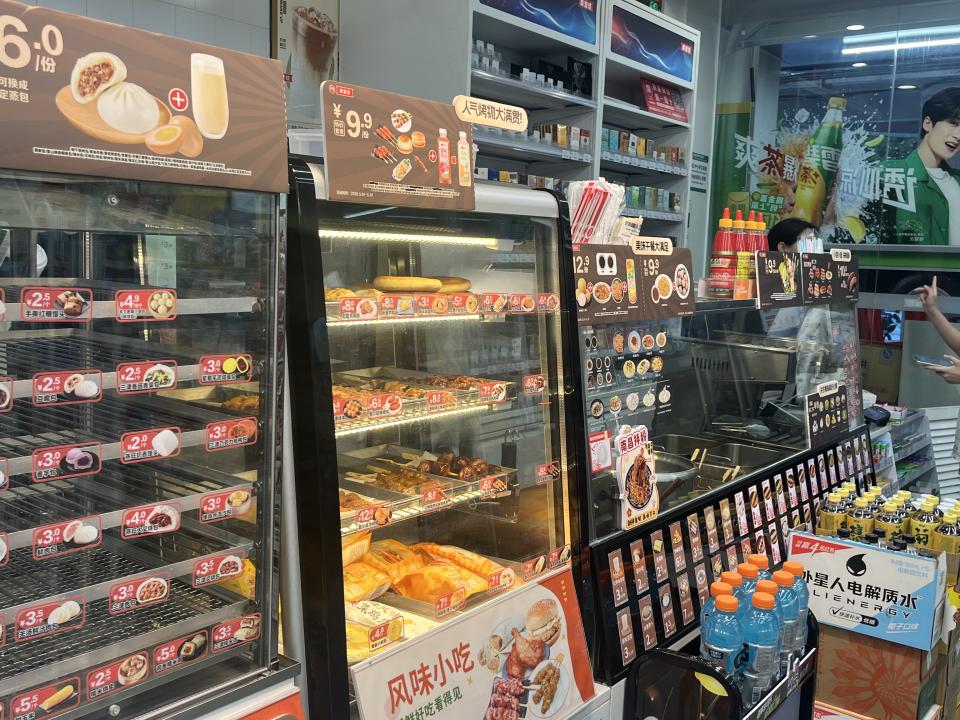
In addition to takeaways, fresh food in convenience stores and community group buying are also diverting the rigid-demand customer flow.
△Photo source: Taken by Red Meal Network
The oden, buns, rice balls, and bento in convenience stores such as FamilyMart and 7-11 are priced at 10 - 15 yuan and are open 24 hours a day, seizing the breakfast and late-night snack markets. On community group buying platforms such as Xiaoxiang Supermarket and Pupu Supermarket, the prices of pre-made dishes and semi-finished ingredients are low. For example, a seasoned meat patty is sold for 9.98 yuan, and a frozen sweet and sour pork fillet is sold for 14.5 yuan. The prices are not high, and most of the food preparation processes can be saved. Consumers have more choices for their diet.
4. Many business restrictions
Liuyun Community in Tianhe South, Guangzhou, presents a more complex picture.
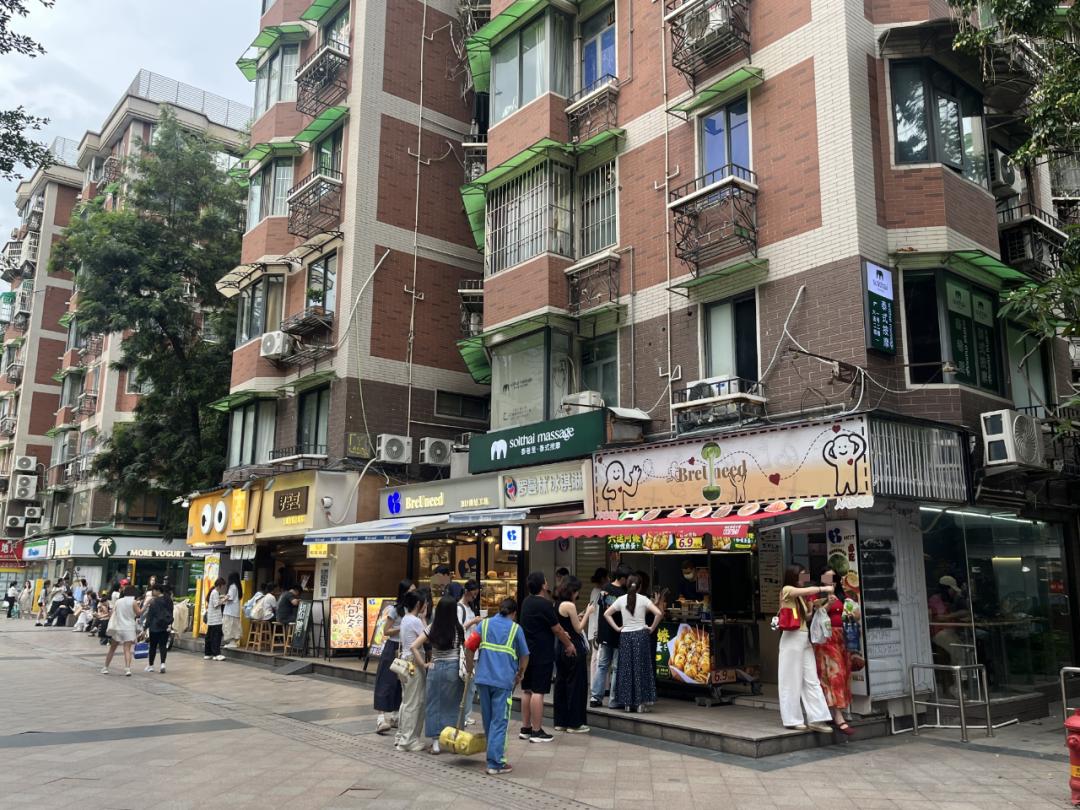
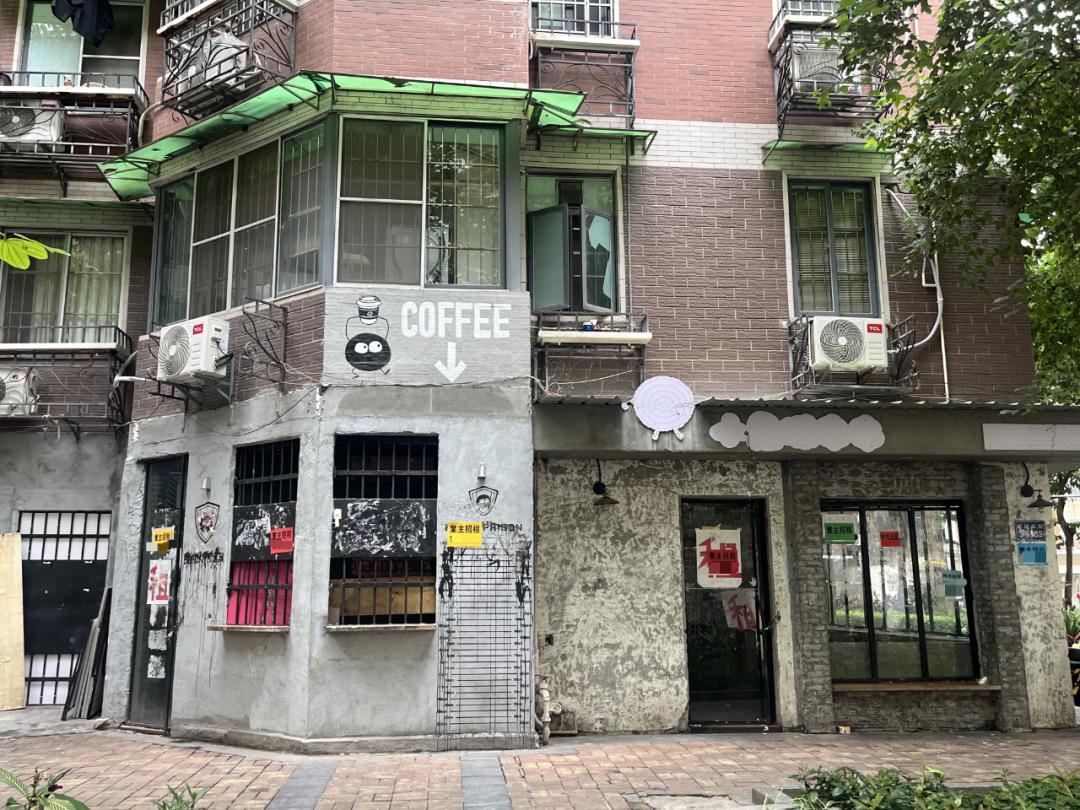
After the ban was issued in April, the main street is still full of people, and there are even new stores in trial operation. However, as you turn into the community, many catering spaces have posted notices of closure and transfer. Many interviewed merchants said that the ban is mainly targeted at hot food catering. Those who are still doing hot food can continue to operate, but the lease or license will not be renewed after expiration, and those operating without a license will be directly removed. Non-open-flame business formats such as tea drinks, sugar water, and ice rooms are not affected for the time being.
△Photo source: Taken by Red Meal Network
Red Meal Network called a property owner who is renting out a storefront as an entrepreneur. This storefront in the inner lane of the community is about 20 - 25 square meters. It used to be a sushi restaurant, and the monthly rent is about 10,000 yuan. When Red Meal Network asked if it could be rented for a noodle business, the other party directly refused, saying that the license could not be obtained.
Complying with the regulatory requirements at the policy level is a real test that the catering businesses in the ground-floor commercial spaces of communities must face. Behind the dilemma of Liuyun Community are problems accumulated over the years: fire hazards caused by aging equipment and excessive renovation of residential-to-commercial stores; too many shops and tourists have made residents live in noise pollution all year round, and the number of complaints has remained high.
The popular "Partner Canteen" in the community also suddenly closed recently. Neighbors nearby revealed that the reason for the closure was that the property management required rectification because the fumes and noise had caused a large number of complaints from residents.
△Photo source: Taken by Red Meal Network
A merchant sighed: "When opening a community store, half of the energy is used to deal with residents' complaints, and the other half is used to deal with policy inspections. It's too risky and nerve-wracking every day. It's better to open a store in a commercial district or just run a pure takeaway store, which is more worry-free."
Sun Jiawei, the founder of Micang Canteen, also revealed to Red Meal Network that the first store of Micang Canteen was opened in a ground-floor commercial space in a community in the Tianhe South business district in Guangzhou. Due to the long queues at the store and a large number of queuing customers, in order to reduce the impact on the daily lives of community residents, the store was moved to a shopping mall.
In communities with tightened policies, the first problem that catering entrepreneurs encounter is not "whether they can make money" but "whether they can open a store".
Conclusion
However, from a more macro perspective, the catering business in the ground-floor commercial spaces of communities is not completely off-limits. Jiang Yi said that there are still opportunities in the ground-floor commercial spaces of communities. Don't be scared off by the fact that "the previous several tenants have gone out of business". "In the catering industry, it's quite common that after five or six stores go out of business, a new one can succeed. When choosing a store, it's not about what the previous tenant did, but about whether it matches - the people in the commercial district, the conditions of the store, and whether the category is suitable for the community. If you choose the right category that matches the community, it might become very popular all of a sudden."
Jiang Yi further said that the current dilemma of the ground-floor commercial spaces in communities is essentially a "late return". He pointed out that during the period of rapid economic development, many storefronts that were not suitable for opening restaurants were opened. According to the population size and consumption habits of a commercial district or community, it can only support 30 - 50 healthy restaurants. If 100 restaurants are opened, they will all "fail collectively". So now the number of newly opened stores is decreasing, which can only be called a return to normal.
The vacancy wave of the ground-floor commercial spaces in communities is a necessary screening process in the development of the catering industry. In the past ten years, any storefront on the street dared to hang a "For Rent" sign, and anyone dared to invest their savings in opening a restaurant. Now that the boom has passed, it's finally clear who can swim and who is swimming naked.
However, the ground-floor commercial spaces in communities are still an indispensable part of the catering ecosystem, provided that restaurant owners know how to meet the needs of residents and how to make a profit from an average customer spending of 15 yuan.
This article is from the WeChat official account "Red Meal Network", author: Qiu Hong. Republished by 36Kr with permission.