Trapped on an Electrification Islet: Japanese Automakers Amid the False Narrative of a "Global EV Slowdown"
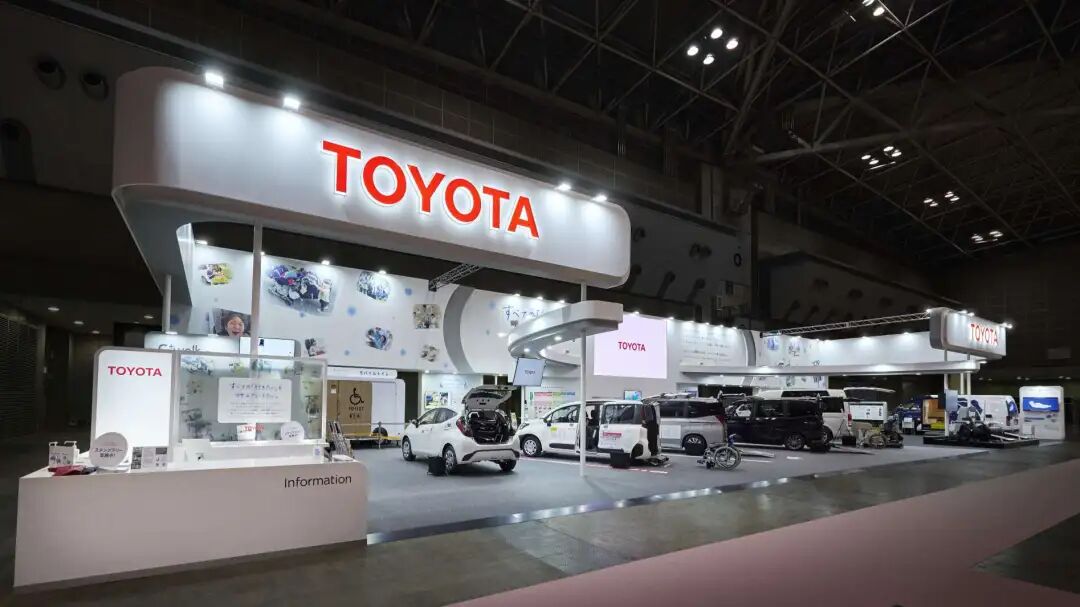
Image source: Toyota's official account
On the streets of Tokyo, it's hard to realize that the global automotive industry is being rewritten by electrification.
A Tokyo resident wrote in an article in "Reinventing Asia" that his most direct impression of Shanghai was "abnormal quietness". This was not because there was a lack of traffic in Shanghai, but because a large number of pure electric vehicles with green license plates had replaced the roar of engines. After returning to Tokyo, he began to notice the sound of internal combustion engines: the idling in front of red lights, the vibration when starting, and the mechanical sound when decelerating, which still constituted the daily background sound of the city.
The difference in sound reflects the difference in the industry behind it.
In the past few months, Japanese car companies have successively suspended, postponed and withdrawn from some pure electric vehicle projects. Toyota has aborted the development of the next - generation pure electric sedan LF - ZC of Lexus, an important project for Toyota to demonstrate its next - generation pure electric vehicle manufacturing capabilities; Honda has abandoned its goal of achieving a 20% share of pure electric vehicle sales by 2030 and frozen its plan for a pure electric vehicle and battery factory in Canada; Subaru has also postponed the launch of its independently developed pure electric vehicle originally scheduled for 2028.
This is not surprising. For a long time, Japanese car companies have shown an opposing attitude towards "full electrification". In the statements of Japanese car companies and some Japanese media, "the downturn of global electrification" has become the most commonly used explanation for these actions. It creates an atmosphere that the boom of pure electric vehicles is receding, and packages the past misjudgments of Japanese car companies in the pure electric strategy as a rapid response to market changes.
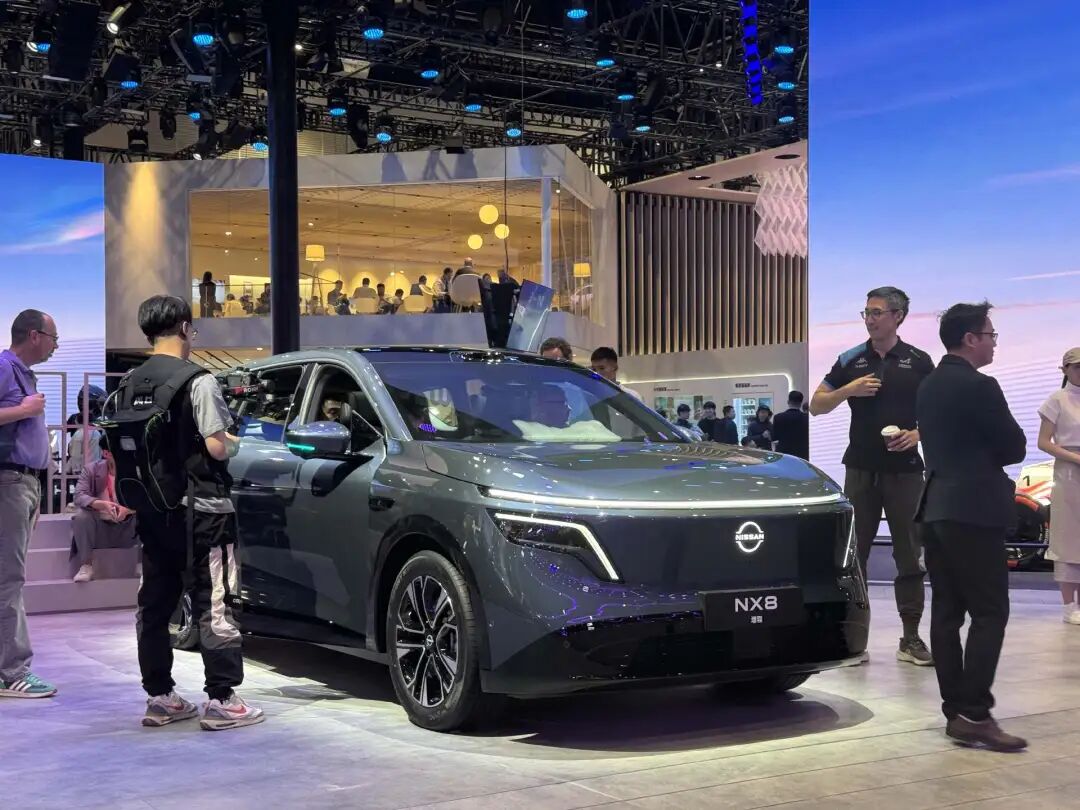
Image source: Reporter Zhai Fangxue
But the fact is that it is not the global electric market that is in a downturn, but the part of the market that Japanese car companies rely on. In 2025, the global sales of electric vehicles still increased by 20%, exceeding 20 million. One in every four new cars in the world is an electric vehicle.
This year, electric vehicles have fully recovered due to the conflict between the United States and Iran. According to S&P Global Mobility data, among the 150 countries with available data, 28 countries set new monthly sales records for pure electric vehicles in March this year, and another 9 countries reached new highs in April. During March and April, 91% of countries saw an increase in pure electric vehicle sales.
The situation in Japan is completely the opposite. At present, the number of countries with an electric vehicle penetration rate of over 16% has increased to 28. However, in April this year, the penetration rate of electric vehicles in Japan was still around 2%, ranking the lowest among G7 countries.
Whether it is the Japanese car companies that withdraw actively or the Japanese consumers who accept passively, they are all becoming an isolated island in the wave of electrification.
It is not the global market that is in an electrification downturn, but the target market of Japanese companies
The retreat of Japanese car companies does come from changes in the external market. However, this "external market" is not the global market they mentioned, but the United States, one of their biggest target markets.
Last year, the Trump administration passed the "One Big Beautiful Bill" (OBBBA), terminating the previous car purchase tax credit policy of up to $7,500 (about 1.2 million yen) introduced by the Biden administration, which seriously hindered the electrification in the United States. In the first quarter of this year, the sales of new pure electric vehicles in the United States decreased by 27% year - on - year.
This has shocked all companies selling pure electric vehicles in the United States, especially Japanese car companies. The United States is the largest overseas market for many Japanese car companies. Take Toyota for example, the sales volume in the North American market accounts for about 30% of its global total, and at the same time, it accounts for nearly 40% of the operating profit, being the core profit pillar; the U.S. market accounts for about 45% of Honda's global total sales, and its importance far exceeds that of other regions. Such a strong dependence directly led to Honda's heavy losses in the U.S. pure electric market.
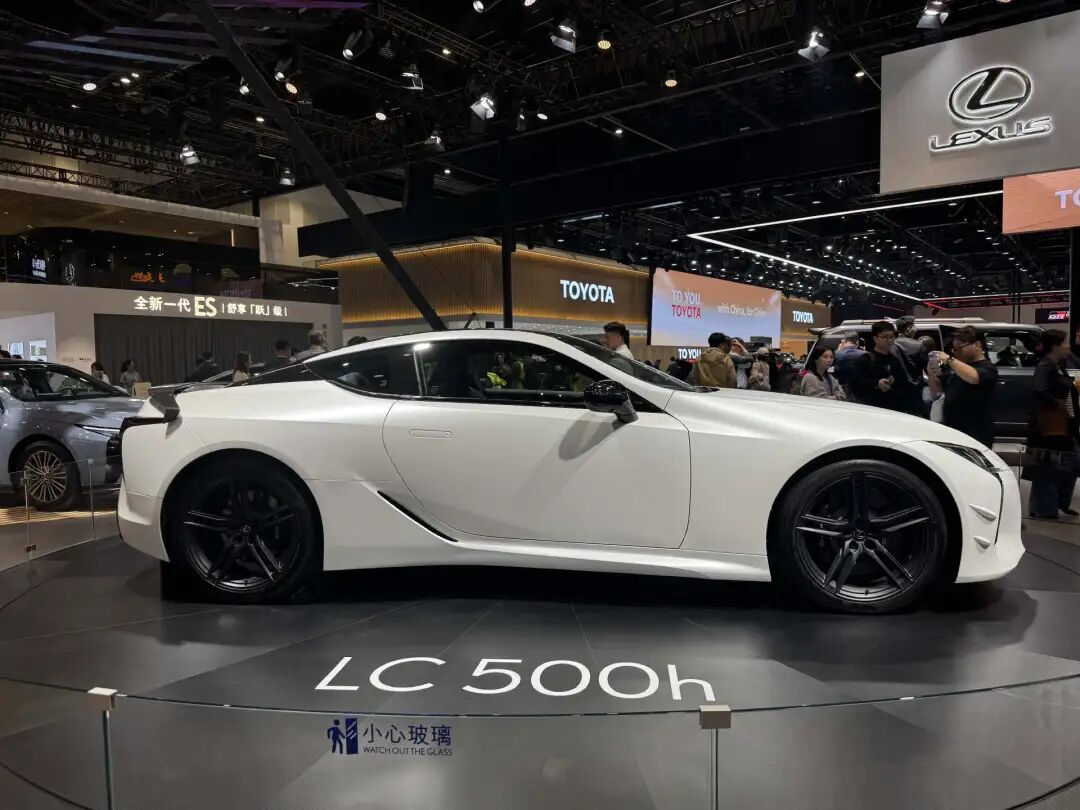
Image source: Photo by reporter Zhai Fangxue
During the implementation of the policy in 2024, Honda decided to invest 10 trillion yen (about 423.6 billion yuan) in pure electric vehicles and software fields in the next 10 years. However, after the U.S. policy changed, Honda had to readjust its power route and even bear a loss of about 2.5 trillion yen (about 105.9 billion yuan). Honda President Toshihiro Mibe admitted at a press conference that "the U.S. pure electric vehicle market is less than half of what was expected and far from the target."
The pure electric products of Japanese car companies defined for the U.S. market are large in size, expensive and high in cost, and few markets can fully accept them. Not only are there differences in regulatory certification, but they also lack price and intelligent competitiveness in China. In Europe, they face double pressure from local brands and Chinese brands. In Japan and Southeast Asia, they do not meet local transportation and consumption scenarios, and the Middle East market is constantly changing. These products specially developed for U.S. consumers cannot be digested by other markets and can only be suspended.
However, does the United States really have no demand for pure electric vehicles? Not necessarily. The energy crisis is also shaking the U.S. market. According to data from automotive company Cox Automotive, from January to March this year, the sales of new pure electric vehicles in the United States decreased by 27% year - on - year, while the sales of second - hand pure electric vehicles increased by 20% against the trend. This shows that even if the subsidies are reduced, the demand of U.S. consumers for low - cost pure electric vehicles still exists.
The U.S. government's containment of electric vehicles also has obvious political factors, which is behind the struggle between the Republican Party and the Democratic Party in the United States. The Republican Party represented by Trump has set obstacles to electrification, largely to safeguard the interests of the oil tycoons behind the party. The government's attitude towards electrification has also been changing with the change of the ruling party.
This is another dilemma faced by Japanese car companies. If the U.S. policy turns again in the next round and the pure electric market recovers, even though companies like Toyota, Honda and Subaru have repeatedly emphasized that they will not give up pure electric R & D, once there are more mature choices in the market, it will be difficult to reserve a place for conservative companies.
Japanese consumers live in a vacuum of "de - electrification"
Normally, car companies usually start the development of pure electric vehicles from their domestic markets. Car companies cultivate users, verify products and improve services in their home countries, and then export to overseas. Domestic consumers are often the most stable and willing - to - buy group for domestic brands.
Japanese car companies are the opposite. They were among the first to have the technological achievements of power batteries and pure electric vehicles, but the Japanese domestic market has not become a model market for pure electric vehicles. Instead, due to the resistance of the companies, it has long remained in the era of hybrid electric vehicles. Japanese consumers are very familiar with hybrids but quite indifferent to pure electric vehicles.
This indifference is not formed naturally. More precisely, Japanese consumers have been trained to ignore or even be hostile to pure electric vehicles in the long - term "de - electrification" propaganda.
The technology media Electrek pointed out that Japanese car companies use various abbreviations containing the word "EV (pure electric vehicle)" to confuse the public and blur the public's understanding of real pure electric vehicles. For example, Nissan's e - power, Honda's e:HEV, and Subaru's e - boxer are actually hybrid vehicles closer to fuel vehicles.
The repeated rendering of the "electric vehicle graveyard" by Japanese media has also continuously reduced the local public's trust in pure electric vehicles. In 2020, more than a thousand abandoned pure electric vehicles appeared in Jiaxing, Zhejiang, which were the remnants after the failure of a shared car company. Japanese netizens said that the media would take out photos of the "electric vehicle cemetery" every few months, hide the year and only mark the date, implying that these photos were taken recently to prove that the prosperity of pure electric vehicles was fictional.
Moreover, Japanese media also vigorously publicize that batteries cannot be recycled, the production process is more polluting, and extremely rare battery fire incidents. Some even fabricate false news, which undoubtedly affects the Japanese public's perception.
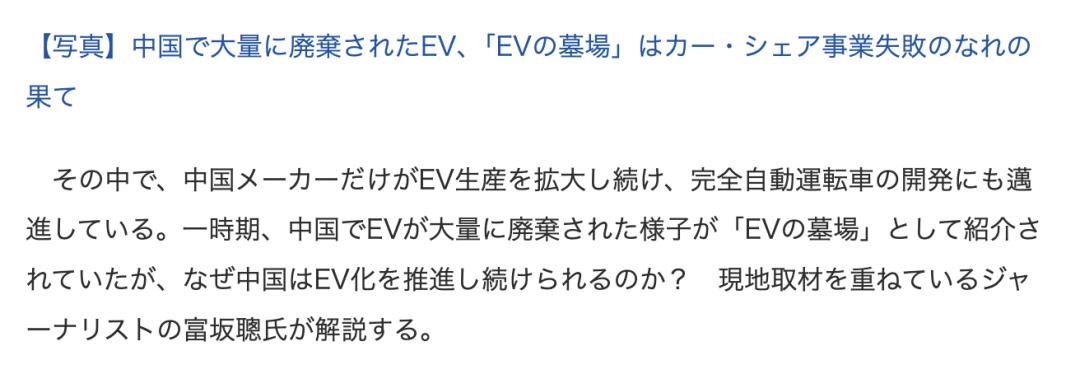
Image source: Screenshot from the Internet
The local pure electric products have also strengthened the stereotype. The pure electric vehicles that Japanese consumers see are often not the pure electric vehicles in the Chinese market with rapidly falling prices, continuously improving range and high - frequency intelligent iteration, but the limited products of local car companies due to long - term insufficient investment: high price, short range, few choices, poor charging experience and backward in - car entertainment. So consumers easily mistake "the pure electric vehicles made by Japanese car companies are not good to drive" for "pure electric vehicles themselves are not good to drive".
This also explains why a developed country with a mild climate, a small land area and a high dependence on foreign oil, an area that is almost perfectly suitable for pure electric vehicles, resists them. A public opinion poll shows that only 28% of Japanese consumers are willing to buy pure electric vehicles.
The public reasons for Japanese car companies to resist electric vehicles in the past are becoming less and less tenable: they say that thermal power generation is more polluting, but the electricity required to drive the hydrogen - fuel vehicles they bet on is about three times that of directly charging the battery; they say that the climate is not suitable for electric vehicles, but the pure electric penetration rate in colder Norway was as high as 97% last year; they say that the infrastructure is insufficient, but the sales of electric vehicles in Southeast Asia with worse grid conditions have increased by 40%; they say that it affects employment, but Japanese car companies themselves are relocating their manufacturing industries...
However, Japanese consumers have covered their ears. They have more faith in the hybrid products of Japanese car companies and are proud of their world - leading nature. Although hybrid products are not defined as new energy vehicles in many countries, they do provide Japanese consumers with perfect products and psychological comfort for environmental protection.
Some Japanese critics believe that this is another "Galapagos phenomenon". This is a Japanese business term named after the evolution of species on the Galapagos Islands, referring to the excessive localization adaptation in an isolated market environment (especially the Japanese market), resulting in the disconnection of products or technologies from the external market.
The "Kaizen" culture is regarded as the standard, but there are also many profit - related considerations behind it
When talking about why Japanese car companies resist electric vehicles, many people will trace it back to the culture.
They attribute the hesitation of Japanese car companies to the "Kaizen" concept long - adhered to by the Japanese manufacturing industry. And they think that Japanese car manufacturers fundamentally find it difficult to make large - scale changes to the existing production methods. In the past few decades, Japanese car companies have been used to keeping the basic structure of cars unchanged and only making continuous fine - tuning and improvements in appearance, configuration and technology. This method was indeed successful before. However, pure electric vehicles change the whole logic of car - making. Everything from the power system, supply chain to software capabilities has to be redone, which is a huge challenge to the local industrial culture.
Just as Sony, Sharp and Toshiba missed the smartphone and software ecosystem in the consumer electronics era, Japanese car companies may also be trapped by their past successful experiences in the electrification era.
But using only culture to explain is not enough, and it may even make the real problem seem less serious. What really makes Japanese car companies hesitate is that electric vehicles will rewrite the most profitable, stable and hardest - to - challenge part of their business in the past few decades.
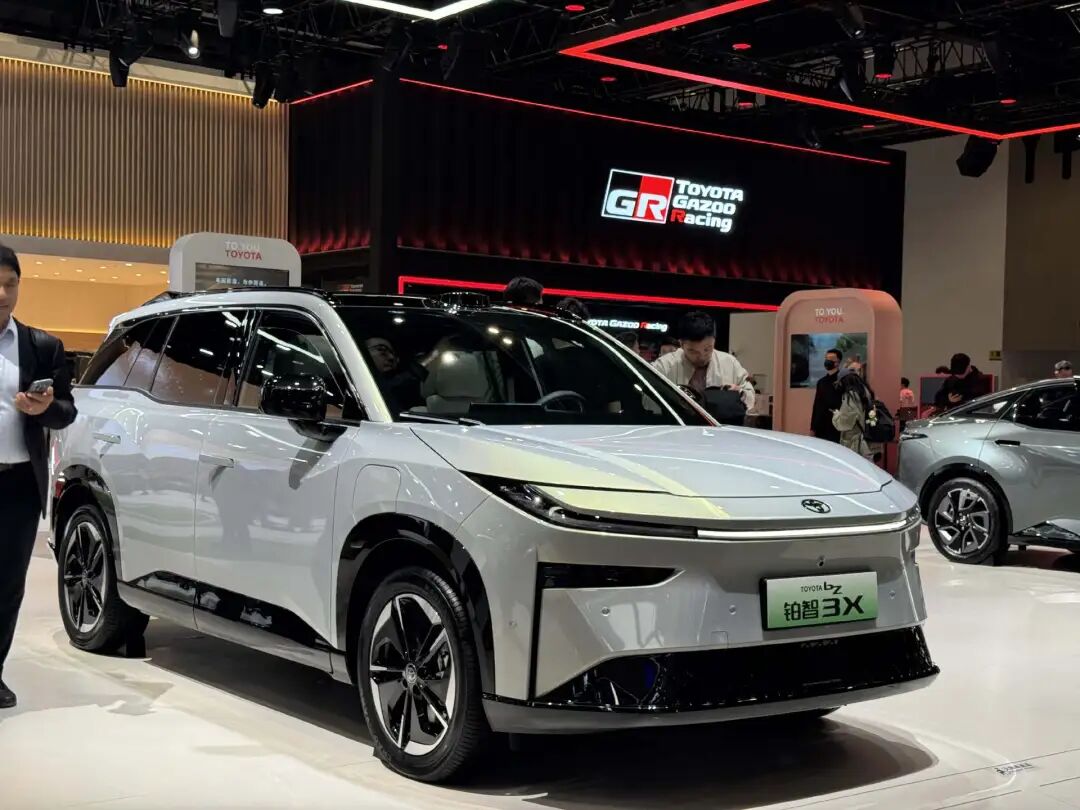
Image source: Photo by reporter Zhai Fangxue
The Japanese automotive industry is an industrial network formed around the engine era, employing a large number of small "husband - and - wife" enterprises all over the place. Take Toyota for example. According to Toyota Times, Toyota directly purchases from about 400 first - tier suppliers in Japan. If the entire supply chain is counted, the total number is about 60,000. These small enterprises have weak bargaining power but high economic efficiency, which are an important source of Toyota's high profits.
According to common industry estimates, the number of parts related to the power system of pure electric vehicles is about 30% - 40% less than that of fuel vehicles. If only moving parts are considered, the gap will be even greater. Once pure electric vehicles are fully developed, the entire supply chain will be reshuffled, and Toyota will lose its long - standing profit advantage in the global market.
In addition, the maintenance income of fuel vehicles is also a considerable and continuous source of income. The more complex the fuel vehicle is, the more frequent the after - sales, maintenance, repair and parts replacement will be; the simpler the pure electric vehicle is, the more difficult it will be for the traditional after - sales system to continuously profit from mechanical wear. This will cut off another part of the stable profit sources of Japanese car companies in the past.
At present, the biggest focus of Japanese car companies is the hybrid route. It retains the engine, the gearbox, the traditional parts system, and also retains the mechanical coordination ability that Japanese car companies are best at. More importantly, car companies can continue to use the existing factories, suppliers, dealers and maintenance systems.
At the same time, hydrogen - fuel vehicles are also being vigorously developed, which are regarded by Japanese car companies as the end - point of new energy vehicles. Although there are still many technical problems that are difficult to overcome and it is difficult to implement, the Japanese government and enterprises still invest a huge amount every year, which has also caused controversy.
Some people explain Japan's bet on hydrogen energy as an energy security choice. Japan is short of fossil fuel resources and has long relied on imported energy. The government has indeed included hydrogen energy and ammonia energy in its energy security strategy and continues to study potential domestic resources such as offshore methane hydrates. However, this explanation is not complete. Methane hydrate is essentially a natural gas resource, which is far from large - scale commercialization. Using it to produce hydrogen does not mean getting rid of fossil energy.
More realistically, there are a large number of old - energy enterprises involved in Japan's hydrogen and ammonia energy routes. Refining, LNG, power, trading and heavy - industry enterprises can still use their original import, storage, transportation, combustion and power - plant assets. For this reason, the outside world questions that Japan's hydrogen energy strategy is overly biased towards grey hydrogen, blue hydrogen and ammonia co - firing, and is essentially extending the life of the old - energy system rather than completely