DJI makes a strategic move, bringing an end to all competitive battles in the panoramic drone market.
According to Leifeng.com, just over a month after the launch of DJI's first panoramic drone, the Avata 360, its global shipments have exceeded 125,000 units, with sales exceeding 500 million yuan, and the number of activated users has exceeded 50,000. Within a statistical period of less than two months after its release, the Avata 360 accounted for over 98% of the global panoramic drone market.
A few years ago, the panoramic drone market was generally considered a "niche" segment. According to a UBS report, the global market size of panoramic FPV drones in 2024 was only about 1.8 billion yuan, accounting for only 3% of the entire aerial photography drone market (about 58 billion yuan).
It took less than two years for panoramic drones to evolve from "geek toys" to a "hot trend."
This raises a thought - provoking business question: Why did a company that has already reached the peak in the consumer - grade drone market choose to enter an unproven new category at this moment? How can a product that DJI is making for the first time reshape the market landscape so clearly in such a short period?
Is the success of the Avata 360 due to DJI discovering a neglected hidden market or "creating" a market on its own?
Panoramic Drones: A Multiplication Problem
The story of the Avata 360 begins when DJI decided to explore a new territory.
At that time, DJI was already a dominant player in the consumer - grade drone market. The Mavic series held the flagship aerial photography segment, the Mini series occupied the lightweight entry - level market, and the Avata series had just launched the FPV flight category - each product line had a clear position. From the outside, it seemed like a company that had achieved perfection in the drone field. However, internal discussions at the company pointed in another direction: "What would a panoramic imaging product from DJI look like?"
The combination of panoramic imaging and flight seems very "attractive," but three technical barriers - real - time stitching accuracy, dynamic obstacle avoidance, and video transmission delay - stand in the way, deterring most potential entrants.
In the past few years, the panoramic aerial photography segment also had its share of popularity. Some startups tried to enter the market through external accessories or special - purpose models. However, they faced practical problems such as customizing lens modules, high mold costs, and heat management pressure caused by dual - channel video streams within a limited fuselage. For small - scale teams with shipments in the thousands, it was a difficult path to follow.
There is a growing consensus in the industry that panoramic drones are a category that looks good but is difficult to make.
To build a panoramic drone, in theory, you only need to do two things: make a good drone and a good camera, and you can achieve a multiplicative effect. DJI has accumulated more than a decade of experience in both areas.
In terms of flight, from the Phantom to the Mavic to the Avata, DJI has been involved in consumer - grade drones and FPV immersive flight for more than a decade. The underlying capabilities such as flight control algorithms, video transmission stability, and obstacle avoidance accuracy have gone through numerous iterations.
In terms of imaging, from handheld gimbals to action cameras and then to panoramic cameras, DJI has developed its own path in miniaturized optical systems and image processing.
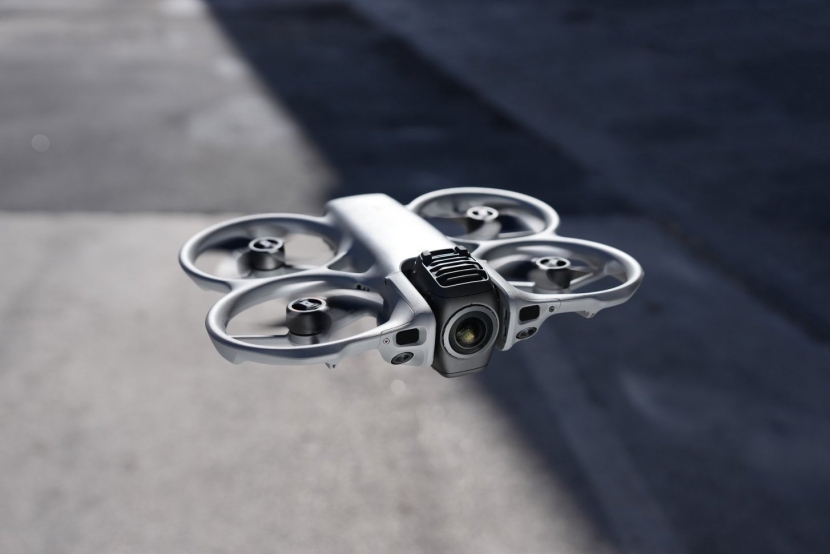
The Avata 360 is the convergence point of these two lines. It integrates the core capabilities of DJI's flagship products into a single device: the panoramic photography solution of the Osmo 360, the O4+ video transmission and omnidirectional obstacle avoidance of the Mavic series, and the follow - me shooting function of the Inspire series. Technologies that could only be experienced separately on different flagship products in the past are now available in one go.
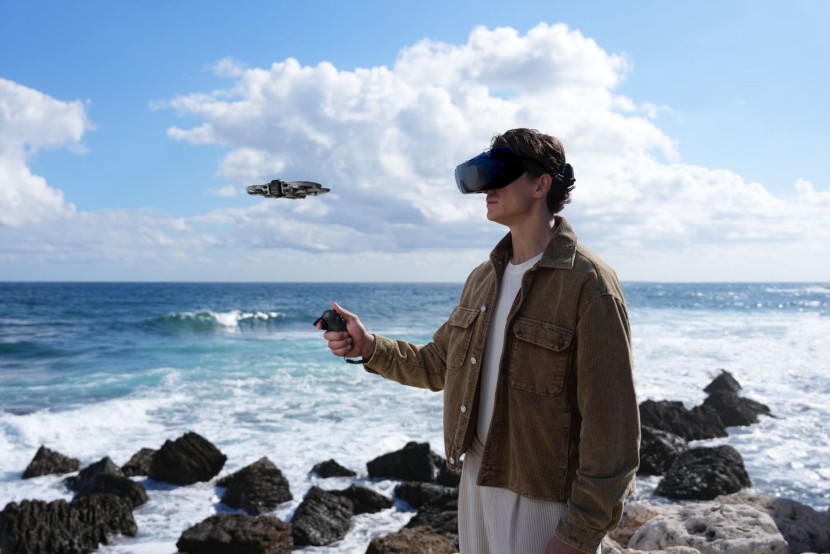
This integration of capabilities enables the Avata 360 to combine the speed of a racing drone with the stability of an aerial photography drone. When wearing the flight goggles, the user's line of sight becomes the camera's view in the first - person perspective, simultaneously stimulating the adrenaline of the pilot and the viewer. Functions such as omnidirectional obstacle avoidance, automatic return, and stable video transmission ensure the stability and error tolerance of traditional drones, providing a safety net for every flight.
Thanks to the Avata 360's integration of these features into a single device, users no longer have to choose between "adventure" and "conservatism," allowing novice players to fly with confidence and enjoyment.
Take on the Complexity and Keep Competitors at Bay
A good company should not only define products but also understand how to define user needs. DJI's goal in making panoramic drones is clear: to serve those who have a desire to create but do not want to be burdened by complex shooting processes. Whether they are novice drone users who want to easily shoot high - quality videos or professional video creators who pursue perfection, they can find their comfort zones during flight.
However, making users feel that things are simple often involves extreme complexity behind the scenes.
Traditional panoramic cameras have long faced a contradiction: the better the image quality, the larger the size. When a traditional rectangular sensor is used for panoramic imaging, only a part of the circular image field can be used in the middle of the rectangle, resulting in a large amount of waste on the upper and lower sides. This is the root cause of the difficulty in achieving a balance among "image quality, size, and battery life" for panoramic cameras.
The common approach in the industry is to accept this loss by purchasing off - the - shelf rectangular sensor solutions. Customizing a sensor specifically designed for panoramic imaging means several times the R & D investment, a long production cycle, and uncertain technical risks.
DJI's judgment is that if the foundation of panoramic shooting is not good enough, the core experience of "fly first, then compose" cannot be realized. 36Kr learned that since 2022, DJI's R & D team has been integrating user needs, conducting preliminary product planning, and initiating work related to the design of a dedicated panoramic sensor, the design of the product's basic architecture, and its implementation.
In 2023, DJI completed the preliminary verification of its panoramic square sensor, the matching design of the panoramic lens, and the design of the panoramic prototype. This sensor was later installed on both the Osmo 360 panoramic camera and the Avata 360 panoramic drone. The most significant feature of this square CMOS sensor is that the circular image field is exactly inscribed in the square photosensitive area, increasing the sensor utilization rate by 25%.
By eliminating the redundant area, power consumption and heat generation are reduced, making the whole device lighter and more portable. To match this new sensor, the team also redesigned the pixel read - out logic, increasing the number of pixels in the height direction from the traditional 3000 to 4000, enabling the dual - lens system to directly output native 8K panoramic videos.

This is just one aspect. Another more "practical" problem is that a panoramic drone requires two cameras (upper and lower) to work simultaneously. During flight, this is not a problem, but when landing, with the two cameras protruding, how can the drone land? The common industrial solution is to add an electric landing gear that retracts during take - off and extends during landing. However, this adds extra motors, transmission mechanisms, and dozens of grams of weight.
DJI's mechanical engineers designed the gimbal to have a flip - structure. During flight, the panoramic module expands vertically. When landing, the gimbal rotates 90 degrees, and the panoramic module turns to face front - to - back, allowing the middle section of the fuselage to bear the weight directly. This design eliminates the need for the entire landing gear system. Behind this seemingly simple "flip" is more than half a year of hand - feel adjustment, optimization of the motor response curve, and repeated verification of the landing logic.
The same is true for the video transmission. The team spent a lot of time tuning the control algorithm to ensure stable signal output when flying through complex environments such as buildings, reducing the delay to a level almost imperceptible to the human eye. The error between head movement and image response is controlled within milliseconds. These details, which are not visible in the parameter table, determine whether the immersive flight experience is truly "immersive."
In terms of visible parameters, the Avata 360 does not compromise either. It is equipped with dual one - inch equivalent sensors, can record native 8K/60fps HDR panoramic videos, take 120 - megapixel static photos, has O4+ full - HD video transmission, omnidirectional visual obstacle avoidance, and a built - in 4G enhanced video transmission module. As DJI's flagship panoramic drone, it is not surprising that it has these top - notch technologies. The question worth asking is how DJI integrates all these advanced configurations into a device with a starting price of 2788 yuan.
The answer lies in DJI's two - decade - long exploration. Its technological accumulation has given DJI mature self - developed capabilities in both flight and imaging, eliminating the need to pay for each technology from scratch. Its product layout allows a customized sensor to serve both the Osmo 360 and the Avata 360, and the results of the flip - gimbal design can be reused in subsequent products. Its supply - chain integration capabilities enable DJI to have a more controllable cost structure for core components.
Combined with a precise understanding of user needs, the Avata 360 forms a mature and smooth chain from definition, technology, and function to user experience, allowing technology to ultimately serve user needs. This is also DJI's greatest commitment to the panoramic drone market.
After Firing the First Shot, What's Next?
After achieving a 98% market share, what's left in the panoramic drone market?
It's not "competition," but "popularization."
In the past, to capture the kind of low - altitude, high - speed racing drone shots, you needed a modified FPV aircraft and a pilot with thousands of hours of practice. Such footage usually only appeared in brand advertising videos, backed by professional teams and large budgets.
Now, a novice with no prior flight experience can unpack the Avata 360, learn briefly, and then fly high - speed, circling shots that were previously only achievable by professional pilots.
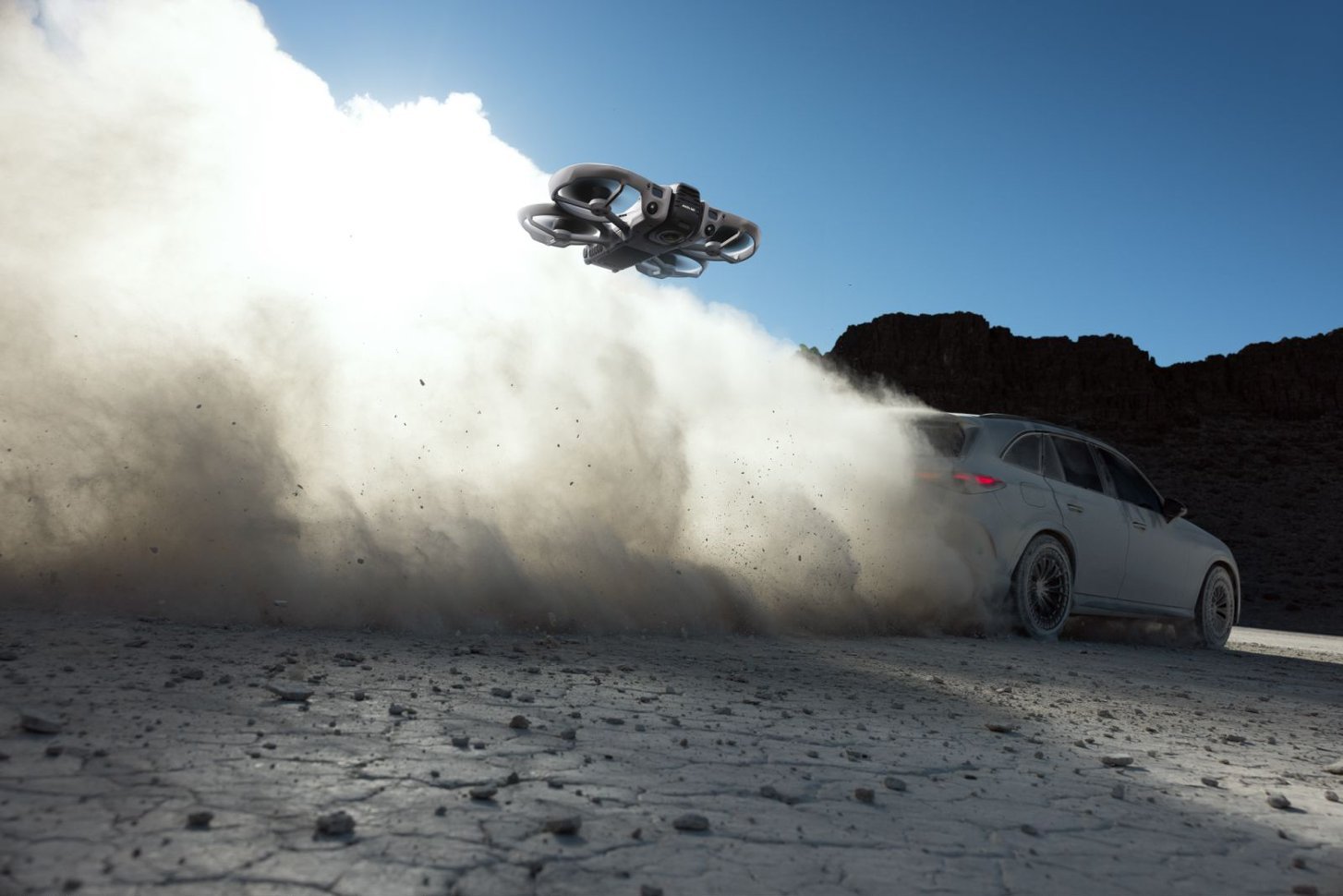
Behind this "plug - and - play" experience, the R & D team carefully considered what a novice might encounter in a real - world environment, identified three key issues, and provided solutions for each.
For many first - time drone users, the biggest obstacle is the fear of crashing the drone. The Avata 360 addresses this fear with two major "safeguards." The omnidirectional visual obstacle avoidance system continuously scans the environment in six directions (front, back, left, right, up, and down), allowing the drone to avoid obstacles on its own. Combined with the O4+ full - HD video transmission and 4G enhanced video transmission, the drone will not suddenly lose control even if the flight signal is blocked.
In the past, drone camera movements required repeated practice, and a single "shaky hand" could cause you to miss a great shot. The core value of panoramic imaging is that during a single flight, all angles can be recorded in the footage. The sensor and in - flight real - time stitching algorithm ensure the integrity and usability of the footage. You can capture all - angle footage during a single flight and review the footage from every direction after landing while sitting on the couch.
The traditional post - processing process for panoramic shooting is: export → stitching software → adjust perspective → render → re - import into editing software. The Avata 360 simplifies this process into two steps: open the DJI Fly App → drag the screen to select the angle → export. The stitching is done in - flight, and the editing can be completed on the mobile phone in one go.
Hiding complex technology and providing a simple user experience is the product philosophy of the 20 - year - old DJI. The Pocket 3 replaced the cumbersome startup process with a rotating screen and opened up the "light - professional" imaging device market with high - quality images and portability. The DJI Neo simplified the operation of aerial photography devices to palm - takeoff and landing and made it easy to control aerial photography devices with both hands using intelligent follow - me shooting technology. When users can easily perform originally complex operations, their attention is naturally focused on the creative process.
From Defining Products to Setting Rules
DJI is not the first company to enter the panoramic drone market. But why does the market situation become clear as soon as this company enters? The answer lies in the fundamental difference between DJI's approach to products and that of other companies.
This is a company willing to pay the cost for "definition rights." In the consumer electronics industry, most companies make product decisions based on a clear formula: R & D investment ÷ expected sales volume = unit cost. When the denominator is not large enough, the project is considered "unprofitable."
DJI's logic is completely different. It first asks "what should this category look like," then works backward to determine the required investment, and then finds ways to absorb these costs through its product matrix.
Paying for image quality, safety, and ease of use - each of these is difficult to recoup quickly on a single product line. However, DJI has a large enough product line and sales volume to share these high - cost investments. Coupled with its industrial manufacturing system accumulated over the years, DJI has finally achieved the "democratization" of flagship products, bringing top - notch products to the market at prices acceptable to ordinary consumers.
If these are the rational barriers, DJI also has a more fundamental competitiveness. It is always a "cool" company that wants to do something "interesting." Looking back at DJI's history, from the Phantom to the Mavic to the Avata, at the beginning of each popular product category, it was not just about filling a market gap, but also because a product manager came up with a new idea: "What if we do it this way? Would it be more interesting?"
This judgment comes from the founder, Frank Wang. He believes that "products must be cool first. Products developed out of interest are more likely to succeed, while products developed purely for profit often don't do well." This product logic, which starts from interest and focuses on user experience, gives DJI a rare ability - to develop good products before users even realize what they need.
It is this "interesting" core that allows a company with annual revenues well over 10 billion yuan to maintain the product sensitivity of its early - stage startup days even after 20 years.
In the past 20 years, DJI has defined consumer - grade aerial photography with the Phantom, established industry standards with the Mavic, and opened up the handheld imaging market with the Osmo Pocket. Today, the Avata 360, with its 98% market share, writes a new chapter: In the consumer electronics field, a Chinese company can become an industry leader by continuously defining new product categories, relying not on price wars or imitation, but on long - term investment in underlying technologies and a deep understanding of user needs.
The 98% market share is DJI's new answer to the emerging panoramic drone market. When the barriers to flight and the limitations of perspective are eliminated, the boundless sky has no blind spots. What is left for creators is pure storytelling time, and for DJI, it is the imagination space for the next 20 years.