HaoFeng AI solves the haptic pain points in digital entertainment and is seeking Pre-A round financing.
In the current digital entertainment field, visual and auditory experiences have long been mature and popular, while haptic feedback has always been a shortcoming in the industry. Ningbo Liangfeng Network Technology Co., Ltd. has launched the first open - source AI haptic vest. This product generates haptic sensations by algorithmically recognizing sound waves and supports mobile phones, computers, and all terminal devices with audio output.
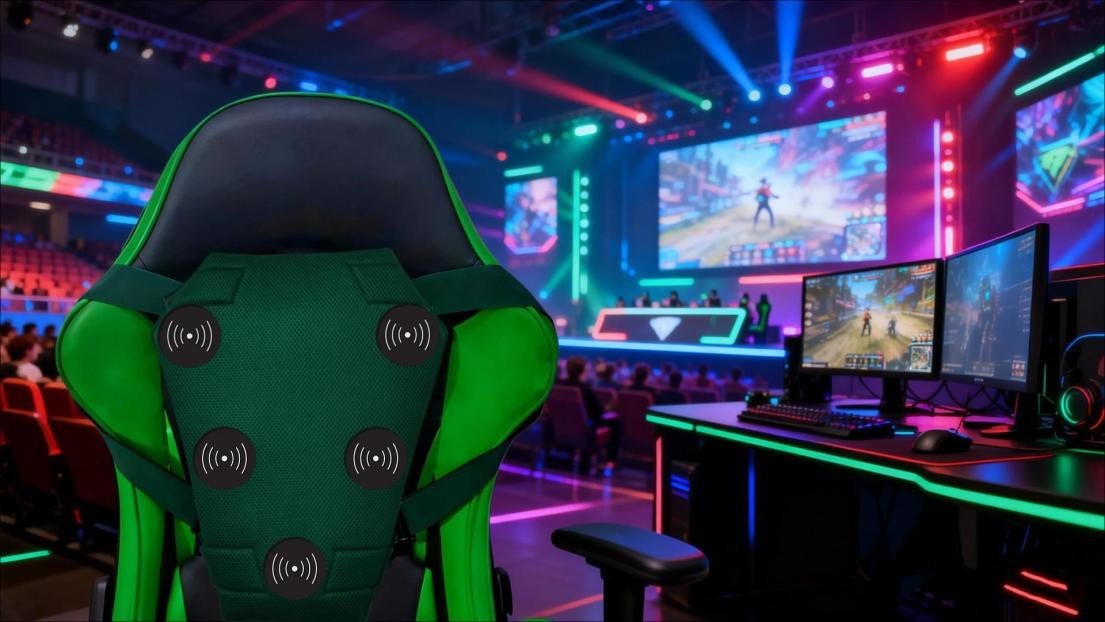
Breaking the boundaries of the senses, this all - scenario domestic AI haptic vest fills the gap in digital entertainment interaction.
As an innovative project in the consumer electronics track, the original intention of developing the Haofeng AI haptic vest is to address the core pain points in digital entertainment. Currently, haptic feedback devices on the market not only have poor compatibility, only supporting a few specified platforms and games, with limited height and weight adaptability, high latency, which affects the haptic experience, but also cannot meet users' all - scenario needs.
Different from the limitations of overseas similar products, such as closed compatibility and high latency, the Haofeng AI haptic vest uses dynamic sound wave recognition technology based on AI algorithms. It can accurately identify the duration, hertz, and intensity of sound waves and automatically generate corresponding haptic feedback signals, achieving intelligent human - machine synchronous interaction. It has multiple built - in haptic modules, adopts a high - insulation and high - stability composite epoxy resin FR4 PCB solution, and is designed with lightweight materials. While ensuring the accuracy of haptic perception, it also takes into account wearing comfort and durability. It is not only wearable but also can be hung on the back of a chair, suitable for everyone.
Real - time haptic feedback and low latency
The latency of the wired version of the product is no more than 10 milliseconds, and the latency of the wireless version is controlled within 20 milliseconds, far lower than the 100 - 200 millisecond latency level of overseas similar products, truly achieving real - time synchronous interaction. The most core innovation lies in the fully open - source compatible design, which can be adapted to all devices with audio output, such as mobile phones, computers, Xbox, and Switch. It supports users to independently adjust the haptic intensity, feedback location, and usage duration, breaking the limitations of the closed ecosystem of overseas products.
Main usage scenarios
Games: In VR games and 3D games, feel every impact of shooting and explosions.
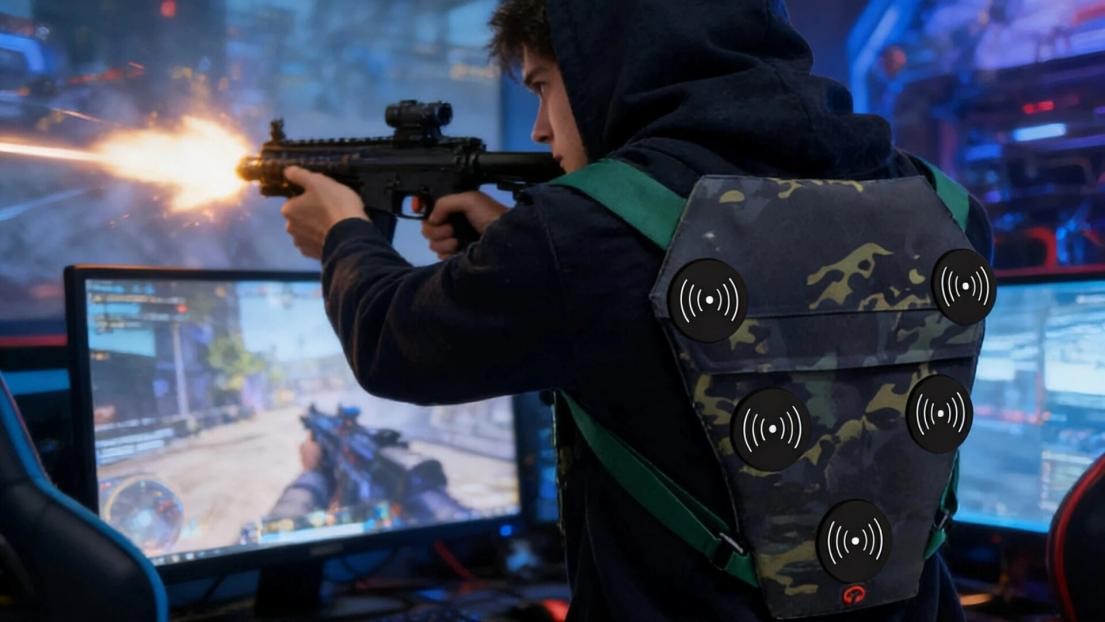
Music: Feel the notes and rhythms beating synchronously on your body surface.

Movies: Break through the audio - visual limitations of watching movies and enjoy an immersive movie - watching experience!
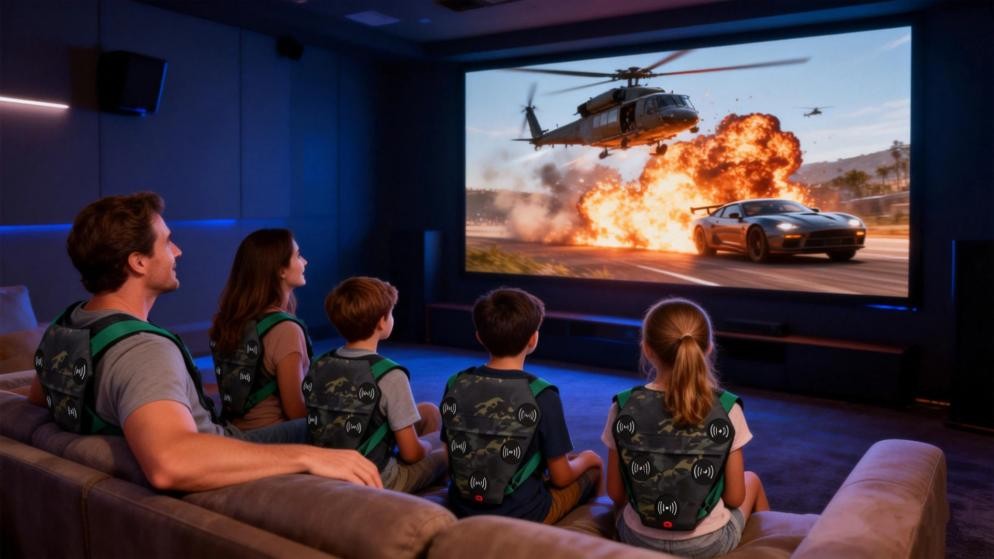
Target users
In terms of market space (consumer side), in 2025, the number of global game players has exceeded 3.5 billion, and the number of paying users is 1.6 billion. With the rapid implementation of the VR and XR industries, users' demand for immersive multi - sensory interaction is growing rapidly. In addition, the user markets for music and movies are even larger. Moreover, the product can also be extended to B - end scenarios such as military special training and medical rehabilitation, achieving broad growth space in multiple scenarios. Early game users who participated in the testing said, "In shooting games, I can clearly feel the vibration of the recoil, and when there is an explosion, I can feel the shock all over my back. The sense of immersion just comes right up."
Profit model
On the C - end, it sells consumer - grade hardware to game players, VR users, and audio - visual enthusiasts. On the B - end, it will subsequently expand into fields such as military training and medical rehabilitation, providing customized software and hardware kits.
Financing needs
Currently, the AI haptic vest is about to start overseas pre - sales and has reached preliminary cooperation with more than 10 email marketers and advertising agencies.
The current project is seeking 10 million yuan in financing. The funds will be all used for overseas pre - sales promotion. Among them, 40% will be invested in Facebook ads, 20% in Google ads, 20% in TikTok ads, 10% in email marketing, and 10% will be reserved as a contingency fund. The investment strategy will be flexibly adjusted based on ROAS data. The cooperation model adopts a flexible plan of sales - based layering plus equity, and specific details can be discussed in person.
The Haofeng AI haptic vest based on domestic AI main - control chips is not only a representative of technological innovation but also an embodiment of China's self - controllable capabilities in fields such as AI chips and human - machine interaction. This product is expected to achieve large - scale implementation in fields such as consumer electronics and medical care, promoting "Made in China" to the global market.