Wang Chuanfu's global No.1 status is essentially a "production scheduling sheet"
Challenge Toyota.
On June 9th, BYD held its 2025 annual general meeting of shareholders at its headquarters in Pingshan, Shenzhen, just as it did in previous years.
More people showed up than ever before. The company had to move the venue from the meeting room to the hall where press conferences are usually held. Wang Chuanfu said on stage that nearly a thousand people were present that day, the largest number in history.
During the Q&A session, a shareholder who had held a large stake in the company for many years stood up. He wanted to know where the company was headed next.
For the first time, the term "world's number one" appeared in Wang Chuanfu's answer. He said that BYD will continue to grow in the next three to five years. After five years, it aims to become the "genuine world's number one" in terms of scale.
It's not about being the number one in new energy or in China. It means being the number one in the overall vehicle scale, including Toyota, Volkswagen, Hyundai-Kia and other automakers.
When he said this, BYD was experiencing the biggest slowdown since the new energy era began. In the first five months of 2026, BYD sold 788,000 vehicles in the Chinese market, a year-on-year decline of 43.3%. The Chinese market can no longer provide the same growth as before.
So Wang Chuanfu's goal is actually aimed at the overseas market.
Looking closely at what BYD has done in the past two or three years, this goal is not surprising. Its approach is no longer like that of a company that only wants to gain a foothold overseas.
BYD Aims to Take Over the Core Markets of Toyota and Hyundai
To understand how far BYD is from its goal, we first need to look at the gap.
Currently, Toyota is the world's number one automaker, selling just over ten million vehicles a year. BYD sold 4.6 million vehicles in 2025, ranking sixth in the world. The gap is more than five million vehicles, which is roughly equivalent to creating another BYD on top of its current scale.
It's certain that most of these additional five million vehicles won't come from the domestic market.
In 2025, the penetration rate of new energy vehicles in China reached 53.9%, approaching the ceiling. BYD's domestic sales actually decreased that year, dropping by about 300,000 vehicles compared to 2024.
Geely, Chery and Changan are all catching up. The domestic market is almost saturated, and the potential for further growth is limited. Therefore, the growth gap has been shifted to the overseas market. Outside of China, the global penetration rate of new energy vehicles is still only a little over 11%.
However, the "overseas market" is not a single entity. The most lucrative parts are precisely the ones BYD can't enter. The United States uses tariffs and regulatory barriers to seal off the largest and most profitable market in the world. Japan and South Korea are dominated by local brands, making it difficult for outsiders to break in. India uses high tariffs and entry thresholds to keep Chinese cars out.
The remaining markets where BYD can compete are in South America, Southeast Asia, Central Asia, Australia, the UK, the Gulf countries, as well as parts of Europe and Mexico. The combined market is smaller, so each accessible market has to bear a heavier share.
And none of these open markets is empty.
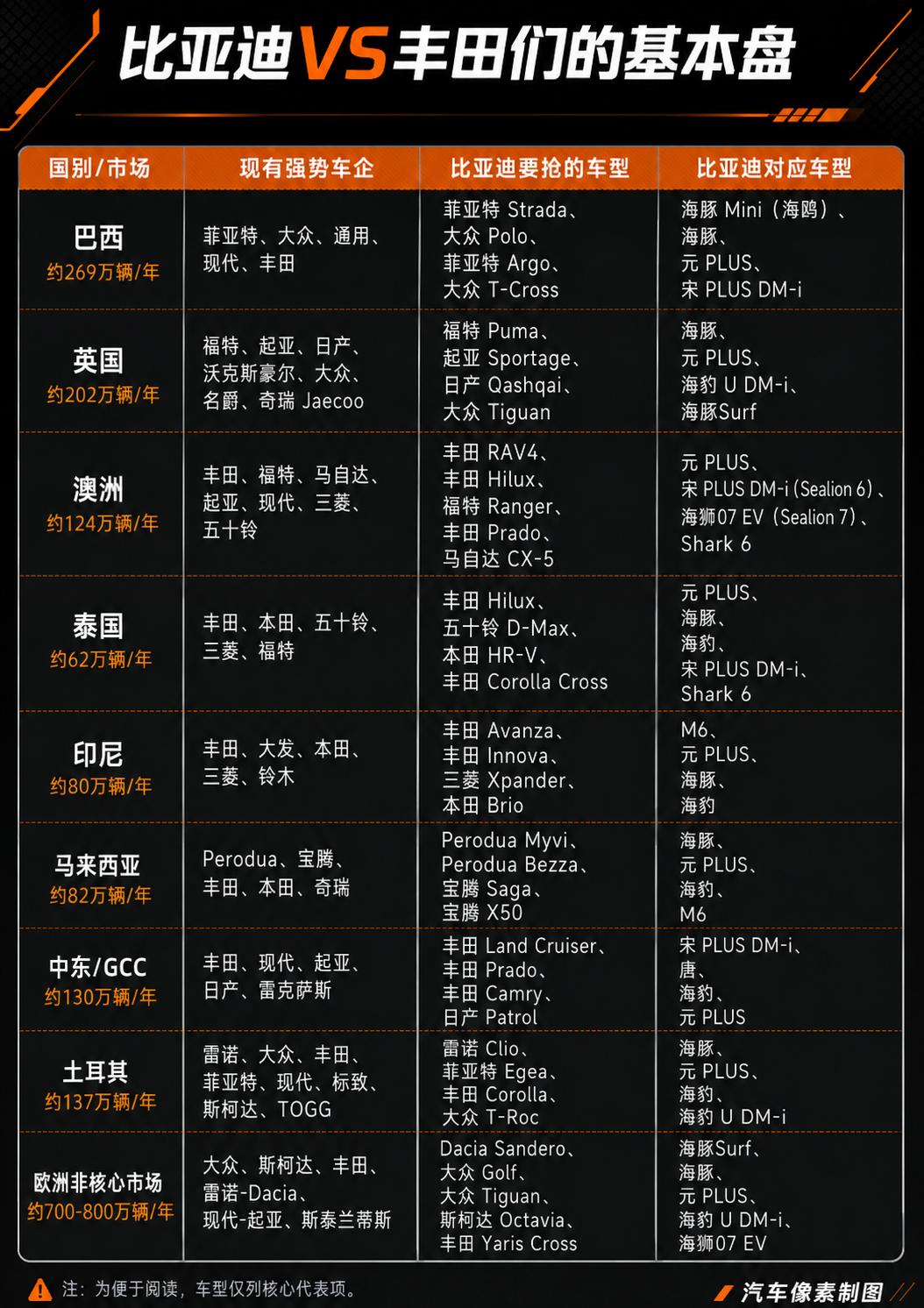
Southeast Asia is Toyota's home turf. It holds nearly 40% of the market share there. BYD has just managed to enter the top three in Thailand. In Australia, the situation is even more extreme. Toyota has been the top - selling brand for 23 consecutive years, with sales twice and a half that of the second - place brand. The Gulf countries are the shared territory of Toyota and Hyundai - Kia. In countries like Saudi Arabia, the UAE and Oman, Toyota has the highest market share.
Only in Brazil, the existing market is in the hands of Stellantis, Volkswagen, Hyundai - Kia and Renault.
If you list the dominant players in these markets one by one, the name that appears most frequently is Toyota, followed by Hyundai - Kia, and then European automakers like Volkswagen and Stellantis.
So the overseas markets BYD wants to capture are the well - established core markets that Japanese and Korean automakers have built up over decades with their fuel - powered vehicles.
What BYD really wants to replace are popular models like the RAV4, Corolla, Elantra and Creta, which are economical, durable and have been on the market for decades. It will use its DM - i plug - in hybrid and blade - battery electric vehicles to replace them one by one in the most popular price segments of each market.
If we break it down, the slogan of "world's number one" actually boils down to a more straightforward statement: BYD has to take over the long - established market share of Toyota and Hyundai - Kia.
This is a tough battle. What are its chances?
Wang Chuanfu Translates Growth into a Production Schedule
When faced with questions like "how to go from sixth to first", Wang Chuanfu's habit is to turn it into a supply - side arithmetic problem.
On June 9th, what he talked about the most was not the market, but production capacity. He said that the number of vehicles that can be sold this year depends on the battery production capacity. The production capacity of the second - generation blade batteries is increasing month by month, with an additional 20,000 to 30,000 sets per month. It won't be until 2027 when the production capacity is fully released that both the domestic and overseas markets will see a significant increase in sales.
A question that should be about the market and products is explained by him as "how much I can produce". In his narrative, demand is assumed to be sufficient, and the bottleneck lies in his own production line.
Wang Chuanfu seems to believe that as long as the technological development curve of the domestic new energy market in the past three years is replicated overseas, the remaining problems can be solved by the production schedule.
This thinking can explain BYD's overseas layout in the past two years.
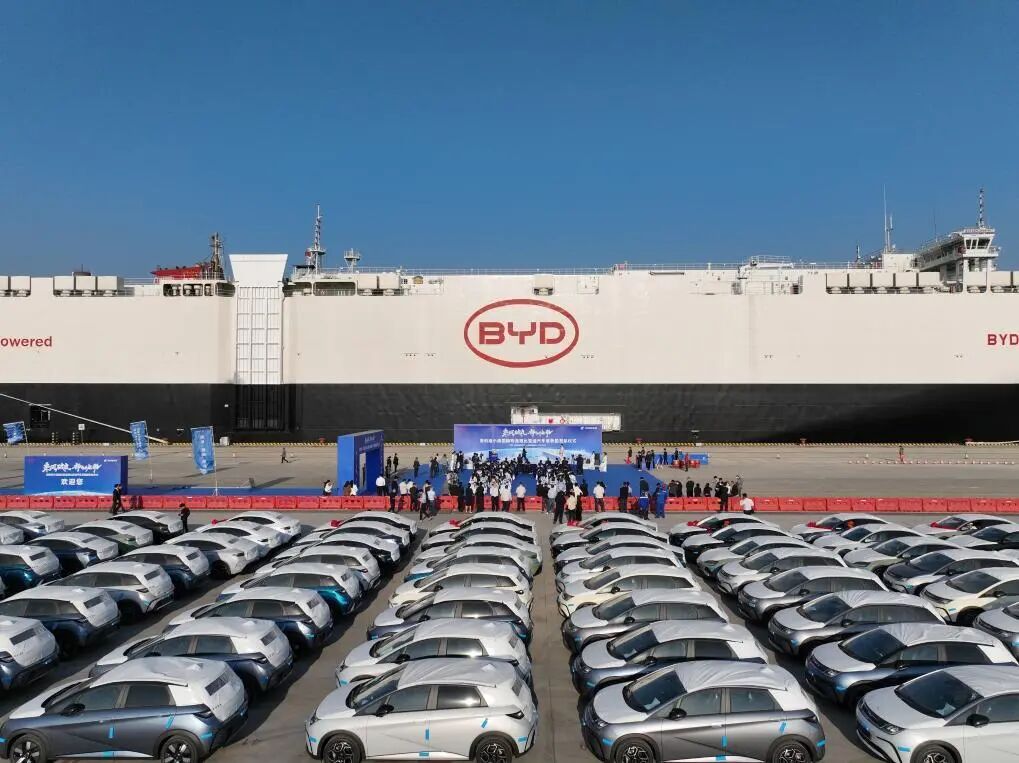
BYD has at least six factories under construction or in the planning stage overseas. The Camacari factory in Brazil was converted from an old Ford factory. It was acquired in 2023, and the first vehicle rolled off the production line in July 2025. The goal is to reach a production capacity of 300,000 vehicles by the end of 2026. The Thai factory started production in 2024, with an annual production capacity of 150,000 vehicles. The Szeged factory in Hungary also serves as the European headquarters. There are plans to invest one billion US dollars in Turkey (which may be postponed), and there are also factories in Uzbekistan and Indonesia.
BYD's approach is based on a bet on speed.
Looking back at BYD's rise in the domestic market, it relied on technological leadership. In 2021, the fourth - generation DM - i plug - in hybrid achieved the same price as similar fuel - powered vehicles with lower fuel consumption. The blade battery also solved the problems of safety and cost. The annual sales of plug - in hybrids increased from 270,000 to over two million in two or three years.
During those years, the domestic new energy market was almost empty. Whoever could offer good - quality and affordable electric vehicles first could capture a large share of the market.
This approach has continued until now. At this year's general meeting of shareholders, Wang Chuanfu said, "I spend about half of my time each week swimming in the ocean of technology." He considers himself "one of the 120,000 engineers at BYD".
However, it's not as easy to translate this approach into sales now. Geely, Chery and Leapmotor are catching up. DM - i is no longer a unique selling point, and there are other companies that can produce fast - charging vehicles.
Technologies are becoming more and more homogeneous, approaching the physical ceiling. Each step forward brings less and less increase in sales.
The situation is different overseas. Outside of China, the new energy market is still at the starting point that BYD faced a few years ago, with low penetration rate, few good - quality vehicles and high prices. Most markets are still dominated by fuel - powered vehicles.
The technological development curve that propelled BYD to the sixth place in the world has hardly started overseas. What BYD wants to do is to take the most advantageous position before the curve takes off and replicate its domestic success in a larger market.
This explains why BYD is making such a big and urgent move overseas. BYD believes that the window of opportunity is limited. Once the new energy market overseas starts to grow, competitors will flock in just like in the domestic market, and the first - movers may not have much more time.
It doesn't want to wait for the market to mature, and it doesn't want to give up the initiative.
In June this year, foreign media reported that BYD is considering acquiring an old European factory. It has inspected "many factories" in Europe and is in talks with automakers including Stellantis.
BYD prefers to operate factories independently. It wants to take over brownfield factories that can be quickly renovated, independently operated, with clear ownership and operating boundaries, rather than getting involved in the existing joint - venture, leasing or multi - party interest structures of European automakers.
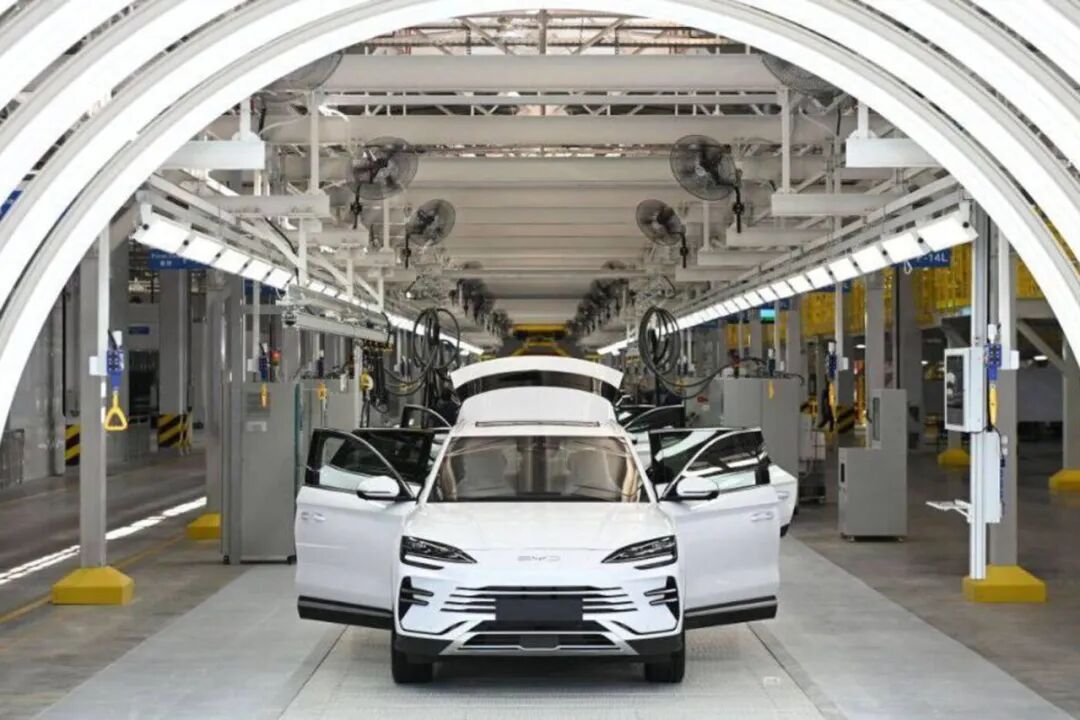
BYD takes control of key factories and the supply chain, and also tries to control distribution and branding as much as possible to ensure efficiency and speed. It would rather not have partners to share risks, but instead have a decision - making chain that can operate at full speed.
The factory in Brazil, converted from an old one, took only 16 months from the start of construction to the production of the first vehicle. The same goes for the export module. A fleet of six to eight ships is used to handle overseas logistics. In terms of distribution channels, BYD has taken a stake in a local distributor in Thailand, partnered with a large distribution group with over a hundred stores in Latin America, increased the number of authorized stores in the UK from 52 to 125 in one year, and signed a contract with Uber for 100,000 vehicles.
Following this logic, BYD's overseas actions are connected. Wang Chuanfu is implementing a replicable model, which is why he answers questions about sales with the logic of a "production schedule".
Whether this approach will work ultimately depends on the fundamental assumption that the technological curve that drives the market will be as steep overseas in the next few years as it was in China in the past few years.
As long as this assumption holds, simplifying the problem into a production schedule is the fastest way to solve it.
BYD vs Geely: Different Strategies for Going Global
A common misinterpretation is to summarize BYD's overseas expansion as being "more focused" than that of Chery and Geely.
In terms of aggressiveness, the three companies are on a par. In terms of overseas scale, Chery sold 1.34 million vehicles overseas in 2025, nearly 300,000 more than BYD, and has been the champion of Chinese passenger car exports for more than 20 consecutive years. In terms of capital boldness, Geely has made a series of acquisitions, from Volvo, Lotus, Polestar to a joint - venture on powertrain with Renault.
The real difference lies not in the degree of aggressiveness, but in the strategic judgment behind it.
Chery bets on the breadth of exports, using both complete vehicle exports and knockdown assembly to penetrate niche markets. It's essentially a light - asset approach.
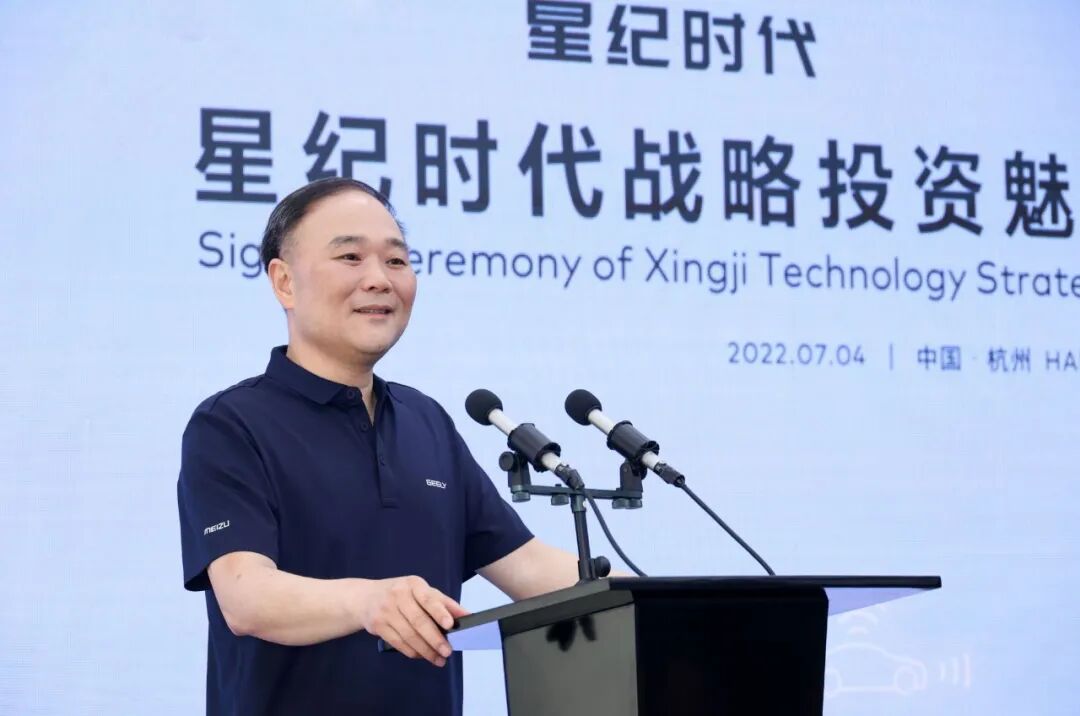
Geely bets on capital and alliances. Li Shufu is more like an asset allocator. On the one hand, he focuses on core capabilities, refining intelligent and new energy technologies to the best level. On the other hand, he takes stakes and forms alliances, seeking to leverage resources at the factory and distribution channel levels.
▍Li Shufu
This year, Geely's Qianli Haohan G - ASD obtained the EU's UN R171 certification, becoming the first Chinese assisted - driving system to pass this regulatory certification. Vehicles equipped with it can be sold in the EU without the need for repeated certification in each country.
At the same time, Geely integrated its R & D teams in Gothenburg and Frankfurt to establish Geely Technology Europe, aiming to reduce the time difference between the release of Chinese and overseas models from more than one year to within six months.
Also this year, Lynk & Co. reused Volvo's resources for its European sales. Geely reused Renault's resources in South Korea and South America. Gan Jiayue of Geely Auto once said that Chinese brands going global is not about "occupying" but "integrating". Joint - venturing locally and leveraging local resources for a win - win situation is a natural expression of this logic.
Behind these three choices are three strategic judgments and three views on where to build the moat.
Geely is not in a hurry about technological substitution. At Geely's 2025 fiscal year earnings conference in March this year, Gui Shengyue, the CEO of Geely Holding, said that the future economy - class passenger car market is likely to be replaced by robotaxis. Soon after, Geely became one of Nvidia's automotive partners.
This judgment shows that Geely doesn't see the current new energy competition as the end - game. It believes that there will be more technological reshuffles in the automotive industry, so it is more willing to use cooperation and capital allocation to maintain flexibility.
Because of this difference, Geely is not in a hurry to claim the "number one" position, nor does it set a five - year deadline. It is more like betting on the future rather than putting all its chips on the current wave of new energy substitution. So Geely's overseas choices are almost the opposite of BYD's. It is willing to accept a slower, more decentralized and more complex approach.
BYD wants to quickly build up its scale through batteries, factories, fleets and distribution channels. Geely, on the other hand, is more willing to secure multiple positions in terms of technological routes, regional markets and cooperative relationships.
The Other Side of the Production Schedule
Aiming to be the number one in scale is a goal setting, a strategic judgment, and ultimately a structural choice.
<