Global people doing a big reconciliation? Elon Musk has broken through the barrier this time.
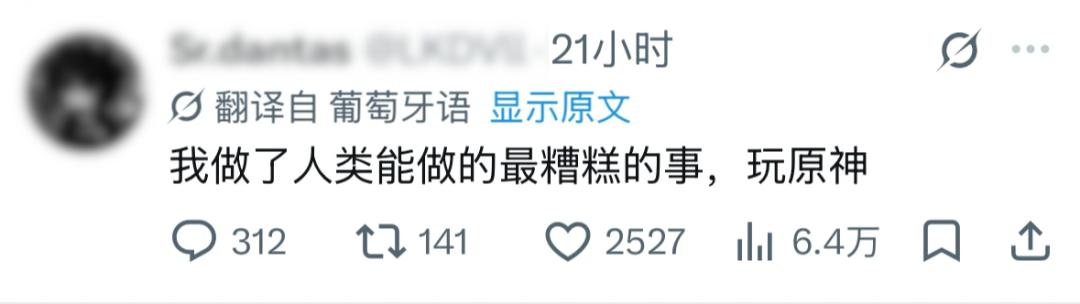
"I've done the worst thing a human can do: play Genshin Impact."
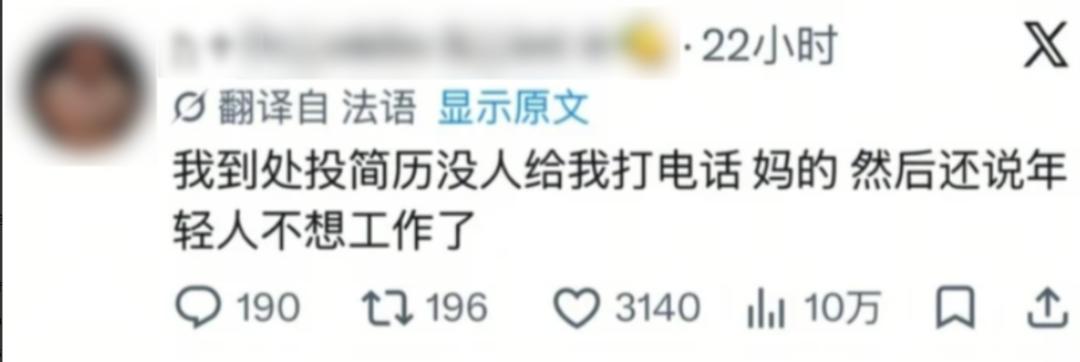
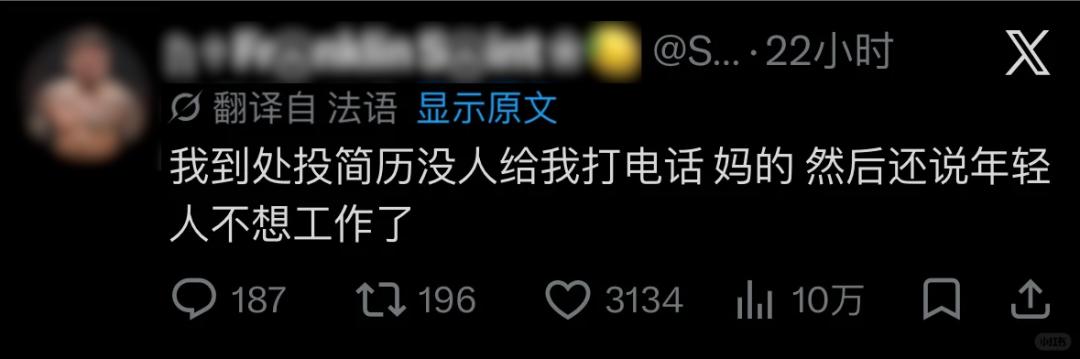
"I've been sending out resumes everywhere, but no one calls me. Damn it, and then they say young people don't want to work."
"I'm 23 years old, and when someone walks into the room, I still suddenly throw my phone away and pretend to be studying."
At first glance, you won't find anything wrong with these posts. Aren't they just the daily meme - making and complaining we often see on Weibo and Xiaohongshu?
But if I tell you that these three posts are from netizens in Portugal, France, and Turkey respectively, and they only appear in Chinese on your homepage...
How would you react?
This matter starts with a new feature:
X (formerly Twitter) recently launched an automatic translation function. Elon Musk announced it at the end of March, and English - speaking users have been using it for a while, but it wasn't available in the Chinese - speaking area until the end of May.
Note that this "automatic translation" is completely different from the previous "translation".
In the past, when you saw a foreign - language post, you had to manually click into the post and then click the translation button. For us young people, this was like heavy physical labor.
But now, the translation is on by default.
You don't need to click anything. As long as you're scrolling through your homepage, you can see foreign - language posts in Chinese.
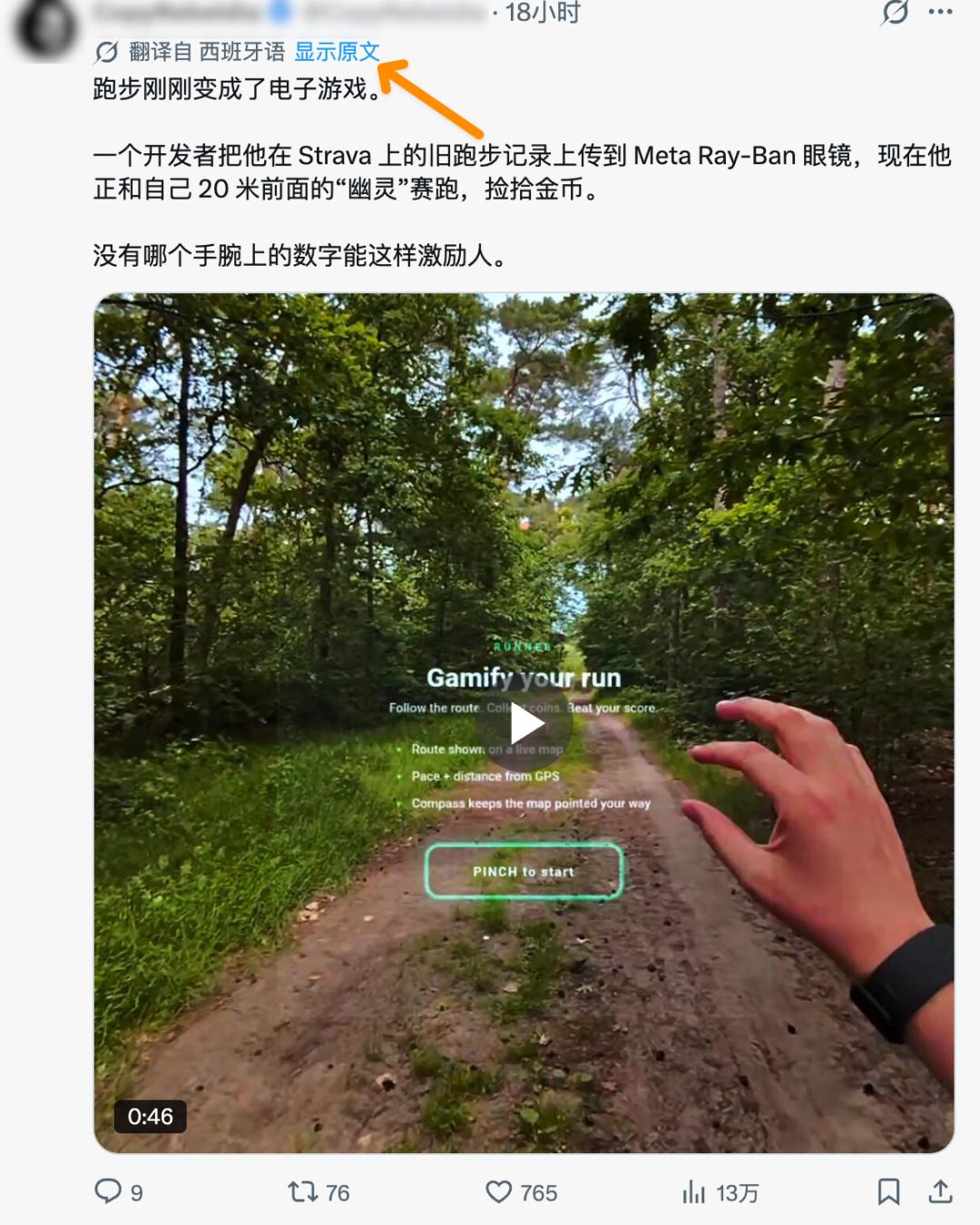
There will be a small line above these posts saying "Translated from Korean", "Translated from Portuguese". You can only see the original text by clicking "Show original".
You might think, isn't it just saving one click?
But after scrolling for a while, I found that Twitter has really become much more interesting.
First of all, since you can see popular posts from various countries on your homepage, the timeline is no longer filled with current affairs and politics or a bunch of explicit pictures...
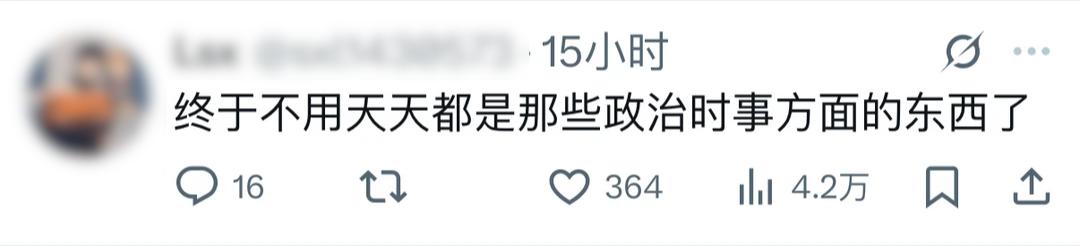
Secondly, after seeing the lives of those foreigners, I found that human troubles are actually the same across races and languages, globally unified.
A Spanish netizen said, "I love that our generation has broken the stereotype that you can't get a job if you have a tattoo. Now, no one can get a job, whether you have a tattoo or not."
Chinese netizens in the comment section were directly confused. They thought the idea that "you can't get a job if you have a tattoo" only circulated in China, but unexpectedly, it also exists in Europe?
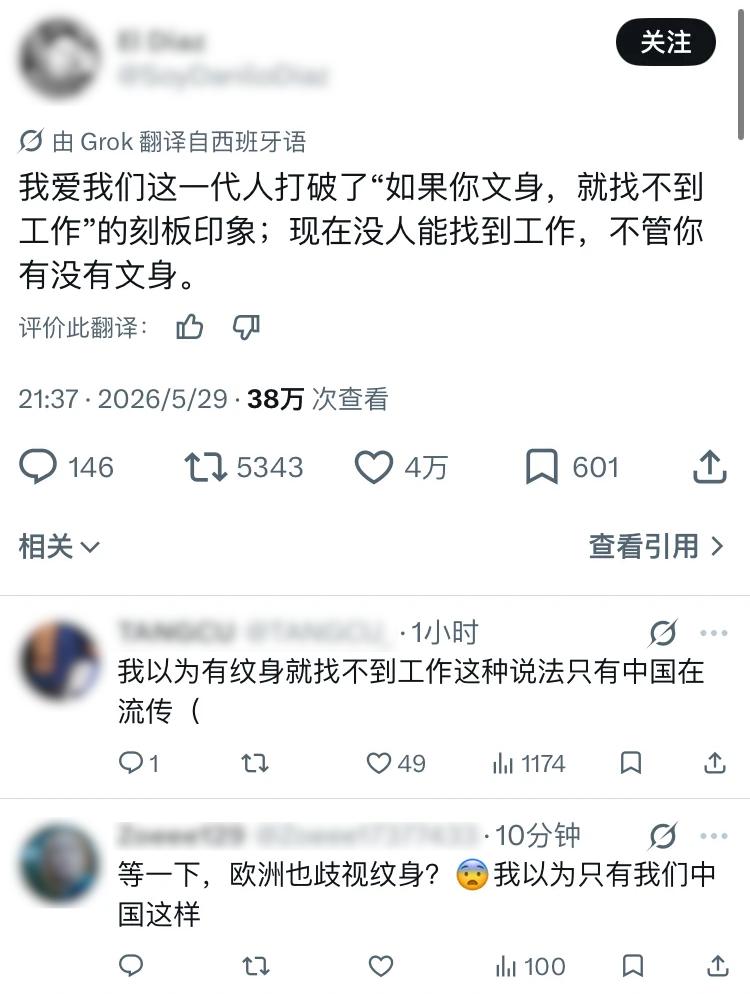
Of course, the main point of the post is... no one can find a job these days.
Those who can't find a job are worried, and those who have found a job aren't much better off.
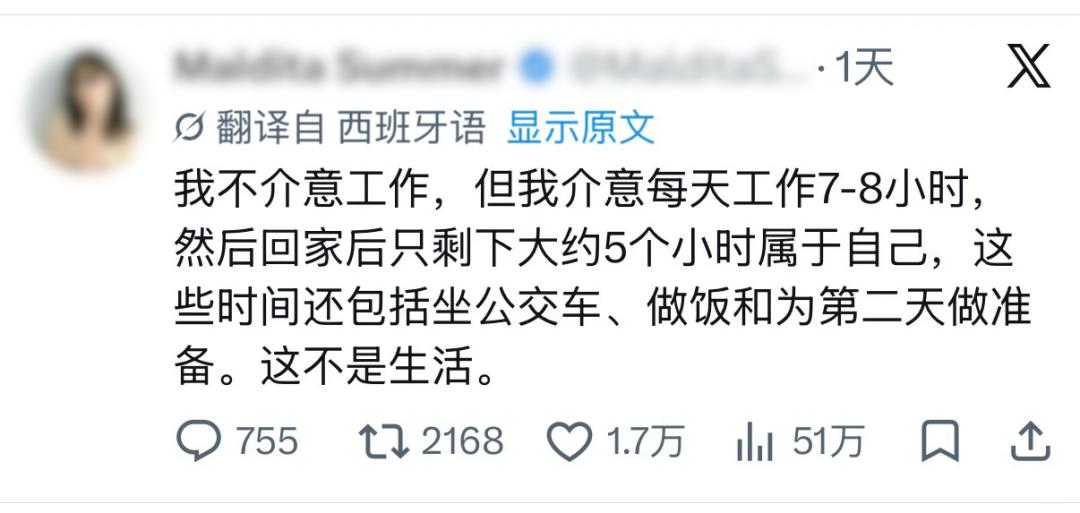
Another Spanish netizen said that he doesn't mind working, but he minds working 7 or 8 hours a day and only having 5 hours for himself after getting home, and still having to take the bus, cook, and prepare for the next day.
After complaining about work, there are also complaints about parents.
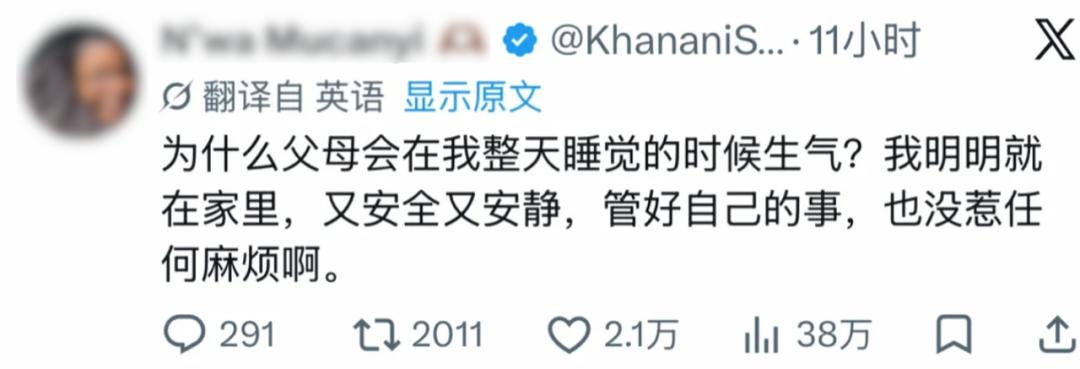
An English post complains that parents are always angry about the fact that they sleep all day, even though they haven't caused any trouble and are quiet.
Seeing this, do you think all parents in the world are the same? Then take a look at what this Korean netizen posted...
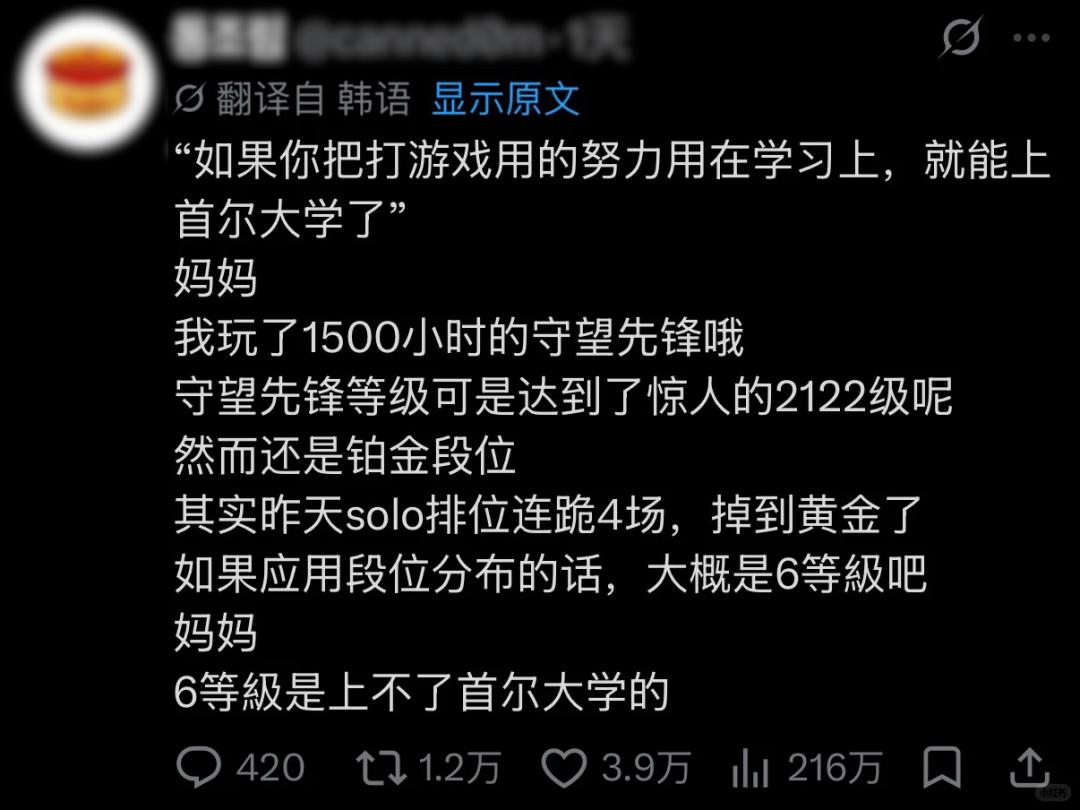
Not being able to find a job, having no time for oneself, and always being nagged by parents. We always thought it was only us, but now we find that netizens on the other side of the earth are really our brothers...
Not only the posts, but also the comment sections are fully automatically translated.
In the past, if you wanted to talk (or argue) with someone who speaks a foreign language, you had to translate what you typed by yourself. Just thinking about it was a hassle.
Now, the comment section has become a real global square, and Chinese and Korean netizens can even praise each other seamlessly...
Just think about it. Now you can understand the posts and the comments, so it's hard for Chinese netizens not to get into it.
So after discussing on Twitter, people still go to domestic social media platforms to continue chatting...
Some people on Xiaohongshu share interesting tweets they've seen. Some say the differences between humans are smaller than those between monkeys, and some post that it's hard to find a job all over the world.
The likes and collections of relevant posts range from a few thousand to twenty thousand, and there are also thousands of comments.
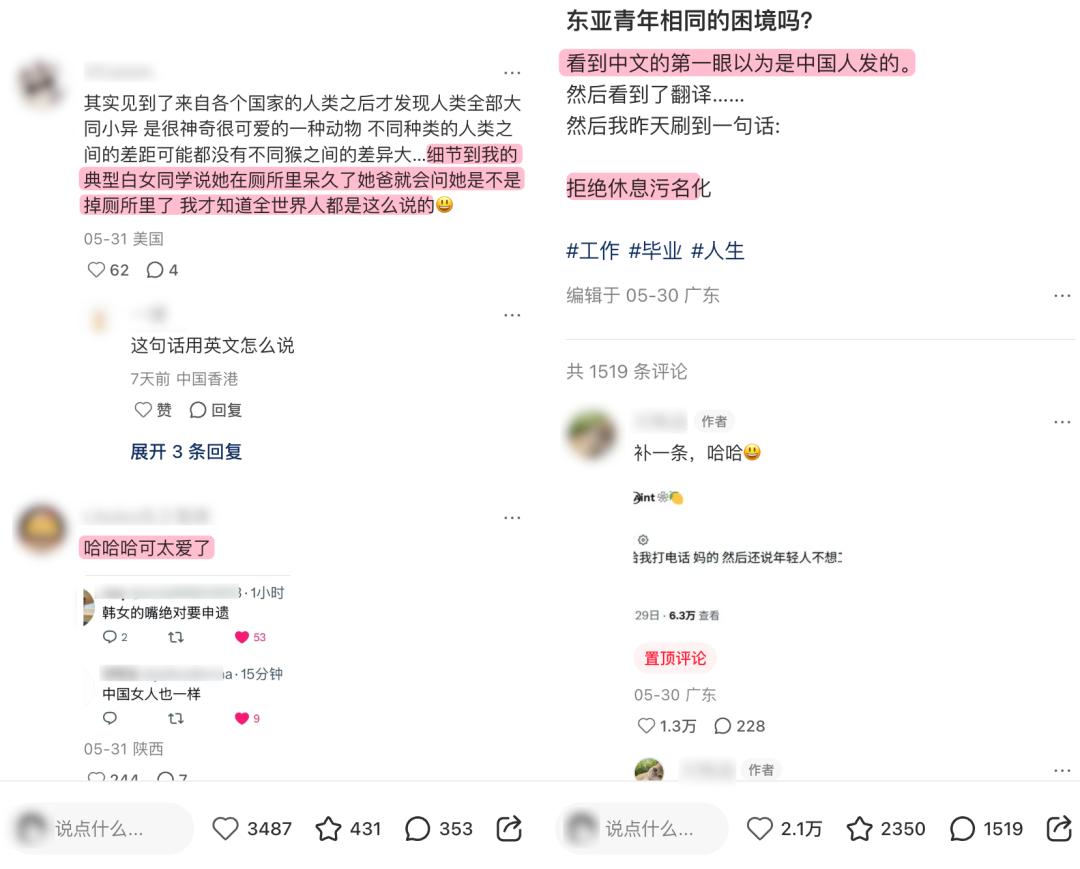
However, our Chinese - speaking area was one of the last to join this big event.
The Japanese - speaking area had access to it at the end of March. The scene at that time could be described as a large - scale netizen reunion, and the most well - known one was the barbecue diplomacy.
On March 26, a Japanese cartoonist drew an illustration: In a barbecue restaurant, several American soldiers were excited and dancing when they saw bacon.
Japanese netizens reposted it like crazy, saying it was "the most standard American in the imagination of the Japanese".
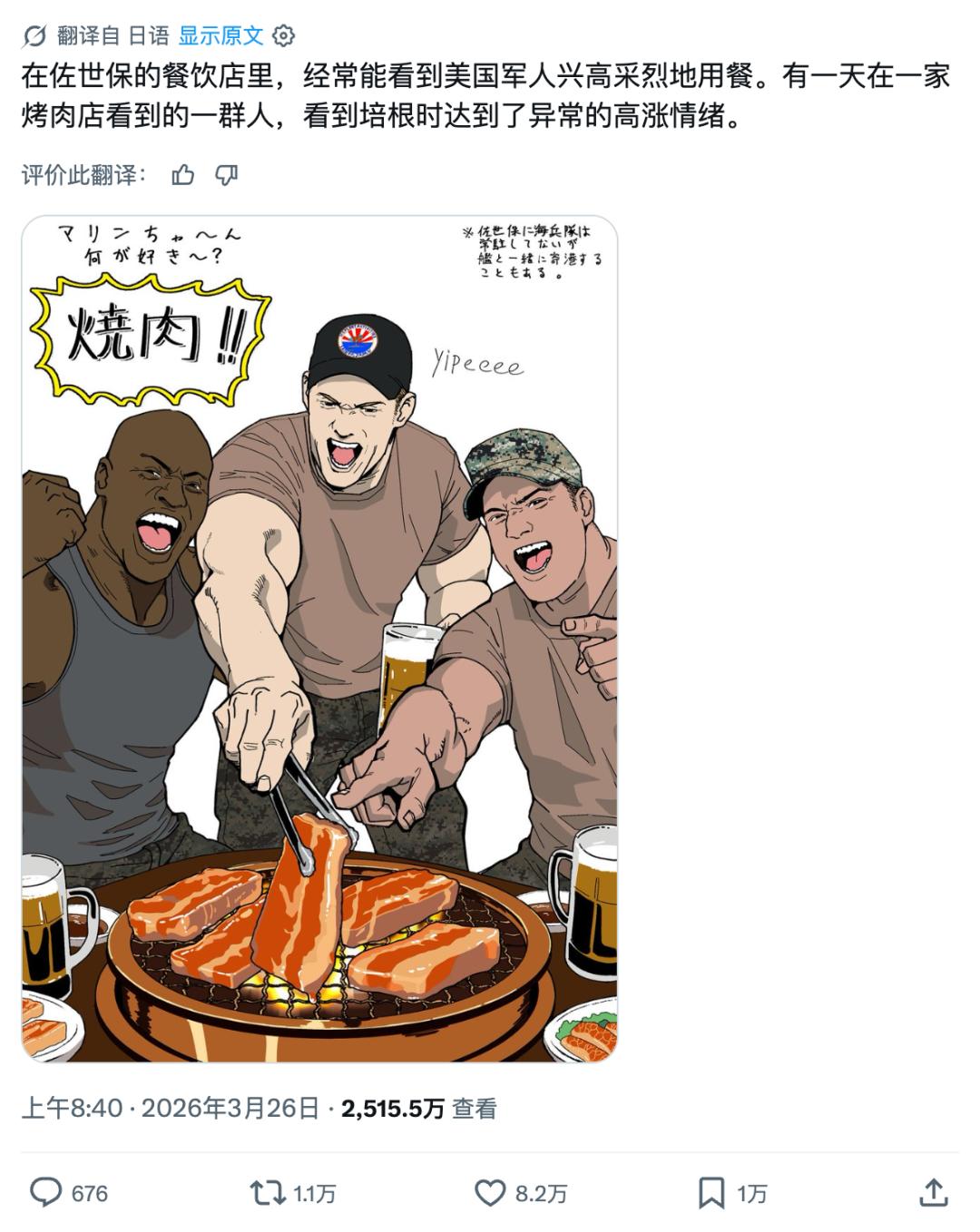
In the past, this kind of Japanese meme would never have left the Japanese - speaking circle. But after being translated by Grok and promoted by the algorithm, it directly entered the timelines of Americans, and got more than 24 million views in less than a week...
American netizens couldn't sit still: Who are they looking down on?
So half of the American X users started showing off smoked beef brisket and whole racks of ribs in their backyards. A new meme was born in the comment section: Americans must post BBQ photos to prove their nationality.
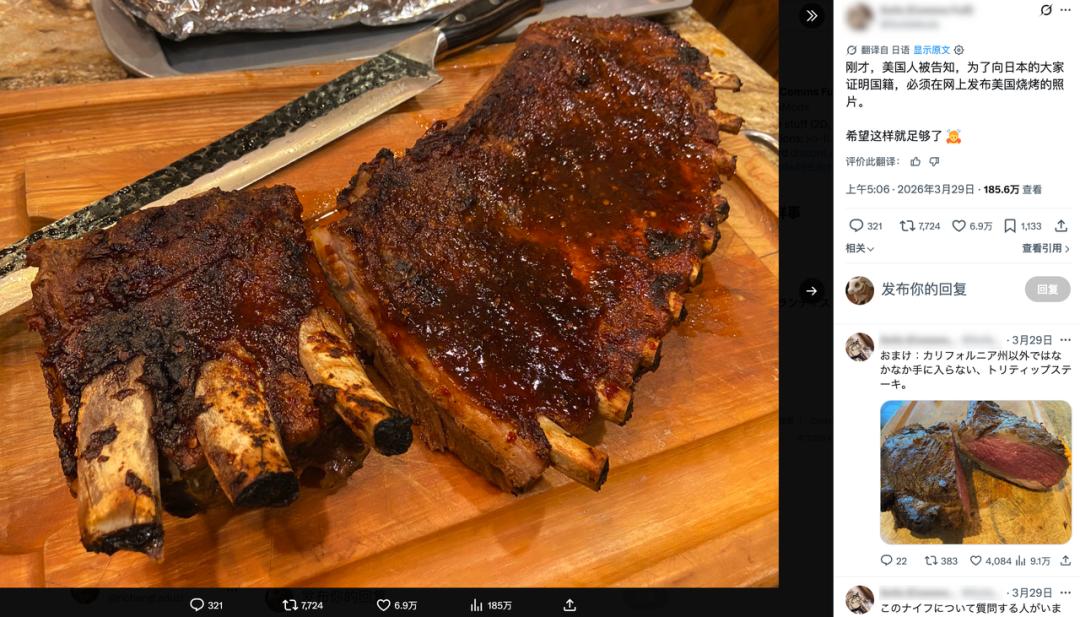
This kind of integration between the different cultures and memes of two countries even attracted Elon Musk to comment...
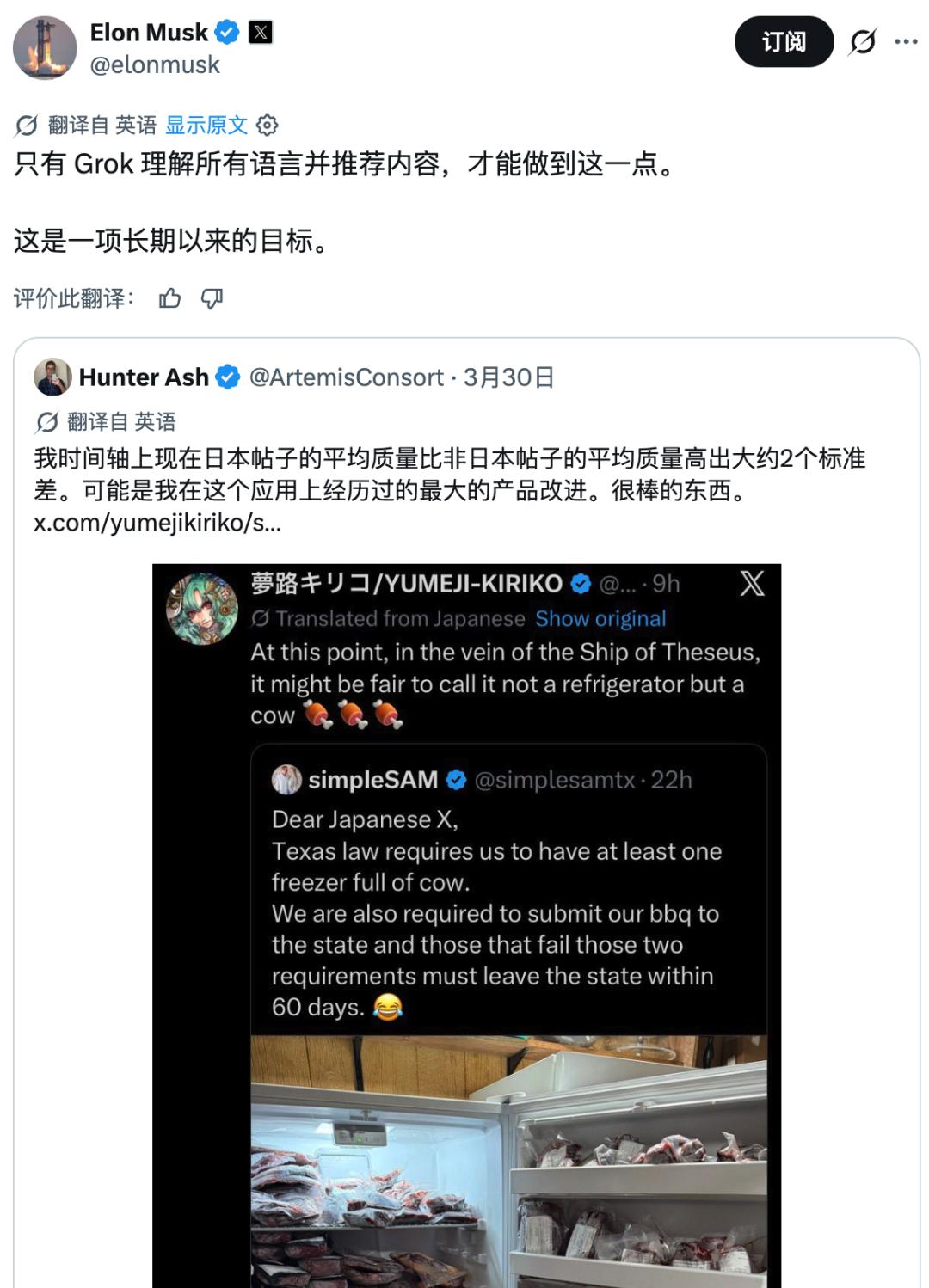
Elon Musk's comment is probably not just for the fun. For X itself, this move is really smart.
In the past, the posts you saw on Twitter were basically in the language you set. Occasionally, there were a few English posts, which were recommended by the algorithm because it thought they really matched your profile.
Why? Because the algorithm was afraid to recommend.
If it recommended a post you couldn't understand, you'd probably just scroll past it. So in the past, everyone was locked in an information cocoon of their mother tongue.
You can see the difference from this comparison
You just skip the posts you can't understand
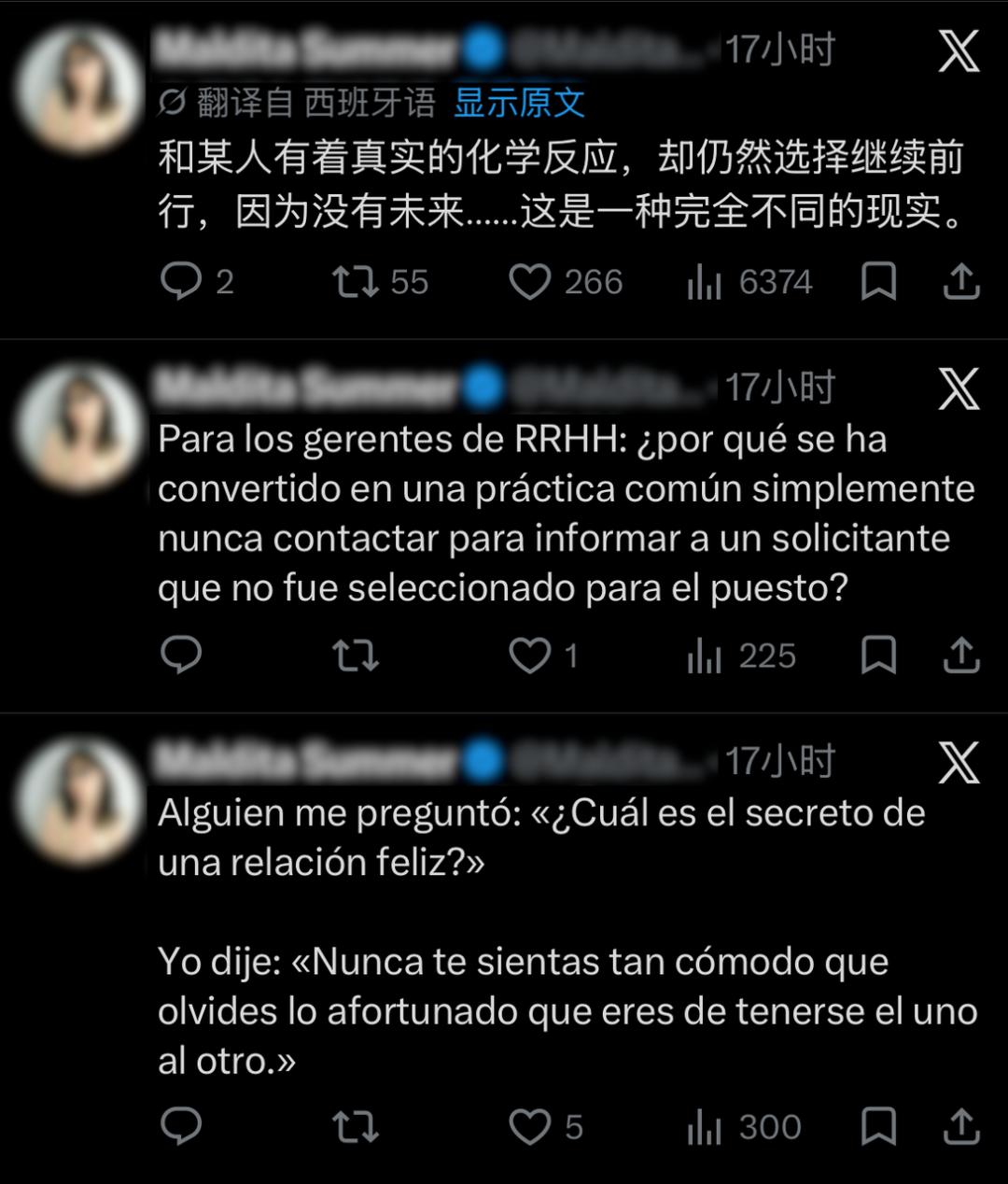
But now it's different. The translation is on by default, and the language barrier is gone. The algorithm can finally recommend posts to you globally based purely on "how good the content is and whether you're interested".
For example, a Japanese netizen encountered an emergency at the station. Because he was quite large, he turned around and became a human shield while others were rescuing.
In the past, you would never have seen this kind of post from the Japanese - speaking world unless someone reposted it on the Chinese Internet. Now it can directly appear on your timeline.
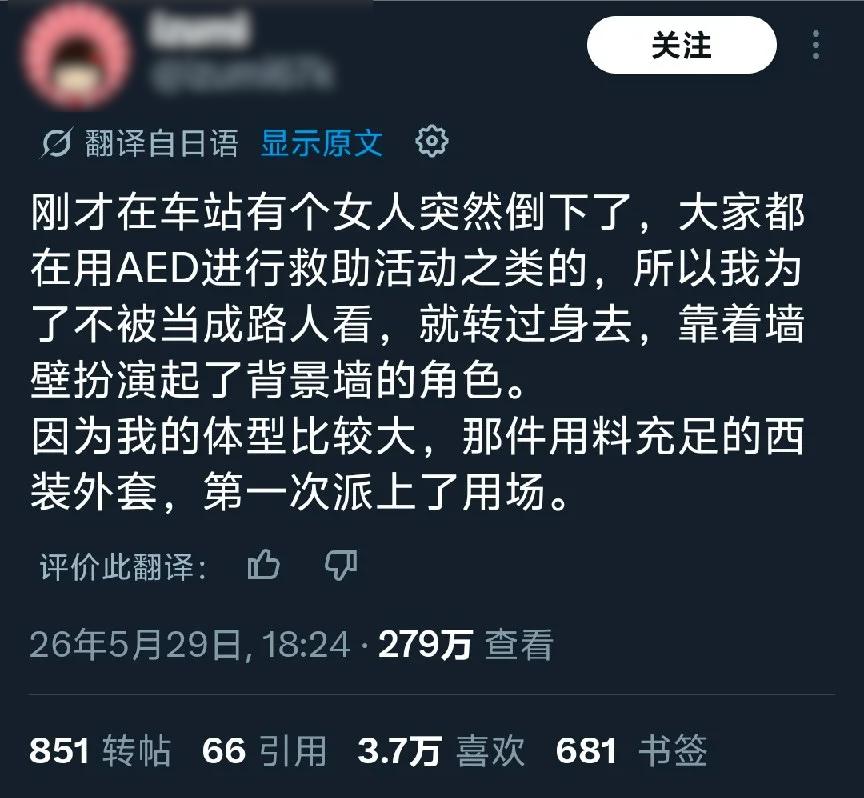
The recommendation accuracy is higher, the content is more diverse, and the user's stay time will definitely increase. Do you think Elon Musk's operation is profitable?
Not only does the platform benefit, but creators may also be the biggest beneficiaries.
Because there is equality in mother tongues.
In the past, if you were a non - English creator and wanted global exposure, you had to translate your content into English by yourself or laboriously create bilingual content. Now the platform takes care of all the translation work. For the first time, a Portuguese blogger and a Korean blogger can face the world's audience in their mother tongues.
Don't you think it's beneficial for creators on X?
However, the opposite is also true: the pool has become global, and so has the competition.
In the past, a Chinese blogger's competitors were those in the Chinese - speaking circle. Now, bloggers of all languages are competing for recommendation slots in the same pool, and the quality of content will become more and more important in the future.
At this point, I guess some of you might ask:
Machine translation has been around for more than 20 years, and Facebook also tried default machine translation ten years ago. Why did X make such a big