Why is it increasingly difficult for girls to buy a favorite dress?
「Where have the sleeves of the dresses gone?」
In the past two years, around the turn of spring and summer, Qiqi has always been troubled by what to wear. She scoured all e - commerce platforms, scrolling on her phone until it got hot, but still couldn't find a dress she liked.
Most women's clothing brands in the market mostly offer sleeveless dresses. For example, Peacebird, a well - known brand, currently has 15 dresses on sale in its official flagship store. They come in various styles, such as floral dresses, vacation dresses, and commuting dresses. Qiqi counted, and more than 10 of them are sleeveless. Among the few with sleeves, most are puff - sleeved.
Qiqi isn't fat. She is 165 cm tall and weighs 118 pounds, with a BMI of less than 22, which is a standard figure. However, when she wears the puff - sleeved princess dresses that merchants promote, she looks unusually broad - shouldered and stocky.
Needless to say, sleeveless dresses can't cover the flabby "bat wings" on her arms, and she also has to consider details like hiding the shoulder straps of her inner wear and managing her armpits.
She once told a customer service representative of a store about this directly. The response she got was, "Dear, sleeveless is in fashion now. If you have concerns, you can buy a cardigan to match." Immediately after, three links to cardigans popped up on the page. Qiqi was furious. "Do I have to pay while being subjected to aesthetic bullying?"
Qiqi is not an exception.
On social platforms, there are quite a few voices like "I've given up buying dresses this summer" and "Have all the nice dresses in China completely disappeared?"
Under such posts, the comment sections are in an uproar. Some people think that current dresses are not very inclusive of different body types. Others say that while the prices are rising, the fabric and craftsmanship are getting worse. Some also complain that there are too many vacation - style and golf - style dresses. "I guess designers think everyone doesn't work."
Due to the mismatch between supply and demand, returning goods has become as common as placing orders.
Based on data released by multiple institutions, the overall return rate of dresses currently is generally as high as 60% - 90%. The main reasons for consumers to return goods are that the product doesn't match the description, there are quality issues, and the sizing is confusing.
Why has it become increasingly difficult for girls to buy a dress they like? What kind of industry dilemma does this phenomenon reflect?
The Disappearing Dress Sleeves
During the 618 promotion, 32 - year - old Nanqiao is also anxious about buying a dress. She works in the public sector, so sleeveless and ultra - short dresses are the first to be ruled out.
Among the remaining options she can see, some are extremely plain, with no design at all, as if she's wearing a plain piece of cloth. Others are small - floral patterns, with gaudy styles that are "tacky as hell."
There are also those so - called drawstring designs that are supposed to cover the belly fat. Nanqiao bought one. When she tried it on and looked in the mirror, the visual focus was completely on her waist and abdomen, making her look fatter. After ruling all these out, there are even fewer options left.
Two weeks ago, Nanqiao took a fancy to a new Chinese - style dress on an e - commerce platform. The model looked noble, elegant, and decent in it, and she was very tempted. Although 450 yuan for a dress isn't cheap for her, thinking that you get what you pay for and she could wear it for a few more years, she gritted her teeth and placed an order.
A few days later, when she received the actual dress, Nanqiao was extremely disappointed. From the fabric to the style and color, it was very different from the display picture. In a fit of anger, she didn't hesitate to click the return button. Since she had overlooked that the product didn't have a shipping insurance when placing the order, after all the hassle, she even lost some money on the shipping fee.
Xiaohongshu user "Sanqiqisan" shared that she hasn't bought a satisfactory dress in three years. With a budget of 300 yuan, it's impossible to meet the three basic requirements of "sleeved," "comfortable," and "looking normal" at the same time.
Helpless, she turned her attention to cheongsams that fit well and have good silhouettes. Then she found that even among the clearance items in the live - streaming rooms, at a price of just a few dozen yuan, there are many comfortable, cool, and sleeved options. She bought several pieces that can be worn daily without restricting movement. Some of the fabrics are light and elastic enough that she "can even do a split."
She said that her next step is to buy Hanfu. "At least there aren't so many sizing issues, and it's very suitable for daily wear."
It's not just consumers who are complaining. Many women's clothing merchants and OOTD bloggers are also having a hard time.
A merchant in Wuhan who does second - hand wholesale of women's clothing, "Shixueyan (Entrepreneurship Edition)", posted a video in April saying that the biggest feeling she had when sourcing spring and summer styles this year was that "she couldn't find a single dress worth taking." It's not that there are too few nice ones; there aren't any nice ones at all. Sleeveless, spaghetti - strapped, and plain styles are very common. Apart from being easy to make, they have nothing to do with being beautiful. To look good in them, one has to rely on good looks and hairstyles.
The owner of a women's clothing physical store, "Daji in Hanzhong," frankly said that this year's summer clothes, because of the sleeveless styles, made her lose "60% of her loyal old customers." She said that in the past, many old customers often asked her to help match clothes. It's the same this year, but they generally added a condition: no sleeveless. With just this one sentence, she had to rule out 80% of the styles in her store. After considering the matching degree, in the end, "there were almost no options left."
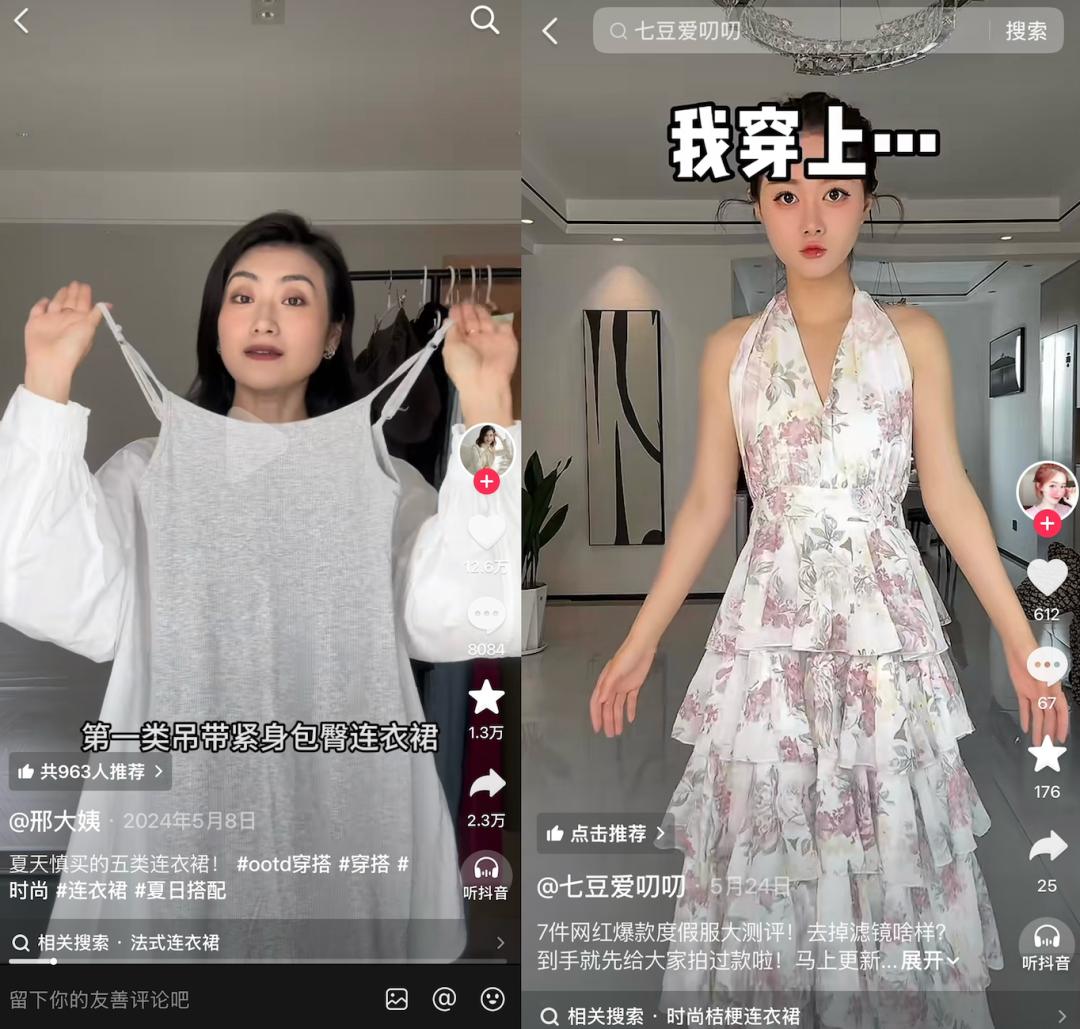
Some senior fashion bloggers and buyers found many "flaws" when testing those "internet - famous" dresses, such as poor on - body effects, making the wearer look darker or fatter, being see - through, and having rough workmanship.
If there are a few dresses that are appealing, with satisfactory materials, good designs, and aesthetic sense, meeting or even exceeding expectations, their prices will definitely exceed expectations too - often costing over a thousand yuan, or even two or three thousand yuan.
In other words, from the consumer end to the retail end, this year's dresses are in an awkward situation of "only to be admired from afar, not to be played with up close."
The Status of Dresses in the Market
In the Chinese women's clothing market and even the entire fashion industry, dresses are a core category.
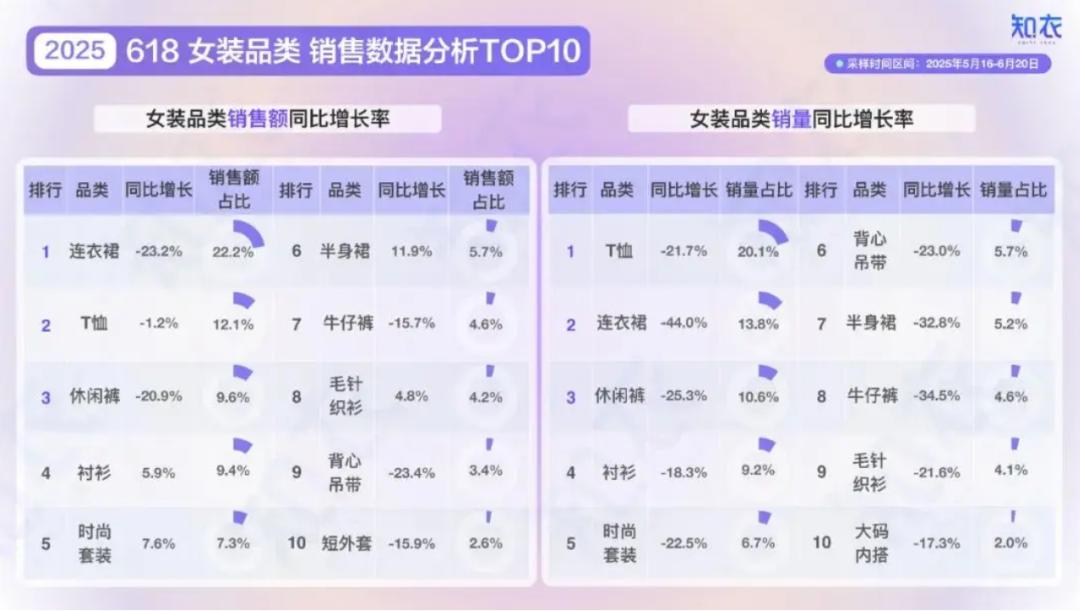
According to the "2025 Taobao and Tmall 618 Women's Clothing Review and Analysis" report released by Zhiyi Technology, dresses rank among the top three in both sales volume and sales revenue in the women's clothing category, with the corresponding figures being 13.8% and 22.2% respectively. Looking at a longer sales cycle, in Q2 of 2025, the sales revenue of dresses in the women's clothing e - commerce market accounted for 21.14%, a year - on - year increase of 14.88%.
Data from Statista shows that in 2024, the women's clothing market accounted for about 55% of the Chinese clothing industry.
From this, we can roughly estimate that dresses, which rank first in the women's clothing category, account for more than one - tenth of the consumption in the entire Chinese fashion industry.
As the mainstay of clothing merchants' daily operations, dresses are also affected by seasonal factors. From the "2025 January - August Dress Market Insight Report" released by Shangpu Consulting, we can see that the consumption of dresses in summer accounts for 43%, far higher than in other seasons.
Compared with other clothing items, the average unit price of dresses is not low. In a single consumption expenditure, the 100 - 300 yuan range has the highest proportion, reaching 38%, the 300 - 500 yuan range accounts for 27%, and the over - 500 - yuan range accounts for 23%.
The "2025 Spring and Summer Women's Dresses White Paper" shows that the sales revenue of women's dresses on the Taobao platform leads the whole network, and the core average unit price is between 100 - 200 yuan.
In addition, the "2025 Chinese Dress Category Insight Report" released by Huaxinren Consulting shows that the market share of dresses on Tmall is continuously expanding, and the proportion of each price range is relatively balanced, with the mid - to - high - end (above 279 yuan) accounting for 58.6%.
Although the market share of the JD platform is not as large as that of the Taobao platform, its growth potential is considerable. The above - mentioned report states that the sales revenue of dresses on JD in August 2025 reached 137 million yuan, a month - on - month increase of 26.3%. Although dresses with an average unit price of more than 746 yuan only account for 11.5% of the sales volume, they contribute 46.3% of the sales revenue, highlighting the high - end strategy.
Feigua Data shows that dresses in the 100 - 300 yuan price range on the Douyin platform contribute nearly 40% of the sales revenue. This price range covers a large number of cost - effective styles and is the most concentrated range for influencers and live - streaming rooms to drive sales volume.
In terms of brand distribution, the Taobao platform is the absolute main battlefield for dress sales among all platforms. Its brand ecosystem is the most diverse and stable, and a complete brand matrix has been formed, ranging from international fast - fashion brands, domestic established women's clothing brands to emerging designers and internet - celebrity original brands.
Based on the data from Zhiyi Technology and Tmall official, in 2025, there were 3,000 - 5,000 brands stably operating dresses on Tmall alone. If we add individual Taobao stores and internet - celebrity shops, the number of brand/merchant entities selling dresses on the Taobao platform can reach tens of thousands.
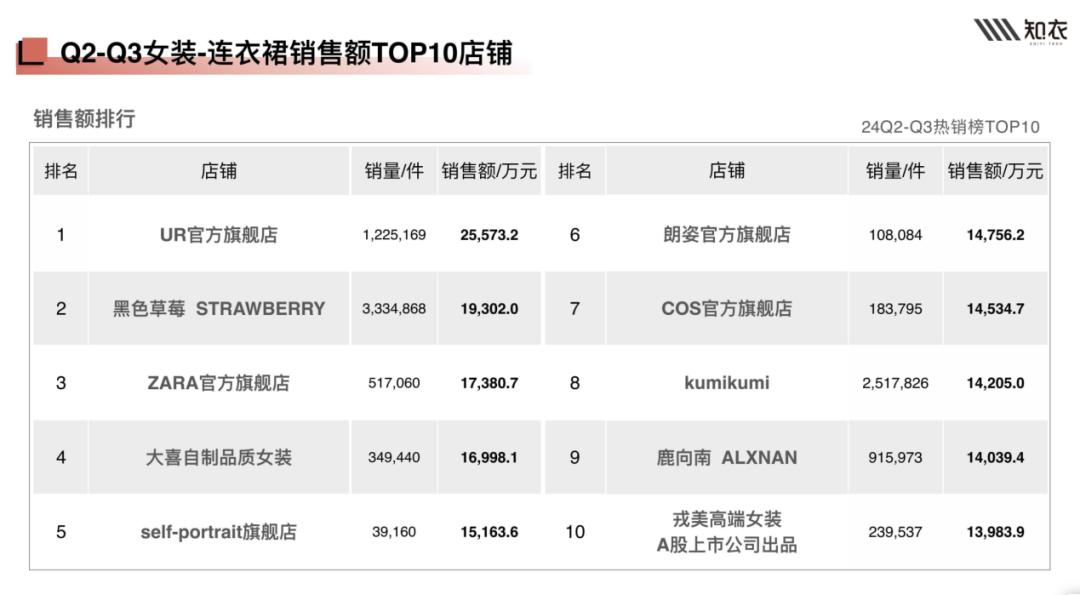
According to the sales situation of dresses of various brands on the Taobao platform from Q2 to Q3 in 2024, the official flagship stores of UR, Black Strawberry STRAWBERRY, and ZARA are high - selling popular stores. At the same time, Kun Studio, Ley Boutique, PUKI, etc. have become dark - horse stores with a high - growth trend in sales revenue.
Although the overall market data is impressive and the growth rate is considerable, dresses are a "high - risk area" for e - commerce returns, and it's typical that revenue increases but profit doesn't.
Currently, the average return rate in the industry has soared from about 30% in 2019 to 60% - 80% in 2025, and the return rate of some merchants is even as high as over 90%.
In addition to the product not matching the description and product quality issues, sizing confusion is also the main reason for returns.
Many consumers have reported that when they place an order according to the online store's size chart, they can't zip up the dress when they try it on. Some even joked that when they buy a dress, "the waistline is always on the ribs, and the bust line is always on the neck."
Moreover, the large gap between the "buyer's show" and the "seller's show" is also a key factor driving up the return rate.
Over - retouched product display pictures are likely to raise consumers' expectations. Not to mention that now AI - generated pictures have invaded the clothing e - commerce field, and there are more problems with inconsistent backgrounds, characters, and clothing textures in product pictures. The gap between the seller's show and the buyer's show has become even wider.
Behind the Mismatch between Supply and Demand
Dresses are so important in the women's clothing market, but consumers and even some merchants generally have a poor experience. Where does the problem of the mismatch between supply and demand lie?
Some people blame the designers.
On social platforms, some people question that designers don't understand the real needs of consumers. Some people miss the previous design styles and search the whole network for early - year designers. Some even go to second - hand platforms to look for old clothes of their favorite brands.
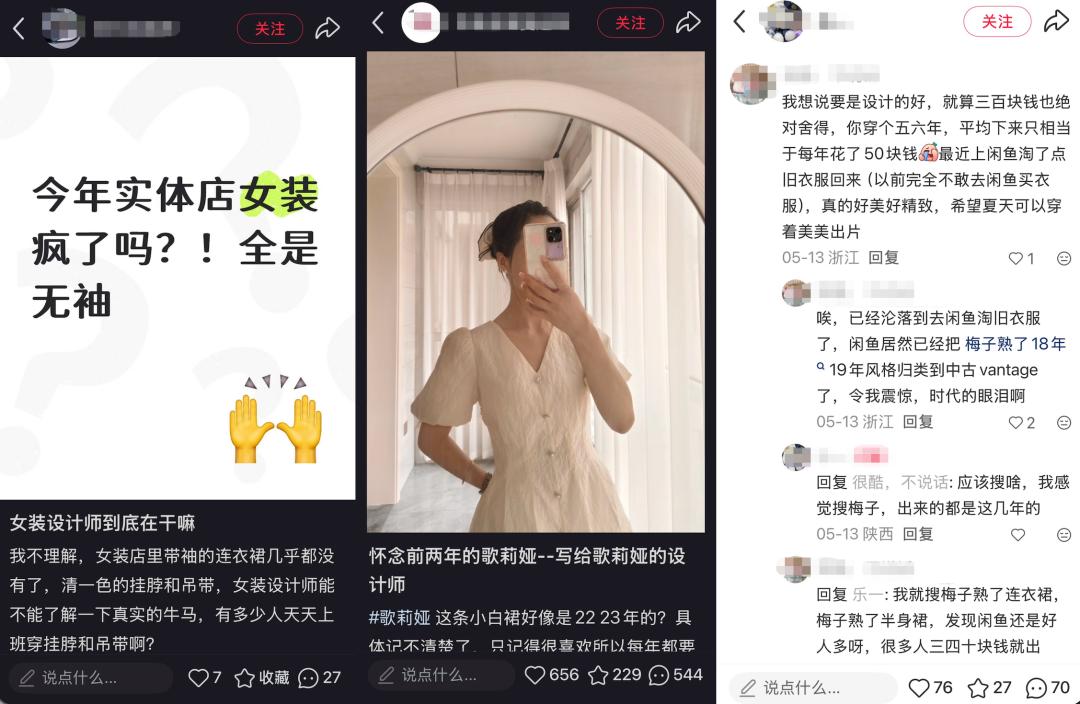
Some designers also "spoke up" in the comment section to defend themselves. "The boss rejected the designs with sleeves, saying they weren't fashionable enough, and the anchor also rejected them, saying they made the wearer look bulky," indicating that designers are also in a difficult position.
So, who is actually determining the development of the current dress and women's clothing industry?
Sanlian Life Weekly interviewed a women's clothing pattern - maker with over twenty years of experience, which may help us understand some reasons.
He observed that driven by the "low - price pre - sale" and "small - order quick - return" models, merchants are squeezing R & D costs and production cycles to the limit, resulting in "all - around cut - corners" in women's clothing in terms of fabric, craftsmanship, quality inspection, and other aspects.
For example, in terms of production craftsmanship, the cuffs of women's shirt linings, shirt fronts, and trouser pockets are the areas where the craftsmanship level has declined most significantly.
Specifically in the dress category, the reason why there are all sleeveless dresses on the market is mainly that, compared with dresses with sleeves, the pattern - making method for sleeveless dresses is simpler. Without the process of making sleeves and without having to deal with details such as armholes and shoulder - width ratios, the average production cycle can be shortened.
In addition, this pattern - maker also pointed out that the low - price, high - volume model has also led to the deformation of the production end.
Take a piece of clothing as an example. The pricing of traditional clothing stalls and physical brand stores is usually 3 times and 4 - 8 times the hard cost respectively, while the pricing in live - streaming rooms may only be 2 times. With low pricing, the goal is to achieve a large sales volume and a high probability of creating a hit product. Even if you only earn ten or twenty yuan per piece, as long as the number of pieces sold is large enough, the profit can't be underestimated. Therefore, industry players are all "lowering prices and looking for hit products."
Moreover, in the pre - sale model, the delivery speed is the lifeline for factories, usually requiring 5 - 7 days or even faster. To avoid