Product Observation | Dian Fan, a founding employee of Xiaomi, starts an AI hardware venture and launches a "frictionless" sleep-friendly bedside lamp
Author | Qiu Xiaofen
Editor | Yuan Silai
Fan Dian, the founder of "Ge Wu Technology", is an "outsider" in the current smart hardware track.
As an early employee of Xiaomi who has experienced its early days, Fan Dian once served as the general manager of Xiaomi's Internet of Things Platform Department and the chairman of the AIoT Strategy Committee. It has been a common approach in the hardware startup scene in the past two years for entrepreneurs with senior executive resumes from big companies to raise funds, quickly launch a hardware product on crowdfunding platforms, use media to create momentum, and then attract more financing.
However, Fan Dian spent three years on the first product.
In 2024, the smart hardware field was still a niche area, and Fan Dian's choice was even more unique. Instead of focusing on AI wearables or AI mattresses that had been proven in the market, he started a brand - new category: the AI Sleep Bedside Lamp (Sleepal AI Lamp).
Few people know what happened during those three years. Fan Dian rarely accepts interviews and sees few investors. This low - key approach is also reflected in the financing of his new company, "Ge Wu Technology". After three years of entrepreneurship, they have only announced one round of angel financing, with investors including Xiaomi and Skyline Capital.
On May 19th this year, the Sleepal AI Lamp started a crowdfunding campaign on the overseas platform Kickstarter, priced at $449. As soon as the product was launched, it was surrounded by curiosity and questions: "Is it crazy to price a bedside lamp so high?" "After three years of entrepreneurship, all you've got is a lamp?" "Who needs this when we have smartwatches?"
During the product crowdfunding period, Fan Dian accepted an interview from Yingke, which was his first media interview since leaving Xiaomi. We can see his clear product ideas and solid technical accumulation.
(Image source: Company)
Measuring Sleep with Millimeter - Wave Radar
Fan Dian's entrepreneurial motivation stems from his own painful experience. He suffers from obstructive sleep apnea (OSA), which means that after falling asleep, his airway is blocked, leading to a lack of oxygen in the whole body. This makes him wake up with a splitting headache even after sleeping for 8 hours. In fact, this kind of problem is not rare. The incidence rate among adults is about 15%, and it is even as high as about 30% for those over 40.
For this reason, Fan Dian has tried a large number of sleep - aiding methods, such as wearing a CPAP ventilator, using an AI mattress, and a sleep belt. However, the solutions that can be truly adhered to in the long - term often come with some "frictions".
Fan Dian told Yingke that the problem with AI mattresses is that the cost of a single product is too high, and the installation cost threshold is also high. They also once considered making an AI sleep ceiling lamp, which has the advantage of being able to sense the whole room, but it may be restricted by the ceiling structure.
Wearable devices with sleep - monitoring functions (such as smart bracelets, rings, and the popular Whoop recently) have been proven in the market. However, market research data shows that the night - time wearing rate of wearable device owners is only 60%, and the main users are young people, with a relatively low penetration rate among the elderly.
Fan Dian analyzed that there are multiple reasons behind this, such as the need for continuous charging of wearable devices and the feeling of oppression when wearing them.
Therefore, they defined the core logic of the product as an AI sleep bedside lamp that does not generate frictional costs.
However, although this idea improves the user experience, it also creates a higher technical threshold.
In the past, the principle of wearable devices for sleep detection was to rely on photoelectric signals (PPG) to detect the heart rate of capillaries and then use the wrist acceleration to measure body movement. Finally, the two data were used to fit the sleep situation.
However, this measurement method is easily interfered with by factors such as hand hair, wearing tightness, skin color, and tattoos.
In Fan Dian's view, these devices cannot fully understand the real sleep environment - they cannot understand whether temperature, noise, and light are affecting your sleep, and they cannot understand the changes in the user's sleeping position.
The principle of Sleepal's AI sleep bedside lamp is completely different.
Fan Dian told Yingke that the transition of sleep stages is regulated by the central nervous system and the autonomic nervous system. In this process, physiological signals such as breathing and heart rate will change in a coordinated manner, which is highly coupled with sleep stages, thus indicating different sleep stages. Among them, the breathing signal is not only highly related to sleep stages but also the core basis for judging sleep apnea.
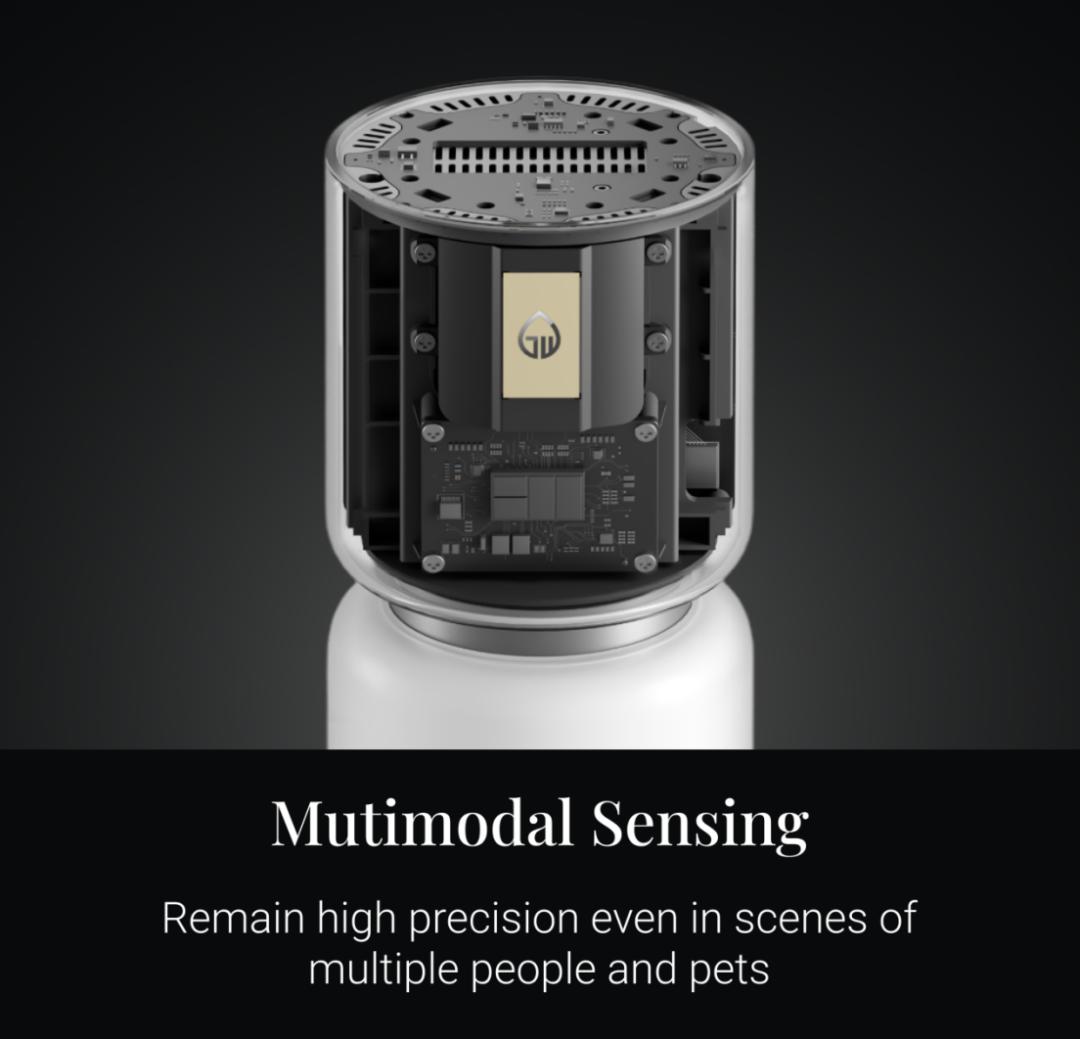
To collect this information, they installed a series of sensor matrices on the Sleepal bedside lamp, including a 60GHz millimeter - wave radar, a thermal array sensor, a microphone array, and an environmental sensor.
Different sensors have their own functions -
The millimeter - wave radar is used to sense body movement signals during sleep, from which the sleep breathing rate, heartbeat characteristics, and chest fluctuations can be extracted. The accuracy can reach 0.1 mm, allowing users to infer which sleep stage the human body is in;
In addition, to comprehensively understand the sleep situation, the microphone array on it is also used to collect snoring and environmental noise, the environmental sensor is used to detect indoor lighting and record sleep interference information, and the temperature - measuring array is used to sense the human body contour and judge the user's sleeping position.
(Image source: Company)
Fan Dian introduced to "Yingke" that although Sleepal uses a non - contact monitoring method, it continuously and frequently monitors direct physical signs such as breathing, heartbeat, and whole - body movement. The resulting sleep stage results have a smaller error compared to wearable devices that detect sleep through body movement.
Recently, in a paper co - signed by "Ge Wu Technology" and Professor Thomas Penzel, the president of the World Sleep Society, Sleepal was verified based on 1022 nights of hospital PSG data, and finally achieved a result of κ = 0.695, which is higher than that of Apple Watch (0.68) and Oura Ring (0.65). (Click to view the paper: https://arxiv.org/pdf/2604.16442)
Seven Vertical Models and Millions of Data Investments
After solving the data collection problem, the next focus is how to establish a standard for the data.
In the field of sleep medicine, PSG (polysomnography) is the recognized gold standard. Specifically, after collecting sleep data, professional technicians will manually mark sleep stages (such as awake/light sleep/deep sleep/REM) and sleep apnea events.
In model training, these data play the role of the standard answer to supervise and align the raw signals collected by the radar.
Fan Dian told Yingke that after three years of entrepreneurship, "Ge Wu Technology" has collected more than 2000 nights of PSG data in cooperation with multiple hospital sleep centers, and the company's annual investment in data amounts to millions of dollars.
Based on these accurate standard data and user sleep data, "Ge Wu Technology" has trained seven vertical AI models, including a vital sign detection algorithm, a multi - modal sleep stage model, a sleep apnea detection model, a multi - modal human state recognition model, a multi - modal sleeping position recognition model, an end - side snoring recognition model, and a radar signal ECG generation model.
Relying on this vertical model matrix with hundreds of millions of parameters, the Sleepal bedside lamp is no longer just a sleep information collection tool but an AI sleep butler that can provide personalized improvement suggestions.
For example, Sleepal can extract high - level physiological features such as breathing rate, HRV (heart rate variability), and sleep stages to help users make sleep improvement suggestions - telling you that you didn't sleep well last night because sleeping on your back led to increased snoring, or that micro - awakenings were caused by environmental noise, light, and a lot of exercise before going to bed.
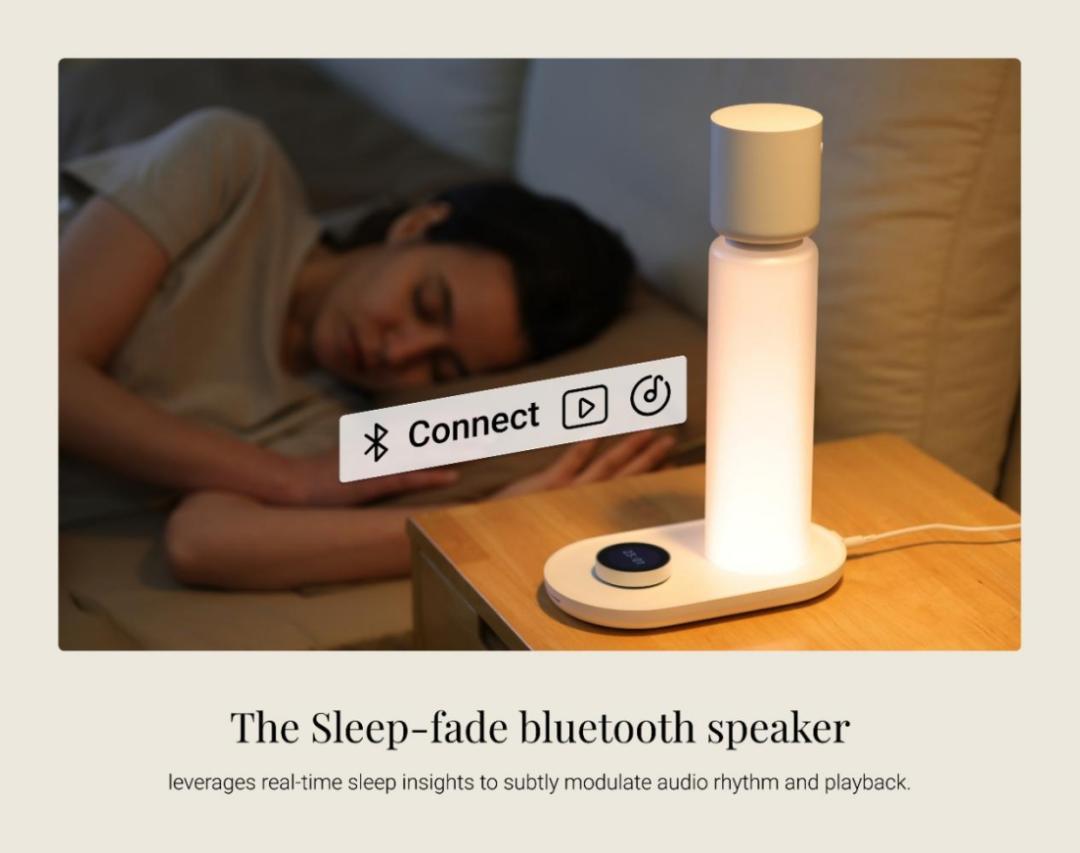
In addition to sleep data detection, they have also made some improvements to the user experience around the core sleep scenario, such as adding functions like a circadian rhythm lamp, white noise, and a smart alarm clock.
For example, just before the set alarm time, Sleepal will gradually brighten the light and make a sound to wake up the user during the light sleep or micro - awakening period, avoiding waking up from deep sleep with a start and getting grumpy. When the user gets up at night, Sleepal will automatically turn on slightly and turn off automatically when the user lies back in bed.

(Image source: Company)
Within the first 48 hours of Sleepal's launch on Kickstarter, the fundraising amount exceeded $200,000. Although it is a new category, new technology, and new brand, it has outperformed more than 90% of the products on Kickstarter, a crowdfunding platform where tech gadgets are very popular.
Fan Dian told Yingke that in terms of the business model, in the short term, Sleepal plans to adopt a form of hardware sales combined with software subscriptions.
Every step of Sleepal shows the style of an experienced hardware product person, low - key and solid.
In the long run, "Ge Wu Technology" hopes to start from bedroom sleep detection and expand in the direction of the whole - house family health AI. In the future, the multi - modal sensing technology verified in the bedroom can be replicated to spaces such as the bathroom (millimeter - wave radar fall monitoring) and the dining room (diet detection).
Ultimately, based on continuous vital sign data, Fan Dian hopes to provide risk screening and prevention for chronic diseases for users and become a real family health entrance for "preventing diseases before they occur".
A bedside lamp is just a small first step.
Homepage image source | Company provided
Typesetting | Fan Xinya

end