The fiercely competitive large supermarkets are venturing into the cultural tourism park sector.
Currently, large supermarkets and shopping centers are witnessing a rising trend of creating projects such as parent - child parks, pet parks, non - powered parks, and sports parks in their outdoor spaces. These businesses that originally belonged to cultural and tourism parks are now being snatched away by commercial malls like supermarkets and shopping centers.
Supermarkets and Malls Cross - border into Park Business
On April 30th, the second - phase project of Xigu Valley Park in Nanjing Hexi Longhu Tian Commercial Mall opened. Covering an area of 10,000 square meters, Xigu Valley Park is divided into six theme areas and is a complete parent - child park. The project includes a 15 - meter - high wooden climbing city, a 1,000 - square - meter interactive water park, a sand workshop, a starry lawn, rope - net swings, slide trampolines, etc. There are even performing arts shows, and chocolate markets, fairy - tale parades, and NPC performances are held irregularly.
Although the 10,000 - square - meter area of Xigu Valley Park seems a bit cramped, it has the advantage of being completely free. Visitors can enjoy all the facilities without spending a single cent. For cultural and tourism parks that generally charge fees, this is simply "vicious competition" that breaks the rules. Although the project is free, its operation service and project quality are not bad. The water park project uses recycled purified water, the amusement facilities are disinfected daily, and the wooden castle is made of pine, which is both environmentally friendly and safe.
The Xigu Valley Park in Nanjing Longhu Tianjie is not an isolated case. In Chongqing, the super - large shopping center Lijia Longhu Tianjie directly took over the operation right of the 240,000 - square - meter Longtang Lake Park at its entrance. Longhu Group invested in building a series of cultural and tourism projects in Longtang Lake Park, such as a park beach park, a mountain non - powered park, a one - kilometer cherry blossom runway, a camping lawn, and a lakeside open - air theater, forming a one - stop experience of lakeside ecology + park cultural tourism + leisure block + mall. Most of the cultural and tourism projects in Longtang Lake Park are free, and the investment and operation costs of the park are supported by the development of Longhu Mall and Longhu Real Estate's residential projects.
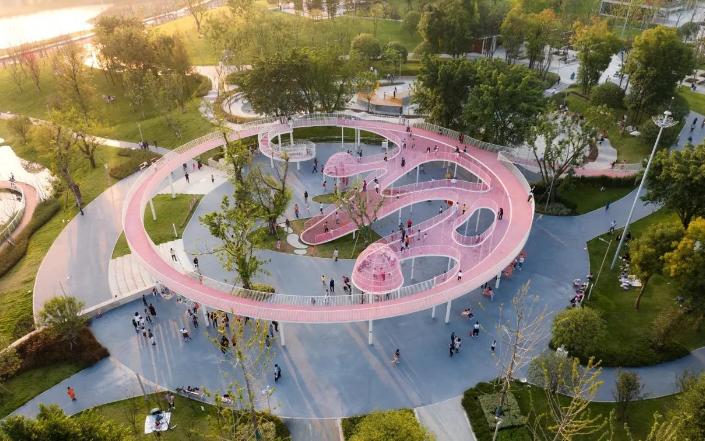
Longtang Lake Park
In Zhengzhou, the MOMO Pet Park project of Ma Xintong, the founder of the retail supermarket Discount Cow and a popular business blogger, is also a typical case of "supermarket + cultural tourism". Ma Xintong of Discount Cow originally invested in a large - scale warehouse - style supermarket, "Discount Cow Wholesale Center", near Zhengzhou East Station. Due to the intense competition among supermarkets in Zhengzhou and the unfavorable location of the wholesale center, the passenger flow was low. To attract more customers from the urban area, Ma Xintong invested tens of millions of yuan to open the MOMO Farm, a pet park, outside the supermarket, with a total planned area of about 26,000 square meters. The cultural tourism and supermarket projects guide the passenger flow to each other, expanding the passenger - flow radiation of the entire project.
Currently, the first - phase project of MOMO Farm has opened, including popular pet animals like capybaras, alpacas, raccoons, Shetland ponies, corgi ducks, and an exotic pet museum. There is also a large open lawn, dozens of non - powered amusement facilities, and popular photo - taking spots. MOMO Farm adopts a charging model. Currently, the single - person ticket price is about 39 yuan, and the family ticket price for two adults and one child is 89 yuan. According to Ma Xintong, MOMO Farm achieved a revenue of 1.65 million yuan in its first month of operation. For a project with an investment of only tens of millions of yuan, this performance is quite remarkable.
In Shanghai, the Western Suburb Shopping Center of Bailian Group transformed its rooftop garden of over 10,000 square meters into an outdoor cultural and tourism leisure scene integrating sports, socializing, parent - child activities, and relaxation, equipped with rooftop courts, children's parks, beach areas, rooftop gardens, etc., creating a new way of "supermarket + cultural tourism".
Intense Competition among Supermarkets Affects Cultural and Tourism Industry
In the past, the leisure and entertainment projects in supermarkets and shopping centers were basically indoors, such as inflatable castles, ball pits, and indoor children's halls. Even the outdoor projects were small square trains, carousels, etc. These are not on the same level as cultural and tourism projects. Cultural and tourism parks are outdoor projects with large areas, open spaces, and close contact with nature. The amusement facilities are larger, more numerous, and more complex, which is an experience that indoor leisure and entertainment projects cannot provide.
When supermarkets and malls extend their hands to outdoor cultural and tourism, the situation is different. Parks like Xigu Valley Park in Nanjing almost have a crushing advantage over regular cultural and tourism parent - child parks. The free model and high - quality service of Xigu Valley Park, combined with the convenient transportation location of the mall and the complete consumption environment, are unmatched by cultural and tourism parks.
Cultural and tourism parks need to buy or rent the land. Due to the large area, the location is usually in the suburbs of the city or embedded in urban parks or forest parks. Their income model is based on ticket sales. When there is wind, rain, extreme heat, or cold, there will be no passenger flow. They dare not invest too much for fear of not being able to recover the cost.
Xigu Valley Park is a project "parasitic" on the commercial mall. The money is invested by the mall, and the venue is the mall's own outdoor square, which does not require payment. Its income does not rely on ticket sales. The park itself does not need to make a profit. It only needs to attract passenger flow and boost the popularity of the mall. Such commercial malls have annual sales of billions and annual rental income of hundreds of millions. It is completely easy for them to support a free parent - child park.
If there is any drawback to Xigu Valley Park, it is that the area is not large enough. Compared with cultural and tourism parks that generally cover an area of 20,000 - 100,000 square meters, Xigu Valley Park is a bit cramped. Moreover, Xigu Valley Park is transformed from an outdoor square, and the ground is all cement - hardened floor tiles, which is not as close to nature as the original cultural and tourism parks and is not as suitable for children to have fun.
The drawbacks of Xigu Valley Park have been solved in other commercial malls. For example, the cultural and tourism projects supporting Lijia Longhu Tianjie in Chongqing and Discount Cow in Zhengzhou are large enough, and the ground is more natural and original, allowing people to have fun outdoors. The Longtang Lake cultural and tourism project of Lijia Longhu and the MOMO Farm of Discount Cow in Zhengzhou are actually competing with cultural and tourism parent - child parks for passenger flow.
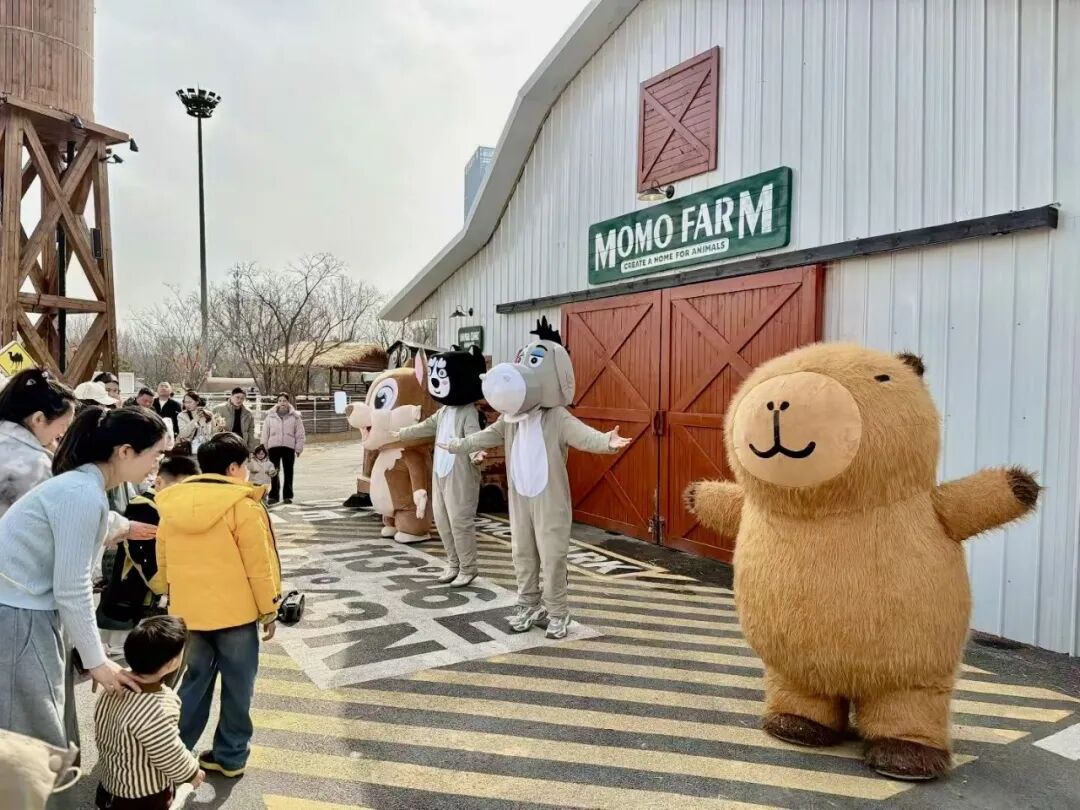
Zhengzhou MOMO PARK Urban Farm
In essence, the involvement of these supermarkets and shopping centers in outdoor cultural and tourism is the result of excessive competition. Currently, the number of commercial malls across the country is excessive, and there is too much homogenization in commodity sales, catering, cinemas, indoor entertainment, etc., and there is no significant difference among them. The only way is to extend their hands to cultural and tourism and empower supermarkets with the cultural and tourism scenarios and experiences.
Parent - child parks, pet parks, non - powered parks, and sports parks are the most suitable cultural and tourism projects for supermarkets. They require small investments, have short construction periods, low project thresholds, do not require core technologies, and have no operational barriers. Basically, they can be built as long as there is an open space. Moreover, these projects are suitable for taking photos and punching in, which is very attractive to family customers, who are the most important consumer group for commercial malls.
What impact will the fact that commercial malls are actively involved in cultural and tourism parks have on cultural and tourism enterprises? Zhiku Cultural and Tourism believes that it is a great benefit for some suppliers of parent - child parks, pet parks, and non - powered parks, which means there are many more potential customers, and commercial malls are all big spenders.
For investment and operation enterprises of cultural and tourism parks or entrepreneurs of parent - child parks and pet parks, this means that the competitive pressure in the industry has greatly increased. The outdoor parks of commercial malls are cheap, have good locations, and are willing to spend money on quality and service. Then, small and medium - sized cultural and tourism parks have to ask themselves what the moat of their parks is and how to compete with them.
Commercial malls are facing intense competition, so they start to engage in cultural and tourism parks. Cultural and tourism park enterprises and entrepreneurs are passively involved in this competition. The industry threshold has been raised, and the industry reshuffle in the track is imminent. Just as the saying goes, what eliminates you is often not your peer competitors, but cross - border players you never expected.
This article is from the WeChat official account "Zhiku Cultural and Tourism", author: Wang Xinyu. It is published by 36Kr with authorization.